Bootstrap
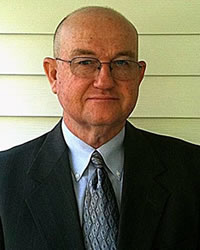
Gary Shepard

Man's Rights or God's Rights

John 19:10; John 19:11
Gary Shepard May, 6 2012 Audio
0 Comments

Sermon Transcript

Auto-generated transcript • May contain errors

100%
John chapter 19. And I want to
go back and just read a couple of verses from the portion that
we read. And those verses are verses 9
and 10. Really, they're verses 10 and
11. Then saith Pilate unto him, Speakest
thou not unto me? Knowest thou not that I have
power to crucify thee, and have power to release thee? Jesus
answered, Thou couldst have no power at all against me, except
it were given thee from above. Therefore he that delivered me
unto thee hath the greater sin. There is almost a temptation
to justify Pontius Pilate and consider him maybe as more innocent
in this affair than the Jews, the soldiers. But those words
that we just read were the words that Pilate spoke to the Lord
Jesus Christ when After he asked him where he came from, Christ
did not answer. And what Pilate said is very
revealing as to what he really thought about the Lord Jesus
Christ. How he regarded Him. What he said showed very much
his ignorance of Christ. his spiritual blindness, and
maybe most especially, his pride of heart. The words of Jeremiah
seem very appropriate when we think about this. He said, "...the
heart is deceitful above all things, and desperately wicked."
Who can know it? Who can know it? And more than
that, what he says here really shows more clearly the very stupidity
and foolishness, if you will, of the whole notion of free will. What man calls free will. And I say that because Pilate
imagined that he had power to choose for Jesus either life
or death. You say, well, he was about as
foolish as you can get to imagine that he could determine for Jesus
whether he had life or death. When in reality, he couldn't
even do that for himself. The Bible says, it is appointed
unto man once to die, and after that, the judgment. Pilate didn't
choose when he was born, and he wouldn't choose when he would
die. You see, the Bible says about
God, He says, I, even I, am He, and there is no God with me. I kill, and I make a life. I wound, and I heal, and neither
is there any that can deliver me, deliver out of my hands. Nobody can deliver themselves
or anybody else out of God's hand. And if that is the case
with physical life, and it is, how much more true must it be
of spiritual life? Can you give yourself spiritual
life? Were you present when you got
spiritual death in Adam? No. A while back, Janice told
me about a church sign she saw. Kind of been hanging in the back
of my mind for a few weeks now. But it said, you have a right
to be born, which was bad enough, and you have the right to be
born again, really. You see, the truth is that salvation,
spiritual life, is not a matter of right at all. It's a matter
of grace. It's a matter of God's grace. We didn't have a right to be
born. And we do not have a right to
be born again. Salvation is of grace. It is by the mercy of God. It is according to the absolute
sovereignty of God. He's the one who said, I will
have mercy on whom I will have mercy. And sinners are not left
to determine the life or death of the purpose and will of God,
especially in salvation. Would you leave the determining
factor in your glory in the hands of your worst enemy? You see,
God has not left that which is His greatest glory, which is
His salvation in Christ, His grace, He's not left the efficacy
of Christ's work, or the success of His work, or ultimately the
glory of the Lord Jesus. He's not left that in the hands
of a bunch of rebels. And yet that's exactly what so-called
free will amounts to. Here is God who's done all that
He can do. Here is Christ who's come and
died for everybody. Here is God who loves everybody. But when you ask men and women
what will determine whether or not a sinner goes to heaven or
hell, they say it's based on whether or not they decide for
God or not. Whether or not they decide to
let God's love be effectual to them, whether or not they decide
that God's purpose will be a purpose of salvation for them, whether
or not they decide that if the success and the glory of Christ
in His death will be effectual or not. That's what Pilate is
picturing here. You see, man has a will, and
all will is, is basically and essentially choice. I don't deny
that. I heard a preacher at a funeral
a while back, He quoted one portion of Scripture, he said, the Scripture
says, Thy will be done. And then he turned on his heels
and he said, but I believe man has a choice. He's like Pilate. And you see, the thing is, the
choice of man, and he certainly makes choices, The problem lies
in this, whether or not man's choice and God's choice is the
same. Who's going to win out? If man's
will comes against God's will, what will determine things? You
see, man's choice and God's choice, really, they never are the same.
Why? He said, because the carnal mind,
that's our natural mind, is enmity against God. Our wills, our ability
to choose, is bound to our fallen nature. That's what our Lord
said to those Pharisees. He said, you will not, and it's
actually, you will not will to come to me that you might have
life. Why wouldn't they do so? Because
they were spiritually dead. That's what he's saying there.
You'd have to come to me to have life, and you don't, so that's
the evidence that you're dead, and you could never of yourself
ever give yourself life. You see, like Pilate, man's will
never chooses Christ. Man left to himself will surely
perish. Paul expressed it like this.
He said, the natural man receives not the things of God. Why? Because they're spiritually
discerned. Apart from the Spirit of God,
they cannot be known, they cannot be believed, they cannot be loved,
they cannot be understood. And yet religion goes out there
and in a big parade offers men and women an opportunity to publicly
choose for God or not choose for God. Our Lord stated something
like this in Matthew 6. He said, which of you can by
taking thought add to your stature one cubit? He said, you cannot
by willing, you cannot by choosing, even add to your height just
a few inches. What makes you think you can
do this? Men and women, they hear about the glory of will
and choice and all these things, and they never stop to think,
that this is such an essential and vital matter and issue, yet
in issues of much lesser importance. They have no success. I get up
on Monday morning, about every Monday morning, and I kind of
will that I'm not going to overeat this week. I'm going to cut back. That doesn't involve my soul,
just involves my body. I fail. I look sometimes and
I think about different matters and I say, well, I'm going to
do better here. I'm going to be more faithful
in this. I'm really going to improve. And I fail. What makes me think that in the
matter of my soul, in the matter of spiritual things, in the matter
of God's glory and purpose, that my choice will be the determining
factor in that matter? Isn't that foolish? But that's
the generally accepted idea of our day. Men and women think
they're standing like Pilate was before Christ, and saying
to Him, don't you know I have the power to decide whether or
not you live or die? Don't you know I have the power
to decide whether or not you're actually successful, or whether
heaven's populated, or whether all your sheep are found and
saved? Don't you know we have the power
to do this? How utterly foolish! You see, whose will and whose
choice is it that determines salvation? Whose will? Whose rights? Whose power? Well, I really understand this. I know that whoever it is that
their will finally determines and shows it to be the deciding
factor in lost or safe, I know that they're the ones that get
the glory. You just mark that down. They're
the ones going to get the glory. And not only that, but if you
stop and think about it, if we're talking about free will, cannot
we just even logically think and understand that there can
only be one free will in the universe? And when that one free
will is come against by all these other wills, whose will you think
is going to win? whose power is going to overcome.
You see, Paul, when he writes to the Ephesians, he states it
in that way that it is undeniable and so plainly clear, he says,
of Christ, in whom also we have obtained an inheritance being
predestinated. You know what that word predestinate
means? It means to mark out beforehand. And the reason why men do not
preach it in this day, though it is plain in almost every portion
of Scripture, is because predestination takes everything out of the hands
of men, puts it in the hands of God. He's the predestinator. He's the one who marks out beforehand. The word is prohorizo. And it's the word that we get
the word horizon from. Who determined the horizon between
the sky and the earth? Do you have anything to do with
that? No. God did it. He said, being predestinated
according to the purpose of Him who worketh all things after
the counsel of His own will." And it doesn't matter if a million
free will preachers stand. and try to make it sound like
it doesn't sound like that, which they're quite talented at doing.
Or if they want to go to some obscure Old Testament passage
and try to prove contrary to what it says in that verse, guess
what it's still going to say? That He works all things after
the counsel of His own will. Turn over to Isaiah 46. Isaiah 46. And listen to God,
He's always describing Himself, and He's not ashamed to describe
Himself as He is. Isaiah 46 and verse 9. He says, "...remember the former
things of old. For I am God, and there is none
else. I am God, and there is none like
Me. What kind of God are you? Declaring
the end from the beginning. And from ancient times, the things
that are not yet done, saying, my counsel shall stand, and I
will do all my pleasure. He's not just talking here about
knowing beforehand what would be done. He's talking about doing
it. The reason God knows what will
be done is because He knows He'll be the one that does it. He is
alone in this doing. Calling a ravenous bird from
the east, the man that executeth my counsel from a far country,
all these nations, all these individuals, Nebuchadnezzars,
Hitlers, whoever they are, raising them up, To do what? To accomplish His purpose. Yea, I have spoken it, I will
also bring it to pass, I have purposed it, I'll also do it. God is not some gray-headed,
gray-bearded individual hanging over the banister rails of heaven,
looking to see what will happen, doing this and doing that by
way of encouragement. No, He's the doer. He's the doer. "...Hearken unto Me, ye stout-hearted,
that are far from righteousness." You'll never have righteousness
by your will. or by your work. He says, I bring
near my righteousness, it shall not be far off, and my salvation
shall not tarry, and I will place salvation in Zion for Israel
my glory. He said, I'll do all that. Paul
says it like this, he says in Romans 9, "...so then it is not
of him that willeth, nor of him that runneth, but of God that
shows mercy." Is it having anything to do with our rights? Our rights
to be born? Our rights to be born again? That's double stupidity there.
No, it says, it's not of the will, it's not of our works,
but it's of God that showeth mercy. And any and all who receive
Christ, who do believe on Christ, he says, they were born not of
blood, nor of the will of the flesh, nor of the will of man,
but of God. And I know what people think.
Here's what they think. They say this. Well, didn't Pilate
really commit him to death? Didn't he really tell those soldiers
and those Jews to take him and carry him out there and crucify
him? Wasn't he the one that willed
to put the Lord Jesus Christ to death? He willed it. But his will was not the determining
will. No, no. His will was not the
determining will. Turn over to Acts chapter 2. Acts chapter 2, and listen to
what Luke records here about Peter's sermon On the day of
Pentecost, one of the first things that Peter did was to charge
them with crucifying the Lord Jesus. They had His blood on
their hands. But at the same time, though
they did what they did willingly and wantonly and sinfully, it
was the will of God that really determined it. You needn't to
think that just because you've willed to crucify the Son of
God, you've got God pinned down somehow. No, listen to what he
says in Acts chapter 2 and verse 23. He's talking about Christ
now. He says, being delivered by the
determinate counsel and foreknowledge of God, foreordination of God,
you've taken and by wicked hands have crucified and slain." But
even at that, God raised him up. But look over in Acts chapter
4, beginning in verse 25, it goes on, Acts chapter 4 and verse 25,
he's quoting here what David said, "...who by the mouth of
thy servant David hath said, Why did the heathen rage, and
the people imagine vain things?" That's what so-called free will
is, vain things. That's what men, when they set
themselves against God, When they click their heels together
and lock their knees and poke out their chest in a stubborn
act, they're not going to let God do anything. It's a vain
imagination. Why did the heathen rage and
the people imagine vain things? The kings of the earth stood
up and the rulers were gathered together against the Lord and
against His Christ. For of a truth against thy holy
child Jesus, whom thou hast anointed, both Herod and Pontius Pilate,
with the Gentiles and the people of Israel, were gathered together."
That's all the people there were. They all fit in that group. Jews
and Gentiles, people in power. For to do. whatsoever thy hand,
thy counsel determined before to be done." That's God. That's God. But if you look back
at our text, I want you to see the next part of that. John chapter 19, note what Christ
says also to him in response to that. Verse 11, Jesus answered
that. He responded to that. Thou couldest
have no power at all against me, except it were given thee
from above. You see, the only power The only
right, if you want to call it that, that any sinner has, has
to be given to him. The only authority that anybody
has is a given authority. That's what the Lord is saying
all through this book. He said, I raise up beggars out
of the dunghill and make them to be princes. All authority
belongs to me. I raise up whom I will. Don't you get all flustered about
the election. God will raise up whom He will.
May be a judgment. I think at this point it probably
will be. May be judgment, but it will
be God. But especially, that's the way
it is in all things, but if I could add to that, especially, that's
the way it is in salvation. You see, none have any power
for Christ. Now, if it's true that they don't
have any power against Christ, except that which is given them,
it is equally true that they have no power for Christ, except
what's given them, what He gives. by the Father. Look over at John
chapter 6. John chapter 6, verse 44. This is what Jesus, you know,
that little sweet Jesus that they're always talking about,
like He's some effeminate, weak, pathetic being. This is what
He says. No man can come to me except
the Father which has sent me draw him." That's right. Pilate couldn't put Christ to
death, have Him crucified, except the Father bring it to pass. In the same way, you and I or
anybody else, if left to ourselves, we never choose Christ. We cannot
come to Him except the Father draws. Why? You say, you're not
allowed it? No, this has to do with ability. And our ability, Wont of ability,
rather, lies in the fact that we're sinners who of ourselves
hate God. We like a little religion. I
mean, who doesn't like a little religion? This has got to do
with the coming to Christ. Coming to Christ. He said, you
can't come, except my Father draw you. You'll be just like
Pilate. You'll be just like every other
sinner. When men and women have problems with what is called
the doctrines of grace, they'll say, well, I have a problem with
this point of election or this point of preservation or something. No, the one you got the problem
with is the first one, the absolute total depravity of man. Did you ever learn about that? We ever learn what we are as
sinners? We ever find out about our inability? If God ever shuts our ears to
what men say that we can do and should do, and hear what He says
He's going to do, we might have some hope. Look down at verse
65, just in case you didn't get it. And he said, therefore I
said unto you that no man can come unto me except it were given
unto him of my Father." You say, well, preacher, you just leave
us without hope. That's the thing. That's what
God is saying. There is no hope in yourself.
And the gospel has to do with the hope of God that He works
in our soul by blessing us and helping us and saving us by His
power. And the glorious thing is that
the Father, in His sovereign grace, has and does give it to
some sinners. He said, no man can come to me
except we were given the image of the Father. And our Lord says
also that there is a people that the Father has just done exactly
that for. You see, the God who declares
His sovereignty in mercy and grace, salvation, He doesn't
declare it in the way of the negative. You see, when we hear
Him declare it, when it's pointed out to us what He says, that
He's not bound to show mercy to anybody, but shows it to whom
He will, we take that as fallen sinners in the negative. They
say, God can't do that. The problem is, He already has. We're a little bit late, even
with stating that. Not that we could change it,
but it's a little bit late. He says though, I will have mercy. And you see, that's the only
thing that saves us. Being in the state we are, just
like Pilate and every other sinner, without any ability to choose
him or come to Christ, we by nature are always, I won't. I might tomorrow is simply I
won't. And every single son and daughter
of Adam and Eve would perish in their sins and inhabit the
flames of hell were it not for the fact that God wills. Now when somebody stands in the
face of God, might be my children, might be your best friend, your
mama, your daddy, your husband, your wife, whoever it is, When
they stand in the face of God Almighty, and they, refusing
mercy, blind to truth, ignorant of God's righteousness, going
about to establish their own righteousness, and in everything
they think and say and do, they're saying, I won't. I'll tell you
when they'll be glad. It's when God wills. I will. Oh, he ain't got any interest.
I know him, he's not going to budge. I know her, she's a self-righteous,
proud thing. I know she's bound up in religion
and all these things and happy to be there. You'll never change
your mind. I'm not trying to. But if she's
the Lord's, He'll change it. He'll change it. Look over in
John 6.37. He says, that the Father giveth me shall
come to me." How can you be so sure? Because He's purposed it. This
people given to Him as His bride. Christ ain't going to be left
standing at the altar. His bride. That body of people
given to Him that are described as His body, and He's the head,
or His building on which He's the foundation of them, they're
going to be saved. They're going to be saved. Listen. All that the Father giveth me
shall come to me, and him that cometh to me I will in no wise
cast out. For I came down from heaven,
not to do mine own will, but the will of him that sent me."
It's not that his will and the Father's will are not the same.
They are. But he comes as Jehovah's servant,
submissive to the Father. And this is the Father's will
which hath sent me. You talk about a free will. Here
it is. This is the Father's will which
hath sent me, that of all which He hath given me, I should lose
nothing, but should raise it up again at the last day. And this is the will of Him that
sent me, that everyone which seeth the Son, and believeth
on Him, may have everlasting life, and I'll raise him up at
the last day." Everyone that sees the Lord Jesus Christ for
who He is. Everyone, and this seeing and
this coming here is just simply believing. But Christ, they see
Him as He set forth in that true gospel that Paul described in
this way. He said, I'm not ashamed of the
gospel of God. I'm not ashamed of the gospel
of Jesus Christ. Well, why not, Paul? He says,
for therein is the righteousness of God revealed from faith to
faith. You see, if we don't have some
understanding as to the righteousness of God, we have no understanding
of the gospel. Because it's in the gospel that
the righteousness of God is revealed. Because the righteousness of
God is revealed in Christ crucified. The righteousness of God has
to do with the way in which He saves His people. Because He
cannot act in His will and His purpose in a way that is inconsistent
with Himself or that in any way defiles Himself. How does God
do it? What is there about the gospel
that shows the righteousness of God? I really honestly have
to say, that righteousness just has to do with God doing right. You remember when Abraham was
talking to the Lord about Sodom and all that was going on, but
especially about Lot. He was interested in that nephew
boy. And finally he said, shall not the judge of all the earth
do right? Now here's the question. Here
is old Lot down in Sodom. And God sends some angels down
there and they lead him out of Sodom. And God rains down fire
and brimstone on the cities of Sodom and Gomorrah and all the
cities of the plain. Now, they were a wicked people. They were a bunch of sinners.
And God was right. to destroy them, to bring his
judgment against them. We understand that, don't we?
What we need to understand is how God could do right by delivering
Lot. And Peter even going on so far
as to say, calling him Righteous Lot. Ooh! I know this. I know that Lot was a sinner,
just like all those people that God righteously destroyed. How did God count him righteous
and deliver him? How did He, the Judge of all
the earth, do right? You know, when you look at it,
honestly, humanly speaking, here God just rains fire and brimstone,
all these people die. But God just decided He wouldn't
kill Lot while He was saying God didn't do right. He wasn't
equitable in His judgment. Yes, He was. You see, Lot was
righteous Lot, not because of anything in Himself, but because
God had put him in the Lord Jesus Christ. And God had laid all
of Lot's sins before the world began. He had charged them to
a surety, the Lord Jesus Christ. And God had charged the very
righteousness of His Son to Lot. So not only was God right to
deliver just Lot, righteous Lot, He wouldn't have been just if
He had. Do you understand that? That's what this New Testament
term, justification unto life, is all about. If we are declared
righteous by God in Christ, then we must have life. And my friend,
everyone that God willed and determined and purposed to save
in His Son, giving them to His Son, and making Him responsible
for them, so that He has to come into this world and die for their
sin. God's doing right when He punishes
His Son, because He's imputed all the sins of His people to
Him. But bless His name, He's also doing righteously when He
raises Him from the dead, those sins being paid. And they're
all going to come to Him, every one of them. You say, now it
still boils down to what they're going to do. No, it always boils
down to what He's going to do. You want to know what He's going
to do? He's already said to His Son, looking at Him as His King,
He said, Son, your people shall be willing in the day of thy
power. Oh, thank you God for not having
to make me a beggar up in front of people. That I don't have
to stand in the name of the Almighty and beg as if He was a worm in
the dust. Beg for Him. plead the people
for Him. It neither helps them or Him. He said, Thy people, My only
begotten, My well-beloved Son, Thy people, they're going to
be willing in the day of Your power. Your power will override
their power. Your will will override their
will. Your purpose will override their
purpose. And that everyone are going to
come to you. They're not coming down the front
of somebody's aisle at church or to somebody's pool or sprinkling
cup. They're coming to the Lord Jesus.
To the Lord Jesus. They're made willing. The shepherd
brings them, gives them faith, causes them to leave every other
hope. causes to repent toward the living
God and believe on Christ, makes them willing to trust all their
salvation and hope and standing before God on the basis of Christ's
righteousness, on the basis of His bloodshed, and not what they
do. You see, their hope. is built
on nothing less than Jesus' blood and righteousness. And they dare
not trust the most appealing, the most outwardly, fleshly appearing,
strong support. But they wholly trust in Jesus'
name. They're justified freely through
the redeeming work of the Lord Jesus Christ. This is their psalm. "'Tis not that I did choose thee,
for Lord, that could not be. This heart would still refuse
thee, hadst thou not chosen me. Thou from the sin that stained
me hast cleansed and set me free. Of old Thou hast ordained me
that I should live to Thee. T'was sovereign mercy called
me and taught my opening mind. The world had else enthralled
me to heavenly glories blind. My heart owns none before Thee. For thy rich grace I thirst,
this knowing, if I love thee, thou must have loved me first."
You see, it's God's free grace, not man's free will. It's God's power, not man's power. It's God's purpose. Not man's
decision. And when God says, I'll have
mercy on whom? I'll have mercy. I'm going to
say, Lord, have mercy on me, the chief of sinners. Not because
I deserve it, for surely mercy excludes that, but just because
you can. And though the devil could bring
up a million things against me to show why you shouldn't, He
can't stop you. And though people can say this,
that, and the other, and call me whatever they want to, hold
it against me forever, He can't stop you. I'm like that old leper. He said, Lord, if You will, You
can make me clean. It wasn't about a problem with
power and ability. If You will, You can make me
clean. Have you acknowledged that? You can save me or damn me. I don't deserve anything. That
leper said, Lord, if you will, make me clean. You know what
the Lord said? He said, I will. Be thou clean. Be thou clean. Oh, I'm glad that
God's power trumps man's power every time. Sort of like Brother
Richardson said that time. God saves a man against his will
with his full consent. And that's the way it is. Father,
this day we praise You and thank You for such mercy, for a hand
of power that reaches out and takes hold of rebellious sinners
who are so stupid, so sinful, so ignorant and blind, so vile,
so wretched, Such total beggars, you've set them upon thrones.
It is all of your power, all of your grace, and therefore
it's all for your glory. Thank you, thank you, thank you.
Help us. Show thyself mighty in saving
these who are yet dead in trespasses and sin. They don't in any way
seem willing now. They don't in any way seem willing
to use even the least means of Your grace. But I know You can
make them willing, and I pray that You would. And when You
do, Lord, we'll praise You and thank You, and we'll say, Thine
is the power and Thine is the glory forever and ever.
Gary Shepard
About Gary Shepard
Gary Shepard is teacher and pastor of Sovereign Grace Baptist Church in Jacksonville, North Carolina.

Comments

0 / 2000 characters
Comments are moderated before appearing.

Be the first to comment!

Joshua

Joshua

Shall we play a game? Ask me about articles, sermons, or theology from our library. I can also help you navigate the site.