Bootstrap
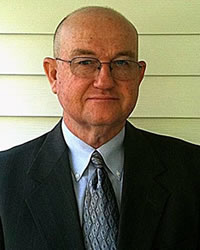
Gary Shepard

Here I Raise Mine Ebenezer

1 Samuel 7:1-12
Gary Shepard March, 25 2012 Audio
0 Comments
Gary Shepard
Gary Shepard March, 25 2012

Sermon Transcript

Auto-generated transcript • May contain errors

100%
Let's bow for prayer. Our Father,
we are brought so many times to realize our weakness. We pray
in this hour for grace and for strength and for the fulfillment
of that promise one more time, that in our weakness, your strength
is made manifest. Give us voice this day. to be able to speak the wonders
of your grace. Help each one of your people
in all their needs, in all their weaknesses, to know your grace
and strength. We'll render unto you all glory
and praise and thanksgiving. Bless your word as it goes forth. cause it to come in power to
your people. We do thank you and praise you. In Christ's name, Amen. In 1758, a man by the name of
Robert Robinson, who was a Baptist preacher, he wrote a hymn that
we're very familiar with. entitled, Come Thou Fount. And there's a story about him
that in his latter life, he evidently had a hard life, lots of difficulties. And one day he encountered a
woman who was looking at a hymnal, and was humming that very hymn,
and she asked him how he liked the hymn that she was humming. And the story is that he replied
to her in tears and said, Madam, I am the poor unhappy man who
wrote that hymn many years ago. And I would give a thousand worlds,
if I had them, to enjoy the feelings that I had then. His circumstances
had undoubtedly changed his feelings, but I trust not his faith. But in that hymn there is a verse,
and I am sure that this was his confidence in his last hour,
if it was his confidence when he wrote the hymn, but in it
he says, Here I raise my Ebenezer, hither by thy help I am come,
and I hope by thy good pleasure safely to arrive at home. I pray that he did know that
But what I want us to think about this morning is, what did he
mean by Ebenezer? He said, here I raise mine Ebenezer. What did he mean by Ebenezer? Well, turn with me in your Bibles
this morning to 1 Samuel and the 7th chapter. 1 Samuel chapter
7. This is a time in the life of
that nation of Israel after that they had just been enabled to
get back the ark of the covenant. They had lost it in battle to
the Philistines. And it says in verse 1, "...and
the man of Kirjath-Jerim came and fetched up the ark of the
LORD, and brought it into the house of Abinadab in the hill,
and sanctified Eliezer his son to keep the ark of the LORD."
And it came to pass, while the ark abode in Kirjath-Jerim, that
the time was long, for it was twenty years, and all the house
of Israel lamented after the Lord." And Samuel, if you remember,
Samuel was the prophet. Samuel spake unto all the house
of Israel, saying, If you do return unto the Lord with all
your hearts, then put away the strange gods and Ashtaroth from
among you, and prepare your hearts unto the Lord, and serve Him
only. And He will deliver you out of
the hand of the Philistines." Then the children of Israel did
put away Balaam and Ashtoreth, and served the Lord only. And Samuel said, Gather all Israel
to Mizpah, and I will pray for you unto the Lord. And they gathered
together to Mizpah, and drew water, and poured it out before
the Lord, and fasted on that day, and said there, We have
sinned against the Lord.' And Samuel judged the children of
Israel in Mizpah." And when the Philistines heard that the children
of Israel were gathered together to Mizpah, the lords of the Philistines
went up against Israel. And when the children of Israel
heard it, they were afraid of the Philistines, And the children
of Israel said to Samuel, cease not to cry out unto the Lord
our God for us, that he will save us out of the hand of the
Philistines. and Samuel took a suckling lamb
and offered it for a burnt offering wholly unto the Lord. And Samuel cried unto the Lord
for Israel, and the Lord heard him. And as Samuel was offering
up the burnt offering, the Philistines drew near to battle against Israel,
But the Lord thundered with a great thunder on that day upon the
Philistines, and discomfited them, and they were smitten before
Israel. And the men of Israel went out
of Mizpah, and pursued the Philistines, and smote them until they came
under Beth-char." Then Samuel. took a stone, and he set it between
Mizpah and Shin, and he called the name of it Ebenezer, saying,
Hitherto hath the Lord helped us." When everything had happened,
this prophet Samuel, took a stone, he did not chisel it, hammer
it, or put any tool upon it, as God always commanded, so that
it might be shown that in no way did man have any part of
the deliverance. But he raised up this stone in
that place and called the stone Ebenezer." That name or word
Ebenezer means stone of help. And not only does it mean stone
of help, but it is supposed to be emphasized with a definite
article so as to say the stone of help. And this was a memorable place
and a memorable time because just 20 years before, they had
suffered that great defeat. And what we have here is not
only for their benefit, but as the Apostle says, these things
are recorded for us. those of us upon whom the end
of the age shall come." We live in the last days. We're not waiting for them. The
Apostle says that God, who spoke in various ways and different
manners by the prophets in days past, He says, He hath in these
last days spoken unto us by His Son." And this is the first thing
that we have need of seeing here, and that is to notice that the
stone is nothing other than another type and picture of the Lord
Jesus Christ. Hold your place here and turn
over to Isaiah chapter 28. Isaiah 28. There are many references to
the Lord Jesus Christ as this stone or as the rock of His people. But we're going to look at just
two. One here in Isaiah 28, and that
is verse 16. He says, "...therefore thus saith
the Lord God, Behold, I lay in Zion for a foundation stone,
a foundation stone, a tried stone, a precious cornerstone, a sure
foundation, and he that believeth shall not make haste." He that
believeth shall never be disappointed. He that believeth shall never
be without help. All right? Just to show you that
this is exactly who the prophet Isaiah also was talking about,
turn over to 1 Peter. 1 Peter and the 2nd chapter. Because in 1 Peter 2, not only
do we find out more, but we find out a reference to that same
statement of Scripture. Look down in 1 Peter 2 and verse
6. Peter says, that wherefore also
it is contained in the Scripture, Behold, I lay in Zion a chief
cornerstone, elect, precious, and he that believeth on him
shall not be confounded." You see, we find that that stone
is a hymn. It is Christ. And then he says,
"...unto you therefore which believe, he is precious, precious. But unto them which be disobedient,
the stone which the builders disallowed, the same is made
the head of the corner." Now here are these who imagine themselves
as builders, who seek to build that which God would accept and
refuse His foundation stone and foundation, they reject Him. But listen further, "...and a
stone of stumbling, and a rock of offense, even to them which
stumble at the word, being disobedient, whereunto also they were appointed."
He says, "...here are these who were appointed such, but here
also are others to whom Christ is the head of the corner, the
sure foundation stone, and to those who believe He's precious,
and they'll never be without help." You see, Christ is the
stone of help to all His people. He is their Ebenezer. And He is the sure foundation
of all their salvation, and this is what they all are brought
to confess. Now, I know what men say. And
they've been saying it all the days of my life, and I'm sure
much longer. They say, well, the Lord helps
those who help themselves. But the people of God, those
who find, by the grace of God, Christ to be their Ebenezer,
this is what they say, such as David. Our soul waits for the
Lord, for He is our help and shield. They say things like
this, God is our refuge and strength, a very present help in trouble. They say, help us, O God of our
salvation, for the glory of Thy name, and deliver us, and purge
away our sins for Thy name's sake. And they say things like
this, summing it all up as a whole. They say like the psalmist, our
help, is in the name of the Lord. The name of the Lord. And that is simply a reference
to the Lord Jesus Christ. They say, our help is in the
name of the Lord who made heaven and earth. Isn't that what the
Apostle says? And all things were made by Him
and for Him. But how is it that the Lord Jesus
Christ has been our help. How is it that He is our Ebenezer,
our stone of help? Well, in that twelfth verse in
our text, it says that when Samuel took that stone and set it or
fixed it in a place between Mizpah and Shinn, that he called it
Ebenezer, saying, he knew what that name meant. He knew it meant
stone of help. And he put that stone in place,
and as he did so, he made this statement. He says, Hitherto
hath the Lord helped us. And what that means is that he
says, thus far, Or, up to this point, the Lord has been our
help. In other words, he goes back
into the history of this people as far as God is concerned in
His dealings with them, and he says, up to this point, God has
helped us. And when I read that, I began
to think of this. I began to think of, when was
it that God began to help His people? In that people, that
this people represents spiritual Israel, when was it that He began
to help us? Well, we don't know as far as
eternity is concerned, but we have the record of God as to
when He began to express it and make it known to us. Turn back over in the book of
Ephesians, because in the book of Ephesians, what we have is
the very record of God, the very Word of God Himself, as to when
He began to help His people. Look over in Ephesians 1. When Paul writes to these Ephesians,
These believers at a place called Ephesus, he reminds them of when
it was and how it was that God began to help them. Look down
in verse 3. He says, "...blessed be the God
and Father of our Lord Jesus Christ." who hath blessed us
with all spiritual blessings in heavenly places in Christ."
In other words, this is all past tense. He's talking about God
as the fountainhead of every blessing to His people, and all
those blessings being blessings wherein He blessed them in Christ. You see that? All right? And then He goes on. He says,
"...according." According. according as He hath chosen us
in Him," or elected us, or chose us, as Paul says in the Thessalonian
letter, chosen us to salvation. He has chosen us in Him before
the foundation of the world. He didn't start helping us when
we believed. He didn't start helping us when
we were born. He started helping His people. Christ was the stone of help
to all His people before the foundation of the world. that
we should be holy and without blame before Him, in love, having
predestinated us unto the adoption of children by Jesus Christ to
Himself, according to the good pleasure of His will, to the
praise of the glory of His grace, wherein He hath made us accepted
in the Beloved." You see, it wasn't a matter of our accepting
Him, and then He would help us. He is the stone of help to sinners
who are the objects of God's mercy and love, and He accepted
them in Christ, or He graced them in Christ Jesus before the
world began. But you see, not only that, but
as soon as time began, He, in all things, helped His people. You say, well, the very first
thing that happened was that we fell. The very first man simply
fell in sin and was cast out of the presence of God. But in
that, God was helping us. because he was viewing us in
a head or representative, so that when we fell in that head
and representative, we might be saved altogether by another
head, the Lord Jesus Christ. Paul is saying, in Adam all die. Yes, but in Christ, those who
are in Christ, they are made alive. He's helping us there. It's not something gone awry
or amiss. Though we fell in Adam and lost
everything in Adam, He was helping us because when He saves us in
Christ, we have more and gain more than we lost in Adam. He helped us. And not only that,
but every event in the history of the world Everything that
happens is not simply a matter of God bringing His will and
purpose to pass, but He's doing it all to help His people as
He glorifies Himself. I remember reading many, many
years ago in a sermon by an old preacher, and he said this, and
it stuck with me, he said, which is God working in all the affairs
of this world. He said, Providence is the handmaid
of salvation. Whatever God brings to pass. And you know, in Scripture it
keeps saying that, doesn't it? And it came to pass. And it came
to pass. What came to pass? What God ordained
comes to pass. As a matter of fact, He says,
and we know something, and that is that all things work together
for good to them that love God, to them that are the called according
to His purpose. all of the time and the place
and the circumstances of our birth. Every event in history
always working toward the coming of the Lord Jesus Christ. But
what is to be seen most of all, not only in this book, but in
all of history, the thing that we must notice most of all is
that what He was doing when He came into this world and when
He went to that cross, what was going on? He was helping us the
most. What's He doing hanging there?
God manifests in the flesh. God come down from heaven taking
on a body, the body of a man. What's He doing? He's there on
that cross helping His people. He's redeeming His people. He's dying for His bride. He's paying the sin debt of His
church. He's really helping them. And when Samuel stands up on
this day, When He rears up this stone and calls it Ebenezer,
He takes them back to that way by which they came out of Egypt
and were brought out of that bondage. It was by redemption. and how that God had through
all their wilderness journeys, how He had in every battle and
every conflict and right to that very present battle, He'd been
their help. There was not one time you say,
well, they got defeated some. That's the Lord helping them.
That's right. They got whipped, as we say.
That's the Lord helping them, teaching them, showing them,
warning them that salvation is not in themselves. The way is
not in a man to know it. And so right in the midst of
what Samuel does on this occasion is he offers a lamb. He offers
a lamb. Why? Because they were redeemed,
they were saved by blood. They were saved by that Passover
lamb's life being shed, and that blood being put on the lentils
and doorposts of their homes there in Egypt, and God saying,
when I see the blood, I'll pass over you. But my friend, that
wasn't just a one-time deal. That is the effect of it. You
see, it's always that we're delivered, not only from our sins, but in
every situation that God brings to us deliverance and salvation,
it's always because of the blood. It's always on the same basis. It's always because of who Christ
is. It's always because of this stone
of help that God has made Him to His people. And so when Paul
writes in the New Testament, he says, "...purge out therefore
the old leaven, that ye may be a new lump as you are unleavened. For even Christ our Passover
is sacrifice for us." It wasn't the blood of a lamb that was
slain as the help of God's people. It was the blood of the Lamb
of God. It was the blood of Christ. And Paul says, "...Christ hath
redeemed us from the curse of the law being made a curse for
us, for it is written, Cursed is everyone that hangs on the
tree." How was He helping us? He was redeeming us from the
curse. How was He helping us? He was
dying on that cross as our Passover, and the Lord, in seeing His blood
shed in the matter of our sins, pronounces grace and mercy to
us. Peter again says this, "...for
as much as you know that you were not redeemed with corruptible
things as silver and gold from your vain conversation received
by tradition from your fathers, but by the precious blood of
the Lamb." The precious blood of Christ as a Lamb without spot
and without blemish. And when the Lord's people are
pictured there in the Revelation, when they're gathered together
in this vision God gives to John in Revelation, they're seen in
that hour and all together singing a new song, speaking of their
Redeemer, to take the book and to open
the seals thereof, for thou wast slain and hast redeemed us to
God by thy blood out of every kindred and tongue and people
and nations." You see, Christ's help was before us, and it is
in every way outside of us. and a perfect help. But look
at their present situation. You see, the truth of the matter
was that all their days, this redeemed people, these who were
brought out of bondage by the blood and power of Almighty God,
even all their days, they had to be helped by the Lord. They
said, Moses, if you'll just tell us what the Lord wants us to
do, we'll do it. You know, that hadn't changed
much. People still say, well, just tell us how to live, or
tell us what to do, and tell us about the Christian life,
and just tell us what to do, and we'll do it. But they never
did. And they failed. And they failed. And you know what? The Lord still
helped them. He helped them. And when you
look at their present situation on this occasion here in 1 Samuel
7, it may well be like ours. It may well be very much like
ours, more often than we want to admit, and maybe right now
even at this moment. Will the Lord help us? Well,
you see this situation is that the Philistines, it's always
a picture of the devil, Goliath, a picture of sin, a picture of
this world, a picture of every enemy of God's people. And they
were about to attack Another time, these Israelites, and these
Israelites were very afraid of Him, very afraid of Him. Why? Why would they be afraid of these
Israelites? If they had this conscious realization,
if they had faith to believe that God really is their help,
why would they be afraid? Because when we sin against God,
we're always afraid. It always leaves us in fear and
dread of virtually everything that goes on in this world. Listen to what he says. He says
in verse 3, If you do return unto the Lord with all your heart,
God will not have divided hearts. Then put away the strange gods. You say, well, we don't have
any idols or anything like that. Oh, my friend, I'm afraid that
the lives of even the Lord's people oftentimes are found with
many idols. What is an idol? An idol is anything,
anyone that you place in the place of preeminence in your
life, and they become your God. Whoever you serve, whoever has
your affections and your loyalties, that's your God. He says, "...and
prepare your hearts unto the Lord, and serve Him only." He'll
deliver you out of the hand of the Philistines. And the children
of Israel did put away Balaam and Ashtaroth and served the
Lord only. And Samuel said, gather all Israel
to Mizpah, and I'll pray for you unto the Lord. That's like
Christ interceding for us. And they gathered together to
Mizpah, and drew water, and poured it out before the Lord, and fasted
on that day, and said there, we have sinned against the Lord. They confessed their sins. They turned from their idolatry. And it says, And when the Philistines
heard that the children of Israel were gathered together to Mizpah,
and the lords of the Philistines went up against Israel, and when
the children of Israel heard it, they were afraid of the Philistines. And the children of Israel said
to Samuel, cease not to cry unto the Lord our God for us, that
He will save us out of the hand of the Philistines." Now, my
first thought is there, these people got no right to expect
God's help. After all He's done for them,
After redeeming them, bringing them out of bondage and slavery
of Egypt, saving them through wilderness, all these things,
they've got no right to ask God's help. But it's not a matter of
right, it's a matter of grace. The Lord loves His people with
an everlasting love. The Lord has made with His people
in Christ an everlasting covenant. ordered and all things insure,
and that's all their salvation. It's in Christ. He doesn't deal
with them as a judge anymore. He's already judged their sins
in Christ. He deals with them as a pinning
Father, and He hears their cry. Now, many have children, You
tell your children and your grandchildren, you tell them, don't do this,
you'll get hurt, and don't do that, and you'll get hurt, and
then they do just exactly the opposite of what you tell them
to do, and guess what? They get hurt. You just walk
away from them. You just say, well, it serves
you right. No, you hear their cry. Scripture says, as the Lord
knows our frame, And he remembers that we're but
dust. And like a father pities his
children, he pities us. The children of Israel begin
to cry out to Samuel and beg him to cease not to cry unto
the Lord our God for us, that He'll save us out of the hand
of the Philistines. And Samuel took a suckling lamb. This is always the basis upon
which God blesses His people. The lamb. Christ crucified. And he offered it for a burnt
offering, holy unto the Lord. And Samuel cried unto the Lord
for Israel, and the Lord heard him. And as Samuel was offering
up the burnt offering, the Philistines drew near to battle against Israel. Well, I guess he didn't hear.
Now notice what happens here. But the Lord thundered. The Lord thundered. Last night
I heard the thunder. Did you hear it? It was the Lord. But when the Lord thundered against
the Philistines, this was not any ordinary thunder. I remember
one time when I lived in Kentucky there in a narrow valley. And one night, evidently a storm
cloud came and it stopped. right overhead of our area. And it thundered. And it thundered. And it kept on thundering. It
didn't just pass on by. It just thundered and thundered
and lightened. And it felt like you were in
a big drum and somebody was on the outside of that drum beating
and banging on it with a metal rod. But it wasn't thundering
like this. They knew this was the Lord Jehovah
thundering. And it made them flee. It says
it discomfited them. That's something like it scared
the daylights out of them. It made them run in fear because
no man can stand before Jehovah God when He thunders the thunder
of His justice. Oh, they took flight in Israel
being encouraged, took flight after them and smote them with
the sword and wrought a great defeat over them. But Samuel
knew. And when everything was done,
he went straight out there and he raised up that stone. He called it Ebenezer. He said
it isn't by our strength or our wisdom or any of these things,
but it's because the Lord has helped us. He's helped us. And
this is the way that we found it all the days of our life.
That is, the Lord's people acknowledged that He was our help before we
ever knew Him. He was our help through every
sickness, and through every danger, and through every foolish sin,
and every reckless behavior. He helped us again and again. Oh, we said back then, Well,
I sure was lucky. We've never been lucky in our
life. There's no such thing as luck. We weren't lucky back then. The Lord was helping us. The
Lord was preserving us. Satan would have swallowed us
up, this world would have consumed us, and we would have self-destructed. But, Joe, we can look back, and
we can raise these Ebenezers at this juncture, and that juncture,
and say, I thought I was being smart, I thought I did have to... No, it was the Lord helping us. Helping us again and again. And
not only that, but since we believe, He's helped us over and over
and continues to help us in every trial. every persecution, every
trouble, every time of our weakness, every fall of this flesh, every
failure. Oh, the Lord should have just
cast me off right then when I did that, but He helped me. When
everybody just seemed to turn against me on that occasion,
The Lord didn't. He helped me. When they persecuted
me for this gospel, He helped me. You see, the road is just
dotted with Ebeneezer's. He's helped us. I'll tell you,
when God reveals Christ to us, when He teaches us this gospel
of His grace, when He shows us the word of the truth, we're
brought to confess. that salvation always has been,
is right this minute, and always will be of the Lord. It always has been by grace.
It always has been in Christ. And He has been our only help. And when we learn, when we're
brought to remember that He is our help from before time, right
down to this very hour, then we'll be encouraged that He'll
be our help presently and in the future. Did you remember
what I quoted there in Psalm 46.1? Turn back to Psalm 46.1
just a minute. This is just too good to be true. God is our refuge and strength. A very present help in trouble. A very present help. Therefore will not we fear, though
the earth be removed, and though the mountains be carried into
the midst of the sea, though the waters thereof roar and be
troubled, though the mountains shake with the swelling thereof? You say, That's earth-shattering,
isn't it? How could we not fear in the
midst of that? Because the Lord is a very present
help. And we can be assured, and we
can be encouraged, that from before time and old eternity,
He's been helping us. He's always been there. And He
is right now at this moment, He who is the same yesterday
and today and forever, He will be in the future. Paul said,
if He's already given us His Son, if God has given us already
His Son, given Him as an offering and sacrifice for our sins, given
Him to die, if He's given us His Son, will He not also with
Him freely give us all things? You could say, if God has already
helped us through the worst. I like to think about this sometimes.
That of a truth for the Lord's people, the worst is behind us. The worst was that Calvary. And
if He's already done that, if He's already given His best to
us, He's not going to withhold anything from His people. He's
not going to fail to help them. And so you could say that hitherto
becomes his forth. He says, Fear not, for I am with
thee. Be not dismayed, for I am thy
God. I will strengthen thee, yea,
I will help thee. I'll uphold you by the right
hand of my righteousness. For I, the Lord thy God, will
hold thy right hand, saying unto thee, Fear not, I will help thee."
I will, that's future. Fear not, thou worm Jacob, and
ye men of Israel. I will help thee, saith the Lord,
and thy Redeemer, the Holy One of Israel. Thus saith the Lord
that made thee, and formed thee from the womb, which will help
thee. Fear not, O Jacob, my servant,
for the Lord God will help me. Therefore shall I not be confounded. Therefore have I set my face
like a flint, and I know that I shall not be ashamed. Behold,
the Lord God will help me. Who is he that shall condemn
me? All shall wax old as a garment,
and the moth shall eat them up." Then he says this by the Apostle
in Hebrews, "...let your conversation be without covetousness, and
be content with such things as ye have. For he hath said, I'll
never leave thee, nor forsake thee, so that we may boldly say,
the Lord is my Helper." The Lord is my Helper. and I will not
fear what man shall do unto me." You see, all of God's people,
all these that believe, all these to whom Christ is precious, He
is their stone of help. We sing that hymn once in a while,
O God, our help in ages past. And then we sing, our hope for
years to come. our shelter from the stormy blast,
and our eternal home. that I look to that Lamb, the
Lamb of God that takes away sin, slain outside of Jerusalem in
my place, and know He helped me, that He's already helped
me through the worst, and so He'll help me through the rest.
Gary Shepard
About Gary Shepard
Gary Shepard is teacher and pastor of Sovereign Grace Baptist Church in Jacksonville, North Carolina.

Comments

0 / 2000 characters
Comments are moderated before appearing.

Be the first to comment!

Joshua

Joshua

Shall we play a game? Ask me about articles, sermons, or theology from our library. I can also help you navigate the site.