Bootstrap
Gary Shepard

The Knowledge of the Glory of God

2 Corinthians 4:1-7
Gary Shepard February, 26 2012 Audio
0 Comments
Gary Shepard
Gary Shepard February, 26 2012

Sermon Transcript

Auto-generated transcript • May contain errors

100%
2 Corinthians chapter 4. Some have said that ignorance
is bliss. And many have, by their actions
or inactions, showed that they really must believe the same
thing. But I can tell you this, it is
sure death. It is eternal death when it comes
to God, when it comes to the things of God, when it comes
to salvation. God said through the prophet
Hosea a long time ago, my people are destroyed for lack of knowledge. Because thou hast rejected knowledge,
I will also reject thee, that thou shalt be no priest to me. Seeing thou hast forgotten the
law of God, I will also forget thy children." He said, you're
destroyed. For lack of knowledge, you have
rejected knowledge. And then in the book of Proverbs,
he tells us this, the fear of the Lord is the beginning of
knowledge. Those who have not this fear
of the Lord, they don't possess any true knowledge. But fools despise wisdom and
instruction." And then in the New Testament, the apostle Peter
is led by the Spirit to give this statement. He says, "...grow
in grace, and in the knowledge of our Lord and Savior Jesus
Christ. Grow in grace and knowledge of
Christ. And why is this knowledge that
he's talking about here, why is this knowledge so vital? Hold your place and turn back
to the gospel of John chapter 17, and listen to John as he's
recorded these words spoken by the Lord Jesus Himself. John chapter 17, verse 3. He says, and this is life eternal. I know the Father was fully aware
of that. But He says it as He does all
of this to the Father in our hearing that we might have knowledge
of it. And this is life eternal, that
they might know Thee. that they might have this knowledge
of Thee, the only true God, and Jesus Christ, whom Thou hast
sent." That's what eternal life is. The knowledge of God as He
is in Christ, it is to know Him. And Spurgeon said on one occasion
something I thought was absolutely true. He said, he who does not
long to know more of Christ knows nothing of Him yet. We don't
have a desire and a longing to know more about the Lord Jesus
Christ, then we really must not know anything about Christ. And men and women by nature,
they shun and they reject, and they're uninterested naturally
in this knowledge. They like that knowledge that
puffs up, that knowledge that can be paraded before men, flaunted
before men, recognized and honored by men. And they do not avail
themselves of the opportunities to hear the gospel, They do not
avail themselves of this opportunity and privilege of hearing this
gospel of Christ. They find it easier to read magazines
and to watch TV and all these things rather than to study the
Bible. because they have this natural
enmity against the things of God. We can watch a two-hour
movie, but we can't sit through a service of 45 minutes to an
hour to hear the Word of Truth. And these things simply are reflections
of what we are by nature. And only God, in His great mercy,
can ever bring us beyond what we are by nature. Job records
these words. He says, this is the attitude
of men and women. Therefore they say unto God,
depart from us, for we desire not the knowledge of thy ways. Why? Paul says, because the carnal
mind, the natural mind, is enmity against God, for it is not subject
to the law of God, to the Word of God, neither indeed can be. We're born ignorant. And we have
this desire naturally to remain that way. We don't want this
knowledge of God. And it's to that state and situation
that Paul speaks here in 2 Corinthians 4 and in verse 1 and 2, and he
says this, seeing we have this ministry, it's not a show, it's
not a high place, It's not a place of natural and earthly esteem. We have this ministry. That means
a place of service. That's what Paul described himself
as, a servant. Not just a servant of God, but
a servant of those he preached to. And that's what every true
gospel preacher is. He's just a servant, a lowly
servant. He says, and only as we have
received mercy. That's the only reason we haven't
fainted long ago. But having received mercy, we
faint not, but we have renounced the hidden things of dishonesty. You would think in our day that
people could see some of the obvious dishonesty of those who
call themselves preacher. He said, we have renounced the
hidden things of dishonesty, not walking in craftiness, we're
not trying to Trick somebody into salvation. We're not trying
to sneak up on somebody. We're not like sales people do,
using the old bait and switch. We're not trying to get you here
with a dinner or a song group or anything like that in order
to get you to do something you don't want to do. We're not doing
these things of craftiness, nor handling the Word deceitfully. We don't just have a few pet
verses that we're always using. He says, "...but by manifestation
of the truth." You see that? Setting forth of the truth. He says, "...commending ourselves
to every man's conscience in the sight of God." The gospel
ministry has to do with the truth. has to do with this true knowledge
that he is talking about all through the Scriptures. And then
in verse 3 he says this, "...but if our gospel is hid..." And
that's what the ministry is all about. It's about the gospel. It's about manifesting and teaching
this truth. "...but if our gospel be hid,
it is hid to them that are lost." They're lost. They don't just
have less life, they don't have just less knowledge. He said,
if they don't have this gospel, they're lost. And then he says
this, he says, "...in whom the God of this world," who's that? The devil? Satan? He says, "...in whom, in these
individuals, the God of this world hath blinded the minds."
Do you see that? The minds. There's a warfare
going on for the minds of men and women. We talk about the
heart, but you can't separate the heart from the mind. We're
one being. And there's this conflict, this
warfare going on, and he says here, he says, that the God of
this world hath blinded the minds of them which believe not. Believe not what? The truth,
the gospel. He says, "...lest the light of
the glorious gospel of Christ, who is the image of God, should
shine unto them." Now what does that tell us? Well, it tells
us that all true knowledge is in and about the Lord Jesus Christ. Let me read you what Paul says
about Christ. He says in Colossians 2 and verse
3, speaking of Christ, he says, "...in whom are hid all the treasures
of wisdom and knowledge." Did you hear that? "...in him..."
not revealed to all, certainly not seeable by the natural eye
or man in him or hid, all the treasures, wisdom and knowledge,
not most of it, but all of them. And so as to enable us at least
to a degree to see the value of it, he calls them treasures. True wisdom from God and knowledge
from God and of God, that's a treasure. And the reason we don't see it,
the reason we don't value this knowledge of God, this gospel
of His truth, is because of what we are as blind sinners, And
here is this truth, this knowledge of God, whereby we might find
this treasure and know this treasure. We're not even interested. You
can imagine that there's this great pirate treasure, and it's
hidden somewhere down on the coast. We have some substantial
evidence or word that there really is a pirate treasure down there
on the coast that we live near sometime, and here we are, we're
headed west in our pursuit and search of it. How are we going
to ever find out where it's at? Ah, you say, if I had a map.
If I had a map that said exactly where it's located, if I could
find where that X is on the map, that's what this truth is about.
That's what this gospel of Christ is about. It's this map that
God gives His people that they might find and know this treasure,
this treasure of wisdom and knowledge and salvation in Christ. You see, there is one Word. There is one source of knowledge. There is one source of truth. That's the Word of God. Look
over in 1 Timothy. 1 Timothy chapter 2. And look down in 1 Timothy chapter
2. He says, I exhort therefore that
first of all supplications, prayers, intercessions, and giving of
thanks be made for all men. Now that's all types of men and
women. And the reason we know that is
what he says in the next verse. for kings and for all that are
in authority, that we may lead a quiet and peaceable life in
all godliness and honesty. For this is good and acceptable
in the sight of God, who will have all men, all kinds of men,
not every person, if it was His will to do so, they would be,
but who will have all men to be saved, and to come unto the knowledge
of the truth." You see that? Every one that he saves, all
his people, that people out of every nation, kindred, tribe
and tongue, some who might be kings and some who might be paupers,
and everything in between. He says He will save them and
bring them to the knowledge of the truth. He won't use ignorance. He won't use error. He won't
use half-truths. He won't use Scriptures taken
out of context. He won't use things that are
put together by men for a theological position, and men look at that
rather than the Word of God. He'll use the truth, bring them
to the knowledge of the truth. And isn't it amazing what he
says in the next verse? He just talked about the knowledge
of the truth. He says this, "...for there is
one God and one Mediator between God and men, the man Christ Jesus."
That's the truth. There's just one, there's only
one, there never has been but one, one mediator, one go-between,
between God and men, the man Christ Jesus. And when we find
this true knowledge, Or rather, when really God uses it for us
to find Christ, we'll be like an old writer who said, if the
Lord has made us know Himself, he said, is this not the fountain
of all saving knowledge? Where is that fountain of saving
knowledge? Where is that map to the treasures? It's in the Lord Jesus Christ. Because he speaks here, and he
says this in verse 6. He says, "...for God, who commanded
the light to shine out of darkness..." He's talking about that natural
creation. When in the midst of that void
and darkness, God spoke and said, "...light be..." And light what? He says, "...that God." hath
shined in our hearts to give the light of the knowledge of
the glory of God." The knowledge of the glory of God. Now, I don't know about you,
but that sounds wonderful to me. The knowledge of the glory
of God. You see, eternal life is not
only to know God, but it is to know God in Jesus Christ, and
to know God in Jesus Christ is to know the glory of God, to
have knowledge of the glory of God, which he says here, is in
the face of Jesus Christ. the knowledge of the glory of
God, that you and I, in our ignorance and in our persistence in ignorance,
would ever have, possess, come to know, come to understand the
knowledge of the glory of God. What an amazing thing it is!
And you won't find it in a sunset or a sunrise. You won't find
it in the face of the sweetest baby that ever lived. You won't
find it in a storm or any of these things. It will only be
in the face of Jesus Christ. And that means the person of
the Lord Jesus Christ and those things that surround Him, that
are a part of Him, that person and work of Christ, he says,
and to give the light of the knowledge of the glory of God. How does God give a sinner the
knowledge of the glory of God in Christ? The word knowledge
here meaning recognition, discernment, acknowledgement. One aspect of
having knowledge is acknowledging not just this truth, but also
acknowledging the things that we once thought were true, but
are not. When Paul wrote to Timothy, he
talked about the servant of the Lord, talking about him and every
one of God's servants. He said, the servant must not
strive or bicker or any of these things, but he must be apt to
teach. in meekness, instructing those
that oppose themselves, if peradventure God would grant them repentance."
And then what follows that? Repentance to the acknowledging
of the truth. How does God give a sinner? this knowledge of the glory of
God in Christ. I'm just going to give you three
things. Number one, by a biblical declaration, by biblical information,
by the assimilation of biblical truth. You're not going to find out
anything saving about God except from this book. This writer is
led by the Spirit of God, who's called the Spirit of Light. He
talks about light, and this light being the knowledge or giving
the knowledge of the glory of God. And without it? Without this book. No knowledge. Now let me just make sure you
understand this. There may be lots of what we
call good books. I'm talking about commentaries,
books written by preachers, things like that. There may be some
that are good books. But it's like a man said a long
time ago. He said, you know, the Bible
really sheds a lot of light on these commentaries. That's right. This is His Word. And the only
thing that's going to count in the final analysis is not what
Reverend so-and-so said, is not what Spurgeon said, or Gill said,
or anybody else. It's going to matter what God
says. Do we understand that? And we may, to the benefit of
our souls sometimes, read these books, and maybe we ought to,
but we always ought to remember that this is not God's Word,
the Bible is. I've heard people use the term
head knowledge, and they speak of this so-called head knowledge
in a very detrimental way. When in reality, all knowledge
of God begins by first entering through the eye gate or the ear
gate. I believe that's in your head,
isn't it? We're either going to have to read His Word, hear
His Word. There's going to have to be an
assimilation whereby we absorb, by God's mercy and grace, these
things of His Word We'll never have any light. It's always by
means of the Scripture. When Paul instructed Timothy,
he said this, he said, preach the Word. That's all true preaching
is. It's a rehearsing again and again
of what God has said. It's not my flowery illustrations
trying to illustration. You know, I've heard preachers,
they just wear Where are you out with illustration?" Well,
if I wanted to go and be entertained by stories and all that, I could
go somewhere else. Like a preacher said one time,
he said, sometimes an illustration in a sermon is like a wind in
a house, it'll let in a little light. But then he said, but
who wants a house that's nothing but windows? No, this is His
Word. We only believe God to the extent
that we know for ourselves, we have read for ourselves, seen
for ourselves that He said this, promised this from His Word. The Lord Jesus said to a group
of people who really thought they had some knowledge, He said
to them, not knowing the Scriptures nor
the power of God." Sometimes I get to thinking about this,
about how many books, how many volumes of commentary and opinion
and illustration, how many books have been written about the Bible. And yet you can begin to talk
to some people about a a subject in the Bible, such as sanctification
or something like that, if you have read for yourself and know
what the Bible says about it, you can begin to tell them what
the Bible says about it, and they look like they're in shock.
Where did they get a belief about such a thing that's contrary
to the Bible? They got it from man. That's
right. There's one thing I'm sure about.
And that is, all my error is either natural in me, or a man
like me gave it to me, taught it to me. That's right. You see, it's always the Word
of God. When Christ began to teach in
Luke 24 those disciples after His resurrection, He still from
the Scriptures taught them. There's got to be a declaration. There's got to be this information
that God has set forth in His Word about Himself and about
how He saves sinners. There's got to be. Turn over
to 2 Timothy. 2 Timothy. And look down in verse 14. This is Paul giving instructions
to this young man, Timothy, this young preacher. Also he says
in 2 Timothy 3.14, But continue thou in the things which thou
hast learned, and hast been assured of, knowing of whom thou hast
heard them. You better know who you've heard
it from. Well, I heard it from Brother
so-and-so, and you know what a preacher he is. I'm afraid
that's not good enough. We have to have heard these things
from God, from His Word. Listen to the next verse. and
that from a child thou hast known the holy Scriptures which are
able to make thee wise unto salvation through faith which is in Christ
Jesus." Now that doesn't mean that from childhood Timothy was
a saved man, but it means that God, begin in him, just like
he must in us all, this instruction, this teaching from the Holy Scriptures. He may have used his mother and
his grandmother as an instrument, but that Word had to be seen
as being exactly the same as the written Word, therefore believed
because it's the Word of God. He says, all Scripture. That's
what this is about. That knowledge by which God saved
this man Timothy, that knowledge was scriptural knowledge. All
scripture is given by inspiration of God and is profitable for
doctrine, for reproof, for correction, for instruction in righteousness,
that the man of God may be perfect, thoroughly furnished, unto all
good works." I wish that men and women would spend more time
in the book of God. Spend more time in the book of
God than they do all these books about God. Paul reasoned with
men that he preached to and bore witness to, it says, he reasoned
with them out of the Scriptures. And when this great man, the
apostle Paul, stood up to preach to some people called the Bereans,
Now, I don't know what they had seen in the way of the miraculous
that God had enabled Paul to do, miracles, whatever it was,
but it says that when he preached, they searched the Scriptures
to see if the things he said were true. You mean to tell me
you're checking up on the Apostle Paul? Yes. He said, though me, myself, or
even an angel of light come to you preaching any other gospel
than this gospel, he said, let him be accursed. Don't you hear
him? Though I know, he says, you have a tendency to hear. That if left to yourselves, you
would hear. Preacher, you say, are you diminishing
preaching? No. But you better remember this. This treasure, as Paul says here,
is in a clay pot. Not in a gold box. Not in a perfect
vessel. He said it's in an earthen vessel. And these Scriptures, they tell
exactly who God is. They tell exactly who Christ
is. They show in plain statements
what it says that He came to do, and why He did it, and what
He accomplished, and where He is now. And that's where knowledge
begins. There must be a declaration.
There must be information from God, and He's given it in this
book. Do we understand that? Alright,
here's the second thing. There must also be, in God bringing
us to the knowledge of His glory in Christ, there must also be
a Holy Spirit revelation. In other words, If all that happens
is that you read the Bible, or if you hear a man preach the
gospel, if that's all that happens, you'll never have this knowledge.
Because the Bible is a closed book. Though it's absolutely
essential and necessary, Just reading the Bible, just knowing
in our heads the Holy Scriptures, just being able to quote them,
that's not true knowledge. It begins with that. But there
must also be a Spirit-wrought revelation. And that's what Paul
is alluding to here as well in connection with this gospel ministry. He said, the reason why we have
knowledge and light, the reason why God has caused us to see
the glory of God in the face of Jesus Christ, is because that
He, as He did in the natural creation, came in power to us
and said, let there be light. light. You see, the Holy Spirit
is the teacher, the revealer. Turn over to John's Gospel and
chapter 16, John chapter 16, and look down in verse 13. I love how Christ here, in giving
this instruction, how He identifies the Spirit, the Comforter that
He would send, and which He did send, as the Spirit of truth. Somebody said, well, the Holy
Spirit was in that place last night. Was the truth there? The gospel there? No, we were
just having such a good time, the preacher didn't even have
time to preach. The Spirit of Truth. Now listen
to it. Verse 13, When He, the Spirit
of Truth, is come, He will guide you into all truth. He'll guide you to this book. You'll be the teacher of the
things that we find in this book. "'For he shall not speak of himself,
but whatsoever he shall hear, that shall he speak, and he will
show you things to come. He shall glorify me.'" You see,
people, Take the Bible and they see the glory of its history,
they see the glory of its moral lessons, they see the glory of
its characters and all these things. But that person who has
the knowledge of the glory of God, they find that knowledge
in Jesus Christ. He shall glorify me. He shall reveal He shall make manifest the things
of Christ." Listen, "'For He shall receive of mine, and shall
show it unto you, all things that the Father hath are mine.'"
I wish we understood that. I love that portion of Scripture
when Abraham's servant is sent out there to get a bride for
Isaac. Do you remember that? And he
goes down there, and as he goes, you're kind of wondering, do
you think that this woman is going to come? Do you think she's
going to come back all that distance to marry a man she's never seen
in her life? And Abraham's servant says this,
he says, my master has just got one son. My master has got houses,
he's got lands, he's got cattle, he's got sheep, he's got all
these things. And He's only got one Son, and
He has given to Him everything. That's what the Holy Spirit reveals.
That God has made Christ to a bunch of sinners that He chose in Christ,
and loved in Christ, and who died in Christ. He's made Christ Jesus unto them
all things. Wisdom, righteousness, sanctification,
redemption. In Him, He has freely given them
all things. In Him, He has blessed them with
all spiritual blessings. That's it. When we see the glory
of God in the face of Christ, we see that everything that God
has to give, He has given in and through Christ and Him crucified. And outside of Him, there's nothing
but wrath. He shall take of mine, and shall
show it unto you." He doesn't have to show it to you. Our Lord,
thinking about Capernaum and some other cities wherein He
did great and wonderful works, where they had rejected Him,
didn't believe on Him, but He didn't get upset about it. He
said, I thank Thee, O Father, Lord of heaven and earth, because
Thou hast hid these things from the wise and prudent. They already
think they know it all, and hast revealed them unto babes. Has
the Spirit of God ever brought you to the point that you're
just saying, Lord, I'm so ignorant. I'm not just a sinner. I'm an
ignorant sinner. Paul confessed himself to be
that. He said, I did these things ignorantly
in unbelief. When our Lord asked those disciples,
He said, I know men say I'm this and that and the other. He looked
at Peter. Peter was just an ignorant fisherman.
He said, Who do you say I am? That's what it's all going to
boil down to, isn't it? Who do you say Jesus Christ is? Well,
some say He's a good man, some say He's a prophet, some say...
Who do you say that I am? And old Peter just said, You're
the Christ, the Son of the living God. Son of God. And our Lord
looked at him, He said, Blessed art thou, Simon Barjona, for
flesh and blood has not revealed this unto you, but My Father
which is in heaven. Revelation. John said, And we
know that the Son of God is come and hath given us an understanding. We don't know it all. Thank God
we'll never know it all. The finite is never going to
know everything about the infinite, but He's given us an understanding
that we may know Him that is true, and we are in Him that
is true, even in His Son, Jesus Christ. This is the true God
and eternal life. Peter said, Grace and peace be
multiplied unto you through the knowledge of God and of Jesus
our Lord. According as His divine power
hath given unto us all things that pertain unto life and godliness
through the knowledge of Him that hath called us to glory
and virtue. Paul writing to the Corinthians,
he said, now the natural man receives not the things of God.
But he said, God gives to His people this understanding. He teaches them. He reveals to
them. He's given them a revelation
of what He's actually saying in His Word. And it is that He
has freely given us all things in Him. There has to be this
biblical information. There has to be this spirit revelation
of Christ through this means. And then there has to be what
I've called a God-wrought affirmation and affection. You know, you
can't have over three points, so I had to combine them two. Now listen, a God-wrought affirmation. What is that? That's the God-given
faith that He gives His people, whereby they are enabled and
do affirm what He says in His Word. We affirm it. We're brought
to believe it. If we believe it, we agree with
it. It's not, as some have said,
God said it, I believe it, that settles it. No. The believer
is brought to acknowledge that if God said it, that settles
it. But we affirm it. We delight
in it. We delight to hear. We affirm
what He says. Our hearts, by the Spirit of
God and this faith that He gives, enabling us to believe, we affirm
it. We amen it in our hearts. You
ever read the Word of God by yourself, just by yourself, and
you read a statement of Scripture wherein He, by His Spirit, takes
that and applies it to the joy and blessing of your heart, and
without even realizing it, in your heart, you raise an amen? Hallelujah. Thank God. Yes, it's truth. When He tells us about Himself,
I can't help but believe that we're brought to the place that
we so delight and agree with God as He is in His holiness
and glory, that we would not have Him to change in even the
slightest measure, even to save us. That's the glory of it. He didn't have to change to save
us. He could remain just and yet
declare us righteous in the Lord Jesus Christ. He said it's through
sanctification of the Spirit and belief of the truth. The truth. We have true knowledge
when we believe the truth, when we believe on Christ who is the
truth, and when we rest in His finished work. That's what this
book's all about. It's all about what He accomplished. We're either going to rest in
that, or we're going to perish. We're going to give Him the glory
for that, or we're going to perish. No middle ground. And then there's
that Spirit wrought affection. Call it head knowledge all you
want to. But when God takes this head
knowledge, and He by His Spirit reveals His glory and His grace
in Christ to us and in us, and we're enabled to affirm it, we
not only affirm it, we love it. You remember those that Paul
spoke of in 2 Thessalonians, before he began to thank God
and praise Him for His people in Christ? He said, they'll perish. They receive not. The love of
the truth. They've got some truth. He knows
a little truth. You ever heard that expression?
They know a little truth. They got a little truth. God's
people love all the truth. They love the truth. They love
God as He says He is. They love Christ, the Christ
of this true gospel. They love the way He saves sinners
as this just God and Savior. That's what it says. Paul says,
but we have this treasure in earthly vessels, that the excellency
of the power may be of God and not of us. We love Him. That's
when we are brought. to truly, in our experience,
affirm this knowledge and have affection for the One in whom
it is. Peter says, "...whom, having
not seen, you love, in whom, though now you see him not, yet
believing." ye rejoice with joy unspeakable and full of glory."
We glory in Christ. We glory in the cross. We glory
in God's grace. We glory that salvation is of
the Lord. Those who have this ministry
Paul talks about here, they preach and they teach the gospel. They know they can't change a
heart. They know they can't give faith. They know that anything
they could persuade men to, some other man could come along and
persuade them otherwise. So they preach, and they teach,
and they wait upon the Spirit to bring this knowledge of the
glory of God in the face of Jesus Christ to their heads and to
their hearts. And then they rejoice. They rejoice
with all those who know and love the truth. And they do so, as
Paul said, till we all come in the unity of the faith and of
the knowledge of the Son of God unto a perfect man, a mature
man, unto the measure of the stature of the fullness of Christ. And they find themselves like
Paul. He said, if any man had any right to any confidence in
the flesh, It would have been me, as I did. Hebrew, teacher,
taught by Gamaliel, he gives this list. But he says, the things
that were gained to me, what I counted as gain, I now count
them as loss. Count all things but loss. For
the excellency of the knowledge of Christ Jesus my Lord." The
prophet said, if a man is going to glory, there is only one glory
that can be, that we know God in Christ. He said, for whom
I have suffered the loss of all things, and do count them but
done, that I may win Christ, and be found in Him, not having
mine own righteousness, which is of the law, but that which is through the faith
of Christ, the righteousness which is of the law by faith,
that I may know Him, Somebody said, well, it's not what you
know, it's who you know. Not exactly right. It's both. Because the who you know may
be the wrong one. It isn't, for some things, what
you know. See what I'm saying? This is
the knowledge of the glory of God in the face of Jesus Christ. Seek every opportunity to hear
the Gospel and to read the Scriptures. Pray that the Spirit of God might
be our Teacher, our Revealer, give us understanding and show
us the things of Christ. And may we in our minds and hearts
affirm and have affection for His Gospel. Father, today we
give You thanks. And we pray that you might get
all the glory, get all the honor, that the trust of men and women
might be in you and not in men, that the Spirit might take the
things of Christ and show them to us. Reveal your Son in us. Give us faith to believe on Him
and love for Him. And out of that love for Him,
move us to service and good works for His glory. For we pray and
ask it in Christ's name, Amen.
Gary Shepard
About Gary Shepard
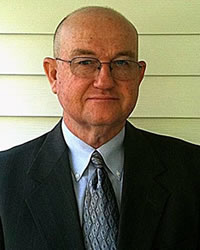
Gary Shepard is teacher and pastor of Sovereign Grace Baptist Church in Jacksonville, North Carolina.

Comments

0 / 2000 characters
Comments are moderated before appearing.

Be the first to comment!

Joshua

Joshua

Shall we play a game? Ask me about articles, sermons, or theology from our library. I can also help you navigate the site.