Bootstrap
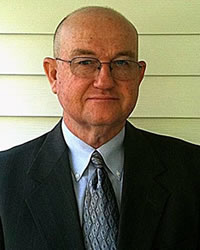
Gary Shepard

The Hour That Now Is

John 5:21-29
Gary Shepard October, 9 2011 Audio
0 Comments
Gary Shepard
Gary Shepard October, 9 2011

Sermon Transcript

Auto-generated transcript • May contain errors

100%
Turn in your Bibles to John chapter
5. I would be glad that multiplied
thousands were here this morning, and not to hear me preach, so
much as to hear me read the words of the Lord Jesus Christ. Beginning
in verse 21, He says, "'For as the Father raiseth up the dead
and quickeneth them, even so the Son quickeneth whom He will. For the Father judgeth no man,
but hath committed all judgment unto the Son, that all men should
honor the Son, even as they honor the Father, he that honoreth
not the Son honoreth not the Father which hath sent him. Verily, verily, I say unto you,
he that heareth my word and believeth on him that sent me hath everlasting
life, and shall not come into condemnation, but is passed from
death unto life. Verily, verily, I say unto you,
the hour is coming, and now is, when the dead shall hear the
voice of the Son of God, and they that hear shall live." For
as the Father hath life in himself, so hath he given to the Son to
have life in himself, and hath given him authority to execute
judgment also, because he is the Son of Man. Marvel not at
this, for the hour is coming in the which all that are in
the graves shall hear his voice, and shall come forth, they that
have done good, unto the resurrection of life, and they that have done
evil, unto the resurrection of damnation." The Lord Jesus, in
this text of Scripture here in John chapter 5, speaks of the
hour that now is. He spoke these words almost 2,000
years ago, and when He speaks of this hour, He speaks of it
in the sense of an age that is then coming, but also in the
midst of that age to definite hours with regard to his people. He speaks of this hour that now
is. And my prayer this morning is
that this hour is just such an hour. But there is also another
hour spoken of in this text, and it is a rather common error
to make them to be the same, because both of them speak of
the dead, And both of them speak of resurrection. Look first again
at verse 25. "'Verily, verily, I say unto
you, the hour is coming, and now is, when the dead shall hear
the voice of the Son of God, and they that hear shall live.'"
But also, in that 28th verse, he continues on saying, "...marvel
not at this, for the hour is coming." in which all that are
in the graves shall hear His voice, and shall come forth,
they that have done good, unto resurrection of life, and they
that have done evil, unto the resurrection of damnation." Now,
I do believe if I am taught of God's Spirit, that these two
hours, the one is spiritual and the other is physical. And not only that, but one is
present and the other is future because our Lord says that the
one is coming, but there is an hour, he says, that now is. And I believe in that 25th verse
is what we find as the first resurrection being a spiritual
resurrection and one that we find spoken of in the Revelation
whenever he tells us saying, Blessed and holy are they that
have part in the first resurrection. And he goes on and says, "...because
those who have part in this first resurrection, the second death
hath no power over them." So it is a blessing, it is the grace
and mercy of God, if any be found to have a part in this first
resurrection. And it is also important because
those in this first resurrection need not fear that coming day
of judgment. They shall not, Christ says here,
they shall not come into condemnation. They absolutely, positively,
according to Him who is the truth itself, they shall not come into
condemnation. They are justified before God
in Christ. Now, there are four or five things
that I want to try to point out to you this morning from this
text of Scripture. And the first one is, what is
the condition? What is the condition of those
that are associated with this hour in verse 25? Well, he refers to them in being
in this condition. He describes them as being dead. But it is not physical death
that he's talking about here in this text, because in verse
28 he speaks of these being in the grave, but in verse 25 he
simply speaks of these others as being dead. And I say not
being physically dead, and not having a lack of physical or
mental capacity or a lack of responsibility, there are a lot
of people who make this very bad mistake with regard to what
God says and that which they are able to do. They imagine
that because God says they are responsible for something, that
they therefore have the ability to do it. But what we find here
is exactly the opposite. Though these are responsible,
they are undoubtedly without ability because they're said
to be dead. They're dead. Not physically
dead. And with regard to responsibility
and ability, all we have to do is remember that when God gave
Moses the law, the Ten Commandments on Mount Sinai, when he gave
that law to Moses for the people who were at the base of that
mountain, the tribes of Israel, when he gave that law to that
people, they were at that very moment breaking that law. And all the time, because they
had not the ability as sinners to keep that law, that did not
make them without responsibility. If you owe $100,000 on a note
at the bank, and you walk in tomorrow morning at 9 o'clock
when they open up the bank, and you tell them with regard to
your note, that because you do not have the $100,000 to pay
them on that note, then therefore you're not responsible to pay
them. See how they receive such a request. But no, he says that they are
in this state, being dead, and Christ in another place, He gives
us a little hint of what He's talking about here in Matthew
28, when He says this, "...let the dead bury the dead." And
if that is simply taken at face value, then we'd have to say,
that's utterly impossible. But what he's saying there is
that there are those who are in this spiritual condition before
God and with regard to the things of God, and they are in that
spiritual condition likened to being dead. But what is really
amazing here, what ought to perk up our ears and our attention
and begin in our minds to be inquisitive about how this can
be. Our Lord says here that the dead
shall hear. How can these dead ones, if they
be actually dead, how can they hear? But they are dead. And they are dead in this sense,
the sense that Paul gives us in Romans 5 when he says, "...wherefore,
as by one man..." Who was that man? That was Adam. And you see,
so many people in our day, they have no understanding about the
consequences of what this man Adam, what he did, had on our
whole race. Because he was a representative
man. So that whatever he did before
God, the consequences of what he did came to bear on all his
posterity. That's what Paul is saying in
Romans 5. "...Wherefore, as by one man
sin entered into the world, and death by sin, and so death passed
upon all men, for that all have died." Actually, what that says
in the original there is for all sin. In other words, before
we were ever born, before we ever came into this world, we
sinned against God. Because Paul is saying there,
as paralleling one man, the first Adam who is Adam, and another
man, the second Adam who is Christ. He says, we came into this condition
in this first Adam, and if we are saved, it's going to have
to be in one outside of ourselves also, by what he calls the last
Adam. You remember what God says to
Adam? He said, Adam, in the day that
you eat of that tree in the midst of the garden, you will surely
die. Number one, it wasn't a matter
of if he would, but when he would. There cannot be any accident
in anything, but everything is according to the will and purpose
of God, even the fall. He says, in the day that you
eat thereof, you will surely die. But we know that Adam, when
he ate of that fruit of that tree there in the midst of the
garden, when he ate of that fruit, he didn't die physically, did
he? No, he didn't. He died spiritually. He who had
at one time had fellowship with the living God, He who had lived
in a sinless paradise. This man who to this point was
absolutely innocent before God, immediately he begins to show
signs of this death, this spiritual death, because it says that he
went and hid himself from God in the midst of the trees in
the garden. He didn't want fellowship with
God. He didn't want to see God. He didn't want to serve God.
And that is an evidence and a characteristic of this spiritual death, not
wanting God as He is, as He really is. And then Paul tells us this
in 1 Corinthians. He says, in Adam, all died. They died. They died in the garden. And so when they are born into
this world, we come into this world as sinners, The Scripture
says we come forth from our mother's womb speaking lies. We come into this world and we
are not sinning in order to become sinners. We are sinning because
we are sinners, born in sin and shapen in iniquity. Turn over in your Bibles to Ephesians
chapter 2. Paul is writing to this church
at Ephesus where these people have been saved by the grace
of God. He's reminding them of what God
has done for them, how he has chosen them in Christ, how he
has saved them by the death of Christ, and he reminds them of
what they were spiritually in themselves. Ephesians, the second
chapter, and look down at that first verse. He says to them,
and He says this really to all His people that He's called out
and revealed Himself to, He said, "...and you hath He quickened."
What does that word quicken mean? It means to make alive. It means
to make alive, and you hath he made alive who were dead in trespasses
and sins. Now, I'll tell you this, I'm
not a real smart guy, but I know death is a serious condition.
He doesn't say, you were in bad shape, although they were. He
doesn't say that they were weak, or that they were sick, or that
they were lame, or any of these other things that we find Him
using to picture us as sinners. He said, and you have He quickened
who were dead. You know, we don't have any problem
understanding that condition in the natural realm, do we?
If somebody tells us that this family member or that friend
or that acquaintance is dead, we take that very seriously,
don't we? And here is the living God calling
us out and showing us what we are. And my friends, the only
way we will ever know what we are is when He enables us to
believe what He says that we are. Like we have gone to the
doctor on occasions and he tells us we have this condition or
that condition, and the natural response to that is, I don't
want to believe that. But if the doctor does not confront
us with the reality of our case and our illness so as to be able
to deal with it and treat it according to his ability, we'll
die. He says, you're dead. He says,
"...wherein in time past you walked according to the course
of this world." They walked? Yes, they walked. They walked
in death. They walked as those dead spiritually,
according to the prince and the power of the air, and the spirit
that now works in the children of disobedience, among whom also
we all had our conversation in times past in the lust of our
flesh, fulfilling the desires of the flesh and of the mind,
and were by nature the children of wrath, even as others did. That's the condition that they
are in. dead in trespasses and sins."
Paul writing to the Colossians. He says, "...and you, being dead
in your sins and the uncircumcision of your flesh, hath he quickened
together with him, having forgiven you all trespasses." Now I'll
show you the picture of us as sinners. Whenever that prodigal,
you remember the prodigal son there in Luke 15, when he was
finally come back to the father's house and confronts him and bows
before him and says, let me just be as one of your servants. And the father received him.
And the father, in his conversation to the other brother, if you
remember, he makes this statement whenever he's questioned about
why there's a big party going on. He said, it was me, or it
was fit, that we should make merry and be glad, for this thy
brother was dead. and is alive again. He was lost and is now found. You see, we aren't just sinners
weak or sick or lame or pitiful. He says we are dead. And this death amounts to separation
from God and alienation from the life of God. It is a deadness
to anything that is spiritually good. It's to be without spiritual
sense. It's to have eyes but not be
able to see the truth and believe the truth as it is. He describes
us in this way, without understanding. That's it. The natural man, Paul
says, receives not the things of God because they are spiritually
discerned. Oh, we can receive the things
of this life, we can receive the things we're taught in school,
we can receive very easily the things of idolatry and falsehood
pertaining to God, but not the things of God as they are. Why? He says, because the carnal
mind, what is that? That's our natural minds as we
are born into this world. The carnal mind is enmity against
God. Somebody always says in their
mind, Oh, preacher, you can't be talking about me because I
love God. No. We, by nature, love the God
of our imagination. We love the God of our traditions. We love the God that's set forth
before us by the preacher, who's only interested in getting us
to be a member, or getting us to give, or something like that,
who makes a God that we naturally would find appealing. But when
it comes to the true God, when it comes to the God of the Bible,
our natural minds are enmity against God. We have no natural
love for the God of the Bible. We love the God of our minds,
the God of false religion, and the one sign of this deadness
that is the greatest is the fact that we don't know it. We don't
know it. In Ecclesiastes, Solomon is led
to write some most amazing statements. not simply in the natural wisdom
that God gave him, but in being led by the Spirit of God. And
this is what he says in Ecclesiastes 9, "...for the living know that
they shall die, but the dead know not anything, neither have
they any more a reward, for the memory of them is forgotten."
Now that's what he's saying there. The living, they know they're
going to die. They know they're going to face
God. They know that they're sinners.
They know that apart from the grace and mercy of God in Christ,
they will utterly perish. But he said the dead, They know
not anything. And that's the condition that
Christ states of these that'll hear the voice of God. They're
dead. Alright? Here's the second thing
quickly. What will God cause these dead
ones, who are definitely different, distinguished by Him, from these
that He speaks of in verse 28, what will He cause them to do? He says, He'll cause them to
hear. Now, there are two things here.
If you were standing over a dead body, you knew it was dead. and you said something to that
dead body, and they began to respond as they had heard it,
what would you think? You'd say, come here folks, this
is a miracle. This dead person did something
that it was impossible for them of themselves to do. They heard. And you see, that's
what the grace of God is. That's what salvation is all
about. It is God in Christ coming to
His people who He Himself says in themselves are dead and giving
them life. How do you know if they have
life? How do you know if the Spirit of God has given me life? He said, "...they hear. They
that hear shall live, none but these. But whoever they are and
wherever they are, from that time till Christ comes again,
they are distinguished from Adam's race, they receive the miracle
of God's saving grace, and He causes them to hear." Just read
it. And this is more than natural
hearing, although it does, without any doubt, involve natural hearing,
but this is a hearing not only of the ear, but a hearing of
the mind, a hearing of the heart, a spiritual hearing. Look back
at verse 24, "...verily, verily, I say unto you, he that heareth
my word, Now, first of all, if we're honest, I mean if we're
honest, you know and I know that every person in this world has
not and will not, even with the natural ear, hear the Word of
Christ. How many in this world, in those
places that are and have been for so long virtually 100% Muslim
or some other religion, how many people do you suppose there are
that have lived and died and they never heard one word of
Holy Scripture? They never read one verse or
heard it out of the Bible. We'd be staggered to find it
out. Absolutely staggered. But he says, he that heareth
my word. So here are some people who first,
on the first hand, they will have to have heard, at least
with their ears, at some point, the gospel of Christ. Paul said,
"...how then shall they call on him in whom they have not
believed? And how shall they believe in
him of whom they have not heard? And how shall they hear without
a preacher?" Now, I grew up and I had a Bible from about as far
back as I can remember. I went to the Bible school and
I glued the felt on the outside of that probably $2 Bible and
I wrote my name in it and that was my project and I had the
Bible and I heard the stories and then I was raised up in a
church and I heard preachers preach and I heard passages of
Scripture read, and I thought that I was a believer, and I
would always go down the aisle again and again and again, and
was baptized, and did all the things that everybody does, and
even had some kind of a natural understanding of the Scriptures,
could quote various passages and histories and figures and
such of the Scriptures to the extent that I became a pastor. Five or six years, I'm telling
somebody about Jesus. That's what Christ talked about
when He spoke of the blind, leaders of the blind, they both fall
in the ditch. Because I'd never heard. I'd never heard what God was
really saying about how He is. I'd never heard what he was saying
that I was, as a sinner, absolutely dead and hopeless and helpless. I never heard such passages as
when he says, without me, you can do nothing. I never heard,
mainly because I didn't want to hear, and also because nobody
would dare to preach it, when he said things like this, "'No
man can come to me except the Father which hath sent me, draw
him.'" I never heard him say, as he said to the Pharisees,
"'You believe not, because you're not of my sheep.'" I lay down
my life for my sheep." But he says, these will hear. These
will hear. I remember the day I was preaching,
if you could call it that. But I was preaching in White
Lake. That's when I first met Brother
Rivenbark. We were talking about the Scriptures
and he asked me if I'd read anything by this fella, and I told him
no, I had never read anything by him. And he asked me what
I thought about election. And we just started talking about
it. What does the Bible say? I must
have read that first chapter of Ephesians I don't know how
many times. But he says, He says in that
third verse, "...Blessed be the God and Father of our Lord Jesus
Christ, who hath blessed us with all spiritual blessings in Him,
according as He has chosen us in Him before the foundation
of the world." And some of those verses that I had read and heard
with the natural ear, I had never heard what was said. But I began to hear. That day
I began to hear. I didn't have perfect understanding. I don't have to this day. But
I began to hear. And I heard in the light of all
this book that salvation is 100% all of God. that it is every bit by His grace,
cannot be merited in any way as the free gift, even the faith
to believe on Christ, and that it is every bit in Christ Jesus. It never at any time has, will,
or does depend on what I do, but it depended on what Christ
did. And this hearing involves understanding. In John 6 he says, many therefore
of his disciples, when they heard this, they heard this in the
outward ear, they said, this is a hard saying. Who can hear
it? I'll tell you who heard it. Peter,
James, and John. When these people in their masses
on that occasion, they turned away, it says, and they walked
with him no more. And he looks over at Peter and
others of the disciples, he said, will you also go away? They said,
Lord, to whom shall we go? You've got the words of eternal
life. They had heard. In John 8, he
says this, to those Pharisees, why do you not understand my
speech? Even because you cannot hear
my word." In John 6 again, he says, it is written in the prophets,
and they, who? God's people. God's elect. And they shall be all taught
of God. Every man. Therefore that hath
heard, and hath learned of the Father," Christ said, He comes
to me. He didn't come to the preacher.
He doesn't come to the front. He doesn't come to the baptismal
pool. He didn't come to any of these things. When he's taught
of God and when he hears and learns of the Father, he runs
to Christ. You remember when Saul of Tarsus
was told, after that Damascus road experience, to go down to
that street called Straight there in Damascus. There's a man, Christ
said, by the name of Ananias, and you hear what he's got to
say to you. And so he gets there, and Ananias, the very first thing
he tells him, It's in some kind of high doctrine, it's in some
kind of strange doctrine. It's the very first thing that
this man Saul of Tarsus heard. He says, "...the God of our fathers
hath chosen thee." Oh! You think that Saul of Tarsus
was looking for God as these people tell me? They're looking
for the Lord. No, sir. He thought he knew God. You think that God was pleased
with his morality and he was a moral man? You think God was
pleased by simply the fact that he knew a lot of the Old Testament
Scriptures or that he was a teacher? He wasn't looking for God, but
because God was looking for him. just like He is all His sheep.
And somehow, in some way, He's going to bring them under the
sound of the truth, and though they are in their deadness, He's
going to cause them to hear. Here's what Saul of Tarsus was
told. He said, the God of our fathers
hath chosen thee, that thou shouldest know His will, and see that just
one, Christ. and should hear the voice of
His mouth." He said, He'll hear. The reason you're now hearing
is because God, in mercy and grace, because He loved you with
an everlasting love and chose you in Christ before the world
began, He has now come to you and given you eyes to see and
ears to hear. He said, My Word. You know, most
of what passes for Christianity in our day pretty much hides
the Scriptures from people. But those that God is pleased
to say, He causes them to hear My Word, He says. The Scriptures
in the book of Acts tells of a people, and these people They
had the privilege of sitting and listening to the Apostle
Paul preach. Well, if Paul said it, or I like
the way Paul said it, or, you know, that's what people say
nowadays, well, I don't like the way he preaches. He's too
loud, he's too long, he's too this, he's too that, he's too
the other. But it says that the noble Bereans, And to my knowledge,
that's the only time that God has given this description to
any sinner. The noble Bereans, they searched
the Scriptures to see if the things which Paul had preached
were true. And that's exactly what I want
everybody that hears me to do. Just open the scriptures and
see if what I say is exactly what God says. He said, they'll
hear my words. And the immediate question that
pops in the natural mind is this, if men and women are in this
state that you say that they're in, if they're actually dead
in trespasses and sin, they don't have ears to hear spiritually
or eyes to see spiritually, why would you preach to them? Number
one, because God said so. Number two, because God gets
glory in the preaching of Christ crucified. Number three, because
that's the means that He has ordained to call out His sheep. My sheep, hear my voice. That's
what He's saying here. What is His voice? His Word,
as it is applied to our hearts by His Spirit. If the only voice
you ever hear is mine, you'll be no better for it. But if you
hear in His words, His voice, My sheep, Christ said, hear my
voice and they follow me. One day God said to the prophet
Ezekiel in Ezekiel 37, took him out and He showed him what was
a great valley. And the scripture says, and that
valley dry and barren, it was full of dry, dead bones. It was like you had buried a
mass of people in the desert and a sandstorm or windstorm
came along after years and it exposed all those graves, all
those dead, dry, bleached bones. Do you know what God told him
to do? He said, prophesy to them, preach to them. He first asked,
he said, Ezekiel, or son of man, can these bones live? And Ezekiel
responds kind of like this, Lord, thou knowest, or what he's saying
is, Lord, I don't know if it's depending on me they can't. He
didn't preach to them. So he preached to them at the
first and nothing happened. And he preached to them again
and the Bible says that the wind came. And as he prophesied, the wind
came on those dead dry bones, and they began to join one to
the other. And it says, "...and sinew came
upon sinew, and flesh upon flesh, until there stood up an exceeding
great army." That's what happens during the preaching of the gospel.
God causes these His people who are in themselves dead, He causes
them to hear. His Word, to hear His Gospel. Paul saying in Romans 10, so
then faith cometh by hearing and hearing by the Word of God. It doesn't just happen, it's
not guaranteed to happen to all, it's just this is the means by
which God brings His people to life and to hear and to believe. When he spoke to the Colossians,
Paul says, the hope which is laid up for you in heaven." He
says, "...whereof you heard before in the word of the truth of the
gospel." What did you hear of? You heard of a hope, of grace,
of blessing, of salvation, of an inheritance. He said, "...laid
up for you." in heaven. That's what God's salvation is
called, an inheritance. Why is it called an inheritance?
Because you receive an inheritance by virtue of a relationship,
not by your efforts, not by your doings, but because of a relationship. I've told you a lot of times
how that when somebody, we see this couple who's worked hard
all their lives, stinted, saved, And they've accumulated a little
bit. And they got that one boy. They got that one son. And as
we say in the South, he's a sorry thing. You know, he wouldn't
work. He throws everything he's got
away. He drinks it up or he squanders
it at all. And he's done it all his life
and they now die. And the lawyer has come to read
the will, the last will and testament, and it says that they have left
to their one heir everything. You know what we say? Man, he
doesn't deserve that. And neither do we deserve anything
but the wrath of God. And if we get His salvation,
it's going to be a free gift in His Son, Jesus Christ. It's going to be all of grace. It's going to be so fully to
His glory that He even has to call us and bring us to life
and cause us to hear the reading of the will. That's all the preaching
of the true gospel is. Suppose that you were going to
the reading of the will of your parents or some family member,
and the lawyer says, well, before I even read this will, I want
you to do this, that, and the other. You've got to have that.
It gives you a long list of things to do. Would that be good news
to you? No. This is the covenant. the
last will and testament of Jesus Christ. And the good news, which
is what the Gospels call the glad tidings are, that it's free,
it's the gift, it's all accomplished by Him, all the sin debt of His
people has been paid, and not only that, He has made us the
righteousness of God in Christ. He's already died as our substitute. He's already paid the debt. And
mark it down, everyone that Jesus Christ came into this world and
died for, hung on that cross, which was to hang before God's
justice, pay a real price for their sin, every one of them,
will be saved. And the first thing we do is
we say, well, what if, what if, what if? There is no what ifs
with the mighty God. The angel said, you shall call
His name Jesus, Matthew 1.21, for, because He shall save His
people from their sins. They're going
to hear. Somehow God's going to bring
them under the sound of the gospel, and they're going to hear that
it's not what they do, it's what Christ does. It's not of works,
lest any man should boast, but it is by His free grace, somebody
says, but you've got to believe. You've got to believe. This book
says they will believe. Why? He says, for by grace are
you saved through faith, and that not of yourselves, it's
the gift of God. They'll all believe. Have you
ever heard that verse, He that cometh to me, I will in no wise
cast out? I heard that verse a gazillion
times probably growing up. The only problem was that wasn't
the verse. John 6, 37. Christ says, "...all
that the Father giveth Me shall come to Me, and him that comes
to Me I will in no wise cast out." That means He gets all
the glory. He does all the saving. All I've
done is all the sinning. But because it never depended
on me, it's sure. You see, that's why we can't
have any assurance. That's why people in religion
are always in fear and doubt and problems and all these things.
That's why when trial and trouble come, they are all messed up. In order to have any grace to
deal with any of these things, we've got to know first that
in the matter that's most important in our soul, God has already
secured us and keeps us through the doing and the dying of His
Son. And if I die of cancer tomorrow,
or if somebody puts a bullet in my head next week, it just
isn't going to matter. They'll just be the instruments
by which He ushers me more quickly into His presence. You say, well,
but what if I've done this? What if I've done... I hadn't
done any of these things when Christ died. But it says that
the blood of Jesus Christ cleanseth us from all sin. That's what makes the Gospel
good news. I think I'll just quit. I hope
you see what I'm saying. These dead ones, because they're
His dead ones. His loved ones. He knows how
we are. He says how we are. Dead sinners. You couldn't do anything to please
God. Why? Because you're a sinner
and He's holy. You couldn't pay any debt. Why?
Because you don't have anything to pay. That's why He paid it
all. Oh, John Newton. I suppose you've
all heard Oh, him, amazing grace. He says, amazing grace, how sweet
the sound that saved a wretch like me. I once was lost, but
now am found, was blind, but now I see. Oh, John Newton, you
read a little bit about him, you'll find he preached the same
gospel that I'm trying to preach to you. Whatever the Lord does,
whatever He has to do, He's going to save His people. Here's old
Jonah, he's made up his mind, he's set his course, he's not
going to go to Nineveh. He don't think those Ninevites
ought to know or hear anything about the Living God, so he's
going another direction. He's already on the ship on his
voyage. What he doesn't know is that he's in God's sea. And he's about to meet with God's
wind. And he's going to be turned in
his purpose to meet the purpose of God. And he's going to be
cast overboard, going to go down to the bottom of the sea in the
belly of this great fish. And what does he confess? He
said, salvation is of the Lord. It's of the Lord in its origination. It's of the Lord in its payment. It's of the Lord in its application. It's of the Lord in its perpetuation. It's of the Lord. May He wake
us from this death, cause us to hear His voice, because His
voice is life. Father, this morning we give
You thanks. We give You glory. We rejoice
in Christ Jesus, because you made us to know that while we
were yet sinners, Christ died for us. That's our only hope,
that's all our hope, and that's the good hope of your grace.
We pray that we might be awakened from that natural sleep of death,
from imagining that we could ever do anything to save ourselves,
but be made aware that all our righteousnesses, as you say,
are as filthy rags, that there are none that doeth good, no,
not one, but that Christ came into the world to save sinners.
Paul said, of whom I'm chief, call out your sheep, speak with
that voice that wakes the dead, calls them to hear, Again and
again, that message that gives to you all the glory, and because
it sends such a perfect Savior, who when He hung on that cross
cried out, it is finished, that we in Him have peace and rest
for our souls. We do thank you and we do praise
you in His name. Amen.
Gary Shepard
About Gary Shepard
Gary Shepard is teacher and pastor of Sovereign Grace Baptist Church in Jacksonville, North Carolina.

Comments

0 / 2000 characters
Comments are moderated before appearing.

Be the first to comment!

Joshua

Joshua

Shall we play a game? Ask me about articles, sermons, or theology from our library. I can also help you navigate the site.