Bootstrap
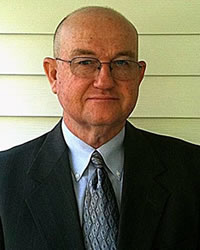
Gary Shepard

This Cup

Mark 14:36
Gary Shepard July, 17 2011 Audio
0 Comments

Sermon Transcript

Auto-generated transcript • May contain errors

100%
Open your Bibles this morning,
if you would, to the Gospel of Mark, Mark chapter 14. I want to read some verses beginning
in verse 32, Mark's Gospel. And they came to a place which
was named Gethsemane, And he saith to his disciples, Sit here
while I shall pray. And he taketh with him Peter,
and James, and John, and began to be sore amazed, and to be
very heavy. And he saith unto them, My soul
is exceeding sorrowful unto death. carry ye here and watch." And
he went forward a little and fell on the ground and prayed
that if it were possible, the hour might pass from him. And he said, "'Abba, Father,
all things are possible unto Thee, take away this cup from
me, nevertheless not what I will, but what thou wilt. And he cometh
and findeth them sleeping, and saith unto Peter, Simon, sleepest
thou? couldst not thou watch one hour? Watch ye and pray, lest ye enter
into temptation. The Spirit truly is ready, but
the flesh is weak." And again, he went away and prayed and spake
the same words. And when he returned, he found
them asleep again, for their eyes were heavy, neither wished
they what to answer him. And he cometh the third time
and saith unto them, Sleep on now, and take your rest, it is
enough, the hour is come, Behold, the Son of Man is betrayed into
the hands of sinners." We surely don't need any more examples
as to why the Lord Jesus Christ must save us other than the ones
we find in our text. You see, these men, Just like
us, they could not even watch and pray. They fell asleep at
this important hour. But what I want you to notice
is to be found in that 36th verse. And he said, Abba, Father. In other words, those two names,
if they were both actually translated, would be translated, Father,
Father. But what we have is those two
names given in this word or prayer. to show us that what he says
is vital and is important to the salvation, not only of these
Jews, but also of the Gentiles. Whether they were Jew or whether
they were Gentile, they would understand that he prayed to
his Father. He said, "'Abba, Father, all
things are possible unto Thee. Take away this cup from Me. Nevertheless, not what I will,
but what Thou wilt.'" You see, the Lord Jesus speaks on this
occasion to the Father, and in our hearing also, of a cup, a
particular cup. Now, I realize that there have
been many stories and myths and fables and such things as that
concerning what some have called the Holy Grail. or a golden chalice supposedly
sought after that had some mystical power because it was the cup
that our Lord drank out of when He instituted that Lord's Supper. But we know nothing in Scripture
of any such holy grail or golden chalice or any of these things. As a matter of fact, I'm sure
that the cup he drank out of on that occasion was nothing
but a lowly pottery cup, a cup of clay. And the important cup
is the one that he's talking about in this text. What cup
is he talking about in that verse? Well, hold your place there and
turn back to where we read in Psalm 75. Psalm 75, the psalmist, In speaking of both that group
he calls the wicked and also the other group he refers to
as the righteous, says that concerning both, there is another cup. If you look down in verse 7,
he reminds us that God is the judge. And he says in that 8th verse
that in the hand of the Lord there is a cup, and the wine
is red, it is full of mixture, and he poureth out of the same,
but the dregs thereof all the wicked of the earth shall wring
them out and drink them." He is talking here about the cup
of divine righteous judgment. He's speaking of this cup as
being the lot, if you will, of all who sin against God, and
he's speaking of it, and when he speaks of it, he reminds us
whose hand it is in. It is not in your hand, and it
is not in my hand, and it is not in the hand of any sinner. He reminds us that it is in the
Lord's hand. And this is the same Lord, the
same God, the same hand of the one that Nebuchadnezzar, that
great king, that mighty and powerful king of Babylon, was brought
to confess in this manner. He found out, he said of him,
whose dominion is an everlasting dominion, and his kingdom is
from generation to generation, and all the inhabitants of the
earth are reputed as nothing, and he, This One in whose hand
this cup is, He does according to His will in the army of heaven
and among the inhabitants of the earth, and none can stay
His hand. None can stop His hand. None can take from His hand,
none can stay His hand, or say unto Him, What doest Thou? Here is this cup in the hand
of a sovereign God, and it is sure and eternal and righteous
and all-encompassing, and none can escape it. It is already
prepared and ready. The Lord is not trying to decide
about this judgment. He's not thinking about whether
it will be this way, or that way, or who it will be for. None of those things. It's already
in His hand. Because the Apostle says in Hebrews,
and it is appointed unto men once to die, but after this,
the judgment. Now notice the descriptive language
that we find in that 8th verse. Not only is this cup in the hand
of Almighty God, but if you look also, he goes on in his description
and he says, "...and the wine is red." In other words, that
same description used elsewhere in Scripture a number of times,
is used as an emblem of the fierce wrath of God. Here we are in
a religious generation. Here we are with people speaking
the name of God on their lips almost moment after moment, and
they know nothing about the holy wrath of God. They know nothing
about his holy hatred of sin. They do not seem to realize that
he has said and demonstrated again and again that the soul
that sins shall surely die. that he will, as a just God,
by no means clear the guilty." In other words, here is this
cup wherein is this wine of his wrath, and it is like fire and
blood and full of fury active. He says also with this language. He said, it is full of mixture. It is full of mixture. In other words, it might be said
that God is as original and as ingenious in His judgments as
He is in His mercies. And he proportions the severity
of his plagues. He proportions the severity of
his punishments with the severity of sin against his holiness. We use the term sometimes, I
hope we don't really use it, but people speak of little sins. But there are no little sins
mainly because there is no little God to sin against. He says it is full of mixture. It has in its judgment remorse
over that which has been done and that which is lost. Memory
of what is lost, and fear, and shame, and despair, and disappointment,
whirls without end. Then he goes on in that description
and he says this, he says, "...and he pours out of the same." Some
people say, yes, God is a God of wrath, or God is a God of
justice and judgment, or God is this and that and the other,
but they do not ever see Him in demonstration of that wrath
or demonstration of that judgment, especially against them. Oh, I believe God's going to
punish the wicked, but I don't really believe I'm one of them.
I really believe that God has a hell, but I don't really believe
He'll ever send me there. He'll send a lot of folks there,
but not me. He says here that He not only
has this cup in His hand, He does not just hold it, and it
is not simply symbolic, but He pours out of this cup. He pours
out of this cup. Listen to what Paul says in Romans
9. He says, "...what if God, willing
to show His wrath..." Did you hear that? "...God is willing
to show His wrath, and to make His power known, endured with
much longsuffering the vessels of wrath, fitted to destruction. He distinguishes in that chapter
between those he calls the vessels of mercy, God's people, and those
he describes as the vessels of wrath. And though God endure
long and is much longsuffering, He is willing and shall show
His power and wrath against these vessels of wrath." And then the
psalmist chimes in many times, but just let me give you one
of them this morning. He says in Psalm 11, "...upon
the wicked he shall rain snares, fire, and brimstone, and a horrible
tempest. This shall be the portion of
their cup." He's describing these same ones that he describes in
Psalm 75, the wicked. And then John, in the Revelation,
takes us up and shows us in that panoramic view of all that will
take place, not only with God's people, but with all His enemies. He says of them, "...the same
shall drink of the wine of the wrath of God, which is poured
out without mixture into the cup of His indignation." the
cup of God's righteous, just, holy indignation. And he says, they shall be tormented
with fire and brimstone in the presence of the holy angels and
in the presence of the Lamb. He pours out of this cup. He demonstrates and shall demonstrate
His just wrath. And then John goes on in the
Revelation, giving us that picture of the finality of all things
concerning this earth, and he says of that great city, he says,
"...it was divided into three parts, and the cities of the
nations fell, and great Babylon..." Great Babylon, that city that
is representative and pictured Religion without God. He says, "...and great Babylon
came in remembrance before God to give unto her the cup of the
wine of the fierceness of His wrath." He pours out of the same. And then he goes on. He says,
"...the dregs." That's the very last essence, the dregs, what's
left in the cup wherein is always the strongest of that which was. He says, "...and the dregs the
wicked shall wring out and drink." You know, if we look honestly,
back not only on the history of this world, but the history
that we can really trust, which is the history we find in the
Word of God. We find that God has slightly
tipped this cup, and drops of judgment have fallen out upon
men time and time again. That's what happened in the flood,
you know. When He in His wrath, because
of sin, when it says He looked down on this earth, He looked
down at men and He saw that every heart was only evil continually. And He destroyed the whole world,
saving eight souls. And that which was on that ark,
and He destroyed everything else. This God that men look at in
our day and refuse to identify in any other way other than His
being a God of love. They say, well, God is love.
But many, many, many more times in this book, if we would only
look, many more times than he has said that statement, God
is love, he has said God is holy, and God is just, and God is a
God of wrath, many more times. Many more times. He rained fire
down on the cities of the plain, such as Sodom and Gomorrah. He rose up against the enemies
of Israel and destroyed them by the tens of thousands. He smote many individuals. such as a man by the name of
Uzzah who reached out simply and touched the ark of the covenant. He smote him with death. He reached out and he rose against
the nation of Israel itself. but the strongest and the most
severe and the lasting eternal judgment is yet to come against
the wicked." Who are they? They are every sinner, whether
it be you or me or the president or a king or the richest man
or the most morally upright woman, it's every sinner without the
Lord Jesus Christ. Every sinner, listen now, whose
sins have not already been judged in Christ. And what we find is
that God in this book gives us hell, tells us about that judgment
that is without end, and hell is in that cup. weeping and wailing and gnashing
of teeth, he says, where the worm dieth not, that is, that
conscience never ceases to condemn us, and hope is never known,
and the pain of eternal separation from God never finds a remedy
or a solution. He says, they wring it out and
they drink the dregs of it, except its eternal judgment. With regard
to those who die outside of Christ, it's like having turned up to
them a cup that has no end to it. They drink it for all. Eternity. But there's something
kind of amazing here in Psalm 75, if you notice. Look at that
next verse. Look at what he says. This is the psalmist. And right
on the heels of what he has just said in that 8th verse, he says,
"...but I will declare forever I will sing praises to the God
of Jacob." Now, you just stop and think about this. It doesn't
say that David is the author of that psalm, although he may
well be, or Asaph or some of the other of the psalmists. But
it doesn't matter who it is, whether it's David or Asaph or
one of the others, whoever it is, they are sons of Adam. They are sinners who fell in
Adam and who were born in sin and shaped in iniquity. How can
he rejoice? If I'm a sinner, if I've sinned
against God, If this cup and this descriptive language is
what He gives us to show the awfulness of His judgment against
sin, how could anybody rejoice? Why is He not struck down with
fear? I can tell you this, and I don't
believe it ever happens until God does something. But if we're
ever brought to see what sin is in the sight of God, if we're
ever brought to know to some degree in our hearts the very
awfulness and vileness of sin and the danger of our situation
as sinners before God, It'll shut our mouths. It'll move away
some of this light-hearted frivolity, some of this foolish religious
clichés that people use. I'm not perfect yet. You better
be, because God, who is perfect in Himself, He requires absolute
perfection. He cannot look at me or you seeing
sin in us and have any pleasure whatsoever." Even more amazing
might be what he goes on to say. He said, I'll sing praises to
the God of Jacob. Surely, if you know anything
about Jacob, with his record as a liar and a conniver and
a schemer and a thief, surely he'd be in hell, wouldn't he? Surely the psalmist is a sinner
himself, deserving this fierce judgment of God. What's going
on here? I want you to listen to something
that God says in Isaiah. He says, awake, stand up, O Jerusalem,
which has drunk at the hand of the Lord the cup of His fury. Thou hast drunken the dregs of
the cup of trembling, and wrung them out." Now, wait a minute. If as sinners we have nothing
to offer God, If as sinners we cannot in any way do anything
to please Him or put away our sin, what is He talking about
here? He's not talking about that national
city, Jerusalem. He's talking about His elect. He's talking about His people.
He goes on, He says, "...thus saith the Lord, thy Lord the
Lord, and thy God, that pleadeth the cause of His people." Now
we're getting somewhere close to finding out how all this happened.
He says, I'm the Lord that I plead the cause of my people. They
can't do it of themselves. They have nothing to offer. They
have no sacrifice for sin that I would ever accept. But I plead
the cause of my people. I'm that God that looks and I
find a way to redeem them. He says, "...Behold, I have taken
out of thine hand the cup of trembling, even the dregs of
the cup of my fury. Thou shalt no more drink it again."
I pledge your cause. It always comes back to this.
If God doesn't do something for us, if He hadn't saved us, if
He hasn't dealt with the matter of our sin on our behalf, we
cannot do anything but perish. But He says to His people, I've
pleaded your cause. I am thy Lord, the Lord. Who is that? That's the Lord
Jesus Christ. The Lord said unto my Lord, Sit
thou at my right hand. Thy Lord the Lord, He is the
Lord Jesus Christ, and He is talking to His people. And like
the psalmist, they are brought by the Spirit of God to see the
awfulness of this cup, which is their just reward for their
sin, and He's brought them to see that hell is no joke. I just wonder sometimes you can
be out in public and, you know, profanity is is so common in
our day, God help us from never taking that for granted that
that's acceptable. But men and women can use hell
in just an instant of passing and take no thought of it. But
I'll guarantee you if God were to open up a hole to that pit,
and open our eyes to look into it and to see the horrors of
judgment and wrath from God Almighty, it would take a man or a woman's
breath. They'd never be able to utter
not only that word, but no other word again. Here are spiritually
dead sinners that are oblivious to the promises of judgment,
And if left to themselves, they would surely perish." In other
words, all that God had to do for any of us to go to hell is
just leave us alone. You realize that? That's all
God has to do for you and I to drink eternally out of this fiery
cup of His wrath. Just leave us to ourselves. Just let us go our way. Just let us, as we say, do our
own thing. But God does something for His
people, and that's what the good news of the gospel is all about.
God brings His people to spiritual life and gives them faith, and
they not only see that in the hand of the Lord there is a cup,
but they are enabled to see and believe the good news of His
gospel that that cup, as far as they are concerned, is in
the hand of the Lord Jesus Christ, their Substitute and Savior and
Redeemer, and bless His name, it is an empty cup. An empty cup. You see, that's
what he's talking about there in Mark 14. This cup. You see,
as he began to take upon his holy humanity, That's something
you and I don't know anything about. The only humanity any
of us have ever seen is sinful humanity. But when He began to
take upon His holy humanity the full weight of the sins of His
people as they were imputed to Him, this holy human who knew
no sin, who resisted sin unto blood, the Scripture says. He
shrank back at the thought of being made sin, the horror of
it. But he submits to drink the cup
of God's holy wrath that was due their sins for a number of
reasons. Number one, because it was the
will of his Father. Number two, because He had agreed
to in that everlasting covenant. Number three, because He Himself
was and had been from old eternity their surety, the One who at
that hour took all the responsibility for their sin even before they
were born. And number four, because He loved
us. He loved us and gave Himself
for us. That didn't change the awfulness
of what that judgment amounted to, which can be simply stated
as this, separation from God. When He hung there on that cross
and the full weight of that judgment, the full cup was being poured
out upon His head, He says, My God, My God, why hast Thou forsaken
Me? Why hast Thou forsaken Me? Oh, He submits to drink the cup
of God's holy wrath, just like you were to take and drink a
cup of strychnine or some awful poison that I would be supposed
to drink, just like you were to have an execution that was
to be executed against you. He stands there as the substitute
in your place. He drinks that cup dry. Turn
back over to Matthew's Gospel for just a moment, Matthew chapter
20. Now, in Matthew 20 here, the
mother of James and John had begun to question our Lord like
mothers might be prone to do concerning their children, to
let one of them sit on the right hand and the other sit on the
left hand of him when he comes into his kingdom. Well, it says
in verse 20, "...then came to him the mother of Zebedee's children
with her sons, worshiping him and desiring a certain thing
of him. And he said unto her, What wilt
thou? She saith unto him, Grant that
these my two sons may sit, the one on thy right hand, and the
other on the left, in thy kingdom. But Jesus answered and said,
You know not what ye ask." And then notice what he asked them.
He says, are you able to drink of the cup that I shall drink
of, and to be baptized with the baptism that I am baptized with? And they didn't hesitate to answer. They said, sure we can. We can
do it. They had no clue of what he was
talking about. They didn't know this cup he
was talking about. But notice what it says, "...and he saith
unto them, Ye shall drink indeed of my cup, and be baptized with
the baptism that I am baptized with. But to sit on my right
hand and on my left is not mine to give, but it shall be given
to them for whom it is prepared of my Father." What he's saying
here is, you cannot of yourself drink of this cup, but because
of my grace to you and my mercy to you, when I drink of it, because
you're in me, because you were chosen in me, because God views
you in His strict justice as being in me, so that as your
head, whatever I do, God counts that as you having done it."
He said, in me, you're going to drink of that cup. Turn over to Romans chapter 6
quickly. Romans chapter 6, and listen,
you see, he's talking about the union of Christ with His people. The union of Christ with His
church, He's the foundation, they're the building. He's the
bridegroom, they're the bride. But the real picture is, He says,
I'm the head, you're the body. Or whatever the head does, the
body does. Now listen, Romans chapter 6,
verse 6, "...knowing this, that our old man is crucified with
Him." Now, there's a sad circumstance in Romans 6. And that's when
the King James translators translated it. The tense that is actually
in some of these verbs is not translated in the way that gives
the full expression of what actually he's saying. What he's saying
here and elsewhere in this chapter is, knowing this, that our old
man was crucified. Was crucified with Him. He says in another place that
we died in Him. When He died, since God viewed
us as one with Him, when He died, we died. When He was buried,
we were buried. When He rose, we rose. When He
rose and ascended to the throne, Paul says we ascended and were
seated with Him in the heavenlies. that the body of sin might be
destroyed, that henceforth we should not serve sin, for he
that is dead is freed from sin." This is the basis upon which
we mortify our bodies, that we seek not to sin. It's because
we've already been set free from sin through the dying of Jesus
Christ. Now, if we be dead with Christ,
We believe that we shall also live with him, knowing that Christ,
being raised from the dead, dieth no more, death hath no more dominion
over him. For in that he died, he died
unto sin once, but in that he liveth, he liveth unto God. Likewise, reckon, or account
ye also yourselves to be dead, or to have died, indeed unto
sin, but alive unto God through Jesus Christ our Lord." You see,
this cup, this particular cup that he's talking about, this
death, which is the death of the cross, was appointed as the
means by which God could be just, and yet, to declare us righteous."
Now, if you look back at that 75th Psalm, set in contrast to
the wicked who, he says, they will surely drink the very last
dregs of this judgment. He says in verse 10, And all
the horns of the wicked also will I cut off, but the horns
of the righteous shall be exalted." The righteous? How can He, as
a just God, declare us righteous, which is what to justify means? He does it on the basis of the
shed blood. of the Lord Jesus Christ, which
He calls a ransom and a redemption price for the sins of all those
He dies for, His sheep, His church, His bride. They're the righteous. Because God had made this sinless
one to be sin for them. didn't involve a change in him
in any way. He's the perfect, spotless, sinless
lamb right to that moment that he dies. And the way that we
know that God has accounted him responsible for the sins of his
people is by that very thing. He dies. God put him to death
in the place of his people. And therefore, Paul says, they
were made the righteousness of God in him. The death of Jesus Christ on
that cross is his drinking down to the very dregs all that was
due the sins of his people. It is Him satisfying God's justice
and honoring His righteous character. He said, it's finished. This cup passed from me. That
implies that in itself, it was so utterly revolting and horrible
to His Holy Self, who did always the will of the Father, that
only it being the Father's will, that only it being what was due
him as the surety of his people, that only out of love for his
people would he submit to such a death, drink of that horrible
cup to save his people from their sins. The writer of Hebrews describes
it like this. He says, but for the joy set
before him. the joy of fulfilling the eternal
purpose of the Godhead, the joy of doing all the Father's will,
the joy of saving His people from their sin, all these joys
and many more brought Him to endure the death of the cross. And as one old preacher said
a long time ago, and to drink damnation dry, the gospel, The
preaching of Christ and Him crucified is like taking this cup, tapping
on the side of it, and it rings a hollow sound. There's nothing
in it. We're saved from wrath through
Him. There's no wrath to face. There's no hell to be fearful
of. There's not a drop of divine
displeasure to face. So what do we do? We do what
the psalmist says in Psalm 116. He said, I will take the cup
of salvation. I'll just drink of Christ and
call upon the name of the Lord. This cup that's in the Lord's
hand, with all its fury and wrath, as He stands as the Savior of
His people, is empty. We can rest in Him. We have reason
to rejoice in Him. We don't have to live under fear
of threats of penalty and fear of legal pressures. He drank the last drop. And I'm
so thankful that He said, though this horrible cup is so awful
to me, nevertheless, not what I will, but what Thou wilt. Can
you rest there? I can tell you this, if you can't
rest there, you won't rest anywhere. Father, this day we give You
thanks and glory and praise. Enable us to drink deep in this
cup of free and full and eternal salvation, this wine of joy that
we find in the crucified Christ. There's no wrath in our cup.
There's no wrath in His cup anymore. He drank it dry. Finished the
work. Satisfied every claim against
Thy people. We pray that You'd make it known
to their hearts. Enable us to rest and rejoice
in Christ. Not to be distracted or drawn
away or made to fear. Perfect love casteth out fear. Perfect love is what we find
on that cross. We pray that you'd help us magnify
yourself in our hearts and minds and give us grace that we might
magnify you before this world. We thank you and praise you in
Christ's name. Amen.
Gary Shepard
About Gary Shepard
Gary Shepard is teacher and pastor of Sovereign Grace Baptist Church in Jacksonville, North Carolina.

Comments

0 / 2000 characters
Comments are moderated before appearing.

Be the first to comment!

Joshua

Joshua

Shall we play a game? Ask me about articles, sermons, or theology from our library. I can also help you navigate the site.