Bootstrap
Gary Shepard

Fetching Grace

2 Samuel 9:5
Gary Shepard June, 5 2011 Audio
0 Comments

Sermon Transcript

Auto-generated transcript • May contain errors

100%
That hymn that was just being
played says, Glory, glory dwelleth in Emmanuel's land. And Emmanuel himself said, Where
two or three are gathered in my name, there I'll be in the
midst. So wherever his presence is,
That's Emmanuel's land, and that's where His glory dwells. I would invite you this morning
to turn to 2 Samuel. 2 Samuel chapter 9. And I'll
begin reading in that first verse. And David said, "...is there
yet any that is left of the house of Saul, that I may show him
kindness for Jonathan's sake. And there was of the house of
Saul a servant whose name was Zeba. And when they had called
him unto David, the king said unto him, Art thou Zeba? And he said, Thy servant is he. And the king said, Is there not
yet any of the house of Saul that I may show the kindness
of God unto him? And Ziba said unto the king,
Jonathan hath yet a son which is lame on his feet. And the
king said unto him, Where is he? And Ziba said unto the king,
Behold, he is in the house of Makar, the son of Amiel, in Lodabar. Then king David sent and fetched
him out of the house of Makar, the son of Amiel, from Lodabar. Now when Mephibosheth, the son
of Jonathan, the son of Saul, was come unto David, he fell
on his face, and did reverence. And David said, Mephibosheth? And he answered, Behold thy servant. And David said unto him, Fear
not, for I will surely show thee kindness for Jonathan thy father's
sake, and will restore thee all the land of Saul thy father,
and thou shalt eat bread at my table continually.' And he bowed
himself and said, What is thy servant? that thou shouldest
look upon such a dead dog as I am. Then the king called to
Ziba, Saul's servant, and said unto him, I have given unto thy
master's son all that pertain to Saul and to his house. Thou therefore and thy sons and
thy servants shall till the land for him, and thou shall bring
in the fruits that thy master's son may have food to eat. But Mephibosheth thy master's
son shall eat bread always at my table." Now Ziba had 15 sons
and 20 servants. Most people and most preaching
in our day present God as a miserable failure. And they present His
grace as pitiful and weak. Though He says that He is God
our Savior, they say He is merely offering, trying, pleading, influencing,
making available, giving you a chance, waiting for a decision,
and totally unable to save anyone against their wills. He's unable, really, to do what
he'd like to against these rebel sinners. But the Bible, wherein
God describes himself, sets him forth as omnipotent, all-powerful,
all-mighty, the absolute sovereign of the universe, and says that
he does his will in the armies of heaven and among the inhabitants
of the earth, and there's nobody that can stop Him. He works all things after the
counsel of His own will. And that means that God's grace,
it has to be consistent with God Himself. God will not be
one way and then act another way. It is described many times
as the grace of God. And a lot of old preachers back
in a day when men seemed to have a lot more regard for the Word
of God than they do in our day, Back in another day, old preachers
used a term in referring to God's grace. They called it fetching
grace. Fetching grace. And if you stop
and think about it, in our text this morning, here is a man who,
after much opposition, has now been raised to the throne." This
is David. And Saul has done everything
he could to kill him and to stop his ascension to the throne,
but God has dealt with all of David's enemies for the most
part, and now he sits on the throne. And also in this text,
we read about another man whose name is Mephibosheth, and what
takes place here takes place in David's acting toward this
man Mephibosheth. But there's just a little problem. By every standard of that day,
And by everything that has taken place in David's life at the
hand of Saul, Mephibosheth is his natural enemy. And it is always the custom of
the king, when he rises to his throne, to first move swiftly
and deal with every remaining front of opposition, deal with
every enemy. But look at what verse 1 says,
and David said, Is there yet any that is left of the house
of Saul that I may show him kindness for Jonathan's sake?" In other
words, the mercy, the salvation, if you will, the grace that this
man Mephibosheth is about to experience It does not begin
in him, it begins in David. And God gives us this to show
us that grace, that salvation, that mercy, if we trace it up
to the fountainhead, it always arises out of and flows from
God. It is the grace of God. It is, as Jonah cried out in
the whale's belly, salvation is of the Lord. And what I wanted you to notice
this morning, what I've had on my mind, is what we find in that
fifth verse. Because this is not only what
takes place here, this is the picture of omnipotent grace. You see, God's grace is not merely
offers or favors of one kind or another. Look at what it says
here in verse 5. It says, "...then King David
sent and fetched him." He sent his servant down to this land
of Lodabar where Mephibosheth lived, unaware of any mercy or
any kind thoughts that David might have toward him. As a matter
of fact, thinking just exactly the opposite. And David, it says,
sends his servant down there and he fetched Mephibosheth from
the land of Lodabar." Now, David is a king who, in the earthly
sense, now exercises a sovereign power over all people. And he is a picture of God the
Father who is able to do what he will, to whom he will, and
who has mercy on whom he will, and is gracious to whom he will. What does David do? He does not
first consider anything in Mephibosheth himself personally. He does not
act toward him in response to how Mephibosheth might have acted
first to him. He does not do toward him based
on anything he sees in Mephibosheth or anything that Mephibosheth
might do for him in the future. He moves to fetch him and have
mercy upon him. That word, fetch, means the act
of going for something or someone and bringing them or it back. In other words, it involves the
whole activity, not of just an attempt, but the act of actually
going after someone and bringing them back. And this picture here
in our text, you remember that the apostle tells us that these
things, these Old Testament scriptures, they were written for our admonition,
for our instruction, those of us upon whom the end of the age
shall come. This is not mere history. But he gives us in this a picture
of God's grace, which is fetching grace, which is the operation
of the Spirit of grace toward the Lord's people. And I don't
think in all of the Bible that we could ever find a more clear
and telling picture of what every one of us is as a sinner, most
especially those who are His elect, these objects of His grace
and mercy. Mephibosheth, he fits us to a
T. The name Mephibosheth means literally,
destroying shame. Where he lives is a place called
Lodabar, which means a land of no pasture. And it says of him
that here he is in the household of a natural enemy. Here he is
a man who is described as lame in both his legs. And how did
he get that way? He got that way from a fall.
In the course of his early childhood, in one of those times when the
enemies of Saul came against him by God's command, his nurse
was running, fleeing out of the house, carrying this man in his
arms as a babe. She dropped him, and from that
day, from that fall, he was lame all the rest of his days. And
that's exactly what the Bible says about us. That we are lame
spiritually. And that from a fall wherein
we fell spiritually in Adam, we fell in that garden in our
representative, in our federal head Adam, and in that fall we
became sinners, none righteous, none good, none able to do anything,
to save ourselves. And all that has to happen for
you to perish and me to perish is for God to leave us alone.
And my friends, that's exactly what He's done to multiplied
millions of people. He said to them spiritually,
like He said of Ephraim, Ephraim is joined to his idols. Let him alone. All He has to
do is not interrupt us or disturb us. All He has to do is leave
us to our will and our ways and our works, and we'll die in our
sins. But he's not going to do that
to his people. He's going to exercise this fetching
grace. And here, although this man Mephibosheth,
he lives undoubtedly in fear that the king may send soldiers
to destroy him any day, although he lives in ignorance, as to
how David really is, although he doesn't know David or anything
about his purposes and designs, all he had to do is just leave
him in that state. And that's all God has to do
for us. He'll be just as just if viewing us in ourselves and
by what we are and do, if He just leaves us to ourselves. If He leaves us clinging to our
idols like Ephraim, joined to false religions, joined to false
notions and untrue things about God, and does not bring us to
repentance and faith in the Lord Jesus Christ, all He has to do
is leave us alone. But God will save His people. Somebody says, do you mean God
will save us whether we want to be saved or not? Absolutely. He will do it because the very
fact that even though we are His people, if we be such, we
are still in that state of nature wherein we do not have any desire
to be saved, which is the clearest evidence that He has to save
us. And He'll save His people by
His sovereign, almighty power and grace, and He'll fetch every
one of them and bring them to Christ in faith. Is that right? Hold your place
here and turn over to Psalm 110. Here is a conversation between
God the Father and God the Son wherein amazing things are said
and really our only hope of salvation is set forth. Listen to what
he says, "...the Lord said unto my Lord, Sit thou at my right
hand, until I make thine enemies thy footstool. The Lord shall
send the rod of thy strength out of Zion. Rule thou in the
midst of thine enemies." In other words, God is saying that they'll
go forth a rod, one, the rod of His wrath wherein He will
deal truly with every real enemy, and yet at the same time, He'll
send forth out of Zion the rod of the gospel, and through that
gospel, He will triumph in the hearts of those His people who
make themselves to be His enemies. But look at that third verse.
Thy people. That's the only reason why anybody
will be saved. Because God has a people. He has a people that He's loved
with an everlasting love. He has a people that He has loved
in Christ and chosen in election grace in Christ before the world
began. He has a people that He views
as the apple of their eye. He sees them not for what they
are in themselves, but for what He has made them to be in Christ. Thy people shall be willing there. How can that be? Isn't it our
free will? No, it's God's will. And he says
to his son, your people, your bride, your church, your body,
your children, they will be willing in the day of thy power. That's the way it is. They're
not by nature willing. They cannot in any way at any
time make themselves willing. They have not a will in themselves
at any point ever to come to Christ. You remember what our
Lord said to those Pharisees and scribes. He said, you will
not come to me that you might have life. Actually, what that
says literally there in that verse is, you will not of yourselves
You will not will to come to me that you might have life."
I've told you this a lot of times. You and I do not realize, men
in our day do not have any sense of this, that our wills are inseparably
joined to what we are. We're sinners. My will, just
in the natural realm, has never acted contrary to what I like
and think in myself by nature. I've never walked into a restaurant,
sat down, and my will overtook me so that I ordered liver. It ain't going to happen. Because
I don't like liver. I don't like the smell of liver.
I don't like the taste of it. I don't like anything about it.
I've never gone in a restaurant and said, I think I'll have liver
and onions today. No. And you and I, as sinners,
who have a natural enmity against God, Paul says. We're never going
to choose Christ. We're never going to come to
Him. We're never going to delight in the things of God. David,
here he is, the king, seeking to show mercy to Mephibosheth.
Mephibosheth views him just as his grandfather told him he was,
his enemy. But God says to his son, thy
people, not all people, not even most people, but thy people shall
be willing in the day of thy power." Now, I know what people
say. Sadly, even some who think that
they are preachers of God's grace, they say, we need to talk about
man's responsibility. Let's make sure we weigh this
out and talk about man's responsibility. Well, man is responsible, but
he is first dead spiritually, and helpless, and hopeless, and
lost as a sinner with No ability. And then they make this kind
of logic. Well, God would never tell a person to do what they
can't do. Oh, He wouldn't. Well, how about when he was given
the law, the Ten Commandments to Moses on Mount Sinai? Moses is up on that mount, God's
writing the law in his own finger on those tablets of stone. What
were those people doing at the base of the mountain? They were
taking all their gold earrings and such, and casting them and
making a molten gold idol to fall down before and worship.
Your want and lack of ability to do what God says doesn't change
your responsibility. His standard is unchanging. But our hope is in this, it is
in His power and His grace that we have no ability to please
God, no ability to come to God, no ability in ourselves to believe
God, especially no ability to establish any righteousness before
God. Our hope is in His grace. You
see, all those miracles that Christ did, healing in all the
accounts of the gospel, all the things that He did in raising
the sick, and opening the eyes of the blind, and lifting up
the lame, and giving strength to the paralyzed, and raising
the spiritually dead, they're all pictures of those who could
not cure themselves or save themselves, but Christ could. You say, why
would you dwell on the fact that we're sinners and unable and
all these things? To bring you to an end of yourself. To bring us to an end of imagining
that we're going to be able to do something to please God, or
that we have done something to please God, or that He would
accept us based on who we are in ourselves, or something like
that. All these things are just the
evidences of our helpless spiritual death. But you see, this is why
Christ came into this world. That's what Paul says. Christ
Jesus came into this world to save sinners. He came into this
world and He went to that cross to pay the sin debt of all His
elect. And in His suffering and dying,
He redeemed by His blood every one of them. He died in their
place as their substitute. They were made, according to
Scripture, the righteousness of God in Him. He did everything
on their behalf for them and in their place. And now, even
divine justice demands that they be saved. You see, here they
are, every one of them, already redeemed by the blood. Here they
are, all their sin-debt put away before the justice of God. Here
they are, every one of them viewed as righteous through the imputed
righteousness of Jesus Christ. Here they are, every one of them
already forgiven in Christ. But what are they in their cells
yet? They're still spiritually dead. They're lost, still wandering
around this earth. How did God save those Israelites
from Egypt? Wonderful picture here. He first
of all saved them, redeemed them by blood. He said, I'm going
through Egypt and I'm going to slay the firstborn in every household. You take a lamb without spot,
without blemish, firstling of the flock, male, and you shed
his blood, and you put that blood, sprinkle it on the linens and
doorposts, and when I see the blood, I'll pass over you. Well, that happened. That night
came. He slew the firstborn in every
household of every beast in that old land of Egypt. There was
crying and screaming, but everyone in those houses there in the
land of Goshen, they were safe. The judgment had already fallen
on those households as was pictured in that blood of the Lamb that
was there on the doorposts. But they were still in Egypt.
The Bible says He redeemed them by power. He brought them out. I went back to look this morning
just to see how many times I gave up even trying to count. How
many times God reminds that people, and in reminding them, He reminds
us of how it is that He brings us out of our state of death
spiritually, how He brings us out of our ignorance and our
unbelief. It says that He did so by a mighty
hand and an outstretched arm. Pharaoh will never let them go.
He did. They'll never come out of that
land with anything. They came out with about everything. They'll never make it through
that Red Sea that lurks right there before them, no other way
around. They did. By power, he opened
up that sea and they marched across on dry ground. He always
overcomes every obstacle, breaks every band, releases everything,
overcomes every superstition, every opposing force, right down
to the ones who are nearest to us by blood. He is going to save
His people from their sins. And how will He fetch them? He
will do so by a messenger. Did you see how this man David
fetched Mephibosheth. He did it by sending a messenger
down to the land of Lodabar where he was, and he did so by him
speaking to him a message. Now, we have a picture there
also of Christ coming into this earth. But He went down, this
servant Ziba. at David's command. You remember
when our Lord was about to ascend back into glory, He said, it's
expedient that I go away. If I go away, I'll send you the
Comforter. I'll send you the Spirit of Truth. And He, the Spirit of Truth,
will not speak of Himself. He will take the things of mine
and show them to you. How do you show a blind man anything?
You first give Him life. That's what Christ said. Everyone
that lives and believes has everlasting life. You don't believe in order
to get life. If you are unable to believe
on Christ, believe the truth of the gospel, believe His Word,
if you're able to believe on Him and Him alone, you have life. you have life. He sends a messenger
with his gospel. He commands them to preach the
gospel to every creature. Now there's no way that I personally
could in the sense that so many interpret that, there's no way
I could ever do that. What does that mean? It means
simply that every true servant of God preaches the gospel, the
same gospel, to every person they have opportunity to. There
are a lot of folks in this county today, I won't have an opportunity
to do that. But I came this morning by God's
grace, intending, if He'd help me, that whoever I came in contact
with this day in this place, that I would preach to them the
gospel and tell you about Christ. He's no failure. His name is
Jesus because He saves His people from their sins. And the good
news is, you see, when Ziba went down to Mephibosheth to tell
him David's message, it was not, well, you low-down, dirty, no-good
thing. It was, though you're that, I've
got some good news for you. Oh, who's it from? David. Not David. Not David. There's no way he could have
any good news for me. And we sit there like sinners.
There's no way that this book, it's just a book, there's lots
of books. There's no way that the living God would, through
this book, send a message to me. He's done so to all He saves. Because the Spirit takes the
things of Christ. and shows them to us. I love
what takes place when Abraham, you remember Abraham, he sent
his servant down to a land to get a wife for his son Isaac. Now you just imagine, traveling
all this long distance by camel, and he's, as you might say, looking
for a needle in a haystack, He's sent down there to get this one
woman to be his son's wife, and he gets there, and a young maiden
is there watering at the well, and she willingly waters his
camels. He gets a sneaking suspicion
this may be the one. But what I really like is what
he says. He says, "...and the Lord has
blessed my Master greatly." And he's become great? And he has
given him flocks, and herds, and silver, and gold, and menservants,
and maidservants, and camels, and asses. And Sarah, my master's
wife, bare a son to my master when she was old, and unto him
hath he given all he has." He said, my master is a well-off
great man, he has one heir, and he has given to this one son
everything he has. That's exactly what God's done.
He has one heir. and all his people are described
as joint heirs with Christ. Christ is all, and he has all,
and all who are joint heirs in Christ, they have everything. You see, religion offers people
so many things, like they say, well, if you do this, you'll
be healthy, or do this, and you'll be wealthy, or do this, and you'll
be this, that, or the other. You'll be relaxed more, and you'll
feel fulfilled more. Christ is everything God has
to give. All spiritual blessing and eternal
inheritance. incorruptible, undefiled, reserved
in heaven. For who? His people. All forgiveness, wisdom, righteousness,
sanctification, redemption, everything. Why did David act in this way?
Because of a covenant. Covenant. If you look here in
that first verse, he gives us a real gigantic hint He said,
is there yet any that is left of the house of Saul that I may
show kindness for Jonathan's sake? I can't remember exactly
what that name means, but I just would almost guarantee you it
means something like the beloved one. You see, Jonathan was Saul's
son, but he was David's bosom friend. And even when his daddy
tried to kill David, Jonathan loved him as his own soul, and
he did everything he could. God had taught him that it would
be David that would be God's king. And he did everything he
could to preserve David's life. And his own daddy tried to kill
him because of it. Called him the son of a wretched
woman. Turn back over to 1 Samuel chapter
20. 1 Samuel 20. I tell you, the Lord has made
us privy to so much good information. 1 Samuel 20. Here are Jonathan and David talking
with each other. Verse 14 says, "...and thou shalt
not only, while yet I live, show me the kindness of the Lord,
that I die not, but also thou shalt not cut off thy kindness
from my house forever." No, not when the Lord hath cut off the
enemies of David, every one from the face of the earth. So Jonathan
made a covenant with the house of David, saying, Let the Lord
even require it at the hand of David's enemies. And Jonathan
caused David to swear again, because he loved him, for he
loved him as he loved his own soul." He said, I don't want
us to have a covenant just with each other. but with our households. Look down in verse 42. And Jonathan said to David, Go
in peace for as much as we have sworn, both of us, in the name
of the Lord, saying, The Lord be between me and thee, and between
my seed and thy seed forever. And he arose and departed, and
Jonathan went into the city, made a covenant with him, with
his household, with his seed. And this salvation that's of
the Lord has to do with what is called in Scripture the everlasting
covenant. And Christ's blood is said to
be the blood of the everlasting covenant of this New Testament
wherein the Godhead is in a complete agreement and covenant to save
every one of his people in Christ. So God shows mercy to them for
Jesus' sake. If you ever have any mercy, if
you ever have the blessings of His grace, if you ever enter
into His holy heaven, if He ever counts you righteous in Christ,
it will be for Jesus' sake. You'll never do anything. You have never done anything. whereupon to warrant the least
blessing of God." Everything is for Jesus' sake. He's going to fetch everyone.
You can read in Ezekiel 37 when you get home. God takes Ezekiel
out and He shows him what is a virtual desert. There's nothing
but dead, dry, bleached bones by the piles laying all over
it. He says to Ezekiel, he said, Ezekiel, can these bones live?
Sometimes I sit up on this podium or wherever it is I'm preaching,
I look out there, everybody's not, they're yawning and they're
not interested or they're absent or whatever it is. That kind
of enters into my mind. Can these bones live? And Ezekiel
said, Lord, thou knowest. And I believe he was saying,
if it depends on me, they can't. If it depends on them, they can't.
What did he say to them? He said, Ezekiel, preach to them,
prophesy to them. Well, that's kind of foolish,
isn't it? Somebody says, well, if I believe what you believe
is the condition and state of men, that they're totally depraved
and blind and dead spiritually, I would never see any use to
preach. Well, if I had their God, I'd feel the same way. But
he said, preach to them. And he began to preach. There
was still no life. But as he preached, the wind
began to blow against them. It's always the type of the Spirit
of God. Like Christ said to Nicodemus,
the wind blows where it will. You hear the sound thereof, you
can't tell where it comes from, you can't tell where it's going.
So is everyone that's born of the Spirit. I can't give you
life. I can't give you faith. I can't
give you repentance. But the Almighty God can. He
can open your eyes. He can cause you to see what
you are in yourself. I can't make you see that maybe
your religion is just idolatry and such. And when Ezekiel began
to preach, and the wind began to blow, and it says, all of
a sudden, bone began to join to bone, and muscle to muscle,
and sinew to sinew, and there stood up an exceeding great army. God fetched them. He fetched
them. The good shepherd, is the chief shepherd, and he'll have
his sheep." He says in John 10, "'Of the sheep I have, which
are not of this fold, them also I must bring.'" I have to bring
them. "'And they shall hear my voice,
and there shall be one fold and one shepherd.'" Peter acknowledged
the same thing. He writes in his epistle, he
said, "...for you were as sheep going astray, but are now returned
unto the shepherd and bishop of your souls." He didn't say,
but you now return to the shepherd and bishop of your souls. He
said, you are returned. It's the same picture in Luke
14. He says, it says, "...a certain
man made a great feast." The king makes a great feast for
his son in another place. And he sends out his servants.
And he says, you go out and you bid them all to come. You bid
them all to come. Well, they have this excuse,
and they have that excuse, and they have the other excuse. One
says, I married a wife. The other says, I've got some
oxen to try. I've got all these things to
do. And so they just all so nonchalantly don't have any interest in this
invitation of the king. And so the servants come back
and he sends his servant and he says, compel them to come,
compel them to come. I can't compel you to come to
Christ, but his servant can. And if you're his sheep, you
can run and you will, but you can't hide. Can you imagine the
God of all glory loving you so much? determining to save you
so much that He will not let you destroy yourself, He will
not let you die in your sin, He will not let you be blinded
to the idolatries of this age, He will not leave you to self-destruct,
He will save you. You say, see, God's grace is
irresistible. There are a lot of people who
don't like that word. They say, well, men do always resist. They
do. It's not to say that men don't
resist, but God's elect can never resist successfully when He enables
them to see the King in His beauty. You see, I love the gospel I
once despised. Why did I despise this God of
the Bible? Why did I despise this King of
glory? Because I'd never seen the King
in His beauty. When I was a young fellow, There
was a young lady that he said she knew of me for some time
before I ever knew her. But I really can't remember ever
seeing her or knowing who she was. But one night I went to
a party at a place called Pine Lodge. You remember that place?
And I met that same girl. Later on, I saw her at another
place. And buddy, that night I saw her.
I saw her, and I've been seeing her more and more for about 47
years. Irresistible grace. When you
are brought to see the King in His glory, how could you ever
turn away from Him? How could you? You could not
love Him. The problem's always been in
you, not in Him. And the glory of His grace is,
it's His will and determinant counsel to save you and fetch
you and have you for His own. He will call all his sheep effectually. He'll bring them by his almighty
grace. Paul says to those Thessalonians,
knowing, brethren beloved, your election of God, for our gospel
came not unto you in word only, but also in power, and in the
Holy Ghost, and in much assurance. He comes unto his own, John says,
and his own receive him not, but as many as received him.
Now, wait a minute. If they don't receive him, how
is it that some do receive him? Here he says, but as many as
received him, to them gave he power to become the sons of God
who were born. not of the will of the flesh,
not of the will of man, not of any of these external things,
but the reason these receive Him is because they were born
of God. He gave them spiritual life. And this is just exactly what
it says in John 6. Turn over to John 6. Now, I'll
try to hurry. John chapter 6. And if you look
down, What you find is that this is exactly what Christ taught.
And He taught it, amazingly, on this occasion, right to His
enemies, right to those who had no interest in what He had to
say, who had no interest in Him, who rejected Him. And rather
than bawling down in despair and say, oh me, they're rejecting
me. No. He looked at them and in
verse 37, He taught that all those sinners who'd been given
to Him by God the Father, they would come to Him without any
fail, and they would be saved. Verse 37. all that the Father giveth me
shall come to me." Do you see anything possible or available
or happenstance about that? Do you see anything left to the
so-called free will of man and the decisions of man? Do you
see any coming to the front or to the baptismal pool or pot? Do you see anything like that
there? All that the Father gives me, they will come to me. And him that cometh to me, I
will in no wise cast out." He further taught that these sinners
who had been given to Him by God the Father, they'd be preserved
and glorified even at the last day. Verse 39, "'For this is
the Father's will which has sent me, that of all which He hath
given me, I should lose nothing, but should raise it up again
at the last day. And this is the will of Him that
sent me, that everyone that seeth the Son, and believeth on Him,
may have everlasting life, and I will raise Him up at the last
day." And He taught that all these sinners that were chosen,
given to Him, and are divinely called and brought to Him for
salvation by God, they'll be glorified." Verse 44, "'No man
can come to Me except My Father, the Father which has sent Me,
draw him, and I'll raise him up at the last day.'" Do you
see that? No man can come to me. You do know the difference between
can and may, don't you? Remember how the grammar school
teacher keep correcting you to be using may for can and can
for may? May has to do with permission. May I use the bathroom, teacher? You've got the ability to do
that. What you want is the permission to do it. May I use the bathroom? Not a matter of permission. It's
a matter of ability. Can has to do with ability. No
man can. Why? He can't because he won't.
He's unwilling. He's blind. He's spiritually
dead. No man can come to me. And that'd
be the end of it right there were it not for sovereign grace. No man can come to me except
the Father which has sent me draw him and I'll raise him up
at the last day. And then he taught this, he taught
that all these sinners who are effectually brought to him, drawn
to him by the Father, that they are taught the truth about him
by God, and they come to him and him alone for salvation. Verse 45, it is written in the
prophets, and they shall be all taught of God. Every man therefore
that hath heard and hath learned of the Father comes to me." They
are taught of a man, or taught of the religion, or taught of
a religious organization. They'll come to that organization.
They'll come to the front. They'll come to the Sunday school. They'll come to something. Anything
but the Lord Jesus Christ. But when they're taught of the
Father, they leave all that. and they come to Christ. They
don't move a muscle. That thief nailed to the cross.
He came to Christ by faith that Christ gave him on that occasion. He said, Lord, one minute he's
about to die and go out to meet an eternity without God. He's
railing on Christ. The next minute, he's calling
out, Lord, Remember me when you come into your kingdom." What
happened? There was one whose hands also
were nailed to a cross, but since he's the Almighty Christ, he
fetched him. He fetched him. You don't take
a man who's fallen in a deep, dark pit, broken every bone in
his body, and knocked himself unconscious. You don't just dangle
a rope over the mouth of that thing and run it down to him
and say, now just take all this and come on out. No, somebody
has to be lured into that pit and they have to bind him up
and take him up and bring him all the way out. That good Samaritan,
while the others walked by on the other side. He went and fetched
him. Put that poor old sinner on his
own beast's back and he poured in oil and wine in his wounds
and bound him up and he took him into the inn and said, I'm
going to take care of him all the way. Whatever it cost. Fetching
grace. When that word draw is used,
it's used here and it's used on two other occasions. And just
so you and I don't think it means that he just like a influence
draws. One other time when that word
is used, it's used when Peter draws out his sword to cut off
the ear of the high priest servant. I don't believe Peter says, now
sword, if you would, if you could, if you feel like you need to,
just jump out of this sheath and cut that man's ear off. No.
Peter takes hold of it, and the word literally means drag, to
drag. The other time it's used is when
They're fishing and they draw the nets in. They lay hold of
those lines and ropes and they pull and they bring that full
catch of fish in. My friends, that's what God has
to do with us. He has to bring us, draw us,
literally drag us. We're such dead, rebel, worthless
things. Imagine Mephibosheth's first
feelings at the sight and the words of David's servant. That
was the way I felt when I first heard the gospel. That was a
little too much God for me. Here I am a preacher in a Southern
Baptist church and I'm thinking this is just a little more too
much God. It's a little too much in His
hands and not in mine. One day something happened to
me. He opened my eyes and I saw that this being the state I was
in, this is my only hope. That He would not only leave
the portals of glory and coming in this world to save me, but
that He'd send His Spirit and actually fetch me and bring me
unto Himself. The reason why we had that third
chapter of Genesis for our reading is this morning, is because when
Adam and Eve sinned, what'd they do? They went and hid from God,
hid themselves in the trees and the garden, and they would have
eternally perished along with our race. But God went looking
for them. Not because he didn't know where
they were, but he brought them to find out where they were in
themselves, and to bring them good news. What was it? Did you
get the good news? It's in verse 15. He said, the
seed of the woman. Well, that's an impossibility.
A woman doesn't have a seed. One woman was found of it, and
that's Mary. He was talking about Christ.
Oh, he said, you'll bruise his heel. He'll crush your head. That's salvation for the Lord's
people. He went and he fetched Abram
from the land of Ur of the Chaldees, a land of idolatry and a family
of idol makers. He went and he fetched Gideon,
found him in the wine press, hired him. He went and he fetched
Matthew, sitting at the seat of custom, collecting taxes,
filling his pockets, lost as a jaybird. He said, follow me. He went down to a jail and he
found and fetched Philemon, I mean Onesimus. He went to another
jail and he found one of his elect and he was the jailer,
Philippian jailer, fetched him. He went on the road to Damascus
and found a man by the name of Saul of Tarsus and he fetched
him. All his sheep, all his sheep.
In Jeremiah 23, he says, Can any hide himself in the secret
places that I shall not see him, saith the Lord. Do not I fill
heaven and earth, saith the Lord?" Many years ago, I read a poem
called The Hound of Heaven. And in that poem it seems to
speak of how the Spirit of God in coming and seeking His sheep. He's like those old dogs that
are turned loose in pursuit. Blood hound after a man. He seeks
them, it says, till he finds them. The shepherd seeks his
lost sheep till he finds them, then he gathers them up in his
arms And he takes them to his house, and there's rejoicing
over it. God's grace is fetching grace. Don't run from Him. You can't
hide. He pursues His people to bless
them. He stays on their trail to show
mercy to them. He didn't send David. David didn't
send his servant down there and say, now, I've got a gilded invitation
for you. come and attend the king's banquet.
David knew how he'd be, and so he fetched him. And he came,
and he was brought to bow, and he said, oh, how could you be
mindful to such a dead dog as I am? And he sat down at the
king's table. You know, he was still laming
himself. But sitting there at the king's table, his lameness
didn't show. And he did eat bread at the king's
table continually. Thank God for fetching grace. Our Father, this day, the only
reason that one such as myself would ever stand and seek to
preach, sinner that I am, and preach to sinners as all men
are, the only way to do in the sure knowledge that you will
fetch and bring by this word and by your spirit all your people
to Christ. And doing that, it will be obvious
that this is why you deserve all the glory alone. Bring your sheep, glorify yourself,
for we ask it in Christ's name, Amen.
Gary Shepard
About Gary Shepard
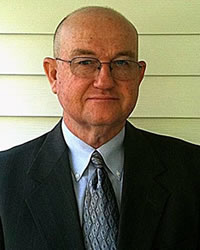
Gary Shepard is teacher and pastor of Sovereign Grace Baptist Church in Jacksonville, North Carolina.

Comments

0 / 2000 characters
Comments are moderated before appearing.

Be the first to comment!

Joshua

Joshua

Shall we play a game? Ask me about articles, sermons, or theology from our library. I can also help you navigate the site.