Bootstrap
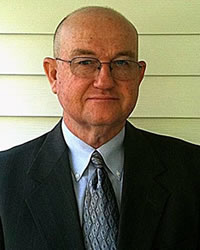
Gary Shepard

Look To The Lamb

John 1:29
Gary Shepard May, 22 2011 Audio
0 Comments

Sermon Transcript

Auto-generated transcript • May contain errors

100%
Turn back to that first chapter
of John where we read. And I want to go back and read
one verse. And that verse is verse 29. The next day, John seeth Jesus
coming unto him, and saith, Behold the Lamb of God which taketh
away the sin of the world." This week I've passed a church sign
that said something like this, let's just fix our eyes upon
Jesus. And I read that sign and I thought,
If I really felt like that that was well understood, both by
those who put it up and by those who would read it, I could rejoice
in that statement. But when you put up such a statement
like that before this world, as is often the case with signs
and slogans, It is without explanation, without definition. What do they
mean, fix your eyes upon Jesus? Well, most often times it has
to do with somebody simply, in their mind, looking to Jesus
as they think He is, Jesus in some great, generic, one-size-fits-all
kind of way, and not the Jesus that we find set forth in this
book. You see, it does you no good
to look at a Jesus. And Paul warns us that we do
well not to look at what he called another Jesus. And yet here in our text, we
have a man who has called upon us to look, to look. The author that the Spirit of
God uses to write this gospel account is the Apostle John. And as the Apostle John writes,
he writes about another man by the name of John. Distinct from
himself, he writes about John the Baptist. He writes about
a preacher. And this preacher, this John
the Baptist, like most of God's servants, he did not fit religion's
mold. He didn't act and dress the part. Matthew says, "...and the same
John had his raiment of camel's hair, and a leather girdle about
his loins, and his meat was locusts and wild honey." He didn't have
his collar or his robe. He didn't live in finery and
dine on the finest. But he was prophesied by the
prophets to come as the forerunner of God's Christ. the voice of
one crying in the wilderness. You know, that's all God's preachers
are, a voice, a voice. Matthew again records, It says,
"...for this is he that was spoken of by the prophet Isaiah, saying,
The voice of one crying in the wilderness, Prepare ye the way
of the Lord, make his path straight. He said, The Lord's Christ is
coming, and he came." He's not like Mr. Campion. He cried, the
Lord is coming, and he came. And not only that, he was filled
with the Spirit of God in his mother's womb. I won't even begin
to try to explain that, because I don't know. And God spoke to
him and told him that the one upon whom he would see the Spirit
descending as a dove, that would be the Messiah, the Christ. And if you look back at that
6th verse, you'll find all the credentials necessary for you
to listen to him and to heed the words of this man, John the
Baptist. Verse 6, it says, there was a
man sent from God. He had the authority of God behind
him. It was a warrant for all to believe
what he said. He was sent of God. And our Lord also gave even greater
and further testimony of him. If you'll turn back to Matthew's
Gospel in that 11th chapter, Matthew 11, and beginning in
verse 7, listen to what it says. And as they departed, Jesus began
to say unto the multitudes concerning John. He's talking about John
the Baptist. What went ye out into the wilderness
to see? A reed shaken with the wind? Did you go out there to hear
a man, a preacher, who will preach what you want to hear one day
and what the next one wants to hear the other day? A man who's
by every window, doctrine tossed to and fro? Is that what you
came out to see? But what went ye out for to see? A man clothed in soft raiment? Behold, they that wear soft clothing,
they're in kings' houses. He's not dressed in finery. Did you come out to see a fashion
show? And you get there and you find
out here's this guy, he's wearing a garment of camel hair, and
he's girt about with a leather girdle, and he has for his diet
locusts and wild honey. But what went ye out for to see
a prophet? Yea, I say unto you, more than
a prophet. He's not just an ordinary prophet. He's a prophet, He's the last
of the prophets, and He's the forerunner of Christ. For this is He of whom it is
written, Behold, I send my messenger before thy face, who shall prepare
thy way before thee. Verily I say unto you, among
them that are born of women there hath not risen a greater than
John the Baptist." We're not talking about just an ordinary
fellow. But this is John the Baptist,
he says, "...notwithstanding, he that is least in the kingdom
of heaven is greater than he. And from the days of John the
Baptist until now, the kingdom of heaven suffereth violence,
and the violent taketh by force, for all the prophets and the
law prophesied until John." What a verse of Scripture! What does
that say about the prophets? And most especially, what does
it say about the law? It says, "...for all the prophets
and the law prophesied until John. And if you will receive
it, this is Elias, which was for to come. He that hath ears
to hear, let him hear." There are a lot of people, they don't
have this ear of faith, and so they do not hear what he says
here or anything else in the Word of God. But he says, "...he
that hath an ear, let him hear what I've just said." There's
not one greater among women than this man John the Baptist. The
Law and the Prophets were until John, But then the Christ came. And then later on it said of
him, and I'd be really pleased if I could just, in honesty,
have this as my epitaph. Chisel this on my tombstone. Don't do that, but I would be
glad that I could have this as my epitaph. It says, John did
no miracle. But all things that John spoke
of this man were true." That would be a fine epitaph. And he was a man, if you'll turn
back to our text, he was a man with one message. He had one
note. You might not have liked to hear
it. If you like to be entertained, If you like to have your intellect
tickled a little bit, if you like to be sensationalized, if
you like flowery oratory or whatever it is, you might not have liked
him. He had one message. His song had one note, middle
C. And he sounded that wherever
he went, whether it was in public or whether it was in private. If you look back at verse 29,
it says, as he sees Jesus coming unto him, he says, Behold the
Lamb of God. I'm not here to call attention
to myself or my abilities. I'm a man of one finger? Behold
the Lamb of God?" And then if you look down also in verse 35,
it says, "...and the next day, after John stood, and two of
his disciples," he's now in a small group, he's now just with two
disciples here, and it says, "...and looking upon Jesus as
he walked, he saith, Behold, The Lamb of God. You know, I know of a couple
of gospel preachers who had this indictment hurled against them. One man, it was said of him,
he has made a God of Jesus Christ. No? He already was that. And then another man had this
indictment against him. Maybe I've had this one against
myself, I hope so. They said, he doesn't ever preach
anything but Christ, Christ, Christ. I'd love to have that
indictment. But if you look at verse 37,
You see, the end result of a preaching of Christ, the Lamb of God, it
says, "...and the two disciples heard him speak." And they said,
that's the best preaching I ever heard. No. It says they followed
Jesus. They didn't follow a man Over
here, they didn't follow this man. They didn't say, I'm of
Apollos, or I'm of Cephas, or I'm of this, or that. In hearing about Christ, they
followed the Lord Jesus Christ. And here, this man, who begins
a public ministry, With Christ right there in the midst, in
the crowd, he said, there's one standing amongst you right now
whose shoelaces are not worthy to tie. And he would have also,
just a little while later, the command from Christ to take him
and baptize him in water. What does he say? What is his
message? What is his gospel? He says,
Behold the Lamb of God which taketh away the sin of the world. He doesn't just say, look at
Jesus. He doesn't say, well, let's just
all fix our eyes upon Jesus, this mystical person. And you
can take what you think about Jesus, and you can associate
it with that statement, and you can look at him, and I'll look
at mine. No, he identifies this Jesus
who is the Lamb of God who takes away the sin of the world. Now, there had been many lambs
offered as a sacrifice. If we knew just how, you and
I, all the animal rights people would have an absolute death
fit if they knew, if they considered, from Adam's day all the way down
to the coming of Christ, how many animals, not just lambs,
but how many total animals were taken out and slain as a sacrifice
that was commanded by God. As a matter of fact, immediately
after the flood, when there was the whole creation in a nucleus
there on the ark, when it rested on the mountain and they came
out of that ark, Noah and his family, do you know what the
first thing they did with those they preserved? They offered
them as a sacrifice. You see, a lot of people don't
realize that they did not just simply take two by two into the
ark, but there were certain of the clean beasts, the clean animals,
that they went in by sevens, and they were taken then and
used in that regard, being regarded as clean before God, appointed
by God, they were offered as a sacrifice. And God didn't consider
it waste. No way. But in Hebrews it says
this, even though that was commanded by God, and even though they
were typifying Christ and His sacrifice, in Hebrews it says,
but it's not possible that the blood of bulls and of goats should
take away sins. Though they undoubtedly sacrificed
millions of creatures, they did not by their bloodshedding take
away one sin. But it was worth it. It may not
be worth it to you, but it was to God. Because they typified
and they pictured and they were foreshadows of the Lamb. And that's what John says. First
thing he says is, Behold. And he's not just talking about
looking in some mystical sense, although this does mean to look,
although it is stated with exclamation, and it is also a divine imperative. Say, I don't want to look. Well,
you defy God at your own risk. He said, Behold. And he's Almighty
God speaking through his prophet. And there's a great urgency here. There's a great command of God
here. It's just like we're standing
here at this intersection or this railroad crossing, if you
will, in the midst of eternity, and there is a rushing train
of God's judgment and wrath over your sin, fast approaching, and
the sign says here, stop and look, And listen, it's for your
good. It's God commanding it. He says,
behold. And that means not only to look,
but it also means to look with some consideration and some thought. Consider what's about to be said. And it says something about our
own condition spiritually. And it ought to show us that
we are blind spiritually in and of ourselves. And it's like me
saying on the brilliance of yesterday's nice sunny day, behold the sun. Boy, are you foolish? I've got
eyes. I can see the sun. But look what
it says back in verse 7. He says, The same, this John,
came for a witness to bear witness of the light. Now, who would ever need a witness
of the light? Suppose we go out today and there's
a bright sunshine shining out there in its brilliance, And
there's somebody that I would have to say, behold the sun,
or behold the light. Who would I be saying that to?
Blind people. I have to witness that there's
a light. And I could come into this building,
I could do the same thing, I could say, behold the light. Well, a blind person can't see
the light. Well, what we'll do is we'll
take these 60 watt bulbs out and we'll put 100 watt light
bulbs in their place and we'll make the light brighter. Won't
help any. The problem is not in the light,
the problem is in our sight. And that's what he says, behold.
Why? Because we can't by nature, We
won't, by nature, see the glory of God in the face of Jesus Christ. And he says this because man
fell into sin through a look, and man must be saved from sin
by a look, and this is a beholding by God-given faith. I didn't see Jesus this week
with my natural eye. As a matter of fact, I've lived
here almost 64 years and I've never seen Him with my natural
eye. So when he talks about our beholding
here, he's talking about a spiritual sighting, a spiritual seeing
by faith, which is not blind faith as men call it. Faith is
the substance of things hoped for, the evidence of things not
seen. The Apostle says of Jesus, believers,
whom having not seen, yet we love Him. Why? Because we've
beheld Him by the eye of faith. We've beheld Him through the
written Word of God, the Holy Spirit, giving us spiritual sight
to see Christ as He's revealed and set forth in the Word. God
says in Isaiah, "...look unto me, and be ye saved, all the
ends of the earth, for I am God, and there is none else." Don't
be looking to this way and to that way. Listen to the God who
created you, the God of salvation, the only God there is, the only
Savior there is. He says, look unto me and be
ye saved, all the ends of the earth. I'm God and there's nobody
else. You remember when Moses, when
the people were bitten by the fiery serpents? Because of their
sin, they were bitten by these fiery serpents God sent into
the camp, and they died of that serpent's bite. But God commanded
Moses, in his mercy, to take a piece of brass and to fashion
out of that piece of brass a brazen serpent, if you will, and he
fastened that to the top of the pole, and it was raised up in
the midst of the camp, and it says everybody who'd been bitten,
if they looked at the brazen serpent, they lived. Wasn't it if they looked at their
bite? It wasn't if they looked all
around them in wonderment or bewilderment. It wasn't if they
looked off to Moses or somebody else. You see, that serpent of
brass was a picture in type of Christ who was made sin for His
people that they might be made the righteousness of God in Him.
The man hanging on that cross lifted up between heaven and
earth, he's not a sinner, but he's made sense in the sense
that God laid on him the iniquity of all his people, and he's suffering
there for their sins. Why wouldn't you want to look
at that? Why would you want to trust your own righteousness?
He says by John's Gospel in chapter 6, he said, "...and this is the
will of Him that sent me, that everyone that seeth the Son and
believeth on Him may have everlasting life." And my friend, I can tell
you this, if you ever see the Lord Jesus Christ as He is in
this book, If ever, as Paul said, he's pleased to reveal his Son
in you, and you are unable to see Christ and look away from
yourself and behold Him, it will be the sight of rejoicing to
your soul. As a matter of fact, the Scripture
says in Hebrews 12 that His people are always looking unto Jesus,
the author and finisher of our faith, who for the joy that was
set before Him endured the cost, despising the shame, and is set
down at the right hand of the throne of God. You see, we behold
Him now as He is, the risen, resurrected Lord. We behold Him
by faith. And we're to stop looking all
around us and stop looking to ourselves and in ourselves in
introspection and look away to Christ. We are to look away from
all else but Him, away from all our old traditions and our old
religions and our thoughts and all these things, like these
Jews who thought and were raised to believe that the Messiah was
going to set up an earthly kingdom. They were raised in that and
they firmly believed it, but it was a lie. It isn't my word
against your word. It isn't my preaching against
somebody else's preaching. It's us against the Word of God. He says, "...behold, and it is
given to those who are spiritually blind by the grace of God they
are enabled to see." You say, well, why would you command a
blind person to see? Because the one who issues the
command, also in the command, gives enablement for his people
to see. I was reading this morning, and
I read over a verse in the Psalm, reminded me that this is just
the way it is. It says in Psalm 97, 11, "...light
is sown for the righteous." Why is there a gospel out here? Why
is there still a message of Christ? Why is there still light in this
dark world? Because it's sown for the righteous.
Because God has declared a people righteous in His Son, the Lord
Jesus Christ, through His bloody sacrifice and death. And He now
has sown this light, this gospel light, to bear to them the good
news and the glad tidings of what He in His grace has done
for them. He says, Behold. And then He
says, Behold the Lamb. The being singular. Not many
lambs, but the Lamb. The one true Lamb. The one pictured
by all the others. There's just one Lamb. There's
just one Savior. There's just one way, one truth,
one life. There is one Mediator between
God and men, the man Christ Jesus. There is one name given under
heaven among men whereby we must be saved. There are not many
faiths. The Lamb. That's why people like
choices so good. Because choices, our desire to
have what some call a free will, all that is is a rebellious will
against God. He says, the way, we say, my
way. He says, my will, we in our sinful
pride and stubbornness, we say, my will, my free will. And people
hear this from preachers all over this world because preachers
know that's what they want to hear. God's done everything you
can do. You know, we're all trying to
go to heaven. Like Billy Graham said, there's lots of ways to
get there. No way. There's one way, one truth, one
life. There's one Savior. There's just
one. We're either going to go the
way of Abel, which is a representation of Christ, salvation by a Lamb,
or we'll go the way of Cain, which is the way of human works
and worth and merit, and perish with him. Just one way. Behold
the Lamb. And in that, John follows a pattern
that is as clear throughout all the Scriptures that we see. I'm more sure of it with every
passing day. And that is, he comes and he
sets forth God's Christ first of all and chiefly, above all
other things, in his redemptive character, in his glory as the
mediator. He didn't say, Behold the King
of Kings. That would have been true, wouldn't
it? But it wouldn't have been the truth, because there is no
truth concerning Jesus Christ apart from His character as the
Redeemer, as the sacrifice. He could have said, Behold a
perfect man. It would have been true. He could
have said, behold, the greatest teacher that will ever live.
He could have said, behold, a martyr. Behold this, that, and the other.
There are a lot of true things about it. But it would not have
been the truth, because the truth, the word of truth, is the gospel,
the good news of that salvation that is through His blood and
His righteousness. That's it. What did He say? It is Christ that died. What
did the prophet say? Ought not the Christ to have
suffered and entered into His glory? You see, blind people
love to hear about Jesus the good moral example or Jesus the
healer. No, this is Christ the Savior
of sinners. Behold the Lamb. As a matter of fact, when you
see the first picture of Christ back in the garden, what is it? the Lamb. Sacrifice for Adam
and Eve that their skins might be taken and covered their nakedness.
In all the history of Israel's worship, here's the sacrifice
right in the midst of it. Everywhere they went, they wandered
in the wilderness with a tabernacle. In the very midst of the camp,
right in the middle of it, there was the tabernacle, and in the
middle of it was the Ark of the Covenant wherein the blood was
sprinkled. You don't want to hear about
this. Everywhere. You go over in the book of Revelation,
and God gives us this panoramic view of all of time wherein the
enemies of Christ and His people are rising up and always being
defeated. And who's right there in the
midst of it, even seated on the throne as one newly slain? The Lamb. The Lamb. He's the Lamb slain from the
foundation of the world. And He's that Lamb now once in
the end of the world, hath He appeared to put away sin by the
sacrifice of Himself." When those Israelites were in the Egyptian
bondage, you know, we like that Charlton Heston view of Moses
and that occasion, that Hollywood view of the Red Sea party and
all that kind of stuff. But how did they get turned loose
to start with? How were they set free? All the
plagues were sent one behind the other, which showed that
there was no deliverance through any other means? until the hour
came when God commanded them to take that lamb without spot
and without blemish that's called the Passover lamb, slay him,
a male, the first of the flock, no flaws, anything, take that
blood, shed it, and paint the lintels and the doorposts of
those Israelite households with blood. And He said, and when
I see the blood, I'll pass over you. And death that came to every
household in Egypt that night, smote the firstborn in every
household of man and beast, that death did not come to any of
those Israelite individuals and families, because that death,
that judgment had already fallen upon a substitute, a sacrifice,
that Passover lamb. And that household was marked.
You see, that's the only way a just God can pass over your
sin. It is as if only if He has visited
that judgment for your sin upon the head of His Son, the Lord
Jesus Christ. The Lamb was always to die. His blood was shed and offered
for the sins of the people of Israel in particular, and no
other nation, no other people had any part of the Lamb. And
Christ died in the same manner, in the same way for His people. He said, I lay down my life.
with a sheep. Then he tells us this, Behold
the Lamb of God. This is God's Lamb. I'm not talking
about Baptist Lamb or Presbyterian Lamb or any such foolishness
as that. This is the Lamb of God. He's
the Son of God. God the Son. and he's God's Lamb
as being the one of God's own providing and appointing. He's the one sacrificed for sin
and is alone acceptable to God as such. He's the God-appointed,
God-approved, and God-accepted Lamb. You see, the sacrifice
is for God. Do you know that? An old brother
a long time ago said something, and I just will never forget
it, and I find it to be the truth of this word. He said, before
God can do anything for you, He's first got to do something
for Himself. He has to maintain His integrity
as a holy and a just God. He cannot save you. He cannot
pardon your sin or mine at the expense of His holy character. He can't violate His law or His
justice. He can't do any of these things.
He must have a sacrifice. You say, I don't know why He
has to. Maybe I don't know exactly why He has to or not. I just
know He has to, and that's God. He has what He wants. I'll tell
you, you'll lay down a great struggle if you ever come to
realize that. That God is greater than you,
that God knows much more than you, that God is the only one
who has any rights, that all you have He gave you as a gift. He can require of you what He
will, and in the matter of sin, He said, I will punish sin. but I've given my Lamb." He is
of God. He is from God. He is for God. And old Abraham, when he was
about to go up with Isaac on Mount Moriah, they were going
up to worship. I wish we knew this. They were
going up to worship. And they weren't going with a
band of choral groups, or they weren't going with all this rubbish
that's associated with the religion in the name of God. They were
going up, just Abraham and Isaac, to worship God, and they had
a big bundle of wood and a knife and fire. You mean to tell me
you got to have that to worship? You did then. And they had to
have something else. And Isaac, as a young lad, had
already been taught that. God had already revealed it to
him, too. He said, Father, we're going
out to worship. We've got the wood, we've got
the knife, we've got the fire, but where's the sacrifice? And
Abraham looked at that boy and he said, God will provide Himself
a sacrifice. You and I don't have anything
He'd take. Everything we have is polluted
with our sin." So they got up on that mount. Abraham thought
that God was going to require him to give his son as that sacrifice. And so he laid out the wood in
the form of that altar, and he laid Isaac on it, bound his hands,
drew back the knife, but God stopped him. It's like God said,
Abraham, you're the wrong father. This is the wrong mountain. This
is the wrong son. And he saved him by a substitute. Abraham looked over in the thicket,
and caught in the thicket was a ram caught by his horns. You know what a ram is? It's
a male lamb. And Abraham went and took that
ram. and slew him, and shed his blood, and offered it on that
altar to God. And Isaac went free. That's substitution. That's what God did in his son. in order to save his people,
in order to glorify himself in all his holy character and attributes,
in order to satisfy his holy justice, in order to show his
holy grace and mercy, in order to show himself a just God and
a Savior and the justifier of those who believe. He said, here
is the Lamb of God. Turn over to Isaiah 45 for just
a minute. Isaiah 45. Look down at verse
21. He just said, "...assemble yourselves
and come, draw near together, ye that have escaped of the nation."
Do you know the nations as a whole, as a majority, they're all going
to perish? God's people are described as those who've escaped of the
nation. He says in verse 21, "...tell
ye, and bring them near, yea, let them take counsel together.
Who hath declared this from ancient time? Who hath told it from that
time? Have not I the Lord? And there
is no God else beside me." Now, what kind of God are you? A just
God. and a Savior. There is none beside
me." He is a just God and a Savior. And there's only one place, or
I should say one person, in whom God is a just God, punishing
the sins of those who look to Him, and a Savior. And it's in the crucified Christ. Look at verse 22. What does he
say next? Look unto me, and be ye saved,
all the ends of the earth, for I am God, and there is none else.
Then he says this, Behold the Lamb of God, which takes away
sin. Do you realize how wonderful
that is? Not only the cause of hell, but
the cause of every evil. Every difficulty, every problem,
every sickness, every wickedness on the face of this earth is
sin. Sin. As much as people want to
blame the devil on everything, the greatest problem is not the
devil, it's sin. My greatest problem is my sin. Your greatest problem is not
whether or not you're going to eat tomorrow, whether you're
going to lose your job, whether your children are going to be
pretty and have straight teeth. Our greatest problem is our sin. Their greatest problem will be
their sin. But here's a Lamb, the Lamb of
God, who takes away sin. There are no mention of possibilities
or opportunities or chances given or any work or any worthiness
in you, not anything said about you or me. And it's given here
in the present tense as a reoccurring constant thing here, the Lamb
of God which takes away or is taking away sin. Most people, I believe, have
got something that foments them, something they did once, something
that they said once, and it particularly, in their mind, in their conscience,
it's like that great sin that just, they can't get past it. Oh, they try to cover it up,
but when they lay down at night, or when they're off by themselves
riding down the road, they just worry about this thing. Oftentimes,
it's many more than one. The trouble is, we don't even
know them all. But it says here, takes away sin. All the sins of all he dies for,
of all time. Sins which in their minds are
sometimes very great, greater than other. But all their sins
in a great mass laid on Jesus Christ. And He bears them in
His body on that tree. What God requires of their sins
in judgment and justice, He paid it. He suffered it. He endured
it. He died this death of the cross. He takes it away. You see, religion
says, give your sins to Jesus. A sinner would never do that,
they're too stupid, they're in love with sin. Couldn't do it
anyway, but he took himself, he took them on himself, he willingly,
voluntarily became the surety of his people, and he took them
upon himself, and he keeps them unto himself, and comes into
this world, and bears the penalty of it in his death. And even
when we're unable to believe on Him, and brought to that first
rest of our souls, conscience keeps coming back, I'm afraid,
to question, to make our peace be disruptive. But He's still
taking it away. I tried to tell you, if He's
already taking it away in the court of heaven, What's taken
away in the court of heaven is the only thing that can satisfy
and take it away in the court of conscience. What reason do
I have to have any hope or peace in the matter of my sin? To believe
that in any way I'd be accepted in God's sight because of what
He said. He that believeth in me, he'll
never perish. This week, a lot of times it
seems like I'd have to come back to that old hymn. My hope is
built on nothing less than Jesus' blood and righteousness. My hope
is a good hope. Why? Because it all depends on
somebody outside of myself. My hope isn't about what I feel.
My hope is based on what He did. The whole mass of the sins of
all His people. His own self bear our sins in
His own body on the tree, that we, being dead to sins, should
live unto righteousness, by whose stripes you were healed. For
the transgression of my people, God says, was He stricken. He says, Behold the Lamb of God,
which taketh away the sins of the world. You know, people don't
use even the most basic logic in considering this, that they
would use in just the most ordinary things of life. But if you think,
if John means the sins of every person in the world, then the
just God of heaven could not and would not send any of them
to hell. But we do know that the Christ
himself has already said that there are already multitudes
in hell. The rich man in hell, he lifted
up his eyes being in torment. But what he's speaking of here
especially, Being the one who speaks among these Jews first
of all, he shows that Christ died for a people, not just of
the Jews, but also of the Gentiles. As a matter of fact, many times. In the New Testament, where you
find that word, world, used, he's talking about the fact that
the distinction is no longer there between Jew and Gentile,
and Christ is therefore the Savior of the world. It doesn't mean
He's saving everybody in the world. It means He's the only
Savior there is in this world. He's the Lamb, and He's the world's
only Savior, and He's talking here also about the world that's
His people, the world of believers. Everybody uses John 3.16 as if
it's some great universal sin. God so loved the world. That
verse doesn't end there. It says that, "...whosoever believeth
in Him should not perish, but have everlasting life." It's
the world of His believing people. He's taken away the sin of the
world. Then why not my sin? Why not your sin? Why not me,
the chief of sinners? What is to keep me from looking
to Him? I'm a sinner. If I am convinced that I am an
absolute sinner, and the only way I'll ever know that is through
believing what God says about me. If I am convinced that I
am a sinner without hope of myself ever being able to save myself,
that makes me the prime candidate. for his saving mercy." When you
get to the Revelation, John sees in that heavenly vision, he says,
"...and when he had taken the book, the four beasts and four
and twenty elders fell down before the Lamb." having every one of
them harps and golden vows full of odors, which are the prayers
of the saints, and they sung a new song, saying, Thou art
worthy to take the book, and to open the seals thereof. For
Thou was slain, and hast redeemed us to God by Thy blood out of
every kindred, and tongue, and people, and nation." Now, I'm
telling you this, the Lamb of God, the Lord Jesus Christ, has
taken away, put as far as the east from the west, the sins
of some. They're all sinners. Why not
you and me? And we believe the promise of
this salvation that's a gift, that's all of grace, that's all
in Christ. That's all through His life and
death? I like that little chorus we
used to sing a lot. Did you hear what Jesus said
to me? They're all taken away. My sins
are pardoned and you are free. They're all taken. What a Lamb
He is. And you know what we keep doing?
Keep looking to the Lamb. I looked yesterday. I'm looking
again today, I'll look again tomorrow. That's where I find
peace. Father, this day, be pleased,
open our eyes, enabling us to see Christ in Him crucified. The one sacrifice for sins forever,
enable us to rest in Him and what He's done. enable us to
look outside of ourselves and away from all the old experiences
and traditions and just to look to Christ. We ask it and we pray
it in His name. Amen.
Gary Shepard
About Gary Shepard
Gary Shepard is teacher and pastor of Sovereign Grace Baptist Church in Jacksonville, North Carolina.

Comments

0 / 2000 characters
Comments are moderated before appearing.

Be the first to comment!

Joshua

Joshua

Shall we play a game? Ask me about articles, sermons, or theology from our library. I can also help you navigate the site.