Bootstrap
Gary Shepard

Understanding Righteousness

Acts 8:33
Gary Shepard April, 3 2011 Audio
0 Comments

Sermon Transcript

Auto-generated transcript • May contain errors

100%
Once again, I'd like for you
to turn back to that 8th chapter of the book of Acts. Acts chapter
8. And this morning, I want us to
look at one verse in particular. If you remember, the Lord has
sent this man Philip down to a desert place where he has found
a man who is a eunuch, the treasurer of Candace, the queen of the
Ethiopians, and he's joined up to his chariot, and as he has
been reading the scriptures from Isaiah, It says that Philip,
from that text, preached unto him Jesus. And the Lord was pleased
to give him an understanding. That's what the first message
involved, the necessity of God giving us an understanding of
those things which he says in his word concerning Christ. And then also, we looked at how
that understanding involved an understanding concerning the
death of Christ. how it is in Isaiah 53 that the
prophet speaks of the death of Christ, and how Paul says, we
preach Christ crucified. But I want you to look at that
33rd verse in Acts chapter 8, whereas Philip, in his discussion
of what was being read by the eunuch. The Spirit of God seems
to give us, out of all of that text, a few thoughts concerning
what is said in Isaiah 53. And in this 33rd verse, It says, in his humiliation,
that is, just as Isaiah spoke of the Messiah, and as Philip
showed the eunuch that Jesus of Nazareth is the Messiah, he
says, in his humiliation, His judgment was taken away, and
who shall declare his generation? For his life is taken from the
earth." Now, these quotes that we have here in Acts chapter
8, Concerning Isaiah 53, they were taken from the Septuagint,
which was the Greek translation of the Hebrew Old Testament. And the reference here in verse
33 is a reference to what Isaiah says in Isaiah 53 and verse 8. Hold your place. Look back with
me at Isaiah 53 at that 8th verse. He says, "...he was taken from
prison and from judgment. And who shall declare his generation? For he was cut off out of the
land of the living. For the transgression of my people
was he stricken." Now, we don't have any way of
knowing all the things that Philip said concerning Jesus from Isaiah
53 as they wrote, we don't know how long, across that desert
place. But it has to be, knowing that
Philip preached unto him the gospel, It has to be that in
these verses and what he says concerning Christ, that he showed
him and taught him something about the righteousness of God
which is central to the gospel. I wonder how often we remember
the words of the Apostle Paul. And I wonder, especially as preachers,
how much preachers remember what he says in these verses. Because as he begins the book
of Romans, in that first chapter and that 16th verse, he says,
"...for I am not ashamed of the gospel of Christ." I'm not ashamed
of the gospel, the gospel being the gospel of Christ. He says, I am ready, whether
to a Jew or a Gentile, to preach the gospel of Christ, for it
is the power of God unto salvation to everyone that believes, to
the Jew first and also to the Greek. And then he makes this
statement. For therein, in this gospel of
Christ, is the righteousness of God revealed." That is, in
the gospel, not only that Paul preached, but also that Philip
preached here, The only gospel that there really is therein,
in that gospel, is the righteousness of God revealed, or demonstrated,
or made manifest. And if you notice in this 33rd
verse here in Acts 8, He speaks about two things being taken
away. Number one, He speaks of His
judgment being taken away. And then also, He speaks of His
life being taken away. And if you notice, the first,
His judgment is taken away through the second, his life. And what that makes for is the
very heart of the gospel, the very message that is preached
to sinners, which does something for God and at the same time
does something for us as sinners. It is not simply that he preached
unto him the name Jesus. He did not simply repeat it again
and again and again as if some mantra or something. But there
was something about him tying together this man, Jesus Christ,
who had just recently been put to death on a cross in Jerusalem,
to those things that the prophet Isaiah had been talking about,
that this very man had been reading about. And what I want us to
see in this verse is three things that go together and three things
that demonstrate the righteousness of God in Jesus Christ and Him
crucified as it's set forth in the gospel. The first thing being
His humiliation. You see that? It says, "...in
his humiliation." And that word, humiliation, here, as it came
to be translated in the Greek New Testament, that word, humiliation,
here, was from the word in the Hebrew that was translated as
prison. Did you notice that? From prison. And here in the New Testament,
as this eunuch was reading it, it was written as his humiliation,
in his humiliation. And that's because in the Hebrew,
that word prison is not used in the same way that we normally
use the word prison in our day. But what it had to do with, and
what it referred to, was any kind of detention, or any kind
of custody, or anyone being bound by something. They were imprisoned,
if you will, in that sense, as they were bound to whatever it
was. So if we're not careful, We will
think that we have heard the gospel when we have simply heard
of how Jesus Christ was in His body and person humiliated by
men. Now, it is plain to see, as was
just read in Matthew 27, It is plain to see how that the man
Christ Jesus, in his body, in his person, was taken, and by
these wicked men, he was humiliated in the highest degree as a man. But like I said, if we miss this
business of what righteousness is about, and if the only humiliation
that we see is his bodily suffering, his open public shame, or such
things as this, then we really missed what the gospel is all
about. You see, what we must see is
his humiliation by God, and what we must also see at the same
time, his self-humiliation. And it began a long time before
the world was. It began a long time before he
ever came to this earth as a man, because he humbled himself. before the world ever was, when
He identified with a people who in themselves would be known
as sinners, and He identified with them in that everlasting
covenant before the world began. when He agreed to be their surety,
that is, to guarantee their salvation by taking upon the responsibility
of all of it upon Himself. when he identified himself in
this covenant relationship with that people, with God's elect
people that he chose in Christ, and there before all the holy
angels, he agreed and willingly volunteered to identify with
them, and in that hour so humbled himself before God and all the
angels. He didn't identify with a group
of fine folks. He didn't identify with a people
who, when they were created on this earth, would be people of
such fine character and good works that God would be proud
of them. He identified with them in the
only way they can ever be in themselves, and that is sinners. He humbled himself. And then we know also that He
humbled Himself when He just simply came into this world. You and I cannot fathom what
this involves, and I don't ever expect to be able. But what took
place is the one that it says created all things. The One who created all of this
world and all that is in this world, He actually, the Creator
of it all, He came into this world. I don't understand that. I don't expect to understand
that. I don't even need to understand that. But how can we ever think
about that? without regarding it as it surely
obviously is a great humiliation, if you will, a great condescension
of the Creator God to humble Himself and come into and become
a part of the creation that He created. to be taught with, to
be dealt with by His creatures as one like unto themselves. And not only that, but He humbled
Himself when He took upon Himself a human body and therefore further
confined Himself to space and time. The one that the heavens
cannot hold. the One who is beyond our ability
to comprehend in His greatness and His glory, the One who is
described as the infinite God who describes Himself as the
I AM. He took upon Himself a human
body and lived in this world on this earth for a period of
time. He walked around. He got thirsty. He got hungry. He got tired. And here he is, in the midst
of all of this humiliation, voluntary humiliation. You see, it says
here, just before this, that he comes in this voluntary character
as a lamb before his shearers and opens not his mouth. He comes
into this world, into this humiliation, takes upon himself a human body. But that's not even the greatest
humiliation, because he humbled himself most when he went in
this humility. And he went into this humiliation
at the hands of man to endure it at the hands of God. Turn
over to Philippians chapter 2. This is, in my mind, one of the
most amazing passages of Scripture And here the apostle Paul uses
it also to show us and to teach us and to describe to us how
we are to be as the people of the Lord Jesus Christ. In Philippians
2 and verse 3, he says, "...let nothing be done through strife
or vain glory." but in lowliness of mind let each esteem the other
better than themselves." That's not easy to do. As a matter of
fact, the only way we ever do it in the least degree is by
the grace of God. And the only way we ever do it
is when the Holy Spirit puts before us and reminds us and
reveals to us this humiliation of the Lord Jesus Christ. Listen,
"...look not every man on his own things, but every man also
on the things of others." Let this mind be in you which was
also in Christ Jesus, who being in the form of God, thought it
not robbery to be equal with God, but made himself of no reputation."
He certainly had reputation. Creator, sustainer, express image
of the Godhead. But He made Himself of no reputation,
and He took upon Him the form of a servant, and was made in
the likeness of men. And being found in fashion as
a man, He humbled Himself and became obedient unto death, even
the death of the cross." Now, my friend, it would be utterly
amazing for us just to think about God in human flesh dying. It would be amazing to think
of Him humbling Himself, even to be taken by the hands of men,
especially wicked men and women, and crucified and put to death,
all these things. But the death of the cross is
not an ordinary death, not an ordinary death. And that comes
in the gospel when we come to the second thing, and that is
when we come to see here what he says when he speaks of, in
his humiliation, his judgment was taken away. That's the second
thing, his judgment. Now, when you stop and think
about it, what in the world would the only perfect man that has
ever lived on the face of this earth, the only man who has ever
had all perfect obedience before the Father, doing always all
the Father's will, worshiping Him at all times, what kind of
judgment would the only sinless man that has ever lived Well,
you see, judgment has to do with justice. Let me put it like this. Judgment is to be, and is supposed
to be, and should be the result of just judgment. And that's what righteousness
is about. You can go and look up the word
righteousness, and you will find that word righteousness always
having to do and being defined by equity. Not only equity in
a person or equity in the acts that they do. The Scripture is
speaking of some being righteous and it speaks of some doing righteousness. In other words, it has to do
with justice and doing justly in everything that is done. And how could we ever read, such
as we read in Matthew 27, and as we know about what happened
to Christ as He suffered this injustice at the hands of men,
and a mock trial by Pilate and others, that wouldn't be a justice. That's not justice, is it? But
what about God? What about God? What about divine
justice? Because there's something that
is stated all through the Old Testament, time and time again,
in one way or another, I don't know how many times, God speaking
generally and God speaking particularly to the nation of Israel and saying
things like this, like He says in Proverbs 17, that justifies the wicked, and
he that condemns the just, even they both are an abomination
to the Lord." When he appointed those judges in Israel, by Moses,
sent them over various groups of the people when there was
controversy amongst the people. He commanded them every time,
reminded them again and again, that you are to judge righteous
judgments. So he says in this Proverbs verse,
that person that calls the wicked righteous, And that person that
condemns a just person, a righteous person, he said, they're both
an abomination to the Lord. And yet here is Philip. He's
just joined himself to this man's chariot. And he's about to talk
about Isaiah, a man who lived a long time ago, to a man who
lives presently, this eunuch, the treasurer of this queen,
and all three of them are wicked. He's going to talk. about what
Isaiah said, he's going to tell it to this man. He believes it
himself that God is going to take these three wicked sinners
who represent the whole of all that He saved, and He's going
to call them righteous, and that He's done it by taking this one
man who's a just man, put him to death. He's going to call
it righteousness. He's going to say that this gospel
that Philip is preaching to this Ethiopian eunuch concerning something
his prophet said many years ago concerning a man who had just
been put to death in Jerusalem, that's righteousness. I'll tell
you that has to be revealed to us. In other words, it would
appear that God is violating his own standards. He's going
to take wickedly, turn him loose, and he's taken perfect, sinless,
holy Jesus of Nazareth in his place, and he's condemned him
and judged him. He's calling it righteousness.
How can God be what he says he is? He said, look unto me. There's no other God. I'm a just God and a Savior."
You see, it doesn't seem like that men and women who hear the
Gospels of our day, that they have any problem in making God
really appear unrighteous. They don't have any problem,
these preachers don't, standing up and telling everybody that
Christ Jesus died for every person in this world, and then almost
in the next breath sometime, tell them if they don't do something,
they're going to go to hell. You mean to tell me that here
are all these people that the Lord Jesus Christ went into this
judgment for, and yet this same God who judged their sins in
Him, they're going to go to hell. He's going to cast them into
outer darkness where there's weeping and wailing and gnashing
of teeth. Well, they say, there's the problem.
Here's the only thing, yes, He died for everybody, but here's
the problem, you've got to believe on Him. And if you don't believe
on Him, then you'll be cast into hell and into outer darkness.
Except there's a problem with that. Isn't unbelief a sin? I'd say it would be. How did
He die for their sins, and yet not for this one sin of unbelief? What's the problem? You see,
when he talks about this judgment here, and it is definitely a
judgment that is brought to bear against the Lord Jesus Christ,
but when he talks about this judgment, it is not a universal
judgment, it is a particular judgment. It's a definite judgment. Look back over at Isaiah 53 in
that 8th verse as it is here. He was taken from prison and
from judgment, and who shall declare his generation? For he
was cut off out of the land of the living, for the transgression
of my people was he stricken. That's this judgment. But it's
not a universal judgment. It's not a general judgment.
It's a particular judgment. His judgment. In His judgment. A particular judgment was brought
to bear by a just God on His servant, on His substitute concerning
a particular people. His people. You say, they're
all His people. Oh, no. Remember what Christ
said? He looked at so many, especially
those religious Pharisees, He said, you are of your father
the devil. You're not My people. And here
they are, this people that Christ is stricken for, He's stricken
for them, not simply in the hands of men. They did not execute
a just judgment on Christ from their point of view, from their
position as sinners, and Him a perfectly sinless man. But
God did. Why? Because He was the surety. When He humbled Himself before
the world began, in that first voluntary, willing humility,
when he humbled himself and became surety. and surety being not
simply the fact that if they failed, He would pay for their
sins or something, but that He would, from the very get-go,
as we say, take all the responsibility of their sins and their salvation
upon Himself, and it would become His instead of them. When it
came time in divine justice at the appointed hour for the surety
to bear the pain, just like one of Joseph's brothers. And their
father was wanting, Joseph was requiring that that other favored
son be brought down to Egypt, to him. He wanted to see him.
They didn't know who Joseph was. And here is Reuben, I believe
it was, that stood when Jacob didn't want his other son to
go down there, didn't want to lose him. He said, I'll be surety
for him. And if I don't bring him again
back unto myself, let me bear the burden. Take my life instead
of his." And all through the Proverbs, the wife Solomon is
giving this wonderful advice. She said, if you strike hands
to be surety for a man, you better not do it lightly because you'll
be smitten. You're the one who'll have to
pay. You're the one who'll have to bear the burden. And the thing
of it is, since Christ had taken upon Himself in this willing
humiliation, being their surety, their judgment had become His
judgment. But it says here it was taken
away. You've got a bill that you owe. How's that bill taken
away? I've tried to tell my kids over
the years, it ain't just going to go away into nothingness. You've got to pay it. That's the only way. And when
He hung there on that cross, His judgment was taken away because
divine justice in the matter of those sins that He had assumed
the responsibility for, the transgression of His people, that justice was
satisfied. Why? Because He died. The soul that sins shall surely
die. He died. His judgment was taken
away. And the glorious thing and the
good news of the gospel is that His judgment was really our judgment
and it's taken away. You remember that little song
we used to sing a lot? Did you hear what Jesus said
to me? They're all taken away. Your
sins are pardoned and you are free. They're all taken away. Every one of them. The judgment. We don't fear the judgment. All
who are in Christ, if you look over in Acts 53, look at what
it says in verse 11. It says, "...he shall see the
travail of his soul, and shall be satisfied. By his knowledge
shall my righteous servant justify many, for he shall bear their
iniquities." Therefore will I divide him a portion with the great,
he shall divide the spoil with the strong, because he hath poured
out his soul unto death, made his soul an offering for sin. And he was numbered with the
transgressors, and he bare the sin of many, and made intercession
for the transgressors." Who are they? His people. His judgment
was taken away. Where? When? In His humiliation. You can imagine the greatest
hour of humiliation for the Lord of Glory and He's being taken. He is that One who is sinless
and perfect and without blemish and without spot and perfect
and glorious in every way. It's like, here's this perfect
young woman who's been virtuous all her life, and she's taken
out and gang-raped and violated and abused, far worse than that. They take the Son of God, but
in His humiliation, His judgment is taken away. And all the judgment
of His people is taken away. And when God raised him up from
the dead, exalted him on high, the evidence was, the manifested
reality was, that all his judgment had been taken away, all that
was due, our sins, he had borne it in his own body on the tree. God had said, Awake, O sword,
that sword of justice, and smite the shepherd. He was made sin
for them that they all might be made the righteousness of
God in Him." He died. All His people died in Him. All
the elect died in Him. And all the elect were raised
in Him. And His judgment, which was their
judgment, was all taken away, paid, God satisfied. Well, there's the third thing. There's a question arises, who
shall declare his generation? I read a lot of commentators
and they all didn't agree pretty much with what I said. Because
what they're trying to do is this, they're trying to just
basically show the human side of this. They say things like
this, "...and the men of his generation, who can describe
their wickedness?" Well, the truth is, their wickedness is
the same wickedness of Adam and every generation up to that hour
and every generation from that hour. That's not what it actually
says, is it? That question arises, who shall
declare his generation? And it means something like this,
since he has died, since he was taken and was by wicked hands
crucified and slain, where are his people? Who will be his offspring? How shall they be? How will they
have life? How will they be brought forth? You see, naturally, if we don't
have life, we don't have birth. That's not the way it works spiritually. Eternal life, this life that
God gives as a gift, that life is the result of the death, the
death of the Lord Jesus Christ, the cross death. The cross death
is that threshold step for life. We live because He gave His life
for us. As a matter of fact, in Isaiah
53, the Christ is said in Isaiah 53, 10, after it says that it
pleased the Lord, or satisfied the Lord to bruise Him. He hath put him to grief. It's God doing it. When thou
shalt make his soul an offering for sin, he shall see his seed. Here's a man hanging on a cross.
Never knew a woman. Never had an earthly child. That's
the end of him and his posterity. Don't record him in the genealogy. Don't talk about him having any
heirs. Oh, wait a minute. He shall see his seed. He will see his posterity. He will see his lineage. He will see his family. Because his death is going to
assure it. That's going to guarantee it.
If you have any hope of life, in Christ before you ever were. Hanging there on that cross,
God manifest in the flesh. In His humiliation and in His
judgment, He was assuring that you will have life. Talk about
waiting until you do something. No, it's because He's already
done something. When you read Matthew chapter
1, after all, throughout the Old Testament, it speaks about
the generations of this one and the generations of that one and
all the others. In Matthew 1, it talks about
the generation of Jesus Christ. It's one. And they stretch all
the way back to the garden if we believe that Adam was actually
saved by the grace of God and the blood of Christ, which I
can't help but think he was. And we see Abraham and Isaac
and Jacob, and we see all through the New Testament Peter, James,
and John, and this woman, and that man, and everything all
throughout all of time, as long as it stands. There they are.
His sheep, His elect. Who's going to declare His generation? He is, because He lives. God is. The gospel is. And that's what's happening right
here in Acts chapter 8. Here is one that God has sent
His messenger to with this one particular message of God's Christ,
how in His humiliation and in His judgment, all our salvation
is accomplished. And here's the good news to you,
sinner, He did it for you. He did it for you. The psalmist
has said of Him, a seed shall serve Him, and it shall be accounted
to the Lord for a generation. The writer of Hebrews quotes
Him before He ever came out of the Old Testament when He said,
I will put my trust in Him, and again, behold, I and the children
which God hath given Me. That's His Christ talking. That's
the Lord Jesus that the Father gave me a people, gave me some
children. That's why He's called the Everlasting
Father. He's not going to lose any of His children. We may lose
all ours. He won't ever lose any of His.
That's the number one prayer of this earthly Father. And that
is that my children may be found among His children. That's it.
They may not prosper otherwise. have this and that and the other,
and there may not be much in the eyes of other people, but
if they're His children, I'll be a happy man." And they'll
declare themselves. They'll declare themselves when
they profess this faith in the Lord Jesus Christ. Paul says
in Galatians 3, "...for you are all the children of God by faith
in Christ Jesus. For as many of you as have been
baptized into Christ have put on Christ, and there is neither
Jew nor Greek, there is neither bond nor free, there is neither
male nor female, for you are all one in Christ Jesus. And
if you be Christ, then are you Abraham's seed and heirs according
to the promise." Our Lord said this. He told us some Amazing
things in Matthew 24. Everybody's trying to figure
out when they're going to be and what that time is. Here's
the thing we ought to really notice. He said, this generation
shall not pass until all these things be fulfilled. There's
some gosh awful things going on in this world right now. But
this earth is not going to pass. Until this generation, His generation,
has been declared. Because Peter said, they're a
chosen generation. Not natural. No children of the
covenant because they're earthly parents or believers or anything.
That's just non-biblical. But there's a chosen generation.
a royal priesthood, a holy nation, a peculiar people, that ye should
show forth the praises of him who hath called you out of darkness
into his marvelous light." God will declare the generation of
Christ, because now that justice has been satisfied, justice will
require it. His grace is righteous grace. His salvation is a work of righteousness. He's a just God and a Savior. And I pray that God will help
us to understand something about righteousness. Let me read you
a few verses in Romans 3. After Paul has talked about how
it doesn't matter whether you're Jew or Gentile, he said, not
different, we're all guilty. But as he writes to these believers
at Rome, he says in verse 21, after he just gets through telling
you, by the works that you do, by the works of this flesh, no
flesh is going to be justified. That's declared righteous by
God. But he says in verse 21, but
now, The righteousness of God without the law, without the
law, without the law. You can't say that enough, it
says it everywhere. Being witnessed by the law and the prophets,
even the righteousness of God, which is by faith of Jesus Christ
unto all and upon all them that believe, but there's no difference,
for all have sinned and come short of the glory of God, being
justified, or having been justified." What does that mean? Declared
righteous by God. Don't mean you're personally
in yourself so, but being declared righteous freely by His grace
without any cause in you. freely by His grace through the
redemption that is in Christ Jesus, whom God has set forth
to be a propitiation through faith in His blood to declare
His righteousness, the death of Christ. Therefore, the gospel
of Christ crucified is a declaration of God's righteousness, that
He is right, that He has dealt in equity and in strict justice
for the remission of sins that are passed through the forbearance
of God. Nobody can say He let Abraham
get away with his sin. He let Jacob or Isaac or any
other Old Testament figure prior to the coming Christ, did He
let them get by with their sin? No. He waited to make known before
us all how he would do it in a just and righteous way. "...to
declare his righteousness for the remission of sins that are
past through the forbearance of God, and to declare, I say,
at this time his righteousness, that he might be just and the
justifier of him which believeth in Jesus." He's just, he's right,
He deals fairly, uprightly in the matter of the sins of every
person He brings to believe on Christ. No hanky-panky here.
No under the table dealing here with God. He showed His righteousness
in dealing with our sins when between heaven and earth He stretched
out His Son. the surety, and He was made sin,
that we might be made the righteousness of God in Him." May God give
us some understanding of righteousness. Instead of all this stuff like
a person walks into a religious service and they sing mostly
the whole service, and the preacher reads a little verse, and he
says, I'm going to preach from this text, and he does just exactly
that. The farther he preaches, the
more he gets away from it and every other thing with Scripture,
fills his sermon with stories and illustrations and stuff like
that, and then tells somebody to walk down to the front and
believe on Jesus. Neither he nor his hearers have
any understanding of righteousness. God give us an understanding
of it. Father, we thank You this day and we give You glory. and
we acknowledge that our ways are not your ways. But for whoever
and to whom, to whomever, you might be pleased to take your
word this day through this message, may it be used at your hand first
to glorify and exalt you as this just God and Savior, and may
it be that message by which You bring hope and peace and faith
in the Lord Jesus Christ to your people as they are made to understand
that it was for their transgression that our Savior was stricken
at the hand of your justice in order that our judgment, which
had become His, might be taken away. May we be brought through
the declaration of that gospel to declare ourselves as those
who have hope only in Him crucified. We thank you and we pray in His
name. Amen.
Gary Shepard
About Gary Shepard
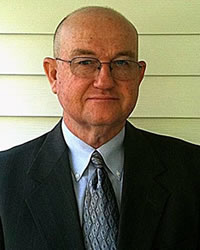
Gary Shepard is teacher and pastor of Sovereign Grace Baptist Church in Jacksonville, North Carolina.

Comments

0 / 2000 characters
Comments are moderated before appearing.

Be the first to comment!

Joshua

Joshua

Shall we play a game? Ask me about articles, sermons, or theology from our library. I can also help you navigate the site.