Bootstrap
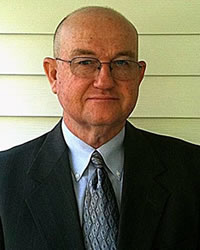
Gary Shepard

Christ: Cornerstone & Stumblingstone

Romans 9:30-33
Gary Shepard March, 6 2011 Audio
0 Comments

Sermon Transcript

Auto-generated transcript • May contain errors

100%
Turn back to Romans 9 where Lee
read. I want to continue where he left
off in Romans 9 and verse 30. What shall we say then? In other words, the Apostle Paul,
in making reference to his own people, the Jews, and to what
they were historically, is simply doing what he says in another
place ought to be done for us. And that is, we ought to be reminded
of them, because the things that were written concerning them
and all the history of that people in the Old Testament. Those things
were written for our admonition, for our instruction. Those of us, he says, upon whom
the end of the age shall come. So he says, what shall we say
then that the Gentiles, which followed not after righteousness,
have attained to righteousness, even the righteousness which
is of faith. But Israel, which followed after
the law of righteousness, hath not attained to the law of righteousness. Wherefore, because they sought
it not by faith, but as it were by the works of the law, for
they stumbled at that stumbling stone, as it is written, Behold,
I lay in Zion a stumbling stone and a rock of a fence, and whosoever
believeth on him shall not be ashamed." Now, I want you to
be prepared this morning to open up your Bibles and use your Bibles
and look with me at some verses. In the Bible, the Lord Jesus
Christ is often called a cornerstone. And that simply means that He
is a sure and solid foundation upon which His believing people
rest and are secure. He is the rock of salvation. Hold your place here and turn
back to Isaiah 28, where we find that to be true in Isaiah 28
and verse 16, where here the Lord says, "...therefore thus
saith the Lord God." And that's what we always want to put stock
in, that's what we always want to believe, that's what we always
want to try and test everything we're told. This is the standard
by which we will be judged. And this is the standard by which
the people of God weigh and measure everything. What thus saith the
Lord. He says, Thus saith the Lord
God, Behold, I lay in Zion for a foundation, a stone, a tried
stone, a precious cornerstone, a sure foundation, he that believeth
shall not make haste." That is a clear reference to the Messiah,
to the Lord Jesus Christ. And also, if you turn back in
the New Testament, to the second chapter of Ephesians, and listen
to what Paul writes to the believers at Ephesus, to the church at
Ephesus. In chapter 2 of this letter,
in verse 19, he says, "...now therefore you are no more strangers
and foreigners, but fellow citizens with the saints and of the household
of God." He speaks of them individually, and then also together as that
local church of believers, and then also of that greater body
of which they are a part, the church of the firstborn. And he says, "...and are built
upon the foundation of the apostles and prophets." You see, the foundation
or the cornerstone of the apostles is the same as that of the prophets,
the same of all God's people, Jesus Christ Himself being the
chief cornerstone. So in the Old Testament and in
the New Testament, more times than this, Christ is referred
to as the cornerstone. But He is also called something
else. In contrast to that, as in our
text today, He is also called a stumbling stone. He is a stumbling stone. Turn again back to Isaiah in
the 8th chapter of Isaiah, and hear the same God in the same
book that we looked at before. In Isaiah chapter 8 and verse
14, it says concerning Him also, and he shall be for a sanctuary,
but for a stone of stumbling, and for a rock of offense to
both the houses of Israel, for a djinn and for a snare to the
inhabitants of Jerusalem, And many among them shall stumble,
and fall, and be broken, and be snared, and be taken." And
then also, if you'll turn back to 1 Peter, again in the New
Testament, where we find the same thing, but we find the two
also side by side. Listen to what he says in 1 Peter
and the 2nd chapter, beginning in the 6th verse. He says, "...wherefore
also it is contained in the Scripture, And we ought to note the wisdom
of God and this glorious harmony that exists between the Old Testament
and the New Testament Scriptures, both of which speak of Christ. Behold, I lay in Zion a chief
cornerstone, elect, precious, and he that believeth on him
shall not be confounded." Note in all these verses, whether
it be the cornerstone or the stumbling stone, it is a person,
him, he that believeth on him shall not be confounded, unto you therefore which believe
he is precious." But unto them which be disobedient, the stone
which the builders disallowed, the same is made the head of
the corner, and a stone of stumbling, and a rock of offense, even to
them that stumble at the word, being disobedient, whereunto
also they were appointed." Now, what God does by the Spirit of
God in directing both the prophets and the apostles to write He
sets in contrast with each other, first of all, what God has done,
and that also, in contrast with that, what men are seeking and
are what they are trying to do. You think about that. Because
those two things, from the beginning book of Genesis, as we find them
with Cain and Abel, are the two things that run all the way through
this book. First of all, what God declares
that He has done, and then what men seek and try to do. If you noticed in these passages,
he says, behold, I lay in Zion. And then contrasted to that is
that which some who are described as the builders tried to do. I lay in Zion," he says, but
the builders, they always set this cornerstone aside and count
him for naught. Just like it was back in the
days when men sought to build that tower we call the Tower
of Babel. When they would seek by their
own doing, by their own work, and by their own building, they
said, we will build a tower to reach up to heaven. But the Scripture
says that God confused them. that he divided their tongues
so that they could not even communicate with each other, and they were
unable to build that tower because there is one tower to God. And that is the tower that he
has built and the tower that he lays on this foundation, which
is Christ. Look back in the book of Acts,
in Acts chapter 4. And listen to what the apostle,
in preaching here in the book of Acts, in chapter 4, beginning
in verse 8, what is the first message that he declares there
at Pentecost and shortly thereafter. Acts chapter 4 and verse 8. Then Peter, filled with the Holy
Ghost, said unto them, Ye rulers of the people and elders of Israel,
if we this day be examined of the good deed done to the impotent
man by what means he is made whole, be it known unto you all
and to all the people of Israel, that by the name of Jesus Christ
of Nazareth, whom you crucified, whom God raised from the dead,
even by Him doth this man stand here before you whole." And then
notice what he says. This is the stone which was set
at naught of you builders, which is become the head of the corner."
That means the one foundation, the one way. So that Peter goes
on and makes that definitely known, saying, "...neither is
there salvation in any other. For there is none other name
given under heaven, given among men, whereby we must be saved."
There is one way, there is one cornerstone, and every other
way tried by men, however great it appears or however weak it
appears, Christ becomes to them a stumbling stone. Now look back at Romans chapter
9. Because when Paul is speaking
here about Israel and about the Gentiles, Paul is not talking
about every Israelite individually. We know that God, in His great
mercy, saved a number of those Israelites, Paul himself being
one of them. And at the same time, he is not
talking about all the Gentiles being saved, because obviously
that is not the case. But he is showing in what he
says about Israel and what he says about these Gentiles, he's
showing how some who had the law never attained righteousness,
And on the other hand, some who didn't have it, they did attain
righteousness. And it was the case among Israelites,
and it was the case among Gentiles, just like it is today, that Christ
is to some the cornerstone, and to others He becomes the stumbling
stone. But I want you to notice this,
and be sure that you understand it. Why did the majority of these
Israelites that Paul is talking about, why did they not attain
righteousness? And when I say righteousness,
I'm talking about that which is required by God to be accepted
by Him. Why did they not attain righteousness? It says, because they sought
it not in a way that it can be found. They sought righteousness
in a way that it cannot be found. And men are shown here by this
very great illustration that went on and on, century after
century, in a people that God outwardly favored and gave the
law to. Men stumble because righteousness
is not by our doing, but it is through believing. Now, if there
ever was a principle, If there ever was, if we could call it
such a concept, it would be that would be contrary to what we
think by nature, contrary to what we feel is right, Contrary
to what is taught by almost every religion in the world, it is
this very thing, that righteousness can never be gained, can never
be gotten in any way by our doing. It is only through believing. Believing. Somebody says, well,
I'll tell you what I believe. No, that's not believing at all. They say, this is the way I feel
about it. I feel like if a person does
the best that they can, God will accept them. You've stumbled
at Jesus Christ. I feel like if you live as good
as you can, if you do this or that or the other, or on the
other hand, if you don't do some things, And here we have in Israel
an example of those who century after century tried both ways
in doing some things they thought would commend them to God, and
on the other hand, not doing some things they thought would
commend them to God. And they what? They seeking it
that way, they never attained righteousness. It is not by our
doing. That's what he's setting forth
here. I don't care how good we think it is. I don't care what
preacher so-and-so said it was. I don't care what the Pope says
or who anybody else on the face of this earth says. God Almighty
says, and He showed for centuries in a people, these Israelites,
that most of them, though they sought righteousness by their
doing, they did not attain it. Why? Because believing is not
a work. As a matter of fact, believing
is just the exact opposite of working. Believing is a ceasing
to work, a resting in, and that's what the Sabbath was all about. That's why we do not have a Sabbath
in our day, because Christ is the Sabbath. That Sabbath day
pictured a finished work and a rest that is in Jesus Christ. We have a Sabbath, but He's a
person. We rest in Him. We believe on Him. We cease from our works. And these Israelites, they counted
Christ as naught, and they sought to establish their own righteousness
before God. You think Paul didn't love them
as a people? You think he wasn't concerned
about them? Well, look here in chapter 10
as we continue on to this very same theme and thought that he's
talking about in Romans 10 in the first verse, and there's
no division in Scripture. He just continues this conversation
with these. He says, "...Brethren, my heart's
desire and prayer to God for Israel is that they might be
saved." What he believed, which is exactly what we believe as
a people and what I seek to preach as a gospel preacher, it in no
way renders us unconcerned about the souls of men. He says, my
heart's desire and prayer to God for these people after my
flesh is that they might be saved. He says, "...for I bear them
record that they have a zeal of God." They have a zeal concerning
God, but not according to knowledge. Isn't it amazing how some people
belittle knowledge so much? It's as if they want people to
remain ignorant. And they put some kind of bounty
on ignorance. They belittle knowledge. And
he says, here are these people, they have a zeal, an enthusiasm,
a sincerity, if you will, concerning God, but is not according to
knowledge. Somebody says, well, Paul, how
do you know their hearts? How do you know what they believe?
Preacher, how do you know what it is that they're not right
about? How do you know they're not righteous
before God? Look at what it says in verse
3. He says, "...for they, being
ignorant of God's righteousness..." There's only one righteousness. is called the righteousness of
God, and he says they are ignorant of God's righteousness. How do
you know that? How do you know what they know?
How do you know what they believe in? He says they're going about
to establish their own righteousness. What are they doing? They're
seeking after righteousness on a principle of law which was
a principle of doing. How do you know that, Paul? Because
they're going about. They're going about to establish
their own righteousness and have not—what's that word there? Submitted. That's got something to do with
the will and the heart and the blindness. They have not submitted. They have not bowed. They've
not been broken upon that cornerstone which is Christ. They're still
stumbling at Him. They're willfully ignorant of
Him. They're willfully rebellious
against Him. Though they have the clear written
revelation of God, though they have heard the gospel, though
they have seen the types that He set forth in the Law and all
these things, they have not submitted themselves unto the righteousness
of God." And then notice what it says in that next verse, "...for
Christ," there's that stone, For Christ is the end of the
law for righteousness to everyone that believes." I mean, it does
not say anything but that. It says that same thing throughout
the epistle. Christ is the end of the law
for righteousness. Every kind, there's only one
righteousness, and He is the end of the law, that is, the
very end of that law that He gave to Moses and that people. He is the goal of that law. He is the one that that law is
made to point us to, and all the types and sacrifices of that
law, and under that law, pointed to Christ. As a matter of fact,
it does not say that they were pursuing righteousness. No, they were seeking a law by
which, through their own efforts, they hoped to attain righteousness. How do all these religions spring
up? How is it that in this county
alone, every time a storefront building comes vacant in some
place, here's another so-called church pops up? Why? Because people are seeking a
law by which to attain righteousness. Here's one over here that says,
if you'll come so many services, you'll be righteous before God.
Here's one that says, if you'll walk down the aisle and shake
the preacher's hand, you'll be righteous before God. Here's
one multitudes of them that say, if you'll shake the preacher's
hand, or if you'll be baptized, or if you'll quit your drinking,
or your smoking, or your lying, or your running around, whatever
it is, we'll give you a law by which you can attain righteousness. One of the worst I've seen lately
is this group, I forget what they're called, there's some
so-called church somewhere that the Supreme Court has said that
they have a right to picket at the funerals of dead soldiers
and such as that. I simply say this, they have
a right in this country as is proved in many other ways, they
have a right to be fools if they want to. stand up and hold a
sign bearing the Ten Commandments to condemn somebody else, when
that law can only condemn them and every one of us? You see,
Israel with the law is a warning to us. And they, like most today,
were ignorant of God's holiness. They were ignorant of the true
meaning of that law which could only condemn them. That's exactly
what Paul says when he writes to the churches in Galatia that
were under the influence of those Judaizers who were trying to
bring them again under that bondage of the law. He says, do you,
you that desire to be under the law, do you not hear the law? It can only pronounce you guilty. Take the Ten Commandments. I'll
live by the Ten Commandments. You'll die by the Ten Commandments. He said, if you, in these commandments,
which are just a summary of the things that you're not to do,
He said, if you violate in one part or portion or the spirit
of it, you're guilty of it all. I'm going to live by the golden
rule. No, you're going to die by it. You're going to face the
wrath of God. You're going to face His inflexible
justice. You're going to be ignorant of
the righteousness He required. You're going to be ignorant of
the gospel. I love what Paul says in the
first chapter of this book. He said he loves Romans. I love
Romans too. Paul said this. He said, I'm
not ashamed of the gospel of Christ. And almost the next breath
out of his body is this statement. He says, "...for therein is the
righteousness of God revealed from faith to faith." I'm not
ashamed of it. This is the righteousness of
God. The only place you'll find out
about, the only place you'll find the righteousness of God
is in the gospel. And men and women are talking
about preaching the gospel, spreading the gospel. They don't even mention
the righteousness of God. They belittle those who talk
about the doctrine of righteousness. And for this reason, men and
women hate the gospel of Christ. They hate His salvation that
is all of grace and all through faith, which they do not have
of themselves. It is the gift of God, and it
is not of works. And this is Christ who is to
them the rock of offense." They're offended. Are you calling me
a sinner preacher? I'm offended. And that's what
pride always... Pride! You tell me what those
who are described in Scripture as lost, condemned, vile, worms,
or maggots as it literally is in the original, blind, hopeless,
helpless, weak, frail, proving it every day, you tell me what
we've got to be proud about. You see, the gospel is good news
to all who believe. The gospel is good news to all
who look outside of themselves and away from themselves and
away from what they do to the Lord Jesus Christ. They will
preach, I'm doing the best that I can. I don't understand why
I have any peace, don't have any peace. I do. Because as long
as you rest one iota, of your total acceptance before God on
something that you do or don't do or are trying to do, you'll
never have peace. You'll never rest. You'll never
know righteousness. Look over here in Romans 10 also,
down in verse 6. Paul goes on, he says, that the
righteousness, which is of faith speaketh on this wise, say not
in thine heart who shall ascend into heaven, that is, to bring
Christ down from above, or who shall descend into the deep,
that is, to bring up Christ again from the dead? But what does
it say? The word is nigh unto thee, even
in thy mouth and in thy heart, that is the word of faith which
we preach, that if thou shalt confess with thy mouth the Lord
Jesus, and shalt believe in thine heart that God hath raised him
from the dead, thou shalt be saved, for with the heart man
believeth." unto righteousness with the heart." People talk
about what the Scripture says about in that covenant blessing
and promise wherein God gives us a new heart. What is a new
heart? I'll tell you what a new heart
is. It's the heart of faith. With the heart, man believeth
unto righteousness. He believes unto righteousness. The one way that any sinner ever
does right before God is when they believe on the Lord Jesus
Christ. They believe not only that God
has done right to forgive them and bless them through Jesus
Christ and His death for their sin, they believe He is right. and that they are right to expect
every blessing from God in Him. You say, well, I don't deserve
anything. Well, in yourself you're right,
you don't. But it says that we are justified unto life, which
simply means that God is just. And He would be unjust not to
give us life and every blessing if He does so in our substitution,
the Lord Jesus Christ. That's so contrary. For with
the heart man believes unto righteousness, and with the mouth confession
is made unto salvation. For the Scripture saith, Whosoever
believeth on him shall not be ashamed. There it is again. One
place it says, not confounded. One place it says, not confused.
One place it says, not ashamed. It means you'll never be disappointed. Resting in Christ. You see, the
gospel of Christ offends us because in it, God calls our righteousnesses
filthy rags. Filthy rags. It offends us because
it calls us sinners, because it refuses our best, because
it rules out all our works, because it puts to naught all our old
experiences, especially religious ones. It reduces all our religious
efforts to what they are, nothing but sin, and it does away with
our high opinion of ourselves. You see, blind people stumble.
If I went and got a big stone and put it right in the middle
of that aisle, and you started to walk out, you saw that stone,
you'd walk around it. You wouldn't stumble over it.
But if you were blind, you'd just stumble. You see, that's
what the Lord has to do. He has to open our eyes. He has
to enable us to see the desperate state and condition we're in,
our blindness, and how that to believe and rest in our own will
and our own way and all these things, and to refuse Christ
as all is this, to stumble. To stumble. We're like Naaman
of old. You remember Naaman? He was a
leper. He was a leper. Leprosy in Scripture
is a picture of our sinfulness. That's how we're described in
Isaiah 1, from the top of our head to the soles of our feet,
nothing but wounds and bruises and putrefying sore. That's a
leper. That's what we are as sinners
before God. And so Naaman is told, he hears
a message from a little maid there in Syria, And here he comes
with all his regalia, with all his splendor as a captain of
the Syrian host of somebody, his garments fine and all, except
underneath those garments is a leprous man. So he comes to
the prophet. The prophet doesn't even come
out to greet him. He sends his messenger outside. Oh, he's already
offended. God won't talk to him face to
face. So he sends his messenger out,
and the messenger says, the prophet said, go and dip yourself in
the Jordan River seven times and you'll be clean. He stumbles
right there. He says, while the rivers of
Banna and Farpar in my native land, they're clear and beautiful,
and you're telling me to go dip in that muddy mud hole of a river
called Jordan? I'll not do it." And so he turns
his horse and he starts to lead, and one of his servants says,
he says, Master, the prophet had told you to do some great
thing. I imagine he had a pocket full of money, don't you? He
said, in so many words, he said, if the prophet had told you to
give 30 pieces of gold, if he had told you to do this or that,
you'd have done it. So the Lord opened his eyes,
and he got down off his horse, Here's this leprous man now,
and he goes and he dips in that River Jordan seven times, which
is just simply a type of how the cleansing blood of Christ,
His death, what it does for us as sinners. He dips seven times,
and when he came up that seventh time, it says that his skin was
like unto a babe's. That's the way we are. But you
remember what he said? He said, I thought. I thought
the prophet would surely speak some words particularly to me
or call out on his God, or I thought he would wave his hands over
my leprosy or something. That's what I thought. And if
God had left him to his thinking, he'd have died. That's the way
God is with us. He leaves us to it. Turn back
to Romans 4. Listen to what it says in Romans
4. What Paul is doing here, he's calling us back to remember such
as Abraham, who was considered by the Jews as their father,
Father Abraham. He says in verse 3, "...for what
saith the Scripture, Abraham believed God, and it was counted
unto him for righteousness." Have you ever got a grasp on
that statement? Abraham believed God. He believed God in direct contradiction
to what he'd always believed, to what he by nature wanted to
believe, to what his religious background said for him to believe. He believed God, and it was counted
unto him for righteousness. Now, to him that worketh is the
reward not reckoned of grace, but of debt." Somebody gives
you money for what you do during the week, laboring, they pay
you, that's a debt, isn't it? But if you get money for what
you don't do, what's that? He says, that's grace. But to
him that worketh not, but believeth on him that justifieth the ungodly."
Now listen to me. Don't pay attention to what's
going on out there. "...to him that worketh not, but believes
on him," that is God, "...that justifies," who? "...the ungodly."
His faith is counted for righteousness. You see, faith is not something
we do. As a matter of fact, we can't
even believe apart from God. Paul said, for by grace are you
being saved through faith, and that not of yourselves, it's
the gift of God. If you're unable to believe God,
to believe the gospel, to believe on Christ, you don't have anything
to toot your horn about. He gave you the faith to believe.
All right? Even as David also describes
the blessedness of the man unto whom God imputes righteousness
without works. You understand that? Now here's
David. You remember David in the Bible?
David was an adulterer. David was a liar. David was a
murderer. If you don't believe it, just
read what it says. And David, it says, who is also
described as the sweet psalmist of God. David describes the blessedness
of the man. He said, this is a man that's
blessed of God. That's not what people say today,
are they? Well, if you've got good health, you're blessed of
God. Or if you've got wealth, you're blessed of God. No. He
said, this is the man that's blessed of God, unto whom God
imputes. You know what that word means?
Charges to his account. Blessed is the man. to whose
account before God he charges righteousness without works,
saying, Blessed are they whose iniquities are forgiven and whose
sins are covered. Blessed is the man to whom the
Lord will not impute sin." In other words, this is what he's
saying. He said, that person that's truly blessed of God,
on the one hand, is the one who God will not charge his sins
to him. And blessed is the man, on the
other hand, that God will count righteousness without him actually
doing works of righteousness. You say, well, that sounds good,
but it's just a little too good to be true. You've stumbled at
the stumbling stone. That's what you've done. You're
still coming before God saying, well, I think you've got to live
right. You ought to live right, but
I'll never take you to heaven. Well, I think you ought not go
out and get drunk. You ought not to. Or you ought
not to commit adultery. You better not. But none of these
things will recommend you to God. He said, the man who's blessed,
that the Lord will not impute sin. And the only way that God
cannot charge me with my sin is if He has appointed one to
bear my sins, and He has charged them to His account. You know
what Jesus Christ is doing on that cross? He is dying for,
bearing the consequence and penalty of the sins of His people. the Lord imputed to him or laid
on him. That's the language of Scripture
that this generation is ignorant of. He bears in his body on that
cross the penalty, the guilt of somebody's sins. And they
are every one counted to be righteous in God's sight in Christ. They are made the righteousness
of God in him. Why did Abraham believe and somebody
else didn't? Because God gave him faith. He doesn't have to give you faith,
he didn't have to give me faith, but he's going to give all his
people faith. Christ said, my sheep hear my
voice and they follow me. An old preacher said, a free
salvation becomes an offense to men on account of their pride,
They cannot bear the idea of being indebted for it to sovereign
grace, which implies that in themselves they are guilty and
ruined by sin. They desire to do something,
were it ever so little, to merit salvation at least in part. That's why preachers can stand
up and they can talk about grace. But I've said this over the years.
Two things. Number one, it's not so much
what a man says when he preaches, it's what he doesn't say. He
doesn't say what God is glorified with. And number two, it doesn't
matter what he said, if at the end, he unsays it all. He can talk about grace all he
wants to, and at the end, he'll say something like this, but
now it's left up to you. If it's left up to you, my friend,
and me, we're in trouble. If it's left up to you and me
to do something that God will be pleased with, we're in desperate
situations. We're hopeless. And such renders
what Christ did as unnecessary. And you stumble at the stumbling
stone. It is offensive in that it is
salvation in a crucified So, my preacher talks about Jesus
all the time, does he now? Paul said, we preach Christ crucified. My preacher talks about how Jesus
was such a good example and how He died a martyr's death and
what a wonderful teacher and all He is. Paul said, we preach
a crucified Christ. We preach that man in his sin
is such a wretched sinner, so unable to save himself, and God
is so holy in Himself and so just that the only way we could
ever be saved is for God to come to this earth and take on a body
in the person of Jesus Christ in order to do the one thing
necessary to save us before His justice, which is to die. for our sin. That's it. Look in 1 Corinthians 1. I'm
not going to be much longer. 1 Corinthians 1, and look down
at verse 18. Paul says when he writes to the
Corinthians, he says, "...for the preaching of the cross."
Somebody said, well, we believe in the cross. We've got crosses
all over the steeple and crosses all over the wall. You don't
see a cross in here anywhere, do you? Because the symbol of
the cross is just like every other symbol. Thou shalt not
make unto me any graven image. He's not talking about a piece
of wood. He's talking about who died on
the cross and what he accomplished on that cross. We don't wear
crosses and make the sign of the cross. That's not the cross.
The cross is the crucified one. All right? For the preaching
of the cross is to them, and literally in the Greek it is,
to them that are perishing. Foolishness. I don't need to
hear that. I've heard that a lot. For the
preaching of the cross is to them that are perishing foolishness,
but unto us, those who are being saved, it is the power of God. For it is written, I will destroy
the wisdom of the wise and bring to nothing the understanding
of the prudent. Where is the wise? Where is the
scribe? Where is the disputer of this
world? Hath not God made foolish the
wisdom of this world? For after that in the wisdom
of God the world by wisdom knew not God, it pleased God by the
foolishness of preaching to save them that believe. through the
foolishness of this business of preaching. But more than that,
for the preaching of what is foolishness to man, the preaching
of the cross, for the Jews require a sign and the Gentiles seek
after wisdom, but we preach Christ crucified unto the Jews a stumbling
block, and unto the Greeks or the Gentiles foolishness." Paul
writes to these same Corinthians, he says, "...for He, that is
God, hath made Him, Christ, to be sin for us who knew no sin,
that we might be made the righteousness of God in him." He says this
when he wrote to the Romans, chapter 5, verse 19, "...for
as by one man's disobedience, Adam's, many were made sinners,
so by the obedience of one shall many be made righteous." What
was the obedience of Christ? His being obedient unto death,
even the death of the cross. You see, it's offensive in that
salvation is by the sovereign grace of God. People look at
the sign outside by which we bear the name of this congregation
of people, Sovereign Grace Baptist Church. What does sovereign grace
mean? Well, a sovereign, the word sovereign means one who
does what he will, to whom he will, when he will, How He will,
though actually God is really the only Sovereign that there
is. And that's just what He says in that passage which is our
text there in Romans 9. If you look back in Romans 9
at verse 17, I mean rather in verse 7, He tells us in using
the same people He gives us an example among the Israelites
themselves. He says this of Abraham, verse
7, "...neither, because they are the seed of Abraham, or they
all children." You know Abraham had more than one son. But it
was in that one son, Isaac, he said that the seed shall be called. That is, they which are the children
of the flesh. These are not the children of
God, but the children of the promise are accounted for the
seed." Then he says, this is what happened. For this is the
word of promise. This is how it works. He illustrated
it. At this time will I come, and
Sarah shall have a son. Now wait a minute. Abraham is
99 years old or thereabout. And it's impossible, humanly
speaking, for him to father a son at his old age, and Sarah, she's
passed the years of childbearing, she's never had a child. It's
hopeless. No, it's by promise. He said,
for this is the word of promise. At this time will I come, God
says, and Sarah shall have a son. And not only this, but when Rebekah,
this was the one that Isaac married, "...when Rebekah also had conceived
by one, even by our father Isaac, for the children being not yet
born, neither having done any good or evil, that the purpose
of God according to election might stand." That means the
purpose of God, according to His choice, might stand, not
of works. but of him that calleth. It was
said unto her, the elder shall serve the younger. As it is written,
Jacob have I loved, but Esau have I hated." Well, there went
the notion that most people in this world have concerning God
right now, that God loves everybody. What did he just get through
saying? He said, I hate Esau. I hate Esau. Well, I just don't
understand how God could hate anybody. That's because you don't
know anything about God. He cannot do anything else of
a sinner in themselves, being the holy God He is and just God
that He is. He can't do anything but hate
Esau and himself. It's easy to say and see how
he could hate Esau. What we need to find out is how
he could love a scoundrel like Jacob. You know, if you had Jacob
and Esau right here standing beside you, living beside you,
Taking note of it, I just have a feeling you might like Esau
better than Jacob. Jacob is a conniver. He's a scoundrel. And God says, but I love Jacob. How can you love Jacob? He loved him in Christ. That's
the only way he can love sinners like you and me. You think you
know me, you don't know me. I'm a... Oh me, I'm a wretch. I'm a wretch. What shall we say
then? Is there unrighteousness with
God? Is God right to love Jacob? Is He wrong to hate Esau? Is there unrighteousness with
God? God forbid. For He said to Moses, I will
have mercy on whom I will have mercy, and I will have compassion
on whom I will have compassion. So then it is not of him that
willeth, there went free will so-called, nor of him that runneth,
not of our works, but of God that showeth mercy. where the
Scripture saith unto Pharaoh, even for this same purpose have
I raised thee up, that I might show my power in thee, and that
my name might be declared through all the earth. Therefore hath
he mercy on whom he will have mercy, and whom he will he harden."
Say, I just don't like that. You stumble at the stone. Stumble
at him. You see, all are in some way
seeking to obtain righteousness before God. But look back at
our text in Romans 9. It says Israel as a people didn't. They had the law of God. They
didn't attain righteousness. Why? Verse 32, Romans 9. Wherefore, or why? Because they
sought it not by faith, but as it were by the works of the law,
where they stumbled at the stumbling stone. If you can save yourself
in any way, if you can do anything, to recommend yourself to God. Then Christ came and died in
vain. If you think you can, you've
stumbled at the stumbling stone. You see, they sought it not by
faith or through faith. How do you have faith? Well,
God has to give it to you by as a gift. For by grace are you
saved through faith, and that not of yourselves. It is the
gift of God, not of works, lest any man should boast." If you
look in Romans 10, you can find out how he does give faith. Because Paul says, so then faith
comes by hearing, and hearing by the Word of God. That's why
we don't spend a lot of time singing. That's why we don't
have a lot of programs. That's why we don't do a lot
of other stuff other than preach the gospel. because God saves
His people by giving them faith to believe what He says in His
Word. That's it. You see, Jeremiah
refers to Christ as the Lord, our righteousness. Christ who
in His cross death is said to have brought in everlasting righteousness. Christ whose righteousness imputed
to us is the only way to please God. And we only do right when
we trust Christ alone and look to Him and rest on Him as He
is the cornerstone. If you would go to the back of
my house, you'd see I've got a deck. I love my deck. But if you walked around my deck,
you'd kind of run your hand around the bottom of it, you'd say,
you'd say, that thing will fall down any minute. There's no post
on the corner, nothing like that. But it won't, because if you
look, according to the builder, he called it, I think it was
cantilever construction. And although all these boards
go out to support every corner, back, everything, underneath,
right in the middle, the board upon which they rest, is a sure
foundation. And Christ is that unseen foundation
of His people. You can't see Him, but He has
done it all. Done it all. Our Lord said, Whosoever
hears these sayings of Mine and doeth them, what was it He said
to do? Believe on Him whom God has sent. I liken Him unto a wise man who
built his house upon a rock. Will we hear God? Look at that
33rd verse. He says, Behold, I lay in Zion
a stumbling stone and a rock of a fence. It means we don't
naturally at the first want to really hear about such a Savior
and ourselves as such a needy sinner. We don't want to hear
about God's way. So we find Him a stumbling stone
and a rock of a fence Naturally. But, whosoever believes on Him,
they'll not be ashamed. Then you'll never be disappointed.
There are preachers who just don't know me. You don't know
what I've done. You don't know what I am. No,
I don't. But He does. He always has known. And He says,
whosoever looks to Me, trusts on Me, and only Me, they'll never
be ashamed. In this same book, When Paul
is going on to some other things, he still bases everything on
this one principle. He says, whatsoever is not of
faith is sin. Now that means more than whatever
you do that's not by faith is sin. It's simply that same principle. Whatsoever is not of faith is
sin. Whatever it is, that you would
seek to stand before God, be forgiven of your sin, enter into
His heaven, be counted right. Whatever it is that you don't
have by faith is sin. Which simply means, whatever
Christ didn't do is sin. Whatever my hope is that's outside
of Christ is sin. You see, this isn't the way it
is like some people present it. that you just do the best you
can, and Christ will pick up the rest of the slack. He's all
the foundation, or He's just stumbling stone to you. But I'm
saying to you, you look to Him. He's God and manifest in the
flesh. And He wrought a full, complete
salvation through His cross death on the cross. He died for the
ungodly. He came to seek and to save that
which was lost. He's not like the Marines used
to have that campaign, we're looking for a few good men. Well,
in truth, there are none. We're all sinners. And Christ
Jesus came into the world to save sinners, Paul said, of whom
I am chief. You look to Him. Father, we pray
in this hour that You would bless Your Word, Your truth to the
hearts of all who hear this. May every thought of mine, every
word of mine fall away into utter inexistence, but may Your Word
and Your truth prevail in the hearts of these who hear. Get
all glory to Yourself in saving Your people from their sins. For we ask it in Christ. Amen.
Gary Shepard
About Gary Shepard
Gary Shepard is teacher and pastor of Sovereign Grace Baptist Church in Jacksonville, North Carolina.

Comments

0 / 2000 characters
Comments are moderated before appearing.

Be the first to comment!

Joshua

Joshua

Shall we play a game? Ask me about articles, sermons, or theology from our library. I can also help you navigate the site.