Bootstrap
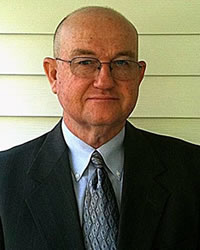
Gary Shepard

The Blood of God

Acts 20:28
Gary Shepard February, 13 2011 Audio
0 Comments
Gary Shepard
Gary Shepard February, 13 2011

Sermon Transcript

Auto-generated transcript • May contain errors

100%
Turn back with me in your Bibles
this morning to that twentieth chapter of the book of Acts.
Acts chapter 20, and to those verses that tell us that the
Apostle Paul is giving some last statements, teaching, encouragements
to the elders from the church at Ephesus. I thought about it
a moment ago that every preacher, not just the last time he preaches,
but every time he preaches, should be so true to the souls of men
and the Word of God as Paul was. Look here in that 20th verse. He reminds him saying, "...and
how I kept back nothing that was profitable unto you, but
have showed you and have taught you publicly and from house to
house, testifying both to the Jews and also to the Greeks,
repentance toward God, and faith toward our Lord Jesus Christ. Simply said, that means that
wherever, whenever, and to whomever He preached, He preached to them
the gospel of Jesus Christ. And then if you look down in
verse 26, he says, "...wherefore I take you to record this day,
that I am pure from the blood of all men." which shows that, as God had
already said, that those who stand to speak for Him, if they
do not say to men what God says, their blood is on their hands. And then again in verse 27, such
a statement, "...for I have not shunned to declare unto you all
the counsel of God." All the counsel of God. And in this verse, the 28th verse,
wherein he says, "...take heed therefore unto yourselves and
to all the flock, over the which the Holy Ghost hath made you
overseers, to feed the church of God, which he hath purchased
with his own blood." Now, this 28th verse shows us that to be
pure of the blood of men we must be pure concerning the blood
of God. And that's my message this morning,
the blood of God. Because you see, as the Apostle
says, all the counsel of God is bound up in the crucified
Christ. We don't just simply stand repeating
the name of Jesus as to present Him as some mystical person. We preach, Paul says, Christ
and Him crucified. God forbid that I should preach
anything to anyone save the cross, which is the person and work
of Jesus Christ. And the preaching of the cross,
rather than being an appeal, or rather than to play on someone's
sympathy, or to offer something or a word of possibility, it
is rather, as Paul says here, the declaration of a purchase. Look back at that 28th verse. He says, "...feed the church
of God." That's not a denomination there. That's not the Baptist
Church or the Reformed Church or any other such names that
we do not find in the Word of God, but it is the Church of
God which is Christ's body. He is the head of this living
body, the church, as it is called, the church of Christ, the church
of the firstborn. He says, "...feed the church
of God which he hath purchased, with his own blood. As I said, the gospel is a declaration
about a purchase or a ransom that has been paid, a redemption
that has been accomplished, a redemption that is by a death, and that
death is the death of Jesus Christ. The gospel is not a simple stating
of that fact, and then we go on to bigger and more important
things such as how we are to live. No, the gospel has to do
with where life is. And that is the life that is
in Christ and is through the death of Christ. As a matter
of fact, it is called here a purchase. And we are described, if we are
the Lord's people, in Ephesians 1 and verse 14, as being a purchased
possession. And this redemption that we speak
of, that the gospel is about, this redemption, which is the
work of Jesus Christ, this redemption must be either totally successful,
or utterly a failure. As a matter of fact, if I were
going to say what distinguishes the true gospel from the false
gospel, it would have to be mainly in this. Does it show Jesus Christ
in his life and death as having actually accomplished something
or only made something available or possible. You see, we have
to be drawn back to these verses, such as this, all through the
scripture, that show the death of Christ as being what it is,
a particular, definite, and very successful death. You see, most of what passes
under the wide banner in our day of Christianity, most people
believe and most preachers preach that when Christ died on the
cross, He died for every person in the world without exception. But that is a big problem. Because
that would make his death to be an utter failure. Why is that? Because as he said,
few there be that enter into that straight gate, and many
there be that go in that broad way that leads to destruction. This is an assessment by Christ
the truth himself. So His glory does not depend
upon how many He saved. His glory depends on Him saving
those He actually purposed to save. His redeeming work. which is where his glory is because
he is glorified in the person of the Lamb of God that takes
away sin. And so his glory is his redemptive
glory, which is simply that glory that became his when he accomplished
the work of redemption and did so to its fullest, actually saving
somebody. actually saving his people. What does the Bible teach? What did Christ die to accomplish? Well, if you would just simply
think for a minute and notice in that 28th verse, he's talking
about the blood of Jesus Christ being exactly this, The blood
of God. Hold your place right there and
turn over to 1 Peter and the first chapter. 1 Peter chapter
1. Because in these few verses,
we have to find out, if we never knew it before, something about
the deity of Christ, that He was nothing less than what He
says He was, God manifest in the flesh. Listen to what it
says here in 1 Peter 1, beginning in verse 18. Peter writing to
these believers, he says, "...for as much as you know." that you
were not redeemed with corruptible things as silver and gold from
your vain conversation received by tradition from your fathers."
You were not redeemed even by that gold or that silver, rather,
that was appointed as the price of redemption under the law.
No, he says, but with the precious blood of Christ, as of a lamb
without blemish and without spot, who verily was foreordained before
the foundation of the world, but was manifest in these last
times for you, who by Him, do believe in God that raised him
up from the dead and gave him glory, that your faith and hope
might be in God." Now, you can't have Redemption, this purchase,
this payment that is made for sin, on the one hand, made by
some entity who is just a man, and on the other hand, by one
that is simply God. No, here is Jesus Christ, the
God-man. And so his death, his bloodshed
as this precious blood, as of a lamb without spot and without
blemish, is nothing less than the blood of God. The blood of God. And it has
to do with something that God Himself, being who He is, could
not do, as He is God absolutely considered in heaven, though
able to create worlds and do so many things, but yet unable
to do the one thing that's necessary to actually save His people,
which is to die. You see what the Apostle Paul
calls the gospel, the gospel of the grace of God. What he
says is good news is the very thing that men and women and
preachers in religion in our day, they don't want to hear
anything about. And that is the dying of Jesus
Christ. But more than that, the ramifications
of that death. Who is it that Jesus Christ,
being God manifest in the flesh, who is it that He actually came
into this world in order to fulfill God's purpose to save? Is that redemption that is in
Christ, is it a certainty? or just merely a possibility. Did He come in order to make
all men redeemable or to actually redeem some? There was an old
preacher many, many years ago, and he set forth what has been
called by some a dilemma. A dilemma. And all he was doing
is simply setting forth some things that most folks have never
actually even stopped to think about or to consider because
they're swept along in this tide of unbelief that is characterizing
religion in our day and every age, I'm afraid. This is what
he said. Christ died for all the sins
of all men, so all will be saved." In other words, if we view God,
listen now, as a just God, either Christ died for all the sins
of all men, so all will be saved, or He then died for some of the
sins of all people, And since the rest of our sins would be
left to us, nobody would be saved. If one little aspect of salvation
was left to you, or to me, we'd perish. But then he gave this
third aspect, and he said that Christ died for all the sins
of some men and women, and they will be saved. Well, I know the
first two. The first two utterly cannot
be. And I know this, I know that
that last part, that last thought is exactly what the Bible teaches
because the Bible, I'm not talking about my opinion or your opinion
or some denominational opinion, but the Bible teaches and sets
forth the death of Jesus Christ as very particular. A particular
person who comes to a particular place, who in that particular
and appointed time, and through this particular means of death,
accomplishes a particular result. That's right. If Christ died
for all men, then why are not all people saved? And let me
give you the ready answer of religion in our day. If you look
at this and honestly confront people, if Christ died in the
place of and for all men, meaning every person in the world, then
why are they not all saved? Somebody says, well, It's because
they have not believed. But let me ask you this, isn't
unbelief a sin? I think unless I'm very, very
mistaken, unbelief is one of the many sins that characterize
every one of us as sinners. So those that Christ dies for
their sins, plural, all of them in their totality, He had to
die for their sins of unbelief as well as other sins. We believe
in what some might call a particular redemption. Some people refer
to it as a limited atonement. They say, you limit the atonement.
If you believe that there will be anybody in hell, just like
Christ said that there already was in his day, that in itself
limits the atonement to these who believe. What does that 28th
verse say? Here is the death of Christ,
which, as I said, is set forth over and over again as a redemption,
which means to buy back by the paying of a price, which is set
forth as a ransom, which is set forth as a purchase, as it is
in that verse. You tell me, who does it say
that Christ, God manifest in the flesh, purchased with His
own blood? The Church. And you know that's
been saying that for almost, or for over 2,000 years. that
Jesus Christ, when He went to that cross in this work of redemption
to redeem us from the curse of the law, to redeem us from our
sins, He purchased the church with His own blood. Now, there are several things
about the gospel. that speaks of this death and
of this blood as the blood of God. Now, just before I go any
further, let me ask you this. Can you imagine God setting out
to accomplish something that He could fail? Can you imagine
God ever running up on a problem or a situation that He did not
already know about? Can you imagine God not accomplishing
something when the Scripture says that He works all things
after the counsel of His own will? Can you imagine God ever
buying something, purchasing something, and not knowing what
He was going to get, and then finally not getting it? You see,
men reduce God to a lower level than their own selves. Because
you and I, if we have a right mind, we know exactly what we're
going to spend our money for and buy, and we'll see to it,
if there's any way possible, that we get it. The gospel, first
of all, which is the gospel of the blood of Christ, it must
be true to the Word of God. How can people be deceived and
believe in what they believe? I can tell you this, they are
deceived by want of any real knowledge and understanding of
the Scriptures. You see, it is not a verse here
or a verse there. I wouldn't want you to believe
what I believe about the redeeming work of Christ just simply based
on that one verse, verse 28, though it would be worthy of
being believed. No, Paul said this, he said,
"'I have not shunned to declare unto you all the counsel of God.'"
All the counsel of God. How does a man living no longer
than this man Paul lived, how did he ever preach to those he
preached to all the counsel of God? Well, he did it by simply
preaching to them Christ crucified. Christ, back in the Old Testament,
was literally referred to by Isaiah as the very counselor
and wisdom of God. Wisdom. What is wisdom? Why is Christ called the wisdom
of God? It is because He is that one
way. that one person wherein God,
as a just God, can be at the same time a Savior God and save
a people from their sins, be true to His own law and justice,
and actually save them. Just look back and think about
the Old Testament Scriptures. Not a verse here or a verse there,
but who was it that in that garden, When they fell, sinned against
God, what was it that He did on that occasion when they utterly
separated themselves from God, when He hid in the garden, sinned
against them, and all our race fell in Him? What did He do?
It says that God took the skins of these innocent animals, and
He slew those animals, and He made coats for Adam and Eve,
and He clothed them, showing in that very thing that the one
way that God deals with sin is through a death, and the only
righteousness, the only covering there is, is that which God provides. Crucify. What about the ark? There are two of them spoken
of in Scripture. One of them is Noah's ark, that
when God's judgment began to fall, and the earth began to
spring up with all the moisture and water that made the flood
which lasted that long time, and he destroyed the whole world
except. for a particular redemption that
was in that ark wherein it says, these eight souls were delivered. But what happened? What happened
was that flood, which was the judgment of God, that flood came
against them as much so as it did every other person in the
world, but it came rather in that one that they were in, that
ark that God had provided, which was a type of Christ. They were
safe on the inside, but that judgment was beating against
that ark, which is Christ. How big was that ark? It was
a particular, definite design, provision, and appointment by
God to save His people in. You go over to the other ark,
which was very different, the ark of the covenant. Did He give
the ark of the covenant to any Jebusite or Hittite or any of
the other peoples of the plain? No. That Ark of the Covenant
wherein that blood was sprinkled, which was a type of the death
of Jesus Christ, the one way God shows mercy, it was given
to this people, Israel, who were a type of His spiritual people,
the blood of that Passover Lamb. That blood that was appointed
by God, He said, "...take a lamb, a male of the flock, without
spot and without blemish, slay him, sprinkle the blood on the
lintels and the doorposts of every household there in the
land of Goshen, the household of every Israelite, but not those
Egyptians. Blame that to me. And when the
death angel passed through Egypt, the firstborn in every household
in Egypt died, except in these houses in the land of Goshen
where that blood had been applied, that blood that was sprinkled
and shed as a type of the death of Christ, for His people. He said, when I see the blood.
Not when you see the blood. He said, when I see the blood,
I will pass over you. All the sacrifices of the tabernacle,
all the sacrifices of the temple, all the work of the priest, all
done for a particular people. Every year that high priest would
go into that Holy of Holies and sprinkle that blood there on
that mercy seat. He didn't do it for every tribe
in all the world. He did it for that people that
he represented. When Boaz went down to the city
gate, he went down there. Boaz, the kinsman redeemer. And I can remember years and
years ago reading about all these books and everything where Ruth
is the star and she's the celebrity and what she did and so wonderful
and everything. And then one day God revealed
the truth to me and I found out it is Boaz who is the celebrity
in that book. Why? Because he's a kinsman redeemer. Because he's a type of Christ.
She's a type of the bride of Christ. And here is that other,
her mother-in-law, who is a type also, Jew and Gentile, a people
from each one of those groups that have distinguished humanity
in this world. But whenever Boaz went down to
the city gate to accomplish that work of redemption, who did he
do it for? He didn't go there and redeem
every woman in the land of Israel. He went there to redeem his bride,
when Hosea. When Hosea went down to the slave
market of sin, he went down there for the sole purpose of paying
the price of redeeming that one which was already his bride,
this woman, Gomer, who was worthless in herself, but he loved her,
and at the command of God, it says, so I went and I bought
her to myself. And that's what every Old Testament
type shows. a particular price for a particular
people. And when you get over to the
New Testament, it doesn't get foggier, it gets even more clear. The Lord Jesus Christ Himself
says that He gave His life for my sheep. Can you believe God's
Word? He says in John 10 and 11, I
am the good shepherd, the good shepherd gives his life for the
sheep. In case they didn't hear it,
he says again in verse 15 of John 10, As the Father knoweth
me, even so know I the Father, and I lay down my life for the
sheep. Somebody says, well, that's because
you're not a sheep until you believe. Your goat, do you believe,
and then your sheep, oh no, oh no. Because our Lord says in
that same chapter to those Pharisees, He tells them that's the reason
why they don't believe. But ye believe not, because you
are not of my sheep, as I said. Not only does it say that Christ
gives His life for the sheep, He said, I lay down my life for
my friends. Greater love hath no man than
this, than that a man lay down his life for his friend. You
are my friends, if you do whatsoever I command you. He's not saying
that you doing what I command you will be the cause of you
being my friend. No, it'll be the effect of you
being my friend. He says here in our text that
he purchased the church. Somebody said, yeah, that's a
man, that's a number that nobody can number. I agree totally,
but God can. And he has. He said, not one
of my sheep will be lost. When he gives that instruction
through the Apostle Paul in Ephesians 5, would you like some lessons
on living? That's what everybody seems to
want. Tell us how to live. Reminds me of just what Israel
always said. Tell us what to do and we'll
do it. They never did. Here's one. Husbands, love your
wives. Well, they say, well, Christ
loves everybody. Well, I guess we'll have to say
that he's saying it's all right for you to love your wife and
somebody else's wife and everybody's wife. He said, husbands, love
your wives even as Christ loved the church. and gave himself
for Eve. He said we're to love our wives
in a sacrificial manner, in a particular cleave only to her, because that's
what Christ did with the church. He says rather that he gives
his life a ransom for many. Matthew 20 and verse 28, "...even
as the Son of Man came not to be ministered unto..." He didn't
come to get you to do something for Him. He came to do something
for His people. "...came not to be ministered
unto, but to minister and to give His life a ransom For many,
for many. So Christ was once offered to
bear the sins of many. Isaiah recording God's words
concerning the Christ. By His knowledge shall my righteous
servant justify many, for he shall bear their Iniquities. An old man by the name of William
Rushton, an old preacher. He said, "...if we ask, therefore,
why any of the sons of men are justified by faith or by the
knowledge of Christ, the answer is, because he bear their iniquities. It is impossible that only one
sinner should be saved by the atonement of Christ if he bear
the sins of many. And it is equally impossible
that the whole world should be saved by his death unless he
bear the sins of every man, because there exists a necessary connection
between Christ bearing the sins of a transgression and the justification
of that transgressor by faith. In other words, everyone that
God justified, Christ died for. And everyone that Christ died
for, God justified them. And then He reveals what He's
done for them by giving them faith to believe what He says
He's done. You see, the words are redeemed.
purchase, ransom, not made a bid on. You see, the whole principle
of substitution, the whole principle of it, that one dies in the place
of another. We don't have any problem understanding
substitution when we watch the Super Bowl, do we? The quarterback
goes down, they bring in a what? Substitute quarterback. That
means he goes in and plays in the place of another. Have you
ever viewed the death of Christ like that? That he did actually
come, the Lord of glory from heaven, to humiliate himself
by taking on this frail humanity? and live in this world under
the shame and rejection of men, to go and be hanged on a cross
in a spectacle before this world, to die in your place. I know this. If Christ died in
my place, He saved me. But this has to be true also
because this is what gives all the glory to God. You see, the
redemptive work was not left to be made effectual by the will
of fallen man. You see, whoever it is that makes
this death effectual for them, they get the glory. Christ died
for you, Christ died for me, and I go to heaven, and if He
died for both of us, what was the deciding factor? You believed,
I didn't believe. Well, that means you got to get
a little bit of glory in. You did something I didn't do,
and actually what you did was more important than Christ, because
it's what actually accomplished your salvation. You see, we know
the design of Christ's death by the end of it. We'll know
exactly who He died for, because all of them will be saved utterly
by God's free grace, and not one of them shall fail to be
in His holy heaven." Somebody said, well, I've got the remedy
for this problem. We'll say this, we'll say that
the death of Christ is sufficient for all men, but it'll only be
effectual for some men. No, this hadn't got anything
to do with sufficiency. The Bible never mentions anything
about the sufficiency of Christ's death. It's always talking about
the design of it. "...in whom we have redemption
through His blood, the forgiveness of sins, according to the riches
of His grace." Redemption has to display a harmony in the Godhead. In other words, the Father doesn't
desire the salvation of all. The Son dies for a different
group. The Holy Spirit seeks to call
another group. Whoever it is that the Spirit
of God mightily and effectually calls to Christ, gives them spiritual
life and faith to believe, they're the ones that Christ died for,
and the ones Christ died for are the ones the Father loved
and chose before the foundation of the world. You say, I can't
believe that. Read Ephesians 1. I dare you. Hebrews 9, "...neither by the
blood of goats and calves, but by His own blood He entered in
once into the holy place, having obtained eternal redemption for
us. I have glorified Thee, Father,
on the earth. I have finished the work which
Thou gavest Me to do." He hung on that cross. He said, it's
finished. You can't add anything to completion. You can't. If you want to add,
just imagine that Lee's a famous artist. He paints this beautiful
picture. He stands there, he works on
it for hours, he goes back another day, he looks at it again, he
paints, he touches it up and everything. Finally one day he
said, here it is. And you say, oh, thank you, thank you, thank
you. But let me take my brush. There's
a few places here. No, it's finished. Salvation
is a finished work. Paul said to Titus, God hath
saved us. Saved us. And that's why his
salvation will be to the glory of the triune Godhead, and to
deny this is to deny God Himself. It has to also, the blood of
God is the only one that can manifest the wisdom of God. Paul said, O the depth of the
riches, both of the wisdom and knowledge of God, how unsearchable
are His judgment and His ways past finding out. And in all
the wisdom of God, in creation, in providence, Everything else
is nothing like redemption. It's His chief glory. Do you
think God is going to leave His chief glory in the hands and
fickle wills of fallen sons and daughters of Adam? You people
that have got children, I've got a granddaughter I love, you
know, and I watch her like a hawk. She's reached two, and she's
into everything, and she's about to take hold of this, and take
hold of that, and take hold of something else, things that would
destroy her. I believe in free will. Well,
just imagine now me in my free will applying your principle.
Here's that little granddaughter, and she's about to take a knife,
or she's about to reach for the fire, or she's about to run into
the middle of Highway 53 there. I'll say, well, I love her, but
I certainly don't want to interfere with her free will. So I'll call
her, I'll beg her, I'll plead with her. You can do that if
you want to, but if I'm able, I'm going to save her. I'm going
to rescue her. I'm going to do everything that's
necessary to assure her safety, all within my ability." Well,
what kind of ability do you think God's got? And yet, men and women
are told things like this, God loves you and He's trying to
save you. Well, what in the world has the love of God got to do
with salvation then? He wants to save you, but one
thing he won't violate is that precious God of free will. No. You know, that's not found in
the Bible, the mention of it, except one place. one place when
they're talking about the offering that was to be given amongst
the people in the Old Testament. Everything else is His will. He does His will. among the armies
of heaven, and among the inhabitants of the earth, and nobody can
stay his hand or say unto him, What doest thou? You see, the
wisdom of God takes into account man's bankrupt state, and his
inability, and his sinfulness, and his spiritual deadness. And
God saves. He demonstrates in this the very
power of God. The hardest thing that's ever
been done is to save a sinner. To wrest that sinner from the
hands of Satan, to save that sinner from his own self-destructive
will, and most especially from his own imagined self-righteousness,
the hardest thing to do is to save a sinner. But I got news
for you as I found out for myself. when I first began to look at
these very things that stand out on every page of this book
to me. When I first began to look at
them, and my heart naturally set that enmity and rebellion
against them, this is not what mom and dad believed, this is
not what old preachers so-and-so preached, this is not what I
believed. But I found out something else,
that when the Father said to the Son in the Psalm, Thy people
shall be willing in the day of thy power, I found that what
I wasn't willing to believe, one time I am now willing to
believe and unwilling to believe anything else. Oh, J. Spurgeon says that this is a
ransom and a rescue and a release. Christ said, all power is given
unto me in heaven and in earth. And He says, "...as thou hast
given Him power over all flesh, that He should give eternal life
to as many as thou hast given Him." You see, God gave His Son
a people. He gave Him in that everlasting
covenant a bride, a people to save by Himself and for His glory. That's what He came into this
world to do, and that's what He did. But let me say right
at the very center of this, is this fact, that only the blood
of God, only the death of Christ, can vindicate the justice of
God. The justice of God. In Isaiah he says, look unto
me. I'm God and there's not anyone
else or any other God beside me." Let men talk about faiths
and gods and say the stupid things like, my God wouldn't do this
or my God wouldn't do that. God said, I'm God and beside
me, there is no other. And He says this, a just God
and a Savior. What first? A just God. Now, the question is this. How
can God, as a just God, honor His own self and His justice,
and save the very sinners, He says, the soul that sinneth shall
surely die? How can He do that? If He just
simply takes everyone into His holy heaven, He's violated His
law and His justice, He's shown Himself unjust. How can He be
a just God? and a Savior. How can He look
at a sinner like you, or like me especially, and say, that
one is righteous in my sight? Only in Christ crucified. Only through the blood of God. I tried to tell you this for
Nearly 30 years or so. Only God can satisfy God. Only God can be that Savior,
and at the same time a just God, and He only does it in Christ. And if He has received on my
behalf the just payment for my sins, I don't have them anymore. And now that same justice requires. that I received that life that
He died to give me. God would be unjust to not give
it to me. Not only that, here are all these
people who will perish because of their sin, not because God
didn't do something for them, they perish because of their
own sin, but if Christ had died in their place, and God cast
into hell one of those for whom Christ died, all of hell could
cry out, Injustice! God is not just! But they'll
never do that, because they'll never be one soul in hell for
whom Jesus Christ stood in their place, died as their substitute,
paid that ransom and redemption price of their sin, finished
their transgressions in His own body on that tree when the wrath
of God was poured out on Him. He is faithful. And what just
to forgive our sins. This blood of God in the death
of Christ is a clear revelation of the love of God. Because God's
love is not a helpless desire or merely good intentions or
well-wishing, but He loved us and gave Himself for us. It exalts the person and the
work of the Lord Jesus Christ. Just as the angel said that he
would do because of who he would be. I'll just keep throwing this
verse back at you until the Lord reveals it to your heart. Matthew
1.21, And she shall bring forth a son, and thou shalt call his
name Jesus, for, because, He shall save His people from their
sins. Number one, all His people are
sinners. You tell me you're not one of
those people, you're not a sinner, well, I haven't got anything
for you. He'll save them from all their
sins, Laurel. He will be the one who does it. There will be no possibility
of Him failing. He shall, He shall save, save
their souls, save them in every sense of the word, keep on saving
them to the uttermost who is people, is people. Somebody said,
well, how do you know if you're one of them? I'll tell you how.
He said, my sheep hear my voice and they follow me. There are
many people who follow churches and a lot of people who follow
preachers. Don't ever follow me. Don't follow
me. Don't look to me. Who follow
experience, they walk down an aisle, they had a funny feeling,
something like that. They follow denominations, they
follow doctrinal positions. But He said, My sheep hear My
voice. He speaks by His Spirit through
this Word, and they follow Me. They have a hope, a salvation
that's outside of themselves. It's not dependent on what they
do. Now being saved by Christ in
a great way certainly influences what we do. But what we do has
no place in our salvation, in our standing before God. It's
all Christ, and it's all through His death. Isaiah had said, it
pleased the Lord to bruise him. He hath put him to grief. When
thou shalt make his soul an offering for sin, he shall see his seed,
his people. He shall prolong his days. and
the pleasure of the Lord shall prosper in his hand, he shall
see of the travail of his soul and be satisfied. He's not going
to be disappointed. He's not hanging over the stair
rail of heaven right now, sad because of the fact that nobody
will accept Him. No. He'll see the travail of
His soul. It says, for the joy that was
set before Him, He endured the cross. He despised the shame,
but He did it because of what He'd accomplished in His death. And only when we know ourselves
to be saved by the blood of God, do we have a proper attitude,
because such a thing will surely humble those who believe. You
think you're something special? Well, let me tell you what a
critter and creature you are. I am. if the God of glory, if
I am such a rich and a lost, helpless, hopeless sinner, that
the only way I could ever be saved is for the Lord of glory
to become a man so that He could do that one thing necessary to
save me, which was to die for me. What a wretched creature
I must be. What an unworthy, undeserving
thing. that He would give such a sacrifice
for us. Nothing that we can do will redeem
us, and we had to be redeemed by Christ alone. But I'll tell
you what, this will give hope for a real sinner if he did it.
You say, well, my problem, I just can't find peace or rest. I just can't do it. That's the whole thing. Rest
never comes by our doing. Rest comes in our looking to
Him who's done it all. You mean He did it all? He did
it all. He either saves us by Himself
and for His glory, or we won't be saved. He either saves us
all by Himself and we'll praise Him for that, or we'll be lost. The Scriptures say, let the redeemed
of the Lord." Are you a Christian? Well, I read the Bible a lot,
and I'm a member of such and such church, and I'm of this
doctrinal persuasion to know that. No, he said, let the redeemed
of the Lord. In Revelation, when that Redeemed
company is pictured, it says they sung a new song saying,
thou art worthy to take the book and to open the seals thereof
for thou was slain and has redeemed us to God by thy blood, listen
to this, out of every kindred and tongue and people and nation. It doesn't say He redeemed every
kindred, or every people, or every tribe, or every tongue
or nation. It says He redeemed these people
out of, or as it says in another place, from among men. And I'll
tell you what else this does, and I'll try to hush. This is
what motivates the true obedience, to true service, to true worship. As is pictured in this book time
and time again, only the free man can serve God. Only that
liberated sinner can worship and praise God. Only that person
who does in the service of God for his people, because he saved
them, not in order to be saved or to improve upon it. Only they
serve Him, only they worship Him, and this is the only basis
for true, zealous, courageous evangelism. I had a missionary
friend, he said, we don't need more missionaries to be doctors
or dentists or whatever they might be. He said, we need more
men to preach the gospel, to be true to the scriptures. And
so that's why, if I were worried about numbers or buildings or
such as that, I'd get me a different message. But I'm simply an under-shepherd
who's looking for the sheep. And as Paul told those elders,
he said, feed that flock. What do God's people, what are
they fed with? The truth. The truth about Christ. And I know that I'm not on a
fool's errand. I'm just to preach, first of
all, the message as it glorifies God. That's my first My first
goal is not to get you saved. My first goal is to honor and
glorify God and be true to His Word. He's the Savior. He's the
Savior. But I know this. He said, My
sheep will hear My voice. I've been thinking about this
week a lot. I was going to try to preach on it, but I couldn't
get it all in my mind. I remember reading a note where
an old preacher said years ago, he said, Providence is the handmaid
of salvation. What do you mean by that? Well,
Providence is simply God ruling in the affairs of man, moving
and doing. What we call accidents, or what
we sometimes mistakenly call luck, or whatever men call it,
is just God doing what He will among men. And so the hand of
His providence is always moving His people, His sheep, to confront
them with the gospel. He's got some good news for them. You remember old Naaman. He was a leprous man. of a sinner. And he would be without hope
except that in the course of all the events and warfare and
everything, there was a little Hebrew maid who came to be a
slave in his house. Oh, she had a run of bad luck,
didn't she? No, there's no such thing as
luck. She's there to tell him about the one place where there's
salvation and a cure. And so she tells him to go to
hear the prophet, go see the prophet Elijah, and God makes
him whole. Paul said, writing all those
prison epistles, he said, I'm a bondservant of Jesus Christ. I'm here. The things that have
happened to me have fallen out to the furtherance of the gospel.
I endure all things for the elect's sake, so that they might, through
me, hear the good news of Christ. This is the blood of God. How
could it fail? Father, this day we give you
thanks, we give you praise, We give You glory, that You would
be pleased to save a bunch of sinners like we are. Make us
trophies of Your grace and Your glory. Get to Yourself all the
glory, not unto us, O Lord, not unto us, but unto Thine own name,
to Your own self. Get glory. We do thank You and
pray that You might Call out your sheep. Bring them to this
understanding and knowledge of this blessed truth. Deliver them
from every old bondage, like Saul of Tarsus, who, as a believer
in Christ, would have to testify that he was before a blasphemer. But God showed mercy on him.
We do thank you for all we have in Christ, and we pray in his
name. Amen.
Gary Shepard
About Gary Shepard
Gary Shepard is teacher and pastor of Sovereign Grace Baptist Church in Jacksonville, North Carolina.

Comments

0 / 2000 characters
Comments are moderated before appearing.

Be the first to comment!

Joshua

Joshua

Shall we play a game? Ask me about articles, sermons, or theology from our library. I can also help you navigate the site.