Bootstrap
Gary Shepard

The Necessary Blood

Hebrews 9
Gary Shepard January, 16 2011 Audio
0 Comments
Gary Shepard
Gary Shepard January, 16 2011

Sermon Transcript

Auto-generated transcript • May contain errors

100%
Turn in your Bibles today to
the book of Hebrews, Hebrews chapter 9. Hebrews 9. The apostle reminds
us and calls us back to remember the things that characterize
the old covenant, the things that we find that God gave in
His law to Israel, and the things that characterize the worship
that we read about in the Old Testament. He says, "...then
verily the first covenant had also ordinances of divine service,
and a worldly sanctuary, or an earthly holy place. For there was a tabernacle made,
and that tabernacle was simply, if you remember, a tent. Actually,
it involved a tent inside of a tent. For there was a tabernacle
made, the first wherein was the candlestick, and the table, and
the showbread, which is called the sanctuary, or the holy place. And after the second veil, the
tabernacle, or that tent within the tent, which is called the
holiest of all, which had the golden censer and the Ark of
the Covenant, overlaid round about with gold, wherein was
the golden pot that had manna, and Aaron's rod that budded,
and the tables of the covenant, and over it the cherubims of
glory, shadowing the mercy seat, of which we cannot now speak
particularly, or we will not speak in detail of those things. Now, when these things were thus
ordained, the priests went always into the first tabernacle, accomplishing
the service of God." In other words, every day these priests
entered into the first part of that tent or tabernacle, and
they carried out all the ordinances of that service to God. But notice what it says in this
next verse, "...but into the second," that is, into that inner
tent, into that which was called the Holy of Holiests, "...but
into the second went the high priest alone once every year,
not without blood, which he offered for himself and for the errors
of the people." If you notice, it seems that there is an emphasis
here, that even though the high priest himself went once a year
into that Holy of Holies, Yet he did not dare enter into the
Holy of Holies without the prescribed and appointed blood." And that's
where I get the title of my message this morning, the necessary blood. I thought about that hymn this
week when I began to look at this. that hymn that we sometimes
sing, which goes something like this, "'What can wash away my
sin? Nothing but the blood of Jesus. What can make me whole again? Nothing but the blood of Jesus. And that is absolutely true in
every sense as far as it goes. But that song, if we look at
it for what it says, and then look at the Scriptures for what
they say, might even be written more truly something like this. What has washed away all my sin? What has made me whole again? Nothing but the blood of Jesus. Because we dare not be left,
as so many are, in thinking or imagining in some way that it
is our applying of the blood of Christ that saves us. But it is rather the blood itself,
the blood of Jesus Christ. And so, when you remember what
our Lord said concerning those who hovered in those houses in
Egypt the night that the death angel passed, when they had taken
at God's prescribing that blood of the Passover lamb and had
sprinkled it on the doorposts of their houses, when God crossed
through the land and slew the firstborn in every house in Egypt,
except for those in that house, Because he had said, when I see
the blood, I will pass over you. And that does not mean that he
had passed over them as sinners or passed over their sinfulness,
it simply meant that his judgment, which was required in the matter
of their sin, it had fallen on that substitute and that sacrifice
rather than having fallen on them. You see, this priest entering
in to the holiest of holy, representing the people before God Almighty
Himself. This priest dare not enter without
blood. Now, I'm afraid that there are
some who have taken this type and maybe applied it just a bit
too far when they read it and they emphasize something like
this. when they say, not without blood,
which He offered for Himself." You see, this is exactly where
the type can only go so far with the Lord Jesus Christ. These
priests had to offer this blood not only for the people, but
also for themselves, because they too were sinners. The priest that the apostle is
about to talk about is the one who is himself without sin. And look at what it says in contrast
in that 14th verse. It says, "...how much more shall
the blood of Christ, who through the eternal Spirit offered Himself,"
what does that say? "...without spot to God." This
priest, the Lord Jesus, offered himself without spot to God and
needed not to offer up any sacrifice for his sins because he had none
but only for the sins of the people. Peter describes that
blood of Christ, calling it the precious blood of Christ as of
a lamb without blemish and without spot. But it always goes down
and goes back to this. And that is, why was there this
necessity for blood? You know, we in our day have
become so nice and so precise and so high-thinking of ourselves
that we imagine that we can in some way escape the necessity
of a gospel that speaks of blood, that we can in some way have
a Christ. and him not be Christ crucified,
a Savior who can save us or enable us to save ourselves without
this business of death. Why? Did in every one of those
types these priests enter into that holy place and have to take
with them blood to sprinkle on that mercy seat? Well, It is
because that blood represented and typified and demonstrated
that a life had been laid down, a life had been given, poured
out as that blood was shed. Turn back over to the book of
Leviticus and the seventeenth chapter. If you remember, in
Leviticus, we are told in other places that these Israelites,
having been given so many things to eat as they had been given
of God, yet they were not to eat the blood. They were not
to eat the blood of any creature, and the reason given for that
is in Leviticus 17 and the 11th verse. He says, "...for the life
of the flesh is in the blood." You know and I know that if a
person is wounded and the blood flows out of that person, life
flows out of that person." And so he says, "...for the life
of the flesh is in the blood, and I have given it to you upon
the altar." Now, we don't have an altar in this building. And in truth, there is not an
altar in any other building in these days in which we live. An altar was a place of sacrifice
where a life was laid down and blood was shed. We don't do that
now. He says, "...I have given it
to you, this blood, upon the altar to make an atonement for
your souls, for it is the blood that maketh an atonement for
the soul." That word, atonement, has something to do with that
which is necessary to make the sinner to be again at one with
God. It has something to do with the
putting away of our sins. It has something to do with what
is required of God to reconcile us to God. And he says, I have
given the blood upon the altar to make atonement for your souls. Why is that? Because no matter
how men try, To make God a lopsided or a one-eyed or one-faceted
God in our day, He remains a just God who will and must punish
sin. Now, that's just the way it is.
And we can dress up our God all we want to, and we can run after
one who more appeals to our flesh and our fallen minds, our own
depraved souls, but God remains the same, unchanging forever. Turn back over to the book of
Ezekiel. This is going to be the way it
is with us, the way it is with our children, the way it was
with everyone who went before us. If you look down in Ezekiel
in the 18th chapter, we are confronted with the reality of the way God
is and the way we are in His hand. Look down in verse 4. He says, Behold, all souls are
mine. Now that's just the way it is.
And He is the one who says, Can I not do with my own as I will? You do with what you think is
yours like you want to. But he says, Behold, all souls
are mine, as the soul of the Father, so also the soul of the
Son is mine, and the soul that sinneth, it shall die. Now, if I stood up here before
you this morning, And I said things that inspired you. If I said things according to
this world and this flesh that encouraged you, that gave you
some kind of hope or that gave you some kind of peace, and this
matter right here was not dealt with, you'd still perish in your
sin. And you could look at me for
all eternity And you could charge me and be angry with me, though
it do you no good, just add to the very hell of hell for having
deceived you and deluded you and given you false hope and
not warned you. You could do that for all eternity,
but it wouldn't change things." He said, it doesn't matter whether
it's the father or the son. the mother or the daughter, all
souls are mine, and the soul that sinneth shall surely die."
Look back over in Hebrews 9. You see, sacrifice is required
of God because sin, and it is offered to God because God is
the one whose law is broken and His justice is offended, and
He says there is one way that sin is forgiven. Look back in
verse 22 of Hebrews 9. He reminds us of something. He
said, "...and almost all things are by the law." Almost all things
under that Old Testament economy, the description that we have
just been reading about, almost all those things had to have
blood sprinkled on them. He said, "...and almost all things
are by the law purged," or cleansed, with blood. Why is that? And without shedding of blood
is no remission. Do you see that? Now, that's
not just my idea or my doctrine. Oh, it is my doctrine, thank
God, but it's not in my I didn't originate it. I didn't read it
out of some theological book. He says, without the shedding
of blood is no remission. Well, you see, the glory of that
is simply this, remission is what forgiveness is all about. In other words, without the shedding
of blood, he says, there is no forgiveness of sins. And this is the reason why he
sets forth Christ here and shows us how He is a more excellent
priest, a superior priest, because of His sacrifice. It is His own. It is the necessary blood. But look back in verse 8. Verse
8, he says that this is the way that was not yet made manifest. He says in verse 8, the Holy
Ghost signifying or typifying or showing that the way into
the holiest of all was not yet made manifest, while as the first
tabernacle was yet standing. In other words, as long as that
went on, as long as God had them to maintain on this earth, this
earthly priest with this animal blood entering in every year
to the holiest of holy in that tent, wherever it was. He said
that was the Spirit of God, though typifying how the way was, but
saying that it was not yet made, what? manifest. It was typified. It was pictured
every time that high priest every year went into that holy of holies. It was pictured. It was there
in a figure because the way, the true way into the holiest
of holy, not on earth but in heaven, was not yet made Manifest."
Verse 9, he says, "...this was a figure for the time then present
in which were offered both gifts and sacrifices that could not
make him that did the service perfect as pertaining to the
conscience." Although God required it, Although they did it in obedience
to God, although they did the things that were exactly prescribed
of God, it never did in their doing what they did, even as
God required it, satisfy and bring peace to their conscience
in the matter of sin. And just stop and think about
that. If under that economy, doing what God said for them
to do. These things did not bring peace
to their conscience. Why would anybody think or imagine
that doing things that God said not for them to do would ever
bring peace to your conscience? All the things that men have
made up in religion and offered to people to do in order to have
this peace in their conscience Surely if these things didn't
bring it, those things won't bring it. He says in verse 10,
"...which stood only in meats and drinks and diverse washings
and carnal or outward ordinances imposed on them until the time
of reformation." Until the time. that the Messiah actually came. That word, Reformation, means
to straighten thoroughly. In other words, these were the
things that God gave them, He ordained them, pictures and types
of the Lord Jesus Christ until that time that the way was actually
made manifest. which was in the coming of the
Lord Jesus Christ. What is the way? What actually, or I should say,
who actually is the way? Look at that 11th verse. He says,
but Christ. You see, this is all about Christ. It always is always about Christ. The gospel is about the Lord
Jesus Christ. The glad tidings are about Jesus
Christ. But not simply about Christ in
some mystical way, but about Christ crucified. All right? But Christ. being
come and high priest of good things to come, by a greater
and more perfect tabernacle, not made with hands, that is
to say, not of this building." In other words, the tabernacle
of whom this earthly tabernacle is a type of, is not imperfect
as it was, but it is perfect And it's in heaven itself. It's
in the presence of God. That's what this is all about.
It's what's done before God. It's what's done in the presence
of God as a priest stands on behalf of his people. Here are all these priests, but
they were all sinners. Here are all these priests having
done this so many innumerable times, year after year. Here are all these priests offering
these sacrifices of blood again and again, but they never did,
neither them nor their sacrifice never did put away one sin. He says, but Christ. Now, can
you see that priest in your mind as he takes that blood, and he
now steps beyond where any of the other priests were allowed
to go? He now enters into that smaller
second tent within that tent, the tabernacle. He now enters
into that Holy of Holies where that Ark of the Covenant is. which has that golden plate on
the top that's called the mercy seat, and God has said that He
manifests His presence over the mercy seat between those two
golden cherubs. And there he goes, has to wear
a special garment, has to be from a particular family. has to do everything in a particular
way. Why? Because of who he's representing. And so he goes in, and he goes into that Holy of
Holies where God dwells. He goes right up to that mercy
seat, and he stands before that very place where God said, I'm
going to dwell there. He makes his Shekinah glory known
between those cherubim. What does he do? Does he utter
some mumbo-jumbo? Does he tell God how good the
people are? Does he make some excuse for
their sin? No, he takes blood, and with
a little shrub, which pictures the cross, by the way, he sprinkles
that blood on that golden mercy seat. That's what he does. He
goes in. He represents the people as a
God-appointed representative. He stands before him dressed
in a way that just simply shows the glory of Christ. But the
thing he does is he sprinkles that blood. He says by that,
an innocent victim. had to die. His life had to be
poured out. A substitute had to suffer in
order to make atonement for sin. He went in and He made atonement
for the sins of the people, and He did so for His own sins. And so the Apostle says, when
He went in, He did so, but not without blood. Not without blood. You see, the way is the one who
said, I am the way. There's just one way to God. There's just one way of access
to the favor and forgiveness of God, and that's through the
blood of Jesus Christ. And the only ones who need this
blood are sinners. This blood was an atonement for
sin. He says in verse 12, "...neither
by the blood of goats and calves, but by His own blood." Why His
blood? Why could the blood of one man
satisfy God? Why, how could the blood of one
man, when every other man is in need of having his sins atoned
for, why could the blood, or how could the blood of this one
man make atonement for the sins of many? Because of who he is. Because this priest is none other
than God Himself. He's not like every other priest.
As a matter of fact, he has a unique priesthood. He didn't come out
of the tribes that the normal priests come out of. He comes
out of Judah. He's the king priest, and He's
God manifest in the flesh who knew no sin. Now, let me ask you something.
Suppose you've got a debt that you want to pay tomorrow for
$100. You've got a bill. that this person has sent you
saying you owe them a hundred dollars. If you go in there tomorrow
morning and you've made you out a bill for a hundred dollars
and you give them a bill for a hundred dollars, you think
that's going to be acceptable by them and offset your debt? That's what everything you and
I do and everything that you and I are amounts to. Trying to pay a debt with a debt. Trying to put away our sins by
more sins. Trying to put away a debt which
requires righteousness with the filthy rags of our unrighteousness. And the very fact that we are
blind shows that we would do such as that. The very fact that
we're self-righteous is why we would even dare think about doing
something like that. When it always boils down to
this, that priest required blood. Blood. Neither by the blood of
goats and calves, but by his own blood. He entered in once. They entered in thousands of
times. He only entered in once. Why? Because if you pay the debt in
full, that's the only time you have to. If you satisfy God,
that's the only time you have to. He, by His own blood, entered
in once into the holy place, having obtained eternal redemption
for us. You see, that's why I say the
song is not exactly all that needs to be said. But this priest,
who is a priest forever after the order of Melchizedek, that
priesthood is described by one who had neither beginning of
days or ending of days, but had a perfect life. He obtained, and really that
word obtained actually can be translated also manifested. He manifested eternal, Redemption. Now, what is redemption? Well, redemption simply means
to buy back by the paying of a price. And so when we sold
ourselves in Adam, as well as doing so from the very moment
we breathe on this earth, when we sold ourselves under sin,
there is only one who can pay the price to redeem us. from our sins. But what does
it say? It says that this priest, who
is none other than the Son of God Himself, this priest, who
is the God-man, entered into Thee holy place, and with His
blood obtained eternal Redemption. This is the redemption of God's
people that always was. And this is the redemption that
is free and full and forever. They'll never have to be redeemed
again. How? By His own blood. Not by your works. Not by your
feelings. Not by anything you could ever
do in time. When Christ died, He died, as
far as you and I are concerned, over 2,000 years ago. But He's
always the Way, He's that Lamb slain from the foundation of
the world. There never was a time that He
wasn't the Way, the Priest, and His blood, the sacrifice for
our sins. You see, without the shedding
of blood, there's no forgiveness. Now, forgiveness, I've tried
to tell you this, because I think a lot of people are confused.
There are two aspects of forgiveness. Number one, the actual forgiveness. And number two, our experience
of that forgiveness. The actual forgiveness is in
and has always been in Christ. God has forgiven, has redeemed
His people in Christ. But when he brings his people,
oh, they're as ignorant and as dumb as a box of rocks and as
blind, though they are so in themselves knowledgeable and
skillful and all that, but in the things of God, they're blind
like everybody else. until he brings them to hear
the good news of the gospel of what Christ has done for them,
that He has redeemed us to God by His own blood. And when they
are enabled to believe that, when they are enabled to trust
the Lord Jesus Christ, then is when they experience the joy
of being forgiven. Paul states it like this. He
writes to the church at Ephesus in that first chapter in verse
7. This is after he has, as far
as an apostle and a preacher and just done so much and coming
down to the end of the road, as we say. He says, in whom? In whom? Talking about Christ. "...in whom we have redemption
through His blood, the forgiveness of sins according to the riches
of His grace." Now listen. We have redemption through His
love. His love is redeeming love, but
that's not what it says. We have redemption through His
power. All will experience a redemption
of sort by His power. We have redemption by His grace. Oh, we're justified freely by
His grace, but it's through the redemption. that's in Christ. What's that? We have redemption
through His blood. You see, redemption strictly
considered is a matter of divine justice. And if before the very
justice of God, the Lord Jesus Christ has stood in my place,
if He has gone to that cross, If He has gone to that divine
hanging tray, if He's gone to that divine electric chair, whatever
you want to call it, if He has died in my place, God has forgiven
me. If He died in your place, God
has forgiven you of every single one of your sins. You say, but
what about if I sin tomorrow? You will. But they were all future
when he died. When he died for Abraham's sin,
how long had they been there? At least in our mind. But you
see, the truth is God made him the surety of his people before
the world ever was, which meant he took in that hour the responsibility
for all the sins of all his people, so that even though we fell in
it, We were always in Christ. We always had this priest, and
He redeemed us by His blood. You see, such a redemption not
only honors God, but it's the comfort of His people. Peter
stood up to preach, speaking of Christ that they had just
crucified in Acts 5. He said, "...him hath God exalted
with his right hand to be a prince and a Savior, for to give repentance
to Israel and the forgiveness of sins. Be it known unto you,
therefore, men and brethren, that through this man is preached
unto you the forgiveness of sins." I'm not on a fool's errand. I'm
a fool, but I'm not on a fool's errand. Sometimes I gather like
this morning, and I see all those empty pews oftentimes, and I
wonder, what in the world? Have I got some good news for
anybody? Somebody I'm sent this day to
tell them that in Jesus Christ God has forgiven them all their
sin because He has shed His blood in the full payment of it. I'm
not trying to make anybody feel bad. I'm trying to give them
some good news. And good news is first of all
bad news to any and all who are trying to save themselves or
do anything to please God. And because of the blood of Christ,
We have access to God. And entrance before God is those
who are clean in His sight. Hebrews 1 begins, that first
chapter, and when He had by Himself purged our sins. See, it isn't actually what can
wash away our sins, it's what has. Who has? When He had by
Himself cleansed, that's what that word purge means, our sins,
He sat down. Why? Because the work was finished.
God accepted it. As a matter of fact, even before
that cross death, because it was so sure, because He was that
Lamb slain before the foundation of the world, He could look at
those disciples with the exclusion of Judas and say to them, to
that eleven, He said, you're clean. Why, as we read, John
says, the blood of Jesus Christ cleanseth us from all sin. You say, yes, but that means
if we walk in the light as He is in the light. What is that?
That's in the light of God's truth, in the light of His gospel,
in the light of His cross death. That's where we have fellowship
with God, in the crucified Christ. Look over in Hebrews 10. I'll
try to hush. Hebrews 10. Look down at that
18th verse. God has said, it's their sins
and their iniquities I'll remember no more. He says, now where remission
of these is, there's no more offering for sin. I like another
hymn. Nothing in my hand I bring, simply
to thy cross I cling. Having therefore, brethren, boldness
to enter into the holiest, you and I, when all these earthly
priests, when they couldn't enter, but yet, he says, God's people,
believers, by the blood of Jesus, by a new and living way which
He hath consecrated for us through the veil, that is to say, His
flesh. What happened when he hung on
the cross? The Bible says that that separating veil in the temple
was torn from top to bottom, showing that the way was open.
God did it, top to bottom. Why? Because Christ had died. I want to show you one more thing.
And if you'll look back in Hebrews 9, look at verse 14. He says, how much more? shall
the blood of Christ, who through the eternal Spirit offered Himself
without spot to God, purge your conscience from dead works."
From every other... If you're a Jew, from all this
old priesthood, don't need it anymore. But from every religious
work, everything you trust in, I don't care if it's that much,
It is a work that ends in death and which can only be offered
by the dead. Purge your conscience that is
to ever depend on anything else and enable your conscience to
rest. You say you can't rest. Well,
I can tell you why. Because in some way you hold
on to that something. that logic that's natural to
fallen men and women, that natural logic that so many of our own
parents and our own kindred and stuff after this flesh have lived
with and died with, that logic that in some way what we do will
commend us to God. Let me tell you this. You can't
in any way serve God or worship God as a slave. You remember what Moses said
that God said that he was to tell Pharaoh? He said, you are
to let my people go that they might go out into the desert
and worship me. Nobody's ever worshipped the
living God, and that's exactly who he says here. He says, purge
your conscience from dead works to serve the living God. That is the true God, in contrast
to every false god, especially these dead, useless gods. The only way that we can truly
worship and serve the living God is as a people who have been
liberated from the bondage of our sins and from these notions
of dead works, only then can we as a free people, free in
Christ, worship Him and serve Him. As a matter of fact, we
don't serve Him to get anything. We serve Him because we have
everything. We have Christ, we have everything. We don't serve Him to get our
sins forgiven, we serve Him because He's forgiven all our sins. Christ
has already paid all the price, and He did so with the necessary
blood. What has washed away my sin? Nothing but the blood of Jesus. What has made me whole? Whole
before God. Nothing but the blood. Oh, precious
was that flow that made me white as snow, nothing but the blood
of Jesus. Can you believe that? That one
outside of yourself, before you were ever born, that in God's
will and purpose, He being God, manifest in the flesh, went to
that cross and died. They crowned Him with thorns.
and His blood flowed out. They nailed Him to that cross
and His blood flowed out. They thrust a spear in His side
and the blood flowed out. The life, that sinless life,
that blood flowed out and was offered before God, put away
all the sins of all His people for all time. Is that your only
hope? That's all my hope. My hope is built on nothing less
than Jesus' blood and righteousness. I hope the Lord will be pleased
to give you faith to believe it and the peace that is the
result of it. Father, we thank you for the
precious blood of the Lord Jesus Christ, as of a lamb without
spot and without blemish, that you have by His blood, by His
death, redeemed us unto Yourself, set us free that we might serve
the living God with thankful hearts, offering up to You simply
not blood, but the sacrifice of praise and thanksgiving for
Jesus Christ and Him crucified. You are worthy of all glory. Worthy is the Lamb that was slain. Bring to the hearts of your people
peace and joy in Him. For we pray in Christ's name,
Amen.
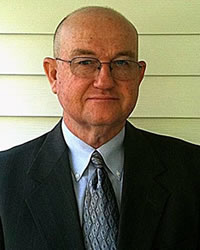
Gary Shepard
About Gary Shepard
Gary Shepard is teacher and pastor of Sovereign Grace Baptist Church in Jacksonville, North Carolina.

Comments

0 / 2000 characters
Comments are moderated before appearing.

Be the first to comment!

Joshua

Joshua

Shall we play a game? Ask me about articles, sermons, or theology from our library. I can also help you navigate the site.