Bootstrap
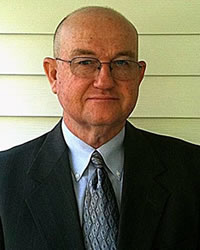
Gary Shepard

The Good News of the Gospel

1 Timothy 1:15
Gary Shepard October, 24 2010 Audio
0 Comments
Gary Shepard
Gary Shepard October, 24 2010

Sermon Transcript

Auto-generated transcript • May contain errors

100%
Turn back in your Bibles to 1
Timothy chapter 1. 1 Timothy chapter 1. Over the last few months, I've
become aware of some young men that aspire to be preachers. They are evidently seeking to
go into the ministry. I don't have a direct contact
with them, but I have sought to send one of them a book that
perhaps might be used of the Lord to help them. But this letter
that we're looking at, which the Spirit of God used the Apostle
Paul to write, is first of all directed to a young preacher
has to do with the ministry. And in the third verse, he says,
"...as I besought thee to abide still at Ephesus, when I went
into Macedonia, that thou mightest charge some that they teach no
other doctrine." neither give heed to fables and endless genealogies
which minister questions rather than godly edifying which is
in faith, so do." The Apostle Paul, being a preacher
of the gospel himself, He knew that this was not a matter that
was to be lightly entered into. And he knew that if this man
or any man was to stand up and preach the gospel, he had first
of all to be called of God. If you look here in verse 11
and 12, He says, according to the glorious
gospel of the blessed God, which was committed to my trust. And I thank Christ Jesus our
Lord, who hath enabled me, for that he counted me faithful,
putting me into the ministry. He didn't just decide one day
to go into the ministry. God had called him, given him
what he calls in another place a dispensation of the gospel,
and put him in the ministry. And he, like myself, he knew
that to be in the ministry, or to be a preacher in the biblical
sense of the word, was first and foremost to preach the gospel,
to clearly and continually set forth the gospel of Jesus Christ. Hold your place here and turn
back to 1 Corinthians chapter 9. 1 Corinthians chapter 9 and
verse 16. He says, "...for though I preach
the gospel, I have nothing to glory of." I have no reason in
myself for preaching the gospel to glory in, for necessity is
laid upon me, yea, woe is unto me if I preach not the gospel."
Now, the word gospel, means literally glad tidings. It means good news. Which means that the gospel,
as it is designed and ordained of God, is going to be good news
and glad tidings to someone. Obviously, not everyone. But the question is to us individually,
is the gospel good news to me? Is it good news and glad tidings
to you? Well, before we answer that,
if you'll look down in verse 15, the apostle Paul gives us,
in what we would call a nutshell, the good news of the gospel. When he says, this is a faithful
saying, and worthy of all acceptation, that Christ Jesus came into the
world to save sinners, of whom I am chief." You see, the gospel
of the grace of God in Christ is a message that is relevant
to our present hour and also to our present need. And for that reason, God has
preserved this statement in such a way and stated it in the present
tense so that it will be stated for as long as it's preached,
which will be as long as the world stands. Notice how he says
it here. He says, this is a faithful saying. And that means it is a word for
you and for me right now, and a word for us personally, and
it is a word that is faithful in the midst of so many unfaithful
sayings. And then he continues in this
one verse, you might say, to give us four things, four things
that make up the good news of the gospel. And the first one
is this, and this causes us, if he gives us understanding,
to know that this, as far as our experience is concerned,
is where everything begins. Because he describes the gospel,
first of all, in this way. He describes it as a saying. That is, the gospel is a speaking
of something, it is a proclaiming, a declaring, and in old language,
it is a heralding of some news, a declaration of truth, and a
preaching of the Word of God. As a matter of fact, it is described
in another place as the testimony of the Lord. And these glad tidings
are such and are set in contrast, as Paul has already said in this
chapter, and is such as being that which is not a fable, or
a myth, or a legend, or a tradition, or a rumor, but the gospel is
the declaration of the eternal God. And it is the same gospel
in every age in the Old Testament as in the New Testament because
Isaiah describes it in chapter 53 in this way. He says, "...who hath believed
our report." In other words, the gospel is a report from God,
who hath revealed, who hath believed our report, and to whom is the
arm of the Lord revealed. And the word saying here that
Paul uses is the word in the original Logos. And that word
Logos is the word, if you turn back to John's Gospel and the
first chapter, the word Logos is translated first of all there
in capital letters, speaking of the Living Word, the Word
that was made flesh and dwelt among us. And then that word
is the same word that he uses here in description of this saying,
this gospel of the Lord Jesus Christ. And it is this word that
the Spirit of God uses, as James said, in giving you birth, he
says, "...of his own will begot he us with the word of truth." And Peter, when he writes, speaking
about this Word, he says just that, being born again, not of
corruptible seed, but of incorruptible by the Word of God, which liveth
and abideth forever, And the word of the Lord endureth forever,
and this is the word which by the gospel is preached unto you."
Now, turn back to 2 Corinthians. 2 Corinthians and that first
chapter, and listen to what Paul says when he writes to the church
at Corinth in this second letter, beginning in verse 18. Because
he says something here about this saying, about this gospel
and word of God, when he says in the preaching of it, in verse
18, he says, "...but as God is true." In other words, God does
not use a lie to save His people. He does not use a half-truth
or something close to the truth. The Lord Jesus said it is the
truth that He will use to set His people free. And it is as
the God of truth, Paul says, but as God is true, our word
toward you was not yea and nay. In other words, it was not one
way at this time, another way at another time. It was not one
way concerning God on this hand, and another way concerning Him
on the other hand. It was not yes on one hand, and
no on the other hand. For the Son of God, Jesus Christ,
who was preached among you by us, even by me and Silvanus and
Timotheus, was not yea and nay, but in Him, that is, in Christ,
was yea. For all the promises of God,
are in Him, yes or yea, and in Him, amen, unto the glory of
God by us. In other words, Paul is telling
us that this subject or this teaching and doctrine concerning
the Lord Jesus Christ, that is, the sum of it as was taught by
Paul and John and all the apostles and by Christ himself, that it
is a definite saying. And it is a sure saying. It is, as he describes it here,
a faithful saying. Now, if I say something to you
that is not thoroughly based on the Scriptures, that's not
a faithful saying. If I stand before men or anybody
else does, and they give simply their own ideas and opinions,
that is not a faithful say. But if a man stands before you,
and not only invites you to, but encourages you to, as the
Bereans are said to have done in Scripture, to take and search
the Scriptures to see if the things Paul said were true. That is the only way to be sure
that what you're receiving is a faithful saying. The gospel is the faithful saying. That is, it is trustworthy and
accurate, not because this man Paul said it, or any of these
that were used to write the Scriptures, but it is true and accurate and
to be believed because God said it. God gave it. He says in Deuteronomy, "...know
therefore that the Lord thy God, He is God the faithful God." who keeps covenant and mercy
with them that love him and keep his commandments to a thousand
generations. That is, God is faithful to every
one of these especially who believe his gospel. As a matter of fact, in another
place it says this, "...faithful is he that has promised." Faithful
and just is he to forgive the sins of those who trust the blood
of Christ. He's the one who always abides
faithful, and he's faithful. to the truth as we find it in
His Word, the Word of truth of the gospel. Brother Mahan had
a sermon and had a track, I remember, many years ago, and he summed
up the gospel in this way. He said, to preach the gospel
is, first of all, to tell the truth about God. the whole truth about God. Don't magnify one of God's attributes,
such as His love, at the expense of His other attributes, such
as His holiness and His righteousness and His justice. And then secondly,
he said, to preach the gospel is to tell the truth about man. That is what God says that we
are. That we are in ourselves lost
and hopeless and having no righteousness that God will accept. Sinners,
vile, corrupt in our nature, fallen in Adam and apart from
grace, without hope. And then He said, it is to tell
the truth about salvation. What is salvation? It's not simply
God giving us health or wealth or any of these things. It is
God saving us in Jesus Christ from our sins. It is a rescue,
a deliverance of our soul from Satan and from sin and from all
the judgment that we're due in ourselves. And then he said,
to preach the gospel is to tell the truth about Jesus Christ. It is to tell the truth about
the Lord Jesus Christ. Who is He? And what did He actually
accomplish? And where is it that He is right
now? Paul says, God is faithful, by
whom ye were called into the fellowship of his Son, Jesus
Christ our Lord. In other words, the gospel, that
is this faithful saying, reveals the faithfulness of God to himself. In other words, most that we
hear in our day in the name of the gospel reveals a God who
is not being faithful to his own character, to his own law,
to his own word. But the gospel reveals the faithfulness
of God, not only to himself, but to his purpose, and to his
decrees, and to his laws, and to his justice, and to his love,
and to his mercy, and his grace, and to his word, and his promises,
and to all his very character and nature. And then it shows
the faithfulness of Christ to the Father, and to His covenant
pledges, and to His chosen people, which He pledged Himself to come
into this world and save. And then it shows the faithfulness
of the Holy Spirit. in complete harmony with the
other persons of the Godhead, to carry out and ensure and apply
all those blessings to those the Father chose and those whom
the Son redeemed by His blood, Him being faithful to call them
and give them new birth and faith in the Lord Jesus Christ by bringing
them to the gospel." It's a faithful saying. And then he shows this
concerning the gospel, and that is, he describes the gospel as
being worthy of all acceptation. That is, not only is the gospel
true, but worthy to be received and believed and trusted in and
relied upon, that is, it is suitable exactly not only to God but to
those to whom it's preached." In other words, I don't have
to walk in here or any place. and simply wonder by those who
are gathered here if what I have come to preach is applicable
to them, needful to them, or fitting to them. I can drive
a thousand miles to the north or five hundred miles to the
south and preach in some other circumstance. I don't have to
wonder if my message will be appropriate because I'm going
to preach the gospel. And he says it's to be received
by all kinds of persons, whether they be Jew or Gentile. There is one gospel for male
or female. One gospel, whether we're young
or we're old, whether we're rich or we're poor, whether we're
very educated or the very least educated, whether we're near
or where we're far, it is a gospel to be received and counted as
a treasure. That's how Paul described it. He said, we have this treasure
in earthen vessels. Why? That the glory might be
to God. But think about this thirdly,
Paul says that the good news of the gospel is mainly this,
and that it is about Jesus Christ. Not about you, not about me. Not about how good you are, not
about praising, it's not about human boasting. He says the gospel
is about Jesus Christ. Now look back at this verse,
verse 15. He says, this is a faithful saying
and worthy of all acceptation that Christ Jesus came into the
world to save sinners. Now, what does that tell us if
we knew nothing else about the gospel? Well, we would have to
know if we were enabled to believe it, that the true gospel has
something to do with what Christ did. Is that not right? It has
something to do with what Christ did. And all the prophets in
the Old Testament said that the Christ would come into the world
and He would do something. And it always boils down to either
one thing or the other, if Christ did come into this world, He
either did this or He did not. What did God say? Through the
prophets, through the types, all the pictures and shadows
and sacrifices of the Old Testament. What did such like his forerunner,
John the Baptist, say? What did Paul and Peter and James
and John and all the apostles, all those disciples that went
out and bore witness of the gospel in the New Testament, what did
they say? They said the same thing. that Paul says in this verse,
and that is that Christ Jesus came into this world to save
sinners. Well, if He came in order to
do so, He obviously must have existed prior to His coming. That's why John says of this
Word, he said, and the Word that was in the beginning with God,
and the Word that was God, that Word was made flesh and dwelt
among us, and we beheld His glory, the glory as of the only begotten
of the Father, full of grace and truth. Isaiah, when he's
giving that marvelous prophecy concerning the Messiah, he says,
"...for unto us a child is born, and unto us a Son is given."
This Son is not born. He's the eternal Christ, God
the Son. but he comes as this child that
is born, and he is described here as Christ Jesus, Christ
meaning anointed, that is, God's anointed and appointed Savior,
and he is Jesus, which is the God-man, Jehovah Jesus, and he
came, he said, to do the will of Him that sent Him. Now you think about that. If
He didn't, He was a failure. But if you stop and imagine and
think about what is being said here, that He is the Christ,
God manifests in the flesh, how could we even begin to imagine
a possibility of Him failing when the prophet had already
stood concerning Him and said, He shall not fail. He came, it says, in the fullness
of time, made of a woman, made under the law to redeem. And it says He obtained eternal
redemption. He came, He says, in order to
make an end of sins and bring in everlasting righteousness. He came to make His people the
righteousness of God in Himself, and to show Himself as the Lord
our righteousness. He said, My meat is to do the
will of Him that sent Me, and to finish His work. And then He hung there on that
cross, And he cried out in his dying hour the declaration that
that is exactly what he did. He said, it's finished. It is finished. He said to the Father, I have
glorified Thee on the earth. I have finished the work which
Thou gavest me to do. And I wish we could see this.
You see, Christ Jesus came into the world to save, not to give
us a chance, not to make us savable, not to make salvation possible. That's what most preach in our
day, in the name of Christ, in the name of Christianity, that
Christ did something long ago in order to make salvation possible
for you. Is that what this verse says?
It says He came into the world to save. And if he didn't save,
then there's no way he could ever be assured of being the
Savior. And it isn't what we allow him
to do. It isn't that he came to be an
offerer, but he came rather to be the offering, to be the one
sacrifice for sins forever, and thereby to save. You see, everyone
who hears the true gospel and everyone who truly believes on
the Lord Jesus Christ is going to acknowledge just exactly what
Jonah acknowledged and confessed in the belly of the fish. He
said, salvation. That's a big word. Because in
this book, we have it in every tense. We have been saved. He speaks of our being saved
and He speaks of our yet being saved also. Salvation, He said,
is of the Lord, of the Lord Jesus Christ. And that's why He was
named what He was named. The name Jesus literally means
Jehovah's Savior. And the angel says this is why
He's to be named Jesus, for He shall save His people from their
sins. Turn over to 2 Timothy. 2 Timothy chapter 1. And look down at this second
letter to this young preacher, Timothy, that Paul writes in
verse 8 of chapter 1, when he says, "...be not thou therefore
ashamed of the testimony of our Lord, nor of me his prisoner,
but be thou partaker of the afflictions of the gospel according to the
power of God." In other words, Paul was encouraging Timothy
because Paul was writing this letter from prison. He'd been
cast into prison for preaching this gospel. He says, it is the
gospel according to the power of God who hath saved us and
called us with an holy calling, not according to our works. but according to his own purpose
and grace which was given us in Christ Jesus before the world
began." Salvation did not begin at the cross. Salvation did not
begin when this world was created. Salvation is an eternal thing. An eternal salvation which was
in Christ Jesus as He stood as the Savior and surety of His
people and they in Him before the world began. Turn over to
Titus. Titus chapter 3. Titus 3 and
verse 4. He writes to Titus and he says,
"...but after that the kindness and love of God our Savior toward
man appeared, not by works of righteousness which we have done,
but according to His mercy He saved us." by the washing of
regeneration and renewing of the Holy Ghost, which He shed
on us abundantly through Jesus Christ our Savior, that being
justified by His grace, we should be made heirs according to the
hope of eternal life." He saved us. And yet the message goes
out in our day something like this, He's done something for
you, And if you'll do something for Him, He'll save you. He's
done all that He can do. Now it's up to you if you'll
believe on Him, or if you'll trust in Him, or accept Him,
or decide for Him, then He'll save you. No, it says, He has
saved us. And any Christ, any Jesus who
has not saved us is another Jesus, is the wrong Jesus. In other
words, if you wanted to sum it up, it could be just about like
this. Any gospel that does not set
forth the Lord Jesus Christ as a totally 100% successful Savior of all His
people is not the gospel. Christ said, I know my sheep,
I love my sheep, I lay down my life for my sheep, and my sheep
will hear my voice, and they'll follow me. And I give unto them
eternal life." And they're never going to perish. Just read John
10. You see, salvation is not something
we do, nor is it our deciding to make what Christ has done
effectual for us. Salvation is what Christ came
to accomplish in full for His people. And He did it. He finished it. And if He saved
me, I'm safe. If He saved me, I'm safe. If
He saved you, you're safe. But we have no interest in Him
as long as we cling to anything or anyone. He said, my sheep
hear my voice and they follow me. And then it says something
else. It says that he came into the
world to save sinners. Well, on the one hand, we could
say, as so many do, and which is true, we're all sinners. But these sinners that he's talking
about here are those sinners that God chose in Christ before
the world began and entrusted into the hands of Christ to save. Would you say everybody knows
they're a sinner? Oh, no. Mr. Spurgeon, I believe it was,
said one time, he said, a sinner is a sacred thing. The Holy Ghost
has made him such. What was he meaning? He means
that person who truly sees and understands what it is to be
a sinner before a thrice holy God, and knows themselves to
be such, and feels the wretchedness of their sin, to such a degree
that they flee to Christ alone, who He came to save, to save
His people from their sin. We preach the electing grace
and mercy of God, and somebody says, well, I just really can't
imagine myself as one of God's elect. That's just not true.
Because you can do that a whole lot easier than you can ever
imagine and really confess yourself to be a sinner. Our problem is
not with our sins, our problem is always with our imagined goodness
and righteousness and always resting in what we've not done
or what we have done in charity or whatever it is. But it says,
man at his best state is altogether vanity. If you ever find out,
and the only way you ever will is for the Spirit of God to bring
it home to your heart, the reality, first of all, of the bad news,
that you fell in Adam, that you have a nature totally contrary
to God, that you have nothing to show for yourself but your
sins. If you ever are unable to see
that, you'll be glad to be saved by one outside of yourself. who accomplished that work 2,000
years ago. Our problem is not our sins,
it's our self-righteousness. Christ died for the ungodly. And if we don't have peace in
our hearts this very day in the matter of our soul, it's not
because we think we're such great sinners, because Christ died
for sinners. It's because we think we know
more than God. and refuse really to bow to what
he says. This is a faithful saying and
worthy of all acceptation that Christ Jesus came into the world
to save sinners. And you know what Paul does?
He did just exactly what every sinner that God saved does. He
accounted himself. and confessed himself to be the
biggest sinner of all. He said, of whom I am chief. Well, was he a cult leader, or
a murderer, or a rapist, or a pervert of some kind? No, he was a moral
Jew, teacher of the Bible, supposedly. But he said, I counted all that
which I thought was good, I counted it all as done, that I might
be found in Christ, not having my own righteousness, which would
be by my doing, but the righteousness that God gives as a gift in Jesus
Christ." He said, I was before a blasphemer, an injurious person,
persecuted the Church of God, thought I was doing right, but
I did it in the ignorance of unbelief. Well, if that was the
case, what did you do? Did you change? Did you make
a decision or something? No, he said, God had mercy on
me. He wasn't seeking the Lord. He
was seeking to get to Damascus where he could take some more
believers of Christ and bring them out, have them stoned, put
them into prison. Christ had saved him. And so
He stopped him and made Himself known to him. And that's what
God does to every one of His people. He stops them, He orders
their course, and He brings them in contact with the truth. And that is that Christ had saved
them. Therefore, all the glory goes
to Him. I don't know about the situation
of these young men, but I know this, if God has called them
to preach. Number one, first of all, they've
got to know the gospel. You can't believe what you don't
know. They first of all got to know
the gospel, as it's summed up in that one verse. Second of
all, they've got to believe the gospel. And then if God's called
them, they may preach the gospel. My prayer is that we'll believe
the gospel. Look to Christ for everything. When we say Christ came into
the world to save sinners, when we read texts like Paul wrote
to Timothy and Titus, He hath saved us, somebody says, but.
No. Either He did or He didn't. If He didn't save you, if He
didn't save me, we'll perish. But if He did, He'll send the
gospel to us and enable us to believe that truth, to rest in
it, and give us hope and peace. Our Father, this day we lift
up the worthy name of the Lord Jesus Christ, our Savior, our
only righteousness. We lift you up and exalt you
as the one whose blood is that sacrifice by which you put away
our sins, satisfied the very justice of God that stood against
us. We give praise to you for your
grace, and we pray that you make your word known to your people.
We know your sheep will hear your voice. No matter where they
may be at the time, lost sheep, they will be called out and brought
to acknowledge that truth wherein you get all the glory. We pray
and ask all things that you would save your people in the name
of Christ. Amen.
Gary Shepard
About Gary Shepard
Gary Shepard is teacher and pastor of Sovereign Grace Baptist Church in Jacksonville, North Carolina.

Comments

0 / 2000 characters
Comments are moderated before appearing.

Be the first to comment!

Joshua

Joshua

Shall we play a game? Ask me about articles, sermons, or theology from our library. I can also help you navigate the site.