Bootstrap
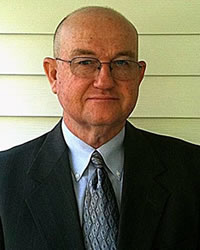
Gary Shepard

Christ The King Priest

Psalm 110:4
Gary Shepard July, 18 2010 Audio
0 Comments

Sermon Transcript

Auto-generated transcript • May contain errors

100%
Psalm 110, where we were at last
week, and we looked at those first verses, and we saw that
this One who is called David's Lord and David's Son is enthroned. The Lord said unto my Lord, Sit
thou at my right hand, until I make thine enemies thy footstool."
This is the Lord Jesus Christ, who is King of kings and Lord
of lords. And then it says that His rod,
which is His gospel, shall go out of Zion. God go forth out
of His church, and His people will hear it, and they will believe
on Him and bow to Him and rejoice in His salvation, and He will
rule even in the midst of all His enemies. The Lord shall send
the rod of thy strength out of Zion. Rule thou in the midst
of thine enemies." And he has a kingdom. And his people, though
they are, as all of Adam's sons, unwilling by nature, they will
bow to him and believe on him, they will be distinguished from
every other one, because he will make them willing in the day
of his power. Thy people shall be willing in
the day of thy power, in the beauties of holiness from the
womb of the morning, thou hast the dew of thy youth." But these
subjects, these who will be brought to believe on Him and bow to
Him and worship Him, saved by Him, they are in themselves all
sinners. and they are sinners, and yet
they will come, these who of themselves are of Adam's race,
they will come and be brought to believe on Him. They will
be His subjects and be to the praise of the glory of His grace. But how can this be sure? How can God, who is holy and
just, receive them and bless them and make them a part of
this holy kingdom? Well, look at that fourth verse. The Lord hath sworn and will
not repent. The Lord, who when He could swear
by none greater, it says, He swore by His own self, and He
will not and He cannot change. And so He said to this one, who
is also His King, Thou art a priest forever, after the order of Melchizedek. He is the king-priest. And many of the kings, even of
Israel, they were found intruding in the priesthood of which they
had no right or part. but God dealt with them severely. And the reason is because there
is only One who is both King and Priest of God. And it is said of Him, by the
Father, here in that fourth verse, long, long ago, Thou art a priest
forever after the order of Melchizedek." Now, who is this person, Melchizedek? Well, we first meet with this
man, Melchizedek, when Abraham, or Abram as he was at that time,
was returning from having rescued Lot, who along with a number
of others had been kidnapped as well as the king of Sodom. So if you'll turn back and look
with me in Genesis chapter 14, It says in chapter 14 and verse
17 that when he had brought back Lot and all the people and all
the spoils that had been taken away, Verse 17 says, "...and
the king of Sodom went out to meet him after his return from
the slaughter of Kediloroma, and of the kings that were with
him at the valley of Sheba, which is the king's dale." And Melchizedek,
king of Salem, brought forth bread and wine, and he was the
priest of the Most High God." And he blessed him and said,
Blessed be Abram of the Most High God, possessor of heaven
and earth, and blessed be the Most High God, which hath delivered
thine enemies into thy hand. And he gave him tithes of all."
And the king of Sodom said unto Abram, Give me the persons, and
take the goods to thyself. And Abram said to the king of
Sodom, I have lift up mine hand unto the Lord, the Most High
God, the Possessor of heaven and earth. that I will not take
from a thread even to a shoelatchet, and that I will not take anything
that is thine, lest thou shouldest say, I have made Abram rich."
Now, he is returning from the slaughter of these kings and
the rescue of Lot when he encounters this mysterious and wonderful
person in the Scripture. His name is Melchizedek. And he is described as a priest
of the Most High. But these are not the only mentions
of Melchizedek, who is either a great and wonderful type of
the Lord Jesus Christ, or maybe even the pre-incarnate Christ
himself. But we find out more about him
in the book of Hebrews and the seventh chapter. Turn over to
Hebrews chapter 7. And when you look at the last
verse of Hebrews 6, there is a reference to this very verse
in Psalm 110. He says, "...whither the forerunner
is for us entered, even Jesus, made an high priest forever after
the order of Melchizedek." So here is, if He is not the pre-incarnate
Christ Himself, He is one who is a picture and type of the
Lord Jesus Christ. And he is the fulfillment of
a prophecy that was spoken of in the day of Eli and Samuel
whenever Hophni and Phinehas, those two sons of Eli, wicked
priests, were slain by God and this prophecy given. And this shall be a sign unto
thee, that shall come upon thy two sons on Hophni and Phinehas. In one day they shall die, both
of them, and I will raise me up a faithful priest that shall
do according to that which is in mine heart and in mine mind,
and I will build him a sure house, and he shall walk before mine
anointed forever." So we have this type, or this one, who is
none other than Jesus Christ. And listen to what he says here,
beginning in verse 1 of Hebrews 7. For this Melchizedek, king of
Salem, priest of the Most High God, who met Abraham returning
from the slaughter of the kings, and blessed him, to whom also
Abraham gave a tenth part of all, first being by interpretation,
King of righteousness, and after that also King of Salem, which
is King of peace. without father, without mother,
without descent, having neither beginning of days nor end of
life, but made like unto the Son of God, abideth a priest
continually." Now consider how great this man was unto whom
even the patriarch Abraham gave the tenth of the spoils. And verily they that are of the
sons of Levi, who receive the office of the priesthood, have
a commandment to take tithes of the people according to the
law that is of their brethren, though they come out of the loins
of Abraham." but he whose descent is not counted
from them received tithes of Abraham and blessed him that
had the promises." Now, that is a real key statement there. Him who had the promises. Now, the Scripture says that
all the promises of God, all of the promises of God, they
are yea, and in Him, that is, in Christ Jesus, amen. They are all bound up in the
Lord Jesus Christ. And so he is showing us here
the superiority of Christ and his priesthood and his sacrifice
in that superiority that was above and so far above the priests
of that Arianic priesthood, these priests, these sons of Levi. He says in verse 7, "...and without
all contradiction, the less is blessed of the better." In other
words, the one that actually does the blessing has to be so
far higher and greater than the one that's blessed. And here
men that die receive tithes, but there he receiveth them,
of whom it is witness that he liveth. And as I may so say,
Levi also, who receiveth tithes, paid tithes in Abraham, for he
was yet in the loins of his father when Melchizedek met him." If
therefore perfection were by the Levitical priesthood, for
under it the people received the law, what further need was
there that another priest should rise after the order of Melchizedek,
and not be called after the order of Aaron?" Now, there are lots
of things that you can learn and are very important throughout
all of this seventh chapter concerning Christ and this priesthood. And he's showing how much greater
Christ is and his priesthood than even Abraham or the sons
of Levi, all of whom paid tithes and honored this man Melchizedek. But what I want you to notice
this morning particularly is these descriptive names and titles
that define and distinguish this priest and this priesthood. Look back in verse 2. He says,
"...to whom also Abraham gave a tenth part of all, first being
by interpretation king of righteousness, and after that also king of Salem,
which is king of peace." What does that name, or what does
this figure and person, who is he, and why is he distinguished
and his priesthood in this manner? Because he is first King of Righteousness,
and then after that, King of Salem, which is King of Peace."
What does that mean? Is that just a title? Was it
just a name or a title given to this figure in history? Or what does it mean especially
as it pertains to the one whose priesthood is said to be not
of an earthly kind or after the earthly order even established
by God, but is far greater and especially in what it accomplishes? Who is He? Well, He is King of
righteousness, and after that, King of peace. As a matter of
fact, Christ could not be King of peace Was He not also, and
before that, this King of righteousness?" In other words, that which is
essential, not only to His kingship, but to His priesthood, is the
accomplishment as this priest and with His sacrifice of this
work of righteousness. As a matter of fact, Daniel the
prophet, in his description of the Messiah, he distinguishes
him by this work that he would accomplish when he says that
he would bring in everlasting righteousness. or he would bring
in the everlasting righteousness. Because it is through this way,
or this work of righteousness, that the Lord Jesus Christ, who
is himself the King or the Prince of Peace, it's by this work of
righteousness that he establishes peace. Turn on over in Hebrews
chapter 7 and look at verse 24. Because he is not just a priest
as some kind of mystical priest or as a figurehead of some kind,
but look at what it says in verse 24. But this man, this priest, this
unique priest, this king priest, because he continues ever, hath
an unchangeable priesthood. sons of Levi, these in that Arianic
priesthood, they would come along and they would serve in the tabernacle,
and then they'd die and there'd have to be another one come along.
And so that priesthood was ever-changing in those who ministered in the
sacrifices, but he, as a priest, because he continues forever. has an unchangeable priesthood."
Now, what does that mean? He has an unchangeable priesthood. Well, there's only One who does
not and who cannot change. And He is the One who is none
other than God Himself, and He says, I am the Lord, I change
not, therefore, ye sons of Jacob are not consumed." So this one
who is spoken of, this one who is pictured in the man Melchizedek,
this king priest, he is the one who because he is none other
than God manifest in the flesh, the unchangeable, immutable God,
his priesthood has been forever. He's the only true, real priest
that has ever been ordained of God and established of God to
represent the people of God before the throne of God. As a matter
of fact, before Abraham was. And before Aaron was, and before
any of these priests such as Eli were, before any of these
priests in that priesthood ever were, he was God's priest and
God's king forever. Now listen, wherefore? He is able also to save them
to the uttermost that come unto God by Him. Now, I know what men do, and
there is a sense in which that is always the way it is. that
we come to God in everything, at every time, only through and
by our one King Priest, the Lord Jesus Christ. But that's not
what saves us. That's not what saves us. What
saves the people of God is the fact that Jesus Christ, 2,000
years ago plus, Jesus Christ, as the man Christ
Jesus, stood as our priest before God, and in Him every one of
His people came to God. They were brought to God by His
priestly sacrifice and work. Look at verse 26. For such an
high priest became us." What does that mean? It means suited
us, fitted us. In other words, we have to have,
as men and women who would stand before this God, we have to have
a man, a representative who would represent us in our humanity. But not only that. It has to
be a humanity that is without sin. God cannot accept a sinner
like you. You couldn't be my priest, and
I couldn't be your priest, and all of us together couldn't be
anybody else's priest, because a sinner cannot save a sinner. He says, "...for such an high
priest became us, suited us, and fitted us as sinners, who
is holy, harmless, undefiled, separate from sinners, and made
higher than the heavens. He doesn't represent us in earth.
He represents us in heaven. He doesn't represent us as a
sinner for a sinner. He represents us as the sinless,
spotless Lamb of God. He is both in His person, the
priest, and the sacrifice, without sin. who needeth not daily as
those high priests to offer up sacrifice, first for his own
sins and then for the people's. For this he did once when he
offered up himself." You see, the glorious thing about this
priest and this priesthood is that the priest himself is also
his sacrifice. He didn't have to do it many
times. He didn't have to go into that
tabernacle day after day like those priests did. He didn't
have to go into the temple day after day like those priests
did that pictured and typified Him. He, it says, entered into
that holy place in the presence of God once. Why? because of who he is as our priest
and because of his sacrifice which was his own blood. For the law maketh men high priests
which have infirmity, but the word of the oath which was since
the law maketh the son who is consecrated forevermore. But now, he didn't stop there.
Keep going, chapter 8. Now, of the things which we have
spoken, this is the sum. I like it when everything comes
down to what we call the nitty-gritty, or the bottom line, or the sum
of something. And so the Apostle says, of all
that we've said about this priest and this priesthood, and how
we have not only compared the priesthood of Christ to the priesthood
of those Old Testament priests, how we've not only compared it
to it, but contrasted it to it, this is the sum. We have such
an high priest, who is set on the right hand of the throne
of the majesty in the heavens." Now, you never, under that Old
Testament economy, you never saw one of those kings that was
supposed to act also in the office of the priest. But, by the same
token, you never saw any of those priests that sat down to take
the throne. As a matter of fact, in that
earthly tabernacle, with all the furniture and the fixtures
that was in that place, there was one striking thing that was
missing, and that was any place to sit down. I say there wasn't
any place, but there was one. As a matter of fact, that Ark
of the Covenant that was in the Holy of Holies, where the priests
went in and sprinkled the blood once a year on the Day of Atonement,
that was actually a throne. And God described Himself as
the God, Jehovah God, the God that sat between the cherubims. There was no one. who could take
the throne with God except God Himself. And as he acted as the
mediator, and he displayed his redemptive work as the priest,
the priest only went in, sprinkled the blood, and came out except
for this priest. He sat down. at the right hand
of the Majesty on high, not only because of who He is as God and
as God's King, but also because His work so satisfied God on
the behalf of His people. His work so demonstrated the
righteousness of God in salvation that He, as Priest, A minister of the sanctuary and
of the true tabernacle which the Lord pitched and not man,
for every high priest is ordained to offer gifts and sacrifices,
wherefore it is of necessity that this man have somewhat also
to offer." For if he were on earth, he should not be a priest,
seeing that there are priests that offer gifts according to
the law." In other words, Christ, if He be a priest, and a far
greater priest than any of these priests, He had to have something
to offer just like they did. But in order to save his people,
it had to be so much greater. It couldn't be the blood of a
lamb. It couldn't be the blood of a
goat. It couldn't be anything that
was tainted or polluted with sin. Turn over to Hebrews chapter
10. Hebrews chapter 10. In Hebrews
chapter 10, look down at verse – it's hard to even know where
to start. Verse 9, let's start at verse
9. "'Then said he," who is this? This Christ, this priest, "'Lo,
I come to do thy will, O God. He taketh away the first, that
he may establish the second.'" The end of that priesthood of
Aaron and those sons of Levi's ended. Why? because the one that
they typified and represented was come. He speaks, "...I come
to do thy will, O God, by the which will we are sanctified
through the offering of the body of Jesus Christ once." Did you
understand what's said there? Christ came. to do the will of
God. And my friends, His doing, the
will of God, is all our salvation. Not what you do, it's what He
did. And the reason why so people
are so destitute of assurance, the reason why they have such
fears and doubts, is because preachers are always pointing
them to what they do. There's no peace there. Peace
has to do with what Christ did. It has to do with the sacrifice
that he offered that put away sin. He is, because he is first
king of righteousness, also king of peace. Now, there are some
who believe that this man Melchizedek was an actual king of Jerusalem. What does Jerusalem mean? Well,
that very word, Salem, means peace. And Jerusalem is a city
that is used, just like Zion, to picture the church which is
Christ's body. God's elect. Those for whom Christ
died. The sheep. I lay down my life
for the sheep. So what is the church? Jerusalem. The city of peace, not a city
of turmoil. Oh, there are lots of conflicts
pictured in Scripture, always going on around Jerusalem. But
Jerusalem, what is it? City of peace. And because the
Lord Jesus Christ is King of righteousness. because he established
that righteousness before God, which is the basis upon which
God is a just God as well as a Savior, because he is the one
that is described by God himself as my righteous servant, the
righteous branch. and gloriously by his people,
the Lord our righteousness, our Advocate, whose advocacy is on
this basis. He is Jesus Christ the righteous."
What's he talking about there? He's the one by which God justly,
in the full satisfaction of all His holy character, and in the
full satisfaction of all His law and justice. He did justly
save His people through the priestly work and sacrifice of this King-Priest. He's King of righteousness, and
therefore King of peace. But look on here in Hebrews 10.
By the which will? Whose will? Free will? No, God's
will. We are sanctified. Not a process. We are sanctified
through the offering of the body of Jesus Christ once. And every priest standeth daily
ministering and offering oftentimes the same sacrifices, which can
never take away sins. But this man, after he had offered
one sacrifice for sins forever, sat down on the right hand of
God, from henceforth expecting till his enemies be made his
footstool. For by one offering he hath perfected
forever them that are sanctified." He said, you're a priest forever
after the order of Melchizedek, who was both king and priest,
whose very name meant King of Righteousness and King of Salem,
which is King of Peace. And you know the truth is that
we've never really trusted Him until we trusted Him, trust Him
in that character and person. Now I know the world runs around
here and tells everybody to make Jesus Lord. Well, I'm afraid
that God the Father did it a long time ago. Beat you to it. But you see, when the Lord is
pleased to reveal His Son in us, we bow down before Him and
praise Him and bless Him as King of righteousness and King of
peace. He's the Lord, our righteousness,
and therefore His gospel is called the gospel of peace. Why? Because He made peace by the
blood of His cross. You say, I don't have much assurance,
or I don't have much comfort. Well, I'm not surprised. Because peace, the God of peace,
is the God of peace to those who look only to Christ crucified. He made peace. Is that true or not? He made peace by the blood of
His cross. God was in Christ reconciling
us to himself." Well, Isaiah says, "...and the work of righteousness..."
You know, just make a note of this verse of Scripture. Isaiah
32 and verse 17, "...and the work of righteousness shall be
peace." Peace. "...and the effect of righteousness."
Yours? No, His. And the effect of righteousness. You see, true righteousness has
an effect. And the effect of righteousness,
quietness and assurance forever. That's a long time, isn't it?
Forever. The effect of righteousness. And you know, the reason why
the effect of that righteousness in our hearts and minds is quietness
and assurance forever is because it has the same effect with God
Himself. What I want you to know, that
the only thing that can bring you peace of conscience is what
brought peace in the court of heaven. in your behalf." And
that was the blood of this sacrifice as it was offered by this priest
before God Himself. Now, I want you to notice something.
Turn back to Genesis 14. Whenever Abraham was confronted. Now, Abraham, it doesn't sound
like to me, was looking for Melchizedek. I don't even know if he knew
this figure, whatever it was, But he immediately recognized
him as one far greater than himself. But look down here in Genesis
14 and verse 18 again. And Melchizedek, king of Salem,
brought a sacrifice, offered it up to God on his behalf. Melchizedek, king of Salem, brought
forth bread and wine, and he was the priest of the Most High
God. Abraham didn't offer a sacrifice
to him. He didn't offer a sacrifice by
him. He received something from Melchizedek. You see, this priest, has something
to give us because He's already offered up the one sacrifice
for sins forever. I get so tired of hearing preachers
everywhere telling people that they need to give something to
God or do something to God. I'm telling you this priest,
our king priest, he does something for us. He's already done something
for us. He has something to give to us
because he's already given himself for us. When Abraham met Melchizedek,
Melchizedek gave him bread and wine, and what does it say? He
blessed him. He blessed Abraham of the Most
High God. And at the same time, he blessed
the Most High God. Now, there's just one person,
one unique person in time and eternity, that can do that, and
that's Christ. He blessed him. Now, how do you
suppose that this Melchizedek blessed Abraham? Abraham wasn't
sick. He just had accomplished a glorious
victory in body. There weren't any cars around.
He had more than he ever could need, and here the king of Sodom
was trying to give him more. How did he bless him? I hear
all these people, the Lord's blessed me with a good family,
the Lord's blessed me with this new car, the Lord's blessed me
with this house. No. He blessed Abraham in the
only way that a priest can bless a sinner like Abraham and you
and me. And he gave him bread and wine.
You know, that's strange, but that's the very elements that
we partake of when we have the Lord's table in. Bread and wine. Why do we, when we have this
feast, which is what it is, the Lord's Table, why do we feast
on this bread and wine that Christ instituted? He said, this is
my body, this is my blood, this is the sacrifice that ratifies
every covenant blessing for you. You see, these are the blessings.
wherein God hath blessed us with all spiritual blessings in Christ
Jesus before the world began." Abraham paid tithes to this man. He blessed Abraham. He's described as the priest
that lives forever. Levi even paid tithes to him. He continues forever. Why? To show the greatness of the
king priest, of all his people. the Lord Jesus Christ. I want you to turn one more place
quickly. I'm just going to try to read this to you. It said he blessed it. How can
this priest, how could he have blessed us? Well, in verse 1
of Romans chapter 4, Paul's talking about this same man Abraham.
He says, "'What shall we say then that Abraham our father,
as pertaining to the flesh, hath found? For if Abraham were justified
by works, he hath whereof to glory, but not before God. But what saith the scripture,
Abraham believed God, and it was counted unto him for righteousness?'
Now to him that worketh is a reward not reckoned of grace, but debt. But to him that worketh not,
but believeth on him that justifieth the ungodly, his faith is counted
for righteousness." Even as David, the same writer of the Psalm
that we read, even as David also describes the blessedness of
the man unto whom God imputes righteousness without works."
That's where the blessing's at. Blessed is that man, that woman,
that young person, that God imputes righteousness to the very righteousness
of God in Christ without their works. You see, all that priesthood
showed was that those people, They could never stand before
God, represent themselves before God, or have any sacrifice to
offer to God by themselves, in themselves. They had to have
one to represent them, and he was a type of Christ. Not only blessed is the man to
whom the Lord imputes righteousness without works, blessed are they
whose iniquities are forgiven and whose sins are covered. Blessed
is the man to whom the Lord will not impute sin. Now, how can God be just and
not impute our sins to us, not count us, hold us accountable
and chargeable for our sins. Well, because he imputed them
to our substitute, our priest, and his laying down his life
is that one sacrifice for sins forever. You see, just because
we don't have some earthly priest, just because we don't have somebody
wandering around in a strange garment or something like that,
that doesn't mean that the Lord's people doesn't have a priest.
We have a King-priest, who on our behalf has so satisfied God,
and made atonement for our sin, and made us the righteousness
of God in Himself, that He sat down at the right hand of the
majesty on high, and he is king of righteousness and king of
peace for his people forever. He's going to rule forever, and
his priesthood and his sacrifice have satisfied God forever. He has neither beginning of days
nor end of life, and he's able to save to the uttermost them
that come to God by Him." Don't look at any other. Don't look
at yourself. Don't look at the law. Rest in
the priest and his sacrifice. He's King of righteousness and
King of peace. You remember when the manslayer
under the law killed a person, And there was established in
Israel those seven cities of refuge, and so that manslayer
was to run as hard as he could to one of those cities to take
refuge from the avenger of blood. If he could make it to that city,
he was safe. For how long? It says, for as
long as the priest lived. Jerusalem. and all its inhabitants,
the church, believers, they're safe in the city of refuge, which
is Christ, because their priest is going to live forever. God help us to know Him. Our
Father, this day we give You thanks for Your mercy. And we're
thankful that though we have so pitifully, poorly, sought
to set forth the King-Priest. That does not change His greatness,
nor does it diminish His work and accomplishments. It just
shows how this sinner so desperately himself needs Him. We thank You
for Your mercy, and for our King and our Priest. We praise Him,
and we pray in His name. Amen.
Gary Shepard
About Gary Shepard
Gary Shepard is teacher and pastor of Sovereign Grace Baptist Church in Jacksonville, North Carolina.

Comments

0 / 2000 characters
Comments are moderated before appearing.

Be the first to comment!

Joshua

Joshua

Shall we play a game? Ask me about articles, sermons, or theology from our library. I can also help you navigate the site.