Bootstrap
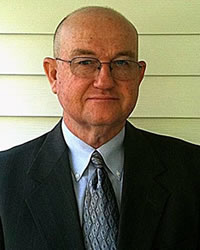
Gary Shepard

The King and His People

Psalm 110
Gary Shepard July, 11 2010 Audio
0 Comments

Sermon Transcript

Auto-generated transcript • May contain errors

100%
Turn back in your Bibles to Psalm
110. I want to talk to you today about
the King and His people. It is a shame that in our day,
on every hand, and especially amidst the godless religions
of our day, that men and women are taught and believe that for
Christ to be a success, for Him to be glorified, it depends on
what they will do. It depends on their decisions. They believe it depends on what
they make him to be. They even use expressions like
this, make Jesus Lord. But actually, the glory of Christ
does not depend on man at all or anything that he'll do. The glory of Christ depends on
what he's done and what God the Father has done and will do as
a consequence of that work. You see, we have in John 17 that
great high priestly prayer where Christ prays and enables us to
hear what He says to the Father. But if we know anything about
the Bible, we know that that most definitely was not the first
conversation between the Father and the Son. And as a matter
of fact, here in Psalm 110, we have just such a conversation
that took place before time, before the world began, before
Christ came in human flesh, It took place in the Godhead between
the Father and this One who is the Eternal Son. You see, the psalmist, writing
by inspiration before Christ came into this world, speaks
of something that in one sense has already been done. He's talking here about the crowning
of God's King. And that is not only something
which has been done, but which is also presently taking place,
and something which will have a full manifestation in the day
ahead. If you look back at the previous
psalm, as do all the psalms, it speaks of the sufferings and
the death of the Lord Jesus Christ. And so when you come to Psalm
110, the father calls out to his son to take the throne. Look back at verse 1, "...the
Lord said unto my Lord, sit thou at my right hand until I make
thine enemies thy footstool." You see, the words rather here
that speak of Lord or the Lord are actually something like this,
Jehovah said to Adonai, So if we had really nothing else,
we would know just from that one verse that what we believe
about the triunity of God, That is, Father, Son, and Holy Spirit. And as John says, these three
are one, we would know it by the words and the conversation
of this one verse. The Father, God the Father, says
to the Son, God the Son, sit thou at my right hand." Now,
we know the truth of this, as well as the importance of this,
because Christ, in His conversations to men, used this very verse. If you remember in Matthew's
Gospel, Whenever Christ is confronting those Pharisees and others with
the truth and reality of His own person and office, He says
to them, if David, then call him Lord. That is, if David referred to
the Messiah as Lord, that is, one over Him and greater than
Him, even God Himself, he said, how is He His Son? And that would do us well to
stop and think about and consider, because if God the Spirit teaches
us the answer to that, then we are on our ways to know the truth
about who Jesus is. If a man like David, refers to
him as David's son, how is he at the same time David's Lord? And that can only be answered
in one who is God manifest in the flesh, the Lord Jesus Christ. He is in that one sense in the
flesh, David's son, But being God in flesh, he is also David's
Lord. And then we also find a reference
to this in Hebrews 1 and verse 13 when he says this, "...but
to which of the angels said he at any time, Sit on my right
hand until I make thine enemies thy footstool." In other words,
the Apostle is by the Spirit showing the superiority of Christ
to the angels. The Father said to the Son, sit
thou at my right hand. And then in the very early preaching
there at Pentecost in the book of Acts, the apostle in that
preaching says this, "...For David is not ascended into the
heavens, but he saith himself, The Lord said unto my Lord, Sit
thou on my right hand." So we have all these testimonies in
the New Testament, including another in Hebrews 10, where
he says, "...but this man, after he had offered one sacrifice
for sins forever, sat down on the right hand of God from henceforth
expecting till his enemies be made his footstool." Now, what
I want us to notice in these verses this morning is a twofold
message and truth here. And one of them is to notice
how the Father says to the Son, "...sit thou at my right hand."
And what that does is shows us that the work of Christ is a
finished work, and not only a finished work, but a work that God accepted. If you remember in the tabernacle
where there was in that Holy of Holies all of these various
pieces of furniture, and yet of all that was there, that table,
that showbread, all these things, and yet there was no place to
sit down. Why was that? Because the work
of those priests was never finished, and though they were priests
of God appointed, they never could, by the sacrifices that
they offered, satisfy God and make atonement for sin. But he is called upon to sit
down. He sat down at the right hand
of God. And sitting down at the right
hand of God also shows us this, that not only did God accept
the work that He did, but God approved the work that He did. You see, that is used here and
elsewhere, this sitting down at the right hand, to show a
place of favor and acceptance. God not only accepting His work,
but approving that which Christ did in His person and work. And as a consequence of that,
also He's given the scepter. That is the rod of power and
strength and authority. If you look down in verse 2,
it says, "...the Lord shall send the rod of thy strength out of
Zion. Rule thou in the midst of thine
enemies." You remember when God sent Moses, He gave Moses that
rod. which always was used, getting
even that water from the flinty rock. And not only that, but
there was Aaron's rod that budded, which signified that resurrection
life that is in Christ Jesus. But if you notice here, the rod
or the scepter or that which signifies his strength and power
and authority is said to go out of Zion. He manifests his strength. He manifests His power, and that
which makes of His greatest glory in the church sending out the
gospel, which not only gives Him all the glory, but is said
to be the very power of God unto salvation to every one that believeth,
both Jew and Gentile." Now, this is a thing that is done in the
mind and will and purpose of God, and it can never, ever be
altered. That is, when He willed to do
this, It was a thing done. So much so that in another Psalm,
he says there in Psalm 2, "...Yet have I set my King upon my holy
hill of Zion." Now, he's not talking here about some future
earthly reign on the earth. He's talking about Christ reigning
as the head of the church on his holy hill Zion, which is
Jerusalem, the new Jerusalem, which is the church that is his
body. But think about this. Here is
the Father establishing His Son as His King on His holy hill,
giving to Him this rod of authority and power. But where are His
subjects? How can he be guaranteed that
he will have these subjects? You see, in order to be a king
over a kingdom, he has to have subjects in this kingdom. We know God has said he's already
king. We know that God has shown His
strength and His authority. We know He will conquer all His
enemies. But where are His subjects, His
people, in any given day? I'll tell you what, when you
look around us in our day, When you hear what men and women say
about God, and especially about as He is in Christ, they cannot
be talking about this God. They talk about a weak God, a
puny God, a God who can only do what you'll allow Him to do. A God who tries, and who pleads,
and who cries, and who wants, and who begs. He's a beggar God. Can't be this God, especially
can't be this Christ. He's the King. But not only here
do we have this crowning of the King, the Lord Jesus Christ,
but we also have a pledge from the Father concerning the subjects
of this King. And as he gives this pledge to
his son, to the king about his people, he speaks of them and
he has associated with them a time. A time. He did all this before
the world began. He is described as the eternal
king. And he did all this before time
ever was, but there is a time that is associated in time with
all these people. Ezekiel is used of God to speak
about that. What did he say through the prophet?
He says, now when I passed by thee, when I passed by thee and
looked upon thee, Thy time was the time of love." Now, here
is a God, that's the God of the Bible, who willed and purposed
and determined all things before the world began, who works all
things after the counsel of His will, not your free will. There can't be but one free will
in this universe. Now that, you would think that
people, and it just shows the natural blindness of men and
women desiring to believe what they want to believe, but there
can only be one true free will in the universe, and that will
belongs to God. He works all things after the
counsel of His own We might as well confront that.
And here he speaks about our natural condition as sinners. who, if left to ourselves, would
certainly perish, would never look to Christ, would never receive
the least of His blessings, our will being bound to a fallen,
depraved nature that never wills anything toward God. But he says
this, "...when I passed by you and looked upon you, behold,
your time was the time of love. What good would it do for God
to love any sinner if He was unable to do that which they
absolutely needed to be done to save them, which includes
exercising His will over their fallen will? which includes coming
to them as they are dead spiritually, unbelieving rebels, and as they're
pictured here like dead, aborted infants in a field, and comes
to them, and he says, your time is a time of love. and I spread
my skirt over thee, and covered thy nakedness, yea, I swear unto
thee, and entered into a covenant with thee, saith the Lord God,
and thou becamest mine." He said, there's a time I chose you, there's
a time I loved you, there's a time I determined all things for you.
Who's that? This people. This people. In Isaiah it says, "...and in
that day there shall be a root of Jesse, which shall stand for
an ensign, or a banner, or a flag of the people. And to it shall
the Gentiles seek, and his rest shall be glorious." These people,
His people, not only of the Jews, but also of the Gentiles. described as they are in the
Revelation and other places, as a people out of every nation,
kindred, tribe, and tongue, they shall each one in that time appointed
by God be brought to Christ." You see, it doesn't say that
he gathers his own people every day or just any day, but on a
particular day. What day is that? Look down in
verse 3. This is what the Father says
to His King, "...thy people." Everybody? No. "...thy people
shall be willing in the day of thy power." Not in the day of
their power. They don't have any power. Not in the day of religion's
power. Not in any way in anything that
they of themselves initiate and do. I don't care how many people
talk about their searching after the truth. The Bible says, you're
lying. There is none that seeketh after
God. Oh, they're looking for a God
They'll just fit their idea of God. And they're looking for
a God that will in some way allow them to get by with their sin. But there is none that of themselves
seeketh after God. Saul of Tarsus wasn't seeking
after God. He thought he knew God. I wasn't
seeking after God. I thought I had known God a long
time. But he says, thy people shall
be willing in the day of your power, the day of God's power. Whenever in John 1 he talks about
those who in such contrast to the multitude did not receive
Christ and did not believe on Him, but as many as received
Him, to them gave He power or the authority or right to be
called the sons of God. He says, "...which were born,
not of blood, nor of the will of the flesh, nor of the will
of man, but of God." Why did they receive Him and everybody
else rejected Him? Here's a whole multitude that
goes away in John 6 after listening to Christ a little bit. They
go away having seen miracles and such as that. They just walk
off and leave Him. But there was a handful that
didn't. Were they smarter? Did they have some ability that
the others did not have of themselves? He turns to them. He said, will
you also go away? They said, Lord, to whom shall
we go? You are the one who has the words
of eternal life. They were born of God. They were begotten of God from
above. And they were enabled to do what
the others were not because of a sovereign act of God the Spirit
enabling them to believe, giving them the gift of faith. You say, how do you know that?
Because they said, Lord, we believe and are sure that You are the
Christ. Nobody else did. You see, it
is the day that God pours out His power and brings each and
every one of these people to hear the gospel wherein the glory
and righteousness of God is revealed. It is the day of His power in
a sinner's heart. when He effectually, mightily
calls them and brings them by first giving them spiritual life. He's going through this city,
and there's a man that is so small he can't see, and he just,
in his curiosity, climbs up in a tree. He's a pretty prominent
man. though he's a man despised by
many of the Jews. He has everything against him,
not only outwardly but inwardly. And our Lord walks along and
all of a sudden he stops at the foot of a tree and he looks up
and he says, Zacchaeus, make haste and come down because today
I must go to your house. Everybody's shocked. He stops
and this Godless rebel that even the Jews don't respect. He's
called him by his name, told him he's going to his house.
Why? He said, because you're a son of Abraham in the highest,
truest spiritual sense. He goes by a tax collector by
the name of Matthew, and he says, follow me. And he does. He goes to a man by the name
of Saul of Tarsus, even as he's risen from the dead, and he appears
to him and he says, Saul, Saul, why persecutest thou me? Why? Because he's one of his people.
Because our Lord had gone to that cross to die for him, to
shed his blood for him. And so all that's done is done
in this day, this time of mercy and grace, when He reveals Himself
to His people. And as I said, that's exactly
who is described here, His people. I'll tell you the most pitiful
Jesus in this world. Sadly it is, He's the most popular
Jesus in this world. He's the one who loves everybody. But his love doesn't really make
a difference, because he can't actually save them. He's the
one who died for everybody, but his death actually does not do
anything effectual for them until they allow it to. He's the one
who's trying to save everybody, but most folks won't let him. That's the most pitiful Jesus
in this world. This one has a people. He had
a people. Before he ever came into the
world, he had this people. And so when the angel came to
those earthly people who would be instruments by which his body
would come, Mary, they said, you have to call him one name.
What's that? Jesus. What does that mean? Savior. Jehovah the Savior. Well, why would you call Him
that? Because you shall call His name Jesus, for He shall
save His people from their sins. Well, why will He save them and
not everybody? Do they deserve more? They don't
deserve one bit more than anybody else. But just like He chose
that nation of Israel in the Old Testament on this earth as
an earthly people, He's chosen a spiritual people and determined
to bless them and have mercy on them because He would. Ain't any reason for Him to have
mercy. Surely isn't any reason in me.
Somebody said, well, why would He do it? Because He's God and
He can. Because He does all that's right. Because when Moses asked Him
and said, let me see your glory, He said, this is it. I will have
mercy on whom I'll have mercy, and I'll be gracious to whom
I'll be gracious. That's a different God from the
God of this world in this day. He will have mercy on whom He
will have mercy. and He'll be gracious to whom
He will." And what are you going to say to that? I'll tell you
what I'm going to say. Lord, have mercy on me. Have
mercy on me. Our Lord, when He watched those
Pharisees turn and mock Him and walk away, He wasn't all bent
out of shape. He didn't get sad and stuff like
that. He simply said this, "...all that the Father giveth Me shall
come to Me, and him that comes to Me I'll in no wise cast out."
Every one of them. all these people that the Father
gave me in that everlasting covenant to be my people, and I their
king, all these people that make up His bride." He said, they're
going to come to me, and when they come, I'm not going to cast
them out. They're going to be willing in
the day of my power. Turn over to John 17. John chapter 17, I want you to
look at this verse. This is the high priestly prayer,
as I said, in the beginning of the Lord Jesus Christ, when He
enables us to hear what He prays to the Father. Look in verse
1, "...these words spake Jesus, and lifted up His eyes to heaven,
and said, Father, the hour is come, glorify thy Son, that thy
Son also may glorify thee." Now, we have some strange ideas about
what it is to glorify. We have an idea that it means
to make something better, when all it really means is to make
manifest what one really is. Verse 2, as thou hast given him."
Now, don't walk around and say, God can't do this. It's a done
deal. As you have already given him
power, or that word means also what that word in John 1 means,
authority or right. Not just ability, but a just
right. over all flesh. That doesn't leave anybody out.
But to do what? That He should give eternal life
to as many as thou hast given Him. You've given May authority
and power, as Jehovah's Servant, as the King, as the Savior, to
give eternal life to as many as you have given me. That people. Look down in verse
6. I have manifested thy name unto
the men which thou gavest me out of the world. Thine they
were, and thou gavest them me, and they have kept thy word."
Now, that's a twofold picture there. He says, Father, you've
given them to me, and you've given me to them, this people. Look down in verse 8, "'For I
have given unto them the words which thou gavest me, and they
have received them, and have known surely that I came out
from thee, and they have believed that thou didst send me.'" He's
still talking about this people. "'I pray for them, I pray not
for the world.'" but for them which thou hast given me, for
they are thine, and all mine are thine." That's a particular
people. Then in verse 11, "...and now
I am no more in the world, but these are in the world, and I
come to thee. Holy Father, keep through thine
own name those whom thou hast given me, that they may be one
as we are." And verse 24, Father, I will that they also, whom thou
hast given me, be with me where I am." Now, let me just ask you
this. Do you think the Father is going
to honor the will of the Son? I think so. Because the will of the Father
and the will of the Son are one and the same. He says, "...that
they may behold My glory which Thou hast given Me, for Thou
lovest Me before the foundation of the world." He said, you love
Me before the foundation of the world. That's understandable,
isn't it? The Father loved the Son before
the world ever was. But look at verse 26. And I have
declared unto them thy name, and will declare it, that the
love wherewith thou hast loved me may be in them, and I in them."
He says in these verses, Father, you love me before the foundation
of the world, and you've loved them as you've loved me. Have you ever done anything to
make God love you? Not on your best day. And that's
why he says the love of God is in Christ Jesus. And it's for
this people that He in love came into this world to redeem and
save from their sins by dying in their place on the cross.
He loved them as He loved the Son because He loved them in
the Son. That's the only way God could
ever love me. is in one outside of myself,
that one who is the head of this race and people, the one who
is this king, and these are his subjects, and God loves all them
in Christ." You see, Christ had a people. He had a church, a
seed, an offspring, a generation before He ever came into this
world. That's why Isaiah called Him
the everlasting Father. Thy people. They're yours by
election. They're yours by redemption.
They're yours by adoption. They're yours by regeneration. Christ has always had a people.
Elijah, you remember Elijah? He was just so pitiful, like
most of us preachers get sometimes. Oh Lord, I'm the only one left
telling the truth about you, and they're after me. And he says to Elijah, Elijah,
I've reserved unto me 7,000 that have never bowed their knees
to Baal. They're not going to bow their
knees to Baal. Because I'm their God and they'll be to me a people. I reveal myself to them, distinguish
myself to them through the very words that you've been preaching. They're not going to bow to Baal.
Why? Because they're my people. My sheep hear my voice, Christ
said, and they follow me. They'll not hear the voice of
a stranger. And here's their disposition. They're willing. They weren't born willing. They're
not naturally willing. There is unwilling. I'll tell
you what free will is. It's simply the desire of the
fallen will to be free from God, free from the restraints of God,
free from this knowledge, this assurance that's deep in every
one of us. Not only that there is a God,
but we've got to face Him. Men boast of free will and are
yet unwilling, Christ said, to come to me that you might have
life. God's elect boast in His will and they are willing. He's
made them willing. He makes us willing to be saved
in the one way that He can save a sinner and be just, which is
in Christ paying the full debt of their sin and Him making them
righteous in Christ. That's it. Only way. You see,
it says that Christ is made unto us wisdom. We see. We're enabled to see how that
God, as a just God, can love us and save us and redeem us
and take us to His holy heaven. as a Savior and still be just. As a matter of fact, if Christ
died in my place, now listen, if Christ died in my place, if
He paid all the debt of my sin, if He satisfied God, on my behalf
in every way, God would be unjust to send me to hell. Not one of
those that Christ loved and died for, they're not going to perish.
Why? Because He's their Savior. That's what He's doing on that
cross. That's why He's being crowned
King even before the world began, because there's no possibility
that He'd fail to save them. They're made willing to come
to Him. All that the Father giveth me, shall come to me." They're
not coming to a church organization or a religion or a preacher that's
standing like a numbskull down at the front of a building and
people marching up and down. There's no salvation at the front
of this building. There's no salvation in me. There's
no salvation in what you tell me. Salvation is in Christ and
what He's already done. That's why it's called good news.
Good news, I'm not even half done. But they are beautiful
people, because their beauty is not in themselves. You know,
the most miserable person is that person that's looking in
here to find peace. I call it belly-button introspection. Well, let me see, have I prayed
enough? Have I preached enough? Have I quit enough things? Have
I done enough things? Man, at his best state, is altogether
vanity. Zero. The best day you've ever
had, or might ever have. You, as a sinner, could never
do anything that God could accept, being the holy God He is, as
any part of the basis of your salvation. None. You say, well, how can we ever
have peace? By looking to Christ. You see, not only does Ezekiel,
or God saying, using Ezekiel's mouth and pen, not only does
he say, here you are, this is the way you look, polluted and
putrefied in your own blood as an infant cast out in the field.
Not only are you this way, but I pass by you and it's the time
of love. And then he goes on to say, "...and
I decked you out, and I covered you, and I clothed you, and I
did all these things for you." It's all what he did. And he
says, "...and your renown went forth among the heathen for thy
beauty." You mean the one that starts out in the beginning of
Ezekiel 16, who's a bloody, aborted, ugly mess, is now brought to
where she's renowned for her beauty? That's the way it is
with God's elect. For it was perfect, perfect through
my comeliness which I had put upon thee, saith the Lord. The only covering, the only righteousness,
the only robe, the only beauty, the only holiness, the only sanctification,
the only anything that God can accept is what He gives to His
people in Christ. The imputed righteousness of
the Lord Jesus Christ. Well, how will they be? He says, "...thy people shall
be willing in the day of thy power, in the beauties of holiness,
from the womb of the morning thou hast the dew of thy youth."
His people are pictured here as being brought about, coming
to be what they are in manifestation, like the dew is. Have you ever
seen the dew form? I haven't, but I've seen the
dew. I don't know how God regenerates His people, but I can tell you
when He has. When they look away from everything
else, that doesn't give them life, but it shows that He has
given it to them. When they believe on Christ and
only Christ, that doesn't give them life, but it shows He's
made them alive. The wind blows where it listeth,
and thou hearest the sound thereof, Christ said to Nicodemus, but
that you can't tell from whence it comes or where it goes, and
so is every one that's born of the Spirit." So what do we do?
We preach the gospel. We tell men and women the truth
about Christ, which is to preach Christ crucified. And amazingly,
like Ezekiel also spoke about, when He was called to stand before
that valley of dry bones. We're all just sitting there
as lifeless sinners, great multitudes of sinners, but He comes and
He gives His people life. Ezekiel says, I saw that here's
this valley of dry bones and God says, go prophesy to it,
preach to it. Well, preaching to the graveyard? But he said, I prophesied. And
all of a sudden, he said, the wind began to blow, and he said,
I began to see bone join to bone, and sinew to sinew, and sinew
to bone, until all of a sudden, he said, there stood up an exceeding
great army. If you can look to Christ, you
will. I'm not going to say what men
say. Well, you need to exercise your faith. You don't have any
unless God gives you. And if He gives it, It'll be
exercise. It'll look to this Christ and
Him alone. He is the King, and He shall
have, He shall save all His people from their sins. You can look
to Him. You're one of His people, and
all you can do is thank Him. That's all you can do. Thank
Him. Seek to obey Him, though it's
not your obedience. Seek to serve Him by serving
His people, which does not add one bit to your salvation because
Christ saved you. You see, we don't work to be
saved, but because He has saved us, we seek to glorify Him and
help His people. Closest you'll ever get to Christ
and actually helping Him on this earth is what you do for your
brethren. May the King be pleased. to make
this the day of His power in your heart and mine. I need it
again and again and again. Father, this day we give You
thanks and we praise You. We thank You for this King, the
Lord Jesus. We thank You that You made Him
King, that He might save us from our sin. We give all honor and
glory and praise to You. Watch over us and help us. Keep
us. Call out one of your sheep this
day and make known to them the glorious blessings of this free
and full salvation in one outside of themselves, your King. We thank you in Christ's name.
Amen.
Gary Shepard
About Gary Shepard
Gary Shepard is teacher and pastor of Sovereign Grace Baptist Church in Jacksonville, North Carolina.

Comments

0 / 2000 characters
Comments are moderated before appearing.

Be the first to comment!

Joshua

Joshua

Shall we play a game? Ask me about articles, sermons, or theology from our library. I can also help you navigate the site.