Bootstrap
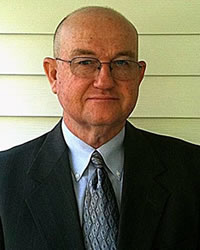
Gary Shepard

The Shepherd's Strong Hand

Isaiah 40:10; Isaiah 40:11; John 10:16
Gary Shepard June, 6 2010 Audio
0 Comments

Sermon Transcript

Auto-generated transcript • May contain errors

100%
Turn in your Bibles to John chapter 10. John chapter 10. Hold your place there. And turn back to Isaiah 40. That psalm that was read, Psalm 23, is, as was said, the
believer's psalm. As a matter of fact, this book
is the gift of God to His people. But that psalm opens up with
a man by the name of David saying, the Lord is my shepherd. And I want to talk this morning
for a few minutes about the shepherd's strong hand. When David said, the Lord is
my shepherd, He meant more than the fact that
the Lord was his available guide. He said, the Lord is my shepherd. And when he did so, he spoke
as one of the shepherd's sheep. Listen in Isaiah 40. at what is said concerning the
Christ of God, the Messiah, this one that David spoke of. It says in verse 10, Behold,
the Lord God will come with strong hand, and his arm shall rule
for him, Behold, his reward is with him, and his work before
him. He shall feed his flock like
a shepherd. He shall gather the lambs with
his arm, and carry them in his bosom, and shall gently lead
those that are with young. He says something here that the
shepherd with his strong hand will do. Turn over to Ezekiel. Ezekiel chapter 34. And look
with me in Ezekiel chapter 34 at verse 11 and 12. For thus saith the Lord God,
Behold, I, even I, will both search my sheep, and seek them
out. As a shepherd seeketh out his
flock in the day that he is among his sheep that are scattered,
so will I seek out my sheep, and I will deliver them out of
all places where they have been scattered in the cloudy and dark
day. And I will bring them out from
the people, and gather them from the countries, and will bring
them to their own land, and feed them upon the mountains of Israel
by the rivers, and in all the inhabited places of the country,
and I will feed them in a good pasture." That's what David was
talking about. And there can be no doubt if
we are taught by the Spirit of God that he is not talking about
a national people here, but he's talking about a spiritual people. He's talking about the Shepherd
who is none other than the Lord Jesus Christ. And if you'll look with me here
in John 10, It is as the shepherd that Christ speaks and says what
He does here in John 10, especially in verse 16. He says, And other sheep I have,
which are not of this fold, them also I must bring, and they shall
hear my voice, and there shall be one foal and one shepherd." You see, in these verses, the
Lord Jesus Christ says virtually the same thing that He had long
before said through the prophets. He tells exactly who it is that
He will save and how it is that He will save them. And although
they will not know, these sheep that He speaks about, although
they will not know this, until it actually happens to them,
he shows this one hope of a sinner. And he speaks of his elect people
as sheep. They are his sheep. And they are likened to sheep
in both the Old Testament as we have read and hear also in
the New Testament. And because of this, they cannot
in any way boast in themselves. It is not simply a title, but
it is also a description. You might remember what is said
in Isaiah 53 of these sheep. It says, all we like sheep have
gone astray. We have turned every one to his
own way. And then our Lord gives that
description also in Matthew 9. It says that when he saw the
multitudes, that he was moved with compassion on them because
they fainted and were scattered abroad as sheep having no shepherd. Lost, scattered sheep. And so it is as the shepherd
of the sheep that Christ loves them and redeems them and saves
them and rescues them. He is often spoken of as this
shepherd of the sheep. In Hebrews 13, he's described
as the Great Shepherd, the Great Shepherd. And then also in 1
Peter 2, he's described as the Shepherd and Bishop of your souls. And then also in 1 Peter 5, he's
described as the Chief Shepherd. And all of these he speaks of,
all these he says, all of them are sinners, spiritually dead
in trespasses and sins, spiritually blind to the truth, by nature
rebels against God, and described by that one word that includes
the whole of their natural condition. They are all lost, lost. Turn over to Luke chapter 15,
and look with me in Luke 15 where we have this same thing given
by Christ Himself in response to what is said concerning him
and what he was doing. Verse 1 of Luke 15, it says,
Then drew near unto him all the publicans and sinners for to
hear him. And the Pharisees and scribes
murmured. And they always do. They murmured,
saying, this man receives sinners and eats with them. What a blessed
indictment that was. That is the only hope we have. This man, Jesus Christ, receives
sinners and eats with them, and then he spake this parable unto
them, saying, What man of you, having an hundred sheep, if he
lose one of them, doth not leave the ninety and nine in the wilderness
and go after that which is lost until he find it." He said that's
even natural for even an earthly shepherd. And he says the shepherd,
if he be a true shepherd, if he has a lost sheep, he goes
after that lost sheep until he find it. And when he hath found
it, he lays it on his shoulders rejoicing. And when he comes
home, he calls together his friends and neighbors, saying unto them,
Rejoice with me, for I have found my sheep which was lost. I say unto you that likewise
joy shall be in heaven over one sinner that repents more than
over ninety and nine just persons which need no repentance. He likens the salvation of these
sinners He likens his relationship to these sinners as the shepherd
who seeks each and every one of his sheep until he finds it. He is the shepherd. And they are lost sheep that
must be found. They cannot find themselves. They are lost sheep, and the
Shepherd, this Good Shepherd, seeks out and finds and brings
each and every one of His sheep to the fold. Look down again
in John 10 at verse 14. He says, I am the Good Shepherd. and know my sheep, and am known
of mine. I know them, and they will be,
since they are my sheep, and I will seek and save them, they
will every one know who I am." Now, back at our verse, verse
16. He says, and other sheep I have
which are not of this fold. Actually, that word fold is the
word flock. And he is describing his people,
his elect people, that are not simply among these Jews, but
also among the Gentiles. Because His people are a people,
according to what we read them confessing in Revelation, a people
redeemed by Him, redeemed by His blood, out from among each
and every people and kindred and tribe and tongue. If you look over in John 11 and
that 52nd verse, when it was being said concerning
that one that should die, and that one being none other than
Christ, it says that Jesus should die for that nation, and not
for that nation only, but that also he should gather together
in one the children of God that were scattered abroad. You see, our Lord was talking
to these Jews who thought they had a corner on God, who thought
that they alone knew anything about Jehovah or were blessed
by Jehovah God. And here is that great mystery
from ages past that His were from among Gentiles and Jews. He is talking about these sheep
who were not present on the earth at that time. He is talking about
His sheep in every age to come. He is talking about His sheep
even in this year and day in which we live. And what does He say about them?
Well, he says they're his sheep. I want you to notice this. Because
it is essential for us to find out that it is not something
that we do that makes us his sheep. It is something that God
has done. Look at what he says. He says in his relating to each
and every one of them that they are His, that they are not themselves,
that they are not the devil's, that they never have been. They are My sheep. Look back at verse 14. He says, I am the good shepherd
and know whose sheep? My sheep. Look down at verse
26. He says to these Pharisees, He says to them who do not believe
on Him, who despised him as he is, who rejected him, he says,
but you believe not. Now, you answer the question
for me. But you believe not because you
are not of my sheep, as I said unto you. Now, I don't care what
anybody says. I don't care if the general opinion
is that everybody is really God's sheep. That's not what it says. Each and every one who refuses
and does not believe on Jesus Christ as He is revealed in this
book, as He says He is. Just like these Pharisees, He
said, the reason you don't believe is because you're not My sheep. Verse 27, My sheep hear My voice,
and I know them, and they follow Me. Who do they follow? Will they follow the church?
No. Will they follow preacher So-and-so? No. Will they follow
this religion? No. Will they follow this doctrinal
position? No. He says, my sheep follow
me. In other words, Everywhere in
every one of these texts, whether it's the Old Testament or the
New Testament, they are always spoken of as the special possession
of Christ. They are the ones that are His
by His right as the Creator and the King and the Lord over all
and the possessor of all things. If you notice verse 16, he says,
and other sheep I have. Well, if they believe on you,
you'll get them. No. Or if they decide for you,
you'll have them. Or if they do something, they'll
be your sheep. That's not what he says. He says,
other sheep I have, not shall have. But they were all, not
only at that present time, the whole entirety of His church,
of His bride, of His people, of whatever name the Scriptures
describe them, of His sheep, but they always have been His. His responsibility. Now, let
me ask you this. Is it the responsibility of the
sheep to look after the shepherd, or is it the responsibility of
the shepherd to look after the sheep? And here are all these
preachers in this world in which we live, and their whole emphasis
is this. You need to do something for
God. You need to give something to
God. You need to do something to make
God something that we want Him to be in this world. That's exactly
the opposite of what this book teaches. The book teaches that
the shepherd is the one who's responsible for the sheep. And most of these churches have
got people working themselves to death and giving everything
they've got and doing everything they can And they are absolutely
worn out and fatigued, and they yet do not have any peace. David had peace. Why? Because he could say, the
Lord is my shepherd. I'm nothing and He's everything.
I have nothing and he gives me everything. I'm powerless and
he does everything. I'm a sinner who cannot save
himself or add in any way to his salvation. He's the shepherd
and he's the one who does the saving. That's a big difference. And they were given to him in
this covenant of grace this everlasting covenant that we read about in
Scripture, they were given to Him by the Father as His bride,
as His people, as that which would be for His glory. Is that
right? Well, just turn over quickly
to John 17. Surely we know that Christ, as
the sinless man, He would not lie, and He especially would
not lie to the Father, would He? Look here in John 17, beginning
in verse, it says, These words spake Jesus, and lifted up His
eyes to heaven, and said, the hour is come, glorify thy son,
that thy son also may glorify thee, as thou hast given him
power over all flesh." That kind of puts away this notion
of letting Jesus do this, or letting Jesus do that, or won't
you let Jesus have His will? That's ridiculous. The Father,
He says, has given Him power over all flesh. But what is He
as the Savior, as the Redeemer, as the Shepherd of the sheep,
what is He in particular going to do with that power? He says
that He should give eternal life to as many as thou hast given
him." What's he going to do with it? He's going to offer eternal
life. That's not what it says, is it?
It says he's going to give eternal
life. If you've got power, now listen. If you've got power over all
flesh, you can do what you will. And that's why His will is the
will that saves and not our will, not man's so-called free will.
You know, all I've ever done with so-called free will is sin
against God. Adam in the garden, here he is,
this mutable person, this person with a mutable righteousness
as they say. What did he do with it? He sinned
against God. That's why Paul says it's not
of him that will it, it's not of him that run it, but it's
God that shows mercy. He does what He will in the armies
of heaven and among the inhabitants of men, and none can stay His
hand. He works all things after the
counsel of His own will. That's what this book says. And
what does He do? He gives eternal life to as many
as the Father has given Him." The sheep. You say, well, I don't
understand that. I don't either. But that's exactly
what this book says. The mission, the work of Jesus
Christ in whatever way it's expressed in Scripture, the Redeemer, the
Savior, whatever it is, and especially as the shepherd, his work will
not be determined in its success by the fickle, foolish, fallen
wills of men and women. It will be determined by his
will and his work. You see, God gave this people
to Christ in that everlasting covenant. He gave this people
to Christ, and He is the surety of this people. He is put in
responsibility of doing everything that's necessary to save them
and bring them to God. You say, well, if that's the
case, why preach then? I'll tell you this, that's the
only reason to preach. You see, if I thought I'd been
sent out here this morning to preach and that those that would
be saved, it would be based on what they knew, what they understood,
what they could do, what they decided, I'd just sat home and
stayed under the air conditioner. But we're looking for God's sheep.
We preach the message of Christ. And he said, if I be lifted up,
I'll draw all unto me. All these sheep he'll bring unto
himself. One day, Paul was sent down to
a bad place. If you wanted to be sent down
to a bad place, in the day in which Paul the Apostle preached,
just be sent to a place called Corinth. It was a wicked place. It was full of idolatry. It was
full of blatant immorality and such. And Paul, being the human
being he was, he was afraid. You know why I know he was afraid?
Because the Lord came to him that night and told him not to
be afraid. And he said, the Lord spake to
Paul in the night and said, Be not afraid, but speak, and hold
not thy peace. Preach the gospel. For I am with thee, and no man
shall set on thee to hurt thee, for I have much people in this
city. Why preach, Paul? Why isn't anybody
going to hurt you? Because I'm not going to let
them hurt you. And the reason you're to preach is because I
have a people in this city. It won't be everyone. They won't
be treating the gospel that you preach any more than it was that
they received the gospel that Christ himself preached. But in Acts 13 it says this,
that Paul, as he preached, there were those who said, well, we
just don't, we're not interested in what you've got to say. We
don't want to hear about this man Jesus Christ. Entertain us. Give us something to make us
feel better and inspire us. And just like in our day, give
us something to make us feel good about ourselves. Or some
of them said maybe we might think about what you've said. But you
know what else it says. You can read it, Acts 13, 48.
It says, But as many as were ordained unto eternal life, They
believed. It didn't say they believed and
therefore they were ordained to eternal life. No, it says
that they were ordained to eternal life and they believed. Who did the ordaining? The one
who always does in this book is God Himself. And they're His, not only by
His right as the King and because they were given to Him by the
Father, but because He purchased them with His blood. That's what
redemption is. I hear well-meaning preachers
say things like this, and I've said them myself before. They
talk about Christ redeeming this gift for you and purchasing this
gift for you. No, the Bible says that the things
that God gives us are freely given. He had to redeem us. You look at that word, redeem,
and redemption in the New Testament, and it's got to do with individuals.
Just like when Hosea went down to the slave market to redeem,
to bow for that slave market, his fallen, wicked wife, Gomer,
and he redeemed her and bought her. But notice in that 16th verse
what the shepherd says, what he says now that he would do. And of the
sheep I have which are not of this foal, them also I must bring. I must bring. Religionists love to say, well,
God can do anything. You know why they say we believe
God can do anything? Because they really don't believe
that He will do anything. And because they don't want to
believe that He has done anything. Some say He doesn't have to do
anything. But He says, I must. Them also I must bring. Why? Because He's purposed to
bring them. Because He determined in that
covenant to bring them. Because He decreed to bring them. And because of His character,
He is immutable or unchangeable, and therefore, if He purposed
to do something, He doesn't change His mind. You see, when Christ hung on
that cross, there's a big notion in most people's mind that when
He went to that cross and was taken and crucified, things were
really out of hand. No. Peter says This is the very thing
that God before determined to be done. Why? Because that's
the shepherd saving his sheep. He has to do and bring them because
of his Word and his promise. And he has to bring them because
of their condition. They won't come of themselves
to himself. And he has to do it because of
divine justice. If he pays for something, he'll
have it. If, as Paul said to those very
Corinthians, He said, you are not your own, but you are bought
with a price. Every one that Christ pays for
by the shedding of His redeeming blood, He will have. You know, most people think that
they're really better or more important or stronger than God
is. You can walk in Walmart and buy
a few items and pay for them and start out and get to your
car and you're looking at your receipt and you're looking at
your bag and you say, wait a minute. I bought this and I paid for
this, but it's not in my bag. Well, just forget about it. It's
all right. Oh, no. grab that bag, grab that receipt,
slam that door, prints back in there, go to that desk, slam
it all down. I paid for this and I didn't
get it. You think Christ is going to
pay for some he didn't get? You see, here's the difference
between the false gospel and the truth. The false gospel says
Christ hung on that cross, and he died for every person in the
world, and therefore, every person who then does something will
be saved. No, he said, I lay down my life
for the sheep. And that's what saves them. It
says, He gave His life a ransom. Well, somebody always says, well,
John 3, 16 says that God so loved the world that He gave His only
begotten Son that whosoever believes on Him should not perish but
have everlasting life. Do you think that when he said
world he was talking about every person in the world? Do you think
that? Just take that word world, cosmos,
in the Greek and look at every reference of it in the New Testament
and see what you find. I believe it was John the Baptist
in one place says that he was preaching and the whole world
came out to him. Every person in the world that's
ever lived in the world came out and heard John the Baptist?
I don't think so. That word world in the scripture
is used of the natural world and also But in that verse and
many others, it's used to speak of this very distinction that
Christ is erasing right now, which is that it was not just
the Jews, but it was a people from among the whole world, Jew
and Gentile. And you ought to rejoice in that
this morning if you're a Gentile. And you know just at first glance
I'd say that most of us all are. That although God had never sent
a prophet to any people in the world except to Israel, Although he had never manifested
himself to any people in the world but to Israel. Although
he had not, until the coming of Christ, shown himself identified
with any other people in this world but the Jews. But what does he say now? As
Paul said, that middle wall of partition is broken down. And Christ said, He said, I'm
going to bring them, and they'll hear my voice, and there'll be
one flock and one shepherd. How's He going to do that? By
the shepherd's strong hand. And He'll do it. Because His
glory depends on it. Now, here's a man over here who's
a carpenter. He builds this house. The people move in. Three months
later, it's falling down in on them. Must not be much of a carpenter,
had he? Here's a man over here. He's a mechanic. You take your
car and he works on your car. You drive off. mile or two down
the road. This is familiar. Down the road
and all of a sudden it's spitting and sputtering and stops you
beside the road and you have to get out and walk. Must not
be much of a mechanic. Well, here's a shepherd. and all His glory as the Great
Shepherd, the Good Shepherd, the Chief Shepherd. All His honor
depends on whether or not He keeps and saves and rescues the
sheep. Will He fail? Impossible. If he does, he is a failure. But he said, I must bring. I must bring every one of them,
and not one of them will be lost. Now, I'm not going to spend a
long time trying to figure out why God has some sheep and whether
or not the other. As a matter of fact, when you
go in the Gospel of Matthew, you see him at that day of the
end of all things, and it says the sheep are on one hand and
the goats are on the other hand. I'm not even going to spend a
lot of time trying to figure out whether or not I'm a sheep
or a goat. I'm going to be at the shepherd's feet. saying, save me, rescue me, you're
my only hope. Well, how must he bring them? One way, by his suffering. Turn over to Hebrews chapter
2. He says, them also I must bring. Look here in Hebrews 2, down
at verse 9. The apostle says, But we see
Jesus, who was made a little lower than the angels for the
suffering of death. Why did our shepherd have to
become a man? Because the only way he could
bring us to God was through his sufferings and death. His death
is the price for our sins. He says, "...crowned with glory
and honor, that he by the grace of God should taste death for
every," or for all. That last word is not in the
original. That he should taste death for every. All right? Every. If I remember what my
good grammar teacher taught me in elementary school, every is
a pronoun. And it cannot be used to stand
by itself. It has to have something around
it to identify. Is there anything in this text
to do it? Well, just listen. For it became him, for whom are
all things, and by whom are all things, in bringing. See, there's that word again.
Them also I must bring. If you bring something, it doesn't
come by itself, does it? You bring it. All right, this
is the shepherd. He's bringing the sheep. In bringing
what? Many sons. Many sons. Were those Pharisees
his sons? No. He said, you are of your
father, the devil. Who is He going to bring? Many
sons. These that He takes death for
are these many sons. He says, "...in bringing many
sons unto glory, to make the captain of their salvation perfect
through sufferings." How well we know whether or not
He was a success as our Shepherd. in what he suffered. Peter said
he suffered the just for the unjust. To do what? To bring us to God. You say, this takes a lot of thinking.
No. It takes a lot of believing. And only by the grace of God,
only by the gift of faith that He gives can we believe it. Oh,
we can believe anything else. We can believe a lie, but the
truth, the truth. You see, when we find
out the truth, the truth is almost too good to be true. for both he that sanctify." Now,
I want you to know what that word means. It means to set apart. He is the one that sets this
people apart from Adam's race that fell and they who are set
apart. are all of one, for which cause
he is not ashamed to call them brethren." Who did he take his
death for? These sons, these brethren. Saying, I will declare thy name
unto my brethren in the midst of the church. That's what Paul said. He purchased
the church. with his own blood." Acts 20. In the midst of the church will
I sing praise unto thee, and again I will put my trust in
him, and again behold I and the children which God hath given
me. Who's talking? The shepherd. The shepherd. Not just a few, but he says,
many sons. Somebody says, well, it's all
or nothing with me. Well, it's not with Christ. It's
the many. Do you know how many people Christ
the Shepherd has to save to be a success? To get all the glory? He only has to save as many as
He intended to save. You see, men make Christ a failure. They say He came into this world
and died in order to save everybody. Well, if He did, He's a major
failure. No. Turn back to John 10. And look at what he says. John 10 and verse 11. And you can believe this and
rejoice, for you can deny it and perish. You answer the question in your
own heart. Is this my shepherd? I am the good shepherd. The good shepherd gives his life
for the sheep. Who did Christ die for? The sheep. Look in verse 15. As the Father
knows me, even so know I the Father, and I lay down my life
for the sheep. What does that mean? In the place
of the sheep. Christ, when He hung on that
cross, He died there on that cross as the shepherd giving
His life for the sheep. Now, if God is a just God, and
He says He is, if one of those sheep that Christ
died in their place for, if one of them perishes, if He sends
one of them to He's not a just God. And that's what it says. If Christ,
as my shepherd, lay down His life in my place, I'm safe. I don't have to spend
my life wondering if I've done enough, or if I've even believed
enough, failed enough, or whatever it is. You see, salvation is
in one outside of ourselves. It's in the shepherd. That's
why David, who had a poor track record, an adulterer, murdered
a man, He rejoiced to say, the Lord
is my shepherd. I shall not want for anything. My friend the sheep look only
to the shepherd. Well, how are they manifested?
He said, my sheep hear my voice. Somebody said, well, why do you
take so long? Why do you read so much Scripture? Because it's
not my voice I want you to hear. The only voice you hear is mine.
But if you hear His voice, if He speaks to you and enables
you to believe the truth of what He says, you're one of His sheep. I don't want to hear anybody
glorify any of the sheep. The sheep want to hear the shepherd
glorify. Well, will they hear his voice
when they hear the gospel, when he speaks to them through this
gospel, which is simply the telling of the truth about God? The telling of the truth about
Christ, who He is and what He did. The telling of the truth
about what God says about us and how He saves sinners. This is my shepherd. Will these sheep be saved? Are
they saved? Well, look down at verse 27. He tells these Pharisees, he
says, you don't believe on me. You know, he didn't seem real bent
out of shape about it either, did he? I can't stand this pitiful, pleading
Jesus, because the one in this book is not like that. He looked
them straight in the face. He never shed a tear. He said,
the reason you don't believe is because you're not my sheep.
But now listen. He says, my sheep hear my voice
and I know them and they follow me. John 6, Christ is out there
preaching and doing miracles. As long as there was a loaf of
bread and a fish to eat, They loved it. Why? Because that satisfies
the flesh. But when he started talking about
spiritual things and the applications of those things, he said, this
man has hard sayings. Who can understand them? And
it says they went, the greater part of them went away except
for a handful of people. He looked at them and he said,
Will you also go away? They said, Lord, to whom shall
we go? You have the words of eternal life. Now you listen
to this now. My sheep hear my voice, and I
know them, and they follow me. And I give unto them eternal
life, and they shall never perish, neither shall any man." Actually,
that says, neither shall anything pluck them out of my hand. The strong hand of the shepherd. That was the hand that reached
out in eternity and chose us. That was the hand that reached
out in redeeming love and purchased us. And that's the hand that
reaches out in sovereign, almighty grace and calls us and brings
us unto Himself and holds us safe and secure forever and ever
and ever. No man, nothing. Somebody said, No man can pluck
you out of his hand, but you might want to just jump out of
it. That's utter stupidity. Those in the hand of Christ,
first of all, they don't want to jump out. But most of all, his glory depends
on him keeping them. What a wonderful shepherd
he is. He came into this world, he said, to seek and to save
that which was lost. And he'll bring every one of
them. You say, well, he won't do anything
against my will. Ah, but his sheep, he said, they'll
be willing in the day of his power. I'll bring them." Christ said, no man can come
to me except the Father which has sent me draw him. Somebody says, oh, I know the
Spirit draws us, but we can resist. Can resist. We always do resist. But that word, draw, used two
other times in the New Testament. One time it's used when Peter
drew that sword out and cut off the high priest's ear. You remember
that? You suppose Peter looked at that
sword and said, well, I think that sword ought to jump out.
No, he reached down and he got it by the handle, run his hand
up to the The hilt pulled it out and cut the man's ear off.
The other time it's used is when those disciples were fishing
and it says that they drew in the net. Those fish didn't just swim that
net into shore. Those men had to draw it. They
had to bring it in. And if you're one of his sheep, You may be like Saul of Tarsus.
He's fighting as hard as he can to deny Christ and to destroy
the people of Christ. And all of a sudden, one day,
when that time came, Christ stopped him on that. The shepherds stopped
him on that road to Damascus. He said, it's hard for you to
kick against the pricks, isn't it? You're like that goat. The man
drives the goat. The sharps stick, pointed stick,
and he goes the ox along to get him to do what he wants to. And
he said, you're just like that ox. You're like a dumb ox. You're
just kicking against the pricks. You can't win. And if you were
to win, you'd lose. Oh, he said, I'll bring you. I'll bring you. I'll rescue you from yourself
as well as from your sins. I'll bring you. I'll keep you
because I love you. That's what love is. It's not
an offer. I got a little granddaughter
I love probably too much. She's right at that stage now,
she gets involved in a lot of dangerous things. Looks like
she almost runs to be hurt with something, you know, find something
she can cut herself on or fall on or something like that. You think I ought to just say,
well, honey, I love you, but I sure hope you don't do anything
to kill you. No, I'm going to do everything
I can. to rescue her whenever I can. And that's the way the shepherd
is. He loves the sheep. He lays down his life for the
sheep, and he's going to bring the sheep. Bring them to what?
To God. To himself. To eternal blessing. I'm glad he's got a strong hand. Father, this day we pray that
you might be pleased to reveal your Son in us, to show us the
glories and the love and the work and the majesty of this
great Shepherd of the sheep. Enable us this day to be able to say with David,
this Lord, This shepherd, this Christ, is my shepherd, and I'll
never want. I have need of nothing else if
I have Him who is all. Bless your word to call out your
sheep, that all the glory and all the honor and praise might
be to you. For we pray in his name, Amen.
Gary Shepard
About Gary Shepard
Gary Shepard is teacher and pastor of Sovereign Grace Baptist Church in Jacksonville, North Carolina.

Comments

0 / 2000 characters
Comments are moderated before appearing.

Be the first to comment!

Joshua

Joshua

Shall we play a game? Ask me about articles, sermons, or theology from our library. I can also help you navigate the site.