Bootstrap
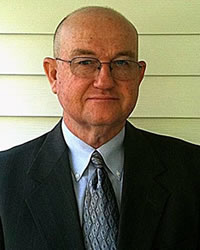
Gary Shepard

Not Without Blood

Hebrews 9:6-7
Gary Shepard May, 2 2010 Audio
0 Comments

Sermon Transcript

Auto-generated transcript • May contain errors

100%
All right, turn back to Hebrews
9 where Brad read. If you remember, last Sunday
we considered our great high praise. And it came to my mind this morning
that under that Old Testament economy, under the law, there
was just one priest that was decked out in a glorious array
of gold and stones and white linen. And that was the one great
high priest. And yet, as it is in our day,
men who make themselves priests, they're the ones who deck themselves
out in glorious robes and array, and they make little or nothing
of the true priest, the Lord Jesus Christ. And also it came to my mind that
when he came, when he came, he himself did not take on this
glorious outward apparel and gold. And the reason for that is that
he himself is what all the things that that great high priest wore
represented, not only what he was and is in his glorious person,
but also in what he accomplishes in his great work. And today I want us to look a
little closer at his service and his sacrifice as our priest. Look back here in Hebrews 9,
in verse 6, and also especially in verse 7. Now, when these things were thus
ordained, all the things that God gave to Moses in the law,
the priests went always into the first tabernacle, accomplishing
the service of God. But into the second, that is, the
Holy of Holies, into that place where the ark of the covenant
and the presence of God was into the second, went the high priest
alone once every year, not without blood, which he offered for himself
and for the errors of the people." Now, it did not matter how glorious
the priest was dressed, and neither did it matter that he was ordained
and appointed of God to do that service. He dared not enter in,
according to that seventh verse, without blood. Year after year, it says that
he alone entered into the holy of holies, but not without blood. And what we find in this book
is that this book, the Bible, is a bloody book. I mean, there is a trail of blood,
a literal stream of blood that flows all the way from the beginning
in the garden, all the way down to the coming and the cross death
of the Lord Jesus Christ. There was literally hundreds
of thousands of bloodsheddings. There were multiplied thousands
of animal sacrifices. And even in the garden, we find
that the very first death that occurred on this earth was because
of a bloodshedding accomplished by God Himself wherein He took
the skins of those animals and made tunics or coats for naked
Adam and Eve. So what is the significance of
the blood that we find spoken of so many times in the Bible? Well, hold your place right here
in Hebrews 9, and turn back to Leviticus chapter 17. Leviticus chapter 17, and listen
to God as He tells us what the significance is of the blood. He says in verse 11, of Leviticus
17, in the midst of talking about all these sacrifices of blood
that were to be offered, blood that was never to be eaten, he
says in verse 11, for the life of the flesh is in the blood. In other words, when blood flows
out of a living creature, life flows out of that creature. When we bleed, we bleed to death
if it is not stopped. But he says, for the life of
the flesh is in the blood, and I have given it to you upon the
altar to make an atonement for your souls, for it is the blood,
it is a life poured out, a life laid down that maketh an atonement
for the soul." In other words, this bloodshed, is representative
of a satisfaction that is made concerning God as a just and
holy God. It is a sacrifice that is made
in the matter of sin. It is a sacrifice for the soul. But this blood, all this blood
that was shed from the garden all the way up unto the coming
of our Lord Jesus Christ, it never put away one single sin. It never paid the debt of even
the least sin against Almighty God. It never satisfied God in
the matter of the sins of those that He purposed to save. But it represented something. And it represented what God required. It doesn't matter what anybody
says that God is satisfied with. It doesn't matter how well-meaning
people may be in representing what is necessary to please God. God has so clearly laid out plainly
in all of these types and shadows that no sinner in the matter
of their sins can ever be accepted by Him without blood. Why? Because He says it so plainly,
the soul that sins shall surely die. In other words, nothing is ever
satisfactory to God as a just God except what He requires,
that is, the price of sin, which is death. And so no priest, that
is, no priest appointed by God, and no priest in obedience to
God ever entered in to that holy of holies without blood. And yet, he tells us in the book
of Hebrews, he says it is not possible that the blood of bulls
and of goats should take away sins. So why did God ordain this
priesthood and ordain these sacrifices, none of which ever took away
a single sin? It was in order to show us just
exactly the only way that sin can be put away. There is only one way. As a matter of fact, it would
seem that the smallest child in the camp of Israel having
been a witness to everything that went on every time that
they moved and set up camp, every time that they moved from place
to place and did the same thing again, it would seem every child
in Israel was probably able to tell you the only way that God
would receive sinners and the only way that sin can be put
away. And God, in all these sacrifices
offered by His priest, is showing us that the sin that we sin against
Him is only forgiven through a sacrificial death, and that
death is the death of His Son. So how did Christ, in the Gospel
of John, how did He express what He was about to do in going to
the cross to die? He said this. He said, I lay
down my life for the sheep. I give my life for the sheep." And if he had only meant by that
the life that he lived as an example, or the life that he
lived in teaching, if he had lived in this world a perfect
life, which he did, and then yet simply ascended back into
heaven to the Father, we'd all perish. Why? Because the wages of sin
is death. And if there were some way that
he could have paid every other obligation on our behalf and
yet not died in our place, we would still have perished. And so that priest went in, commanded
of God, dressed in a certain way, done on a certain day, entered
into a certain place, but he never did it without blood. and Christ's death in the place of His people as
our substitute is our salvation because the prophet says to us,
the Lord hath laid on Him the iniquity of us all. And this means this, that we
are not simply to trust the Lord Jesus Christ as being some notable
historical figure or even some mystical purpose, but we are
to trust Christ as the one who died on the cross in order to
accomplish a particular work for a particular people. Now, what does Paul say? He said, we preach Christ crucified. And then, as if we didn't get
totally a grasp on just exactly what he's stating. He says in
another place, I determined to know nothing among you save Jesus
Christ and Him crucified. That doesn't mean that we wear
a crucifix around our necks symbolizing Christ hanging on a cross. It means that the gospel, the
good news for sinners, has to do with this shedding of His
blood that Christ accomplished almost two thousand years ago,
and it is by the shedding of His blood that He put away the
sins of His people. Now, I want you to turn over
to Romans 3, because Romans 3, there is a
verse in this third chapter of Romans that the Spirit of God
uses the Apostle Paul to give us to show us that it is not
a mere faith in this mystical person that saves us, but it
is rather what He Himself actually did. Now look at verse 25. He says of Christ, whom God hath
set forth, and if you notice those next two words are in italics. They're added by the translators. They're not actually in the original.
Supposedly for clarity. Sometimes not so much for clarity,
I'm afraid. Because what it actually says
here is that God set forth the Lord Jesus Christ a propitiation
through faith in His blood. What does that mean? That means
that Christ is not only to be looked to in who He is, but actually
also into what He did in His death. It is faith in His blood. You see that? He died. He shed his blood. Hebrews 13, he says, Wherefore
Jesus also, that he might sanctify the people with his own blood,
suffered without the gate. Now, I can remember hearing about
the blood about as far back as I can remember. We'd sing that
song, What can wash away my sins? Nothing but the blood. What can
make me whole again? Nothing but the blood. But you see, the idea was that
somehow it would require me applying that blood. or me doing something
to make that blood effectual on my behalf in order to save
me. No, the priest went into that
holy place by himself and with that sacrificial blood, and he
accomplished that work alone. And that's exactly what Christ
did. If I'm enabled to believe on
Christ, it's because of what He did. Every grace and every
blessing that we receive, it flows out of the finished and
accomplished work of the Lord Jesus Christ. So what is His blood? How is
it significant in our salvation? I want to give you a few things
this morning. Number one, Christ's blood is the basis, the only
basis and ground for our redemption. Now, you know that the Bible
is full of this word redeem. What does it mean? Well, it means
to buy back, to buy back by the payment of a price or ransom. And that's what we require. We
had to be redeemed from the curse of the law. We had to be redeemed
from the bondage of sin. We had to be delivered back to
God, and the only way it could be was by the paying of this
price. What is it? Well, turn over to
I Peter and the first chapter, and listen as Peter gives us
so clearly, tying together all these Old Testament types and
figures and shadows and showing us that they all pointed to Christ. All right? I Peter chapter 1
and verse 18. He says, For as much as you know
that you were not redeemed with corruptible things as silver
and gold from your vain conversation received by tradition from your
fathers. There was a price called the
redemption price under the law, each one giving the same coin,
and that coin was said to be the price of redemption. A rich man didn't give more.
A poor man didn't give less. Why? Because there's only one
price of redemption. But he said, of all those things,
of all those things that represented the redemption of the soul and
all that bloodshed, he said, we were not redeemed by all those
things, he says in verse 19, but with the precious blood of
Christ. What redeems us? The precious
blood of Christ as of a lamb without blemish and without spot,
who barely was foreordained before the foundation of the world,
but was manifest in these last times for you, who by him do
believe in God, that raised him up from the dead, and gave him
glory, that your faith and hope might be in God." There was one price for the redemption
of God's elect. And there was only one who was
able to pay that price. And the only way he was able
to pay that price is to come as God, manifest in the flesh,
and die, shed his blood for our redemption. Paul says it this way in Ephesians
and also in Colossians. He says of Christ, he says, in
whom we have redemption through His blood. You can't do anything
to redeem yourself. I can't do anything to redeem
myself before God. We don't have any of those so-called
redeeming qualities. It is only in Christ and through
His blood. That's the price He paid, and
that's the redemption He accomplished. In our chapter in Hebrews 9 and
verse 12, He says, "...neither by the blood of goats and calves."
but by his own blood he entered in once into the holy place,
having obtained eternal redemption for us." By himself? By his blood? Standing before
God? Dying on that cross hanging between
earth and heaven? wrapped in silence and darkness
because everything was between the Father and the Son. He shed
His blood and obtained eternal redemption for us. He purchased the church with
His own blood. And every one of God's people,
all the redeemed, They will, every one, as John saw them in
heaven, sing this one particular new song, saying, Thou art worthy
to take the book, and to open the seals thereof, for Thou wast
slain, and hast redeemed us to God by Thy blood. out of every kindred and tongue
and people and nation. Christ's blood is the basis for
our redemption. And here's the second thing.
Christ's blood is the basis for our justification. Now, I found out a long time
ago that people would rather let a preacher or a theologian
or somebody do their thinking for them. But I'm going to keep
asking you this. I'm going to keep pressing this
on you. Do you have any understanding
of what it means to be justified? Because that's a word God uses
a lot. And I'm going to give you a simple
definition one more time and tell you that to be justified
is to be declared righteous by God and before God on the basis
of someone outside yourself. Where's your justification? The
Pharisees, the Bible says, they justified themselves. They went around just like everyone
does by nature, going about trying to establish their own righteousness
and therefore to justify themselves by themselves. God could never look at you.
He could especially never look at me. And on the basis of anything
we ever were or ever will be or ever do or ever stop doing,
say that before God and His law and His justice and man and devils,
that soul is righteous. But Paul writes in Romans 5 these
words. He says, "...much more than being now justified by his blood, being or having been justified
by His blood. We shall be saved from wrath
through Him. All our justification, the basis
upon which God will declare any sinner righteous in His sight,
is through the blood-shedding of Jesus Christ. We talk about
it in these terms, although they're never in the Bible. We speak
of the blood and righteousness of Christ. When in truth, that
is essentially redundancy, because the blood is the righteousness
of Christ. His blood-shedding is the righteousness
of God. It is the basis upon which He
can rightly and justly declare us righteous. Why? Because He puts away our sin.
He puts away our sin. Alright? Here's the third thing.
I've got to hurry. Christ's blood is the total basis
of our reconciliation to God. You see, reconciliation is between
individuals. It's literally this, a making
of peace. And if you look back, you can
check it later, but if you look back in Leviticus 16 and verse
20, it says concerning the priest, And when he had made an end of
reconciling the holy place and the tabernacle of the congregation
and the altar, he would bring the live goat. In other words,
on the Day of Atonement, here's the priest. And the lots would
be cast over two goats. One lot would be for the people
and one lot would be for the Lord. And then the priest would
take the lot, the goat that the lot of the Lord fell on, he would
take that goat and slay that goat and shed that blood and
sprinkle that blood in the holy place. And it said when he did that,
The reconciling had taken place. And that's what this book says. It says that God didn't Himself
need to be reconciled because He didn't change. But we had
to be reconciled to Him, and we could not do that of ourselves. But it says in 2 Corinthians
5 that God was in Christ reconciling. What does that mean? That means
that that sinner in Christ, that sinner in Jesus Christ, whose
hope is Christ and Him crucified alone, that sinner can lift their
eyes toward heaven and look into the unseen face of God and know
that there is no frown on his face. that he can have peace in his
conscience, that she can live in this life and know that the
wrath of God against their sin has already been put away by
the bloodshedding of Jesus Christ. Everybody's always talking about
living, and somebody says you're never ready to live until you're
ready to die. And I can tell you this, you're
never ready to die until you know that Christ has already
died that death for sin in your place. And to show you our blindness,
to show you our spiritual death, here is the the one chief matter
of all eternity concerning us. And here are all these clear
pictures and types and statements from God Himself showing us the
one way that anybody's ever reconciled
to God. And we're oblivious to it. We're oblivious to it. Listen
to him. You see, God has reconciled all his people to himself in
Christ. How did he do that? Well, Paul
says in Colossians 1 and verse 20, "...and having made peace
by the blood of his cross." Preachers tell you, you'll need
to make peace with God. You can't. There's only One who's
ever made peace with God on the behalf of a sinner. And He made
peace with God on their behalf by the blood of His cross. He says, "...by Him to reconcile
all things unto Himself. By Him I say whether they be
things in earth or things in heaven." Christ's blood is the
single basis of our reconciliation. And Christ's blood is the basis
of all true fellowship with God. What was it the songwriter said?
He said, me and Jesus have got a good thing going. Oh, no you
don't. You can't be spoken to by God, and neither can you speak to
God, except by this priest and his sacrifice. There's no fellowship
with God apart from the blood of Christ, because it is impossible
for sinners to have fellowship with Him on any other basis. But I'll tell you what John said.
He said, if we walk, but if we walk in the light. Now somebody
is always trying to make that to be, if we walk on that straight
and narrow path of morality, if we live for God, if we don't
do this, that can never be the basis. Think about what it says. That can never ever What you
do or don't do can never be the basis of anything with God. If you don't walk out in the
light, you'll fall out of fellowship with God. That's not what he's
saying there. He says if we walk in the light
as He is in the light. What is light? Light is truth. He's talking about the gospel
here. If we walk in that light, in
the light of what this book says, believing what he says here,
if we walk in the light as he is in the light, we have fellowship
one with another, and the blood of Jesus Christ his Son cleanseth
us from all sin. You look at yourself. Joe, do
you feel cleansed of all sin? Isn't it? Does anybody here feel
pure and clean and could say that even in this very service
you have not sinned a sinful thought? No. But in the light, in this book,
it says, as He is, so are we in this world. standing before God in the person
of Jesus Christ, washed clean by His blood. And the blood of
Jesus Christ has not only made us clean, but also cleanses our
conscience. On the one hand, when we find
ourselves convicted of conscience, And on the other hand, when into
our conscience enters in notions that we have favor with God based
on something we do. No, it's always the blood. And that's the way it is from
the first day that we ever believe on Christ. That's the way it
is to the last day we live in this world. That's the basis
of our fellowship. We never have ourselves improved. That's what Paul said. He said,
I know that in me, that is in my flesh, dwells no good thing. And then Christ's blood is the
basis for all of God's covenant blessings. And what we read in Hebrews 9
and verse 15 speak of some covenant blessings of that eternal inheritance. The Scripture says that God has
blessed His people with all spiritual blessings in Christ Jesus. given them. And the truth is that when He
chose us in Christ and gave us to Christ and Christ to us, He
gave us all that He has to give in grace before the world began. Why? Because He gave us Christ. And He entrusted us into the
care of Christ. Look back in Hebrews 9, verse
15, And for this cause he is the mediator of the New Testament,
or New Covenant, that by means of death, for the redemption
of the transgressions that were under the First Testament, they
which are called might receive the promise of eternal inheritance. For where a testament, and you
can just use that word covenant, it's the same thing. For where
a covenant is, there must also of necessity be the death of
the testator. Suppose that some family member
of yours has in their will given you a large inheritance. What's the only way you'll get
it? They have to die. For a testament is a force after
men are dead, otherwise it is of no strength at all while the
testator liveth. whereupon neither the first testament
was dedicated without blood. For when Moses had spoken every
precept to all the people according to the law, he took the blood
of calves and of goats with water and scarlet wool and hyssop,
and sprinkled both the book and the people, and all the people,
saying, This is the blood of the testament which God hath
enjoined unto you. Moreover, he sprinkled with blood
both the tabernacle and all the vessels of the ministry, and
almost all things are by the law purged with blood, and without
shedding of blood there is no remission." What is remission? It's remission
of sin. It's forgiveness. You see, God's forgiveness is
not like ours. It's not just a matter of equals
saying, well, I'll forgive you, you forgive me. No. We're talking about God. And that's why he tells us that
without blood, Without the shedding of blood,
there is no remission of sin. There is no covenant blessing. Because all that is wrapped up
in this glorious thing called the covenant of grace, It depends upon the dying of
Jesus. It depends on His shedding His
life's blood, His perfect, sinless life's blood. In Hebrews 13, the Apostle says, that brought again from the dead
our Lord Jesus, that great Shepherd of the sheep, through the blood
of the everlasting covenant. All right. Here's one other thing,
finally. is the basis for all our access
to God and our worship of God. We could just do a lot of things
and imagine ourselves special people, but we still could not
come before the throne of God, and neither could we worship
God. We could have every kind of special
soft music We could have everybody dressed in special robes and
I could be up here wearing some kind of fabulous something or
other. We could have candles lit and
lights low and everybody feeling real dreamy and all that kind
of stuff. But we still couldn't worship
God. The Bible says in Abraham and every Old Testament
believer, when they worshiped God, it was always around a sacrifice. Abraham, you know, he traveled
from place to place, lived in tents. But everywhere he went,
the Bible says that he took stones and he raised up stones and made
an altar and he slew a sacrifice. Noah. When he stepped off that
ark, that small company, having there on that ark the only living
creatures that there were, what's the first thing he did? He worshipped
God. How did he do that? He raised
up an altar and he took one of the precious, valuable animals,
more than one, and he slaughtered it. Why? That's the seed of all that
new creation. God delivered him, and now God
must be worshipped in the only way He can be worshipped. You know, the Bible storybooks
all show two by two these creatures going in the ark. That's not
true. Of the clean animals, More of them came in the ark. Seven. Why? So that there would be a sufficient
number to worship God when He delivered them by blood. By blood. Paul says, in Christ Jesus, ye
who were sometimes far off are made nigh, brought near by the
blood of Christ." It was all this blood, all these
sacrifices, but now there are no more offerings. There are
no more sacrifices. There is no more blood that shed.
Why? Because the way of access has
been opened. Turn over to Hebrews 10 and look
down at verse 19. He says, "...having therefore,
brethren, boldness to enter into the holiest." I mean, this is
the true holiest in heaven before God, and men could not even enter
into that holy of holies on earth in the tabernacle. And now he
said, brethren, we have boldness to enter into the holiest, we
ourselves, by one way, by the blood of Jesus,
by a new and living way which he hath consecrated for us through
the veil, that is to say, his flesh. We worship God in Christ crucified. We demonstrate it now when we
are baptized in confession of Christ. What do we do? We go down into that water and
we're lifted up, picturing our confidence in His saving us through
His death in our place and burial and resurrection. When we gather
to have the ordinance of the Lord's table, we take the wine
and the bread. And we do not in any way imagine
that somebody praying over it or doing something to it would
somehow make it to actually become the body and blood of Christ,
nor even it to become so when it enters into our bodies. But just as they look forward
in those sacrifices to the bloodshedding of the Lamb, we look backwards
and rest in the same confidence of what He has come and done
in His flesh. And where there is a remission
of sin, there's no more offering for
sin. You would think that people would
read that and, well, it says, now where remission of these
is, there is no more offering for sin. What do such rituals
and what would it be to go out and offer something for a sacrifice
today but a denial that Christ's sacrifice ever accomplished anything? We come to God, but not without blood. And to the Lord's people, to
those who believe on Him, to those who have been given understanding
that He, by His death, actually redeemed them and reconciled
them and justified them and accomplished all their salvation. We can sing a little bit of a
different song. We can say, What has washed away
my sin? Nothing but the blood. What has made me whole again? Nothing but the blood of Jesus. Oh, precious was that flow that
made me white as snow. Nothing but the blood of Jesus. One day we'll all stand before
God. There's only one thing that will
matter, and that is the blood. of Jesus Christ. God give us an interest in Christ
crucified man. Father, we thank you this day
for your great and amazing mercy to sinners like as we are, that you would come in human
flesh and do the one thing necessary to save us from our sins, which
is to pay that debt, to pay that ransom for many, and in that
payment deliver us, save us, be our high priest with your
perfect sacrifice, reconcile Justify us before You. Save us
from Your wrath. Bless Your Word for Your glory
and the good of Your people. For we pray in Christ's name,
Amen.
Gary Shepard
About Gary Shepard
Gary Shepard is teacher and pastor of Sovereign Grace Baptist Church in Jacksonville, North Carolina.

Comments

0 / 2000 characters
Comments are moderated before appearing.

Be the first to comment!

Joshua

Joshua

Shall we play a game? Ask me about articles, sermons, or theology from our library. I can also help you navigate the site.