Bootstrap
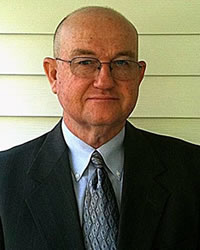
Gary Shepard

The Question of Questions

Isaiah 45:20-22
Gary Shepard January, 24 2010 Audio
0 Comments
Gary Shepard
Gary Shepard January, 24 2010

Sermon Transcript

Auto-generated transcript • May contain errors

100%
If you would turn this morning
to the book of Isaiah, chapter 45, I hope that you will give me
one more time your attention, because I want to talk to you
about the question of questions. I hope you were able to see in our reading of Daniel 6 the kind of dilemma that King
Darius was in. He had a desire to show mercy, but he had also the necessity
of being just. I think something like three
times In that text of Scripture, we have a representation of the
law and justice of God in what is described as the law of the
Medes and the Persians. Three times, I think, it says
that it alters not. The king could not alter the
law once it was given, even to save Daniel from the den of lions. And there are other occasions
in this book where we find this same thing spoken of or represented
such as in 2 Samuel 14, because David faced a situation like
this in dealing with his son Absalom. He was banished from the kingdom. But there was a woman that was
sent by Joab to David on the behalf of Absalom, and she makes
a really interesting statement. She says, For we must needs die,
and are as water spilled on the ground, which cannot be gathered
up again, neither doth God respect any person, yet doth He devise means that
his banished be not expelled from him. He devises means, though
he does not respect any man's person or work, he devises means
by which his banished be not expelled from him. But here in Isaiah 45, we hear
God declaring Himself, and it would seem like that He would
have the same difficulty. Look down in Isaiah chapter 45
and verse 20. Assemble yourselves, and come,
draw near together, ye that are escaped of the nations. They
have no knowledge that set up the wood of their graven image,
and pray unto a God that cannot say." And my friend, that is the case
of any man-made God, whether in the form of a piece of wood
or brass or gold or just in our minds. That is a God that cannot
save. Tell ye, and bring them near,
yea, let them take counsel together. Who hath declared this from ancient
time? Who hath told it from that time? Have not I the Lord? And there is no God else beside
me. A just God and a Savior, there
is none beside me. Look unto me, and be ye saved,
all the ends of the earth, for I am God, and there is none else." You see, in reality, how God can be such and do such
is a very intelligent, a very interesting, and a very eternally
important question. Because most people have never
stopped to consider how their religion or how their own beliefs
concerning salvation deals with this very thing. If you remember when God was
about to destroy Sodom and Gomorrah, and Abraham was made aware of
it by God, he began to ask questions And he would always join those
questions with this thought as he presented it back to God. He said, shall not the judge
of all the earth do right? If there are 50 righteous people
in it, would you destroy it? No. What about 40? or thirty, or twenty, or ten? No. Shall not the Judge of all
the earth do right? And yet the Scriptures show us
that He did deliver a man out of that who is described as righteous
lot. How did He deliver lot and destroy
all these other people. And I know that there are a lot
of people who just simply kind of close it all off and try to
end it all by just kind of saying this, I'm saved by grace. But I'd always have to ask this,
is this grace that you're talking about being saved by, is it the
grace of the God of the Bible. His grace is the grace of the
righteous God. Paul says this in Romans 1, he
says, I'm not ashamed of this gospel that God has not only
saved me through, but called me to preach. I'm not ashamed
of it because therein is the righteousness of God revealed. And here it is, as he says in
Romans 5 and verse 21, that as sin hath reigned unto
death, even so might grace reign through righteousness unto eternal
life by Jesus Christ our Lord." He says God's grace, His wondrous
saving grace is righteous grace. And an old preacher said something
like this one time. He said, unless we see this, we shall mistake the gospel and
fail in appreciating both the pardon we are seeking and the
great sacrifice through which it comes to us. He said, no vague forgiveness
arising out of a mere paternal or fatherly love or good-natured
indifference to sin will do. We need to know what kind of
pardon it is. whether it proceeds from the
full recognition of our absolute guiltiness by Him who is to judge
the world in righteousness. We need to know that. We need
to understand that. And this is exactly what the
cross work of the Lord Jesus Christ does It answers both to
God, and it also answers to the believing sinner's consciousness. And conscious because it is described
as a work of righteousness. Now, you hold your place right
here, but turn back a few chapters to Isaiah chapter 32. Isaiah chapter 32, because everyone supposedly desires
peace. They desire quietness of conscience. They desire assurance. Listen to what he says. Isaiah
32 and verse 17, and the work of righteousness, and the work
of righteousness shall be peace, and the effect of righteousness,
quietness and assurance forever." Man, we ought to try to find
out something about what a verse like that really means. and the work of righteousness
shall be peace, and the effect of righteousness quietness and
assurance forever." There was a man that lived in
the 1500s by the name of William Tyndale, or William Tyndale. And God moved this man's heart really to his own death in translating
the Scriptures into English. As a matter of fact, I read recently
where something like 75 to 85 percent of how we have it in the King
James Version is a result of that man's translation. And when he did this, the whole
world was living in what is described as the Dark Ages, mainly because
Catholicism, the Pope, and that religion that always associates
itself with the arm of powers and earthly governments had left
no translation to the common people. They made statements, the priests
made statements like this, it is better to have the words of
the Pope than to have the Word of God. That was the darkness. And so this man who would later,
for this very thing, he would later be taken at the hands of
religious authority and civil government that had become one. He would be taken out and strangled
publicly and then his body burned. But when he went to translate
as a very gifted man, who in fear of his life, he went and
translated the Old and the New Testament out of the Hebrew and
Greek, and he made this statement, he said, He said, even the man,
the boy with the plow, will know more about the Word of God than
the Pope does. And when he went to that death,
and he died that martyr's death, he prayed that God would open
the heart of the King of England. It wasn't long. It wasn't just
a few years, I believe, before this translation became a very
public translation. But when he came to this word
in the Hebrew and in the Greek that is translated righteous
or righteousness, The words in the English came
out something like this, right ways or right wise. And so he translated that word
by kind of coining the word for what it meant and making it righteous
or righteousness. which being defined means rectitude
or means a person's actions are justified. Righteousness means, or righteous,
means that a person in doing something is just in doing it. And I've thought about this for
a long time. I know I don't have any kind
of a total understanding of it, but there seems to be a distinction
in Scripture between holiness and righteousness. Holiness has to do with how God
is. The word holy, means whole, perfect. But righteousness has to do with
what He does. Now, of course, He does what
He does because He is how He is. But righteousness has to do with
justice, or with doing justly, and in the Scriptures, especially
in the matter of salvation. And it amazes me how that men
and women can take such personal offense of any kind of inequity
or injustice in the business world, or in the political world,
or in the judicial world, and yet turn, on the other hand,
and in the most important matter and issue of all eternity, they
can just allow anything to be. That's not righteousness. As
a matter of fact, let me read you some verses. I've read these
verses to you sometime before, but let me read some verses to
you out of Leviticus, chapter 19, where we kind of first run
into this matter of righteousness, because he says through Moses
to the people, and especially to the judges that were set up
over Israel, He says in verse 35, ye shall
do no unrighteousness. But that's not all he says. He
says, you shall do no unrighteousness in judgment, in meat yard, in
weight, or in measure. This was a command given amongst
all the people, especially the judges, the business people,
all who bought and sold. He says, just balances, just
weights, a just ephah, and a just hen shall ye have. I am the Lord
your God which brought you out of the land of Egypt. He says, that's the way I deal
with men. And you're to be just in when
you weigh out a pound of something. These were the Hebrew weights
that are mentioned here, the ephah and the hen. When you weigh
out a pound, when you pour out a gallon and sell that to a person,
when you take something like that or give it in trade, better
be a pound, better be an ounce, better be a gallon. And you better do righteous judgment. You see, here in our text, in
Isaiah chapter 45, God directs the Spirit to have Isaiah quote this word. He says in this 21st verse, ìI am a just God and a Savior, and there is none but me.î Now,
weíre going to talk about God. If we are going to preach the
gospel of God, if we are going to believe the gospel of God,
he says this, I am a just God and a Savior and there is none
beside me. And what I find in this book
is that this is central to the message of all the Scripture. It doesn't matter whether it's
the Old Testament or the New Testament. And it's simply kind of summed
up in one sentence, that is, God is just, He's righteous,
And he must be true to that aspect of his character, and God is
a Savior. He's merciful. He's gracious. And when you go back to the very
opening pages of this book, and you begin to read in the book
of Genesis, we find that very thing in so many ways. First of all, when we find Adam,
as he is cast out and condemned by the justice of God, but as
he leaves, God gives him a promise. He is going to deal with him
as a just God and a Savior. Not only that, not long afterward,
when the world before the flood is judged and destroyed by God's
justice. There it is. And yet He's not only a just
God, but He's a Savior floating in that ark, is Noah and his
household. He's a just God and a Savior. When it comes time that on Mount
Sinai, God gives His holy law, which can do nothing but condemn. Along with that law, He also
gives a tabernacle. He gives a mercy seat. He gives
a priest to offer a blood atonement. But the greatest of all, And
that which all these things point to and picture is the death of
God's Son. That's why Paul said, I'm determined
to know nothing among you save Jesus Christ and Him crucified. Because the cross says that God
is just, He will and He must punish sin, and yet God is a
Savior. He does forgive the sins of some,
the sins of many, the sins of His elect. He is a just God and a Savior. That is God's wisdom. That's
the miraculous, amazing, the most glorious thing about Him. The thing that He uses to describe
Himself, I'm a just God, not but a Savior, a just God and
a Savior. Let me read you some words out
of the book of Proverbs where Christ is here long before His
coming described as wisdom. He says in verse 20, I lead in
the way of righteousness. In the midst of the paths of
judgment. I lead in the way. I'm at the forefront, if you
would, of all that God does in righteousness. of all he does
justly and in judgment. And this is the question of all
questions, and that's why I call this that, because men throughout
the ages have asked this question when they found out something
about who they were. You know that this is the word
of truth. Because the only place and the
only way that you and I can find out anything about how things
really are is right here. People will listen to preachers
brag on them. They'll listen to each other
brag on themselves. How do we find out how we really
are? Just one way. when he brings us to believe
what he says that we are. And they ask this question when
they find out something about the true character of God, how
he is. He's really a just God and a
Savior. And unless we're brought by the
Spirit of God to contemplate these things, to think on these
things, we'll perish. We'll just die in our sins and
die in our ignorance. And there'll be a lot of people
who run around on this earth putting up their stickers and
their signs saying, Jesus is the answer, when they don't even
know the question. They don't know anything about
the question of questions. How can God, who is perfectly
holy and just, yet at the same time justify or declare righteous
the ungodly? You see, that's who believers
believe on. They believe on that God. Paul says, but to him that worketh
not, but believes on him that justifies the ungodly, his faith
is counted for righteousness. How can this God, how can He
justify? The ungodly. How can he call
righteous, even declare to be righteous, the ungodly? The proverb says it's an abomination
for a man, much less God, to do such a thing. You see, He is, as Isaiah says
here, He is a just God who punishes sin, and at the same time, a
loving Savior who pardons iniquity. We don't ever find out how that
is. I'm not just talking about grasping a few biblical facts
or concepts in our mind. I'm talking about the receiving
of it into our heart of hearts, into our consciences, where it
brings that peace that Isaiah talks about. We don't ever find
that. We just live a charade, a hypocrisy
of religion until we go out and meet God, who is, as he says, Job thought about this. Do you know that the book of
Job is considered to be one of the oldest books of the Bible? That man Job says in Job chapter
9, I know it is so of a truth, but how should man be just with
God? How? He said, I know it's the
truth. How though? In Job 15 it says,
What is man that he should be clean, and he which is born of
a woman that he should be righteous? He said, Behold, he puts no trust
in his saints, Yea, the heavens are not clean in his sight. How
much more abominable and filthy is man who drinks iniquity like
water?" There isn't anything that surprises
men and women in our day. There is no shock effect anymore. The more we read, the more we
hear, the more we see, the more we do, the more callous we become to
it. Job 25. How then can man be justified
with God? Or how can he be clean that is
born of a woman? Behold, even to the moon, and
it shines not, yea, the stars are not pure in his sight, how
much less man that is a worm, and the Son of Man which is a
worm." You're wondering about what you're
going to eat for lunch. You're wondering about what you're
going to wear in the morning. You're wondering where you're
going to go this week. You ever wonder about this? You see, if the Lord comes for
us this very day, it won't matter what we're going to eat, or wear,
or do, or work. But this question will still
be there. Turn over to Romans chapter 3. Romans chapter 3, and listen
as the Apostle Paul makes reference to something that is written
in the Old Testament in various ways many times, but especially
in this way in Psalm 53. Look down at verse 10. He says,
as it is written, there is none righteous, no, not one. There is not one of us in all
of Adam's race that ever was in themselves, in their persons,
righteous. Nor were there ever any in their
conduct of life as well as any other thing, thought, motive,
deed, whatever it is, there is none righteous, no, not one. You're not going to escape this.
I'm not. You say, well, he's preaching.
No, this is us, every one of us. He says, there is none that
understandeth There is none that seeketh after God. They are all
gone out of the way. They are together become unprofitable. There is none that doeth good. No, not one." Not one. That's the truth. Their throat is an open sepulchre. We open our mouths, that which
comes out of us is nothing but death. With their tongues they
have used deceit. The poison of Asp is under their
lips. whose mouth is full of cursing
and bitterness, their feet are swift to shed blood, destruction
and misery are in their ways, and the way of peace have they
not known? There is no fear of God before
their eyes." That's just a graveyard where
every one of us are in Adam, and every one of us are by I
can't look down my nose at you, you can't look down your nose
at me. We can't compare ourselves one to another. If we are in
any way less actively sinful than anybody else, it's only
because His hand has restrained us. And so he says in verse 19, Now
we know that what thing soever the law saith, it saith to them
who are under the law, that every mouth may be stopped, and all
the world may become guilty before God. Everyone guilty. That's all that the law can say
to you, or to me, or anyone else, guilty. All right? Therefore, by the deeds of the
law there shall no flesh be justified in his sight, for by the law
is the knowledge of sin. God showed through this people
of Israel that He gave that law to directly. He showed in them
and how they did under that law that by the doing of the law,
nobody has ever been or can be justified. Why? He said because
if you offend in one point, God's law is such you are guilty
of the whole. All right? Verse 21, But now
the righteousness of God without the law is manifested, made visible,
made aware, opened up, being witnessed by the law and the
prophets. This is exactly what the Law
and the Prophets were speaking of. That's why I say righteousness
in the Old Testament and in the New Testament has always been
the same. It's a righteousness that is
purposed and given and now revealed, he said, even the righteousness
of God which is by faith of Jesus Christ unto all and upon all
them that believe. You see, all who are ever righteous,
and by that I mean made righteous by God, they'll all be made such
the same way, through the same one, through the same death. He said there's no difference.
God has to deal with everyone He saves the same way. all have
sinned and come short of the glory of God." If you remember, Paul is writing
this to the believers at Rome, who he describes along with all
of God's people in this way, being or having been. justified freely by His grace through the redemption
that is in Christ Jesus. How is anybody justified? Justified
through the redeeming work, the redeeming bloodshed of Jesus
Christ. whom God has set forth a propitiation
through faith in his blood, why? To declare his righteousness. You see Christ hanging on that
tree, just like Christ crucified, preached in his gospel, is the
declaration of God's righteousness. That God is justified in how
He deals with those that Christ dies for. He does right in forgiving them,
in showing mercy to them, in being gracious to them. He does
right in doing such to them In Jesus Christ and His redeeming
work, He's a just God and a Savior. He says to declare His righteousness
for the remission of sins that are passed through the forbearance
of God. To declare, I say at this time,
His righteousness that He might be just and the justifier of
him which believeth in Jesus. Why? Because Christ dealt with
everything that is against His people. It isn't a matter of a feel-good
kind of view of God. It isn't a matter of somebody
like a big Santa Claus looking down and saying, well, we're
just going to look over these things. This is a matter of righteousness. It declares His just dealing
with the sins of those who believe on the Lord Jesus Christ. The psalmist said, Surely His
salvation is not them that fear Him, that glory may dwell in
our land. Mercy and truth are met together. Righteousness and peace have
kissed each other. Where at? In the cross death
of Christ. Because their sins are paid for.
They're remitted, which is exactly what forgiveness is. It is the
remission of sin that is through the shedding of His blood. It's a just forgiveness. It's
a righteous salvation. And so he says in this Isaiah
45 and verse 21, he says again, I'm a just God and a Savior. There is none else. And then
look, he says, he commands something. He says, look unto me. Look unto Me." Why? Because when God gives a sinner
faith, they look to Christ. They look to Him. That is, He
cries out, it would almost seem like, from the very cross itself. And He says, look unto Me, all
the ends of the earth, and be ye saved. Apart from God's grace, we'll
be looking at everything but. He doesn't say, look to the church,
or look to religion of some kind, or look to your works, or look
to the law, or look to your experience, or to yourself, or even to look
inwardly. He says, look unto Me. Verse 23 in Isaiah 45, he says,
I have sworn by myself, the word is gone out of my mouth in righteousness,
and shall not return, that unto me every knee shall bow, and
every tongue shall swear, and surely shall one say in the Lord, have I righteousness. Can we say that? Can we say, I have righteousness? Just one way. He says, in the
Lord have I righteousness and strength. Even to Him shall men
come, and all that are incensed against Him shall be ashamed. In the Lord shall all the seed
of Israel be justified, and shall glow." When Paul writes to the Corinthians
in II Corinthians 5, he says, all things are of God. who hath
reconciled us to himself by Jesus Christ, and hath given to us
the ministry of reconciliation, to wit that God was in Christ
reconciling the world unto himself, not imputing their trespasses
unto them, and hath committed unto us the word of reconciliation." He says, he hath made him to
be sin for us, who knew no sin, that we might be made the righteousness
of God in him. He says, look unto me. I am the answer to the question
of questions. Whenever Israel had sinned against
God and He sent the fiery serpents, and they went into the camp and
bit individuals and those who remained in that state, they
died from that fiery bite. But God commanded Moses to take
a serpent made of grass and hold it up on a pole in the middle
of the camp, and everyone that looked that that serpent lived. What was that a picture of? Well, they would later on take
that piece of brass and make an idol of it. And God would cause his servant
to call it Nehushtan, a piece of brass. Because that's all
it was. Salvation is in who it represented. Christ hanging on that cross,
being made sin for us, and therefore dying in our place for sin. That's the righteousness of God.
That's it. He says, What will the results of this
looking be? He said, you'll be saved. You'll be saved. Saved from your
sin. Saved from Satan. Saved from
bondage. Saved from the curse of the law.
Saved from your own self. You'll be saved. When the Apostle John writes
in 1 John 3, he says something that men have used to confuse
people a long time. And I stayed confused in it long
enough myself. But he said this. He says it
about three times basically there. He says, He that doeth righteousness
is righteous, even as He is righteous. What is that doing righteous? It is trusting Christ. And what this says is this. that the person who believes
on Christ, who trusts Christ, is doing righteousness, which
is the righteousness which is of faith, which is the same thing
God did. Because Paul in Ephesians 1 says,
that it is God who first trusted in Christ. God is right to trust Jesus Christ
His Son, to rely upon Him, to make in His life and death a
clear manifestation that God is right to forgive sinners in
Him. Well, what's the righteousness
which is a faith thing? What is this doing righteousness? It's looking to the same one
that God looks to. That's right. Can you do that? Can you trust the same one that
God has trusted from old eternity? That's righteousness. It isn't whether or not I ever
do this or do that or do something else, whether or not I ever tell
a lie again or whether or not I ever do one thing or another,
we will do these things. And that's why Paul says, with
the heart man believeth unto righteousness. Faith in Jesus
Christ. is righteousness. God trusted
His Son, and you can trust His Son. A believer can say, has judged
my sin in His Son, and now He declares me not guilty. And He's not only right to do
that, He's right to bless me and save me and give me all the
gifts of His grace. And there's never going to be
a court of higher appeal. He is the Lord. our righteousness. Well, when old Darius went to the den
of lions the next morning, Daniel had been brought through
the judgment. What was the judgment? He'd be
cast into the den of lions. But the Lord preserved him to
show us how he preserves us. And that is by bringing us not
around judgment, but through judgment. When he judges us in
Christ, judges our sins which he lays on him, and he dies the
death of the cross. Well, they went the next morning,
they rolled back the stone. Nobody had broken the seal. There's
old Daniel. How'd you make it, Daniel? God
preserved me. Well, they took him out. They took the people that accused
him. They threw the whole shooting match in the same dinner line. What happened? Justice was there
for them too. When the lions tore at them and
broke their bones even before they hit the floor of that pit. Only God can, has, dealt with
the matter of our sin as a just God. and a Savior. So, John writes in his first
epistle, he says, if we confess our sins, He is faithful and
just to forgive our sins and to cleanse us from all unrighteousness. You see, unrighteousness It's
when we try to deal with our sins any other way. That's the question of questions. And this is how God shows mercy
to sinners such as we are, and at the same time maintains the
unchanging integrity of His holy and just character. When Old Tyndall translated the
words It came out something like, right-wise or right-ways. This is the right way. This is
God's right way. This is God's wise right way. It's the only way. We look to
Christ. We believe on Him. We trust Him. That's the righteousness which
is of faith. That's the righteousness of God. I hope the Lord will help us have
more than just a head understanding of that, but to grasp and appreciate
what it really means in light of who He is and who we are. Our Father, this day we give
you thanks. We know there's nothing new in
what we've tried to say this day. We know that we do not even know
altogether why this day, why this people. We pray that you might bring
that Peace and quietness and assurance to one of your children, fresh
and anew this day, through the work of righteousness, which
is Christ crucified. We thank you for your mercy.
We thank you that you are a just God and a Savior. And all who look to you are saved. We thank you and pray
in Him and in Him alone. Amen.
Gary Shepard
About Gary Shepard
Gary Shepard is teacher and pastor of Sovereign Grace Baptist Church in Jacksonville, North Carolina.

Comments

0 / 2000 characters
Comments are moderated before appearing.

Be the first to comment!

Joshua

Joshua

Shall we play a game? Ask me about articles, sermons, or theology from our library. I can also help you navigate the site.