Bootstrap
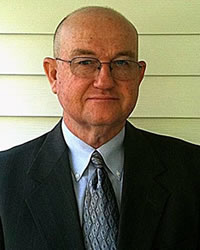
Gary Shepard

The Everlasting Covenant

2 Samuel 23:5
Gary Shepard October, 12 2009 Audio
0 Comments
Gary Shepard
Gary Shepard October, 12 2009

Sermon Transcript

Auto-generated transcript • May contain errors

100%
Please turn with me this morning
in your Bibles to 2 Samuel, the 23rd chapter. 2 Samuel, chapter
23. Beginning in verse 1, It says, Now these be the last
words of David. David the son of Jesse said,
and the man who was raised up on high, the anointed of the
God of Jacob, and the sweet psalmist of Israel said, The Spirit of
the Lord spake by me, and His word was in my tongue. The God
of Israel said, the Rock of Israel spake to me, He that ruleth over
men must be just, ruling in the fear of God. And he shall be
as the light of the morning, when the sun riseth, even a morning
without clouds, as the tender grass springing out of the earth
by clear shining after rain. Although my house be not so with
God, yet he hath made with me an everlasting covenant, ordered
in all things, and sure. For this is all my salvation
and all my desire, although he make it not to grow." Now, in our text this morning,
This is King David speaking. And as the Spirit of God directs
here the prophet, he describes this man David, who is also a
type of Christ, as being the son of Jesse, the man raised
up on high, the anointed of the God of Jacob, and the sweet psalmist
of Israel." And what we have recorded in
these verses are his last words. These are the death bid words
of David. And we ought to listen to all
the words that are given by inspiration of God, and I suppose especially
as they are given to a man in his dying hours. You see, he knows what God requires,
and he has some understanding of the character of God. He knows what God will bless,
and he is in these last hours contemplating these things. He does not hope or think. that in this dying hour that
God will lower Himself or His standard to receive him. As a matter of fact, he restates
it again in verse 3. He says, The God of Israel said,
The rock of Israel spoke to me, He that ruleth over men must
be just ruling in the fear of God. And such a ruler, such a
king as that, he shall be as the light of the morning when
the sun rises, even a morning without clouds, as the tender
grass springing out of the earth by clear shining after rain."
He says this is what God requires. This is what God blesses. But then he has to confess something. He has to confess My house is
not so with God. My house is not so with God. And many of his own family, of
his own children, had been in rebellion against David himself. They had showed themselves for
what they were, being natural descendants of David by what
they did. Ammon was the man who forced
his own sister. Absalom was the man who killed
his own brother, and tried to dethrone David himself. And even as David was in his
last days, another son, Adonijah, he also tried to usurp the throne. And not only was it these graceless
children, but it was also his own personal sins and failure,
his numbering the people, his own adultery, his own sins, one
after the other, so much so that God had said to him long before,
therefore the sword shall never depart from thine house because
thou hast despised me, and hast taken the wife of Uriah the Hittite
to be thy wife." He even sent Uriah the Hittite
out to the front lines of battle just so he would be killed, and
he would have his sins covered up, he thought, and take Bathsheba
to his wife. But not only these things, he
was like us also in another house. He was of the house of Adam. And in Adam, just like you and
me and every one of us, he had sinned against God And so, whatever
God required, whatever God would bless, whatever would be a ground
for Him to be ushered into God's presence and blessed, He could
not find it in any of these things, even in His deathbed, in His
dying hour. But what we find is that he who
could have no peace in his conduct or his works or his accomplishments
as a father or a king, will he in this hour have any hope? Can he find in this moment, as
he looks out into the vast eternity before him, can he have any peace? I can tell you this, and I'm
sure Billy would vouch for me on this. You don't go to any
funerals where people don't go to heaven. Every family member,
every preacher, every religious figure in that hour, no matter
what the individual has been or failed to be, they will find
some ground upon which to give comfort and hope concerning the
one that has passed. Now, that's just a fact. Will
he, will this man, speaking by the Spirit of God, will he have
any reason for hope or peace with such a life as he's lived
and confesses, my house is not so with God? But if you notice here in that
fifth verse, it begins with that word, although. Although my house
be not so with God. And then it continues with another
word that is one of those words of grace. He says, yet. Yet. And that is the same way when
Paul describes all of the elect of God in Ephesians 2, in all
that they were by nature, in all that they were in themselves,
dead in trespasses and sins. And then he says, but God, who
is rich in mercy. And that is exactly where David
is found at this hour. He says, although my house be
not so with God yet, even though these things are true, and confessed
by this man. Although my house be not so with
God, I've not been a ruler or a father or a husband or a man
or anything else that will fit this description. Yet, he hath made with me an everlasting
covenant, ordered in all things, and sure, for this is all my
salvation and all my desire, although he make it not to grow."
Now, I want to tell you something this morning. Not only was this
David's hope, And not only is it the hope of all that we read
about in this book that believe God, but this is a sinner's only
hope. It is in something that the everlasting
God has done. Now, listen to what he says here. Be not so with God, yet he."
In other words, it will not be, and it cannot be, as men in religion
confess before men and God something that they have done, a decision
that they made, a work or a ritual that they introduced. And neither
will it be for you or me or anybody else something that a blabbering
preacher or priest or someone else uttered at our graveside. If we have any hope of salvation,
of mercy, of peace, and of heaven, It will have to be in something
that this everlasting God has done. That's just the way it
is. God can only accept that which
He gives. He can only receive and bless
and honor the work that He Himself has done. And you and I and every
one of us, like David, we've done nothing and are nothing
but sin, but the Bible says He hath done marvelous things. Marvelous things. You see, that's
why the gospel is so unpopular in our day. That's why the pews
in this building are not filled to hear the true gospel in this
very morning. It is because the gospel has
to do with that which God has done, and we'd rather be praised
and bragged on for what we have done. He says this is something
that God has done. And I'd ask you in this very
moment, is this where our hope is? Is this where your hope is? Because this same psalmist in
the Psalms a number of times says, hope thou in God. And what we find is that the
Bible tells us in the New Testament that the only hope is this, the
good hope of grace. What is the good hope of grace. The Apostle says, Christ in you,
the hope of glory, Christ dwelling in us by faith, and we looking
to this same one that David looked to, this covenant Christ as the
whole of salvation. Now, what he says here is that
God has done something. It's not a hope in what God will
do, first of all, but it is a hope that is in something that God
has already done. And what is that? He says, although
my house be not so with God yet, He hath made with me an everlasting
covenant. An everlasting covenant. Do you and I know anything about
this covenant? I thought about it when I was
preparing and thinking about what I might say concerning this
this morning. I wondered just how many people
have ever heard a message that had anything to do with the very
thing that David on his deathbed said is all my salvation. It's something to do with a covenant. What is a covenant? Well, let me give you this out
of the dictionary. The dictionary defines covenant
as usually a formal, solemn, and binding agreement, a compact. It defines it as a written agreement
or promise usually under seal between two or more parties especially
for the performance of some action." That's just how the dictionary
defines covenant. But what David says here is that
God has made with him not just an ordinary covenant, but an
everlasting covenant. In other words, God. And by the
way, in what the word actually means in the Hebrew, oftentimes
it has something to do with that which is symbolized by flesh
coming together, like the shaking of our hands. I remember when I was growing
up, My dad used to say to me, I've heard him say it over and
over again, and I have come to believe it and sought as best
I could to live by it, that a man's word is his bond. What we say, what we speak in
agreement with someone else when we shake hands as a sealing of
an agreement and a pledge and a compact to do something, we
ought, with all the strength that's in us, to do it. But this is far, far more than
this. As a matter of fact, You could
say in the light of what it means, and in the light of what is said
in this book, that within the Godhead, the persons of the Godhead
struck hands in a covenant agreement, an everlasting covenant. And though he says that God hath
made with me an everlasting covenant, how could an everlasting and
eternal covenant have been made with one who was not yet then
even born? How could that be? who Himself, and you and I ourselves,
if we were not present in old eternity before the world ever
was, which is certainly what everlasting means in the first
part of it, how could it ever be said that He made with us
an everlasting covenant? Well, he made with David this
everlasting covenant, the same covenant that he made with all
of his people in eternity when he made that covenant and he
entered into this covenant on David's behalf in the Lord Jesus
Christ. He's the covenant head. And when the Godhead within itself,
Father, Son, and Spirit, entered into this covenant, all of this
covenant people were represented in that Godhead and in that covenant
in the Lord Jesus Christ. So every believer every one of
God's elect, they can, in faith, according to this Word, according
to the very witness of God's Spirit in our heart, they can
rejoice that while we were in that state, only in the mind
of God, while we were yet in ourselves, not yet born, He hath
made with us an everlasting covenant. in the Lord Jesus Christ. And it's for this reason that
David says it's sure. That's what he says it. He has
made with me an everlasting covenant, and that covenant is sure. We like a sure thing, don't we?
And yet, how we, in direct contrast and contradiction to that, want
to base our whole soul's salvation and the matter of our sin based
on something that you and I think or do or promise. Let me ask you this. Have you
ever failed to do anything you planned to do this week? Have you ever failed to do something
you told someone you would do this week? Have you ever failed
this past week, just this week, to do something that you wanted
to do? Well, there's nothing that you
and I could ever do, or think, or promise, or pledge, or whatever
it is, and at the same time guarantee the accomplishment of it. He
said this covenant, sure. Sure. And when Paul writes in
the book of Romans, he said all of this is made to be received
by faith that God gives in order that the promise might be sure
to those it was given. That's why He made it to be by
faith. Faith doesn't accomplish anything. Faith, just simply,
God-given faith, and we don't have it apart from God giving
it, and we don't have it apart from what He says in His Word.
But all faith does is God enables us to believe just what David
believed and look to Him in what He's already accomplished. That's what makes it sure. That's
what guarantees it. Because the things in this covenant,
everything in this covenant, they all depended not on what
you and I would do, certainly not on what David would do, but
on Christ. That's what God said. He said,
I've laid hands on, I've laid help on one that's mighty and
able. God has not put to be a responsibility
the things that pertain to all His glory for all eternity and
the salvation of this people that He loved. He's not committed
it into the hands of His enemies or into the hands of one who's
weak, but He's committed it into the hands of Christ. shall not fail the prophecy. You see, everything depended
in this covenant on Christ doing everything that was necessary
to assure that David and the others in this covenant, that
they would receive every blessing and every benefit of that covenant. Now listen to what he says all
throughout the Scriptures. He says he made a covenant with
Noah. He made a covenant with Abraham. He made a covenant with some
others. And they are all described in
Ephesians as the covenants of promise. But what are they? What they are is just simply
types of the covenant of promise. And when you look at all those
places where it says that God made a covenant with Noah or
Abraham or whoever it was, you never see a stipulation in that
covenant. He said, I'll make a covenant
with you and I'll do this and I'll do that and the other. But
you don't ever hear Him say, now that's as long as you do
this. You go back and look at it. I'm
going to give you a son, Abraham. I'm never going to let the world
be destroyed by water again. No. They're covenants of promise. But it's God's promise. And the
Scriptures tell us in the New Testament that all the promises
of God, every one of them, every one
of them, all the promises of God are yes and amen in Jesus
Christ. All that was necessary for God
to be able to fulfill the promises He made in His grace to His people,
every single one of it, every part and parcel of them, every
detail of them, they depended on Jesus Christ and only Christ. You see, a covenant is a testament. You could just really use the
words interchangeably. You could use, I believe, in
the New Testament maybe the word covenant more accurately even
than testament. This is the new covenant. And it is a covenant of grace. A covenant of grace and it is
in Christ Now, you remember what we read there, or what Brad read
in Psalm 89, but turn over to Isaiah 42. Isaiah 42. And listen to what he says beginning
in verse 1. He says, Behold my servant. whom I uphold, mine elect, in
whom my soul delighteth, I put my spirit upon him, he shall
bring forth judgment to the Gentiles." Then he says in verse 4, he shall
not fail nor be discouraged. But look down in verse 6. He says, I, the Lord, have called
thee in righteousness, and will hold thine hand, and will keep
thee, and give thee for a covenant of the people, for a light of
the Gentiles. I'll give what? What's this covenant
about? I'll give you, my servant, you
who cannot and will not possibly fail for a covenant. For a covenant. Turn over to
Malachi. Malachi chapter 3. Malachi 3 and verse 1. Still talking about the Messiah,
the Christ. Malachi 3 and verse 1. He says, Behold, I will send
my messenger." That's also the word for angel when we have it
in the capital letter. I will send my messenger, and
he shall prepare the way before me, and the Lord whom ye seek
shall suddenly come to his temple, even the messenger of the covenant. whom ye delight in. Behold, he
shall come, saith the Lord of hosts." Christ is the messenger
of the covenant. He's the manifester of the covenant. And He is the one in whom a sinner
has what is called everlasting consolation. Listen to what Paul says. When
he writes to those Thessalonians, he says, Now our Lord Jesus Christ
Himself and God, even our Father, which hath loved us and given
us everlasting consolation, and good hope through grace." That's what David had on that
dying bed. He had everlasting consolation. Even in the light of his failures
and his sin, he had everlasting consolation looking to the Lord
Jesus Christ who would come because God had made with him an everlasting
covenant. And it's a covenant of grace.
It was born out of everlasting life, love, and in it God gives
to His people everlasting life. Because He's made them one with
Christ. And described Him in this covenant
as being the everlasting Father because of these that were given
to Him in that covenant. And what is called in the New
Testament the New Covenant, or the New Testament itself in Scriptures,
is simply this everlasting covenant. And that just means it's new
insofar as the order in which it was revealed. You see, what is called the New
Covenant Joe is simply the everlasting covenant. And it is new only in the sense
of being newly revealed, and it is compared and yet contrasted
to the old covenant again and again in the book of Hebrews. Turn over to Hebrews chapter
7. Hebrews chapter 7 and look down in verse 19. The Apostle says, For the law
made nothing perfect, but the bringing in of a better hope
did by the we draw nigh unto God. And inasmuch as not without an
oath he, that is Christ, was made a priest, for those priests
were made without an oath, but this with an oath by him that
said unto him, The Lord swear, and will not repent, Thou art
a priest forever after the order of Melchizedek." And he said,
the Lord confirmed this with another. He swore by Himself
because there was none greater. This is His pledge and His promise
concerning this covenant. It has a priest and a sacrifice. And by so much, was Jesus made
a surety of a better covenant. Under that old covenant there
was a priest, there was a sacrifice, but nothing to compare to this
better covenant. Had a better priesthood, has
a better sacrifice, has a surety. Jesus was a surety of the everlasting
covenant. Now, what is a surety? Whatever
a surety is, it says Jesus was a surety of this covenant. Well,
a surety is not a guarantor. You know, when you get all those
loans you get And you sign them and you're looking. The only
time you ever look at them is when you sign them. And you sign
them and it says, guarantor this and guarantor all this kind of
stuff. Sometimes you have to get somebody
to sign with you or for you. And when they sign, it means
that if you fail to pay this, they're going to be responsible. I bet it's kind of hard this
day and time right now to get anybody to sign with you, for
you. That's not assurity. Assurity
guarantees himself the payment of it up front. Up front. And this covenant, which is the
covenant of salvation, was never a covenant wherein those in that
covenant, it was a a pledge that if they failed to perform, then
he would step in and fill in or pay off the debt. No, he's
the surety of it. He guaranteed to pay the full
of it up front. It never depended on us one bit. It always depended on the covenant
head and the surety. And Christ stood as the surety
of His people, that people that God chose in the everlasting
covenant, and blessed with all spiritual blessing in Him before
the world began. That's what it says in Ephesians
1 through 8. He blessed them with all spiritual
blessings in Christ before the world began. That's why he's
called the Lamb slain from the foundation of the world. And when you read David's words
here, his peace, his comfort, his dying hope, he says, he hath
made with me an everlasting covenant ordered in all things. Sometimes we get to fretting
about our failures after we believe. And my friend, we're going to
have them to one degree or another. It's not if any man sins, it's
when any man sins. And we can do so many things
that change us as far as the comfort of our salvation and
the peace of our salvation. We may even at that very last
hour find for a moment discomfort of conscience. as we go out to meet God. But it won't change this covenant,
because it's ordered in all things. That means it included every
jot and tittle of what was necessary to please God, satisfy His justice,
make us righteous, cause Him to receive us and bless us unto
Himself. Everything. And since it was
everlasting, it included everything before we were born, everything
before we believed, everything after we believed, and everything
for all eternity. It's ordered in all things. And somebody says, but what if?
Forget it. But what if? But what if? Order
in all things. You see, the truth of the matter
is, to our Displeasure almost. And certainly
to the displeasure of the self-righteous. To those who do not know themselves
a sinner. And do not think it possible
for any weakness to be found in them. But the truth is, David,
when he lay in the arms of the harlot, or in the arms of Bathsheba
herself, was as saved and as righteous before God as he was
the day he sung the Psalms in the temple." You say, do you mean God pleased
with that? No, he said, David, the sword
will not depart from your house as long as you live. And if you'd
ask David about it, he said, the rod of God's chastisement
is bent on me terrible for what I did. That wasn't his salvation. Christ
is his salvation. When he sent Uriah out there
to the bounty, you say, how can a man do that? How can a man
do that? How can a sinner not do everything
except what God restrains him from doing? Was he safe? And he was, because Christ was
his salvation. He says in that psalm, he said,
if my people, this covenant people, they're the seed of Christ, if
they break my commandments, they do it. He said, I'll not break
my covenant. I'll bring the rod of my chastisement
to bear against their transgressions, and I'll bring them back unto
myself, but I won't break my covenant." Why? Because the covenant head's glory
depends on it. If any man sins, when any man
sins, John had just said, I write unto you little children that
you sin not. But when any man sins, we have an advocate with
the Father, Jesus Christ the righteous. All things pertaining to God. Every detail of this covenant
salvation committed into the hands of the surety. Everything
always depended on Him. He would bring in what is described
by Daniel as an everlasting righteousness. He'd do everything, and especially
the chief thing, which was to come in human flesh. and go to
that cross, and there, under the hand of God's inflexible
justice, die in the place of His people as their substitute
for their sins. Look over just a few pages to
Hebrews chapter 9. Hebrews 9 and verse 15. Or verse
14. He says, How much more shall
the blood of Christ, who through the eternal Spirit offered himself
without spot to God, purge your conscience from dead works to
serve the living God? And for this cause he is the
mediator. of the New Covenant, the New
Testament. What is the basis for his mediation
of this covenant? Since it is a covenant that God
has made since those involved in this covenant are sinners
in themselves? What is the basis, the necessary
basis of his mediation? How is he this mediator between
God and men? That by means of death. Why death? Because the wages
of their sin is death. that by death, for the redemption
of the transgressions that were under the first testament, they
which are called might receive the promise of eternal inheritance. For where a testament or a covenant
is, there must also of necessity be the death of the testator. For a testament is a force after
men are dead, otherwise it is of no strength at all while the
testator liveth. Whereupon neither the first testament
was dedicated without blood, for when Moses had spoken every
precept to all the people according to the law, he took the blood
of calves and of goats. with water and scarlet wool and
hyssop, and sprinkle both the book and the people say, This
is the blood of the testament which God hath enjoined unto
you." And so when Christ, when He came, And he instituted the
Lord's Table. And he handed those disciples
there at that first Lord's Supper that cup of wine. And he said,
this is my blood of the New Testament, which was shed for you. Look over in Hebrews 13. Hebrews
13. Verse 20, as the apostles closing
out this epistle, he says, Now the God of peace, verse 20, that
brought again from the dead our Lord Jesus, that great Shepherd
of the sheep through the blood of the everlasting covenant. He brought Him in, brought Him
from the dead. through that blood, through that
sacrifice of the everlasting covenant. He lives. The covenant's in effect. He says, Make you perfect in
every good work to do His will, working in you that which is
well-pleasing in His sight, through Jesus Christ, to whom be glory
forever and ever. Amen. You remember in the Holy of Holies,
in the tabernacle, there was that gold-covered box that was
called the Ark of the Covenant. What happened to the Ark of the
Covenant? Well, the high priest went in
once a year. In that covenant, in that box,
there was the broken tablets of stone. There was Aaron's rod
that budded. There was the golden pot of manna. There was everything that represented
what was necessary to save us from our sins and give us life
in Christ. And that high priest went in
once a year. He didn't just wave his hands
around and say a few foolish words or something like that.
He went in and with blood, he took that hyssop and he sprinkled
blood on that mercy seat which covered the Ark of the Covenant.
Why? Because that's how that covenant stands. stands in the dying of the covenant
head, the Lord Jesus Christ. And David says, although my house
be not so with God yet, He hath made with me an everlasting covenant,
ordered in all things, and sure, and this is all my salvation. Are you serious, David? This
is all of it. This is the sum total of it.
It's not this plus something else. It's salvation by God,
by grace, by Christ in all that He is and does outside of me. That's my hope. That's all my
salvation. Is that all your salvation? Covenant
mercy? God's grace to you in Christ?
His blood shed in your place? His making you righteous in Christ? Is that everything to you? David is saying in another place,
He only is my rock and my salvation. Then he said, this is all my
desire. all my desire." Psalm 27, he says, "...one thing
have I desired of the Lord, that will I seek after, that I may
dwell in the house of the Lord all the days of my life, to behold
the beauty of the Lord, and to inquire in His temple." You see, with all David's failures, There's one thing I noticed that
David, with all his failures, can't hardly find him guilty
of. One thing is this, those that showed themselves to be
his enemies, he didn't retaliate. He didn't
show vengeance toward them. He left them to the Lord. He
was about to do it with Naboth. When the Lord sent Abigail out
there and stopped him, and after she stopped him and he thought
about what he was about to do, he said, Oh God, I thank you
so much that you sent Abigail. You didn't let me go out and
do what I was about to do. The Lord will defend his people.
And I'll say something else. God described him as a man after
his own heart. How can you say that? Because
he looked to the One that God looks to. He looked outside of himself
and away from himself to Christ, to the Lord Jesus Christ. He's
all my desire. And then he says this, he says,
although we make it not to grow. It's kind of a hard expression. I think a man by the name of
Robert Hawker may have had some light on this. Old Hawker said
it as if he had said, in Jesus my felicity is so complete my
redemption so perfect, and my desire so fully answered, that
I find no room for anything more. It is all my salvation, for it
leaves no room for anything to be added. It is all my desire,
for I can want nothing else beside. Here then I rest my soul with
all its capacious cravings for happiness. In Jesus I have all. No need for it to grow. No need
for more. No space for more. He's everything. Is this our hope? Is this all our salvation? And we find in the Lord Jesus
Christ and Him crucified in this salvation that's all of His grace
in Him, this covenant consolation and assurance. I can tell you this, in the hour of death, nothing
else will matter. Nothing else will matter. Nothing
else will count. Nothing else will give hope.
Nothing else will give peace. Nothing else will give entrance
into God's holy heaven. This is the everlasting covenant. And he said, when those who've
made their covenant with death, They've already got it figured
out. He said, when you've made your covenant of death, in that
hour, he said, I'll come in and wash it all away. I'll bring to nothing your covenants,
because there's only one that's going to stand. That's the everlasting
covenant. You say, well, what do I do,
Preacher? Do like David. Let's look to Christ. Look to
this covenant. It's ordered in all things and
sure. And it's the all of salvation. Our Father, this day we are so unable to speak To tell of the great and glorious
things of your covenant mercies. To tell men and women of this
covenant God. This everlasting covenant. This mediator of the covenant. This covenant of grace. of the gift of salvation and
righteousness and peace and joy, everything, through Jesus Christ
and Him crucified. Lord, give us understanding. Give us faith. Enable us to look
to Him and to know this peace To know it, Lord, not only in
the hour of our passing, but to know it every hour and every
day and every year until then. And then to know it and enjoy
it for eternity. For it's an everlasting covenant.
No one can ever change it or break it. Sealed with the precious
blood of your Son. Lord, call out, we pray this
day, your covenant children. For we ask it in Christ's name.
Amen.
Gary Shepard
About Gary Shepard
Gary Shepard is teacher and pastor of Sovereign Grace Baptist Church in Jacksonville, North Carolina.

Comments

0 / 2000 characters
Comments are moderated before appearing.

Be the first to comment!

Joshua

Joshua

Shall we play a game? Ask me about articles, sermons, or theology from our library. I can also help you navigate the site.