Bootstrap
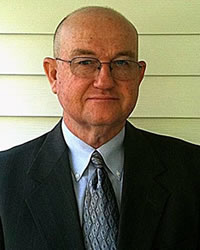
Gary Shepard

Christ Made Sin, Men Made Righteous

2 Corinthians 5:21
Gary Shepard September, 13 2009 Audio
0 Comments
Gary Shepard
Gary Shepard September, 13 2009

Sermon Transcript

Auto-generated transcript • May contain errors

100%
I want you to turn back this
morning in your Bibles to 2 Corinthians and the 5th chapter. And I'm
going to read one verse of Scripture, and that is the 21st verse. The last verse in 2 Corinthians
5, For he hath made him to be sin
for us, who knew no sin, that we might be made the righteousness
of God in him. This past week I received an
email, and even as I think about it,
I just feel a kind of unconscious shaking of my head
in bewilderment, just utter amazement. In this email, the individual
suggested that I had altered my doctrine. And not only that, but that I
could no longer find this verse to be a matter of great joy comfort
and thanksgiving. When I read those words, I thought, what self-delusion. I know of no gospel preacher who, no matter what else could
be said about him, that if this were true, he is an utter failure. He is no longer a preacher of
the gospel and has no business standing before men. Now, there are two things that
I'm sure of. Number one is I know that that
is not true. The second thing that I'm sure
of is I know that those of you who have heard me preach week
after week for nearly 30 years, you know that that's not true. Absolutely
not true. Not only do I believe what is
stated in that twenty-first verse, not only do I believe it and
rejoice in it and give thanks to God for that blessed truth,
The longer I live in this world, and the more I see the love of
so many wax cold, the more I find disappointment in man, and more
so in myself, the more it is the only thing I can rejoice
in. It is the only truth I can find
comfort and blessing in. I can't say what this person,
or really any other person, believes about this verse, but I know
this. I believe all about it. that
God has given me faith to believe. You can't believe more than God
gives you faith to believe. And then also, I believe all
that a finite man, such as myself, can believe and understand about
what The infinite God has made His infinite Son to be for a
finite creature like me. I don't believe that the finite
will ever be able to fully comprehend the infinite. I believe all that a sinner,
who in himself has never known anything else but sin, everything
he says, does, and thinks is sin, I believe all that a sinner
can believe concerning a sinless one being made sin. There'll always be a mystery
in such things to me. And I believe what the Word of
God says about it, not one thing more, and certainly not one thing
less. I cannot see some mystical meaning
of it beyond what God has plainly said in the Scriptures. I cannot believe it to be more
than what God has been pleased to reveal. I realize was so in
Paul's day, and it is in every age. that there are always the
Gnostics, that is, these knowing ones, who always seem to have
a deeper, a more clear, a more advanced understanding and revelation
than what we find simply given in the Scriptures. I'm not one
of them. I'm not one of these knowing
ones. And the only knowledge that I
have, and in truth the only knowledge that any believer has, is that
knowledge that we find given by God in the Holy Scriptures. That's all we have. And that's
all we can believe. And in light of that, there are
five things this morning I want to say to you. And to anybody
who will hear this, anywhere, anytime, and I'll say this, if
I in any way or at any point turn from these things, there
are two things you can count on. Number one, I'll be gone
the wrong way. And number two, these things
will still be true. Whether I believe them or not,
and whether or not I'm found preaching them or not, these
five things I believe will be true. Here's the first one. that Christ being made sin, I
believe it to be as it was pictured in all the Old Testament types
and shadows. That is, long before the Lord
Jesus Christ came into this world and was made flesh and dwelt
among us, God in these Old Testament types and shadows showed us in
a picture what it would be for Jesus Christ, that coming Messiah
and sacrifice, to be made sin for His people. I believe that
Christ being made sin is in the very beginning promise of the
Bible. When you go back to Genesis chapter
3 and verse 15, where God is talking to the devil concerning
the very sin that has just now entered into this world, He makes
this promise, which is the very first promise of this truth,
when He says this to the devil. He says, the woman's seed, though
you will bruise his heel, he will bruise your head. And when He gave that promise,
He showed us in the very fact that the woman's seed, which
has to be Christ, That woman's seed would be bruised, and in
doing so, at the same time, he would bruise or crush the head
of sin and the serpent and Satan himself. He would be made sin
for his people, and being made sin, he would die. But not only
die, but in that death, He would crush and deal with the sins
of His people and put them away. Not only that, but also in the
very first type and picture that we find in the Bible. And it
is in that which God did on that occasion after the fall when
He clothed them with the skins of animals. After they had sinned,
and in order to cover their nakedness, and in order to show in a type
and be what some call the proto-evangel, that is, the very first one to
declare the gospel, The Scripture says, unto Adam also and to his
wife did the Lord God make coats of skins and clothe them. In other words, he showed how
that righteousness would be accomplished, how that they would be clothed
with righteousness, because in the dying of those innocent animals,
In their death provision was made that they might be covered
of their nakedness." He showed a picture of substitution. He showed a picture of salvation
by sacrifice. He showed in a picture what it
would mean for Christ, the innocent one, to be made sin for us, that
we might be made the righteousness of God in Him. And then the very
next type that we read about in that same opening book which
is that very lamb, that very sacrifice that their son Abel
offered up to God when God refused the sacrifice of Cain, which
was no sacrifice, and showed in that that the only way that
God would be worshipped and the only way a sinner can come before
God is through the slaying of this lamb which Abel offered,
and the Scripture showed that God was pleased with his offering,
refused Cain's which represented man's work, and He showed again
how it is and what it means for Jesus Christ to be made sin for
us that we might be made the righteousness of God. Not only
that, when you come to the time of the flood and you see Noah,
the Bible says eight souls, Noah and his family, being delivered
through judgment, which was a judgment because of sin, we find all this
judgment coming against all these sinners in the world in that
flood, and yet here is Noah and his family, and they are preserved. But how is it that they are preserved? They are not preserved because
God just favored them and unjustly and unrighteously let them escape
this judgment. No, they are saved and delivered
because they are in this ark which was the design of God,
and in that ark they are saved. They are saved because the floods
of judgment and the rain and everything that took place on
that occasion, it came against the ark rather than against them. You could say that ark, because
it stood between them and that judgment, That ark, which was
a type of Christ, was made sin for them, and they in that ark
were made the righteousness of God. And you go all the way through
this book, and you find men such as Abraham there on Mount Moriah. And he, at the commandment of
God, has taken up his son, the Bible says his only son, by the
name of Isaac. And he has taken him up on that
mount and is about, at God's command, to plunge a dagger in
his heart and shed his blood and offer him up as a sacrifice. And all of a sudden as he's about
to do this deed, he's about to take the life of his son that
he loved, God stops him. And in the place of his son,
God commands him to go over to the thicket where there is a
ram who is caught there in that thicket by his horns. And there
that ram is offered up in substitution for Isaac on that altar as a
sacrifice to God. That lamb is made sin in a type
for him that he might be made the righteousness of God. Sin
in a picture. The sins of God's people are
dealt with in that picture, in that substitute, and in that
ram that was slain. You go a little bit farther in
the book of Exodus, and there we find on that occasion that
we call the Passover. There was to be a lamb without
blemish and without spot, taken, shut up, and viewed to make sure
it was a perfect sacrifice. And at the command of God, that
lamb for every house in those Hebrews was to be taken and slain,
and that blood was to be taken and sprinkled on the lentils
and doorposts. And the Scripture says that God
said, and when I see the blood, I will pass over you. Does that mean that judgment
did not come on those households of the Hebrews? When it fell
on every house in Egypt and the firstborn in every family was
killed there at the hand of Almighty God, did judgment not fall on
the house of these Hebrews? Absolutely it did. But it fell
in that God appointed sacrifice, that Passover lamb, was in that
type and picture made to be sin for them and they were safe in
their houses, the judgment of God fell on that victim and not
on that firstborn in the household. And then Paul comes along and
taking that very type, he proclaims this message. He says, Christ,
our Passover is sacrifice for us. Everywhere you look in this
book, even such things as that occasion when Moses, at the command
of God, he did something that was in a type just exactly what's
represented. The Bible says that Moses put
his hand in his garment. He stuck his hand in his coat,
just like this, out of sight. And then afterwards, he pulled
it out, and his hand was leprous. And then again, he took his hand,
that leprous hand, he put it back in his garment again, and
when he took it out, the Bible says it was clean. Let me tell you what A.W. Pink said about that. He says,
is ineffably holy in Himself. He had no sin. He did no sin. He knew no sin. But in infinite
grace, He took our place and was made sin for us. He bare
our sins in His own body on the tree. And because of this, He
was at that time in the sight of God what the leper was, defiled
and unclean, not inherently so, but by imputation. Here is Christ, clean, holy. The hand is stuck in his garment.
He pulls it out. It's leprous. He's made sin for
us. And then again, the Scripture
says Moses put his hand back in his garment. He took it out
again. What was it? It was clean because the sins
that were represented in that leprous hand had been put away
by the Lord Jesus Christ. They had been imputed to Christ. Listen to what old Robert Hawker
said. He said, in the case of the imputed
righteousness of the Lord Jesus Christ to His people and their
sins imputed to Him, the sense of imputation goes farther and
ascribes to Christ and to the sinner that which each hath not. Did you get that? He says, in
the imputation that we read about in this book, just as it was
with Moses, just as it is in the imputation of the sins of
God's people to Christ, he says, that which each hath not, by
the very act of imputing it to them, they have. How does Christ have any sin? Has He made sin? By the imputing
of the sins of all His people to them. How are they made righteous? By the imputing of Christ's righteousness
to them. They each one in that have that
which they inherently do not have in themselves. He knew no sin. Just like you
and I know no righteousness. Do we understand that? And in one of the greatest types
that you can find in all of the Old Testament, if you'll turn
to Leviticus and the sixteenth chapter, that which we find taking
place in the sin offering on the day of atonement, pictures
this very thing so clearly. Look here in Leviticus 16 and
verse 7. Aaron, the priest, is commanded
of God to take two goats. Isn't it amazing what God uses
to show us what sin is? To show us who it is that He
is saving. to show us the only way that
you and I could ever be saved. It is not a pretty picture. He shall take the two goats and
present them before the Lord at the door of the tabernacle
of the congregation, and Aaron shall cast lots upon the two
goats, one lot for the Lord and the other lot for the scapegoat. Why has it got to be one lot
for the Lord, one goat for the Lord? Because this is always
the chief thing in salvation. God must be satisfied. Brother
Scott Richardson, more years ago than I can hardly remember,
he always said it like this. He said, before God can do anything
for you, He's got to do something for Himself. Whenever Abraham
was about to take Isaac up, and Isaac asked him where was the
sacrifice, he said, the Lord will provide Himself a sacrifice. And Aaron shall bring the goat
upon which the Lord's lot fell, and offer him for a sin offering. But the goat on which the lot
fell to be the scapegoat shall be presented alive before the
Lord to make an atonement with him and to let him go for a scapegoat
into the wilderness." Now, we misuse this term scapegoat nowadays. Because the scapegoat, he was
allowed and even taken by the hand of a fit man and led out
into the wilderness and he was to make sure that that scapegoat
went free because justice had been satisfied. Because the Lord's goat had been
slain. Do you remember what Christ said
when those men came to get him in the garden? He said, you looking
for me? They said, yes, we're looking
for Jesus of Nazareth. He said, if you take me, these
have got to go free. Why? Because he was being made
sin that they might be made righteous before God, that they might be
set free. That's the exact picture here.
Look down in verse 20. It says, and when he hath made
an end of reconciling, Isn't that the same word that we find
over there in 2 Corinthians 5, that was just read? And when
he hath made an end of reconciling the holy place and the tabernacle
of the congregation and the altar, he shall take the live goat,
and Aaron shall lay both his hands upon the head of the live
goat, and confess over him all the iniquities of the children
of Israel, and all their transgressions in all their sin, putting them
on the head of the goat, and shall send him away by the hand
of a fit man into the wilderness, and the goat shall bear upon
him all their iniquities unto a land not inhabited, and he
shall let go the goat in the wilderness." What happened to the iniquities,
the sins of those Israelites in this picture? Well, the priest
He went and laying His hands on the head of that scapegoat,
He confessed. He in this picture laid on him,
imputed to him this innocent victim. He laid on him, confessed
on him all the iniquities, all the transgressions of those Israelites. What was that a picture of? Christ
being made sin for us that we might be made the righteousness
of God. You see, those two goats are
really just one. But they picture that work that
is Godward first and then manward. That picture is Christ being
made sin and that He in that role suffers He is the one that
all these things represent, whether it's the Old Testament priest
or the sacrifices or the offerings, they all speak to this very thing,
Christ and Him crucified. I believe every one of them. I see it as a clear picture.
That's Christ. That's Him being made sin. That's
Him suffering. The result of it is that we,
like those Hebrews and whoever the offerer was, are made the
righteousness of God in Him. Here's the second thing. I believe
Christ being made sin to be as God said it was through plain
statements in the Old Testament. I don't really see anything complicated
about it. If you turn over to Isaiah 53,
I don't believe that there are too many. Somebody may get some
real fresh light. I'm always scared of this fresh
light. But somebody may get some fresh light. But I don't think you'll find
it any clearer than in Isaiah 53. Isaiah 53, where the prophet
is speaking of the Messiah, he's speaking of God's Christ, and
he's speaking of Him in His character as the Mediator and Savior and
Redeemer and Sanctifier and Substitute of His people. Isaiah 53, verse
4. He hath borne. Now, that's got
an E on it. B-O-R-N-E. I'm not a learned
man, but I believe that means to carry something. Isn't that
right? Especially in the old English.
He's borne a heavy load. All right? Here it is. This is
the cry. Surely He hath borne our griefs and carried our sorrows. Yet we did esteem him stricken,
smitten of God, and afflicted. But he was wounded for our transgressions. He was made sin. He was bruised
for our iniquities. The chastisement of our peace
was upon him and with his stripes we are healed. All we like sheep
have gone astray, we've turned every one to his own way, and
the Lord hath laid on him the iniquity of us all." What did he do? The Lord laid
on Christ. Actually, it means something
like made to meet together on His head the iniquity of us all. Who's that? God's elect. All of His sheep. That's a plain
statement of the Old Testament before Christ came. It's spoken
of as a done deal. As an accomplished thing in the
mind and purpose of God, the Lord hath laid on him the iniquity
of us all. Blessed is the man, Paul says,
to whom the Lord will not impute sin. What did he do with it?
He laid him on Christ. He was oppressed and he was afflicted,
yet he opened not his mouth. He is brought as a lamb to the
slaughter. always coming back to this thought
of sacrifice. He said he was brought as a lamb
to the slaughter, and as a sheep before her shears is dumped.
So he opened not his mouth willingly, obediently to God. He was taken
from prison and from judgment. And who shall declare his generation? For he was cut off out of the
land of the living. For the transgression of my people
was he stricken. Why did Christ die? What is it
for Him to be made sin by God? It's for the transgressions of
God's people that He was stricken, stricken, smitten, and afflicted
by God Himself. And he made his grave with the
wicked, and with the rich in his death, because he had done
no violence, neither was any deceit in his mouth, yet it pleased
the Lord to bruise him. He hath put him to grief, when
thou shalt make his soul an offering for sin. He shall see his seed,
he shall prolong his days. and the pleasure of the Lord
shall prosper in his hand, he shall see of the travail of his
soul, and shall be satisfied. By his knowledge shall my righteous
servant justify many, for he shall bear their iniquity." Therefore will I divide him a
portion with the great, and he shall divide the spoil with the
strong, because he hath poured out his soul unto death, and
he was numbered with the transgressors, and he bare the sin of many,
and made intercession for the transgressors." You know, when the Spirit of
God opens our eyes, Which means he brings us to a willingness
to believe what God clearly and plainly says in his word. It's
easy to believe. You see, our problem is not in
this business of not realizing what God said. It's in that natural
rebellion against what God said. You can't read that chapter with
those plain statements which just every verse rings out with
this very truth and substance and essence of just what Paul
states in verse 21 that we read in 2 Corinthians 5. Every verse
says this. He was made sin for us that we
might be made the righteousness of God in Him. It's everywhere
substitution. It's everywhere imputation. It's
everywhere God holding the surety accountable for the sins of His
people. That's the very substance of
that verse. Oh, John Gill, he said, God the
Father, against whom we have sinned, from whom we have turned,
and whose justice must be satisfied. He has laid on Christ, his own
Son, the sins of all his elect ones, which are, as it were,
collected together, and made one bundle, and burden of, and
therefore expressed in the singular number, iniquity, and laid on
Christ, and were bore by him, even all the sins of all God's
elect, a heavy burden is this, which none but the mighty God
could bear. And this was typified by laying
of hands and laying of sins upon sacrifice, and putting the iniquities
of Israel upon the head of the scapegoat by whom they were bore
and carried away, These words may be rendered, he made to meet
upon him the iniquity of us all, the elect of God, as they live
in every part of the world. They're meeting in Christ. Their sins are represented as
coming from all quarters, east and west and north and south,
and as meeting in Christ as they did when he suffered as their
representative on the cross. were almost like this," he said.
He made to rush. he made to rush or fall upon
him the iniquity of us all. Our sins, like a large and mighty
army, beset him around and fell upon him in a hostile manner,
and were the cause of his death, by which means the law and justice
of God had full satisfaction and our recovery from ruin and
destruction is procured, which otherwise must have been the
consequence of turning to our own ways." Every way you look, every worthwhile commentator
on Scripture, shows the dying of Jesus Christ to be this satisfaction
of God. And men have railed over the
years against what they call a mercantile redemption. They
said it's just like a matter of business with you folks. No,
it's a matter of business with God. He said to satisfy the law and
justice of God. Yes, it is legal, but that's
exactly what suretyship is about, is it not? I'll tell you this,
Solomon warned, he said, you better be careful if you be surety
for somebody, because you're going to smart for it. has been responsible for the
sins of God's elect since before the world began. That's why God says, I'm a just
God and a Savior. Well, if He's not a just God,
we can throw out all these legal terms and ramifications. What
is justification? But as somebody said, a forensic
term, a term of the court whereby we are declared by the court
of heaven as righteous in Christ. Let me ask you this. When you
have to pay a bill, I mean one of those humdinger bells, when
you have to reach down and pick up your pen and put that pen
to your check pad and you write it out and you know it has in
that stroke sucked out every penny almost in your account.
Is that real? I'll tell you what, it feels
pretty real to me. Let me ask, when a man, before the courts,
is found guilty of a capital crime and he's sentenced to death,
legally sentenced by justice to death. When they take him
out, when justice, which is what that man is that goes to get
him that morning, when he takes him out of that cell and marches
him down to the death chamber when they pull that switch on
him if he's electrocuted, or if they turn on that gas and
it consumes him and he's gassed, or when he's injected by that
which is surely to kill him. Is that real? You can bet on this. Christ's
suffering in this legal satisfaction before God's justice is real. Don't tell me it's not real.
It wouldn't be real if it was not legal, if it didn't satisfy
the claims of God. Daniel said, after three score
and two weeks, Messiah shall be cut off, but not for himself. Christ didn't die for himself.
If he didn't die because of his sins, then he must have died
for somebody else's sins. That's what a substitute does.
Zechariah had stated it so clearly. He said, this is God saying it,
awake, O sword. I wrote that hymn this week and
talked about Christ falling under the justice blade. That's foreign
to our generation, isn't it? It's not foreign to the Bible. Zachariah said the Almighty God
would make this statement, "'Awake, O sword, against my shepherd,
and against the man that is my fellow, saith the Lord of hosts,
and smite the shepherd.'" When the sword of justice, divine,
holy, legal justice, when it fell on Christ, That was real. That was real. Oh, John Bryan, he said, the whole of salvation
by Christ crucified is a mystery. The imputation of our sins to
Him, the inflection of the punishment due to us upon Him, and our discharge
from guilt on account thereof. The justification of our persons
by His obedience are precious truths, but very wonderful and
mysterious. Natural men, though ever so much
improved in knowledge, esteem them irrationable and unintelligible
notions. Thirdly, I believe Christ being made sin
to be as we find it in all the events we find in the four Gospels. That day that the prophet spoke
of, that sacrifice that all those
sacrifices talked of, it came. The Word was made flesh and dwelt
among us. And we find in those four Gospel
accounts, there in the New Testament Scriptures, Christ being tested
and shown to be without sin all His life. We find Him hated without
a cause, confessed by Pilate to have no fault at all, accused,
we find Him tried and condemned without any proof of crime or
sin against Him, and put to death, actually, as a man, put to death
outside of Jerusalem on a cross. That's a fact. And just like every other attempt
to rewrite every other bit of history in this world, it seems
like, though there be an attempt to
rewrite this history, it's going to stand. I saw a man wearing a t-shirt
the other day. He said, I'd rather be historically
accurate than politically correct. That's the way I feel about the
gospel. I'd rather be accurate with this history about Jesus
Christ as a man, the God-man coming into this world and suffering
the death that we find in Scripture of the cross outside of Jerusalem
being crucified in the perfect fulfillment of all that the prophets
and types said concerning Him. Is that what we find? Turn over to Luke's Gospel, chapter
24. Luke's Gospel, chapter 24, and
look down at verse 25. This is after his resurrection. It says that he says to these
men and women, after he is raised up from the dead, then he said
unto them, O fools, am slow of heart to believe all that the
prophets have spoken. Now, what did the prophets speak?
They surely didn't say He was going to come and take an earthly
throne and be an earthly king, deliver them from all their enemies. That's not what the prophets
were talking about. What were the prophets talking
about? He says, ought not Christ to have suffered these things? He's saying, this death that
I've just died, this suffering that I've just
endured, is just what they were talking about. Ought not Christ
to have suffered these things and to enter into His glory? My friends, His sufferings are
His glory. And beginning at Moses and all
the prophets, he expounded unto them in all the Scriptures the
things concerning himself." He tied everything in those sufferings. shown in type and word in the
Old Testament scriptures to the very events that had unfolded
before their eyes there in those gospel accounts that we have
the record and history of. He says, they were all talking
about me and that which has happened to me has happened just like
they said it would. You see, the four Gospels record
the very events of Christ being made sin for us. And even from
His cross, we hear His words as the substitute. We read of
His incarnation, of His being that Word that was made flesh. We hear of His life, and His
teaching, and His final days on the earth, and His death,
and His resurrection from the dead. And we hear of His doctrine,
which was the same thing. He said, I'm the Good Shepherd. I lay down my life for the sheep. He could have said it just as
easily. I'll be made sin for the sheep, that these sheep might
be made the righteousness of God in me. I have a cup to drink. I have a baptism to be baptized
with. One of the apostles said, I'm
ready to be baptized in that same baptism. No, no. No, no. This is the winepress
of God's wrath, and God's Christ has to tread it alone. God has laid help for his people
on one that's mighty. The Bible says that when he's
transfigured there on the Mount of Transfiguration, the apostles,
Peter, James, and John, they see him. What is he doing? He's
talking with Moses and Elijah. He's talking with these two men
who represent the Law and the Prophets, and they were talking
about his decease, his exodus, which he would accomplish
at Jerusalem. You see, Christ being made sin
is an accomplishment, a success. But I've got to hurry. Fourthly,
I believe Christ being made sin to be as the apostles stated
in their doctrine and as their doctrine and gospel. After Christ ascended back into
heaven, And we find the real ministry of those apostles really
taking a public stage there in the book of Acts. Peter stands to preach on the
day of Pentecost. And he says of Christ, he says,
Him being delivered by the determinate counsel and foreknowledge of
God you have taken, and by wicked hands have crucified and slain." First sermon. Wait till you're imbued with
power. Fifty days. That's what Pentecost
means. Fifty days. He stands up. How are we going to know whether
or not Peter has been endued with power at this time? Because he tells the truth of
God. Because he tells of Christ being
made sin according to God's will and determinate counsel and purpose
from old eternity, and yet at the same time showing that this
responsibility shall be on the hands of those who slew him. This was Paul's doctrine. He said to the Ephesians, and
I could give hundreds of examples of Paul. The one we just read
in verse 21, he says also in Ephesians 5, he says, walk in
love as Christ also hath loved us and given himself for us an
offering and a sacrifice to God. He didn't just say follow Christ's
example. He didn't say just learn His
teachings. He didn't just say follow His doctrine. He said He's given Himself as
a sacrifice for us. He's made sin for us. He said in Romans 5, For as by
one man's disobedience many were made sinners, So by the obedience
of one, that actually says by the one obedient act of one, the many were made righteous.
What act of obedience was that? Paul says in Ephesians, when
he was obedient unto death, even the death of the cross. You mark this down. It's not
Christ's obedience under the law of Moses that saves us. Though by his obedience to that,
it does show him a perfect sacrifice. But it is by this one act of
obedience that we're made righteous. And that is that death of the
cross. This was Peter's gospel. He said,
who his own self bear our sins in his own body on the tree,
that we, being dead to sins, should live unto righteousness,
by whose stripes ye were healed. And all through the writings
of the Spirit of God on the hand that
wrote the book of Hebrews. He says, by the witch will we
are sanctified through the offering of the body of Jesus Christ once
for all. The what? The offering of the
body, the perfect body of Jesus Christ. But this man, after he
had offered one sacrifice for sin forever, sat down at the
right hand of God. By the witch will we are sanctified
through the offering of the body of Christ. Neither by the blood
of goats and calves, but by his own blood he entered into the
holy place and obtained eternal redemption for us. And then number five. I believe Christ being made sin
to be just exactly what God says it is in our verse. The first thing I see here is
this. This is something God has done. Who's he been talking about here?
What God has done. God was in Christ, reconciling
us unto Himself. All things are of God for He. For He. Something that God has done,
this, as I said, is an act of God in history. You're looking
for something now? You're looking too close at hand.
You've got to look back. Somebody said, faith is believing
that God will do what He says He'll do. Hold on just a minute. That's true. But first, true
faith believes that God has done what He says He's done. And if
He hadn't done what He says He's done, then you need to be confident
that He'll do what He says He will do. for God, He. He did it in eternity, certainly
in that everlasting covenant. Christ is described as the Lamb
slain from the foundation of the world. He did it on the cross
in time in the body of His Son. And that's what He declares in the
Gospel. hath made Him." Who's that? Christ. The God-man. That man that walked here on
this earth. He's made Him in this determining
counsel and will and purpose of God. He has made Christ who
knew no sin. Why is that important? Because a sinner cannot die for
a sinner. He just can't. Everything that
pointed and pictured Christ being made sin, what did He say? It's
got to be without limits. It has to be perfect to be accepted. And you watch as the priest steps
out on that Day of Atonement and he takes that goat upon which
he will now – well, listen, he's the goat – takes the goat by
which he will slay him, the one that the Lord's lot fell on,
or whether it's the goat whereby he'll confess the iniquities
of those Israelites. Whether it is, it doesn't matter.
I don't see where he goes and goes somewhere and takes maybe
like a handful of pitch. You know old Black Pitch. Now
we've got to make sure he's really a type of being made sin. So we're just going to rub it
all over him. Grime him up and make him to
be black and ugly and filthy and we'll take a bucket out of
the cesspool and pour over him and all that kind of stuff. You
see anything like that going on? No. Why? Because God's Christ
knew no sin. As that old writer said, it was
not inherently in Him. It was never found in any motive
in Him or in any deed done by Him or in any word spoken by
Him. He knew no sin. You and I don't know anything
but sin. But he knew no sin. Perfect. For we have not a high
priest which cannot be touched with the feeling of our infirmities,
but was in all points tempted like as we are, yet without sin. Peter said he's the one who did
no sin, neither was guile found in his mouth. Hebrews, for such
a high priest became us, who is holy, harmless, undefiled,
separate from sinners, and made higher than the heavens." You can't get around that. That's
like a big sore thumb. I mean, it's just going to be
there, those statements again and again and again and again.
He knew no sin. For he hath made him to be sin for us." Now, those
words, to be, are as they often are in the King James Version
in italics, which means they were added. So, what it says
is, this one who knew no sin by God was made sin. Now, how do we know that? Number one, because God said
it. Because God said it. This one
who knew no sin was made sin. God said he was. God being who
he is, holy and just, obviously he was bearing somebody else's
sin. God said it. But secondly, We know it because, well, let me say it like this.
We know what it is to be made sin in this sense because Christ
Himself expressed it. What is it to be made sin? It's
to be separated from God. He's hanging there on that cross. And the Bible says that three
hours of darkness shrouded this transaction. Evidently, you and I aren't going
to find out every detail of it, nor could we for want of the
faculty's incapacity to do so. Three hours of darkness falls
on the land as Christ hangs on that cross to show us that this
transaction is between God and His Son. God makes Him to be
sin for us who knew no sin, that we might be made the righteousness
of God in Him. Nothing but darkness. So, what
does it mean to be made sin? It means to be separated from
God. He cries out of that darkness,
my God, my God, why hast thou forsaken me? Somebody said, God? Forsaken
God? When the sins of His people are
laid to his charge, and the day comes for the surety to pay up. What is the price? Separation
from God. He didn't say that because he
didn't know. He didn't say it because he wanted
God to answer it. He said that so that you and
I would know. But thirdly, and what it means
most of all, for one who knew no sin to be made sin, it means
he died. It means he died. And he died
no ordinary death. He died what is described as
the death of the cross. Here is the God-man. God manifests
in the flesh. And God, as God, could do everything
from the throne of heaven that we need done for us except the
one thing we need most of all. And that's somebody to pay our
sin debt. Somebody to do that which is
required because of our sins. What is that? To die. He said, all these sacrifices
and offerings offered up, you wouldn't have any of them, so
a body thou hast prepared for me. Did you notice in all the
verses that I've, so many of them I've read this morning,
it says, by the offering of his body once. All those Old Testament types
and pictures, what did they all have in common? Though they had
various creatures and persons, whatever it is, they all had
one thing in common. They're all associated with death.
They all died. When you and I first confess
Christ, how do we do it? By picturing His death. When
we gather around the Lord's table and have the Lord's supper, what
do we gather around? His death. That's what it is to be made
sin. It's for this sinless substitute
and representative of all God's elect to be dealt with by God
in their place and to die what is required for all who sin against
Him, and that's to die. Why does he die? Because the
wages of sin is death. Because the soul that sins shall
surely die. If you think you're such a good
fellow, or such a good gal, that God could in dealing with you
and saving you do less than that, you're sadly mistaken. We're
such vile, wretched sinners in the sight of a holy and a just
God that the only way that could be made for us to be saved is
for God Himself to clothe Himself in human flesh and in our nature
come into this world to die. Talk about what a good person
you are. You're a vile wretch, and if
it weren't for the grace of God and the death of Christ, you'd
be eternally separated from God in hell forever. If He hadn't been made sin for
you, this sinless one, and died this death of the cross, you'd
perish. You see, every believer is brought to take these pronouns
that are in our verse and replace them with the true individuals. For God. hath made Christ sin for Gary
Shepherd, Christ who knew no sin, that Gary Shepherd might
be made the righteousness of God in Christ." That's doctrine, but it's not
just a doctrine. It's life. It's life. Paul says, Christ hath redeemed
us from the curse of the law, being made a curse for us. What
does it mean to be made sin? It means to be made a curse for
us. What does that mean? For it is written, cursed is
everyone that hangs on a tree. Peter, for Christ also has suffered
for sins, the just for the unjust, that He might bring us to God,
being put to death in the flesh, but quickened by the Spirit.
Life through His death. That's what this Gospel is about.
And that's what this verse is about. Paul said, For I delivered
unto you first of all that which I also received, how that Christ
died. for our sins according to the Scriptures,
and that he was buried, and that he rose again the third day according
to the Scriptures. You see, justice satisfied in
Christ is salvation. What a verse! not believe this, not rejoice in this. This is my only hope. This is the heart of the gospel. This is Christ crucified. God did something in His Son
in order to make His people righteous. Made the righteousness of God
by Him? No. In Him. I think it was old Owen or somebody
said, there's not one shred of righteousness in this world except
that which is set forth in Christ in the gospel. In Him. You see, a lot of people seem
to indicate that something in the work of Christ and then the
work of the Spirit enables us to be righteous. But if I could be righteous,
I wouldn't have needed Him to die, and my dying in Him, so
that I might be made the righteousness of God in Him. If I ever find any in myself,
I'm in trouble. What anyone believes that I believe
doesn't change what I believe. What anybody says I preach doesn't
change what I preach. And I'm like Paul, and I believe
most here know it, I determined to know nothing among you save
Jesus Christ and Him crucified. What anybody says about me doesn't
change me. I'm in Him. But it may say a lot about them.
It may say a lot about me. I believe this. You believe it. If you don't, I hope God will
enable you to believe it. I pray he will. I pray he'll
bind my wandering heart to him in this very thing. Father, this day I thank you
for your amazing grace. I know there are many who can
preach your gospel better than I can, but I know they can't
preach a better gospel than the one that you've set forth all
throughout this book, all of which these things say the same
thing that you say in this one verse. You know our hearts. Bring us
to believe this truth, to look to Christ, to cast off all hope
in self, and to cease from doing things that would distract from
Christ. Bless Your Word to our hearts,
for we pray and ask it in Christ's name. Amen. Amen. You're liberated.
Gary Shepard
About Gary Shepard
Gary Shepard is teacher and pastor of Sovereign Grace Baptist Church in Jacksonville, North Carolina.

Comments

0 / 2000 characters
Comments are moderated before appearing.

Be the first to comment!

Joshua

Joshua

Shall we play a game? Ask me about articles, sermons, or theology from our library. I can also help you navigate the site.