Bootstrap
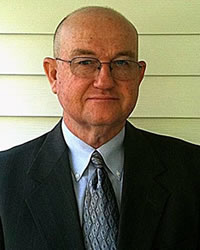
Gary Shepard

Christ Our Passover

1 Corinthians 5:7
Gary Shepard July, 20 2009 Audio
0 Comments

Sermon Transcript

Auto-generated transcript • May contain errors

100%
Open your Bibles this morning
to I Corinthians, and the fifth chapter. I Corinthians, chapter 5. some moral misconduct in the
church at Corinth. And the apostle in his letter
to them instructs them to deal with it, to recognize it, to
not glory in it, to be ashamed of it, And he says to them, you know
that a little leaven leaveneth the whole lump. And then, as always, he goes
back and he uses the Lord Jesus Christ in this matter. showing how that just a little
bit of works leavens the whole lump of grace. And he says if it's of works,
then it cannot be of grace. He says in verse 7, Purge out
therefore the old leaven, that ye may be anew lump, as ye are
unleavened." In other words, be what you are
by the grace of God in Christ. Christ our Passover is sacrificed
for us. The Apostle told these same Corinthian
believers something that we ought always to remember. Hold your place there and turn
over to chapter fifteen. Here in chapter 15, beginning
in verse 1, he says, Moreover, brethren, I declare unto you
the gospel which I preached unto you, which also you have received,
and wherein ye stand, by which also ye are saved, if ye keep
in memory what I preached unto you, unless ye have believed in vain. For I delivered unto you first
of all that which I also received, how that Christ died for our
sins according to the Scriptures, and that He was buried, and that
He rose again the third day according to the Scriptures. Now, the Scriptures that he makes
reference to here, they had to be the Old Testament Scriptures. But the Old Testament Scriptures,
just like the New Testament Scriptures, speak of Christ and speak most
particularly of His death, of His sufferings. If you remember,
when our Lord revealed Himself to those disciples, after the
resurrection. He said to them who did not know
who He was after that resurrection, He said, ought not Christ to
have suffered these things and to enter into His glory? He said, you're fools. and so
slow of heart to believe the things that were spoken by the
prophets. But in light of what the prophets
said, ought not the Christ to have first suffered these things
and to enter into His glory and beginning at Moses? beginning at Moses." That means
he began in those first five books of Moses in the Old Testament,
and beginning at Moses and all the prophets, he expounded unto
them in all the Scriptures the things concerning himself. And when you get to the book
of Hebrews in the New Testament, we read that the things that
God gave through Moses, the things that He gave through all the
Old Testament prophets, they were shadows, they were types,
and they were typical of the Lord Jesus Christ, and they signified
things concerning his sufferings and the glory that should follow. And this means, by virtue not
only of all these things, but most especially in light of this
seventh verse, this means that the Passover that was initiated
at God's command by Moses, that also was typical of Christ as
Paul is led by the Spirit to remind us of. As a matter of
fact, there is a verse in Hebrews 11 that makes us to know that
Moses, And all the Old Testament believers, they believed on Christ. They believed the gospel of a
crucified Christ, which they had in type and picture and illustration,
just like all who are saved now will believe, believing the gospel. Listen to this statement. It
says of Moses, through faith he kept the Passover and the
sprinkling of blood, lest he that destroyed the firstborn
should touch them. Did he simply, in an obedience
just to the ritual and ceremony that God commanded? Did He just
simply do those things and command the people to do them? No, it
says that He did them by faith. He did them believing something
concerning the one God had promised that He would give and who would
come. And Moses, as well as all God's
elect among that earthly people, they believed God, and they trusted
in the One whose coming and salvation was promised by God, and they
looked to Christ just as we do today by faith, by faith in that
God-given revelation that he gives of Christ. But they did
not just look to this coming of Christ as most of the Jews
in general did. They looked to him as a sacrifice. Look back here in I Corinthians
5 and be sure that we catch what Paul is saying here in the latter
part of that seventh verse, he says, for even Christ, our Passover,
not just in some generic or mystical sense, not just Christ in His
person, separated from His work, but no, he says, for even Christ,
our Passover is sacrifice for us." They looked to the one pictured
in the Passover as the sacrifice for their sins. They looked at
what was represented about him in this picture of the Passover,
and the Passover was a clear picture of the good news of the
gospel of a crucified Christ. The Passover, like Jesus Christ,
was a sacrifice. And they looked to this one who
is the one mediator between God and men, and they looked to that
one way by which God saves sinners, and that is in Jesus Christ and
Him crucified, pictured as the Lamb sacrificed. And that's why when John the
Baptist, who is described in this book as the very forerunner
of the Messiah, he is the very forerunner of God's Son, of God's
Christ, when he at the first sight of Jesus Christ, the man
Christ Jesus, it says, John seeth Jesus coming unto him and saith,
Behold the Lamb of God that takes away the sin of the world. He could as easily and as truthfully
have said, Behold the Messiah of God. He could have said, Behold
the Son of God or the King of God. or the Lord of God, or a
host of other titles and many more that you and I have never
heard of concerning the Lord Jesus Christ. But He announced
Him in this character of sacrifice and redemption. He said, Behold
the Lamb of God. And he is not a lamb in some
general sense, but he is the lamb which takes away sin. As a matter of fact, on another
occasion, whenever Philip beholds the Ethiopian riding in that
chariot in the desert, and he is reading what? The Old Testament
Scriptures. He is reading from Isaiah. And the Scripture says in Acts
chapter 8, the place of the Scripture which he read was this, He was
led as a sheep to the slaughter, and as a lamb dumb before his
shearer, so he opened not his mouth. In his humiliation his
judgment was taken away, and who shall declare his generation? For his life is taken from the
earth. And this man, Philip, asked that
eunuch, he said, do you understand what you're reading there in
those Old Testament Scriptures? He said, how can I except some
man show me and tell me? And he read this Scripture, quoted
it, and the eunuch answered Philip and said, I pray thee, of whom
speaketh the prophet this? Of himself or of some other? What's that all about? It says,
"...then Philip opened his mouth, and began at the same Scripture,
and preached unto him Jesus." You see, that's the big thing
in our day. There are a whole lot of people
who claim to be preaching Jesus. They claim to be telling something
about the Jesus of the Bible. But even as it was in Paul's
day and Philip's day, if you remember what Paul says there
in chapter 15, it says that he, in the beginning, preached unto
them how that Christ died according to the Scripture. And we don't
have one book here and another book here that are in some way
contrary to the other or disconnected to the other. What we have is
one continual message and revelation from God, and it is concerning
His Son who is the sacrifice for sins. You see, that's exactly I mean,
what the Old Testament Scriptures show us, if God is pleased to
reveal it to us. And that's what the Gospel is
about. How did Christ die according
to those Old Testament Scriptures? How did He die as the Passover
of His people? We'll turn back over to that
portion that we read earlier back in Exodus chapter 12. How did Jesus Christ die as the
Passover? The Passover of His people, how
did He die? Well, there's one thing you might
notice when you go and you read through all these verses that
we read, and if you think back about how big a group of people
this was, what it required to do what the Lord commanded here,
a lamb for a house, somebody estimated that there were over
250,000 lambs that were slain. We're talking about a lot of
people. We're talking about a lot of
households. And therefore, in light of what
the Lord has commanded Moses to tell the people to do, we're
talking about a lot of lambs. But it's clear that God was only
looking at one. He was only looking to one. Because when he gives this instruction,
if you look back here in Exodus 12 and verse 4, he says, And
if the household be too little for the Lamb, let him and his
neighbor next unto his house take it according to the number
of the souls. All through this text of Scripture,
he never uses the word them. concerning the lambs. And the
reason he doesn't is because these lambs, though they were
many, they represented one lamb, and it's that one lamb that God
is looking to. And that's why John the Baptist,
when he announced him as the forerunner, he said, Behold,
the Lamb of God. There are not many lambs of God. There are not many ways of salvation. There are not many faiths. There are not many ways to God. There are not many truths. There is one. There is one Passover. There is one sacrifice. And this Passover, ordained of
God, And given at the hand of his servant Moses, who is a mediator
between God and the people in this sense, this sacrifice in
the Passover gives us a very clear picture of Christ. Here are some things I want to
give you this morning. Number one, it was a perfect
sacrifice. You know, it is amazing to me. You can go throughout the Old
Testament and the history of Israel and all the accounts that
have to do with that economy under the law, which was the
law that had sacrifices, and every one of them, it is emphasized
that they be perfect. Look at that fifth verse. Your
land. shall be without blemish a male
of the first year, and ye shall take it out from the sheep or
from the goats." Without blemish. I want to ask the world, who
has all their lambs and all their sacrifices, Can yours fit the
very first criteria of sacrifice before God? Is he perfect? You can bring Mohammed, you can
bring Buddha, you can bring every figure of notability in all the
religions of the world, all men, all died, all lived, and none
would dare to say that they were perfect. But this land, this Passover
land, was to be without blemish. As a matter of fact, the law
is emphasizing this in Leviticus 22 when he says, And whosoever
offereth a sacrifice, it shall be perfect to be accepted, there
shall be no blemish therein. Men are talking about giving
something to God, working for God, doing something for God,
something that is tainted and polluted by their own sinful
selves. And imagine that God will accept
it, that He will accept our person or anything done by us when it
has to be perfect to be accepted. You see, this Lamb, this Passover
represented One. And of Him it is said that He
is the One who knew no sin, and He must be One who knows no sin
in order to be made sin for us. He is the One who is described
in this way. He is holy and harmless and undefiled,
separate from sin. He did no sin. He thought no
sins. He is tempted in all points,
such as we are, yet without sin, because that's the only thing
God can accept. You see, that's why Abel's sacrifice
was accepted of God, and Cain's was not. Cain's was the work
of his own hands, and Abel's sacrifice was this lamb which
represented that which God provided Himself. The only thing that
God can accept is what He gives, because He's perfect, because
He requires perfection. because he has to be as is pictured
in this sacrifice. Peter, writing in the first chapter
of his first epistle, he reminds the believers that we're redeemed,
not with corruptible things such as silver and gold. Those things
under the Old Testament economy that pictured redemption, they
weren't redeemed. All these lambs, it's not possible
that the blood of bulls and goats should take away sin. Why? Because
they represented the perfect sacrifice, but they weren't it. He said, we're redeemed with
the precious blood of Christ. How was that? He said, as of
a lamb. as of that Lamb without spot,
without blemish. That's what we're redeemed by,
by a perfect, sinless sacrifice. The writer of Hebrews, in contrasting
the blood, the sacrifices of the Old Testament with Christ,
he says, how much more shall the blood of Christ, who through
the eternal Spirit offered Himself without spot to God. Purge your conscience from dead
works to serve the living God without spot. You see, that's why all the attempts
are made by so many in our day and every age to make Jesus a
mere historical figure or make Him a man who upon close examination
they find that He has a blemish or a fault or a flaw or He did
something that was sin because they would make Him like themselves. But He's not. When he stood under the scrutinizing
eyes of those that delivered him to be crucified and slain,
they could not offer any just claim of his error. And when the one who examined
him looked at what was said about him and everything that was known
about him, he said, I don't find any fault with him. Because that's what the Passover
pictured. Pictured a perfect sacrifice. God has to have a perfect sacrifice,
and He's the only one that can give that sacrifice. As a matter
of fact, He must Himself come in human flesh and be that sacrifice. Here's the second thing. This
Passover, this sacrifice, was a substitutionary sacrifice. If you go back and read through
these verses, such as verse 3 and verse 4, it says, a lamb for
a house. And when you find that word in
Scripture, that word F-O-R, it means so many times, and every
time that it speaks of Christ in this death, it means in the
place of. What was the Passover lamb to
be? A lamb for a house. You see, Paul writes, and John
writes, and all the writers of Scripture, they remind us that
Christ loved us and gave Himself for us. Turn over to Isaiah 53. Here is another Old Testament
scripture, Isaiah chapter 53, and look down in verse 4 where
the prophet Isaiah, in speaking of God's Christ, the Lord, our
Passover, in verse 4 says, Surely he hath borne our grief. and carried our sorrows. Yet we did esteem him stricken,
smitten of God, and afflicted. We thought at first glance that
he's smitten of God because of something he did. It says that he was the one who
bore our griefs, carried our sorrows. Verse 5, but he was
wounded for our transgressions. That lamb died in a picture for the sins
of that house. A lamb for or in the place of
those in that house. He was bruised for our iniquities. The chastisement of our peace
was upon Him, and with His stripes we are healed. What's He doing on that cross?
He's bearing the stripes, the divinely applied stripes of God's
justice that was due for all His people, for all their sins,
for all times, so that there is not another stripe that will
fall on them. All we like sheep have gone astray,
we've turned everyone to his own way, and the Lord hath laid
on him the iniquity of us all." The prophet speaking of all God's
people of all times, all of them. You mean to tell me that God
will not in the matter of His justice even bring a switch to
His people. He laid on Him all the stripes
that were due for all the sins of all His people because He
is dying there as the substitute. That is what the Passover picture
is, a substitutionary sacrifice in the place of this people that
he had been made surety for and guarantor for and responsible
for to bear all their sins on that tree in his own body. That death that fell on that
land, it didn't fall on anybody in that household. It was in
their place. It was picturing Christ. And
not only was this a substitutionary sacrifice, it was a particular
sacrifice. He said, a lamb or a house. You see, it was not in any way
given to or associated with any house of the Egyptians. Not one. Absolutely not one. And the reason is because Christ
sacrificed. Our Passover was sacrificed,
Paul says, for us. Who was he writing this letter
to in Corinth? He was writing it to the church
at Corinth. He was writing it to believers.
And he did not feel some kind of necessity to in some way manipulate
what the Scriptures showed and pictured concerning the death
of Christ to make it in some way more universal and therefore
more universally accepted by men. He said, A Lamb for as Christ
our Passover sacrifice was. Christ said, I lay down my life,
I give my life for the sheep. And then he turned immediately
and he said to some who were right there full of questions
and interests concerning him, though they were the wrong ones,
he said, you're not of my sheep. What a mockery to the death and
sacrifice of Christ to think or imagine or to say and especially
to preach that there will be some people in hell that Jesus
Christ laid His life down for. What a mockery of divine justice
it is to say that God, who is a just God, would in some way
cast into hell one that Christ died for. He says that he purchased the
church with his own blood. That his name is Jesus, and for
that reason he is called such, for he shall save his people
from their sin. Who? His people. Look down here
in Isaiah 53 again. Verse 7. He was oppressed and he was afflicted,
yet he opened not his mouth. He is brought as a lamb to the
slaughter and as a sheep before her shears is done, so he opened
not his mouth." What did Philip say? This is Jesus the prophet
is talking about. He was taken from prison and
from judgment. And who shall declare his generation? For he was cut off out of the
land of the living. For the transgression of my people
was he stricken." I believe it was Spurgeon who said it. There
wasn't one more verse in the Bible. that showed clearly a
particular redemption, a limited atonement, a definite death.
If there wasn't one more verse in the Bible but that one, he
said, I'd have to believe it. That's God talking. For the transgression of my people,
the Passover, Christ, our Passover, was sacrificed as a perfect sinless
sacrifice, and He was dying there on that cross as a substitute
for His people and in their place. A Lamb for a house. And the writer
of Hebrews says this in chapter 3, he says, but Christ as a Son
over His own house. whose house we are if we hold
fast the confidence and the rejoicing of the hope firm unto the end."
Everyone who looks to Christ and only to Christ, they're His
house. And He's the Lamb that was slain,
who died as a sacrifice for the sins of His house. And then this Passover that was
typical of Christ, it was a sacrifice to God. A sacrifice not offered in the
sense that it's offered to man to take or not to take or whatever,
but a sacrifice in the sense that a sacrifice in the Old Testament
was offered to God. He offered himself to God. That doesn't mean he just kind
of held himself out and said, God, do you want me or not? No,
it means that he laid down his life in this sacrificial, substitutionary
sense, and he did so to God. Turn back over to Exodus 12,
and look over in verse 26, I believe it is. And it shall come to pass when
your children shall say unto you, what mean you by this service? You see, this was to be perpetuated. And he said, when your children
come along, and they begin to wonder, what's going on here?
What are you going to say to them? That ye shall say, it is
the sacrifice of the Lord's Passover. Christ died as a sacrifice to
God. I don't know who said it first,
but whoever said it first, said it right, And that is that in
order for God to do something for us, He has to first do something
for Himself. You remember when Abraham was
about to take Isaac up on the mount, and Isaac asked him, he
said, I see the fire and the wood, but where is the sacrifice? He said, the Lord will provide
Himself a sacrifice. This is the Lord's Passover. Jesus Christ is the Lord's Passover. God is the one who has been sinned
against. God is the one who has been offended
by me. God is the one whose justice
must be satisfied, whose character must be honored in every way. This is the Lord's Passover. You see, Christ's sacrifice is to honor
God in all that He is in the salvation of His people. Christ's sacrifice is the one
thing that has satisfied the offended justice of God. Christ's sacrifice, our Passover,
is the one sacrifice to show Him as a just God as well as
a Savior. It was to pass over them, but
not their sin. Don't ever think that that's
what the Passover was about, just the passing over. God said,
I'm just not going to look at your sin. I'm just going to kind
of sweep it under the carpet. That's not what that means. As a matter of fact, the Word
itself, has a closer connection to this
meaning, to brood over. Now, you think about that a little
bit. To brood over. Or this meaning,
to spread the wings over. To protect. Now, how'd that happen? You see, he protected that house. That lamb protected. That lamb, there's a descriptive
language all through the Bible which pictures a hen, if you
would, when there's danger near for the chicks. She's pictured
as the one who spreads her wings out and those chicks gather under
the wings for protection. As a matter of fact, The word
here may even be connected to an Egyptian word. Old Brother Pink quotes an older
gentleman much farther back than him, a scholar by the name of
Uquart, I believe his name was. But he said that this is a word,
this word Pesac or Pesac, from which we get Paschal Lamb. is really close to an Egyptian
word that means to spread your wings over and protect. Let me read you a verse from
Isaiah 31. He says, "...as birds flying,
so will the Lord of hosts defend Jerusalem, defending also He
will deliver it, and passing over He will preserve it." That's
Isaiah 31.5. That sounds good to me. He didn't
just pass by our sins. He dealt with our sins. The land
is that protecting power over the house because he bears the
sins of the house. This lamb was dealt with as Christ
was dealt with in the matter of our sin. This lamb, he said,
take him out and kill him. But he's innocent. So is Christ. But he's dying
for the sins of his people. The Lord has brought down upon
him the sword of his justice. He said, take the shepherd and
smite the shepherd who watches after the sheep. He's not to be admired simply. He's to be slain. He's to be
killed. Take him out and kill him. Paul
said it's God that justifies, it's Christ that dies. And if
we would know of the love of God, and the mercy of God, and
the grace of God, and the righteousness, and justice, and faithfulness,
and majesty, and purpose, and glory of God, we'll have to see
it in the face of Jesus Christ and Him crucified, sacrificed. That's why we preach the cross.
That's the love of God. Peter said, "...for Christ also
hath once suffered for sins, the just for the unjust, that
he might bring us to God." How? By being put to death in the
flesh and quickened by the Spirit. Hebrews says, "...this man, after
he had offered one sacrifice for sins forever, sat down on
the right hand of God. The wrath of God fell on the
land." It wasn't that God didn't deal
with the sin of the people in this house like He was the Egyptian. He deals with all sin the same.
And this is. Just like the Ark, it wasn't
that he wasn't dealing with the sins of Noah and his family,
but that wrath in the flood, that judgment, came against the
Ark of Christ. This came against the Lamb, the
Passover. And then this sacrifice, it was
a separating and a securing sacrifice. What are you going to do with
the blood? Put it on the door. Put it on the lintels and the
doorposts of the door. That's what Christ is called.
He's the door. What does a door do? A door shuts
some out and shuts some in. Isn't that right? A door is a way of entrance to
my house. But I'll tell you, at night we
shut that door, and that's not only to keep us secure and safe
inside, it's to keep somebody else out. And that's the way it is. Christ,
Paul said this preaching of this crucified Christ, it's a savor. It's a fragrance. It goes up,
it's a sweet savor to God in them that are being saved and
in them that perish. To some it comes to us naturally
in our self-righteousness as salvation that's all in grace,
that's all in one outside of ourselves, that's all by the
death of one. It's naturally offensive to the
carnal man, but to God. And to those who
are in the house, it's a sweet savor sprinkled on the lentils
and the doorposts. The Scripture says when God had
Noah to build that ark, had one door in the ark, and it says
that when Noah and his family were brought into that ark, it
said, the Lord shut the door. And that ark shut the world outside
and shut Noah and his family safe inside, just like the Passover. And Christ's people are in Him. They're not of this world. They're
delivered out of this present world, and they're safe. They're
absolutely safe, and their safety is in the sacrifice that has
already endured the wrath and punishment of a holy God in the
matter of their sin, and their felt assurance. Now, I didn't
say their assurance. I said their felt assurance is
in looking to the Lamb. Have you ever been somewhere,
you know you've got something to pay, and you know you've got
it in your wallet, but just before you get there, you stop and you
reach back in your wallet, and you have to make sure you've
got that money. Well, that money is the payment. What you're looking at kind of
gives you an assurance, doesn't it? That's the way it is with
Christ. Looking to Him is where our felt
assurance is, although He Himself in His death, that's our real
assurance. Somebody said that it's like
a ship, an ocean-going ship. There are people on the ship,
and there's somebody who's laying out there on the deck, in the
sun sunning as that ocean liner's cruising along across the Atlantic,
and here's somebody else there down in the bottom of the ship
in their little cabin, and they're crying and fretting and sick
and this and that and the other. Which one of them is going to
make it across? I feel they both are. Because
it doesn't matter as to how they feel. They'll make it if the
ship makes it. And God's people are going to
make it because Christ has already made it. He's that himself who
is already the one who has entered into the harbor of God's heaven
and dropped the anchor that's attached to all his church. He
sits at the right hand of the majesty on high, and therefore
this sacrifice was a successful sacrifice. Verse 13, And the blood shall
be to you for a token upon the houses where you are.
And when I see the blood, I will pass over you, and the plague
shall not be upon you to destroy you when I smite the land of
Egypt. The plague will not Do you hear, people? The plague,
he says, will not be upon you when I smite this world, because I've seen the blood of
my Lamb. I'm looking to Him. I never looked
to you to start with. I looked to Him in that everlasting
covenant. I looked to Him when I made Him
the surety. I looked to Him when I chose
you in Him. I looked to Him. I've always
looked to Him. I'll always look to Him. But
the blood, that blood that poured out, what was it an evidence of? When
it was applied to your house, what's that? He said, that's
a token for you. That's what the gospel is. He's given us a token of grace to make us know what He already
knows. Did one of these Hebrews perish?
Did a single soul in any household die where the blood was? No. No. And the writer of Hebrews
says it's by this will of God, by the which will we are sanctified,
set apart unto God, made holy by God in Christ through the
offering of the body of Jesus Christ once for all. For by one
offering he hath perfected forever them that are sanctified." How? By that one offering. It was a sacrifice that is perpetual
in its efficacy. They were to continue this throughout
all the generations. Paul says it like this. He says, for even Christ, our
Passover, and it really isn't, is there. The words are these, for even
Christ, our Passover, has been. or was sacrificed for us. That's a problem oftentimes in
the New Testament translation of the King James. When it says,
is, many times it's was. He was crucified. He was sacrificed
for us. And He'll be always the sacrifice. He was sacrificed, and the Bible
says, once He appeared in the end of the
age to put away sin by the sacrifice of Himself. One sacrifice for
sin forever. And it was the sacrifice that
was signifying of the new creation. You go back and read verses 1
and 2. And when the Lord gives this
to Moses, he said, this is going to be the beginning of your year.
I don't care what kind of calendar you've had before. This is going
to be the first of your new year. Paul says, if any man be in Christ, He's in a new creation. That's
what that says there. He is a new creation, and old
things are passed away. Behold, all things are become
new. Why was this to be the new year? Because God said so. And because everything begins
with the Lamb. It was a sacrifice of continual
preservation. You see, Christ's sacrifice is
finished, but it is forever fresh before God. on the behalf of
his people. When John saw him in the Revelation,
chapter 5, he says, "...I beheld, and lo, in the midst of the throne,
and of the four beasts, and in the midst of the elder, stood
a lamb as it had been slain." That means a lamb as if newly
slain. Wait a minute. There stood a
lamb. Yes, he's alive, but he's as if he's just newly slain.
He's so fresh, so securing to that hour before God on the behalf
of his people. He's a Passover. And it was a
sacrifice to be feasted in again and again. He said, from this
day forward, for the rest of your generations, you gather
together, your families in a house, Slay that lamb, sprinkle that
blood on the lintels and doorposts, you go inside and you eat that
flesh. It has to be roasted with fire. Why? Because this lamb, he dies
under the hands of God's justice, his fiery wrath. It has to be
eaten. It can't be boiled. It can't
be cooked any other way. It has to be roasted with fire.
And it has to be all one piece. You can't cut Him up and do it.
And you eat all of it. Anything that's left by morning,
burn it up with fire. We feast on all of Christ. We
believe on all of Christ. We take all of Him. He said,
you remember He said, except you eat My flesh and drink My
blood, you've got no part of Me. We appropriate Christ by
faith. We feast on Him when we hear
His Gospel. What a joy it is to hear about
Him. to hear about our Passover land
that was sacrificed for us. We feast on it when we confess
this very thing in baptism. What? His death, burial, and
resurrection. We feast on this very thing when
we take the Lord's table. He called it a memorial. What
did Christ say? This new and remembrance of me. As a matter of fact, it was nearing
Passover or the time of Passover when Christ gathered his disciples
and it says, he took bread and gave thanks and break it and
gave it unto them saying, this is my body which was given for
you, this do in remembrance of me. Likewise also the cup after
supper saying, this is the cup, this cup is the New Testament
in my blood which is shed for you. Everything has to do with
our land. We remember. God's gift of grace,
Christ's coming in the flesh and in His sinless perfection,
bearing in His body our sins in our place on the tree, remembering
that Christ, our Passover, was sacrificed for us. Do we feed on Christ? Do we look
to Him? Is all the sacrifice for our
sins forever? Is He our Passover? He said, In all things purge
out the leaven. just as we purge out the leaven. He said, you eat this feast with
unleavened bread. Nothing is to be mixed with Christ. Don't you let one little work
or one little experience or one little feeling enter in as the
hope of your salvation. It's our Passover lamb, plus nothing. He's our Passover. And we sit. Sometimes we stand. We don't
rest much, but we're under His protection forever. Feast on Him. Believe on Him. Rest in Him. If we're in Him, The Lord has
said, when I see the blood. When was that blood shed? Two
thousand plus years ago. He said, here's your token. The
blood. Christ's death. The blood. When
I see the blood, I'll pass over you and the plague won't come
to this house. Or you may have You may have
heartaches, you will. You may have weakness and sickness
of body, you will. You may have trials and tribulations,
you will. But this plague will not come
to your house. It's coming to all this Egypt
of this world. You see, because I've seen the
blood. God help us to see it. Our Father, we thank You for
Your dear Son and His sacrifice for our sins. We thank You for Christ, our
Passover, who was sacrificed for us. Help us, we pray, to purge out
the leaven of all that displeases you in our lives, in the Church,
and most especially enable us to feed upon Christ, who is the
bread of life, to trust in Him, His death, and nothing else. Help us, we pray, and bless Your
Word wherever You cause it to be preached. Watch over us as
we go out into this week. Enable us to honor You, to follow
You in all things. Follow the Lamb whithersoever
He goes. For we thank You and we pray
in the name of Christ. Amen. Come here.
Gary Shepard
About Gary Shepard
Gary Shepard is teacher and pastor of Sovereign Grace Baptist Church in Jacksonville, North Carolina.

Comments

0 / 2000 characters
Comments are moderated before appearing.

Be the first to comment!

Joshua

Joshua

Shall we play a game? Ask me about articles, sermons, or theology from our library. I can also help you navigate the site.