Bootstrap
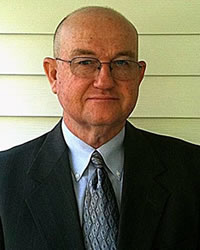
Gary Shepard

A Profile of the Blessed #5

Matthew 5:7
Gary Shepard June, 8 2009 Audio
0 Comments
Matthew 5:7 Blessed are the merciful: for they shall obtain mercy.

Sermon Transcript

Auto-generated transcript • May contain errors

100%
Turn back, if you would, to that
fifth chapter of the Gospel of Matthew. Over the last few weeks, we've
been looking at this portion of Scripture, and we've been doing so by looking
at each verse. And I've called these messages
a profile of the blessed. And the one that gives the profile
here, the profiler, if you will, is none other than Him who is
called the truth. He is the Lord Jesus Christ. And this morning, I want us to
look down at that seventh verse, where he gives a description. And as I've said each time, and
surely want you to know, that these are not conditions for
being blessed of God. But they are, as he says here,
the description or the characteristics of those who have been blessed
by God. Verse 7, he says, Blessed are
the merciful, for they shall obtain mercy. Now, many people do not realize
that this word blessed here that is used by so many, it actually
means happy. Even when it is used often to
describe God as the blessed God, it is literally the happy God. And there are so many people
in our day who, when you ask them how they're doing, they
respond with that one word, oh, I'm blessed. But as I've tried
to show you in these messages, there is only one who knows and
who can tell us those who are truly blessed, and that is the
One who blesses. That is God Himself, and most
especially as He is here as God the Son, Jesus Christ. And what He says here, this verse,
in no way teaches that anyone will receive mercy from God as
a result of them showing mercy. We have to weigh everything that
is said in light of everything else that is said in this book. And no scripture, no one part
or portion, he says, is of any private interpretation. It does not stand by itself. but is to be taken in light of
everything that God says in His Word. And we know that Paul,
when he wrote to Titus in chapter 3, he reminded them, not by works
of righteousness which we have done, But according to his mercy,
he saved us. He writes to this man, Titus,
who is a believer, and he writes this letter to believers in all
times, and this is the message that he reminds them of, not
by works of righteousness, which we have done, but according to
His mercy He saved us." These that are described in our verse
here are merciful because they have received great mercy from
God. They are, as Paul says, merciful
because they were mercied of God. And the mercy that they
are brought to show, it is the fruit of grace, and it is the
result of the Spirit of God teaching them and revealing to them the
mercy of God to them which is in Christ. I had a friend who
is now passed on, but he told me this, and it stuck in my mind. He said, I want to show mercy
because I need mercy. And I've thought about that so
many times, especially that last part. I do so very much need
mercy. And these who are born of God
and mercied in Jesus Christ are merciful because they not only
know that they have been shown mercy, but that they continue
to need mercy. I have been shown great mercy
from God. But at the same time, I continue
to need mercy. But words like mercy and grace,
though they are so often spoken of, by men and women in our day,
they only mean what God means for them to mean in His Word. And so in light of that, there
are three things that I want us to think about this morning
in light of what he says. The first thing is this, what
is mercy? And how does God show mercy to
us? If we are in need of mercy, we
need first to know what mercy is, and at the same time, we
need to find out how does God show mercy to us? Well, let me say first of all
that mercy, I suppose if you wanted to give it a simple definition,
it would be this. It is God not giving us what
we deserve. On the other side of that same
coin, if you will, is grace. Grace is God giving us what we
do not deserve. And here is mercy which is God
not giving us, not dealing with us according to what we deserve. It is for the miserable. As a matter of fact, mercy can
also be described like this. Mercy is the kind treatment of
one who has acted as an enemy to you. So the truth of the matter
is, if we find ourselves in need of mercy, if we say we want mercy
from God, we are also at the same time confessing something
about ourselves. We are confessing that we are
those who are in need of mercy, and we do not want God to give
us what we really deserve as sinners, but rather we would
pray that He would deal with us in mercy and not give us what
we deserve. But you see, the thing that so
many fail to have any understanding about is this, and that is God's
elect, in reality, they were never His enemies. And they were never at any time
thought of by Him, looked at by Him as being His enemies. But at the same time, this is
because he does not change. He is the unchanging God, and
he does not change, so neither can his relationship to these
he described as his chosen ones, or as these he describes as blessed. But the truth is, that while
he has never thought of them as his enemies, they every one
have of themselves acted as enemies to him." When Paul describes
the believers there he writes to at the church at Ephesus,
In Ephesians 2, he says that we all were, even as others by
nature, the children of wrath. What does that mean? Deserving
of God's wrath. acting in a wrathful way toward
God, disobeying God, defying God, hating God in our hearts
and in rebellion against Him just as someone in a kingdom
would be in defiance against the King. So when He deals with us, He
has to deal with us in mercy as those who have acted as enemies,
as those that Paul described in Colossians 1 when he says,
and you that were sometime alienated and enemies in your mind. The mind of God never regarded
His people as His enemies. He loved them with an everlasting
love. But at the same time, they in
themselves, in Adam, when they fell in Adam, they in themselves,
when they are born into this world, they show themselves toward
God as enemies of God. Enemies, He says, in their own
minds. by wicked works." Now, what in
the world does he mean there? Does he mean all the vile things
that they do by nature? Well, surely every one of them
does all these things to one degree or another. But what he
means there is this, they were enemies in their minds by wicked
works is this, they sought by nature to stand before God and
be accepted by God and blessed by God based on their works and
not the work of Christ. They come forth from the womb.
The Bible says speaking lies. What is the biggest one of all?
Well, let me tell you what I think. I think if I do the best I can
and live the best I can, then God will accept me and receive
me unto Himself and bless me. And men know that that's what
we believe by nature. And that's why everywhere in
this world, In a multitude of places, in one way or another,
in all the various religions of this world, men stand, and
in one way or another, they tell men and women that if they do
good, God will bless them. They say, if you'll give, God
will bless you. They say, if you'll quit doing
this, if you'll quit drinking this or smoking this or going
here, if you'll quit doing something, God will bless you. And men and
women receive that because that's what we are in our fallen nature. That's what we really believe,
that we can, if we will, do something that will please God. And until God brings us to an
end of that thinking, until He brings us to an end of ourselves
and causes us to know what we really are and our inability
as sinners being such that everything we do is sin, because that is
exactly what we are. I've got some what I think will
be good news last week. I heard someone say on the news
that one of these days shortly there won't be any liquid print
cartridges to put in printers because they've developed a newer
way of printing of a dry kind of ink so that one of the things
they said about it was not only will it be cheaper but less messy. Because every time I go to change
a cartridge, every time I go to change the cartridge in the
printer, I get something on my fingers and everything I touch
after that leaves that mark and it reminds me that that's the
way I am as a sinner. I do what I do. I think what
I think. I say what I say because I am
what I am. You know, like I know, if you
know anything about yourself, in your heart of hearts, it doesn't
really matter how many people say what a good person you are. It doesn't matter how many think
what a religious person you are. In your heart of hearts, if they
knew the thoughts you think, if they knew the things that
you said to yourself, if they knew the motives and the desires
of your mind, they would lock you in the darkest prison and
throw away the key. Not safe to be around them. But my friend, you're not alone.
And the reason why all the remedies of men, that's the reason why
all the remedies of religion and all the remedies of politicians
and government, the reason that they fail is because they deny
the one essential thing that we must know, and that is that
we're sinners. And at our best state, he said,
we're altogether vanity. That means nothing. He said,
every one of us have sinned and come short of the glory of God. Every one of us are dead in trespasses
and sin, and what we need is mercy from God. We've acted like enemies. The
carnal mind, Paul said, that's the natural mind we come from
our mother's womb with. That natural mind is enmity against
God. Oh, not the God of our imagination.
Not the God we put together. Not the God that false religion
hands us and says, here it is, one just like you wanted. You
go and you seek after the church of your own choice so you can
get the God of your own choice. But there's just one God. He
said, beside me there's none other. There's just one God. And He is the God with whom we
have to do, and if we ever have mercy, we'll have to have mercy
from God. And the mercy of God, we have
to be reminded, something that we don't know, is that the mercy
of God is joined to His glorious God as the absolute sovereign
over all. You know, we live with all our
rights. And so we imagine with this God
of our choice, this God of our own making and imagination, as
the Bible says, we imagine that He must be like we want Him to
be, and so we imagine that He must show mercy to us. No, He mustn't. No, He mustn't. You see, he says
so many times, I do what I will. I do all things after the counsel
of my own will. I do what I will in the armies
of heaven and among the inhabitants of men, and no one can stop me
or stay my hand or say unto me, what doest thou? He said, I'll
do all my pleasure. Whatever it is that I desire
to do, that's exactly what I do. Anything less is not God. One day a man by the name of
Moses, you remember him? Stop and think about what Moses
had seen. He had seen a lot. He'd seen
staffs turned into serpents. He'd seen rivers turned into
blood. He'd seen all of the natural
creation unleashed in the form of lice and flies and everything. He had seen the Red Sea part. One day in the book of Exodus
in chapter 33, you can go home and read it. He said, Lord, show
me Your glory. What will that be? After all
Moses has seen, what will God now show him that is His glory? He said, And I beseech thee,
show me thy glory. And the Lord said, I will make
all my goodness pass before thee, and I will proclaim the name
of the Lord before thee. I'm going to show you the essence
of my greatest glory. He says, and I will be gracious
to whom I will be gracious and will show mercy on whom I will
show mercy. That's the glory of God. He can have mercy on whom He
would have mercy. He can be gracious to whom He
would be gracious, because there is nothing in any of us to deserve
it or merit it, and there's nobody who can stop Him. You know that. Do you believe that? Well, let
me tell you this. It doesn't matter if you do or
if you don't. It isn't going to change him one bit. And my
only hope is that he is the way that he is. The devil could look
at me, and surely did, and has, and continues to look at me in
my vileness as a sinner, and says to God, there's no reason
why you ought to show mercy to him. He doesn't deserve mercy. He
doesn't deserve grace. He doesn't deserve forgiveness.
He doesn't deserve redemption. He doesn't deserve any kind of
mercy at all. Why would you have mercy on Him? Because I will have mercy on
whom I will have mercy. You think that's an Old Testament
trait for God that He has somehow changed, turn over, hold your
place right here, and turn over to Romans chapter 9. Romans chapter 9, here the Apostle
Paul, writing to the church at Rome, brings to the remembrance
of these believers, and to all of us who would ever read this,
just exactly what God taught Moses. Romans chapter 9 and verse
15. For he saith to Moses, and he's
just got through telling them, that salvation is all of God,
it's all of God's grace, it's only in Christ, he saves who
he will, and he responds to what he knows will be the natural
response of fallen man." Well, that's not right for God to do. You know, it's a little bit late,
isn't it? For you and I, in our ignorance
and blindness, to stand here in the year 2009 and say what
is right or wrong for God to do when He's already done it. He did this before the world
began. Now, you listen to him in verse 15. He just responded,
verse 14, what shall we say then? Is there unrighteousness with
God? Can God do wrong? No. You see, you and I don't determine
what is right or wrong, and especially when God does it, what God does
shows us what is right and wrong. For he saith to Moses, I will
have mercy on whom I will have mercy, and I will have compassion
on whom I will have compassion." You see, the Bible is not hard
to understand, it's just hard to believe. Because it's not
what we want to believe about God, it's not what we naturally
want to believe about ourselves. We'd rather believe in something
men have called free will. There's only one free will in
this universe, and that's God's. So then, it is not of him that
willeth. It's not your will, it's not
your decision, it's not your work. It's not of him, nor of
him that runs, works. but of God that showeth mercy."
You really think you'd ever have anything that God would accept? You're like me and that coffee
toner, that printer's ink. Everything you touch is nothing
but polluted with your sin. He says, "...for the Scripture
saith unto Pharaoh, Even for this same purpose have I raised
thee up, that I might show my power in thee, and that my name
might be declared throughout all the earth." What did he do
to Pharaoh? He destroyed him. He cast him and his whole army,
not just into the Red Sea to drown, but he cast them into
everlasting darkness. Therefore, have he mercy on whom
he will have mercy, and whom he will, he hardeneth." That's just a little too much
God for most folks. What do you have to do to harden
Pharaoh? Leave him alone. That's all he had to do. Just
like taking, which is what the Bible describes us as, a lump
of clay. In other words, all you have
to do to harden a lump of clay is just leave it there in the
sunshine, because that's what it'll do naturally. But he had mercy. In that picture
of those Israelites being delivered out of Egypt and that bondage
through that blood that was shed, painted on the lintels and doorposts
of their houses. And God said, when I see the
blood, I'll pass over you. And then He brought them out
of the Red Sea. He showed mercy to them. That's
just a picture of the mercy that He shows to His people. But be sure of this. Not only
is all mercy of God from God according to His will, to whom
He will, all of God's mercy is in Christ. There's no mercy in Buddha or
the Pope or anybody else, the Virgin Mary. There's no mercy.
You show me in this book, Even Mary, the Bible says that
she, when knowledge was given to her, that she'd give birth
to the Son of God, she said, my soul hath rejoiced in God
my Savior. She was a sinner in need of being
saved, even by the One who came into her womb. Not as a result
of a natural conception, but of a supernatural birth. He is
God in the flesh, come to die for the sins of His people. She rejoiced in that. She rejoiced in it. You see,
outside of Christ, there is no saving mercy. And the reason
that all the mercy of God is in Christ is because mercy from
God must come to sinners in a way in which He is consistent with
Himself. And that can only be through
the perpetuatory sacrifice of the Lord Jesus Christ. Now Moses, when he was receiving
From what God said He was going to do concerning this rebellious
people, Moses began this word of intercession, and he reminded
God what He said, of who He was,
and of what He pledged to this people. I want you to listen
to what He says. You can look at it when you get
home. It's in the book of Numbers. And the 14th chapter and the
18th verse, he said, the Lord is longsuffering and of great mercy. Aren't you glad? He is a God
of mercy. But He doesn't leave you and
I to decide how He's merciful. He says, Moses says to God, the
Lord is long-suffering and of great mercy, forgiving iniquity
and transgression. And, that's the next word, and, by no means clearing the guilty. Now, let me ask you something
in all honesty. I'm going to confess to you the
same. Are you guilty of sin? I'm as guilty as they get. As a matter of fact, Paul, he
described himself in the way that every child of God finds
himself having to confess themselves He said, I'm the chief of sinners. I need mercy. If God were to
deal with me today on the basis of who I am, on the basis of
what I've done, or what I've not done, or what I've said or
not said, or what I've preached or not preached, whatever it
is, I'd be in hell so quick. So quick. Guilty. You used to hear people say,
what's your position on the law of God? I've got one. Guilty. I'm just guilty. You say, well,
I think the best thing to do is live by the golden rule. I've
tried that. I'm guilty. I have not loved
God. with all my heart and my neighbor
as myself." I'm just guilty. Guilty. Well, here he says, this
God will by no means clear the guilty. No means. The soul that sins shall surely
die. What is mercy then? Would you be interested in finding
out what mercy is if God will by no means clear the guilty
and you and I are everyone guilty? How does He do it? He does it
in that way that was clearly pictured time and time again
in the Old Testament, but especially in what was called the mercy
seat. Do you know there was something
in the Old Testament, in that Old Testament economy and law
that God gave to Moses that was called the mercy seat? What was
that? Well, actually, it was on top
of a box. Instead of trying to find out
about what the Ark of the Covenant was through a movie called Raiders
of the Lost Ark or Indiana Jones or something like that, the real
Ark is in this book. And it was a box. of a specific
design that God gave Moses instruction to have built of a particular
wood, of a particular size, covered and overlaid with gold, and that
lid that was on the top of that box, in which, in that box, the
broken commandments were put. Some other things, but the broken
law. And on the end of each side of that golden clad box were
The cherubim fashioned according to God's design, looking at each
other and facing each other over that lid. And God said, in the
midst between the cherubim over the
Ark of the Covenant, that's where I'll meet with this people. That's a little strange, isn't
it? In other words, God as it was in that hour when he manifested
his presence with what was called the Shekinah glory cloud. He
manifested his presence. He said, this is the only place
I can dwell with this people between the cherubims over the
Ark of the Covenant. Why there? Because once a year at the time
of God's appointing, with the sacrifice of God's appointing.
The blood of that sacrifice, one particular sacrifice, a lamb
without spot and without blemish, whatever it was, perfect, that
blood of that creature slain was taken by the high priest
once a year, and he would go in to where that Ark of the Covenant
was, that mercy seat. Nobody but him could go, and
only once a year could he go. Why? Because he's the type of
Christ. There's just one great high priest
between God and men, the man Christ Jesus. And he's not only
God's priest, he's the sacrifice too. That priest would go in
once a year into what was called the Holy of Holies. Nobody could
ever go in there except the God-appointed priest once a year, and he would
take that blood and a little piece of shrub called a hyssop,
he'd dip that in that blood and he'd sprinkle it on that mercy
seat to make atonement for the sins
of the people. And God was demonstrating in
that, that the only way that a holy God can show mercy to
guilty sinners is through the blood of the one He has appointed
and provided, the one whose blood alone is perfect blood. Because it must be perfect to
be accepted. He sprinkled that blood. on that golden mercy seat. He's
walking around, he had to wear a special garment, a special
long garment, and on the bottom of that garment were golden bells
fashioned in the shape of pomegranates. What color does pomegranate give
out? It gives out a red hue. All these things symbolize Christ
and His blood. And as long as they could hear
the bells tingling as the priest went and shook that blood on
the mercy seat, everything was all right. And if he came out
alive, they knew God had accepted the sacrifice. They knew that
God had accepted the work of this priest on their behalf.
And all these things were just simply pointing to the one who'd
come. And when John the Baptist saw
him, what did he say? Behold the Lamb of God. What
does that Lamb do? Take away sin. The only way mercy
can be shown is for sin to be paid for. And what takes place
is this, God has laid all the sins of His people on Christ,
made Him responsible for it, and He, in His cross death, shed
that blood, died that death that was necessary to put away sin. Go over in the book of Hebrews,
read what he says. He shows how that Christ The
true priest, how far superior he is over all those Old Testament
priests. How his blood is so far superior
over all that blood that was shed of animals. And he hath by one offering entered
in once, and by the sacrifice of himself, Hebrew says, put
away the sins of his people forever. That's what Christ came into
this world to do. He said, I laid down my life
for the sheep. The Pharisee said, we're really
not interested in you. We know all about God. We're
God's people. We know all about God. We're
not really interested in you. He said, the reason you don't
believe is because you're not of my sheep. My sheep hear my voice. I know them. I bring them to
know me, and they follow me." You want to know where mercy
is at? Mercy is in Christ and Him crucified. Not just in some
abstract Christ, certainly not in one made of gold or wood or
stone or something hewn out. That is a very abomination to
God. He said, Thou shalt not make
unto me any graven image. Why? Because Christ is the living
God. He is the one. And His death
was a death that actually accomplished something. And He is described
in Luke's Gospel as the mercy. He's the mercy. That's why I want to know the
true Christ. He's the only one that mercy is in. That's why
I want to know what He actually came to do, what He actually
did in His death. He accomplished a work that He
said, it's finished. Done. And all the mercy is in Christ,
in His death. And that's why it said, to endure
forever. You go read through the Psalms
and hear him talking about the mercy of God. He said, the mercy
of God endures forever. Why? Because it's in the eternal
Christ. That's why His blood is described
as the blood of the everlasting covenant. That's why Paul says
to those at Ephesus, he said, you were dead in trespasses and
sin, but God, who is rich in mercy, has made you alive together
with Jesus Christ. You see, Paul Or as he was at
that time, Saul of Tarsus, he was a Pharisee. As a matter of
fact, he was one of the chief Pharisees. He was moral more so than most
of us, I'm sure. He probably could quote more
scripture out of the Old Testament than we could even imagine to
be able to. He was more strict, more zealous. He described himself at that
time as a Hebrew of the Hebrews, a Pharisee, touching the law
in its outward claims, blameless. But when God showed him what
he really was, He confesses later, he said,
I was before a blasphemer and a persecutor and injurious, but
I obtained mercy. Well, somebody said, he did something
that made God show him mercy. No. You see, that's the very
thing about mercy. You can't do anything to deserve
it. When you call out to God for
mercy, you're saying that there is nothing in me to deserve anything
but your wrath. I've acted as an enemy toward
you. You'd be just to cast me into
hell, but have mercy. There was a man by the name of
Bartimaeus. He was a blind man. He lived
in the city of Jericho, which was under the curse. God said,
curse be that man that builds again Jericho. And the Scripture
says that Christ was going out of that city. But when somebody said, I'm sure
Bartimaeus said, what's all this shuffling noise and what's the
crowd all talking about? They said, that Jesus of Nazareth
is passing through. You know what he said? He said,
Jesus, thou Son of David, have mercy on me. They said, quiet now. But the
Bible says when they told him that, he cried even louder. Jesus,
thou Son of David, Have mercy on me." You know what Christ did? He
stopped in his tracks, and he had mercy on him. To be
honest, he'd already had mercy on him. Because if he hadn't
had mercy on him before then, he'd have never called out on
him. You need mercy. Well, the Bible says that two
men went up to the temple to pray. And one of them was a Pharisee.
And he began to tell God what most people tell me when you
ask them, do you know God? Are you a believer? Are you a
Christian? Well, he said, Lord, I'm thankful that I'm not like
other men. I'm certainly not like this publican
over here. I'm thankful that I tithe, I
give, I don't do certain things, you know. Let me tell you this, if your
hope is in what you do or don't do, you're in trouble. But the Bible says that that
old publican, you know what he was? He was just one of those
despised tax collectors. It says he smote himself on the
breast. And he cried out to God, God,
be merciful to me, be sinner. And that word merciful there
is the word that has as its meaning also propitiated. and goes all the way back and
ties to the Old Testament because that sacrifice of blood that
was sprinkled on the mercy seat, that mercy seat being a perpetuatory,
that meant it turned away the wrath of God and brought favor
from God. And that sacrifice was a perpetuatory
sacrifice. And John said, that God has made
Christ a propitiation for our sins. He said, God, be propitiated
toward me, a sinner. Put away my sins. Oh, I look
only to Christ and His blood. And God is merciful to all who
come to Him in Christ who plead not their works, but His blood. And the psalm, the psalmist says,
For thou, Lord, art good and ready to forgive, and plenteous
in mercy unto all them that call upon thee. Now that, when it says in the
Bible, as Paul says in Romans 10, whosoever shall call upon
the name of the Lord shall be saved, that's not just something
that's uttered with the mouth. When you go back in the Old Testament,
You read about Abraham and others and it says that Abraham built
an altar out of stones and he slew a lamb and called upon the
name of the Lord. So what does that mean? It means
to seek mercy and grace and forgiveness and favor from God in the one
way that a sinner can approach Him, and that's through the sacrifice
of Jesus Christ. That is, if you need mercy. He says, happy are the merciful. Because, you see, the second
thing is this. God's mercy makes those who've
received it merciful to others. Since God has been so merciful
to us, how can we not be merciful to others? The psalmist says,
the wicked borrow and payeth not again, but the righteous
show mercy and give. The merciful man doeth good to
his own soul, but he that is cruel troubleth his own flesh. He that despiseth his neighbor
sinneth, but he that hath mercy on the poor, happy is he." That
is exactly what Christ is saying here. He said it was mercy in Abraham
after he had been wronged by his nephew that caused him to
pursue and secure the deliverance of Lot. He says it was mercy on the part
of Joseph after his brethren had so grievously mistreated
him that caused him to freely forgive them. It was mercy in
Moses after Miriam had rebelled against him and the Lord had
smitten her with leprosy that caused him to cry, Heal her now,
O God, I beseech thee. It was mercy that caused David
to spare the life of his enemy Saul when that wicked king was
in his hands. That's mercy. David, why don't
you kill Saul? You've got him in this cave.
He's asleep. You've got the knife. You've
got your hand on his garment. Why don't you kill him? Think
of everything he's done against you. But David knew himself to be
so mercied of God. I must show mercy. I must show
mercy. He that showeth mercy, Paul says,
let him do it with all cheerfulness. You see, I could never forgive
so and so for doing it. If you ever find out what you've
been forgiven of, if you have, you see, mercy shown to us makes
it impossible for us to have a grudge or seek revenge. And then here's the third thing
quickly. All who've received mercy in Christ will obtain future
mercy. Blessed are the merciful. Who
are they? Those who've had mercy in Christ
and it's brought them to show mercy. For they shall obtain
mercy. David who received mercy from
God was found often crying out for more mercy and receiving
it. I still need mercy. I don't ever expect in this life
to reach a point when I won't need mercy. And that's why Jeremiah
says in Lamentations, the Lord's mercies, had it not been for
the Lord's mercies, we'd have been consumed. But the Lord's
mercies, they're new every day. Every day. Have mercy upon me,
O Lord, for I am in trouble. Mine eye is consumed with grief,
yea, my soul and my belly. That's the child of God, always
in need of mercy. And you who know the mercy of
God, you know that you need more mercy and that it's still found
in the one in whom you first received mercy. But there'll be no mercy, no
future mercy. to those who refuse the mercy
of God in Christ. You see, mercy is not to be found
by your doing, or your feeling, or your religion, or anything
else. Mercy is in Christ. God, be merciful to me, the sinner. I'm the sinner of sinners. Paul
might have been the chief of sinners, but that was before
I came along. And I need your mercy. And he has mercy to those who
are in Christ. And that's why the gospel is
called Glad Tidings. Father, this day we give you
thanks and praise and all the glory and pray that you'd have mercy
upon us. Thank you that you have had mercy
on us in Christ. Grant to us faith by which to
look outside of ourselves and apart from anything in us, to
behold the One who is the great mercy performed, Jesus Christ,
and Him crucified. Lord, we know you do have mercy
on those who seek it in Him, and the very fact that any do is the very testimony that you've
already had mercy on them. You bring them by your providence
into the place of mercy to hear the gospel of your mercy in Christ. Bring peace and rest to their
souls because of your mercy. Save your
people, we pray, for the glory of your name. For we thank you
and pray in Christ's name. Amen.
Gary Shepard
About Gary Shepard
Gary Shepard is teacher and pastor of Sovereign Grace Baptist Church in Jacksonville, North Carolina.

Comments

0 / 2000 characters
Comments are moderated before appearing.

Be the first to comment!

Joshua

Joshua

Shall we play a game? Ask me about articles, sermons, or theology from our library. I can also help you navigate the site.