Bootstrap
Gary Shepard

The Shepherd Substitute

John 10:11; John 10:15
Gary Shepard March, 22 2009 Audio
0 Comments
Gary Shepard
Gary Shepard March, 22 2009

Sermon Transcript

Auto-generated transcript • May contain errors

100%
I want you to turn in your Bibles
this morning again to John chapter 10. John chapter 10. And I want to read two verses. The first verse is that 11th
verse. I am the good shepherd. The good
shepherd giveth his life for the sheep. And the second verse I want us
to read is in verse 15. As the Father knoweth me, Even
so know I the Father, and I lay down my life for the sheep." Now, there are several things
that I want us to note in the beginning here, just in these
two verses. And that is that the Lord Jesus
Christ speaks of himself here as the shepherd, as a shepherd. And not only that, but he says
also that he is the good shepherd. He is that sinless, perfect,
holy shepherd. and that he is the good shepherd
or the true shepherd in contrast to every false shepherd. He's saying something that no
other could. I am the good shepherd. And he shows us here that it
is as this shepherd that he saves his sheep by his death. I lay down my life for the sheep. And that he does so voluntarily,
he does this freely and willingly, he gives his life for the sheep. He lays down his life for the
sheep. If you look at that 18th verse,
he says, no man taketh it from me, but I lay it down of myself. I have power to lay it down,
and I have power to take it again. This commandment have I received
of my Father." And notice also that he says that as this shepherd,
he lays down his life for the sheep, not for the goats that
he speaks of also in other places, or as these Pharisees are said
to be, not of his sheep, but he lays down his life willingly
and voluntarily for the sheep. But what does it mean when he
says just exactly that? I lay down my life for the sheep. Well, the for, that word for
that is used in both of these verses by the Lord Jesus Christ
Himself means instead of. I lay down my life instead of
the sheep. Or it means in the place of. Or for the sake of. And it signifies the doctrine
that some refer to as the heart of the gospel. And that is that
it speaks of his death as the shepherd being a substitutionary
death. That Christ when he died as a
shepherd was dying as the substitute for his sheep, or as is said,
he died a vicarious death. He died a death for someone else
He died a death for sin and not for himself or any sins of his
own. He acted in that hour as a representative
man. And he acted as a representative
man in the same way that Adam in the garden when he fell, he
acted as a representative man. So what he did greatly affected
those he represented, and Christ, what He did, dying as a substitute,
greatly affected those that He died for. An old preacher said
this, The substitution of Christ in the place of his people, the
imputation of their sins to him and of his righteousness to them
is the central fact of the gospel. But the principle of being saved
by what another has done is only possible on the ground that we
were lost through what another did, and the two either stand
or fall together. If we did not fall and become
lost in what one did as a representative, then we cannot be saved by what
one did as a representative. But Christ is saying that this
is exactly what has taken place. The shepherd has laid down his
life in the place of, and for the sake of, and instead of the
sheep. And this is what we must see,
and this is exactly what the Spirit of God reveals in the
gospel just as he did to Abraham of old. He revealed this to Abraham. Because the Lord Jesus Christ
in John chapter 8 makes this statement. He says, Your father
Abraham rejoiced to see my day, and he saw it and was glad. How did Abraham see not just
Christ, but he said, He saw my day and it had an effect on him
so that it made him glad." Well, it was in that God revealed to
him in a picture and in a type the Lord Jesus Christ and His
substitutionary death enabling him to believe on that death,
believe in that Christ, so that it made him glad. When was that? Well, hold your
place and turn back to the book of Genesis to the 22nd chapter. Genesis chapter 22, and look
down at verse 10, when Abraham is about to take
a knife and slay his son as a sacrifice and an offering to God. He has taken Isaac up on Mount
Moriah, he has builted an altar of wood, he has the fire and
the knife, and at God's command he is about to slay his son. Now listen in verse 10, And Abraham
stretched forth his hand, and took the knife to slay his son. And the angel of the Lord called
unto him out of heaven, and said, Abraham, Abraham. And he said, Here am I. And he said, Lay not thine hand
upon the lad, neither do thou anything unto him. For now I
know that thou fearest God, seeing thou hast not withheld thy son,
thine only son, from me. And Abraham lifted up his eyes
and looked, and behold, behind him a ram caught in a thicket
by his horns. And Abraham went and took the
ram and offered him up for a burnt offering in the stead of his
son. And Abraham called the name of
that place Jehovah-Jireh. As it is said to this day, in
the mount of the Lord it shall be seen." In other words, in
that hour, as it says, God provided Himself a sacrifice, and at the
same time He provided Abraham and Isaac a substitute. Look back in that 13th verse. It says, Abraham lifted up his
eyes and looked, and behold, behind him a ram caught in a
thicket by his horns. In other words, here was this
ram, that God obviously and providentially had provided, held captive there
in these thorns, which really represented even the thorns of
that crown pressed on the head of the Lord Jesus Christ. But
look at what it says in the last phrase, and He offered Him up
for a burnt offering in the stead of his son." He offered up that
ram, that sacrifice that God had provided, he offered him
up as a substitute in the stead or in the place of his son. And God showed him in that hour
and enabled him to see the coming one that God would provide, that
ordained and appointed sacrifice of God, His Son, who would come
into this world and lay down His life for the sheep. And all those sacrifices in the
Old Testament showed that this principle of a substitute victim
was the one who would die in the place of the offender. If you remember on the day of
Atonement, when you go back in Leviticus chapter 16, there would
be that sacrifice, that lamb that was offered, that goat rather,
that would be offered And the Bible says that when the lots
were cast, the lot that fell on the Lord, that goat was to
be taken and slain. But listen to the language of
Scripture. It says, Aaron shall lay both
his hands upon the head of the live goat and confess over him
all the iniquities of the children of Israel. He would lay His hands
and there would be this picture of imputation, this picture of
a transference of all the sins of the children of Israel to
the head of this goat. He would confess all their sins
as he laid his hands on the head of the goat, and all of their
transgressions in all of their sins, putting them upon the head
of the goat, and shall send him away by the hand of a fit man
into the wilderness." Everywhere you look in these sacrifices,
was this principle, this picture of that innocent God-appointed
victim and sacrifice dying instead of and in the place of those
that atonement was made for. And when you go to the book of
Daniel, you read about that prophecy concerning the Messiah. And it
says, and after three score and two weeks shall Messiah be cut
off. He will be put to death. But it says He will be cut off,
but not for Himself. Not for His sins. And you go
back to the very early places of Scripture, you look at the
picture that we see in the ark that God commanded Noah to build. When that judgment and flood
fell on the earth in punishment for the sins of the people, that
same judgment that came upon all of the people of the earth
came upon the people who were there in the ark. But there was
a great difference. That same judgment, rather than
fall directly on them, fell on the one that they were in, which
was that ark, which was a picture of Christ. Those rains and that flood and
those winds, they beat against the ark, but they were safe in
the ark through a substitute. You look also in that Passover
lamb in Egypt that night, when the death angel came through
Egypt, and it fell that the firstborn in every household in Egypt,
God said, would be put to death. But before that, they had each
one in the houses of those Israelites taken that lamb without blemish
and without spot. And that lamb was taken out and
slain, and that blood was taken on little pieces of hyssop, which
was a shrub, and they were to paint the blood on the lentils
and the doorposts of each one of their houses. And when that
death angel came, and all in Egypt, the firstborn died, but
it didn't die in those households. Why? Because of a substitute. Because that Passover lamb was
a substitute that was slain because it pictured the Lord Jesus Christ
and the death that He would die for His people. And yet in this
world in which we live, which is a godless world, it knows
nothing of such a God as this, and it knows nothing of such
a sacrificial love as this. But it's the same thing that
we find clearly spoken of in the New Testament. Paul, writing
to the Galatians, he says in the first chapter, speaking of
Christ, who gave Himself for our sins that He might deliver
us from this present evil world according to the will of God
and our Father. When he writes to Titus, he says
of Christ who gave Himself for us that he might redeem us from
all iniquity and purify unto himself a peculiar people zealous
of good works. He gave himself for us. He died this death in the place
of his sheep. And when the shepherd laid down
his life for the sheep and poured out his very perfect sinless
lifeblood, it was to satisfy the very justice of God in the
matter of their sins. And his suffering was for the
penalty that was due to them in their place, in their room
instead. I remember years ago, I don't
know where I read this or who had it, but they told a story. And as I recall, it was a story
about a man in France, many, many years ago, a man who had
been drafted into the army. But as it was permitted in that
day, he had a friend who was willing to and who did take his
place as a substitute and went into the army instead of the
man. And in the process of war, as
it went on, this man who went in as the man's substitute, he
was killed in the battle. He died. But that didn't end
the war, and the war kept going on and going on, and so a little
bit later, when the war had gone on for the years or time, however
long it was, they sent another notice drafting that first man
again into the army. But he refused to go. And when they called him forward
to make his case, he pleaded that he could not go because
he was dead. They said, what do you mean you
can't go because you're dead? Well, he explained how a substitute
had stood in his place in the ranks and while doing so, he
was killed. And now, as the man was slain,
while acting in his place, he was therefore legally exempted
from the service, because the substitute had served and died
on his behalf. Now, I don't know if that's a
true story or not, but I know that in a sense, and to a limited
degree, It is a picture of exactly what Christ has done for his
sheep. He says it two times. I laid down my life for the sheep. And Christ's death, as such a
death, a substitutionary death, satisfied every claim of divine
justice that was against his sheep, and did so on the legal
grounds of substitution, so that his death must also demand that
these sheep then justly go free. You remember what it says when
they came, the soldiers did, to take the Lord Jesus Christ. There is nothing that is written
or happened by accident in this book. Christ was there with those
disciples who pictured all of his church, all of his sheep
in every age. They came and He said, who are
you looking for? They said, we're looking for
Jesus of Nazareth. And He said, I'm He. And when
He did, they fell back. But then He said something. He
said, I've told you that I'm He. And if therefore you seek
Me, Let these go their way. Let these go their way. You're
going to take me. And this is a picture of divine
justice. If divine justice took him, if
it took Christ, who is the sinner's substitute, in his room, in his
place, instead of him, he said, let these go free. And that is
the reason why he has, in that sense, set every one of his sheep
at liberty, Peter expressing it just like this. He says, "...for
Christ also hath once suffered for sins,
the just for the unjust, that he might bring us to God being
put to death in the flesh, but quickened by the Spirit." What
did he do? He suffered for sins, the just
for the unjust. In Matthew, Christ expresses
it the same way. He said, the Son of Man came
not to be ministered unto. He said, I didn't come to have
you do something for me. I came to do something for you.
The Son of Man came not to be ministered unto, but to minister
and to give His life a ransom for many. That's the price. That's the
price of our deliverance. That's the price of our sin. That is, all of the sins of all
of God's people, all of them individually, and all of their
sins individually, all the sins that you and I, in our wickedness,
not only in our person, but in our minds, and in our mouths,
and in our deeds, every one of them required such a death that
only Christ And my friend, if he didn't die
for us in that sense, you and I will have to die forever. Because
we can never satisfy, we can never pay what is required. We can never endure what is necessary
for sin to be put away in the sight of a holy and a just God. Turn back to Isaiah chapter 53. If there ever was a plain, a
clear, an unmistakable, an undeniable place of Scripture where this
is so clearly stated, it is here in Isaiah chapter 53. Now, what he says here is that
though Christ is spit on, mocked, forsaken, unpleasing, unlovely
to man, look at what it says in verse 4. Surely. You know what that means. I just
this morning, I had to go back and see if I could find in an
old Hebrew dictionary what that means. Surely, it means truly
or actually, really. Surely, He hath borne our griefs. What does that mean? That means
He was weighted down with the sufferings that they brought. Surely He hath borne our griefs
and carried our sorrows, yet we did esteem Him stricken, smitten
of God, and afflicted, but He was wounded for our transgressions. And my friend, every one of God's
sheep, every one of God's people, having been brought to believe
on the Lord Jesus Christ, can take that pronoun, our, out of
that text and put their own very name in it, so that is exactly
what it reads. Surely He hath borne our griefs
and carried our sorrows, yet we did esteem Him stricken, smitten
of God, and afflicted. But He was wounded for Lee's transgressions, Gary's transgressions. He was bruised for our iniquities. The chastisement of our peace
was upon Him, and by His stripe we are healed. Just as real, just as sure, Why? Because the substitute that
God not only provided and appointed, He did it in our place. I laid down my life for the sheep. All we like sheep have gone astray. We have turned everyone to his
own way. and the Lord hath laid on him
the iniquity of us all." Look down at verse 8. He was
taken from prison and from judgment, and who shall declare his generation? For he was cut off out of the
land of the living for the transgression of my people. was he stricken. Look down at verse 11. He shall
see of the travail of his soul, and shall be satisfied. By his knowledge shall my righteous
servant justify many, for he shall bear their iniquity. Therefore will I divide him a
portion with the great, and he shall divide the spoiled with
the strong, because he hath poured out his soul unto death, and
he was numbered with the transgressors, and he bare the sin of many,
and he made intercession for the transgressors." Now, there
are two things I'm sure of there. Number one, that is that the
Substitute did everything in the place of His people in order
to accomplish their salvation and make them perfectly righteous. And the second thing is this,
He gets all the glory for it. Do you hear that? Therefore, I'll divide him a
portion with the great, and he or she will divide the spoil
with the strong, because he hath done these things." That's what it says here in the
Old Testament. But turn over to Romans chapter
5. That was Isaiah in the Old Testament
led by the Spirit. This is the Apostle Paul in the
New Testament led by the Spirit, where we have both the picture
and the principle here in Romans chapter 5. Look down at verse
7. For scarcely for a righteous
man will one die, yet peradventure for a good man some would even
dare to die. That's just in the natural realm.
But God commended His love toward us in that while we were yet
sinners, Christ died for us. Christ died in our place. Christ died as our substitute. Christ came and stood before
the justice of Almighty God in human flesh as a man, and for
these people died for them. Much more then, being now justified
by His blood, we shall be saved from wrath through him. For if when we were enemies we
were reconciled to God by the death of His Son, much more being
reconciled we shall be saved by His life. And not only so,
but we also joy in God through our Lord Jesus Christ by whom
we have now received the atonement." What? He said, we're going to be saved
from wrath. And not only that, but we can
joy in God through the Lord Jesus Christ because in Him we have
received the atonement. The English word for atonement is the same as
the Hebrew word which means to cover. To cover. As a matter of fact, if I'm not
mistaken, the Hebrew word is close akin to that word that's
translated in the King James and Genesis for pitch, that tar
that was used by Noah to cover the ark. What did that do? Well, it shut
the water out of the ark, and it shut those in the ark in safety. But that word is also the name
for the lid or the cover of the Ark of the Covenant. You know what was in the Ark
of the Covenant? That broken law. You know what went on that
Ark of the Covenant lid? That blood sprinkled on it. So here is a people and their
sins who are represented in that ark and they are safe and God
is appeased and pleased and reconciled and atonement is made and that
blood is sprinkled on that lid of the ark of the covenant. But the Greek word rendered atonement
means from reconciliation and favor And it also has to do with
a change or an exchange, which means that it really has to do with
substitution. There is reconciliation made.
There is peace made. There's a justice matter that's
been dealt with and satisfied. How? Because there's an exchange
that's taken place. And the Lord has laid on Him
all the sins of His sheep. And He has laid on them, those
sinful sheep, the very righteousness of Christ. He's their substitute. You know, that seems so simple,
doesn't it? God gave him our sins and therefore what we deserve,
and he gave us his righteousness and what he deserves. There's
just one problem with that. And that is by nature we're so
proud, we're so arrogant, we're so self-willed, we're so stupid,
we're so ignorant, we're so self-righteous that we don't think we need such
a thing. But thank God He knows what we
need. God dealt with His people based
on not what they think they need, but on what He knows that they
need. And so He laid our iniquity on
Christ. That means literally He made
it to meet on His head. And he put the substitute to
death, and he lay down his life for
the sheep. Substitution, which is the sufferings
of Christ as the punishment for these sinners, has accomplished that reconciliation. That's what he said. He made
peace by the blood of his cross. It wasn't by his lovely life
that we enter into God's presence. It's not by any of our imitation
of Christ. It's not by any observance of
our lives or daily rules for living. Not by leading a religious kind
of life. It's by His blood. It's because
of the substance. If he had come into this world
as a man and lived a perfect life, which he did, and ascended
back into heaven, we would still perish. If he had come as a man
and taught, as he did, the highest and most glorious truth, and
ascended back into heaven, we would still perish. Because the wages of sin is death. And if one's going to save us
from our sins, he's got to come and be our substitution. Paul said he was delivered for
our offenses and raised because of our justification. Paul said to Timothy, he gave
himself a ransom for all to be testified in due time. What's a ransom? It's a price
paid for free in a captive, and this word implies a vicarious
and equivalent substitution for the many. Who could be a substitute for
this many? None but God's Son. None but
the God-man. None but this Shepherd. I am
The Good Shepherd. And from the first and opening
pages of this book, immediately right after the fall, this is the picture God gives.
When Adam and Eve fell and sinned against God in the garden, we
fell with them and in them, God immediately Himself showed the
one way of salvation. And He took, when they ran and
hid themselves in their blindness and nakedness and rebellion against
God in the trees, in the midst of the garden, God called them
out. And the Bible says that He took
skins of animals and made coats or tunics for
them. What does that mean? It means
that only through that God-appointed and provided sacrifice and substitute,
dying and shedding blood is sin put away and the righteousness
of God established and imputed. That's it. And this is why the Son of God
had become of man, come in human flesh, be in perfect human flesh. It is to suffer and to die in
the place of his sheep. That's it. You see, the shepherd is the
substitute. Well, if this is the case, who are the sheep? He told this to the Pharisees.
They heard the same thing. They said, we don't believe in
anything like this. You mean, are you saying that
our being good boys and girls in our eyes since the time we
were little, that that's not going to give us God's favor? Are you saying that That our
religious dress, our position in this world, our walk, our
giving this, our abstaining, are you saying that God's not
going to accept that? We don't believe anything like
that. He said, you believe not because
you're not of my sheep. But look down at verse 27. My
sheep. hear my voice. Now, I'll say this first of all.
I can't tell anybody that you're one of God's sheep. Only He can do that. Only He
can do it. You know, I just shudder every
time I think of how many times maybe this day some little child
or some young person or some older person will come down the
aisle in some religious service, and some preacher will shake
their hand and tell them, based on that little walk down the
aisle, and their decision or their rehearsing a sinner's prayer,
so-called, they're going to say, now you're saved, and don't ever
let anybody tell you you're not. There's only one person in this
world, or I'll say one kind of person, that'll tell a lost man
that he's saved, or a lost woman, and that's another lost person. I can't tell you that. But the shepherd can. And he does. And he does it through
his Word. Can we hear him saying that?
I'm the good shepherd. I lay down my life for the sheep. No one took it from me. I have
the authority, the power, God in flesh. I have the power to
lay it down. I have the power to raise it
up. I'm such a rotten, vile sinner. Well, evidently that must be
the condition of all the sheep if he had to lay down his life
for them. Am I a bad enough sinner that
God in order to save me had to come into this world as a man
and go and live in this life and go be hung on a cross outside
of Jerusalem in order to die a death and shed his blood to
save me in my place. He said, My sheep hear my voice
and I know them and they follow me. What's your hope, the shepherd? Isn't that what David said in
that reading? The Lord is my shepherd. I shall not want. I shall not want. I give unto them eternal life,
and they shall never perish. Neither shall any pluck them
out of my hand. My Father which gave them me
is greater than all, and no man is able to pluck them out of
my Father's hand. I and my Father are one." Now,
to the sheep, that's about the best news. It is the best news. But what does it say in that
next verse? Then the Jews took up stones
again to stone him. It's a despised message. He's
a despised shepherd to everyone but the sheep. You say, well, you're like a
bunch of dumb sheep being led around, this Jesus and this way
of salvation. Thank God. Thank God. Our Father, we thank you for
such an amazing gospel. We thank you for that great mystery
of godliness that God was manifest in the flesh. that he came as the shepherd's
substitute for that purpose of dying in
the place of, instead of, the sheep. Lord, we pray that we might be
found among them, that you might speak to our hearts,
cause us to know that this is your truth, that salvation is
altogether in the shepherd and in his laying down his life for
us, suffering in our place, satisfying you on our behalf, dying the
death that we deserve to die but couldn't. Lord, may he have all glory and
honor forever. Grant to us that comfort. Enable
us to believe, to rely on the Shepherd, to be able to say of
a truth in our heart of hearts, the Lord, the Lord Jesus Christ
is my Shepherd. I shall not want, neither now
or ever. I shall not want for anything
in soul or body. We thank you and pray and give
you praise in His name. Amen.
Gary Shepard
About Gary Shepard
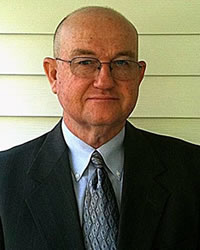
Gary Shepard is teacher and pastor of Sovereign Grace Baptist Church in Jacksonville, North Carolina.

Comments

0 / 2000 characters
Comments are moderated before appearing.

Be the first to comment!

Joshua

Joshua

Shall we play a game? Ask me about articles, sermons, or theology from our library. I can also help you navigate the site.