Bootstrap
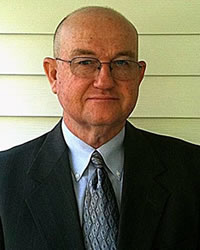
Gary Shepard

God's Abigail's Coming To David's Lord

1 Samuel 25
Gary Shepard March, 8 2009 Audio
0 Comments

Sermon Transcript

Auto-generated transcript • May contain errors

100%
Again, if you would turn with
me to 1 Samuel chapter 25. Sometimes I feel so cold of heart. But it gives me a lot of joy
to read such a passage as we've read and feel the Spirit of the
Lord making what we read precious, just really precious, just seeing
His grace and His mercy in this account. I've called this, Abigail's coming
to David's Lord. God's Abigail's. Thank goodness He has some Abigail's. If you think about what is going
on between the first coming and the coming again of the Lord
Jesus Christ, I believe it's very well pictured
here in this twenty-fifth chapter. It's very well pictured in this
king who is at this time, though anointed, in exile. And it does appear, as far as
the world is concerned, that Christ is Himself in exile at
this time. But He is actually accomplishing
the bringing of His sheep to Himself. And all of them are
brought by Him, and they all come as Abigail did to David. As I said, David is in a kind
of exile, having been driven into the wilderness
because of King Saul's jealousy and anger. And the king seeks
to take his very life. And David and his men are in
Carmel where a man by the name of Nabal, which literally means
folly, stupid, a fool, he as this vile person has his
large herds of sheep and goats in this place. And David and
his men not only have not taken any of his property, any of his
sheep or goats, but they also, being there, have watched over
them and kept them safe from the traveling bands of marauders
such as the Philistines. And so David sends some of his
men to Nabal where he is watching over the shearing of the sheep
to just ask of him a few provisions. But we read Nabal's response
in verses 10 and 11. He says, who is David, and who
is the son of Jesse? There be many servants nowadays
that break away every man from his master. He is acting like he knows nothing
about David, and he is likening David to a runaway slave. And then he says, shall I take
my bread and my water and my flesh that I have killed for
my shares and give it unto men whom I know not whence they be? He is a little bit like Pharaoh. When Moses confronted Pharaoh,
with God's message to him, Pharaoh says, who is the Lord that I
should obey Him? And his response is like that
of many to the gospel of Jesus Christ, to that Word concerning
God's Son. It's like the response of the
Jews, who you remember said, we will not have this man to
rule over us. And so David's men returned to
him, and they told him what Nabal said. And David's first reaction
is recorded in that thirteenth verse. He said, put on your sword. He told 400 of his men to put
on their weapons, and he himself put on his weapon, and he took
a vow of sorts to go and destroy Nabal and every male person of
his family, and to spoil all his goods. And here in this text, we see
what we find everywhere in the Old Testament Scriptures, and
that is this, God will deal with His enemies and He will avenge
His people. In Luke's Gospel, we read, And
shall not God avenge His own elect which cry day and night
unto Him, though He bear long with them. I tell you that He
will avenge them speedily. Nevertheless, when the Son of
Man cometh, shall He find faith on the earth?" He said He will
avenge His elect. And Paul reminds us
of this in Romans 12. He said, Dearly beloved, avenge
not yourselves, but rather give place unto wrath, for it is written,
Vengeance is mine, saith the Lord, I will repay. And not only will he bring about
this revenge on his people and his name, he will at the same
time, and in this time, save all his elect and preserve them. That's what we find everywhere
in the Old Testament, and we see his distinguishing sovereign
saving grace and power again and again. We see him save Abel
and judge in a righteous judgment the sins of Cain. We see him save Isaac and pass
by Ishmael. We see him save Jacob and hate
Esau And here we have the same picture in him saving Abigail and bringing
his wrath on Nabal. And not only that, but we have
in Abigail's coming to David a very clear picture of a sinner
coming to the Lord Jesus Christ. You see, he commands this coming,
and he calls upon people, saying in Matthew 11, Come unto me,
all ye that labor and are heavy laden, and I will give you rest. Those he calls here, he calls
and says, come, describing them in this particular character,
all you that labor and are heavy laden. Then in John 7, it says,
in the last day, that great day of the feast, Jesus stood and
cried, saying, if any man thirsts, Let him come unto me and drink." You see, coming to Christ, coming
to Him as He is, coming to Him in the heart without moving a
single muscle is the coming that is pictured here in our text. It's not coming down to the front
of a building. It's not coming to the pool of
water or the baptismal font. It's not coming to religion or
to the church. But it is coming to Christ as
He is revealed in the gospel. And we know by what we read and
by what we see that not all people will come to Christ. As a matter
of fact, he said of those Pharisees, you will not come to me that
you might have life. But he says also, all that the
Father giveth me shall come to me, and him that cometh to me
I will in no wise cast out. And no man can come unto me,
except the Father which hath sent me draw him, and I will
raise him up at the last day." You see, coming to Christ is
nothing less than believing on Christ. It is believing the gospel
of Christ, and it is pictured here in Abigail to whom God has
given a unique and particular understanding. What was it that Abigail knew
and understood? Well, she knew that by whatever
reason it does not say, and that is so we'll pay particular attention
on exactly what happens here, but for whatever reason she'd
come to know that she had a bad marriage. She was married to Nabal. And her relationship to this
man Nabal made them to be one in the eyes of David. That's what we find pictured
in the Scripture. Paul says, For this cause shall
a man leave his father and mother, and shall be joined unto his
wife, and they too shall be one flesh. That is, they are regarded by
virtue of this union as one flesh, and that for a particular reason. And that is to show us in a picture
the union, first of all, that every single one of us has in
Adam. We are, in a sense, representatively
married to that man Adam, and it is a bad marriage. And this is not my illustration,
but it is God's illustration, because like Adam, Abigail's
husband had defied and insulted and made himself an enemy of
the king. And the king had pronounced the
sentence of death and condemnation on all his household. They never did anything. They
never said one word ought against David or anybody else, but because
they were in a household, They were viewed altogether as one
with Nabal, and that is the exact picture that we find in Scripture
wherein God views everyone in themselves as being one with
the one who sinned against God and defied God and rebelled against
Him in the garden. Listen to what Paul says in Romans
5. Wherefore, as by one man sin
entered into the world, and death by sin, and so death passed upon
all men, for that all have sin. What that says is not simply
that all have sinned in themselves, but that sin brought forth a
death upon all who are in Adam, because in Adam all sinned. Listen to it. He says, for until
the law, Sin was in the world, but sin is not imputed when there
is no law. Nevertheless, death reigned from
Adam to Moses, even over them that had not sinned after the
similitude of Adam's transgression, who is the figure of him that
was to come. In other words, Adam was not
simply a man, but he is described as the man Adam, so that all
who are in union with Adam, as Abigail was in union with Nabal,
all who were in him sinned when he sinned, although they themselves,
from Adam to Moses and the giving of the law, there was no law
for them to sin against. But they still were born. And
to him they still died. And the reason that they died
was the fact that they were all sinners and that they became
sinners in Adam when he sinned. And that's exactly what Paul
tells us in the letter to the Corinthians. He says, in Adam
all died. and only in Christ are all made
alive, and they must be found in that second Adam, and they
must be represented before God in Christ, and they must be brought
in that passage that is described as a passing from death unto
life. Now, I want you to hold your
place there and turn over to Romans chapter 7. Because in Romans 7, Paul uses
the very law that God gave to the nation of Israel to show
us the only way that we can ever be delivered from that responsibility
for sin that we came to have under Adam when we fell in Adam. Romans 7 and verse 1. He says, Know ye not, brethren,
for I speak to them that know the law? How that the law hath
dominion over a man as long as he liveth? For the woman which
hath an husband is bound by the law to her husband so long as
he lives, but if the husband be dead, she is loosed from the
law of her husband. So then, if while her husband
liveth she be married to another man, she shall be called an adulteress. But if her husband be dead, she
is free from that law, so that she is no adulteress, though
she be married to another man. Wherefore, or in the like manner,
or in a similar manner pictured in this, Wherefore, my brethren,
ye are become dead to the law by the body of Christ." What
happened to the body of Christ? He died. Wherefore, my brethren,
ye also are become dead to the law by the body of Christ, that
ye should be married to another, even to him who is raised from
the dead, that we should bring forth fruit unto God. There's only one way. There's
only one way for us to be free from this bad marriage. There's
only one way for us to be free from the condemnation in Adam,
from the judgment of God in Adam because of our sin, and that
is through the death of the Lord Jesus Christ. That's it. That's the only way. Paul says
in the Colossian letter, and you being dead in your sins,
and the uncircumcision of your flesh, hath he quickened together
with him, having forgiven you all trespasses, blotting out
the handwriting of ordinances that was against us, which was
contrary to us, and took it out of the way. nailing it to his
cross. What does that judgment say? What does that law demand? That the soul that sinneth shall
surely die. And it is only through and by
the death of the Lord Jesus Christ, and especially our death with
Him and in Him, are we delivered from that connection to Adam,
that sin in Adam, and that association with Adam, just like death was
the only way that Abigail could be separated from Nabal. All right? Here's another thing
I want you to notice in this. And you can remember it as we
read. And that was, it was out of a desperate, dangerous situation
that caused Abigail to seek David. What was about to take place?
Well, a king was approaching in judgment on the household
that she was a part of. And my friend, the King of Kings,
the King of Kings is coming in judgment on a household that
we're a part of. When I thought about this, this
passage of Scripture came to my mind. is in Luke 14. He says, What king, going to
make war against another king, sitteth not down first, and consulteth
whether he be able with ten thousand to meet him that cometh against
him with twenty thousand? Or else, while the other is yet
a great way off, he sendeth an ambassador and desires conditions
of peace." Now you think about this. Abigail got to thinking about
that household of Nabal. He may have had a Lot of sheep,
he may have been a great man in the eyes of many, but compared
to the force and the king that was coming, he was nothing. And my friend, compared to the
one who's coming back to this world, comparing to him of whom
David is a type, the king of kings, we're nothing. We don't have any defense. We don't have any protection.
We don't of ourselves have any righteousness. And it says here,
what king in his right mind, if he has 10,000 soldiers, And
he knows that he is coming up against a king with 20,000 soldiers,
doesn't sit down and consider whether or not he'd be able to
overcome. And he says, if he figures rightly,
that he'll not be able, with a force so small, to overcome
a force so great, he better send out an ambassador and seek conditions
of peace. That's what Abigail's doing.
She's become the ambassador. And she's come out to this king. And she's out approaching this
king because of the danger that is posed upon her family. And that is the same situation
that moves every sinner that comes to Christ. In other words,
it's the bad news that is all outside of Christ are already
under the just condemnation of God. It's the news of God's holiness,
the news of God's unsparing justice, the news of God's hatred of our
sin, of our own unrighteousness and inability. When God brings
that home to our hearts, we begin to see our danger. Because we're just like Nabal,
we're nothing but folly. Everything we've ever thought. Just like the psalmist said,
making a reference just like this, he said, the fool has said
in his heart, there is no God. I read years ago where that is
not literally what's being said there. That what is literally
being said there is this, the fool has said in his heart, know
God. Know to the claims of God. Know to the commands of God. The fool has said in his heart,
know God for me. That's the way Nabal was. But
it's a blessing of God's grace when He awakens us as He did
to Abigail to our need and causes us to see the urgency of the
matter of our eternal soul before God. It says that she was a woman
of good understanding. Where'd she get that good understanding? Because when you listen to her
words, when you hear exactly what she says here, it's not
simply a matter of fear for the family or fear for the household
or the possession. There's much more going on here.
She is a woman who has been brought to believe God. She has an understanding. And
you know it's only by the grace of God that any sinner such as
you and I is ever brought to have a good understanding. That's what John says. He says,
And we know that the Son of God is come, and hath given us an
understanding, that we may know him that is true, And we are
in Him that is true, even in His Son, Jesus Christ. This is the true God and eternal
life. What did Nabal think about David? He said he's nothing more than
another one of these runaway slaves. But of the same man,
of the same name, This wife, Abigail, knew that he was the
one that God had spoken of and promised and would give the king. And she said, whenever you come
to your throne, remember me. She didn't say, well, David,
I know something about you. I know what's been said. If you
ever make it, Think about me. No, she said, when you come to
your throne, she believed God. She believed
God. And just like it says of Noah,
when it says, by faith Noah, being warned of God, of things
not seen as yet, moved with fear, prepared an ark to the saving
of his house, by the which he condemned the world, and became
heir of the righteousness which is by faith." There hadn't any water ever fallen.
It never had rained in those days. But it says, Noah, by faith,
by God-given faith, Noah being moved with fear, being warned
of things that God said was not seen but were to come, he moved
with fear and he built the ark to the saving of his house. That's
Abigail. My family, Now through my husband
has risen up in the face of God's King and brought his wrath upon
us and he's coming. So I think I'll just sit down
here and grin and bear it. I think I'll just sit back here
and I'll try to think that everything's going to be all right. No, she
rose up and she ran ahead to meet David. And when she got to David, when
she got to David, she took a rightful place before David. She bowed herself and her face
down to the ground before David. Why? If you look at what David
possessed, it seemed outwardly at that moment, she had far more in one sense
than he and all those men had. But she knew who David was. And
she knew what David had been given by God. And so when she
was confronting David, she got down off the donkey she was riding,
and she got down in the dust and bowed down for David. Because
that's the only place you can before a king. She bowed down as one broken,
as one begging. And she called upon Him when
He did not appear to be on His throne, when He did not appear
to have any right to do anything. She bowed down for Him, and she
owned Him to be her King. And that's what the Lord Jesus
brings all His people to do. that though he is not visible
to the natural eye, though he is not physically present in
this world, though he is not acknowledged to be king by the
great majority of this world, the Lord brings all his people
to see their need and to flee as Abigail did to the Lord Jesus
Christ and to bow before him in their hearts and minds as
one broken and contrite Because it says, those that are of a
broken and a contrite spirit he will not despise. He won't despise them. You remember that woman that
came to the Lord Jesus Christ asking of her daughter, And he
answered and said, it's not me to take the children's bread
and cast it to dogs. And she said, truth, Lord. That's what I am, a dog. Yet
the dogs eat of the crumbs which fall from their master's table. Then Jesus answered and said
unto her, O woman, great is thy faith, be it unto thee even as
thou wilt. And her daughter was made whole
from that very hour." What did Abigail do? And she
bowed before that king, seeking mercy and grace. You're the one who's the king,
and I'm the beggar. Lord Jesus, you're the one that's
the Almighty One. You're the King of kings and
Lord of lords. You're the one who can do what
you will. Like that man said, if you will,
you can make me clean. And she bowed down and she begged
for mercy. And as she did, she did something
else, too. She confessed iniquity. She didn't say, well, you know,
David, my husband, in other words, she didn't do like Adam did to
Eve. When God confronted Adam with
his sin, the thing that Adam said was, Lord, the woman you
gave me, she made me to do it. If there ever was a time in which
our responsibility For everything that we do wrong, it seems like
we try to pass off on either somebody else or some condition
or something, it is this hour. But if you look over in verse
24, it says, And she fell at his feet, and said, Upon me,
my Lord, upon me let this iniquity be. And let thy handmaid, I pray
thee, speak in thine audience, and hear the words of thine handmaid. She didn't say Nabal did this
or Nabal did that. She said this iniquity, is mine."
She said like the publican, God be merciful to me, the sinner. She confessed like the Apostle
Paul himself to be the chief of sinners. And like David himself
in Psalm 51, have mercy upon me, O God, according to thy lovingkindness,
according to the multitude of thy tender mercies, blot out
my transgressions. Wash me thoroughly from mine
iniquity, and cleanse me from my sin, for I acknowledge my
transgression, and my sin is ever before me. Against thee
and thee only have I sinned, and done this evil in thy sight,
that thou mayest be justified when thou speakest, and be clear
when thou judgest." Behold, I was shapen in iniquity, and in sin
did my mother conceive me." You know, you and I, by nature,
are quite willing to confess everybody else's sin. We're willing
to point out their faults and their falls and their failures.
But the sinner that comes to the Lord Jesus Christ like Abigail,
they come confessing their iniquity. Whether or not anybody else is
a sinner or not, whether or not anybody else is saved or not,
that's not the issue. It's my sin. Will you forgive my sin? Will
you receive me in yourself and bless me? And she came seeking
this forgiveness. Look down at verse 28. She says, I pray thee, forgive
the trespass of thine handmaid. Now, a person who is brought
by God to believe what He says about their sin, and who is brought
to believe what He says about their sinfulness, believes also what He says about
forgiveness. What's that? And that is, there
is no forgiveness outside of Jesus Christ. Without the shedding
of His blood, there is no remission or forgiveness of sin. There is no forgiveness before
God, and there is no forgiveness experienced in our conscience
except in that one that God Himself has provided and has taken at
His hand of justice on that cross. There is no forgiveness. Except
in Him. She said, I pray thee, forgive
thy handmaid. Forgive me. Not my husband. You see, I can't ask for forgiveness
for anybody else. But forgive me. Forgive me. And the ground upon which she
asketh is this, I pray thee, forgive the trespass of thine
handmaid, for the Lord will certainly make my Lord a sure house. A sure house. Because my Lord
fighteth the battles of the Lord, and evil hath not been found
in thee all thy days. How could that be said? Because
David is a picture of Christ. The Lord will make sure your
house, you're the one who fights the battle of the Lord, and you
are the one in whom no evil has been found all your day. Because David is not only a picture
of Christ as far as what she says of him in his purity, but
also of what she says of him in his victory. You see, Christ's victory at
the cross is what's pictured here, as he is oftentimes that
bloody captain who returns in victorious conquest. with all
His spoils with Him. He triumphed, Paul says, over
all sin in His cross. And David pictures Christ, the
one in whom we have redemption through His blood, the forgiveness
of sins according to the riches of His grace. You see, all her pleas were based
on who He was, what He would do, what God had promised in
Him, and on His willingness to show her mercy. Then, and I've
got to hurry, when she came, she came exalting Him and worshiping
Him and praising Him. Look down at verse 29. Yet a
man is risen to pursue thee, and to seek thy soul. But the
soul of my Lord shall be bound in the bundle of life with the
Lord thy God, and the souls of thine enemies, them shall he
sling out as of the middle of a sling, and it shall come to pass." when
the Lord shall have done to my Lord according to all the good
that he hath spoken concerning thee, and shall have appointed
thee ruler over Israel." He's going to exalt you? And He's going to bind you up
in the bundle of the life of God, and He's going to take the
souls of all your enemies and sling them out like a bunch of
stones in a sling. And she says, remember me. Remember me. Last part of verse
31, it says, But when the Lord shall have dealt well with my
Lord, then remember thine handmaid." You know, that's the hope of
all God's people. It says He remembered Noah. It
says He remembered Abraham. It says He remembered His covenant.
It says when He makes inquisition for blood, He remembers them. He forgets not the cry of the
humble. He knows our frame. He remembers
that we're dust, just like He did that thief who
on that cross said, Lord. He said the same thing that she
said, Lord, when You come into Your kingdom, remember me. Remember me. And David granted her request.
Verse 35, So David received of her hand that which she brought
him, and said unto her, Go up in peace to thine house, for,
see, I have hearkened to thy voice, and have accepted thy
person. He said, Go in peace. But now
you just go in peace. Don't worry about it. He can
say that as a type of Christ because Christ is the peace of
God. He is Himself the very God of
peace. But most especially, He made
peace by the blood of His cross. He says to every sinner that
comes to Him, go in peace. Go in peace. For I have accepted
you personally. Could that ever be said of us?
That's what Paul says of every believer. He says, He hath made
us accepted in the Beloved. In the Beloved. And then here's a very interesting
footnote, and it surely carries the type all the way through,
and that is, then David took her. After Nabal died, after God killed
him, After all this, David took Abigail for his wife. How did he do that? Well, he
sent his messenger to her. He sent his messenger to her
and he said, David would take you to be his wife. I guess you might say in a sense
that's a kind of an invitation, maybe a kind of proposal. But considering who made it, considering her attitude toward
him that she'd been brought to long before this moment, It was more than an invitation.
It was a command. Come. I'm taking you to be my
wife. If you look over in verse 41,
look at her attitude. This is the attitude of every
sinner saved by grace. And she arose. and bowed herself
on her face to the earth and said, Behold, let thine handmaid
be a servant to wash the feet of the servants of my Lord. She
said, Just let me be a servant in your household to wash the
feet of your servants. But he said, you're going to
be my wife forever. And that surely gives a great
picture of what the attitude of grace is in a sinner saved
by grace, and yet what is the promise and command of God concerning. You're going to be my queen.
Just let me be a servant in your house. Abigail's name means something like this, the
Father's joy. And that certainly is the name
of all of God's people. And especially
when they are brought, as Abigail was, to come to David's Lord. They're the Father's joy. Can that be? He said, likewise, I say unto
you, there is joy in the presence of the angels of God over one
sinner that repents. there is rejoicing in the presence
of the angels of God. Well, who would then be doing
the rejoicing? God Himself. He rejoices over
His people. And especially when He brings
them as Abigail, as one of His Abigail's, to come to David's
Lord. To believe on the Lord Jesus
Christ. To leave every every dangerous situation in
Adam, and to come in Christ to that salvation which is in
Him. Our Father, today we give You
thanks and we praise You for such grace. Bring us, we do pray,
unto Your Son. Bring us as Abigail, seeing our
need, falling down before you, confessing our sin, and looking
to you for mercy. Speak to our hearts and say to
us through this gospel of peace, peace be unto you. because I've
made peace by the blood of my cross. We thank you for your mercy,
and we pray as we go and partake of the food, Lord, that follows,
that you would receive our thanks. We pray that you would bless
Brad as he goes on this journey. Watch over him and keep him and
keep his family. Lord, help us all, we pray. For
we ask all things and thank you in the name that is above every
name. Amen. Thank you.
Gary Shepard
About Gary Shepard
Gary Shepard is teacher and pastor of Sovereign Grace Baptist Church in Jacksonville, North Carolina.

Comments

0 / 2000 characters
Comments are moderated before appearing.

Be the first to comment!

Joshua

Joshua

Shall we play a game? Ask me about articles, sermons, or theology from our library. I can also help you navigate the site.