Bootstrap
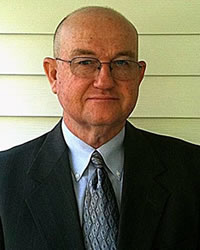
Gary Shepard

Christ Cursed, Sinners Blessed

2 Samuel 16:5-14
Gary Shepard March, 1 2009 Audio
0 Comments

Sermon Transcript

Auto-generated transcript • May contain errors

100%
Turn back to where we read there
in 2 Samuel chapter 16. The title of my message this
morning is, Christ Cursed, Sinners Blessed. When we come to one of these
Old Testament passages, as we often do, there are two things
that I want us always to remember. One of those things is what Paul
says to the Corinthians. Speaking of these Old Testament
persons, and events, he says, now all these things happened
unto them for examples. And they are written for our
admonition upon whom the ends of the world are come. God recorded them, preserved
them, and has given them to us, those who will live in what he
calls these last days. And those are the days between
the first coming of Christ and His second coming. God hath in
these last days spoken unto us by His Son, which brings me to
the second thing I want us always to remember. And they are the
words of Christ Himself when He spoke to the disciples after
the resurrection, and He said, these are the words which I spake
unto you while I was yet with you. that all things must be
fulfilled which were written in the law of Moses, and in the
prophets, and in the Psalms concerning me." Samuel is one of the books
of the prophets. He was the prophet of God. And so we know, before we ever
turn to this book, that the main featured person of what is said
here is none other than the Lord Jesus Christ. And we come in
this chapter to a man who is a very remarkable figure. He's a prominent man in all the
writings of Scripture, and his name is David. And one of the greatest things
about David is simply this, and that is, he is a type of the
Lord Jesus Christ. He was God's chosen, anointed,
and beloved King. He is the King that God appointed,
and His very name means favorite or beloved. And you know, the
Lord spoke audibly from heaven concerning this man, Jesus of
Nazareth, and He said, This is my well-beloved Son in whom I
am well pleased." And likewise, David himself is called the man
after God's own heart. And we know that that can be
said to be such only because of Christ. And not only that,
but he was born in Bethlehem. And he was not only born in Bethlehem,
but he was also a shepherd. If you remember, his father sent
him out to tend to the sheep. And he is a type of the Lord
Jesus who is the Good Shepherd, who is the one who is called
the Great Shepherd, the Chief shepherd and the shepherd and
bishop of our souls. And this man, David, was also
a man who very early on was rejected by his brethren and later on
by the people. And this occasion that we come
to in their text is one such occasion. Because David is traveling
where he is, going where he's going, because his own son, the
son of his own flesh, by the name of Absalom, has turned the
heart of the people against David. And that sounds very strangely
familiar. Because if you remember, in the
garden it was the devil, that old serpent that turned man against
God. And now he seeks his life, and
David is forced into exile, and with him is just a handful of
loyal people. And what we find here, what we
read, is this account of him leaving the city, and as he is
leaving the city, he is cursed publicly and openly by a man
by the name of Shimei. And then as that takes place,
one of David's captains, or David's right-hand man, a man by the
name of Abishai, he immediately asked permission to kill Shimei. He said, why should such a dead
dog as this man, be allowed to curse the king. And if you'll
just say the word, I'll take my sword and take his head off." And David could have done that.
And nobody, for the most part, would have blamed him. And certainly,
as the king, he had power to do it. But I want you to look
again at David's words. Verse 10, he said, What have
I to do with you, ye sons of Zeruih? So let him curse. because the Lord hath said unto
him, Curse David. Who shall then say, Wherefore
hast thou done so? And David said to Abishai, and
to all his servants, Behold my son which came forth of my boughs
seeketh my life, how much more now may this Benjamite do it? Let him alone, and let him curse,
for the Lord hath bidden him." Now, my friends, those are mysterious
words. They are mysterious words and
words that cannot be spoken, and a view that certainly cannot
be taken by any person but for the grace and revelation of God. Because David owns this to be. this cursing of this man Shimei,
he says that this is all according to the will and purpose of God. And not only does this event,
but David's response to this event, provide an excellent picture
of the sufferings and the crucifixion of the Lord Jesus Christ. This one of whom David is a type,
there is a great number of comparisons here, and here is the first one. That is, that David, just like
the Lord Jesus voluntarily submitted to God in whatever befell him. He finds that in his heart he
is enabled to bow to what takes place, to submit to this cursing,
knowing that it is the will of God, and he does so Voluntarily. He could have destroyed this
man in an instant, but he didn't. He could have just given one
word and allowed Abishai to kill him, but he would not. He said,
let him alone. In other words, let him vent
his wickedness. Let him say of me and do to me
whatever it is that he will." And in doing so, David's humiliation
is a picture of the humiliation and submission of the Lord Jesus
Christ. Listen to what Paul says of Christ
in Philippians 2. He said, and being found in fashion
as a man, which was humiliation in itself, he said he humbled
himself and became obedient unto death, even the death of the
cross. That is, the Lord Jesus Christ,
who is none other than God in human flesh, He bowed himself
in a willing and voluntary submission to all that was needful in the
sufferings that he would suffer to save his people according
to the will of God. He said he was not only humbling
himself to be obedient unto death, But to be obedient to the worst
and most awful and most horrible death that ever a man died, that
is the death of the cross. And then we read this by another
one of the prophets, Isaiah in chapter 53. He said before the Messiah had
ever come, He said, He was oppressed, and He was afflicted, yet He
opened not His mouth. He is brought as a lamb to the
slaughter, and as a sheep before her shearers is done, so He opened
not His mouth. When they cursed Him, He did
not curse them. When they spit upon Him, He did
not spit upon them. When they struck Him, when they
crowned His head with thorns, when they nailed His hands and
His feet to a cross, when they thrust the spear into His side,
when they wrought Him naked before all of the world, He opened not
His mouth. And when you read in the Gospel
of Matthew, concerning the offenses that were wrongfully brought
against him, it says, and the high priest arose and said unto
him, Answerest thou nothing? Aren't you going to defend yourself?
Aren't you going to give some response to what you've been
charged with? What is it which these witnesses
witness against thee?" But it says that Jesus held his peace. Matthew again, it says in chapter
27, and when he was accused of the chief priests and elders,
he answered nothing. Then said Pilate unto him, Hearest
thou not how many things they witness against thee? And he
answered him to never a word insomuch that the governor marveled
greatly. Pilate said to him, Don't you
know that I have the power, I have the ability, being who I am,
I have the power to have you taken, crucified, put to death. Don't you know that? Aren't you
going to respond to that? The Lord Jesus said simply this,
you only have the power that my Father in heaven allows you
to have. And then when the Apostle Peter
wrote concerning the Lord Jesus Christ, he says that he is the
one who did no sin, neither was guile found in his mouth, who
when he was reviled, reviled not again. When he suffered,
he threatened not, but committed himself to him that judgeth righteously. When they reviled him, when they
threatened him, he did not respond, but rather, Peter says, he committed
himself to him that judges righteously. And the Lord Jesus Christ in
this same spirit, in this same way, freely and voluntarily submitted
Himself to the hands of men and to the death of the cross. And His reason for doing this
was the same as David's. You know how many people are
so ignorant of the Bible, so ignorant of the gospel, that
they imagine that if there was ever a time when everything was
out of control, when God was totally bound and Christ was
totally helpless, it was when they took Him and hung Him on
that cross. But that's not the case. He said,
I lay down my life for the sheep. He, with the greatest exercise
of his own sovereign will, rather than it being determined by men,
he freely and willingly and voluntarily bowed himself, allowed himself
to be taken and slain at the hands of men, and he was at that
moment in the greatest control that can be imagined. You remember when he hung there
on that cross, and the Bible says that he said to John something,
and he responded just simply to those around him. And then
at that time appointed, in that time, that one thing he called
the hour that he was headed to, it said that he bowed his head
and gave up the ghost. And he did so for David's reason. The Lord hath said unto him,
Curse David. Let him curse, for the Lord hath
bidden him." Is that the case in the death of Christ? Is it simply that things were
out of control and that men overtook God or overcame God? David submitted to that cursing,
to the slinging of that dirt and stone. He said, the Lord
has bid him to curse David. One of the first things that the Apostle Peter, in those
early days around Pentecost, one of the first things that
he is led by the Spirit of God to proclaim and preach and announce
concerning what has just taken place in the dying of Jesus Christ
is this. In Acts 2, he says, him being
delivered By the determinate counsel and foreknowledge of
God, you have taken, and by wicked hands have crucified and slain." What's he saying? He's saying
you did just exactly what you wanted to do. You'll be held
in exact account for just exactly what you did. You did it as wicked
men. You did it in your desire to
take Him and by your wicked hands crucify Him and slay Him. But when you did it, you did it according to the determinate
counsel and foreordination of God. Isn't that what David said? The Lord has said unto him, curse
David. The Lord said that? Absolutely. And just in case we didn't get
that, a little bit later, just a few sentences later, he says,
the Lord hath bidden him to curse David. Listen to what the Apostle says.
in Acts chapter 4. Maybe you ought to turn there.
Acts chapter 4 and look down at verse 26. This isn't way after
that the apostles like Paul and others began to get into the
deep things. This is some of the first things
that they were told after the resurrection of Christ. Acts chapter 4 and verse 26. Listen to the Apostle. The kings
of the earth stood up, and the rulers were gathered together
against the Lord and against His Christ, for of a truth against
thy holy child Jesus, whom thou hast anointed, both Herod and
Pontius Pilate with the Gentiles and the people were gathered
together." Now, is there anybody left out there? Jew, Gentile,
Pharisee, scribe, priest, elders, Roman government, everybody. He said they were gathered together
against the Lord Jesus Christ. Now look at that 26th verse.
For to do whatsoever thy hand and thy counsel determined before
to be done. That's right. It wasn't everything going to
This was the will and the purpose and the foreordained decree of
God Almighty, because that was what was necessary to save His
people from their sins. When you read the book of Daniel,
and it talks about the Messiah, and it tells exactly what is
going to be taken taking place, and what is said there is that
the Messiah will be cut off. What does that mean? That means
he'll die. He'll be put to death. And not
for his sins. Job said, God hath delivered
me to the ungodly and turned me over into the hands of the
wicked. What did he do that for? To accomplish
his purpose, to carry out his will. God determined it just
as He determined the lots that fell on the two goats on the
day of the atonement. In other words, on that day of
atonement, they were to take two goats, and it says in Leviticus,
and Aaron shall cast lots upon the two goats, one lot for the
Lord, and the other lot for the scapegoat. And Aaron shall bring
the goat upon which the Lord's lot fell, and offer him for a
sin offering." It's kind of like they roll the
dice. They cast lots. And they cast lots over these
two goats to decide which goat would be killed. And it said
that the one upon whom the Lord's lot fell, he was to be taken and slain
as the sacrifice. Well, is that just luck? Is that just the roll of the
dice, as men say? No, elsewhere in the book of
Proverbs it says, the lot is cast into the lap, but the whole
disposing thereof is of the Lord. He decided which
goat was to be slain. And not only that, he decided
that that was what was to happen to the one that was called his
goat, and the other goat was to be turned loose into the wilderness,
led out into the wilderness by a fit man, and never seen again. What does that mean? That means
the sins that had been laid on him, the sins that the other
goat had supposedly in a tithe suffered for, they were so put
away, never to be remembered by God again. Listen to Isaiah. Yet it pleased the Lord to bruise
him. He hath put him to grief. When thou shalt make his soul
an offering for sin, he shall see his seed, he shall prolong
his days, and the pleasure of the Lord shall prosper in his
hand. He shall see of the travail of
his soul, and shall be satisfied. And by his knowledge shall my
righteous servant justify many, for he shall bear their iniquities." Who bruised him? The Lord bruised
him. What does it mean, it pleased
the Lord to bruise his son? Does it mean that God is some
kind of vindictive or sadistic God who just delights in hurting
somebody? No, that means it satisfied God. It satisfied God and it honored
God in the thing wherein He sent it to accomplish. It pleased
God in that His Son, suffering and dying in the place of His
people, honored God in all points and saved them from their sins. It pleased the Lord to bruise
Him. hath put him to grief. He hath
laid on him the iniquity of his people." And just like David, he willingly,
freely, voluntarily laid down his life for his people. You see, David here was cursed. Now, there's a kind of a twofold
application which can be made here. On the one hand, as far
as Shimei's cursing here, it was totally unjustified in the
sense that David was not guilty of what Shimei had charged him
with. He had not shed the blood of
Saul's household. He could have killed Saul a number
of times. He slipped into a place where
Saul was asleep. He went right up to him and he
took something from him to let him know that he had been there
totally able to kill him, but he didn't. And rather than hate
him, he loved him and especially loved Jonathan, his son. Likewise, the Lord Jesus Christ. All the charges that men laid
against Christ were totally unjustified, and the Bible says that they
hated Him without a cause. There was no reason, there is
no reason to hate sinless perfection standing there in your midst. The Bible describes this man,
Jesus Christ, as being holy, harmless, undefiled, and separate
from sinners. He was described as the one who
did no sin. The Lamb without blemish or spot,
the One who knew no sin, neither in thought or motive or word
or deed did He sin, not only against God, but not against
any man. And they laid all these charges
against Him. But they were all unjustified. They hated Him without a cause. This man Shimei, he thought he
knew what was going on. But he didn't. David had not
shed the blood of Saul's household. As a matter of fact, God Almighty
was the one who shed that blood. And when David found the word
that these of this family had been slain, he did two things. He said, how are the mighty fallen? And then he said this, is there
not one? Is there just any one person? I don't care who they are. Is
there just one person left in Saul's household that I might
show a kindness to for Jonathan's sake? They said, yeah, there's only
one fellow left. His name's Mephibosheth. And
he lives down in the land of Lodabar, the land of no pasture. And he's lame in both his feet. And he's hiding there from you
because he knows that his family was an enemy to you. And he seeks
there to stay at distance so that you won't sleep. David said,
go fetch him. And he sent his servant, and
he fetched Mephibosheth, and he brought him back to the king's
house. And he said, because of your
father Jonathan, you'll eat bread at the king's table like one
of the king's sons for the rest of your day. His cursing was unjustified. And likewise, the sinless, perfect
Son of God. They called Him a son of Belial. You know what that is? They called
Him a child of the devil. They called Him a blasphemer,
a gluttonous man, a wine-bipper. But it was a lie. But, now you
listen to this now, but so far as God was concerned, in the
case of the Lord Jesus Christ, did He, who is this One who knew
no sin, as far as God's judgment was concerned, did He deserve
to be cursed? Why did God, in the same way
but in a far greater way that He said to Shimei, curse David,
why did He say, curse my son, the Lord Jesus Christ? Now, men don't have a problem
with that because they're unjust. But how does a just God, now
listen, how does a just God, a holy God, a God who must act
in His actions in a way consistent with who He is, how does He say
concerning His Son, perfect and sinless? If you ever find that out, and
you'll never find it out apart from God teaching you, but if
you ever find that out, then you'll have some understanding
of the gospel. You remember old Job? Job had
this real question that plagued him. He asked it on more than
one occasion. He said, how can God, who is
of purer eyes than to behold iniquity, to even look on sin? How can God, who is of purer
eyes than to even behold iniquity, how can he justify or count as
righteous any sinner who drinks iniquity like water." Now, here
you've got a God who says, He is so holy He cannot even look
upon sin, and here is man who drinks sin like water. It's so
common to Him. How could God, this God, Look upon his Son, whom he has
sent into the world, and say to divine justice, Awake my sword,
and smite the shepherd." Curse this David. Curse this
one who is called David's son and yet David's Lord. Is God just? in this action that
he brings in cursing his son? Yes, he is. Why? Because he has imputed. You ought to take the time to learn
that word. He has imputed. That means to
charge to one's account. to lay to one's account. He has charged or imputed all
the sins of all his people for all time to the Lord Jesus Christ." That's what Isaiah said he'd
done. The Lord hath laid on him the
transgression of his people." Men didn't do that. Men couldn't
do that. But God had laid on Christ, or
held Him accountable for all their sin. Paul says that God
hath made Him to be sin for us. He laid on Him this iniquity
of His people. And so he is justly cursed by
divine justice as he bears the sins of his people, and the wrath
of God in the matter of sin brings death upon him. When Christ was hanging on that
cross, they said, he saved others, let him save himself. They said He claims to be the
Son of God. If He be the Son of God, let Him come down to
that cross. But He will not, because He is
in that hour bearing the consequence, the guilt, the punishment, the
penalty of the sins of His sheep in His own body. It says, through
death. He hangs there on that cross.
He's not hanging there before Roman law or Jewish law. He's hanging there between heaven
and earth before divine justice. And this God who says, the soul
that sinneth shall surely die. This God who says that the wages
of sin are death. If he is paying the wages for
my sin or your sin, what has to happen to him? He has to bear the curse. He
has to die the death. And my friend, if he didn't face
that for you, you've got it yet to face. He drinks. the cup of divine
wrath because the Father had given it to him. Paul says, for
he hath made him to be sin for us who knew no sin, that we might
be made the righteousness of God in him. Who made him to be
sin? God did. Who bid Shimei to curse you,
David? God did. Who bid death to be
brought against you? Holy Lord Jesus Christ on that
cross. My Father did. In John 18, Peter speaks and
seeks to act a whole lot like Abishai did toward David. It
says, Then Simon Peter, having a sword, drew it, and smote the
high priest's servant, and cut off his right ear. But then Jesus said to Peter,
Put up your sword into the sheath, The cup which my father hath
given me, shall I not drink it?" Who gave you this cup? He said,
my father did. And it is that cup of divine
wrath. And the scripture says, then
the band and the captain and the officers of the Jews took
Jesus and they bound him. He said, the Lord has bid them
to do it. And Christ, as the substitute
of all who believe on Him, was made a curse for us. Cursed for
us because we are under the curse of divine justice because of
our sin. If He bears my sin, He has to
bear the curse. If He takes responsibility of
my sin, He has to pay the price. Do you see that? And that's what
He's doing on the cross. He's bearing the curse. You see, the curse for lawbreakers,
such as we are, is death, eternal death. And the only ones who are not
under that curse are those who have been brought by the Spirit
of God to look to the Lord Jesus Christ and to believe on Him
and trust what He did in bearing the curse. And all who seek to stand before
God and be accepted by God in themselves alone, all who look
to their own person, to their own works, to their own imagined
righteousness, to their own doing the best that they can, to their
own little rituals of religion, they are cursed. Every person, who trust in a
standing before God based on this principle of something they
do. They're cursed. Because that's
what the law was all about. And all the law can do to a sinner
like you and me is curse us. Condemn us. Turn to the book of Galatians, and look with me in the third
chapter of this book of Galatians, and listen to what the Apostle
Paul says. Now, you know, if we're not going
to listen to the Word of God, we ought not even believe there
is a God. You hear me? I mean, if you're
not going to believe what God says about Himself, you might
as well not even believe there is a God. This business of saying
you believe there's a God, but you're going to do things your
way, that's the most utterly foolish thing that could be.
But listen to Paul in Galatians chapter 3, verse 10. For as many as are
of the works of the law are under the curse, for it is written,
Cursed is every one that continueth not in all things which are written
in the book of the law to do them." Did you get that last
part? To do them. All things. Everything. The Apostle said if you offend
in one point, You're guilty of the whole. But that no man is justified
by the law in the sight of God, it is evident. Obviously not to all. For the just shall live by faith,
and the law is not of faith, but the man that doeth them shall
live in them. You're going to seek to stand
before God based on your conduct, based on what you do, based on
how you've lived, based on what you've not done, or what you've
not drunk, or what you've not smoked, or whatever it is. You better not offend in one
point. And the truth is you already
have if you never again. But now listen to verse 13. Paul
says, writing to these believers at Galatia, Christ hath redeemed
us from the curse of the law. Redemption has to do with something
that Christ has already done, not with something you help him
to do or agree to him to do it. He said, Christ hath redeemed
us. Redemption means the buying of
one back by the paying of a price. There's a price to be paid. Just
like whenever Boaz went down to the gate of the city to redeem
Naomi and Ruth. who were in bondage because of
the death of both of their husbands. In order for him to take Ruth,
that Moabitess woman, to be his wife, he had to go down to the
gate of the city where all the legal matters were taken care
of and redeem them. And the only way he could redeem
them was, number one, he had to be the near kinsman, which
he was. He had to be able to do so, which
He was. He was a rich man. He had to
be willing to do so, which He was. And Paul says, Christ hath redeemed
us. He paid the price. He bought
us. How did He do that? He hath redeemed
us from the curse of the law. How? Being made a curse for us. Being made a curse in our place. For it is written, Curse is every
one that hangeth on a tree. God treated His Son like a sinner
because He was standing there in the sinner's place. He stood
there as the surety and the price had to be made. He says He redeemed
us. He didn't buy just a bunch of
toys for us. a place for us, He redeemed us. Because we, like old Gomer, Hosea's
adulterous wife, we'd sold ourselves into sin, and we're there on
that slave market of sin, and He redeemed us. Bought us by
the paying of the price. And if He was made a curse for
me, If He were made a curse for you, and Paul says the other
side of that coin is this, then we are made the righteousness
of God in Him. You see, it's a double imputation. God has laid the sins of His
people to the account of Jesus Christ, and He has laid the very
righteousness of God in Christ to their account. these same
people. They have made Him to be sin
for us, that we might be made the righteousness of God in Him." So he said, they'll not be cursed. They'll be blessed. This holy Son of God Because
He's the representative, substitute, and Savior of sinners, He'll
be cursed. But because He died for them
and redeemed them by His blood, a people out of every nation,
kindred, tribe, and tongue, redeemed them from among men and redeemed
them to God, they're the righteousness of God in Him. Where's their righteousness?
In Him. In Him. All because the Lord has bidden
it. Why is this going to happen,
David? Why are you going to be cursed on this occasion? He says the Lord has bidden it.
This is the Lord's will. This is the Lord's doing. And likewise with Christ. This is a sinner's only hope.
Only hope. Look back in 2 Samuel 16. Verse 12, he says, it may be
that the Lord will look on my affliction and that the Lord
will requite me good for his cursing this day. Well, needless to say, David
went to that throne. David overcame all his enemies,
even the one who was his own son. That man Absalom, who was his
own son after the flesh, who you know he loved, and yet he
set his heart against him and tried to kill him and usurp his
throne. One day in a battle, this young
man Absalom was riding on his horse, and the Bible says he
had long hair. He rode under a low-hanging branch,
evidently, and his hair got caught up in the tree limb, and he hung
there in the air, pulled off his horse, and one of David's
men came and thrust the sword in him, killed him. David went to that throne, and
he won the hearts of his people, just like the Lord Jesus Christ.
Oh, it could be said surely. He said, if may be that the Lord
will look on his affliction and that the Lord will requite me
good for his cursing this day. What did God do? The Bible says
that when he had once by himself purged our sins, he sat down. God raised him from the dead
and he sat down at the right hand of the majesty on high. He humbled himself and became
obedient unto death, even the death of the cross. Wherefore
God hath highly exalted him, that at the name of Jesus every
knee in heaven and earth and under the earth shall bow and
confess that he is the Lord." But look at verse 14. and the king and all the people
that were with him." Who's this all involved? The king and all
the people that were with him. You say, well, they weren't many.
No, but they were his people. They were with him. They went
with him through that cursing. You see, the picture here is
that wherever this took place, it was at a going out of a city
where there was a kind of a ravine that led out, and here were these
rocks on each side, and this man Shimei was on those rocks,
and he was throwing the stones and throwing the dust and cursing
David as he went out. And when the Lord Jesus Christ
went through that, which is called the valley of death, All his
people were with him. And when he was raised up, they
were all raised up in him. So that he's described as the
head who is now seated in the heavenlies, and all his people
are in him. All right? And the king and all
the people that were with him came weary. and refresh themselves there. They refresh themselves with
the King. Whenever the Lord's people are
brought to see what He's done for them, they begin to be refreshed
with the King, and they'll spend eternity refreshed in His presence. And I'll add just one more little
note, and that is that all the Lord's people ought
to find some consolation in this, in everything that happens to
them. Everything. Because no matter
what happens, if it seems even that it cannot be of God, It
is. It is. And when it seems that we might
be cursed the greatest, we can be comforted in the fact it's
the Lord. The Lord has bidden it. If He
gave His Son for us to die in our place, to bear our sins in
His own body on that tree, to pay our debt, to set us free, than everything He does for us.
Everything He brings to pass, whether it is sickness or heartache
or trouble or trial or tribulation, whatever it is, He's bidding
it. And it is for our good and His
glory. Christ was cursed, and so His
people, Though they are sinners in themselves, they'll be blessed. The angel said, Thou shalt call
His name Jesus, for He shall save His people from their sins. Father, this day we give You
thanks and praise. We give You all honor and glory. We know that had you left us
to ourself, if you leave us to ourself, we would but surely
perish. We would go out and face unending
and eternal wrath, separation from you and all good forever. But if Christ stood in our place
and paid our debt, if he satisfied every claim of your justice that
would be against us because of our sin, if he bore them in his
own body through his suffering and death, then we shall not meet them,
and rather than be cursed will be blessed with the very greatest
blessing of all, and that is to be made the righteousness
of God in the Lord Jesus Christ. Glorify Yourself, Father. Reveal
Yourself. Give us an interest in spiritual
and eternal things. For we pray and ask everything
in Christ's name. Amen. Yes.
Gary Shepard
About Gary Shepard
Gary Shepard is teacher and pastor of Sovereign Grace Baptist Church in Jacksonville, North Carolina.

Comments

0 / 2000 characters
Comments are moderated before appearing.

Be the first to comment!

Joshua

Joshua

Shall we play a game? Ask me about articles, sermons, or theology from our library. I can also help you navigate the site.