Bootstrap
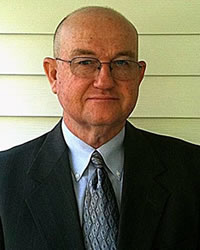
Gary Shepard

Powerful Preaching

Acts 10:34-44
Gary Shepard February, 10 2009 Audio
0 Comments
Gary Shepard
Gary Shepard February, 10 2009

Sermon Transcript

Auto-generated transcript • May contain errors

100%
I hope you would turn with me this morning in the book of Acts.
Acts chapter 10. I'm going to begin this morning,
and I don't know how far I'll get. I'm going to begin. Acts chapter 10, and I'll begin reading in verse 34. Then Peter opened his mouth and
said of a truth I perceive that God is no respecter of persons. But in every nation he that feareth
him, and worketh righteousness, is accepted with him. The word which God sent unto
the children of Israel, preaching peace by Jesus Christ He is Lord
of all. That word, I say, you know, which
was published throughout all Judea and began from Galilee
after the baptism which John preached, how God anointed Jesus
of Nazareth with the Holy Ghost and power, who went about doing
good and healing all that were oppressed of the devil, for God
was with him. And we are witnesses of all things
which he did, both in the land of the Jews and in Jerusalem,
whom they slew and hanged on a tree. Him God raised up the
third day and showed him openly, not to all the people, but unto
witnesses chosen before of God, even to us who did eat and drink
with him after he rose from the dead. And he commanded us to
preach unto the people, and to testify that it is he which was
ordained of God to be the judge of the quick and dead. To him
give all the prophets witness that through his name whosoever
believeth in him shall receive remission of sins. And while
Peter yet spake these words, the Holy Ghost fell on all of
them which heard the word. And they of the circumcision
which believed were astonished, and as many as came with Peter,
because that on the Gentiles also was poured out the gift
of the Holy Ghost. For they heard them speak with
tongues, and magnify God, then answered Peter. Can any man forbid
water that these should not be baptized which have received
the Holy Ghost as well as we? And he commanded them to be baptized
in the name of the Lord, then prayed they him to tarry certain
days. Now, I have thought about it
on a number of occasions. When I have heard somebody make
reference to having heard some powerful preaching, or I've heard
it spoken of concerning preachers, that they are a powerful preacher. And I've often wondered maybe
what they meant by that. And I'm sure it varies from one
to the other. I'm sure that some gauge what
they would call powerful preaching by the results. And yet, if we
do that in the case of Noah, of whom the Bible says he had
only seven converts then I guess we'd have to say that Noah was
not really a powerful preacher. Or if we go simply by oratorial
ability or speaking ability, the power to move people by what
you say and how you say it, Then we'd have to say that such as
Tertullus, that we read about here in this book, and other
orators that stood up in opposition to the gospel where it was preached,
we'd have to say that they were powerful preachers. And then I'm sure that there
are those who mean merely emotion. They can bring men to emotion,
stir their emotion, bring them to fear, speak in such ways of
authority and dogmatism that they move people and bring people
to fear and to follow them. But what I read here in this
book is that the Lord Jesus Christ, speaking to the apostles, who
themselves were merely common workers, and who were, as this
man Peter here, merely fishermen, he says to them in the first
chapter of this book of Acts, But ye shall receive power."
They did not have the power that was necessary in the task that
God had called them. And He commanded them, saying,
But ye shall receive power after that the Holy Ghost is come upon
you, and ye shall be witnesses unto me, both in Jerusalem, and
in all Judea, and in Samaria, and unto the uttermost part of
the earth." And obviously this power that would be given to
them was to enable them not to show themselves something special
before men, and not to win the praise and the admiration of
men, not to promote themselves, but to enable them to preach
the gospel of the grace of God in Christ. I hear the term sometimes, holy
ghost preaching, or preaching in the power of the Spirit. And my thought is in light of
what I read in this book, that when the true gospel is preached
by those who are sent of God, and empowered by His Spirit to
preach Christ Jesus and Him crucified, that truly is Holy Ghost preaching. Look down here in verse 22. It says, And they said, Cornelius
the centurion, a just man, and one that feareth God, and of
good report among all the nation of the Jews, was warned from
God by an holy angel to send for thee into his house, and
to hear words of thee." To do what? He was told that he was
to hear words from this man, Simon Peter. If you look down
further in verse 32 and 33, it says, Send therefore to Joppa,
and call hither Simon, whose surname is Peter, He is lodged
in the house of one Simon a Tanner by the seaside, who when he comes
shall speak unto thee." He was told by the Spirit of God through
this angel that he was to hear words that would be spoken, he'd
find out a little bit later, by a fisherman. Look down in verse 33. Immediately, therefore, I sent
to thee and thou hast well done that thou art come, now therefore
are we all here present before God to hear all things that are
commanded thee of God." What were they now gathered for? What was the purpose that they
had come together And this man Peter, now being in their presence,
he said, it was to hear the things commanded of God to thee. And what we find is that the
Spirit of God, who would empower and enable this man Simon Peter
to speak, He is the one, He is the first cause for bringing
all these things to pass and for revealing God's purpose to
save Cornelius and others. Look back in Acts 10 and verse
1. There was a certain man in Caesarea
called Cornelius. And rather than all of this universal
desire of God to save all men, what we find in this book is
this particular and special desire of God and purpose of God to
save some men, specific men. And there was a certain man in
Caesarea called Cornelius, a centurion of the band called the Italian
band, a devout man and one that feared God with all his house,
which gave much alms to the people and prayed to God always. He saw in a vision evidently
about the ninth hour of the day, an angel of God coming into him
and saying unto him, Cornelius? And when he looked on him, he
was afraid, and said, What is it, Lord? And he said unto him,
Thy prayers and thine alms are come up for a memorial before
God. and now send men to Joppa, and
call for one Simon, whose surname is Peter. He lodgeth with one
Simon a tanner, whose house is by the seaside. He shall tell
thee what thou oughtest to do. And when the angel which spake
unto Cornelius was departed, he called two of his household
servants and a devout soldier of them that waited on him continually,
and when he had declared all these things unto them, he sent
them to Joppa." In other words, all these things are taking place
at the ordaining purpose and command of God And the Spirit
of God has begun to work in the experience of this man to bring
him to a certain point. And then we see not only God's
preparation, the Spirit of God preparing this one who is the
recipient of God's grace, but he also works in the preparing
of the messenger. Simon Peter. Look down in verse
9. On the morrow, as they went on
their journey and drew nigh unto the city, Peter went up upon
the household to pray about the sixth hour. And he became very
hungry and would have eaten, but while they made ready, he
fell into a and saw heaven opened, and a certain vessel descending
unto him, as it had been a great sheet knit at the four corners,
and let down to the earth, wherein all manner of four-footed beasts
of the earth, and wild beasts, and creeping things, and fowls
of the air, And there came a voice to him, Rise, Peter, kill and
eat." In other words, the vision was of a sheep, a great sheep,
with four corners held up at each corner, holding all of these
four-footed beasts and creeping things and wild beasts and fowls
of the air, and Peter is then told to rise and eat." Well,
verse 14, Peter said, "'Not so, Lord, for I have never eaten
anything that is common or unclean.'" In other words, I'm a Jew. Under
the Jewish law, I cannot and I never have eaten any of these
things which are under that law called unclean. And the voice spoke to him again
the second time, what God hath cleansed that called
not thou common." In other words, the only reason And the only
way it can be known or determined whether something is clean or
unclean is by what God says. And under His law, all those
things that were commanded under the Mosaic law by God for them
not to eat because He had called them unclean, By the same standard,
whatever it was that God called clean, no man was to call unclean. And this was done thrice, and
the vessel was received up again into heaven. Now, while Peter
doubted in himself what this vision which he had seen should
mean, behold, the men which were sent from Cornelius had made
inquiry for Simon's house, and they stood at the gate." In other
words, this strict Jew, who had lived under the law all his days
and who regarded all these beasts such as were in that sheet as
being unclean, he also regarded all Gentiles as unclean. He didn't know what this vision
meant. And so it says, in just a little
while, when he came out of this vision that God had given him,
that these men who had been sent by Cornelius, these men who themselves,
along with Cornelius and his house, were all Gentiles, they were standing there at the
door. And they called and asked whether
Simon, which was surnamed Peter, were lodged there, And while
Peter thought on the vision, the Spirit said unto him, Behold,
three men seek thee. Arise, therefore, and get thee
down, and go with them, doubting nothing, for I have sent thee."
Now, here is God bringing all this to pass. And, my friends,
whether or not we realize it or not, in the salvation of every
one of his people in their experience in this world, this is what he
does and has been doing in their lives all their days to bring
them to hear the gospel. And so the Spirit of God has
not only spoken to Cornelius, and moved him to send men down
to Joppa to Simon Peter. He's also working in the preparation
of Simon Peter's heart to receive them. And now, not only that,
but his providence will bring the messenger to those who are
to hear the message. You know, one of the things that
encourages my heart, with what I'm able to do and what I understand
and what I'm able to get together and to speak, one of the things
that encourages me to be able to preach, not only here, but
on the radio or wherever it is, or to put the messages on the
Internet, is this, and that is the assurance that God has a
man and a message to deliver that message to his people wherever
they are. And we could just say, well,
why didn't God use this one, and why didn't God use that one,
and why didn't He use the other one, and why must He now use
Simon Peter, who obviously is not really close at hand, but
is probably a good distance away, and a great inconvenience, and
yet this is what God has ordained. All right? Now listen. Verse
21. Then Peter went down to the men
which were sent unto him from Cornelius, and said, Behold,
I am he whom ye seek. What is the cause whereof ye
are come?" And they said, Cornelius the centurion, a just man, and
one that feareth God, and of a good report among all the nation
of the Jews, was warned from God by an holy angel to send
for thee into his house, and to hear words of thee. Then called
he them in, and Lod's then, And on the morrow Peter went away
with them, and certain brethren from Joppa accompanied him. And the morrow after they entered
into Caesarea, and Cornelius waited for them, and had called
together his kinsmen and near friends. And as Peter was coming
in, Cornelius met him, and fell down at his feet, and worshipped
him. But Peter took him up, saying,
Stand up, I myself also am a man." When I read that, I thought how
much against the flesh it is. For a preacher who has now come
into this place and has now received this amazing honor from this
particular man who falls down before him and who recognizes
him evidently as something special so as to honor him as such. How contrary it is to human flesh
for this preacher to say, stand up, I myself also am a man. He didn't say, yes, I'm Reverend
Simon Peter. He didn't allow for one hint
of praise and glory to go to him. He did not for a moment
allow himself to be promoted in any way by this individual. He said, stand up, man. I'm only
a man just like you are. And then it says, and as he talked
with him, he went in and found many that were come together. This was no accident. And not
only that, he said unto them, ye know how that it is an unlawful
thing for a man that is a Jew to keep company or to come unto
one of another nation, but God hath showed me that I shall not
call any man common or unclean." He said, God has showed me. Has
He showed that to us? He said, God has showed me that
I am not the one who can call any person clean or unclean. Only God can do that. Therefore came I unto you without
gain, saying, As soon as I was sent for, I asked therefore for
what intent you have sent for me. And Cornelius said, Four
days ago I was fasting until this hour, and at the ninth hour
I prayed in my house, and behold, a man stood before me in bright
clothing." and said, Cornelius, thy prayer is heard, and thine
alms are had in remembrance in the sight of God. Send therefore
to Joppa, and call hither Simon, whose surname is Peter. He is
lodged in the house of one Simon, a tanner by the seaside, who,
when he comes, shall speak unto thee immediately. Therefore I sent to thee, and
thou hast well done that thou art come. Now therefore are we
all here present before God to hear all things that are commanded
thee of God." Now I'm telling you this, how
can you read Just what we read here thus far in Acts 10 and
not know that it was God who purposed to save Cornelius and
evidently others among his household and friends? And how could we
not know that it is the Spirit of God who prepares this man,
Simon Peter, and teaches him something about God's grace that
he, to this point, had not even began to acknowledge that everything
that is clean is because God says they're clean, and everything
that's unclean is because God says it's unclean? And how could
we look at this? without seeing that God's providential
hand has arranged this hour and this setting. It is no accident
that they are gathered together. And it is no accident that Peter
is the individual that God has appointed and prepared and brought
to this hour. So what will he say? What will a ragtag fisherman, what will a man say after having been brought
through all these things? It's even like when Philip was
in God's providence brought down to the desert to come in contact
with the Ethiopian eunuch. What will he do? And most especially,
what will he say? Because I know this. I know that
God honored the message. I know that God blessed the gospel
that he had sent Peter to preach. How do you know that? Well, just
look over in verse 44. And while Peter yet spake these
words, the Holy Ghost fell on all them which heard the word. Now, I'll tell you what I know
about this. I know this is powerful preaching. I know this can without
a doubt be called Holy Ghost preaching. I know that this is
a man sent by God to a people ordained by God to preach a particular
message that has been determined of God. And so that makes me very interested
in what Simon Peter preached. You know, many are sometimes
often quick to say whether or not a man is preaching the gospel. But there's one thing we know
for sure, and that is we know Peter did. He preached the gospel. And that being the case, what
did he preach? He preached Christ. He preached the Lord Jesus Christ. He didn't give them a history
lesson. He did not give them a lecture. on things pertaining to the law? He told these that God had gathered
by His Spirit about Jesus Christ." Now, hold your place right there
and turn back over to Acts chapter 8, I believe it is. Acts chapter 8. Because this is a pattern. If
you look back in Acts chapter 8, we find where this man Philip
is now found in a desert. Now, if you can just imagine
this, there were no interstates. There were no highways such as
we have today. There were no road signs and
marks of identification like we have today. The Bible says
that this man Philip is found in a desert. And not only that,
but here is a man called Eunuch from Ethiopia who has been to
Jerusalem and he is traveling back to his homeland and somehow, Some way, God brings these two
individuals together. And this man, this Ethiopian,
is of such a stature and caliber in the world that he's riding
along in his chariot. Probably got somebody driving
his chariot for him, and he's riding along and he's reading
a scroll of Isaiah. All right, look here in Acts
chapter 8. Verse 28 says, "...he was returning,
and sitting in his chariot read Isaiah the prophet. Then the
Spirit said unto Philip, Go near, and join thyself to his chariot. And Philip ran thither to him,
and heard him read the prophet Isaiah, and said, Understandest
thou what thou readest? And he said, how can I except
some man guide me? And he desired Philip that he
would come up and sit with him. And the place of the scripture
which he read was this, he was led as a sheep to the slaughter
And like a lamb dumb before his shearer, so opened he not his
mouth. In his humiliation his judgment
was taken away, and who shall declare his generation? For his
life is taken from the earth.' And the eunuch answered Philip
and said, I pray thee, of whom speaketh the prophet this, of
himself or of some other man?" Now you look at the next verse.
Then Philip opened his mouth and began at the same scripture
and preached unto him Jesus. An old preacher once said, it
may have been Mr. Spurgeon, he said, just as they
say all roads lead to London, So do all Scripture lead to Christ. And if he had been reading from
Genesis 1 or Genesis 3 or whatever it was of those Old Testament
Scriptures, you can just count on it that when Philip heard
what he read, he would have done the same thing and preached unto
him Jesus. And my friend, that is exactly
what Peter does, and that is exactly what Paul did. Paul said, we preach Christ and
Him crucify. Turn over to 1 Corinthians. 1 Corinthians and that second chapter,
and listen to what Paul says. Now, we've got Philip here. We've
got Peter in our text. We've got the Apostle Paul here,
who was Saul of Tarsus. But look here in chapter 2. He
writes to these Corinthians, and he says, And I, brethren,
when I came to you, came not with excellency of speech or
of wisdom, declaring unto you the testimony of God. You do not need excellency of
speech, and you do not need worldly wisdom. As a matter of fact,
they are a hindrance in the declaration of the testimony of God. For I determined not to know
anything among you save Jesus Christ and Him crucified. Now listen to this, and I was
with you in weakness, and in fear, and in much trembling. Now that just, my natural image
of the Apostle Paul is not like that at all. You know, I just
kind of have this image in your mind by virtue of what he says,
and what God enabled him to do. I just have an image of him being
just like a man riding a white horse carrying a big sword and
just fearless. No, he said, I was in fear. But do you know what his greatest
fear was? His greatest fear was to say
something or to say less than what God had commanded him to
say. He feared that he might not tell
the truth. I was with you in weakness and
in fear and in much trembling, and my speech and my preaching
was not with enticing words of man's wisdom, but in demonstration
of the Spirit and of power." Now, how in the world could Paul
ever know, I'm sure in his own heart, He had the witness of
God's Spirit that what he was preaching, he was being enabled
to preach and had been taught to preach by the Spirit of God.
But how did he know? How did he know that God was bearing
witness to his preaching? Number one, because he was preaching,
God had enabled him and was bringing him to preach what God had told
him to preach. The Gospel of the Lord Jesus
Christ. And not only that, but because
God was bringing those so contrary to themselves and so contrary
to nature, God was bringing men and women to believe what He
preached. He said, it's not in the way
I preached it. It's not in all these other things. Rather, I
was just the opposite. He said, but it's in power and
demonstration of the Spirit that your faith should not stand in
the wisdom of man. You know, our faith is not to
rest. in the fact that we believe a
preacher knows what he's talking about. Our faith is not to rest
in any way in the individual, but our faith is rather to rest
in the one that is set forth in the gospel. That your faith should not stand
in the wisdom of men but in the power of God. And so, Simon Peter comes down
here to Cornelius' house, and he is like this man Paul and
Philip, all of whom determined not to know anything among men,
but Christ and Him crucified, and he preaches. what he had been taught of God
to preach. Look back in Acts chapter 4.
You see, from the time of this empowerment,
this enabling of the Spirit of God that had come on the day
of Pentecost It's the same message. Acts chapter
4, verse 8. Then Peter, filled with the Holy
Ghost, said unto them, Ye rulers of
the people and elders of Israel, if we this day be examined of
the good deed done to the impotent man by what means he is made
whole, He said, now, if this is what we're being asked, on
whose authority or by which individual, this man's healing has come forth,
if that's what you're asking us about, which is obviously
the case, we'll just say God did it. No. No. Be it known unto you all,
and to all the people of Israel, that by the name of Jesus Christ
of Nazareth, whom you crucified, whom God raised from the dead,
even by Him doth this man stand here before you all." It's Him. This is the stone which was set
at naught by you builders, which is become the head of the corner,
and neither is there salvation in any other." Whoa, you talk
about a narrow-minded preacher. There is no salvation in any
other. They were saying there's no salvation
in any other one than the one we preach. How do you think that'd
fly in our day? That's what I'm telling you.
There is no salvation in any other one other than Jesus Christ
of Nazareth. For there is none of the name
under heaven given among men whereby we must be saved." That's it. Salvation, the salvation of our
souls, salvation from sin, is only in Jesus Christ. Now, when they saw the boldness
of Peter and John, and perceived that they were unlearned and
ignorant men, what are you fellows being so
dogmatic about? It's obvious that you are ignorant
and unlearned men by our standards. They marveled. And they took
knowledge of them that they had been with Jesus. Were they glowing? How did they know that they had
been with Jesus? You ever stop and think about
that? Was there a little halo around their head or something?
No. They took knowledge that they
had been with Jesus because they taught the same thing that he
taught. They had the same message. Look back here in Acts chapter
10. Now listen. Listen to this. Verse 34, ìThen Peter opened
his mouth and said, Of a truth I perceive that God is no respecter
of persons.î Now what heís going to preach is the absolute necessity
of Christ and Him crucified. Why? What's going to be the basis
for setting forth before these people, after all that's been
done, all the arrangements, ordination of God, working of God's Spirit,
providential overriding of all, what is He going to say to them
and what will be the basis upon which He'll say it? The first thing He's going to
do is tell them God is not how you think He is. That's the first thing He's going
to tell. He's going to tell them that there is one God. You Gentiles, I know, He said
you're real bad about having a multitude of gods. But there
is one God of both Jew and Gentile. And He is no respecter of persons. You know that's the most common,
the natural notion of men and women, every one of us by nature,
that somehow that we are in ourselves or that somehow we'll be able
to do by ourselves something that God will be pleased with. I mean, after all, we're pretty
pleased with ourselves, and it's obvious we've got a lot of folks
around us. They're pretty pleased with us, and compared to a whole
lot of folks out there, you know, we're much more pleasing than
they are. No, the first thing he says is,
God is no respecter of persons. This hasn't got anything to do
with whether or not you're a Jew like me or a Gentile like you. We're all the same in the sense
that we all fell in Adam, in the sense that we all are sinners
by nature, in the sense that we are not in ourselves righteous
in any way. And God, you see, this respecter
of persons here means that God does not simply look on the outward. He does not look on the appearance. He does not look on the visage
of an individual. He's the God who looks on our
heart. And how foolish it is for men
and women to say, well, you know, God knows my heart. That's the
problem. That is the problem. He knows
our heart, and He says the heart is deceitful above all things
and desperately wicked. And God, who is infinitely holy,
God who sees all things and knows all things by what they are,
He pronounces every son and daughter of Adam in themselves as unclean. You're like a leper. Nothing
but wounds and bruises from our head to our toes, wounds and
bruises and putrefying sores. And like a leper, we go about,
and if we call ourselves what God commands us to do, we have
to say, unclean, unclean. He recognizes no man in Himself. And in one short statement, this
man Peter is enabled by the Spirit of God to tell the truth about
God and the truth about man as they are in themselves. God is
no respecter of persons. This isn't about who you are
as a Gentile or who I am as a Jew. But in every nation, every nation. He that feareth him, and worketh
righteousness, is accepted with him." When Paul writes that indictment
in Romans 3 against man as he is in Adam, He tells us that there is no
fear of God in their eyes. They fear men, but he says there's
no fear of God. That's not to say that at times
men and women are not full of a kind of a natural fear, fear
of judgment and all that. This has to do with reverence. And he says by the proverb writer
that the fear of the Lord is the beginning of wisdom, and
it is only God who can bring this to a center. When Paul was traveling on the
road to Damascus, the Saul of Tarsus, on his merry way to do
what he would against the cause of Christ and the church of Christ,
all of a sudden, He stopped in his tracks, and what he had never
had before, Joe, he immediately has. The fear of the Lord. Who are you, Lord? Whoever you
are, you're the Lord. You're over me. You're so much
higher than me. You're holy. You're the Lord. What do you have me to do? But he says, he that fears Him and worketh righteousness is
accepted with Him. Now, I'll tell you, they learned
something real quick that this generation needs to know. And
that is, it's God who must accept us. It's not we who accept Him. And every one that he accepts,
he only has accepted them in the Beloved. That's what Paul
says in Ephesians 1. He hath made us accepted. That literally says something
like this. He has graced us in the Beloved. Capital letter. That is, He hath made us accepted
in Christ. We have the forgiveness of sins
in Christ. It is through and by the person
and work of Christ on the cross and nowhere else. And so important and so vital
is this for us to know, if we're ever to be saved, God will send
a man. He'll send this message. He'll
overcome every obstacle. He'll do whatever's necessary to bring that blessed Word to
them, and them to that Word. Everyone that fears Him and worketh righteousness
is accepted of Him. Now, the way we think, the natural
way of thinking is that His accepting them is because they fear Him. and because they weren't righteous.
But it's just the opposite. And that's often the way it is
in the Bible. The fact that he has made them
accepted in Jesus Christ, as must be obvious by Peter himself
and by these wild Gentiles. The fact that God in His free
grace has made them accepted, made them wisdom and righteousness
and sanctification and redemption in Christ is evidence in that they are
brought to fear Him. Did you know That's this man,
Cornelius. Of course, this is a time of
transition, I guess you'd say. But this man, Simon Peter, even
before he was brought to hear Peter preach the gospel, had
already been brought by God to, in some degree, know this fear
of the Lord. Why? Because this wasn't going
to be accidental salvation, and it wasn't going to be momentary
salvation. It's eternal salvation. And so those who fear Him and
those who work righteousness are those who He has already
made to be accepted in the beloved, because before this time Christ
had already died, and they were there He was there bearing the
good news of Christ and Him crucified. So, he that fears the Lord and
works righteousness. Ooh, doesn't it say there's none
righteous at all? That's right. But when you read 1 John 3, He
talks about those who do righteousness. And he says, after stating that
about three times, he says in giving his example of it, Abel
did righteousness and Cain did not do righteousness. Abel worked righteousness. Cain did not work righteousness. Well, what did Abel do and what
did Cain do? You know, the only thing we know
about those guys, for the most part, is that Cain offered to God,
sought to worship God, and be accepted by God on the basis
of what he did. and able, he came before God
having only what God had provided and what God had appointed in
that sacrificial lamb, which was a type of Christ. That was working righteousness. He was looking to the righteousness
of God in Christ. and everyone that fears the Lord. I don't
mean this foolish stuff. I mean that reverence is God
for who He is as this holy and just and righteous God, sovereign
in all things. They regard God as the one He
says that He is. and that works righteousness,
who only seeks to come to Him, pray to Him, approach unto Him,
have salvation from Him, only through and by the One who knew
no sin, but was made sin for us, that we might be made the
righteousness of God in Him. The One who died only in Him. He has made them accepted in
Him and therefore by Him. Now, Peter goes on, and I may
go on later. I don't know. But the first thing he says is, of
a truth I perceive that God is no respecter of persons, but
in every nation he that feareth Him and worketh righteousness
is accepted with Him. Men and women, they come to such
verses as that, and they say, well, that's what we believe.
If you'll do right, God will save you. If you'll do right,
you're okay with God. No. God is no respecter of persons.
Not Jew or Gentile, not male or female, not all these other
distinctions, even that He has made, and furthermore, many more
that men have made. He don't look at your outside
and have an imagination of you like you have of you and like
I have of me. I got up this morning, I took
a shower and brushed my teeth and shaved and did all these
things and I put on this blue suit and red tie and I stood
up there before the long mirror and I thought, well, you don't
look too bad. That's the way we are as sinners
spiritually. Well, you know, we're not too bad. That's not
what God sees. He sees the wickedness of our
hearts. This is not where we come from,
not whether we're Jew or Gentile, not whether or not we're Americans
or any of these things. But it's whether we're in Christ,
whether His grace was fixed upon us like Cornelius, whether or
not God has purposed and sent to us a messenger, though He's
just a pitiful ragtag fisherman maybe, whether or not He's revealed
to us that He's made us accepted in His blood. wrought the fear
of the Lord in our hearts, and calls us to worship Him, seek
Him, only through and by the sacrifice of the one He calls
the Lamb of God. God help us. May we be the objects
of such mercy as Cornelius and so many of his household and
friends. May when we seek to know anything,
it is that we might know Him whom to know as life eternal. Father, we thank You this day. And we marvel at the thought
of how many times such a thing as we've read about
in this tenth chapter of Acts has been repeated again and again
and again. Your purpose, your preacher,
your people, your power, all made manifest. Thank You for
Your mercy to us. Thank You for the bounty of Your
grace poured out. Help us, we pray. Keep us. Reveal Yourself to us and in
us. Call out Your sheep. May they
be many among our houses and families like
Cornelius, our friends. Accomplish your purpose and glorify
yourself, for we thank you and we praise you in Christ. Amen.
Gary Shepard
About Gary Shepard
Gary Shepard is teacher and pastor of Sovereign Grace Baptist Church in Jacksonville, North Carolina.

Comments

0 / 2000 characters
Comments are moderated before appearing.

Be the first to comment!

Joshua

Joshua

Shall we play a game? Ask me about articles, sermons, or theology from our library. I can also help you navigate the site.