Bootstrap
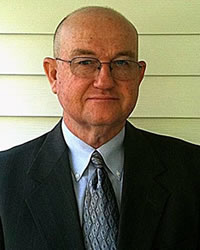
Gary Shepard

'I Have Chosen You'

John 15:16
Gary Shepard October, 26 2008 Audio
0 Comments
Gary Shepard
Gary Shepard October, 26 2008

Sermon Transcript

Auto-generated transcript • May contain errors

100%
Please turn in your Bibles this
morning to the Gospel of John, chapter 15. John, chapter 15. These verses
are words that the Lord Jesus Christ spoke to these His disciples. And as we read through these
verses, we are told that believers, like these disciples, are said
to be loved by Christ. Look down in this ninth verse. He says, As the Father hath loved
me, so have I loved you. Continue ye in my love. And if we want to know how the
Father loved the Son, I'll let you know by reading in John chapter
17. He says, Father, I will that
they also whom thou hast given me be with me where I am, that
they may behold my glory which thou hast given me, for thou
lovest me. before the foundation of the
world. They are loved as the Father
loved Christ, and that before the foundation of the world. And then we find out also that
this love, this love of Christ was a sacrificial love. Look down in verse 13. He says,
greater love hath no man than this, that a man lay down his
life for his friends. That certainly parallels what
our Lord says in John 10. I lay down my life for my sheep. I give my life for the sheep. And he describes these not only
as those that he loves, but he describes them also here as his
friends. But when he goes on to tell us
what the first cause is for anyone being a friend of Christ, or
what the evidence is of Christ's love, He shows us that it is
the choice of Christ. It is the sovereign election
of God, of these people out of Adam's race to be the objects
of His great mercy and grace. And that brings me to the text
this morning that I want us to look at and to hear his words
in John 15 and verse 16. He says, Ye have not chosen me,
but I have chosen you and ordained you that ye should go and bring forth
fruit, and that your fruit should remain, that whatsoever ye shall
ask of the Father in my name, he may give it you." I have chosen you. The word that is translated here
in this verse as chosen is the same word which is, we have the
word derived elect. As a matter of fact, it is translated
and means the same thing in other places in Scripture. Our Lord said in Matthew 24,
and except those days should be shortened, there should no
flesh be saved, but for the elect's sake, for the chosen's sake,
those days shall be shortened." And then we have it also by the
Apostle Paul in Colossians 3, where he instructs the believers,
saying, Put on, therefore, as the elect of God, as the chosen
of God, holy and beloved, vows of mercies, kindness, humbleness
of mind, meekness, long-suffering." Our Lord says here, I have chosen
you. And when I read that, I have
to ask this question. Is he talking simply to these
disciples? Or, since he has preserved these
words all down through the generation, is he talking to me? Is he talking in this statement
to you? I know this when I read this
verse. What he says here in this text
speaks so clearly and plainly against the modern decisionism
of our day. He speaks against the notions
of anybody accepting Jesus. It stands against the notion
of man's so-called free will and all of the easy believism
of this man-centered religion in our day. It cannot be both
true. He says to somebody, I have chosen
you. While I was looking at this,
I came across some words that an old preacher had spoken when
he was talking about this very subject of God choosing, of God
electing some sinners to salvation. Let me read you what he said.
He said, Lay aside your prejudices, Listen calmly, listen dispassionately,
hear what Scripture says, and when you receive the truth, if
God should be pleased to reveal and manifest it to your souls,
do not be ashamed to confess it. To confess you were wrong
yesterday is only to acknowledge that you are a little wiser today,
and instead of being a reflection on yourself, it is an honor to
your judgment and shows that you are improving in the knowledge
of the truth. Do not be ashamed to learn. and to cast aside your old doctrines
and views, but to take up that which you may more plainly see
to be in the Word of God. But if you do not see it to be
here in the Bible, Whatever I may say, or whatever authorities
I may plead, I beseech you, as you love your souls, reject it. And from this pulpit, if you
ever hear things contrary to this sacred word, remember that
the Bible must be the first, and God's minister must lie underneath
it. We must not stand on the Bible
to preach, but we must preach with the Bible above our heads. After all we have preached, we
are well aware that the mountain of truth is higher than our eyes
can discern. Clouds and darkness are round
about its summit, and we cannot discern its topmost pinnacle,
yet we will try to preach it as well as we can. But since we are mortal and liable
to err, exercise your judgment. Try the spirits, whether they
are of God. And if on mature reflection,
on your bended knees, you're led to disregard election, a
thing which I consider to be utterly impossible, then forsake
it. Do not hear it preached, but
believe and confess whatever you see to be God's Word. And that's good advice. And that is applicable to every
point, every doctrine that we are to look at in the Word of
God. But I'd ask you this this morning. Do you have hope of salvation? And is that hope ultimately determined
by something you did or something that you are doing, or is it
based on something that God did? When everything is analyzed and
we get down to what we call the nitty-gritty, what is it that
actually determines whether or not you enter into heaven or
are cast into hell. And I say this morning that that
is vitally important because it determines who it is that
actually gets the glory in our salvation. We cannot read the
Bible Without seeing if we have any honesty about us at all,
we cannot read the Bible without seeing that God is the God of
election. We can't come to this text and
many, many more and hear what the Lord Jesus says here, I have
chosen you. without being confronted with
the truth of this matter of sovereign, unconditional election. And I think that one of the reasons
for this is, and why it is so plain and so often in Scripture,
is that God has purposed, He said, to stain the pride of man. And I know nothing in this book,
no doctrine it seems, that seems to stir the rebellion of our
hearts, the natural rebellion of self-righteous men and women
like being confronted with God's right to do what He will. It stirs up in us naturally that
enmity when we're confronted with the fact that He chooses
whom He will, and that He saves whom He will, and that it is
His will is the first cause and determining factor of the salvation
of every person that is saved. And I'll tell you this, it is
not a new thing. And I could go back in the Old
Testament and show it again, how the Lord chose one and bypassed
the other, all down through all the families of the patriarchs,
through all the nations that lived on this earth. But just
let me show you a clear illustration of this that is found in Luke
chapter 4. And just like it is on this occasion,
It has to do with what our Lord said in that very synagogue of
His hometown of Nazareth. He faced all those people in
the synagogue here in Luke 4. He got up at appointed time and
He read from the Scriptures. And then when it seemed like
that they would, on the one hand, maybe receive what he says, look
at what he says in verse 25. He says, but I tell you of a
truth. Many widows were in Israel in
the days of Elias, when the heaven was shut up three years and six
months, when great famine was throughout all the land." Now,
one thing he shows in that is that as far as need is concerned,
it was everywhere. But now listen to what he says,
"'But unto none of them was Eli sent, save unto Sarepta, a city
of Sidon, unto a woman that was a widow." He bypassed every other
person, every other household in that famine time, and he sent
his prophet to a widow woman, and one who was not a Jew, but
a Gentile, and then he goes on a little farther. He says, and
many lepers, many people plagued with leprosy were in Israel in
the time of Elisha the prophet, and none of them was cleansed
save Naaman the Syrian. God sent his prophet to that
one Gentile leper, that one proud, arrogant captain of a heathen
host, and he sent his healing to that man and none other. And I'll tell you, when our Lord
read this, He read it knowing the effect it would have on these
proud religious Jews And that same kind of reaction comes out
of the heart of every sinner in every age, and it says, and
all they in the synagogue, when they heard these things, they
were filled with wrath. I'm talking about God the Son
in human flesh standing before them. I'm talking about words
that were flowing out of Him who is the truth Himself. I'm talking about clear application
of the very Old Testament Scriptures in an unmistakably clear way. And when all of these in that
place who had gathered in the name of God and religion, when
they heard this, They were filled with wrath. And they rose up. They were vocal. They were active in their anger
and wrath. And they rose up and thrust him
out of the city and led him unto the brow of the hill whereon
their city was built, that they might cast him down headlong. Why? Because he spoke the truth
of the electing grace of God. Because he confronted them with
this right of God to show His mercy to whom He will show His
mercy. To be gracious to whom He would
be gracious. And rather than delight in that,
rather than delight and bow before God as He is, rather than asking
Him to show mercy to them. They sought to kill Him, and
they would have killed Him, but it was not yet His hour. God has an elect people. And there is nothing in them
that is worthy of His grace, or worthy of His choice, or worthy
of His sovereign mercy, but He does have a people. Turn back to John chapter 15
and look down in verse 19. He says, if you were of this
world, the world would love His own. But because you are not
of the world, but I have chosen you out of the world, therefore
the world hateth you." Where do these people come from? He
said, I have chosen you out of the world. And it is so foolish
to hear men say things like, God cannot do that. When every
place it is stated in this book, we are told that it is something
that God has done, God who can do no wrong, God who can make
no error, God who cannot be unjust, and it says that He has already
done it. It is an accomplished thing. I have chosen you. And in our verse here, in verse
16, our Lord begins in the negative to rebuke the natural sinful
thoughts of men concerning this. He says, you have not chosen
me, but I have chosen you. And if you look at these that
he has chosen, if you look at these that he says that he has
loved, if you look at these that he describes as his friends,
look back in verse 14. He says, you are my friends if
you do whatsoever I command you. What does he command us? To believe
on him. And one of the first aspects
of believing on Christ is believing Christ. He said, you have not
chosen me, but I have chosen you. And I don't know anything that
comes as near pressing on the big bubble of our self-righteousness
We keep talking in the economic world about the oil bubble and
the house bubble and all these other kind of bubbles that seem
to be bursting all around us at this hour, but none of those
bubbles can even begin to come close to the bubble of human
self-righteousness and pride that gets severely pressed against
the doctrines of Jesus Christ. Now, I want to ask you something
today. Is Christ talking about you here? Is He talking about me here as
He tells us what all men do and are by nature? Which is what? We do not choose God. We choose our God. We choose a God like we would
go down a buffet restaurant picking out what we want to pick out
about Him, but God, the God of the Bible as He is and as He
declares Himself to be in Scripture in His entirety, This is true. You have not chosen
me. No one naturally chooses Jesus
Christ as He is. We do not by nature choose that
which we are altogether in ourselves enmity against. I don't know
why it is, but all my days, I've had, it seems like, a kind of
a natural enmity against some things that other people eat. In other words, if you bring
out liver, fried, boiled, whatever it is, and put it on a plate
before me, I absolutely will not eat it. And I have never, I have never
had myself go into a restaurant, go into someone's home, and ask
or order that which I by nature somehow do not like. I have never chosen to order
liver, to buy liver, to serve liver, because I seem to have
a natural enmity even to the smell of it. And to imagine that we would,
or that to imagine that we could, as sinners so blind and so ignorant,
so much enmity against God, so fallen in our nature, choose
Him who is the exact opposite of us, is to be utterly stupid. You see, you cannot, As so many
have tried to do, you cannot reduce or explain away election
with a false definition of divine foreknowledge. And they say something like this.
As a matter of fact, most preachers and most religious people, they
define foreknowledge as God seeing beforehand who would choose Him
and basing his choice on that. There are two big problems with
that. None ever would choose him. And the other problem is,
if that was the way God operated, that would make salvation ultimately
by a work that we do and not by the grace and power of God. As a matter of fact, Paul expressed
it like this. He said, Who hath first given
to him, and it shall be recompensed unto
him again. If you can show us, Paul says,
somebody who has first initiated anything positive or good toward
God, Show us one person who has given anything to God that he
will accept or receive, and he will be recompensed for it. And what was true of these disciples
is absolutely true of all people. Every natural man is blind and
deaf. Their will is fallen. And Christ
looked at them and looked at us in ourselves and said, you
will not come to me that you might have life. You won't do it. That's why it is so foolish.
to put pressure on men and women, to try to trick them into salvation,
to kind of sneak up on them with the gospel, to disguise than
hide or decorate the truths of God which are plainly designed
to bring man to an end of himself. You see, all who trust Christ
they do choose Him. But it is only because Christ
chose them. And what Christ is saying here
is, you would never have chosen Me if I had not chosen you, if
Mine had not been a choice of My grace. You wouldn't have chosen Me.
Why? Because men and women have no
no need, no felt need, no seen need of a physician. And that's what Christ says.
He said, people who don't have a need, people who are not sick,
they don't come to me. Not only that, there is no natural
beauty to be beheld by a natural man in the Lord Jesus Christ,
who has no form or comeliness that we should desire him, but
who is described as a root out of a dry ground. Because we by nature, which only
possess a nature of sin, we do not want to be made holy by Him. We don't think we're lost, therefore
we don't want to be found. We don't think we're blind, therefore
we don't want to be given sight. We don't think we're wrong, so
we don't want to know the truth. And that's all what we are. We
don't want the gospel because it speaks of spiritual things. So our Lord said, I created,
I came, I died, I would, but you would not. And that's what he reminds every
one of us here this morning who has been brought to believe on
Christ. We're reminded again and again
that we might praise God for His grace, that we have not chosen Him. And the responsibility lies in
every man. who is the man born in this world
with a kind of free will of sort, but what did he choose? He chose
sin, he chose Satan, he chose error, he chose death. Ye have not chosen me. But let me ask you this. Could
it be that by his grace you might be enabled to hear what Christ
declares that He has done. Can we really hear this? I don't mean hear it so as to
be able to go out and spout it out and rehearse it out or throw
it into your conversation or something like this. I mean,
do we really believe it in our hearts? He says, you have not chosen
Me, but I have chosen you. You see, all that He carries
to eternal glory, He loved and He chose. And if you stop and
think about it, He gives us that truth in so many of these illustrations,
such as His bride. Joe, who chose your bride? You
did. All you men out there who are
married, you chose your bride. And all of you, who is it that
chooses your friends? You do. And it's amazing that
a right that we claim for ourself, we try in some way to withhold
for God. from God. Look back in verse
13 again. He said, ìGreater love hath no
man than this, than a man lay down his life for his friends.î You see, he not only chose those
that he loved. His love is not only demonstrated
by his choice of them. But His love and His choice is
made manifest for His chosen ones in His giving His life for
them, in His dying that they might live, in His redeeming
them by the price of His own blood. That's what I was trying
to say in the radio message this morning. The death of Jesus Christ
is an act, is a work of righteousness which He Himself, in Himself
and by Himself, accomplishes for all His chosen. Let me read you a few verses.
In Revelation 5, speaking of the people of God, standing in
heaven, pictured in this way. It says, And they sung a new
song, saying, Thou art worthy to take the book, and to open
the seals thereof, for thou wast slain, and hast redeemed us to
God by thy blood out of every kindred, and tongue, and people,
and nation. They said, You're worthy. You're
absolutely worthy of all praise and all glory. You're worthy
to take this book of God's decrees and purposes and everything in
them fulfilled because all the promises of God are yea and amen
in You. And here it is. You redeemed
us by Your blood. redeemed us to
God, out of, from among every nation and kindred and tongue
and people. In Ephesians 5, Paul says, And
walk in love, as Christ also hath loved us, and hath given
himself for us, and offering and a sacrifice to God for a
sweet-smelling savor. And when you read in Romans chapter
1 and verse 5, it tells us of Jesus Christ, who is the faithful
witness and the first begotten of the dead, and the prince of
the kings of the earth, unto him that loved us and washed
us from our sins in his own blood." He loved us. He gave himself
for us. He chose us. Because all of these
things make up that one purpose of God which was in Christ before
the world began. And God, if at any time anything
altered in that, it meant He had to alter and He cannot do
that. You see, all men would be lost
Because they have not, and they do not, and they will not of
themselves choose Christ, but, he says, I have chosen you. When? Well, before they believe,
and not because they believe. Turn over to Acts chapter 18. Acts chapter 18, and look down and listen to the apostle and what was said to him as he
was very fearful in so many places. It says in verse 8, And Crispus, The chief ruler of the synagogue
believed on the Lord with all his house, and many of the Corinthians,
hearing, believed and were baptized. Then spake the Lord to Paul in
the night by a vision, Behold, be not afraid, but speak, and
hold not thy peace, for I am with thee, and no man shall settle
thee to hurt thee, for I have much people in this city." He
counted those of his chosen, of his elect people that were
scattered among the people in Corinth as already his very own. He said, I have much people in
this city. They hadn't chosen Him. They
hadn't believed on Him. But He had chosen them. Not only
that, but even before that. Turn over to 2 Thessalonians. 2 Thessalonians. And listen to
what the Apostle says when he writes to these who are in Thessalonica. 2 Thessalonians and the 2nd chapter,
look down at verse 13. Now, you have to go back and
read all that he says prior to this, because he speaks of, definitely,
a people who receive not the love of the truth. He speaks
of a people who God sends strong delusion on them that they should
believe a lie, that they might all be damned who believe not
the truth, but who had pleasure in unrighteousness. And then
verse 13 begins with but. But we're bound to give thanks
always to God for you. For you. believers. He says, brethren, be loved of
the Lord, because God hath from the beginning chosen you to salvation
through sanctification of the Spirit and belief of the truth. He said, God from the beginning
loved you chose you to salvation. Not simply to have a chance,
not simply to have an opportunity, not to make salvation available
or possible or achievable or any of those things. He said
he's chosen you to salvation. And it goes on in that first
epistle to the Thessalonians. He says, "...for God hath not
appointed us to wrath, but to obtain salvation by our Lord
Jesus Christ." Turn over to Ephesians chapter 1. Ephesians chapter 1, and look
down in verse 4. Paul finds a reason here to bless
and praise God for this. Verse 3 says, Bless me, the God
and Father of our Lord Jesus Christ, who hath blessed us with
all spiritual blessings in heavenly places in Christ, according as
he hath chosen us in him. Don't ever think for a minute.
that the doctrine of sovereign election is God just simply choosing
you, because He could not. Why? He cannot choose that which
is contradictory to Himself. But it says, He hath chosen us
in Him, in Christ, before the foundation of the world, that
we should be holy and without blame before Him in love. He chose us who were in ourselves if I can
say it, unchoosable, unlovable, undeserving, ill-deserving, with no significance. I remember preaching a message
once wherein I tried to set forth this truth, and a lady came up
to me afterwards as spiritually blind as a bat. She said, after
hearing the very opposite of her thinking, she said, you know I always thought
I was special. That's not this. Those that God chooses, they
are not in any way in themselves special, except the fact that
they are special sinners. If you look back in our text
here in John 15, and you look down in verse 20, listen to what
it says. Remember the word that I said
unto you, the servant is not greater than his Lord. If they
have persecuted me, they will also persecute you. If they have
kept my saying, they will keep yours also." How did they feel about what
Christ said about election in Nazareth? They wanted to stone
him. And you know, men in general
have wanted to stone every preacher and every person who believed
the truth of God concerning this from that day forward and before. It's amazing. Your good friends,
your good family, people that have been your bosom buddies
for years, When they find out that you believe
the truth, Christ said, they kept my sayings. They wouldn't
have them and they won't have yours. But you know what? It's an amazing
thing to me and shows our true utter blindness and how naturally
resistant of this very thing we are when we would imagine
When we would even think for a minute that somehow all those
who died in unbelief, rejecting not only this gospel doctrine
but every other gospel doctrine, therefore rejecting Christ, that
somehow we helped them by not believing it either. You know, when men and women, alienated from God, alienated
from Christ and the truth, when they perish and are cast into
outer darkness, a great part of that agony is to be among
those that they have loved, who like them despised and rejected
the God of all glory." Do you remember what that rich man said?
He called out to God and to Lazarus, although Lazarus couldn't hear
him. But he called out to God, he said, send Lazarus, to warn my brethren that they
come not to this place. Our Lord said, he that is ashamed
of me and my words before this generation, I'll
be ashamed of them when I come in all the glory of my holy angels. Sad, sad. But you know, a man can stand
and say, well, I like this about God, and I like that about God,
and I believe this about God, if we don't believe all about
Him. We don't really believe anything about Him. That's just
the way it is. Why did He do this? What is the
reason for His love? The reason for His choice? Well,
you can look all you want to look, and you can think all you
want to think, and you can imagine all you want to imagine, but
it'll still be simply just for one reason, and that's the good
pleasure of His will. I can't find any reason that
He'd ever choose me to. I can't find any reason. I can
find every reason why He shouldn't have. There's no reason in man. There's no request from man or
no response from man. There's a verse of Scripture
in which Christ Himself pictured this very thing. It's found in Mark's Gospel.
It says, "...and he goeth up into a mountain." You know, He
did that oftentimes. And it says, And he called unto
him whom he would, and they came unto him. That's the picture. He went up into a mountain, and
he called unto him whom he would, and they came unto him. Turn over to Romans 9, and let
me show you another illustration that God gave long before Christ
ever came. Romans chapter 9, and listen in verse 9, when He
has been showing this distinguishing grace of God choosing some and
leaving some to the just consequences of their own sin, not doing anything
wrong against them, but showing mercy to whom he would. Verse
9, he says, For this is the word of promise, At this time will
I come, and Sarah shall have a son. And not only this, but
when Rebekah also had conceived by one, even by our father Isaac,
for the children being not yet born, neither having done any
good or evil, that the purpose of God according to election
might stand not of works, but of him that calleth." It was
said unto her, The elder shall serve the younger. As it is written,
Jacob have I loved, but Esau have I hated. What shall we say
then? Is there unrighteousness with
God? God forbid. For he said to Moses,
I will have mercy on whom I will have mercy, and I will have compassion
on whom I will have compassion. So then it is not of him that
willeth, nor of him that runneth, but of God that showeth mercy. There have been two great falls. The fall of the angels when a
third of the heavenly host of angels fell with Satan. And there has been the fall of
Adam's race when we fell in Adam. But God did not choose, He did
not come to die for, and He did not redeem the angels. He left them to the just consequence
of their sin. But for His glory and by His
grace, He chose a remnant, a remnant according to the election of
grace from Adam's race, and He came into this world and He redeemed
them and saved them with an everlasting salvation. He didn't choose who we think.
The rich? James said, Hath not God chosen
the poor? How about the noble? He said,
Not many noble are called. What about the learned, the highly
learned people? He said, He's hid these things
from the wise and prudent. How about the moral, outwardly
righteous ones, the virtuous such as the Pharisees? No. He said you're full of dead
men's bones. But he was a friend of publicans
and sinners. He says in our text, I have ordained
you. But this means that He has not
only ordained us, but He has also ordained the means, the
way in which He would accomplish their salvation. The way in which
He would make known to His chosen the fact that He has saved them. You see, the gospel is not a
message telling you how to do something. The gospel is a declaration
of what God has done, and that's what Christ is doing here. He
said, you've not chosen me, I've chosen you and ordained you. You remember in Acts 13 and verse
48, the apostle is there preaching, and almost everybody rejects
what he's got to say. But not everybody. There were some who believed.
And I'll just tell you who he says believed. He says, and as
many as were ordained unto eternal life, they believed. And that's always the way it
is. It's not, well, if God chose
you, you're good and heaven doesn't matter. That's a lie. That's
not true. He says, and as many as were
ordained unto eternal life, they believed. They didn't believe,
and then they were ordained to eternal life. God ordained them,
as He says in our text, and they were ordained unto eternal life,
and therefore they believed. Why? Because He gave them faith. You know what's the hardest thing
in this world to do? No. What's the most impossible
thing to do? It's to believe what you can't
believe. You know, somehow people have
an idea that this business of believing in faith is something
that's in us, that we've got to kind of gird up ourselves
and get a hold of ourselves and do something. No. If God doesn't give us faith,
we'll never believe. And if God gives us faith, we
can't help but believe. And we'll believe the truth as
it is in Christ. If you turn back to 2 Thessalonians,
where we read in that second chapter in verse 13, and pick
up in that next verse what he says in verse He said, God has from the beginning
chosen you to salvation through sanctification of the spirit
and belief of the truth. God the Father in divine election
set us forth in Himself before the world began. God the Son
came into this world and set us apart in His death on that
cross, and God the Spirit will set us apart, everyone, and bring
us to do what? The belief of the truth, whereunto
He called you by our gospel to the obtaining of the glory of
our Lord Jesus Christ. He ordained the end, and He ordained
everything to accomplish that end, and all the means, such
as the sending forth of this declaration of the gospel, the
truth about Jesus Christ, which does, on the one hand, have a
negative. Christ said, You have not chosen
Me. But I have chosen you. You have not done anything for
me, but I've done something for you. You have not of yourselves
loved me, but I've loved you. You can't save yourselves, but I've saved you. I've done
everything. through sanctification of the
spirit and belief of the truth. That's what I want people to
do is believe the truth. And I know that they will if
the Spirit of God gives them life and faith. He brings every one of His people
to believe on Himself which is to believe His gospel. And I pray that we would be found
among them. Because if He has loved us and
chose us and redeemed us and called us by His Spirit and gospel,
then there will be a fruit thereof. You've not chosen me, but I've
chosen you and ordained you that you should go and bring forth
fruit and that your fruit should remain." Fruit. What is our fruit? Well, it's
that fruit which is wrought by the Spirit of God that Paul speaks
of in Galatians 5. He says, but the fruit of the
Spirit is love, joy, peace, longsuffering, gentleness, goodness, faith,
meekness, temperance. Against such there is no law. In some degree, in some measure,
The Spirit of God produces in every one of God's elect this
fruit. It's not the fruit of religion.
It's the fruit of the Spirit. Let me read you a hymn. Turn
in your hymn book to hymn number 96. Let me read you a short hymn
by an old preacher in 1836 by the name of Josiah Condor. "'Tis
not that I did choose thee, for, Lord, that could not be. This
heart would still refuse thee, had thou not chosen me. Thou
from the sin that stained me hast cleansed and set me free. Of old thou hast ordained me
that I should live to thee. T'was sovereign mercy called
me and taught my opening mind. The world had else enthralled
me to heavenly glories blind. My heart owns none before thee,
for thy rich grace I thirst. This knowing, if I love thee,
thou must have loved me first." Somebody in 1836 believed this
gospel. Somebody in 1837 believed it. And every year, from that day
to this day, and every day until Christ comes again, wherever
the remnant according to the election of grace is, this people
out from among every kindred, tribe, and tongue, and nation,
they will believe. They'll be brought to confess
this. Lord, We didn't choose you, but
you chose us and ordained us that we might go forth, bring
forth fruit, and that this fruit should remain. I'll give you
just another few words out of another old hymn. Zion surveyed the wondrous grace
The God of heaven displays. He chose us out of Adam's race. Awake and sing His praise. You say, well, what should we
do? Awake and sing His praise. Give all glory and honor and
thanksgiving to God that even though we didn't choose Him,
He chose us. Believe His truth and rest in
what He has done. Father, this day we give You
thanks and we praise You. We know that if left to ourselves,
we would not even to this hour choose You. But because You've
chosen us and ordained us, because you have sent your Spirit, caused
us to believe your truth. Lord, we are thankful that we
do choose you. We thank you that our choice
is because of your choice of us, that you should get all the
honor and the glory, not only in this life, not only in our
life in this world, Lord for all eternity. Fill our hearts with gratitude. Cause this great truth to be
a humbling thing in our hearts and minds. And cause us to rest in your
free grace and the blessing of being chosen
in Christ. redeemed by Christ and called
to Christ forever and ever. Bless, we pray, these sick ones
that are upon our hearts. We pray again especially, Lord,
for Brother Walker's wife. We thank you for every one of
the least of your blessings. for all of your people wherever
they are in this world in their afflictions and troubles and
trials. Help each one. And Lord, we pray
that you'd cause your gospel that exalts you in all things
to go forth and to run well in our day, in this place. Call out your sheep. Glorify
Yourself, for we ask everything according to Your will and through
the precious life and shed blood of Your Son. Amen.
Gary Shepard
About Gary Shepard
Gary Shepard is teacher and pastor of Sovereign Grace Baptist Church in Jacksonville, North Carolina.

Comments

0 / 2000 characters
Comments are moderated before appearing.

Be the first to comment!

Joshua

Joshua

Shall we play a game? Ask me about articles, sermons, or theology from our library. I can also help you navigate the site.