Bootstrap
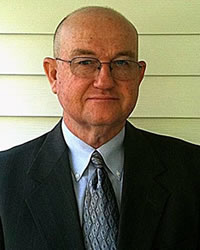
Gary Shepard

Faith In His Blood

Romans 3:24-26
Gary Shepard October, 5 2008 Audio
0 Comments
Gary Shepard
Gary Shepard October, 5 2008

Sermon Transcript

Auto-generated transcript • May contain errors

100%
Turn in your Bibles this morning
to Romans chapter 3. Romans chapter 3. When our Lord instituted this
table that we have come to this morning, One of the elements that he ordained
was the wine. And when he did that, he said,
this is my blood of the New Testament. And we know that that does not
mean that it was literally or that it ever becomes the blood
of Jesus Christ. But as it is in all that He has
ordained, and in all that He has said in His Word, most significant,
the blood. Look with me here in Romans 3. In verse 24, where the Apostle
Paul writes, being justified freely by His grace through the
redemption that is in Christ Jesus, whom God has set forth
to be a propitiation through faith in His blood. to declare his righteousness
for the remission of sins that are passed through the forbearance
of God, to declare, I say at this time, his righteousness,
that he might be just and the justifier of him which believeth
in Jesus. He speaks here of faith in his
blood. And when he does that, he makes
us to know that he is not talking about faith in Jesus Christ as
some kind of mystical being. But when he says faith in his
blood, He takes us all the way back to the beginning of this
book, the Old Testament Scriptures. Hold your place here and turn
back to Genesis chapter 9. Noah and his family have just
been brought through that judgment that is picturing the judgment
of all men, and most especially the judgment of the sins of God's
elect in Christ. He is pictured in the ark. But as they come to this place,
having come through the flood, having been brought and delivered
through that judgment, God recommissions Noah and his family in much the
same way He did Adam and Eve. He says, Be fruitful, multiply,
and replenish the earth. And He tells them here also that
He has not only given them the trees and all the vegetation
and such to eat, but he says he has now given them all flesh
to eat. He's given them all things to
sustain them and deliver them and give them physical life. But there is one exception. that he makes in the midst of
all of this. He says in verse 3, every moving
thing that lives shall be meat for you. That is, God has never
commanded us to be vegetarians. That's not the diet of God. But the diet of God for us is
the one we struggle the most with, I'm afraid, and that is
moderation in all things. Every moving thing that lives
shall be meat for you, even as the green herb have I given you
all things, but flesh with the life thereof, which is the blood
thereof shall ye not eat." In other words, his command to Noah
and his family and all that followed is, while I give you all flesh
to eat, you do not eat. the blood. You do not take unto
yourself the blood. You see, flesh was not to be
eaten with the blood in it, and it is as if God is saying here,
everything is for you, all the flesh is for you but the blood. is for me." And that simply means
that the blood has a special significance, a great significance,
in that it represents that which is spiritual and eternal and
has to do with Christ. And so, in all the law of God,
He guarded the blood with this great significance, saying in
Leviticus 17, And whatsoever man there be of the house of
Israel, or of the strangers that sojourn among you, that eateth
any manner of blood, I will even set my face against that soul
that eateth blood, and will cut him off from among his people. He goes on further. He says,
For the life, it is the life of all flesh, the blood of it
is for the life thereof. Therefore I said unto the children
of Israel, Ye shall eat the blood of no manner of flesh, for the
life of all flesh is the blood thereof. and whosoever eats it
shall be cut off." He says it again in that same book. Ye shall not eat anything with
the blood. And then in Deuteronomy he says,
Only be sure that thou eat not the blood, for the blood is the
life, and thou mayest not eat the life with the flesh. And I don't know how many times
again and again in this book, all through the Old Testament,
there is a special significance given to the blood, and all men
everywhere are forbidden to eat the blood. And even when you
come to the New Testament in the book of Acts, And the apostles
are discussing what kind of instruction is to be given now that the law
has ceased. In Acts 15, he says, we write
unto them that they abstain from pollutions of idols, and from
fornication, and from things strangled, and from blood. You do not eat the blood. Later he says that ye abstain
from meats offered to idols, and from blood, and from things
strangled, and from fornication, from which, if ye keep yourselves,
ye shall do well. He says there is a reason for
it. And if you turn over to Leviticus
chapter 17, And look down with me in Leviticus
chapter 17 at that eleventh verse. Here is the reason. He says, "...for the life of
the flesh is in the blood. And I have given it to you upon
the altar to make an atonement for your souls. For it is the blood that maketh
an atonement for the soul." Now, I went back and I read there
again in Genesis this morning of that great host of living
creatures that God commanded to go into the ark. But sometimes we miss something
that is said in that text of Scripture because it tells us,
if we read closely, that that was two of each, male and female,
of every beast and living creature, everything that crawled no matter
what it was, but it says also that of that which was unclean,
of those animals which were unclean, there were to go seven of them
in. And it says male and female. And when you stop and think about
it, it seems like a strange purpose that seven, which would mean
that there would be an odd number in those pairings, and there
was obviously four males and three females of those things
that God commanded that they were clean. Why was that? Well, when you read in Genesis
there around chapter 9, it tells us that when Noah and his family,
after the waters had subsided and the ark had settled on Mount
Aaron after a certain period of time, and the waters had dried
up, that they came out of the ark. And the Bible says that the first
thing that Noah did, was to offer up sacrifices and burnt offerings
unto the Lord. In other words, here was in all
of these clean beasts, that one odd male that stood there, not
only was there in this group the replenishing of all the species
of the earth, But there was also that one odd male in all of these
species of clean beings that was offered up to God. The blood of those animals, those
clean animals in the sight of God under His law that was not
even yet given, to Moses, and yet here was under his command
a sacrifice and an offering of blood. And so what we find is that all
through this book, the life of these animals was shown to be
given to them to preserve them alive and to secure them from
the death that their sins deserve. There is a key thing in this
book that we need to understand. And we know nothing about God
until we are brought to see Him. And that is, He must punish sin. He is an infinitely holy, and
just being who operates as he will and does what he will, and
he says this, the soul that sinneth shall surely die. And so, when the life flows out
of any living creature, as especially was shown in all these sacrifices
that were slain, when the life flows out of them, the blood
flows out of them, and he said, the life is in the blood. And so we have under the law
that God gave to Moses, all of these living creatures, these
clean beasts in his sight, slain on these altars, their blood
shed, and they were offered as an atonement to God for sin. And yet it says, it was not possible
that the blood of bulls and goats and sheep and whatever he ordained,
it was not possible that that blood ever put away sin. So somebody would say in our
day, I can imagine, well, why was all of that blood wasted? Well, the truth is there was
not anything wasted in the offering of those sacrifices. Number one, everything belongs
to God, and that which is done at His command and for His glory
cannot ever be said to be wasted. But the chief reason is, this
blood shed in this way to those in that day and recorded for
us in this day is a great mercy to you and me because of who
and whose blood it pictures. In other words, God was showing
in every one of those sacrifices, whether it was a bird, whether
it was the Passover lamb, whether it was the red heifer, it did
not matter. Whenever blood was shed, God
was saying to men and women everywhere that I will and must punish sin. that it requires the shedding
of blood, it requires a death because the soul that sins shall
surely die. And yet, there is my mercy in
that there is coming one. There is a sacrifice to come. There is a Lamb that has not
yet been born into this world. There is one who is coming. whose blood shall take away sin." And he says here, if you notice,
in Leviticus 17 and verse 11, that not only is the life of
the flesh in the blood, but he says, I have given it to you
upon the altar to make an atonement for your soul. In other words, it had to do
with a picture of atonement for sin, salvation from sin through
the blood that he would come. And these animals were offered
in the place of the sinner. And he said, this is the reason
given why the blood should not be eaten. because it was typical
of the sacrifice and the atoning work of the Lord Jesus Christ
which he would offer in the place of his people. Somebody said a long time ago,
this book is not simply history, though it is good and faithful
and accurate history, but rather this book is first of all his
story. So that everything from Genesis
to Revelation is about not simply how to live, but the one in whom
life is. And so he says, In all that he
does, God showed them and us that there is no remission of
sins. There is no forgiveness of sins
without the shedding of perfect blood. And so they were not to eat the
blood. They were not to drink the blood,
because the blood represented the one way of atonement, the
one sacrifice that God provided and would accept, and that is
the blood of the Lord Jesus Christ. God as the sovereign creator
and ruler of all nature, he reserved the blood to himself and allowed
me in only one use of it, and that was in the way of sacrifices. And he was preserving in this,
and he was demonstrating in this, and he was pointing in this,
and typifying in this, and picturing in this the one way of forgiveness. And so when the Apostle comes
in Hebrews chapter 9, and there is a great comparison and a great
contrast to those Old Testament priests and those Old Testament
sacrifices to the Lord Jesus Christ. He said, "...and almost all things
are by the law purged with blood." That means cleansed. And so here
we have the blood shed and taken in the basin, and that blood
sprinkled at various times in various places, and most especially
on that Day of Atonement, once a year when the high priest would
go in to the Holy of Holies. And he would take that blood
and sprinkle it on that golden mercy seat. And if he lived, if God accepted
the sacrifice, if he honored that sacrifice of blood, he came
out of that holy place and pronounced blessing on the people. Why? Because the blood, in a
figurative way, made atonement. But now, this is the good news
of the gospel, now the blood of Christ, which was shed on
that cross outside of Jerusalem, has finally, and fully, and really,
and effectually put away We go back and we read the Old
Testament Scriptures. And it is a bloody book from
Genesis all the way to Malachi. And yet God is mercifully, not
only to them but to us, showing us this one way, this way of
sacrifice, this way of judging sins, this way of salvation through
the blood of Jesus Christ. But now the law has ended. And
now there is yet no more sacrifice for sins. And there is simply
one blood that has been shed, and that is the blood that these
sacrifices pictured, and now that law has come to an end,
and Christ's blood is to be appropriated. Now you think
about it. Here he is. All through the Old
Testament. You do not drink the blood of
these animals slain. It's a law. I'll cut off every
person who does that out of the camp. I'll mark them and deal
with them severely. Every person that eats or drinks
the blood of an animal. Well, look over in John chapter
6. Listen to the Lord Jesus Christ
here in John chapter 6. In verse 53, the Lord Jesus Christ
says to these Jews, Then Jesus said unto them, Verily, verily,
I say unto you, except you eat the flesh of the Son of Man,
and drink his blood, you have no life in you." Now, what's
happened here? Surely, God had put the flesh
and the blood of man in a totally different area, even beyond the
blood of bulls and goats and such, and now the Lord Jesus
Christ, to these that He has just given bread to. He says this to them. Verily, verily, I say unto you,
except you eat the flesh of the Son of Man, and drink His blood,
you have no life in you. Whoso eateth my flesh, and drinketh
my blood, hath eternal life, and I will raise him up at the
last day. For my flesh is meat indeed,
and my blood is drink indeed. He that eateth my flesh and drinketh
my blood dwelleth in me, and I in him." You think that's rather strange? Well, these Jews sure did. They came up raised under that
system of the Mosaic law and being warned again and again
that repeated word, you are not to drink the blood of any of
these creatures. And yet, here is the Lord Jesus
Christ. Here's this one who's none other
than God manifest in the flesh. Here's the man Christ Jesus,
the only sinless, perfect man that's ever lived in this world.
And he's saying to them, unless you eat my flesh and drink my
blood, you don't have any part in me. What does he mean by that? Well, just as that shedding of
blood in the Old Testament, just as those sacrifices that were
offered in the Old Testament, they pictured Christ. This eating
and drinking is a spiritual partaking of Christ. They didn't understand that,
and neither will any of us. apart from the grace and the
Spirit of God." You see, like those Israelites, when they took
the blood of the Lamb and at God's command, they sprinkled
it on the lintels and doorposts of all their houses there in
the land of Goshen. And God said, when I see the
blood, I'll pass over you." What did that mean? Well, God had
pronounced a judgment, a death to the firstborn in every house,
in all of Egypt. And He didn't say, well, I'm
going to cause the firstborn to die in all the houses of these
Egyptians, but not in your house. Because these Israelites in themselves
as sinners, they were no different than the Egyptians. So what happened? He said, you
take you a lamb, a male, the firstling out of the flock, and
you shut him up and you watch him to make sure he doesn't have
a flaw or a blemish, a spot. And then at a certain time, you
take and shed that blood of that lamb and take the blood and paint
your lintels and doorposts in your houses. And he said, when I pass through
the land that night and bring judgment and death, he said,
when I see the blood, I'll pass over you. Does that mean he just
passed over sin? No. It meant that he had dealt
with the sin in that household figuratively, in the one that
he had appointed, in that lamb that he had provided, and that
death and judgment had come upon them as much so as it would on
the Egyptians, but it had come to them on their substitute. And that's what Christ is. He
is the substitute. He is the sacrifice of His people. And each one of them are brought
in time to be a partaker of Jesus Christ. In this way, we partake
by faith. It's as if God not only has done
this great thing for us, But He has given us also the faculty
by which to receive what He's done for us. We partake in His death on the
cross. In other words, believers are
saying in what they believe in what they do, in what they repent
of, that Christ and Him crucified, He is all my life. His death is our life. Our life is through His blood. I remember an old writer many
years ago. He wrote something that he entitled,
The Death of Death. And that's what Christ's death
is for his people. His death is the death of death
for all who believe on him. For all who eat his flesh and
drink his blood, all who look to him and only him, and that
death that he died as their life. Their life. Isn't that what the
Bible says that Christ is? He said, I am the way, the truth,
the life. And his life laid down, that's
what he said, I lay down my life for the sheep. That means when
he hung on that cross and that blood flowed out of him, that
sinless perfect blood, that blood was viewed by the justice of
God as the full payment and penalty for all the sins of His people. He's not dying at random on that
cross. He's not dying for every person
who will ever live in this world on that cross. It says that He
shed His blood for the church It says that He laid down His
life for His sheep. That He gave His life a ransom
for these many that He brings unto Himself. He paid an actual
debt for a particular people. He laid down His life and shed
His blood. And that's our life. That's why the blood of Jesus
Christ is so significant. And it is not what you and I
think of the blood. It wasn't what those Israelites
were feeling there in that house that they were dwelling in, knowing
that the death angel was about to pass through their land and
slay the firstborn in every house. He said, when I see the blood, You see, sacrifices, just like
these Old Testament sacrifices pictured, that blood was for
God. It was to satisfy Him, to honor
Him as a just God and a Savior. It was to show Him righteous
in dealing with the sins of His people, and at the same time,
in doing so, showing them to be holy and righteous in the
Lord Jesus Christ. You see this eating His flesh
and drinking His blood, that is simply spiritual language
for believing on Christ. Look back here in John chapter
6 again. Look at verse 66. As long as he was giving them
bread and fishes and food and such as that, as long as he was
doing that, everything was fine with him. But when he began to
talk to them in this spiritual way, when he said what he says
there about his flesh and blood, they said, this is a hard saying. Verse 66 says, From that time
many of his disciples went back and walked no more with him.
And then said Jesus unto the twelve, Will ye also go away? Then Simon Peter answered him,
Lord, to whom shall we go? Thou hast the words of eternal
life. And we believe. You see that? We believe. All these other people walked
right away. They heard the same thing these men heard, and they
turned and they said, well, I don't need this. And they were not
partakers of Christ. But they said, we're dead. We
need life. And you have the words of eternal
life. There's no one else to go to.
And that's what I'm telling you this morning. There's no one
else to go to. There's no other sacrifice for sin. There's no
other way of acceptance with God. There is no other righteousness. There is no other Savior. There
is no other way but that Christ and Him crucified. and everything else is just death. And we believe and are sure that
thou art that Christ, the Son of the living God. Those who truly believe that
Christ is all their life, that He actually
paid the debt of their sin in full in His cross debt. Everyone who looks to this God-purposed,
God-given sacrifice that believes on Him, they are spiritually drinking
His blood. And that's what Paul is talking
about. God has set forth Jesus Christ a propitiation. And propitiation means simply,
on the one hand, that which turns away the wrath of God, and on
the other hand, that which gives the favor of God. And he says that is through faith
in his blood. Somebody says, well, I believe
in Jesus. Well, so do the devils, Christ said. In Hebrews he says, of how much
sore punishment, suppose ye shall he be thought worthy who hath
trodden underfoot the Son of God, and hath counted the blood
of the covenant wherewith he was sanctified, wherewith Christ
was set apart to an unholy thing, and hath done despite unto the
Spirit of grace." In other words, do you remember what God said
of the person? who disregarded the blood even
of an animal or of an Old Testament sacrifice, what God said would
befall him? Well, how much more worthy of
greater and eternal punishment shall that person be who disregards
the blood of Jesus Christ, which is the blood of the everlasting
covenant? Now, there is nothing in this
book that ever tells a person that if they'll do this or that
or the other, that they can ever merit God's favor and blessing. Being dipped in a pool of water
will not put away our sins. Nor will it make effectual what
Christ did. Partaking of this bread and this
wine will not put away sin. He said, This do in remembrance
of me. So what does he give us in our
two ordinances? Baptism, that which represents
the death and the burial and resurrection of Christ. What
does He give us in this? His body and His blood. This is the blood of the New
Testament, He says, which was shed for many. Listen to this. His blood is the ground for our
justification. Justification is simply God declaring
a sinner righteous through another. Paul says in Romans 5 and verse
9, much more than being now justified by His blood, we shall be saved
from wrath through Him." Does that sound good to you?
That sounds the best. He says, "...much more thee,"
and this is actually like this in the original, "...having been
justified." through His blood, we shall be saved from wrath
through Him." Why? Because He's already borne the
wrath of God's people. Listen to this. His blood is
the price of our redemption. Ephesians 1-7, "...in whom we
have redemption through His blood the forgiveness
of sins according to the riches of His grace." Hebrews 9, 12, "...neither by
the blood of goats and calves, but by His own blood He entered
in once into the holy place." having obtained eternal redemption
for us. His blood removes the sins that
separate us from God. Ephesians 2 verse 13, But now
in Christ Jesus ye who sometimes were far off are made nigh by
the blood of Christ. His blood is our peace with God. You ever hear people say, well,
you need to make your peace with God? You couldn't. And if you
could have, there's no need for Christ to come. Colossians 1.20, And having made
peace through the blood of His cross, By Him to reconcile all
things unto Himself. By Him, I say, whether they be
things in earth or things in heaven. His blood is what gives
us access to God. Hebrews 10, 19, having therefore,
brethren, boldness to enter into the holiest by the blood of Jesus. How did that priest go in once
a year into that holy of holies? He didn't go without blood. He
didn't face an offended God. He didn't face a God who requires
bloodshed, death in the case of sin. He didn't go into that
holy place without blood. But the Bible says when the Lord
Jesus Christ hung on that cross and He gave up the ghost in death,
that lifeblood had poured out of Him, that perfect life. The Bible says that the veil
in the temple, that separating veil that was always there, the
veil in the temple was torn in two from top to bottom. showing that the way to access
to God was made in Jesus Christ and his bloodshed. We don't apply
the blood. The priests sprinkle the blood. And the Bible says that when
Christ rose from the dead, he ascended back into heaven, into
the very holy place in heaven. and offered to God the sacrifice
for His people. His blood is our continual cleansing
before God and in our conscience. John said, but if we walk in
the light as He is in the light, what does that mean, if we walk
in the light? Does that mean if we conduct
ourselves in such a way as to be holy and favorable in His
sight, that we have fellowship with God? God forbid that we
would think that. The light He's talking about
here is in the light of truth, in the light of the gospel, in
Christ who is the light. If we walk in Him, if we look
to Him, we have fellowship. one with
another, and the blood of Jesus Christ cleanseth us from all
sin. not from most sin, not from our
biggest sins, not from our little sins. He said the blood of Jesus
Christ, the continual efficacy of His sacrifice continues before
God to cleanse us in His sight from all sin and cleanses our
conscience. His blood is our everlasting
righteousness before God. Christ's death is our righteousness.
He is our righteousness. I don't have any other. Revelation 7 shows that picture
in heaven. It says, And one of the elders
answered, saying unto me, What are these which are arrayed in
white robes? And where did they come from?
And I said unto him, Sir, thou knowest. And he said unto me,
These are they which came out of great tribulation, and have
washed their robes, and made them white in the blood of the
Lamb. That's why Paul says, God forbid
that I should glory in anyone, anything but the cross. He's talking about the one who
hung there and what he accomplished there. God forbid. I'm determined to know nothing
among you save Jesus Christ and Him crucified. We have the little radio program
Airs on a couple of stations. Supposed to come on 10 o'clock
every Sunday morning. Turned it on this morning. I
always turn it on just to make sure they're broadcasting. I turned it on this morning and
it had been preempted by a live event. down in the seashore on the seaside
village of Moorhead City where they were having a blessing of
the fleet. A bunch of lost religious people
going to stand out there and make their prayer supposedly
in sync and bless a bunch of fishing boats. What blasphemy! It is Christ that died. It is God that justifies. And who can lay anything to the
charge of God's elect because of that? Because it is God's
Christ that died. And this is what we confess in
the Lord's Table. I feel really condemned that
we have not had it more often than we have. And yet, on the
other hand, one of my greatest fears is that it becomes nothing
but a ritual and a ceremony. We have to be partakers of Christ. We confess that His sinless body
laid down in death for us is our life. And we don't have any
other life. As a matter of fact, the Scriptures
speak of His appearing. When He appears, when He, our
life, Christ, our life appears. You have eternal life. Not outside
of Christ. And not apart. from this death,
from this life that is through his death. The life's in the blood. That's
what God was always saying. Don't eat the blood, because
the life's in the blood. The blood's for sacrifice. The
blood is offered up to me. One day, Abraham, at the command
of God, He took his son, Isaac, and they
were about to go up on Mount Moriah. God had told him to take
Isaac, his only son. Well, didn't he have another
son? Yes. But God didn't recognize him. He said, you take Isaac,
your only son, up to that mountain and offer him as a sacrifice
to me. Can you imagine anything to a
parent any more horrible than that? But the Bible says that
Abraham believed God. And so, they went a part of the
way, and there were some men with him,
Abraham was not a poor man. He was a man of some great substance. And so, they had all that was
necessary. And he stopped. And he told these
men to stay behind. He said, while me and the Lord
go up to worship. That ought to tell us a lot about
what worship is about. And that young lad, young man
I'm sure he was, He looked at all that they were going with,
him and his dad, and he said, I see we've got the wood, and
we've got the knife, and we've got the fire, but where's the
sacrifice? God speaking through Abraham
sure would tell us a lot if we have an ear to hear. He said,
the Lord will provide Himself a sacrifice. And that's the only sacrifice
God will accept, the one He provides. So they went up on that mountain.
They laid out the wood. And then Abraham took and bound
up Isaac and laid him on that altar of wood. And he was about
to draw back the knife at God's command and slay his own son, shed his
blood as a sacrifice and an offering to God. And just about the time he was
about to draw the knife back and do the deed, God stopped
him. And he pointed to a ram whose
horns had been caught up in a thicket. Would you dare think that was
an accident of some kind? No. God had provided this ram
whose horns were caught up in a thicket. And he took Isaac off that altar. He took that ram and put him
on the altar in his place and slew that ram and shed his blood
and worshipped God. And he showed him in that so
many things. But one is the great thing of
substitution. was taken off of that altar,
and that ram was offered in his place. He went free. That's what's happening
on that cross, and everyone that Christ died for on that cross
Every one of them will go free, because God's justice will require
that everyone whose sins are paid on that cross, they go free. Now, some people think that by
what is generally taught, that Christ died for everybody, that
somehow that glorifies God. Not if the great mass of them
die and go to hell. If Christ paid their debt and
God still sends them to hell, is that a just God? If He paid part of their debt
and they've still got some to pay, they'll still perish. But you remember in Egypt that
night, it was a lamb for a house. It was that ram in the place
of Isaac. It was always that Passover lamb,
not for all the peoples in the world, but for the people of
Israel, which are a type of God's spiritual people. There is the circumcision after
the flesh that Paul says in Philippians 3, we are the true circumcision. Who worship God. Worship God spiritually. Rejoice in Christ. And have no confidence in the
flesh. That's the true Israelite. And that's who Christ died for.
Everyone that He died for. They either have been in time
past or they shall be in time future called out and brought to believe on Christ. God is going to see some way
that they hear the gospel. They are going to be brought
through this maze of religion all around us where men are telling
you to do this and do that and to do the other. And they're
going to hear what I call the gospel not of do, but the gospel
of done. And when our Lord Jesus hung
on that cross, he said, it's finished. You can't add anything
to completion. And the gospel is the good news
that comes to his people that their sin-debt is paid. Paid. Paid in full. It's the gospel of Don. He did
it all. He purchased it all. He suffered
it all. He accomplished it all. Therefore,
to Him be all the glory. He said, this do in remembrance
of me. Well, what do we remember about
him? That divine justice, the sword
of divine justice pierced his body and shed out his blood,
which was his life. I give my life. I lay down my
life for the sheep. Somebody said, well, how do I
know if I'm one of his sheep? He said, my sheep hear my voice
and they follow me. They won't hear the voice of
a stranger. Oh, they hear it for a while. They hear their
own voice saying, well, this is the way it is and this is
what I'll do to go to heaven. And then they hear the voice
of a false religion, but they will not hear it finally and
fully. He's going to bring every one
of them. This is the Father's will that
has sent me, that of all whom He has given me, I'll lose nothing
but raise them up at the last day. All that the Father giveth
me shall come to me. And him that comes to me I will
in no wise cast out." I'll tell you, to a dirty, vile,
rebel sinner such as I am, that's the best news that I have ever
heard. The very best news. If you have your Bibles, and
I hope you do, turn over to Matthew 26.
Gary Shepard
About Gary Shepard
Gary Shepard is teacher and pastor of Sovereign Grace Baptist Church in Jacksonville, North Carolina.

Comments

0 / 2000 characters
Comments are moderated before appearing.

Be the first to comment!

Joshua

Joshua

Shall we play a game? Ask me about articles, sermons, or theology from our library. I can also help you navigate the site.