Bootstrap
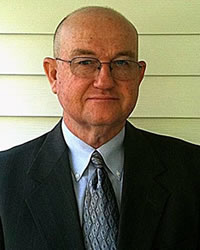
Gary Shepard

The Lord's Choice

Psalm 132:13; Psalm 132:14
Gary Shepard July, 20 2008 Audio
0 Comments
The doctrine of unconditional election is a biblical doctrine and it is a glorious doctrine believed by God's people. It gives all glory to God and humbles the objects of His grace in Christ.

Sermon Transcript

Auto-generated transcript • May contain errors

100%
I turn back this morning to that 132nd Psalm where we read Psalm
132. I want to talk to you this morning
about the Lord's choice. I flipped through the channels
on TV this morning, and I listened a little bit to
three or four different TV preachers, and I believe I can honestly
say that not one of them even came close to the gospel. not even begin to glorify the
God of the gospel. There are two verses here in
this chapter that I want us to consider. And that is verse 13 and 14. The psalmist says, For the Lord
hath chosen Zion, he hath desired it for his habitation. This is my rest forever. Here will I dwell, for I have
desired it. Now, when you read one of these
psalms where it begins as a song of degrees, I believe that they were given
or written and sung by the singers as they went up to the temple
to worship. They would go a little ways and
they would stop and they would sing. And then they would go
up a little bit farther, and they would stop, and they would
sing. So it is a song of degrees. And it amazes me that what they
sang about, men in our day are unwilling to preach about. And they said that the Lord hath
chosen Zion for his habitation. You see, when the Israelites
conquered the Promised Land, the tribe of Benjamin was given
a portion that included what became Jerusalem. But the men of Benjamin, they
were not strong enough to capture all the territory. And so it
was not until King David's time that it finally became the possession
of the Israelites. Isn't that the way it is in grace?
that we don't ever actually possess anything except through our king
and his conquering. But David made this his capital,
if you will. He made it his dwelling place,
and oftentimes Zion and Jerusalem are used interchangeably to speak
of the city of David. But actually, Zion was a particular
mountain on which some people had built a fortress that they
thought was so strong that they told David that even blind men
and lame men could defend it. But if you look back in 2 Samuel
5, you'll find that David captured Zion, and it became this place
of great prominence. You read about it many times
in Scripture and history. But the name Zion had a spiritual
significance, and it is used many times in Scripture by the
Spirit of God to speak of and describe the people of God, or
the church of the Lord Jesus Christ. In Isaiah, we read these
words. It says, and the ransomed of
the Lord shall return and come to Zion with songs and everlasting
joy upon their heads, they shall obtain joy and gladness, and
sorrow and sighing shall flee away. You see, Zion is the sum of the
Lord's people all together as a whole body, the church of the
living God which He dwells in, which is signified by this Zion,
the city of God. Now, you hold your place here.
and turn over to Hebrews chapter 12. Hebrews chapter 12, and look
down with me in verse 22. The Apostle, in contrast, says
to us and reminds believers that they are not come to Mount Sinai. I don't care what preachers say.
Some say that God takes us first to Sinai and then He takes us
to Calvary. That's not true. He says here,
you're not come to Mount Sinai, that fiery mount, that mount
that to touch it was to be slain. But He says, but you are come
unto Mount Zion. and unto the city of the living
God, the heavenly Jerusalem, and to an innumerable company
of angels, to the general assembly and church of the firstborn,
which are written in heaven, to God the judge of all, and
to the spirits of just men made perfect, and to Jesus, the Mediator
of the new covenant, and to the blood of sprinkling that speaketh
better things than that of Abel." He said, you're come to this
Mount Zion, the heavenly Jerusalem. You come not only to the people
or to the city of God, but to Him who is the King of that city,
to that city where Christ dwells. And then just turn over a little
bit to the book of Revelation, to Revelation and the fourteenth
chapter, and listen to the language here In Revelation 14 and verse
1, John says, "...and I looked, and lo, a Lamb," you see its
capital letters there? It's THE Lamb. "...I looked,
and lo, a Lamb stood on Mount Sinai, and with him a hundred
forty and four thousand, having his father's name written in
their foreheads." Now, what does that hundred and forty-four thousand
mean? It means a complete number with
none of them missing. All the elect people of God,
and they're in the midst the risen, glorified Lamb of God,
the Lord Jesus Christ. And He is in the midst of them.
And they would be His dwelling place forever and ever for one
reason which is stated in that thirteenth verse. Why? It says, because he hath desired
it for his habitation. Why are they his people? Why do they make up that temple
in which he dwells and in which he magnifies his own glory and
grace? Just one reason. Because he desired it. That's the reason. Because he
desired it. And he doesn't desire one thing
and do another. He doesn't desire something and
allow something else. I don't care what anybody says. He just doesn't. And the notion
that he desires all these people to be saved, the notion that
he loves all these people, the notion that Christ died for all
these people and yet so many of them, most of them, are not
going to be saved, the notion that the mighty Spirit of God
is trying to save all these people but can't, that is an abomination
to God. And we would do well, everyone
who ever hears me say this, we would do well to remember something
that is recorded in the book of Job. And that is this. He is in one mind. The triune
Godhead, Father, Son and Holy Spirit, that one
true and living God, He is in one mind, and who can turn Him? Who can stop Him? Who can change
His mind? Who can prove that there's ever
been any error in his mind and purpose? And listen to this,
and what his soul desires, even that he does. Do you believe that? Whatever
his soul desires, that he does. And so if we trace back why we
or any other person is ever saved or blessed by God in Jesus Christ,
it is because He wanted it that way. It's not your will. It's not free will. It's not
anybody's will or mine or purpose. God Almighty in His absolute
sovereignty, and He does it by His own choice in grace. And that's what the psalmist
says. He says, for the Lord hath chosen Zion. Why did He do it? Because He
desired to do it. He desired to do it. It's His
decision. I know that some, like Billy
Graham, have always been talking about your decision, but if you
look at this, it's His decision. The Lord hath chosen Zion. And such foolishness, as we have
heard over and over again in the years, as men try to argue
against this very thing, such as, well, this is the way it
is that God votes for you, and the devil votes against you,
and you are to cast the deciding vote. That is not true. First of all, the devil does
not have a vote in God's purpose. and we be more like Him than
we are like God in our nature, we don't have a vote either. There is one vote, there is one
choice, and this is divine election. And what men fight against, what
they argue against, what they debate against, when the Lord
is pleased, if He ever does, to open their hearts and minds
to the understanding of the truth and give them grace and faith
to believe the truth, that's what they'll rejoice in maybe
most. There was a divine selection. And this is a plain declarative
statement of truth And it is given in the past tense. The Lord hath chosen Zion. In other words, that means that
it is too late for anybody, devil, angel, or man, to argue against
that. It is too late to disagree with
it. It is of no value to disagree
with what he's already done. You see, when we fly in the face
of what the Bible says that God has already done, we fly into
the face of God Himself. And this simply reflects what
we find elsewhere in the Bible, that He is God that He works
all things after the counsel of His own will, that He does
everything according to His own pleasure and purpose, and that
He sits and reigns and rules in heaven among the armies of
heaven and among the inhabitants of the earth, and there is none
who can stop Him, stay His hand, or question Him, saying, What
doest thou? He made a choice in divine wisdom,
in divine grace, in divine mercy, by divine power, according to
divine knowledge, in Himself and by Himself. He made a choice. Somebody said that the news and
its reporting has to do with who? And when, and where, and
what? And that is the same way it is
with the good news of the gospel. And here it is stated so plainly,
he says, for the Lord hath chosen Zion. What does that mean, chosen? It means what is said elsewhere,
especially in the New Testament, It means elected. It means that there was an election
of grace. And to choose or to elect, it
means to select or choose out from among men without regard
to who they were or what they had done or what they hadn't
done, and especially of what they would do. I know what men say. They say,
well, God, there is an election, and God did choose His people,
but He chose them based on what they call foreknowledge. In other
words, they say that foreknowledge is God knowing ahead and before
time who would choose Him, and therefore He chose them. There are lots of things wrong
with that. Number one, foreknowledge in the Bible is not simply precise
or prior knowledge. It is foreordination. It has to do with forelove. And he made that choice of his
people. He chose them in the Lord Jesus
Christ. based on what He would do, not
on what they would do, which if He had made it based on what
they would do, that would be making salvation by their works
and not His grace. You see, it has to be this way
or it can't be by grace. And this choice, as we see here
in our text, this choice, is pictured in God's choice of the
nation of Israel, His choice of the Hebrews to be an earthly
people. And you would think, you would
think that after all these centuries, you would think And I certainly
do not know all of God's purpose concerning that earthly nation. But even at this hour, a people
to be called by that name, a people who were in times past actually
and truly an earthly nation that God had set apart and supernaturally
blessed and used for His own purpose, the very notion of that
still is found to be hated in the hearts of men. Now, like
I say, I don't know what all of God's purpose is in that nation,
or if even they are a nation at this hour. But I know that
the very thought of them being so, the very thought of God dealing
with anybody like that, and being favored by God in such a manner
that still causes men and women to hate them and despise them
and do everything that they can to destroy them against every
logical way of thinking. Why? Because that's still in
the root of our hearts by nature. It still has to do with us feeling
like that it is us who is the sovereign who must choose Him,
that it can't be with Him choosing us. Turn back over to Deuteronomy.
Or listen to me read in Deuteronomy chapter 7 what God says of that
people. Because I assure you, what he
says of them, he says of this spiritual people. Deuteronomy
7 and verse 6, he says, "...for thou art an holy people unto
the Lord thy God." The Lord thy God hath chosen
thee to be a special people unto Himself above all people who
are upon the face of the earth." Can God do that? That's history. He already has done that. He did that. He says, but the
Lord did not set His love upon you, nor choose you, because
you were more in number than any people. For you were the
fewest of all people, but because the Lord loved you, and because
He would keep the oath which He had sworn unto your fathers,
hath the Lord brought you out with a mighty hand, and redeemed
you out of the house of bondmen from the hand of Pharaoh king
of angels." King of angels. And then the next thing he says
is, know therefore that the Lord thy God, He's God. You just know that. As a matter
of fact, he says concerning that very thing, he says, I've done
all this that they might know that I'm God and that there's
none other and that I make a difference between me. He says, the Lord hath chosen
Zion. As a matter of fact, the psalmist
in another place, he says, moreover, he refused the tabernacle of
Joseph, and chose not the tribe of Ephraim, but chose the tribe
of Judah, the Mount Zion, which he loved. He's even making a
distinction among that people. He said, just so you know that
this is more to it than an earthly people. It says that He cast
this one aside, and He didn't choose this tribe, but He chose
Judah. What does that mean? He chose
those in Christ, because Judah is a type of Christ. You see, it's not what God saw
that we do, but it's what He did. It's an unconditional election,
and this was the very first thing that Ananias was supposed to
teach this man Saul of Tartus when he was brought finally blinded
down to the city of Damascus. Somebody said, we'll just keep
this thing as some say a family secret. No. Whenever Saul of Tarshish, who
this man Ananias, we know he was already deathly afraid of
Saul of Tarshish. He didn't even want to be sent
to meet him because he'd heard what he'd done in the past and
what an enemy against God and every believer in Christ was.
So, but when he got down to Damascus, he had something to tell him.
Why? Because it determines who gets
the glory and salvation. What did he tell him? First thing,
he said, the God of our fathers has chosen you. that you should know His will,
that you should see the Just One, that Just One, and shouldest
hear the voice of His mouth. You are a rebel just like every
other son of Adam. You are a God-hater and a Christ-rejecter
in your heart. You are a self-righteous Pharisee
who thinks that he has done something or been something to commend
himself to God. But God is going to have mercy
on you. And you are here right now, the
object of His love, the object of His grace, the object of His
mercy. Because He's chosen you. He's
chosen you in that One who's the Just One. And He's chosen
you to see that Just One and to hear His voice. Because that's
the only way that God can speak to such miserable wretches as
we are, is to speak to us through that Just One. to that One in
whom He can be just and the Justifier. That's the only way He could
speak to us. That's the only way He could
speak to Paul. That could be the only basis upon which He
chose us. And so, when we find this man
Saul of Tarsus, who became Paul the Apostle by the grace of God,
when we find him speaking his last time to the Ephesian elders,
he said, I've kept back nothing profitable to you." That's what I hope to be able
to say. I've kept back nothing profitable to you. And he said,
I'm clear of the blood of all men. And he says, at the same time,
and I've not shunned to declare unto you all the counsel of God. So what did he preach? What did Paul preach? I'll tell you what he preached.
He preached as an essential part of that gospel that glorifies
God and saves His people. He preached as an essential part
of that divine election that God has chosen a people. We know that because of what
he wrote to these very same people. He is talking to the Ephesian
elders. He is talking about those who
are to preach there at the church at Ephesus. So, turn over to
Ephesians chapter 1. Somebody said, well, I sure would
love to be able to preach like the Apostle Paul. I have a feeling that if you
were to hear the Apostle Paul preach this morning, as far as
a speaker, as far as a public presentation, you would probably
be disappointed, because we read enough in the
Scripture that said his bodily presence was weak, and he had
things that some people regarded as hard to understand. I'll tell you what I'd rather
have. I'd rather to preach who Paul preached. And that's why I find myself
being drawn back to this book, especially such portions as Ephesians
1. And look at what he says in that
third verse of the beginning of the introduction of this letter. You can't sneak up on people
with the gospel. Paul never tried to slip up on
anybody and blindside them with the truth that is so directly
contradiction to their natural hearts. He just laid it out there. And when now he writes, as he
has aged and as he is about to enter into the presence of Christ
Himself, he writes to them in this epistle, this letter, and
he says in verse 3, Blessed be the God and Father of our Lord
Jesus Christ, who hath blessed us past tense, who hath blessed
us with all spiritual blessings. That's why all this notion of
reward, of somebody having a bigger mansion in heaven than the other,
of somebody getting more badges and medals than the other, is
so ridiculous, because he blessed all his people in Jesus Christ
with all spiritual blessings. And I promise you this, that
when God's people enter into heaven, when they enter into
that eternity of which there is no end and no change, There
won't be anything but Christ, His people, the angel, and these
spiritual blessings. In heavenly places, or as it
actually is there, in the heavenlies. He blessed them with all spiritual
blessings in the heavenlies. in Christ. There aren't any blessings outside
of Christ. That's just it. There aren't any. And look at that next phrase,
according. I can remember one time when
I was being confronted by some religious deacons in a Now, the
circumstance that one of them told me concerning my preaching
and what I was setting forth, he said, well, this ain't according
to Hall. I think he was the bridge man. What we preach is to be according
to God, according to His Word. And this is what it says, "...according
as He hath chosen us in Him before the foundation of the world." God has a people. And He chose a people in Christ. He chose a bride for Christ. Election is to be chosen in Christ
before the foundation of the world. Were you there then? No, you
weren't, unless you were in Christ. I wasn't there unless I was in
Christ. But it says that they were chosen
in Christ, and so if there is no election, there's no Christ. No Christ. And furthermore, his
choice does not involve merely some privileges or opportunities
or chances, but the whole of salvation. And Paul thanked God, and he
blessed God for these things, and so do all true believers. Look at the following verses.
Because being chosen in Christ and blessed with all these spiritual
blessings of which election itself is won, he goes on to say more. What flows out of that? What
are these blessings? He says, according as he hath
chosen us in him, chosen us." You see that? "...in Him before the foundation
of the world, that we should be holy and without blame before
Him." I was listening to one of those
preachers this morning, and I was so thoroughly amazed
at how he took verse after verse which show plainly that salvation
is not of works. And He'd make them a work. Who's going to enter the kingdom
of God? Not anybody except Him who does the will of the Father. And then you know what He would
do? He would take that from being Christ. And those who are in
Christ, that's who does the will of the Father. Not only Christ,
but those in Christ. They're going to enter into the
kingdom of God. But then He'd turn and make that something
that they did. That we should be holy and without
blame before Him. You're not holy and without blame
in yourself, are you? I am not, and I never have been,
and I never will be in this earth. But before Him, being in Jesus
Christ the righteous, being in Him who is holiness incarnate,
being in Him who is without blame, who is without sin, all His people are. And according to what I've read
and come to understand, that's where that verse ends, because
that in love begins actually the next phrase. Then He says,
in love, having predestinated us. If there's a booger bear in modern
religion that's any worse than election to people, it's predestination. But I'll tell you this, you throw
out predestination, you've thrown out the Christ of the Bible.
What does that mean? It means that He marked off and
determined beforehand in love, not in hatefulness or
wrath, but in love, God, the Father of our Lord Jesus Christ,
in love, having predestinated us, there it is again. It's too
late. Too late to fight against it.
It's a done deal. And we better seek the Lord to
find out exactly what it involves. It says, "...in love, having
predestinated us unto the adoption of children." You see, God's people were His
people before the world began. They don't become His people
by something that they do. They became His people by His
choice of love. in love, having predestinated
us unto the adoption of children by Jesus Christ." How are we
ever the sons of God? In the Son. That's how we're
heirs of God, by being joint heirs with Jesus Christ. That's
something He did. according to the good pleasure
of His will. His will. To the praise of the glory of
His grace, wherein He hath made us accepted in the beloved. This is all in Christ, this is
all by grace, and this is all by virtue of Him who made us
accepted in the Beloved. That means He graced us in the
Beloved, in whom we have redemption through
His blood, not just any way, Not just any redemption, but
blood redemption. We have redemption through His
blood, the forgiveness of sins, because there is no forgiveness
of sins without blood. Without the shedding of blood,
there is no remission of sins. Why? Because sin requires death. According to the riches of His
grace, wherein He hath abounded toward us in all wisdom and prudence,
having made known unto us the mystery of His will according
to the good pleasure which He hath purposed in Himself." that in the dispensation of the
fullness of times he might gather together in one all things in
Christ, both which are in heaven and which are on earth, even
in him, in whom we have obtained an inheritance, being predestinated
according to the purpose of him who worketh all things after
the counsel of his own will." Now, if I were trying to get
a lot of folks to do a lot of things, I wouldn't preach that, because it all has to do with
God. It all has to do with what He
did in Christ. If I were trying to get folks
to give money, or to join the church, change their lives and
stuff like that, I'd preach and put the emphasis on what they
were to do. That's not what I'm trying to
do. I'm trying to tell you what God
has done. I'm trying to tell about what
He's done for you in Jesus Christ. I'm looking for some people,
that people that He chose in Christ before the foundation
of the world. I'm trying to find His sheep
that He laid down His life for. And every once in a while somebody
will be confronted with this gospel and they'll say something
like this. They'll say, that's not for me. I'll say, probably not. Probably not, but it's for somebody.
It's for His people. And you note the glorious things
that are associated with election in Christ. I know election is
not the whole of salvation, but there's no salvation without
it. Turn over to II Thessalonians. An old preacher said one time,
he said if there wasn't any other book or any other verse in the
Bible concerning election and the choice of God except this
one, I'd have to believe it still. 2 Thessalonians chapter 2 and verse 13. I need to get there first. He says, But we are bound to
give thanks always to God for you, brethren, beloved of the
Lord, because God hath from the beginning chosen you to salvation
through sanctification of the spirit and belief of the truth,
whereunto he called you by our gospel to the obtaining of the
glory of our Lord Jesus Christ." What a summation of grace! What a statement of divine, unchanging,
and everlasting love! Notice this. This election flows
from the love of God. Brethren, beloved of the Lord, God demonstrated this and two
children that were born of the same mother and father, twins,
he said, for the children being not yet born, neither having
done any good or evil, that the purpose of God, according to
election, might stand. Not of works. but of him that
calleth. It was said unto her, The elder
shall serve the younger. As it is written, Jacob have
I loved, but Esau have I hated. I chose Jacob, and I left Esau
to his sin. which I hate." You say, well, I just don't understand how God,
whose love could hate anybody. That's not the real problem.
What we need to find out is how he could ever love such a scoundrel
and conniver like Jacob. who is a picture of every other
sinner. Brethren, beloved of the Lord. Loved in Christ. Somebody says,
well, yeah, I believe that God chose that people would have
some opportunities. No, He says He's chosen you. Individuals. Those that Paul
was writing to, brethren. And he said, from the beginning. From the beginning. That's before you were, before
I was ever born on this earth, from the beginning. It was that
time before Genesis 1. Because it says, in the beginning,
God created the heavens and the earth. It's that time that Christ speaks
of in Proverbs 8 when He says, I was in the beginning. I was
with Him in the beginning. But you notice, he doesn't leave
that choice hung out there, as some have so abused it and say,
well, if God chose you, He chose you, and if you're going to heaven,
you're going to heaven. If you're going to hell, you're going to hell.
You know, whatever will be, will be. That is not true. Whatever
will be, whatever is, whatever comes to pass, God has ordained
it. And He has also ordained the
means by which He'll bring it to pass. Why? Because He gets glory in how
He does it. Paul says, by the Spirit of God,
He hath from the beginning chosen you to salvation. Not just a chance or opportunity,
but to salvation itself. Salvation in Christ through. Through. Through sanctification of the
Spirit and belief of the truth. You see, the only way for God
to ordain and accomplish an end is for Him to have to do with
all the details in between, all the means, and all the means,
He says, even the wrath of man will glorify Him, and the rest
He'll restrain. through sanctification of the
Spirit and belief of the truth. Those that God chose in Christ
before the foundation of the world and blessed with all spiritual
blessings, He is going to sanctify or set them apart by His Spirit
and bring them to believe the truth. Why? Because he's glorified
in our believing what he says that he's done in Christ. As
a matter of fact, here are all these people saying they want
to glorify God when the only way we glorify God on this earth
is by believing God. Believing what he says about
himself, saying again what he says about himself, believing
what he says he's done for us, and resting in that, and seeking
in all that we do in this world to live according to that. You see, as it shows here, the
work of God's Spirit has to precede faith. Sanctification of the Spirit
and belief in the truth. You can't get the cart before
the horse. It isn't like someone said, well,
if you'll believe God, you'll be born again. No, afraid not. But if you believe what He says
about Christ, you believe on Him that you have been born again. you'll rest in Him. Faith is
not the cause of our election, it's the effect of it. And more
particularly, the effect of God's Spirit in us through the new
birth. Only the Spirit of God can give
spiritual life to the soul and spiritual light to the understanding
and spiritual submission to the will of God and the way of salvation
that's in Christ. Spiritual affections toward the
divine and spiritual things. Belief in the truth, belief on Him who is the and
belief in how, through his shedding of blood, through his death on
that cross, he put away our sin, and how that God in that made
us the righteousness of God in him. Religion in our day is very interested
in doing right. First of all, what they say is
right isn't always right. But as we are commanded to do
in our lives in this world, to live for the glory of God and
adorn the gospel of our Lord Jesus Christ, we are to do right. But in the sight of God, I've
already done right. Why? Because on the one hand,
I've already paid that which sin and judgment and justice
require. I've already died. And on the other hand, I've been
raised in Christ. And I made the righteousness
of God in him." That's what imputed righteousness is all about, to
be in Christ in all that he did and in all that he is. Whereunto he calls you. That ain't just an invitation. Moreover, whom he did predestinate,
them he also called, and whom he called, them he also justified,
and whom he justified, them he also glorified." That's a golden
chain, and not one link of it will ever be broken. He called. Jew, the servant of Jesus Christ
and brother of James, to them that are sanctified by God the
Father and preserved in Jesus Christ and called, partakers
of a holy and heavenly calling." That's why I don't call you at
the end of the service. Come down front. You could come down to the front
and you still wouldn't have come to Christ. But when He calls a sinner, He
calls them from all that they ever were, all that they ever
trusted in, all they ever hoped in, all they ever had any confidence
in. He calls them from those things,
and that is repentance toward God and all those things, and
He calls them to Christ, faith in the Lord Jesus Christ. When He calls you, you come.
And when you come, you don't ever go anywhere else. Who has saved us and called us
with a holy calling, not according to our works, but according to
His own purpose and grace which was given us in Christ Jesus
before the world began. This is a heavenly calling. This
ain't an invitation at the end of a service. This is a mighty,
powerful calling of invincible grace, irresistible, mighty grace,
the grace of God, the grace and power of the Spirit of God. I'm not going to bargain with
you on the behalf of God. I'm going to try to lift up His
Son. And He said, if I be lifted up,
I'll do the drawing. I'll do the drawing. Paul said
he called you by our gospel. Now, what he's doing there is
he's not saying, I thought this thing up. No. He's saying our
gospel, that is the gospel of Zion, compared to every other
false gospel. He calls his people, he said,
by our gospel, which gives all the glory to God. which makes
it to be all of grace, which puts everything in Christ, which
abases the sinner and gives all the exaltation to God. He said to the Thessalonians,
knowing, brethren, beloved of God, your election of God. How do you know that, Paul? Did
God let you when you were there on the backside of the desert
with Him alone? Did He give you a sneak peek
into the Lamb's book of life? He said, knowing, brethren, your
election of God. How do you know that? He said,
for our gospel came not unto you in word only. but also in
power, and in the Holy Ghost, and in much assurance." That Word God made to you to
be more than just a message. Somebody said concerning Brother Bird when
he preached here, He's a good speaker. He is a
good speaker. But what he preached and who
he preached, that's the glory. That's the gospel. That's what
I want. I want that Word to come out
to somebody's heart in power. I don't want them to join up
and become a member. I don't care if they're a Calvinist
or what. I want them to be the recipients
of the truth of Christ in power to their heart. And the Spirit
of God is the only one that can do that. My family, your family, you,
me, it doesn't matter who it is. But I rejoice in this. He's able. All His sheep are going to hear
His voice. They're going to come, and this
is going to be something to them more than just a doctrine. It's going to be more than just
a position theologically. It's going to be life. They're going to have to be born
of God, begotten from above. But what Paul said in his day is true today. He said, there
is even at this present time a remnant according to the election
of grace. You said, how can you be so sure
of that preacher? How do you not know that it's
not already, that day's already passed? Because he's still causing his
gospel to be preached. I told somebody, I come in here
to prepare the radio program. I get up early in the morning,
I come down here before all the sounds of the world start, I
get right here in this pulpit, take that recorder, and I preach. And I'm not on the fool's errand. He said, my sheep will hear my
voice. I'm preaching to somebody out there I can't see. I'm preaching
to somebody who bodily is not even present here. But I feel the same Spirit directing
me that I feel this morning. Whereunto he called you by our
gospel. Thank God there is even at this
present hour to him as a remnant according to the election of
grace. A chosen people in Christ who
have yet to be called out, who have yet to be shown, who have
yet to be given life, who have yet to hear, but they will. They will. Because God loved
them and chose them, sent his Son to die for them, and the
Spirit in that covenant has pledged himself to bring them from darkness
to light in Christ. It's the Lord's choice. The Lord
hath chosen Zion. And he has desired it for his
habitation. And I'm like David. I desire
it too. I desire it for my habitation.
To be in Christ. To be found in Him. To be made
the righteousness of God in Him. When all this stuff is no more. And it's not going to be any
more. I'm not going to be in the world,
you're not going to be in the world. You're not going to be in that
house you labor for, and I'm not going to be in my house.
You're not going to be in that car you drive. You're not going to
be in your body. Will you be in Christ? May God give us the grace to
choose Christ. And in doing so, rejoice, because
He's chosen us in Him. Our God and Father, we give You
thanks this morning and praise. And we rejoice that You, Jehovah God, have chosen Zion, chosen that
people of the mount of the Mount Calvary, that people in Christ
who dwell in Him and have since the beginning of the foundation
of the world, who lived in Him and who, because they died in Him, rose
in Him. Save us, we pray. In Jesus' name, Amen.
Gary Shepard
About Gary Shepard
Gary Shepard is teacher and pastor of Sovereign Grace Baptist Church in Jacksonville, North Carolina.

Comments

0 / 2000 characters
Comments are moderated before appearing.

Be the first to comment!

Joshua

Joshua

Shall we play a game? Ask me about articles, sermons, or theology from our library. I can also help you navigate the site.