Bootstrap
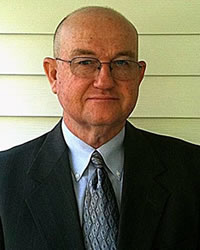
Gary Shepard

The Black Brook Drunk Dry

Psalm 110:7
Gary Shepard July, 6 2008 Audio
0 Comments

Sermon Transcript

Auto-generated transcript • May contain errors

100%
Please turn back in your Bibles
to where we read there in Psalm 110. The title of my message today
is, the black brook drunk dry. And if you would look with me
again here in Psalm 110, I would remind you that this
psalm, just like all the other psalms, speaks of Christ. In Luke 24, we are told that
the Lord Jesus Christ said to those early disciples, these are the words which I spake
unto you while I was yet with you, that all things must be
fulfilled which were written in the law of Moses, and in the
prophets, and in the Psalms concerning me." Hold your place here and turn
over to the book of Mark, because here in Mark, we find
him referring to this very Psalm, Mark 12, beginning in verse 35. It says, And Jesus answered and
said, while he taught in the temple, How say the scribes that
Christ is the Son of David? For David himself said by the
Holy Ghost, The Lord said to my Lord, Sit thou on my right
hand, till I make thine enemies thy footstool." He was quoting
this same Psalm, Psalm 110. And said further, David therefore
himself called him Lord, And whence is he then his son? And the common people heard him
gladly." And if we can ever find out, and we'll never know apart
from the Spirit of God teaching us, but if we can ever find out
how that Christ is David's Lord, and David's son, then we'll begin
to know something about the gospel of Jesus Christ. In this glorious psalm, the Christ,
the Lord Jesus Christ, is shown to march to victory. He is seen as conquering all
of his enemies and all the enemies of his people. And he is, as
Paul says in Philippians, highly exalted. And he is exalted for
the reason that is pictured here in that seventh verse. That's the one I want us to think
about this morning. It says, "...he shall drink of
the brook in the way, therefore shall he lift up the head." He
shall drink of the brook in the way. You see, the Lord Jesus
Christ, Paul says, humbled himself and became obedient unto death,
even the death of the cross. And then he says, therefore,
or because of that, God has highly exalted him. You see, the path to this victory
The path to this exaltation and glory led through a brook. The way of peace for sinners,
what the Bible calls the way of righteousness and the way
of salvation, they were all the way of suffering. the way of
substitutionary death, the way of sacrifice, and the way of
the cross. And it may well be that what
is said here in this verse, this seventh verse, is a reference
to something that we read over in the Gospel of John, chapter
18. Turn over to John's Gospel and
the 18th chapter, because here in John 18, beginning in verse
1, it says, When Jesus had spoken these words, He went forth with
His disciples over the brook Cedron where was a garden into
the which he entered and his disciples. And Judas also, which
betrayed him, knew the place, for Jesus oft times resorted
thither with his disciples. Judas then, having received a
band of men and officers from the chief priests and Pharisees,
cometh thither with lanterns, and torches, and weapons. Jesus therefore, knowing all
things that should come upon him, went forth, and said unto
them, Whom seek ye? They answered him, Jesus of Nazareth. Jesus saith unto them, I am he,
for as it is actually in the original, I am." And Judas also,
which betrayed him, stood with them. As soon then as he had
said unto them, I am, they went backward and fell to the ground. Then ask ye them again, Whom
seek ye? And they said, Jesus of Nazareth. Jesus answered, I have told you
that I am, or I am he. If therefore ye seek me, let
these go their way, that the saying might be fulfilled which
he spake, of them which thou gavest me I have lost none. Then Simon Peter, having a sword,
drew it, and smote the high priest's servant, and cut off his right
ear. The servant's name was Malchus. Then said Jesus unto Peter, Put
up thy sword into the sheath, the cup which my Father hath
given me. Shall I not drink it?" Now, the psalmist had recorded
by the Spirit of God that this one, the Christ, who
would be highly exalted and a complete success in all things, he had
recorded these prophetic words. he shall drink of the brook in
the way." And when our Lord Jesus Christ was betrayed, He was betrayed
as this One who had crossed over the brook with His disciples
and would again cross over the brook on the way to the cross. But the brook that is being spoken
of here, not only the real one that is spoken of, but even the
one that is spoken of literally here in John 18, this is not
a brook that you might think of when you think of a brook. This is not some kind of picturesque
scene. that we're talking about here.
It's not some poetic brook. It's not some serene brook. Because as he says here, this
brook, the brook Cedron, or as it was the brook Kidron, was
the black brook. And it is not without some picture
an illustration of that which the Lord Jesus Christ was about
to portray. You see, Kidron literally means
dark or black. And not only that, it was a dark
ravine that most of the time was full of stagnant water until
a hard rain came And then it would flow racing like a torrent. That's another thing it means,
torrent. And it would flow like a torrent
down to the Red Sea, to the Dead Sea. And it is symbolically referred
to in the Old Testament as the Valley of Jehoshaphat, which
simply means judgment. This was the valley of judgment. And when the Lord Jesus Christ
crossed the Burkidron, He was on His way to the cross to drink
of the black stream of judgment. He says, I lay down my life for
the sheep. And when you go back in the Old
Testament, you find a number of references to this brook,
and the Bible seems always to associate dark things with the
brook Kidron. Whenever David was having to
flee from Absalom, The Bible says that he fled Jerusalem barefooted
and weeping with all of these people as he fled in exile from
Absalom. 2 Samuel 15 says, And all the
country wept with a loud voice, and all the people passed over,
The king also himself passed over the brook Kidron, and all
the people passed over toward the way of the wilderness." Not
only that, but David, who was cursed by Shimei, in the showing
of mercy to Shimei, he gave him this warning. He said, stay in
Jerusalem. In other words, stay in the only
place where I can be sure to keep you safe, because there
are many, because of what you said to me and cursed me, they're
ready to kill you. He said, For it shall be that
on the day that thou goest out, and passeth over the brook Kidron,
thou shalt know for certain that thou shalt surely die. and thy blood will be upon your
head." He said, you cross over the brook Kidron and you're going
to die. And not only that, but on another
occasion, the priest Hilkiah, at the command of King Josiah,
it says, and he brought out the grove. That was an idol, idolatry. He brought out the grove from
the house of the Lord without Jerusalem unto the brook Kidron,
and burned it at the brook Kidron, and stamped it to powder, and
cast the powder thereof upon the graves of the children of
the people." He took the groves out there and literally by that
brook stomped and cast down and crushed to dust the idols. that had been taken into the
house of the Lord. And then again, in 2 Chronicles,
we read of King Asa. And it says that also concerning
Maokah, the mother of Asa the king, he removed her from being
queen because she had made an idol in a grove and Asa cut down
her idol and stamped it and burned it. at the brook Kidron." And then we read later on in
2 Chronicles about Hezekiah. In other words, it seems that
there is a picture here where all idolatry and where all judgment
against that rebellion against God seems to be associated with
this black brook. It says, "...and they arose and
took away the altars, that were in Jerusalem, and all the altars
for incense took they away, and cast them into the brook Kidron." You see, actually, Kidron was
virtually a cesspool and a sewer And all of this refuse and the
carcasses of dead animals and especially all the blood and
remains of the sacrifices offered in the temple, they were all
dumped into the Kidron. It says, "...and the priests,"
in 2 Chronicles again, "...and the priests went into the inner
part of the house of the Lord to cleanse it, and brought out
all the uncleanness that they found in the temple of the Lord
into the court of the house of the Lord. And the Levites took
it to carry it abroad, and they cast it into the brook." So it's no wonder that it came
to be called the black brook. And it provides in that picture
and in that symbolism, and in that brook that Christ crossed
on His way to the cross, it provides this picture of what He endured
and suffered on the behalf of His people. You see, the cup
which Christ Himself drank alone, it contained this river of sorrow,
of sins, of blackness, of judgment for sin, of wrath. He says to us in Matthew, In
the words that he spoke to those disciples, he says, Are ye able
to drink of the cup that I shall drink of, and to be baptized
with the baptism that I am baptized with? And they said in their
foolishness, They said in their ignorance, just in what we say,
if not by word, by our actions naturally, they said unto him,
we're able. But my friend, you and I can't
drink of this black brook, and neither could they. And the sufferings
of the Lord Jesus Christ, they were so unspeakably more. and so much heavier than the
sufferings of other men, that he did not drink of the something
like a small cup, but he drank the whole sea, he drank the whole
river, he drank the whole stream of his father's wrath that was
due our sins. O John Gill, said, I see not
why that the black and unclean brook, or common sewer, may not
be an emblem of the pollutions and defilements of sin which
being laid on Christ when He passed over that brook made Him
so heavy and sore amazed in His human nature as to desire the
cup might pass from him. I can tell you this, all that
was involved in what Christ would drink of that cup, all that was
involved in what it means for Him to drink of that black stream,
you and I may not enter into it fully and understand it completely,
but He did. He knew full well what was involved. He knew full well what he was
about to face. And the raging stream, that's
exactly what it is, the raging stream of our iniquities and
the blackness of our sins and the filth of our defilement. and the flood of our transgressions
and the vengeance of offended justice. God put it in that bitter cup. And as somebody said a long time
ago, he drank damnation dry. He drank this black brook of
divine justice, of the sins of his people, of all these things. It says that he humbled himself
and he became obedient unto death. But it wasn't just any death, because he describes it as a
particular death, even the death of the cross. You see that man hanging on that
cross outside of Jerusalem, he is not simply being executed. He is not simply a man who is
dying just any ordinary death. This is the death of the cross. And even in his earthly symbolism,
even in what it was regarded in that day as the death of a
criminal, the death of somebody who had committed a horrible
crime. Even that cannot fully represent
what it meant in that day. You see, the Bible says of you
and me that we drink iniquity. like water. But this was like the waters
of Marah, which the Israelites, they could not in the wilderness
drink. And they could not drink of that
water, just like you and I could not drink of this black stream. So what did God command Moses
to do on that occasion? Was there any way by which they
might have sustaining water and life in that wilderness place
where they died of thirst? It says, Moses cried unto the
Lord, and the Lord showed him a tree. I don't think that that was an
accident either. Here they were, these poisoned
waters, these dark waters, Though they were dying of thirst, they
could not drink of them. Mora means bitter. And the Bible
says that Moses cried out to the Lord, and the Lord showed
him a tree, which when he had cast into the
waters. I don't know how big a tree it
was, It may well have been just a big, gnarly, desert, parched,
unappealing-looking, broken branch of wood. But when he cast that
tree into the waters, it says the waters were then made sweet. Everywhere in this book is a
picture of the one way that we are saved from our sins. The one way that our sins can
be dealt with by just God and at the same time you and I are
saved from our sins. Everywhere is a picture of how
the Lord Jesus Christ bore in His own body our sins on the
tree and put them away. One old preacher said, He shall
be humble, he shall drink of the brook in the way. That bitter
cup which the father put in his hand, he shall be abased and
impoverished the wrath of God running in the channel of the
curse of the law, which was the brook in the way, in the way
of His undertaking, which must go through and which ran in the
way of our salvation and obstructed it, which lay between us and
heaven. And Christ drank of this brook
when He was made a curse for us. And therefore, when he entered
upon his suffering, he went over the brook Kidron, he drank deeply
of this black brook, this bloody brook, so drank of the brook
in the way as to take it out of the way of our redemption
and our salvation." That's what this book says. It says, he who
knew no sin, is there on that cross drinking that black brook
dry. He who knew no sin was made sin
for us in our place that we might be made the righteousness of
God in Him. You know, you hear every now
and then of somebody who is involved in some kind
of accident in which they are brought in what seems to us the
most horrible conditions. You hear of somebody falling
into a cesspool or something like that. But the truth is the pollution
Isn't it amazing how in our day everybody is so concerned about
world pollution? They're worried about not having
a drink of water that will be perfectly pure. They're worried
about not having air that is perfectly pure. And yet the one
thing that really pollutes us, that defiles us, and will destroy
us, not only physically, but eternally, which is our sins, they're not interested in that. But I'll tell you, in the saving
of His people, the pollution, the full flood of all that our
sins deserved was laid on Him. All that pollution was imputed
to Him. All those sins of all His people
of all times were made to rest on His head, and He bore them
in His own body on the tree. Now, don't you think for one
minute that when we say all the sins of all His people of all
time that He bore them all in His own body on the tree, don't
you for one minute think that those sins were simply corporately
viewed by God and dealt with by God in Christ, they were altogether
individually dealt with. Why? Because God is a just God. And this isn't something that
is a mere mass of something. This is something that involves
God justly dealing with our sins, every one of them individually
over all time in Christ. Every wicked thought we think. Every wicked word we say. This very nature of sin that
we possess, our fall and our identity, our original sin in
Adam, everything foul and vile and polluted about us and done
by us, made a black stream. And he drank it dry. You say,
how could one man do that? Because he's God in the flesh. He's not merely a martyr dying
there like some simple historical figure. He is the God-man. And there in that glorious person,
in that sinless humanity, Here is this God-man who knows no
sin, and He is there on that cross suffering this ocean of
judgment in the matter of sin. Would you like to hear Him say
it? He says, What's a water spout? That's
like a tornado or a hurricane in the water. All thy waves and thy billows
are gone over me. That's the Christ. Here He is again. Thy wrath lieth
hard upon me, and thou hast afflicted me with all thy ways. God says, for the transgression
of my people was he stricken. And you and I could not in our
Father's imagination, and I certainly could not this morning if I had
even a good ability to describe it, I could not set forth the
horrors, the filth, the pollution, the judgment, the wrath of all
that Christ suffered for His people. It did not at any time contaminate
His holy self, but because the Father had laid them on Him,
Because God had held him accountable for them, he had to endure all
that justice required. Waters, in Scripture, do very
frequently signify things like afflictions and sufferings. The psalmist said, Save me, O
God, for the waters are come in unto my soul. I sink in deep
mire where there is no standing. I am come into deep waters where
the floods overflow me. Not only that, but to drink represents the feeling or the
bearing of such things. Let me give you a couple of references.
Isaiah says, "'Awake, awake, stand up, O Jerusalem, who hast
drunk at the hand of the Lord the cup of his fury. Thou hast
drunken the dregs of the cup of trembling, and wrung them
out.'" Which Jerusalem do you think he was talking about there? He was talking about the church.
He was talking about the people. Well, when, when have we drunk
at the hand of the Lord the cup of His fury? When have we drunken
the dregs of the cup of trembling and wrung them out? When our
Savior did it. When Christ drank it. Christ went away, it says, the
second time, and he prayed, saying, O my Father, if this cup may
not pass away from me except I drink it, thy will be done. He shall drink of the brook in
the way. And that's what he did. He drank
the damnation that was due every one of his children, all of his
elect, everyone that he brings to believe on him. He drank that
righteous, just damnation dry. Some people act as if he drank
the most of it and they're going to have to drink just another
sip or two or a drop or two. Oh, no. He either drank it all
or he drank none. He either bore in his own body
on that tree all of our sin or none. But if you notice also in that
7th verse, It says that what follows as
a result from his drinking of this brook is this, therefore
shall he lift up the head. You see, after the suffering
of the Lord Jesus Christ, and what it accomplished, came the
glory. I don't know of anything that
diminishes the true glory of Christ any more than speaking
of that work which He did on the cross, that work which He
did in His life and death in this world as a man. I don't
know of anything that diminishes His glory any more than to make
it just simply making something possible. That's not the way the Bible
does it. The Bible says that he put away sin by the sacrifice
of himself. The Bible says that he suffered
the just for the unjust to bring us to God. This book says that by one offering
He perfected, He sanctified His people forever. It says He washed us clean. It says that He made us righteousness. And there is not one drop of
wrath There is not one quick frown on the face of God for
any or all who look to the Lord Jesus Christ. Not one drop. The Bible says that He saved
us from our sins. that He put our iniquities behind
His back, never to be remembered again. It says that He bore them away,
that He paid the dead in full, that He satisfied God, that even that sin, that haunts you the most. You know most every one of us. Somewhere back sometime, someplace,
in some circumstance, we said, we did something, and the devil
haunts us with it all our Sometimes we get the feeling,
well, if the Lord would forgive me for this, that or the other,
you know, that may be a little bit believable, but how could
He ever? The devil says, He could never
forgive you for that. That was so horrible. That was
so vile. It doesn't matter if anybody
else knows about it or not. You know about it. No. When Christ drank of that black
brook, He drank it to where there is not even a moist spot in the
bottle of it. You can imagine going down to
the beach, not too far from us, standing on the shore, looking
out over that ocean, that vast space of water that we cannot
even see very far into at all. That's our sin. And imagine going down there and looking out there, and you
don't see one drop. You say, well, it's got to be
out there somewhere. So you start walking out in it. And you walk
a little farther, and it's still dry. You walk a little farther,
and if anything, it gets drier and dustier. And you keep walking
and walking and walking. And you never find a drop. That's
what Christ did. And you see, this is what His
resurrection from the dead reveals. This is what it declares. Christ
Himself said when He spoke of how the Psalms were those things
concerning him, he said, ought not Christ to have suffered these
things and to enter into his glory? He shall drink of the brook in
the way, therefore shall he lift up the head. Peter said, though those prophets
through whom the Spirit of God spoke, he said, searching what
or what manner of time the Spirit of Christ which was in them did
signify when he testified beforehand the sufferings of Christ and
the glory that should follow. Therefore shall he lift up the
hill. You see, when He died the death
of the cross, and He was put in that tomb and remained there
for enough time that everybody could be absolutely sure that
He had died, He lifted up His head by His
own power in the resurrection. He lifted up His head, it might
be said, as the conqueror. Paul says, blotting out the handwriting
of ordinances that was against us, which was contrary to us,
and took it out of the way, nailing it to His cross, and having spoiled
principalities and powers, He made a show of them openly, triumphing
over them in His cross. But if you notice here, It says,
Therefore shall he lift up the head. Now, when the Lord Jesus Christ
raised from the dead, He did so bodily, and He did lift up
His head. But I believe the reference here
is to what he is to his people. You know, the Scriptures speak
of Christ, the head of the church, which is his body. And when he stooped and humbled
himself and lowered himself to drink of that black brook and
drank it dry, He did lift up the hand. He did lift up Himself
as the head of the church, which is His body, and in doing so,
He lifted up all His people. He raised up all His people. We died in Him and were raised
in Him. His exaltation is the reward
of His humiliation. And because he drank the black
brook dry and accomplished every obligation he had made as the
surety of that everlasting covenant, God raised him up. And as a man, he sat down as
the right hand of the majesty on high. And when he sat down,
the head of this body was lifted up. And that means that they are,
as Paul said, seated in him in the heavenly. But it means that
they shall, every one of them, be lifted up from their deadness
and their blindness and their ignorance. And in time, through
the preaching of the gospel to them, the Spirit of God will
lift them up and raise them to spiritual life and faith in Jesus
Christ and set them on that solid rock. And though they lay down in the
dust one day, He's going to lift them up again
and raise their bow bodies to be fashioned like unto His glorious
body. Because when the head is lifted
up, the body is safe. And that means that there is opened to us a stream of grace and mercy and blessing that flows not only to us but
in us and shall from all eternity. They shall be abundantly satisfied
with the fatness of thy house, and thou shalt make them drink
of the river of thy pleasures." We don't have to drink one drop
of that black brook. But we'll drink of the rivers
of God's pleasure. The psalmist said, there is a
river, the streams whereof shall make glad the city of God. He says, O everyone that thirsteth,
come ye to the waters. And he that hath no money, come,
buy and eat. Come, buy wine and milk without
money and without price. What is all that? It is Christ
Himself. I love this verse. It's in John
7. It says, In the last day, that
great day of the feast, Jesus stood and cried, saying, If any
man thirst, let him come unto him, and drink. He that believeth
on me, as the scripture hath said, out of his belly shall
flow rivers of living water." I think in that feast, if my
mind serves me correctly, I think at the end of that particular
feast they would take And they would draw water out of a certain
well and go pour it in the ceremony of that closing of the feast. Our Lord stood up and said, you've
been through all this. Is there anybody here who's still
thirsty? You've been in all this ritual
and ceremony and these outward things. Is there anybody that
still has a thirst for righteousness? Let him come unto me and drink. He that believeth on me. That's
what that drinking is, believing. Believing on Christ. As the scripture says, out of
his belly shall flow rivers of living water. He drunk the black brook dry, and we drink of him. Sweetness. We draw water out of the wells
of salvation. We find in Him not only no bitterness,
no judgment, no wrath, we find in Him nothing but righteousness
and blessing and glory. That's why He said, we'll be
saved from the wrath to come. We shall be saved from the wrath
of all who look to Christ." You see, all these things that
the psalmist tells us about here in Psalm 110, and you just go
back and read it. It begins with his exaltation.
The Lord said unto my Lord, sit thou at my right hand. It tells all that he'll do. Your
people will be made willing in the day of your power. You're
the Eternal One. You have the beauties of holiness
from the womb of the morning. Thou hast the dew of thy youth.
You're the priest forever after the order of Melchizedek. Why? Because you drank of the
brook and the way. Drank dry all judgment, all wrath,
made an end of all that pollutes my people. and lifted up the head, lifted
up the body with the head. He said there's nothing left
but a clear stream of pure, free grace. Come and take of the water of
life freely. I'll tell you, the soul that has not yet believed that
Christ put away all our sin, that soul can't rest. If there's
one drop of judgment for me to face, I'm gone. If for just one Evil thought
I have today, I have to meet God with it. There is no hope
for me. My hope is in this one who drank
it dry. That cup of trembling, which isn't just like a little
teacup. but the cup of all God's wrath
against the sins of his people." When he began to contemplate
it, when he crossed over that brook there to Gethsemane and
he began to think about it, his soul was exceedingly sorrowful.
Sweat as it were, great drops of blood. That's the weight of our sin
coming to bear on the Savior. Have no confidence in yourself. But look to Him. Because in Him there is no sin.
None at all. Father, this day we give you
thanks for such a wonderful Savior and such a glorious, complete
and full salvation. Cause us, we pray, to be able
to rest in Him, to be assured in our hearts by
what you say in your word and by the witness of your spirit, that our sin is gone, that the debt is fully paid, that the stream is dry. Cause to spring up in us that
fountain of living water Blessed we pray your word to
the salvation and comfort of your people. And may all glory
and honor be to you alone. For we pray in Christ's name.
We thank you in Him. Amen.
Gary Shepard
About Gary Shepard
Gary Shepard is teacher and pastor of Sovereign Grace Baptist Church in Jacksonville, North Carolina.

Comments

0 / 2000 characters
Comments are moderated before appearing.

Be the first to comment!

Joshua

Joshua

Shall we play a game? Ask me about articles, sermons, or theology from our library. I can also help you navigate the site.