Bootstrap
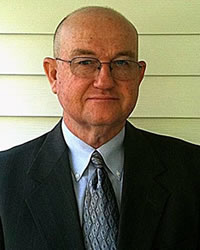
Gary Shepard

The Ransomed Returning

Isaiah 35:10
Gary Shepard May, 25 2008 Audio
0 Comments

Sermon Transcript

Auto-generated transcript • May contain errors

100%
Turn back to Isaiah chapter 35. I don't have anything new this
morning. I always think about what an old preacher said once. He said, if it's true, it isn't
new, and if it's new, it isn't true. And sometimes I find myself going
back, trying to think about what to preach, knowing that you've
heard me so many times, and yet I always wind up with the same
thing. Paul said, we preach Christ crucified. Look back with me at the last
verse of Isaiah 35. And the ransomed of the Lord
shall return, and come to Zion with songs and
everlasting joy upon their heads. They shall obtain joy and gladness,
and sorrow and sighing shall flee away." If you go back and read the previous
chapter as well as the first part of
this chapter, you will find that this last verse especially is
a great contrast to what has been said. I thought about it. possibilities, but God makes promises. Men speak of their free will. God exercises His sovereign will. Men speak of man's potential. But God brings His purpose to
pass. And that's exactly what He's
saying here. As a matter of fact, what is
said here in these words are things that many claim that they
truly desire, that they would really love to have, that they
even seek after. Everybody wants to be happy. That's all I want to do. I just
want to be happy. Well, this speaks of songs. And he talks about everlasting
joy and gladness. And how about that last part
where he speaks of sorrow and sighing shall flee away." This is a complete salvation. And we have a picture here of
a people coming out from among men and in every place marching,
as it were, in a single line. Here comes one from this direction. Here comes one from that direction.
Here comes one of this color, another one of that color. Here
comes male and female. Here comes young and old. And they all form a single column,
if you will, marching all in the same direction to a particular
goal and objective. They're not on a pilgrimage. They're not on a pilgrimage to
somewhere like Mecca or the Holy Land or Salt Lake City or anywhere
because they're not going just to visit. The Bible says they are returning. There are people who are returning. And the reason that they are
returning is because that they have been astray. They are the
wandering lost sheep that Christ talks about. And they went astray
in their father Adam. And not only that, but the Bible
says that they also went astray from their mother's womb. But
now they are returning. And he identifies this particular
group of individuals And they are, over time, this people who
he calls here, the ransomed of the Lord. The ransomed of the Lord. There are so many different names
that God gives to His people. And in each one of these names,
He reflects something of His work of grace and mercy to thee."
They're His elect. They're His children. They're
the redeemed. They're the church. They're His
bride. They're believers. They're the
ransomed of the Lord. And this is the name by which
they are called, and it not only identifies them, but also tells
a whole lot about them and what God has done for them.
We see that in the word ransomed itself. You see, the word ransom means
to release. to preserve, to deliver, to rescue,
and to do it surely. No possibility of failure. And not only that, it involves
a price, and it implies at the same time a transaction of a
legal sort. Now, I know what men say. They
say, well, we're not interested in a mercantile redemption. I am. Because the Lord Jesus, by the
Apostle, reminds His people that you are bought with a price. Call that mercantile if you want,
but it sounds like a legal transaction to me. But who is it that needs
a ransom? These are the ransomed of the
Lord. Who needs a ransom? And who needs
such as is indicated by that Word? I'll tell you who. Every sinner that is saved from
their sin. every single person who is delivered
from their sins. And that means you and I, because
of the state sin has left us in, we, if we are saved, have
to be ransomed from our captivity and slavery. You see, the truth is, every
one of these glorious names and words used by God, while they
signify some glorious aspect of His salvation in Jesus Christ,
at the same time they show us something of our awful condition. We had to be ransomed. And we were in captivity to Satan
because he could do with us what he pleased. We were in his power
hopelessly and helplessly under his control apart from the grace
of God. As a matter of fact, when Paul
wrote to Timothy, He said that the servant of God must be meek
and gentle and apt to teach and long-suffering and all this in
his dealings with men. Preaching the gospel, he says
that God might, according to His own will, enable them to
recover themselves out of the snare of the devil who are taken
captive by him at his will. Does that sound like man's got
a free will to you? They are taken captive, he says,
by the devil by his will, not their will. And we were in bondage
to sin, to its power most definitely, from which no resources or ability
of our own or of any creature now or in eternity could ever
deliver us. I know we like to talk about
our freedom. We are free people, free men.
There will be a lot of talk about that tomorrow and during this
holiday. But we are captives and in bondage
by nature and in Adam to our own sin And we were also in bondage,
held fast to the justice of God. God says, I will in no wise clear
the guilty. I'm going to punish sin. And here we are, held fast by
divine justice, subject to its holy demands, subject to the
penalty it requires, which is eternal death. Not a fifty dollar fine, not
a thousand dollar fine, not a million dollar fine, eternal death. And there was no possibility
of escape, and to be redeemed has to be to be delivered by
a ransom from this captivity of Satan, and from this bondage
of sin, and from this condemnation that we have of ourselves, and
it is not to have anything offered but an actual deliverance. And we never could, and we never
would ever, be able to ransom ourselves. As a matter of fact,
in Job, he says, Because there is wrath, beware lest he take
thee away with his stroke, then a great ransom cannot deliver
thee. Will he esteem thy riches? Not gold, nor all the forces
of strength. You may escape out of the hand
of man. You may escape out of the justice
of man, but not God. The psalmist records this. He
says, they that trust in their wealth, and all wealth is not
monetary. Some people have a wealth of
money. Others, they think they have
a wealth of strength. They think they have a wealth
of wisdom. They think they have a wealth
of works. They think they have a wealth
of righteousness. He says, they that trust in their
wealth and boast themselves in the multitude of their riches,
none of them can by any means redeem his brother. nor give
to God a ransom for him." Why is that? For the redemption of
their soul is precious, costly, and it ceases forever. But when we come to such a text
as this, there is that promise and pledge of God that although
there are none that can ransom themselves, none that can pay
the price of their sins, none that can deliver themselves from
either Satan or the bondage of their sin. He says there are some that are
ransomed here. the ransomed. They are so truly such that He
already calls them this in Isaiah 35. Some have a view that nothing
ever was or nothing ever could be until such and such a time,
end time, but He calls them here the ransomed of the Lord. How is it that these who could
not ever have ransomed themselves, how is it that this is a promise
that these are some who are ransomed? Because God sovereignly, graciously,
mercifully, mightily, He provided the ransom. He gave it as a free gift. God seeing and knowing our state. He says, then He is gracious
unto him and saith, Deliver him from going down to the pit. I have found a ransom. Job describes how Men are His
desperate state, His awful condition as sinners, His bondage, His
blindness, and all that, and shows how hopeless He is. And then it says, then God says
something. He said, deliver Him. He's not
going down to the pit. He's not going to die this eternal
death. He's not going to spend eternity
in hell. He's not going to suffer the
consequences of his sin. He's not going to endure eternal
punish for ever and ever worlds without end. I've found a ransom. I'll tell you this, my hope is
not in what I've found, it's in what God's He said, I found
a ransom. And you see, this is the good
news of the Gospel. This is what the hope of God's
people is, that the God-found, God-given ransom is the Lord
Jesus Christ. And He is the eternal and divine
Son of God. He is the one who has assumed
our humanity, being born of a woman and become the Son of Man, and
He did that for a reason. He came into this world as God
manifests in the flesh. He came on that mission and for
this purpose that He states. What's that? Well, turn over
to Matthew chapter 20. Matthew chapter 20. And listen to him as he says,
the reason for his coming into this world is this, Matthew 20
and verse 28. Look back at verse 27. He said,
And whosoever will be chief among you, Let Him be your servant." Who does He give as an example?
He said, even as the Son of Man came, not to be ministered unto,
but to minister and to give His life a ransom for many. Why did Jesus Christ come into
this world? Why did he assume human flesh,
take upon himself a body and walk on this earth as a man that
seemingly accomplished very little and was eventually at a young
age, respectively, put to death? to give himself a ransom for
many. And we don't have any doubt as
to what it was that he gave as this ransom. If you look back
in verse 28 of Matthew 20, it says he came to minister and
to give his life. Suppose he'd come into this world
and he'd lived as a good little boy there in Nazareth. Suppose he had come into this
world and lived a perfect life as a man, which he did. All these
things. And yet, at a certain time, after
having lived, after having taught, after having done all these things,
he just ascended back into heaven. you and I'd perish." Because he came to give his life
a ransom. He came and he gave his sinless,
perfect, God-pleasing life. And he did so, if you notice
here, he came here to give it freely in grace as the unspeakable
gift of God. You can't earn it. You can't
do anything to deserve it. You can't demand it. You can't
claim it. It says here that He came not
to be ministered to. All these preachers are trying
to get people to do something for Jesus. I won't ever save
you. It's what He does for us that
saves us. He didn't come to be ministered
to. And they stand up and they present
Him as the world's biggest beggar, begging, pleading, trying to
get something out of people, trying to get people to do something
for Him. He said, I didn't come to be
ministered to. I came to minister. I came to give something. And he said, that's my life.
Came to give his life. Not simply to be a teacher, or
an example, or a martyr, but to give his life. Which is simply,
according to what we read in Scripture, since God says, the
life is in the blood. You don't have any blood, you
don't have any life. He came to give His life for
some, His blood shed, His righteousness, then is the ransom by which men
are delivered from going down to the pit of everlasting destruction." What did it take to keep God
from casting every one of us into hell? say the best one of the bunch,
what would it take, what did it take to keep God in His strict
justice from just taking us and casting us out of His presence
forever? His life. He came to give His life for
ransom. He came to pay the price of heavenly,
eternal glory. And surely the greatness of the
ransom, namely Jesus Christ, the Son of God who gave Himself
for our sins, declares sufficiently that we can neither satisfy for
sin or have dominion over it. What does that mean? All our
hopes in Him. If he left one dime, one penny
in the economy of divine justice, if he left one penny for you
and I to pay, we'll perish. If he did not assume, and therefore
by his sacrifice of blood on that cross, if he did not pay
the ransom price, if that's not the one God was talking about,
we're in trouble. We're in trouble. You see, the word ransom and
the word redemption, they're close akin. And redemption is
that word that we have pictured so well in that man Boaz who
went down to the city gate and he paid what was required And
there he redeemed Ruth and Naomi and was therefore the kinsman
redeemer. And so the Lord Jesus Christ
came into this world, bone of our bone, flesh of our flesh.
He didn't take on Himself the nature of angels, but He took
on Himself the nature, the flesh of the children of Abraham spiritually. And He went to that cross and
paid that ransom price and satisfied God on every part for our sins. to give myself, my life, a ransom
for many." And Paul describes it in this same way in Ephesians
1 when he says, "...in whom we have redemption through His blood,
the forgiveness of sin according to the riches of His grace."
That means you And I, if we are brought to believe on Christ,
we have it. In whom we have it. And we have
always had it in Him because it's freely given of God, given
by His grace in Christ before the world began, and given in
Him when He hung on that cross, given in Him when He ascended
back into heaven. He said we have it. We don't do anything to get it,
and we certainly don't do anything to make it effectual. You see, not in ourselves, we're
not self-redeemed, but in Christ the Redeemer. And the word redemption
means deliverance in general and an accomplishment of it,
but it always has to be through the paying of the ransom. Because that's always what the
words express. There is no ransom paid. There
is no redemption accomplished. There is no salvation given apart
from the shedding of His blood. That means when He hung there
on that cross, and those wounds were afflicted to His body, Whether
it was that crown of thorns pressed on his head, whether it was the
nails driven in his hands and his feet, whether it was the
spear thrust in his side, his life's blood poured out on that
cross. And he was left such a blood-covered
mass that he was unrecognizable. But his lifeblood poured out
is just exactly what God required to put away our sin, to make
an end to the sins of his people, to ransom them and set them free. Peter says, for as much as you
know, that you were not redeemed with corruptible things as silver
and gold from your vain conversation received by tradition from your
fathers, but with the precious blood of Christ." You don't hear too many people
talking about the blood of Christ anymore. And those who speak
of it, speak of it as if you were there and you touched that
blood and rubbed it on you somehow, you'd be safe. You wouldn't have
been. As a matter of fact, a soldier,
how many times do you suppose some of those soldiers driving
the nail in his flesh or putting the spear in his side, how many
of them do you suppose had blood spattered on them? But they are
not saved. He says, but with the precious
blood of Christ, as of a lamb without blemish and without spot,
who verily was foreordained before the foundation of the world,
but was manifest in these last times for you. God says, I found a ransom. And if you notice here in verse
28, it says, Even as the Son of Man came, not to be ministered
unto, but to minister, and to give his life a ransom for me. What does that mean? It means in the place of. It signifies What we find everywhere
in this book, whether it's Isaiah 53, whether it's John's Gospel,
wherever it is, it signifies salvation and deliverance only
through a substitute. He had to die in the place of
his people. He gave his life a ransom for
That means in the place of, or instead of, or as a payment for
His people. He came and died as their substitute
and paid their ransom. He's made sin for us that we might be made the righteousness
of God in Him. He suffered the just for the
unjust to bring us to God. And you know he doesn't stop
there. He tells us something else. He says, and to give his
life a ransom for many. And men don't seem to be satisfied
unless they can say in error that which the Bible does not
say, that he died for everybody. He said he gave his life a ransom
for many. Because if he had given his life
a ransom for every person in this world, every person in this
world, divine justice would see to it that they were every one
saved. No, he says, I lay down my life
for the sheep. He tells us that he purchased
the church with his blood. He tells husbands to love their
wives even as Christ loved the church and gave himself for the
church. Turn over to 1 Timothy. 1 Timothy chapter 2. Now, I can tell you this. There is salvation for the many
that Christ gave His life for. And to have any hope in a universal,
all-inclusive ransom or redemption is to have no hope at all. But listen to what he says, I
Timothy chapter 2, I exhort therefore that first of all supplications,
prayers, intercessions, and giving of thanks be made for all men, for kings and for all that are
in authority. that we may lead a quiet and
peaceable life in all godliness and honesty, for this is good
and acceptable in the sight of God our Savior, who will have all men to be saved
and come to the knowledge of the truth." Now, somebody says,
well, that means that God wants to save everybody, and He's trying to save everybody,
and Christ in His death made everybody savable. But if we have any even intellectual
honesty at all, and come to this chapter of Scripture, and listen
to what is being said in the context when Paul in verse 1
speaks of making intercession and giving thanks for all men. He's talking about all kinds
of men. He's not saying that Christ died
for all men or that God is saving all men, but He's saying you
ought to pray and give thanks for all men, even if they're
kings who don't treat you so well. That probably ought to ring home
to us. That has to do with presidents and leaders and politicians and
such also. It's a whole lot easier to fuss
about than it is to pray for them, isn't it? For there is one God and one
Mediator between God and men, the man Christ Jesus, who gave
himself a ransom for all to be testified in due time. Every one of them that Christ
gave himself a ransom for, it will be known, it will be made
manifest, it will be testified to in due time. Why? Because he's going to bring
every one of them. He's going to bring every single
one of them. Isaiah said, he was taken from
prison and from judgment, and who shall declare his generation? For he was cut off out of the
land of the living, for the transgression of my people was he stricken. What does that mean? That means
that they must then, and they will, go free. They will. He shall see of the
travail of his soul, and shall be satisfied by his knowledge,
shall my righteous servant justify many, for he shall bear their iniquities."
Whose iniquities does he bear? These he justifies. These many. Therefore will I divide him a
portion with the great, and he shall divide the small with the
strong, because he hath poured out his soul unto death. He was
numbered with the transgressors, and he bare the sin of many,
and made intercession for the transgressors." You see, the glory of Christ has never depended on Him saving
every person in this world. The glory of Christ rests on
Him saving every person He came to save. Every person that the
Father gave Him to save. Every person in His body, as
it's spoken of. Every person in His church. And that's exactly what he did. How are they known? First of all, look back in our
text in Isaiah 35. Now, if you see all these things
spoken of, He begins to talk about how things
are going to change. There's this picture, you know,
it's bad, it's dry, it's barren, it's all these kind of things.
Then all of a sudden it says, verse 4, say to them that are
of a fearful heart, be strong, fear not. Behold,
your God will come with vengeance, even God with a vengeance, He
will come and save you. Then the eyes of the blind shall
be opened, and the ears of the deaf shall be stopped. Then shall
the lame man leap as an heart, and the tongue of the dumb sing.
For in the wilderness shall waters break out, and streams in the
desert. And the parched ground shall
become a pool, and the thirsty land springs of water. In the
habitation of dragons, where each lay, shall be grass with
wreaths and rushes, and a highway shall be there and away." That can't be anybody
but Christ. That can't be anybody but the
gospel of Christ. And it shall be called the way
of holiness. This is the way that God is just
and justifies sinners. This is what is called the way
of righteousness. The unclean shall not pass over
it, but it shall be for those the wayfaring men. For these lost sheep, they've
been astray so long. They've been afar off. They've
been described by God as being scattered to the four winds. No fools should not err therein. No lion shall be there, nor any
ravenous beast shall go up thereon. It shall not be found there,
but the redeemed shall walk there. And the ransomed of the Lord shall return." Does that sound like a mere possibility
or opportunity to you? This is the pledge of Jehovah
God, and the ransom of the Lord shall return. That's what Peter said. He said,
You like sheep were gone astray, but now you are returned to the
shepherd and bishop of your souls. How did you get returned? He
brought you. He not only bought you, but He
brought you. To the true and living God as
He reveals Himself to be in Scripture. He said, and the ransoms of the
Lord shall return. And you know what that means?
That means if you return to God, you're going to leave something
behind. As a matter of fact, that's what
repentance is. Repentance is a renunciation. turning our back on, renouncing,
and repenting of what we once thought about God and what we
once trusted in to commend us to God. As a matter of fact, that's what
it says, repentance toward God and faith in the Lord Jesus Christ. When we come to Christ, we leave
all that stuff behind. Paul said, now I was before,
I was an upstanding citizen, good moral man. I was in religion. I was a teacher of the Jews,
a Hebrew of the Hebrews. I was all these things. But he
said, I counted it but nothing. to be found in Christ. Nothing. Well, I don't count
it for much. No, nothing. Absolutely nothing. You see, when you return to the
Lord, it's like the old hymn writer
wrote Nothing in my hand I bring, simply to thy cross I cling. The ransom of the Lord shall
return to God as He is in the person of Jesus Christ. As a
matter of fact, Christ said, all that the Father gives me,
He'll come to me. He says, every one, He says,
of my people, they shall all be taught of the Lord. And everyone
who has heard and learned of the Father, they come to me." That is why Christ said, "...of
the sheep have I that are not of this fold, them also I must
bring." When you look at it here, you see what characterizes coming to Zion, which is coming
to Christ. He says it's with songs and everlasting
joy upon their heads. But it goes beyond that. It goes
to a further eternal. It says, they shall obtain joy
and gladness, and sorrow and sighing shall flee away. Flee away. That doesn't mean in this life
that we don't have any sorrows and that we don't do any sighing.
But there will come a time. either in the hour that God takes
us from this world or the hour that He comes for us in the clouds. And I'll guarantee, if we're
in Christ, all sorrow and sighing will flee away and never return. Never return. We'll have sorrow in this world,
but we'll have joy and gladness over the matter of our sin. And know that Christ made himself a ransom for us. When you come to Hebrews 12,
the apostle reminds us, he said, we're not We're not come to that earthly mountain. You're not come unto the mount
that might be touched, and that burned with fire, nor unto blackness
and darkness and tempest, and the sound of a trumpet, and the
voice of words, which voice they that entreated, that the word
should not be spoken to them any more, for they could not
endure that which was commanded. And if so much as a beast touched
the mountain, it shall be stoned or thrust through with the dark.
And so terrible was the sight that Moses said, I exceedingly
fear and quake." He said, you have not come to that mountain.
I don't know why men insist on taking people back to the law,
back to Mount Sinai, when that is the only thing that can happen,
he said. He said, you're not coming there.
But you are come unto Mount Sinai, and unto the city of the living
God, the heavenly Jerusalem, and to an innumerable company
of angels, to the general assembly and church of the firstborn,
which are written in heaven, and to God the judge of all,
and to the spirits of just men made perfect, and to Jesus. the Mediator of the New Covenant. He said, you're not going to
that mountain, but you're going to Mount Zion.
You've come to Mount Zion. To the church. To the blood-bought
church of Jesus Christ. To God, the Judge of all. To
Jesus Christ, the Mediator. Old John Newton wrote in his
hymn, He ransomed me from hell with blood, And by his power
my foes controlled. He found me wandering far from
God, And brought me to his chosen foe. The Ransomed of the Lord. shall return. And come to Zion with songs and
everlasting joy upon their heads, they shall obtain joy and gladness,
and sorrow and sighing shall flee away." In this life, He'll
bring them to Christ. He'll bring them to hear the
truth. He'll bring them to identify
with the gospel. He'll bring them to identify
with His people. And then He'll finally bring
them all unto Himself. And they'll be to the praise
of His glory worlds without end. Our Father, we give You thanks
and praise We thank you that our weak preaching will in no way hinder the accomplishment
of this glorious promise. But in their weakness, you'll
manifest your strength and call out each one of your
each one of these ransomed by the shedding of Christ's blood,
and bring them unto yourself. Lord, we thank you this day,
and we pray that you'd continue to be merciful to us. Hear us, we pray for Christ's
sake. Look to Him. Lord, and help us
to look to Him. Keep us and help us and watch
over us as we depart out of this place. And may our hearts be
full of that joy and that gladness for Your mercy to us. For we
pray and ask all things in Christ's name. Amen. Amen.
Gary Shepard
About Gary Shepard
Gary Shepard is teacher and pastor of Sovereign Grace Baptist Church in Jacksonville, North Carolina.

Comments

0 / 2000 characters
Comments are moderated before appearing.

Be the first to comment!

Joshua

Joshua

Shall we play a game? Ask me about articles, sermons, or theology from our library. I can also help you navigate the site.