Bootstrap
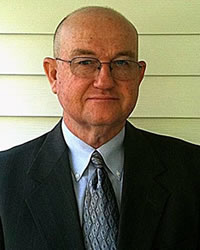
Gary Shepard

The Sovereign Mercy of Christ

Luke 23:32-43
Gary Shepard April, 13 2008 Audio
0 Comments
Gary Shepard
Gary Shepard April, 13 2008

Sermon Transcript

Auto-generated transcript • May contain errors

100%
If you will turn back to Luke
chapter 23, I want us to look at some things
in the light of this text. Let's look back and read again. Verses 42 and 43. And these are the words of a thief. And they are not only the words
of a thief, but they are the dying words of a thief. He said unto Jesus, Lord, remember me when thou comest
into thy kingdom. And Jesus said unto him, Verily
I say unto thee, today shalt thou be with me in paradise. God has not only given us plain, clear doctrine and teaching
in Scripture, He has also given us clear illustrations
of the doctrine of Scripture. And what we have in these verses
and in this account is a picture, a clear example of the sovereign
mercy of Christ. And we have in this few verses an event that deals a death blow,
if you will, to the slightest notion of salvation by human
works or will or worth. Let that person who imagines
that man has a part in salvation come to this chapter, because this is the plainest
example of what it means to be saved by grace. And since the grace that saves
us is God's grace, it is the most clear and obvious illustration
of sovereign grace. Somebody is always wanting to
know, what do you mean by sovereign grace? Well, my first thought
is, if you knew anything about God and anything about grace,
I wouldn't even have to tell you. Because salvation is by
the grace of God, the mercy of God. And since it is from God,
it must be like God who is sovereign or controls all things according
to His will, so it has to be sovereign grace or sovereign
mercy. Here it says that when they crucified
Him, John says this, when they crucified Him, and two others
with Him on either side, and Jesus in the midst. Here are three crosses on this
mountain. And we have seen that pictured
many times. We've actually seen three crosses
put up in various places. There was a man who made it his
life's work to go around almost the world, if he could, and in
the highest place, if he could get permission or lease the land,
he'd assemble three crosses. But I don't believe he knew anything
about what happened on those crosses. And we have two men,
both who are said to be thieves, and only one of them is saved
from his sins. Somebody wrote years and years
ago that there are two men here one saved that none should despair,
and one left in his sins that none should presume." There is one fellow here who
dies in his sins. And there is one here who is
saved by the sovereign mercy of God, and in this, God demonstrates
for all of us to see this great truth that He showed to Moses
and that Paul makes reference to in Romans 9. Paul reminds us that God said
to Moses, I will have mercy on whom I will have mercy, and I
will have compassion on whom I will have compassion. So then
it is not of him that willeth, nor of him that runneth, but
of God that showeth mercy. And long before this day, and
what happened there on Mount Calvary, God demonstrated this
again and again to a number of visible persons here in the Old
Testament, this same truth when He bypassed Cain and left
him to his own way and yet saved Abel. And also when He left Ishmael. to his own deeds of the flesh,
to his own way, and he saved Isaac. And maybe the greatest
example in the Old Testament is in that he left Esau to his
own self, but he saved Jacob. And even went so far to tell
us Jacob have I loved, but Esau have I hated. And our Lord is on this very
occasion doing just exactly what would be done in answer to what
He prayed to the Father in John 17. He says as He prays, Father,
as thou hast given him, that is, he is talking about himself,
as thou hast given him power over all flesh, that he should give eternal life
to as many as thou hast given him. What is power over all flesh
except sovereignty, dominion, and authority? And that is, as
Jesus Christ, the Savior, as Jesus Christ, the Mediator, God-Man,
given all authority to give eternal life to whom He will. And that will is the same will
of the Father to those that the Father gave to Him. And so when we find this in Scripture
and we begin to read it, If we read it with any kind of thought
or even logic or reason, there are some things that are very
obvious. Let me give you a few of them.
In what takes place in this account of Scripture, in Christ showing
mercy to this thief on this occasion at this time, All who insist
on baptism, or say that baptism is the means by which we are
regenerated, or that it is necessary to the salvation of the soul,
they are all proved wrong. Baptism is the answer of a conscience
made obedient by the Spirit of God wherever it is possible. But this man entered into God's
presence without that water baptism. Not only that, but shown here
is that a life of good works and morality and doing our best,
the idea that that will save us is not true. Man at his best state is nothing
but vanity. And the whole notion that just
pervades thought in our day in people all around us that somehow
if you do your best, God is going to accept it as the basis of
salvation. That's proved wrong here. This man is dying at the end
of a life undoubtedly marked by the illest of deeds and now
having done something that brings the government to put him to
death. Not only that, the foolish notion
that all the acts of modern religion, such as walking down the aisle,
or raising your hand, or signing a card, or accepting Jesus, or
saying a sinner's prayer, or any such thing, that such notions
as that for salvation just are absolutely false. He's nailed foot and hand to
a wooden cross. He doesn't follow anybody's rehearsed
prayer. He doesn't raise his hand. He
can't raise his hand. He can't come off that cross
and walk down anybody's aisle or do any of the rituals of ceremony
that men say are the way by which we receive favor from God. None of the so-called sacraments
can he do. Can't take the Lord's table. Can't do any of these things.
Can't go into a period of abstaining for something. He's nailed to
a cross. Not only that, but the idea of
giving money as being necessary to be blessed of God. He hasn't
got a penny to his name. And not only that, but the idea
that an earthly priest or some kind of natural human mediator
is necessary to receive the favor of God or know God, that's absolutely
rubbish. There's one man, as Joe prayed,
one man that's the mediator between God and men, and he's hanging
on that middle cross. The notion that a person needs
to make a pilgrimage to some kind of sacred site or place,
whether it be Mecca or Jerusalem or whether it be Salt Lake City,
it doesn't matter where it is. This fellow is not going anywhere. Absolutely not. or the notion
that joining a religious organization and being part of a particular
group or association of people, that in that way, some way we're
saved. He's not going to be able to
join anybody's group. He's not going to be able to
go to anybody's meeting. and the idea that certain facts
or particular points of information or the realization or understanding
of certain creeds or confessions of faith, that that's what saves
us. No. That's not it. And then we find also in this
that the idea that there will be some kind of intermediate
state, that there will be some kind of purgatory necessary,
a go-between place before some are actually able to enter into
God's heaven. That's absolutely stupid. Christ tells this man today,
without hesitation, without reservation, without preparation, today you
will be with me in paradise." And then also those who insist
upon certain experiences. Have you got the baptism of the
Holy Ghost? Have you had a vision? Have you
had one of these revelations which are nothing but extra-biblical
revelation? Have you seen a sight? Have you
experienced a wonder? He hasn't. He's experiencing physical pain. He's experiencing just what every
one of them are experiencing As the blood flows out of him,
as the people who are down below just showing the very nature
of these men and women who are just like us, they are mocking
and scoffing and deriding not only him, but the Son of God. Religious folks, fine upstanding
citizens, But there are occasions when the very true nature of
fallen man, God just turns back the cover and lets it expose
itself for what it is, and here it is at its worst deriding the
Son of God. But I want you to particularly
and especially notice something else that proves God's distinguishing
grace and power. And that is that both of these
men who were of the same nature, that they had most likely participated
in the same crime. Why would we think that? Well,
because the Jews claimed that they would never judge and never
condemn two in one day, but one today and the other tomorrow, unless they are one in the transgression. And it would seem like that these
who are described in the Scriptures, if they are participants in the
same crime that ended with the death of someone, that's why they're being put
to death together. In other words, it may well be,
and probably was, that they, in the participation of this
robbery together, it wound up in the slaying of someone. And
that's why they're not only being put to death, but they're being
put to death at the same time and on the same day. But here's the difference. You see, they both had the same
heart and the same mind to rail on Christ just like those soldiers
and religious leaders and rulers and people of all various ages,
stations of life did. They were no different. And that's
the way you and I are. We are no different in that sense,
in that natural sense. Hold your place and turn back
to Matthew 27. Matthew chapter 27 and look down
at verse 41. It says, likewise also the chief
priests mocking him with the scribes and elders said, He saved
others, Himself He cannot save. If He be the King of Israel,
let Him now come down from the cross, and we'll believe Him. He trusted in God, let Him deliver
Him now, if He will have Him, for He said, I am the Son of
God." But look at this next verse. The thieves. See that S on the
end of that? the thieves also which were crucified
with him cast the same in his teeth." In other words, when
all of this dramatic event began, these thieves, though they themselves
were hanging there about to die, left to themselves, they were
the same as all the rest. They were saying the same about
the one on the middle cross. They were defying God and angry
with God because of their own sin and its consequences. Turn over to Mark's Gospel in
the fifteenth chapter. Mark chapter fifteen. In verse 32, here's what Mark
says, "'Let Christ, the King of Israel, descend now from the
cross, that we may see and believe.'" He records the same attitude
of the people that Matthew and Luke do. Then it says, "'And
they that were crucified with him, they revolted.'" They revolted. And what you see
here is a picture of everybody being in the same condition,
having the same heart and attitude, having that same fallen nature
of Adam, that same carnal mind, that's enmity against God. You've got the chief priests.
You've got the rulers. You've got the scribes and the
Pharisees. You've got the soldiers, from
the greatest of them to the least of them. You've got the crowd
filled with the wealthy and the poor, the learned and the unlearned. And you've got these two men
who are the pictures of the very dregs of society, and they're
all of the same mind. Why are they like that toward
this man that nobody has been able to bring a charge against,
that nobody has been able to truly show a reason for condemnation
at all? Why are they all like that? Because he's God. He's God manifest in the flesh. And he can do with his own what
he will. And that very enmity against
God is manifested and demonstrated against that man on the middle
cross. My, my. And then just a little while
later, this is so remarkable, just a little while later, one
of them calls Jesus Christ, Lord. He refers to Him as, My Lord. You know what Paul says about
that in 1 Corinthians 12? He says, wherefore I give you
to understand that no man speaking by the Spirit of God calls Jesus
accursed, and that no man can say that Jesus is the Lord but
by the Holy Ghost. Paul is not talking about just
saying the Word or speaking the name from your lips. And here at this time, is this
man doing much more than taking a shot in the dark? He is doing
much more than just speaking that name, Lord, to the Lord
Jesus Christ. He is, just like Paul says, by
the Spirit of God calling him Lord. Something's happened. Both of them have been hearing
what is said of Jesus Christ and by Jesus Christ. I don't think that there's any
reason on this occasion to say that they knew absolutely nothing
about him. They may well have sat in the
courts that condemned him. There was no doubt that within
the prison itself where they were kept that that was a buzzword
going around. There's no doubt that there were
many charges and claims that were made against him that really
told something about him. What did we read? It says that
at Pilate's command, at Pilate's command for a reason I'm sure
he didn't really know, and for writing it he surely faced opposition
for, But he had inscribed on a sign on the top of that cross
in Hebrew and Latin and Greek this superscription. This is the King of the Jews. Well, what did they charge him
with, somebody said? Well, he says he's God, manifest
in the flesh. What did he claim? They preach
that he's the Messiah. That he's the one come into this
world to take away sin. That he's the one who truly in
his death is to be that one sacrifice for sins forever. He's the one
who's the Messiah who will make an end of sin and bring in everlasting
righteousness. As an old preacher said one time,
ain't nobody but a fool and one of God's children will believe
that. You mean to tell me That this
man that they've spit on and kicked around, crowned with thorns,
gambled over his garments, done all these things, and exposed
so shamelessly before all the eyes of these wicked people to
see, you mean to tell me he's the one that Isaiah said? Didn't
he say he'd have no form or comeliness that we should desire? Didn't
he? I heard that all my life. I remember someone reading that
from one of the scrolls, that it said that Messiah would come
and that he would be wounded for the transgressions of God's
people. That he'd come and he would be
the one who would seek out the lost sheep of the house of Israel. Would that be Him? You know, all these things are
just facts, albeit true facts. And they will not change. That
gospel, that prophecy, that one that was spoken of by all the
Old Testament prophets, that which was said of Him could not
be changed. was just exactly who they said
he'd be. But the chief priests didn't
know it. Pharisees didn't know it. Sadducees didn't know it.
Scribes didn't know it. Soldiers didn't know it. Except
maybe one. The other thief didn't know it.
And this man didn't know it when they first hung him on that cross. But Christ revealed Himself to
him. I don't believe that anything
outward was demonstrated, such as him being able to see angels
attending to Christ. I don't believe that there was
a glow about Christ. It was this simple matter of
Christ giving him faith and opening his eyes to enable him to see
who he was, what he's doing. And that's just what has to happen
to us. I try. I'm a failure, a miserable
failure, but I try to set forth what the Scriptures say about
Christ. And I try to do so knowing that
we all are in the same natural condition and spiritual condition
as this thief was, as helpless and unable of ourselves to understand
anything. But I do so in the knowledge
that God can reveal Himself. that He can show sovereign mercy. The goal of evangelism supposedly
is to try to get God saved to save everybody. That's not my
goal. My desire is for Him to save
whom He will. to be merciful to whom He will.
Now, I pray for a lot of folks, I have no doubt, that He'll not
save. I pray for a lot of folks that
are so near and dear to me, but it's obvious that at this point,
He has not saved them. But in my heart of hearts, and
though it may break my heart, while I live here in this world,
in my heart of hearts, I want Him to save whom He will. I want Him to save His people
from their sin. I want Him to save my brethren,
my true family. I want Him to save that people
who will be saved to the praise and glory of His name. And you know what? I know He
will. He will, won't He? He will. Both of them have been hearing
what was said of and what was said by the Lord Jesus. And both have seen Him, but now
only one of them confesses Him as Lord and calls upon Him for
mercy. Why? Because He's been born again. Because the life giver is hanging
on that middle cross. Because He who hath power over
all flesh has given unto Him that experience of eternal life. He is now born of God and born
from above and quickened by the Holy Spirit. And God has opened
his heart like He did Lydias. He has given him faith. Given him faith to believe on the Lord Jesus
Christ. Do you remember what John recorded
there in John 1 concerning Christ? He said, He came unto His own,
and His own received Him not, but as many as received Him. To them gave He power to become
the sons of God, even to them that believe on His name, which were born, not of blood,
nor of the will of the flesh, nor of the will of man, but of
God. This man was not born according
to the will of the flesh or the will of a man, not by an act
or a decision of himself, but by an act and decision of God. He gave him eternal life. He
gave him spiritual life which is demonstrated always in this. He believed on Christ. He did reach out to Christ. He did call out to Christ. But why did he do that? Because
he was brought to believe on it. And hypocrisy at that hour won't
do any good, will it? It's not a grasping at last straws. It's a believing on the Lord
Jesus Christ. He didn't simply just change
his mind. But as one of God's elect, even
in that last dying hour, he was made willing in the day of God's
power." In other words, it was the day
of his greatest weakness. And it appeared almost that it
was the day of Christ's greatest weakness. But it was the day of his greatest
power. Absolutely. And God revealed the truth of
who Christ was to him. And that is the only difference
and the fact that God made him to differ. He made him to differ
from that other thief. And not only from that other
thief, but all those people around. Here are all those people of
all kinds. And they would look at those
thieves and say, well, boy, what a good person I am. Christ looked on him in sovereign
mercy. How do we know he had faith in
the Lord Jesus Christ? Well, I'll tell you, here's one
clear evidence. he sided with God in his own condemnation. Look back at verse 40 and 41. At some point, he stopped his
railing against Christ. And the next time that the other
thief The next time he railed on Christ, he said, Dost thou not fear God, seeing
thou art in the same condemnation? And we indeed justly, for we receive the due reward
of our deeds. We're here justly. We deserve
this death. And then he acknowledges the
sinlessness of Christ. He says, but this man hath done
nothing amiss. Now, I'll tell you, when a man
like this man in his fallen humanity is brought to this And he's enabled to see another
man who is sinless. That's a work of God. It's enough
when he is brought to confess his own sinfulness. But when
he now confesses that the one who's hanging here on this cross
suffering the same outward death that he's about to suffer, that
he's sinless, And his faith acknowledged the
kingship of Christ. He said, remember me when you come
into your kingdom. That's the Christ. That's the
king. There ain't no kingdom without
a king. And then he says, it shows that
he believed in his resurrection. He said, remember me when you
come. You're not going to stay dead.
You're coming into this kingdom. This death that you're dying
is going to be a threshold, a door by which you enter into this
kingdom. But here's the thing of it. He
believed in his absolute, sure success. He believed now what
the prophets had said. You remember what the Lord says
in the very next chapter after his resurrection to those disciples
on the Emmaus road? He said, O fools and slow of
heart, to believe all that the prophets have spoken, ought not
the Christ have to suffer and then enter
into His glory? That suffering is the door by
which the Christ entered in order to enter into his glory, because
his glory is the salvation of all his people. And his salvation
of them is through his death, through his shed blood, that
his death would accomplish something for him. He said, remember me
when? He didn't say, remember me if
you come into your kingdom. He said, remember me when you
come. You're going to enter your kingdom. You're going to be a
success in all that you came to do. Your death is going to
be just a preview of the glory that's to come. Not only that, but he didn't
say that Christ ought to do this because of anything in him. He
didn't say, you've got to. If you're any kind of a Savior
at all, you'll save me. No, he said, remember me. Do you know anything about that? Lord, remember me. You don't
have to. I don't deserve it. I'm not worthy
of the least of your blessings. I'm not in any way deserving
of anything but death, hell, and eternal judgment. But mercy is the kind treatment
of an enemy. Remember me. One old writer said, this was
great faith indeed, to be exercised on Christ at such a time as this,
when He was under the greatest reproach and ignominy, while
He was insulted and derided by all sorts of people, and when
He was forsaken by His own apostles and was suffering a shameful
punishment and now dying. And yet God-given faith enabled
him to see, in some measure, who that was
on that cross. And not only that, but to have
some understanding of what he was doing there and what he would
accomplish. Because that's what the Christ
would do. What did Christ say to him? Barely. Truly. Truly. I would never expect you to take
my word for something. But can you take his word? Barely. Verily I say unto thee. I don't care what they've said. I don't care what anybody says.
It ain't going to matter anything at all. Verily I say unto you. That's why I don't try. And that's
why no true gospel preacher will try to work you into an experience
or a profession or a confession or whatever you want to call
it. Because this business of salvation
is between the Savior and the sinner. And he does, with his gospel, say to every one of his people
at some point in time in their life, there he is, the consoling words of his grace. the good news. You think this
came as good news to this man? If there's ever been a man at
such a time to have good news come to him, he said today, shalt thou be with me in paradise. Do you know there are some people
who try to make a question out of that? Not only is it against the truth
of language, it's contrary to every principle
of mercy and grace. He's making a statement. Today
you will be with me in paradise. How could such a vow sinner be
taken into the very presence of God almost instantly. Because the one on that middle
cross was being at that moment made sin for him. And he was
made the righteousness of God. After that, if he had lived another
500 years, he would have been no more fit, no more ready, no
more perfect than he was at that moment. God had imputed to him the righteousness
of God and made Christ his redemption, his justification, his sanctification,
everything. He was dying to put away his
sins. Christ was suffering the just
for the unjust to bring us to God. The sinless Christ was dying
for somebody else's sins. And this is the only way. This is the only way for you
and the only way for me to be received by God. save from our
sins, and enter into His presence. Because we're all thieves. We're all those who sought to
steal the glory of God. And divine law and justice has
nailed us tight with condemnation. And we cannot deliver ourselves. Only Christ crucified can. Only His blood, His death. Lord, remember me. That's my prayer. Remember me. And only He can speak that good news to our heart.
And He gives us this example. He shows us that He'll have mercy
on whom He will. Well, if we're brought to see
ourselves are right, we'd say, well, I don't see how you could have
mercy on me. But you see, that's the glory
of it. He said, I'll have mercy on whom I'll have mercy. And
I'll show you. I'll have mercy on the very thief
that's hanging on that cross beside me. Because I will. And I'll say to him, I'll say
to you, today you'll be with me in paradise. There's a sense in which God's
people, this people for whom Christ died, they're already
there. They're the body. He's the head. Wherever the head
is, the body is. Seated in the heavenlies with
it. actually, really, to dwell with Him who has shown sovereign mercy
to us, because He would, and for the glory of His praise and
grace. Our Father, this day we cannot
but thank You praise you. Look forward to that day when we will be with you, and we shall praise you for all
eternity for your sovereign mercy. Join with this thief. Praise you for your grace. We pray, Lord, this morning that
you would take this clear illustration, join with plain declarations
of Scripture, and speak to some heart. whether they be here this day,
or whether in a place that you've
appointed them to dwell, that you bring this word to their
ears. May they cry out, Lord, remember me. And may your sovereign mercy
speak that good news to them. We pray and ask all things and
thank you. In Christ's name, amen.
Gary Shepard
About Gary Shepard
Gary Shepard is teacher and pastor of Sovereign Grace Baptist Church in Jacksonville, North Carolina.

Comments

0 / 2000 characters
Comments are moderated before appearing.

Be the first to comment!

Joshua

Joshua

Shall we play a game? Ask me about articles, sermons, or theology from our library. I can also help you navigate the site.