Bootstrap
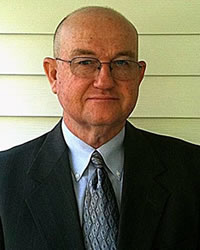
Gary Shepard

The Priest's Office

Exodus 28:1
Gary Shepard February, 17 2008 Audio
0 Comments
Gary Shepard
Gary Shepard February, 17 2008

Sermon Transcript

Auto-generated transcript • May contain errors

100%
Turn back with me where we read
in Exodus 28. If you notice, in just the verses
we read, There is given a description
of some beautiful, specifically appointed, and gloriously made
garments. They were for two things. Number
one, they were to set apart the one that God had appointed the
priest. And then secondly, those glorious
parts of this garment were to represent the various glories
of the true priest, the Lord Jesus Christ. Look back with me at that first
verse. These are the instructions that
God gave to Moses. He says, And take thou unto thee
Aaron thy brother, and his sons with him, from among
the children of Israel, that he may minister unto me in the
priest's office." That's what I want to talk to
you about this morning. The priest's office. In the Old Testament, there were
three offices for which God commanded an anointing. He gave a special formula or
recipe, if you will, for the anointing oil which was to be
used when these three office holders were anointed. The king was to be anointed with
this all, as the one that ruled over men for God. And then there was the prophet.
The prophet was to be anointed as the one who speaks to men
for God. And then there was the anointing
that was to take place with the priest. And what did the priest do? Well, the priest represented
men before God. Just as the prophet spoke to
men for God, the priest and the priest's office represented men
before God. The name Christ, for this reason,
simply means anointed. He is the anointed one. And these Old Testament offices
that were under the law, they were all simply types and figures
of Christ. is the King of Kings. Christ is, as Moses said, that
Prophet, capital letters. And He is likewise the Priest
of God. And if God enables us, If he
opens the eyes of our understanding, we can see in these priests,
especially the great high priest, how Christ is the priest of his
people. The first thing that we have
to see and take notice of is the answer to this question. How is the priest of God called
to this text? In other words, how did this
man Aaron and his family, how did they come to be the priests
of God in this economy? Well, they are simply the priests
of God for one reason. And that is because God Himself
is the one who speaks to Moses and declares that He has appointed
Aaron to be the priest. No man, even in the Old Testament
under the law, no man could be appointed by an organization
to be the priest. Not only that, no man could ever,
out of ambition or just simply fleshly desire, no man could
ever assume or get this priesthood simply because they wanted it. And that is exactly the way it
is as God looks at and appoints his own true priest that these
priests pictured. Turn over in your Bibles to Hebrews
chapter 5. Hebrews chapter 5 is a great
enlargement on what this priesthood was all about and who these priests
really represented. Hebrews 5 and verse 1, for every
high priest taken from among men is ordained for men in things
pertaining to God, that he may offer both gifts and sacrifices
for sins. Who can have compassion on the
ignorant and on them that are out of the way? for that he himself
also is compassed with infirmity, and by reason hereof he ought,
as for the people, so also for himself to offer for sins." Now
these priests, because they were sinners themselves, not only
had to offer these sacrifices for the sins of the people, but
for their sins. And what we have here in the
book of Hebrews is the apostle taking that Old Testament priesthood
and making the comparisons that can be made to the priesthood
of Christ. But there are also many contrasts. But listen. And no man taketh
this honor unto himself. No man decides that he'll be
a priest to God. Many men have decided that some
would be priests unto God, and many have decided for themselves
that they would enter into some kind of priesthood, but no man
takes this priesthood unto himself, takes this honor unto himself,
but he that is called of God as was Aaron. Now, you look at
the next verse. So also Christ glorified not
himself to be made an high priest, But he that said unto him, Thou
art my Son, who said that? God the Father. Thou art my Son,
today have I begotten thee, as he saith also in another place,
Thou art a priest for ever after the order of Melchizedek. Now, what is the difference in
the priesthood of Melchizedek and the priesthood of Aaron? Well, there are a lot of differences,
but I'll give you one. And that is, these priests who
were priests like Aaron was, they all had a beginning and
they all had an end. They all died. and their work
as priests ceased to be, but not like Melchizedek. Melchizedek
is that man that met Abraham when he returned from the slaughter
of the kings, and Abraham bowed to him and worshipped him, and
he is described as one whose priesthood is without beginning
and without end. The Lord Jesus Christ is the
priest of God, and His priesthood is after the order of Melchizedek. It has no beginning, and it has
no end, and He is a priest because God called Him and ordained Him
and established Him as His priest. Now, there were many figures
over all of the history of Israel. There were many figures of God's
priests, but when the true priest came, when he who is this priest
forever after the order of Melchizedek, when he came, sent of God, no
other figures were needed And certainly, there are no other
priests. All those priests that God ordered
Moses and those people to have as a part of their worship of
God, they all ceased to be when the true priest came. And the Bible says this, There
is one God and one mediator between God and men, the man, Christ
Jesus. Now, did you understand that?
There is just one God, and men may claim many faiths, And they
may all agree that each has this God and that God and this way
and that way, but he says, there is none beside me. There is one
God. And there is one, one mediator
between God and men, and who's he? He's this one priest, the
man Christ Jesus. And there is another thing that
also distinguished the priests, and this excludes every other
one but Christ. And that was, he was to be in
this picture and type, he was to be without defect of any kind
and a totally complete person. Hold your place right here in
Hebrews and turn back to the book of Leviticus chapter 21. Leviticus chapter 21. When he
is giving this part of the law, those who stand and represent,
as the priest did, this people before God, they could not be
like some. Leviticus 21 and verse 16, And
the Lord spake unto Moses, saying, Speak unto Aaron, saying, Whosoever
he be of thy seed in their generations that hath any blemish, any blemish, let him not approach
to offer the bread of his God. And whatsoever man he be that
hath a blemish, he shall not approach a blind man, or a lame,
or he that hath a flat nose, or anything superfluous, or a
man that is broken-footed, or broken-handed, or crook-backed,
or a dwarf, or that hath a blemish in his eye, or be scurvy, or
scabbed, or hath his stones broken, No man that hath any blemish
of the seed of Aaron the priest shall come nigh to offer the
offerings of the Lord made by fire. He hath a blemish. He shall not come nigh to offer
the bread of his God." Now, he could receive just like all the
other people. But if he had any blemish, if
he had an extra finger, as we say, if he had an extra toe,
if he had a flat nose, if he had any kind of physical or mental
deformity of any kind, he could not be the priest. Why? Because the priest was a
picture of the Lord Jesus Christ. And one particular thing that
Peter says when he is talking about that redemption that is
accomplished by Christ, he says that he is without spot and without
blemish. Why? This shows us that a sinner
cannot stand before God and represent another sinner. A sinner cannot
stand before this thrice holy God and be accepted in any way,
and that is why the Scriptures go to great lengths to show us
that our priest is the one who knew no sin. He knew no sin. He's that spotless Lamb. He's the one who is described
in this way. For such an high priest became
us, or was suitable for us, who is holy, harmless, undefiled,
separate from sinners, and made higher than the heavens. So much so was the Lord Jesus
Christ, the One who was without sin, therefore suiting Him to
be both the priest and the sacrifice, that even Pilate, when he had
examined Him in every way, said, I find no fault in Him. So here is the one who fits the
priest's office. He's the one established and
ordained and appointed by God. And he is in every sense perfect
and holy and righteous so as to leave him as the only one
who can represent us. But what does he do? What does a priest do in representing
men before God. Look back in Hebrews 5. In verse 1, it says, For every
high priest taken from among men is ordained for men in things
pertaining to God. This has to do with something
pertaining to man's standing and acceptance and blessing before
God. Look at that next line, that
he may offer both gifts and sacrifices for sins. That's what the priest
did. The priest offered these sacrifices
for sins. But as we just read there, in
order to perform this work on the behalf of men, the priest, it says, was taken
from among men. Now you could never, I could
never, these men that we're reading about, in all reality, never
did really represent men before God. And the reason was because
they were in themselves as unacceptable as we are. And they could not
satisfy God in any way because what they did was simply the
kind of things that we might do. They simply pictured the
Lord Jesus Christ. But in order for Him to be our
priest, the priest had to be taken from among men. And so
He is described as the One who came and was manifest in the
flesh. He is God manifest in the flesh. He has come in order as a man
to represent men. Now, you think about that. When
I read to you that verse, for there is one God and one Mediator
between God and men, what does He say? Does He say just Christ
Jesus? No. He says the Man Christ Jesus. You see, the priest's office
required a man taken from among men. And the Bible says that
Christ, He did not take on Himself the nature of angels, but He
took upon Himself the seed of Abraham in order to be our priest. and
our sacrifice. And though these earthly priests
that pictured Christ, though they offered the sacrifices again
and again, Christ, who is the priest of His people, who is
God's priest because of who He is and because of the sacrifice
He offered, He did it once. lambs or goats or heifers or
various kinds of animals, do you imagine, were slain and sacrificed
and offered again and again in the nation of Israel through
all those years at the commandment of God? Multiplied thousands. Millions,
I dare say. But that was because all these
bloods, though they pictured the way that sin was put away,
they could not ever put away sin. Only the priest of God, the one
true priest of God, and that one true priest's sacrifice could do it. and so sufficient,
so perfect was his work and his priesthood and his sacrifice
that he only had to do it once. Let me read you some verses. Speaking of him, it says that
he needeth not daily as those priests, to offer up sacrifice,
first for his own sins and then for the people's, for this he
did once when he offered up himself." They did it many times. They
offered many sacrifices. And God gave those to us so that
we might have an understanding and at least a mental picture
of what the work of Christ was all about. He, as a priest, offered
his sacrifice to God once. Listen to this. Neither by the
blood of goats and calves, But by his own blood he entered in
once into the holy place, having obtained eternal redemption for
us. Listen to this verse. For then,
had he been like all other priests, must he often have suffered since
the foundation of the world, but now once In the end of the
world hath he appeared to put away sin by the sacrifice of
himself. And then Peter expresses it like
this, for Christ also hath once suffered for sins, the just for
the unjust, that he might bring us to God, being put to death
in the flesh, but quickened by the Spirit." He is the priest and he is the
sacrifice. One old writer says, The high
priest offered often. The victims died. The altars
blazed. The incense burned from year
to year, from day to day. But Jesus presents one victim
once. His death once died. His life once given. His blood
once shed fully and forever washed out His people's sins, redeemed
His people's lives, and saved His people's souls. His one surrender
of Himself as the atoning Lamb forever quenched all wrath, forever
took away all curse, forever satisfied all claims, forever
saved the family of faith, forever opened heaven, forever vanquished
hell. And to add to infinite perfection
is impossible. And woe be to them who think
such an offering incomplete. Woe to them who think that there
is yet another earthly priest required. Woe to them who think
that his work and his sacrifice was not sufficient for the saving
of his people, for the satisfying of the justice of God, and for
the bringing of the unjust to God in him. And woe be to them who would
imagine that some earthly priest appointed by a false religion
or appointed by their own selves could take of a piece of bread
or offer a drink of wine and say that because they have in
some way consecrated it, that it becomes in their giving of
it the body and blood of Christ. Oh, no. He offered this sacrifice
once. And when we gather to take of
the Lord's table, when we eat of that bread, when we drink
of that wine, we know that there is nothing special in them and
that there are simply elements, just like these priests were,
to point us back. to His sacrifice. Because He says, as oft as you
eat of this bread and drink of this wine, you do show the Lord's
death till He comes. He said, this do in remembrance
of Me. And yet there are some who, I
suppose, in order to try to avoid anything concerning the priesthood
like that, they offer the bread and the wine, and they say what
is called by some consubstantiation that the individual, when they
take of it into their bodies, it becomes the body and blood
of Christ. Oh, no. There was one priest. He was appointed of God. He was
perfect in every way, and the sacrifice that He offered was
the one sacrifice for sins forever. Turn back to Hebrews 10. Hebrews 10, and look down in
verse 11. And every priest standeth daily
ministering and offering, oftentimes, the same sacrifices which can
never take away sin. You say, well, why did God, over
all those generations, appoint these men to sacrifice these
animals, to shed this blood, to go and to do so in the tabernacle
in the temple? Why did He do that? He did that in mercy till the
coming of His Son to show these people and to show us the one
way, the one priest, and the one sacrifice for our sins forever. These priests who were appointed
by God, they offered up, for that reason, oftentimes sacrifices,
but those sacrifices never took away one sin. But now look at the next verse,
verse 12. But this man, this one man, Joe,
this one individual, But this man, after he had offered one
sacrifice for sins forever, sat down on the right hand of God. Now, in that Holy of Holies,
where that priest, the high priest, went once a year to offer up
this sacrifice, there was not among all those pieces in that
Holy of Holies. There was no chair. There were the candlesticks,
there was the table, the showbread, there was the Ark of the Covenant,
there were all these things, but there was no chair. And no
priest ever sat down because the work was never finished. But because this priest So carried
out his office and work on the behalf of his people. So finished
he the work required to save them, to justify them, to redeem
them. So finished and so accomplished
was his work that it says he sat down on the right hand of God. from henceforth expecting till
his enemies be made his footstool, for by one offering he hath perfected
forever them that are sanctified." You see, his work is a work for
God. Well, not ever forget that. He
does stand as the representative of his people before God, but
his work is first for God. Abraham was about to take his
son Isaac, which is a clear type of this very thing. He was about
to take him up on Mount Moriah to offer him at the command of
God as a sacrifice. And Isaac had been well taught
by his father. He knew what was required to
worship the living God, to worship a holy and a just God. And so
he said, as they were about to go up by themselves, they left
the porters that were with them behind. He looked at his father
and he said, Father, I see that you've got the knife to slay
the sacrifice. I see you've got the wood and
I see you've got the fire. Where's the sacrifice? And Abraham said, God will provide
Himself a sacrifice. And they went up on that mountain,
just these two, and Abraham bound Isaac, who was not some little
boy, but a man in his own right. He bound him, it says, hand and
foot, and he laid him on the wood that was to make up that
altar, And he was about, at God's command, to put his son to death. But God stopped him. And he pointed to Abraham, a
ram who had been caught in a thicket by his horn. And he told Abraham
to take that ram and offer, instead of his son, that ram on the altar. You see, the only sacrifice that
God will accept in the matter of our sins is the one He provides. The only priest that will enter
into His holy of holies in His presence is that one that He
has appointed. And that is none other than the
Lord Jesus Christ. You see, it's a work for sins. If you remember there in Hebrews
5 and verse 1, He tells us that this is about the sins of His
people. And if you remember when we read
there in Exodus 28, the Scripture says that as a part of this distinctive
garment that Aaron the priest was to wear were these two onyx
stones set in gold. And they were to be attached,
one on one side, one shoulder, and one on the other. And he
said, you take, and on those stones have an engraver to engrave
on one stone six of the tribes of Israel, the names of the tribes
of Israel. And on the other side, the other
six. Israel was made up of twelve
distinctive tribes And they made up the whole. And when that priest went into
that holy place, when he went in there to sprinkle that blood
on the mercy seat, when he went in there to offer that sacrifice,
he went in there as the representative of those people. He bore them
on his shoulder. And he was also to wear a breastplate. And that breastplate had twelve
distinctive stones set in it, each one of them representing
the nations of Israel, the people of Israel. And that's who he represented.
Just like Christ, as the priest of his people, represented them
before God. laid down his life for his sheep,
died in the place of this people given to him by the Father, and
so represented them, that his work His sacrifice accomplished
a glorious salvation for them. Now, look back in Hebrews 10
at that 14th verse again. "...for by one offering..." Now,
what offering was that? Himself. "...for by one offering
He hath..." I'm not a teacher. I was never
even a very good student. But I think that means past tense,
doesn't it? He hath – what? – perfected forever. His blood so put away all of
their sins Because His death so satisfied every claim of justice
against them, His righteousness imputed to them is such that He perfected forever them
that are sanctified. Now, what does that word sanctified
mean? There are a lot of people who
think it means some kind of a second blessing or some kind of an accomplished
holiness or perfection. That word simply means set apart. Set apart. That's what God is
doing in Exodus 28 with regard to Aaron. He's setting Aaron
apart, distinguishing him from other men in that he was to accomplish
this priesthood. And everyone that the Father
set apart in Christ, chose in Christ, and blessed in Christ
with all spiritual blessings before the world began, everyone
set apart unto him. He came and he represented them
before God. gave Himself a sacrifice for
their sins. Died as the substitute in their
place. And they are therefore perfected
forever. In the sight of God, every one
of them is like their sons in this. He is without sin. You see, He has said here to
offer a sacrifice, and that sacrifice is Himself, because we don't
have anything to offer. No earthly priest, either before
Him or after Him, has anything to offer that God will take. And that's why we preach Christ
crucified, because there is the priest of
God and his sacrifice for sin, and he offers up himself in our place. He says, Therefore doth my Father
love me. because I lay down my life, that
I might take it again. No man taketh it from me, but
I lay it down of myself. I have power to lay it down,
and I have power to take it again. This commandment have I received
of my Father." Well, when Aaron or whoever the high priest was
at any particular time, when they went in there and offered
that sacrifice, How did the people know if God
had accepted their sacrifice? They knew He had if He came out
alive. As a matter of fact, such was
the work of the priests that God had them make little pomegranate-shaped
bells of gold and tie into the hem and borders of his garment,
so that as he moved in there, shaking that blood sprinkled
on that mercy seat, the sound would mean that he was alive. If he came out of that holy place
alive, God had accepted his work. And likewise, that's the convincing
evidence that God has accepted the perfect work of his Son,
that he has fulfilled the priest's office in the fullness, in that
God raised him from the dead. And what did the priest do when
he came out after having offered that sacrifice? Well, when he came out of God's
presence, His being alive, as I said, was
the evidence that God had accepted. And then it says that he blessed
the people. I'll read that to you. And the
Lord spake unto Moses, saying, Speak unto Aaron, tell my priests,
and unto his sons, saying, On this wise shall ye bless the
children of Israel, saying unto thee." He came out and he blessed
the people. What is a blessing? Well, he told them what God said
to tell them. That's a blessing. And that's
why the gospel is a blessing. Listen, saying unto them, The
Lord bless thee, and keep thee. The Lord make his face shine
upon thee, and be gracious unto thee. The Lord lift up his countenance
upon thee, and give thee peace. And they shall put my name upon
the children of Israel, and I'll bless them. God bless them. Look back in Hebrews 7. Hebrews 7. And look down in verse 24. But this man. See, he's all through
this contrasting Christ the priest with all these other priests.
But this man, because he continues ever, hath an unchangeable priesthood. Wherefore, or this is why, he
is able also to save them to the uttermost, that come unto
God by him, seeing he ever lives to make intercession for thee. He ever lives to make intercession
for thee. And not only does his work accomplish
the complete, full salvation of their souls, But his present intercession
is for their benefit and their good until he brings each one
of them unto himself. Turn back to Hebrews 4. Look down at verse 14. that we have a great high priest that is passed into the heavens. Jesus, the Son of God, let us
hold fast our profession. For we have not an high priest
which cannot be touched with the feeling of our infirmity. He's bone of our bone and flesh
of our flesh, and He was in all points tempted like as we are,
yet without sin. Let us, therefore, come boldly
unto the throne of grace that we may obtain mercy and find
grace to help in time of need. Early on in his comparisons,
the apostle here in Hebrews says these words in chapter 3 and
verse 1. Wherefore, holy brethren, partakers
of the heavenly calling, consider the apostle and high priest of
our profession Christ Jesus. Just one who carried out the
work of the priest's office. And he satisfied God on the behalf
of all his people, all of whom will be manifested
in time in this. They believe his gospel. And God gives them faith to cast
off every other hope in themselves or any other man and to trust
this priest and his work for all. He truly is the one great High
Priest, and He is the only one who has taken at the command
of God the priest's office to represent all of God's elect
to Him. And not only did he go in to
the holy of holies in God's presence, offer his sacrifice, and sat
down, but he made that a throne of
grace to us and says that in him we can come boldly into God's
presence. See, these people could not even
go into the holy of holies. But when he hung on that cross
and yielded up his life, the Bible says, in order to show
what had taken place, that the very veil of the temple, which
at that time was still going on, that separated men from God,
it was torn from top to bottom. And by this new and living way. Christ crucified. We are commanded
to come boldly, without fear, to the throne of grace for mercy
and for help in time of need. That's the priest's office. That's the priest, Christ, and
his sacrifice. Father, today we give you thanks,
and we rejoice that although the world seeks to counterfeit
your glorious Son, we thank you that we have a true
priest whose person is fully accepted by you, whose sacrifice
is one sacrifice for sins forever, who can never change, and whose
work will never, ever be found imperfect. We thank you that
he offered up himself in our place. We thank you that you
received that perfect work. That is all our hope. It is the
hope of grace, and it is a good hope. Lord, give us understanding and
help us look to Christ alone, to trust this priest and not
ourselves or any other. Do help us to consider our great
high priest, the Lord Jesus Christ. Bless your word, Lord, we pray. Bless these of our children and
family that are upon our hearts. Rest them from the hand of the
adversary. Bring them unto yourself. Give
them an understanding and a love for your truth so as to cast
every other hope off and look to Thee. We pray for mercy over
the coming week. Bring us back, Lord, safely at
the next appointed time to worship. Bless each one, especially in
spiritual things. For we thank you and we praise
you. And as kings and priests unto God, we offer up unto you
the only sacrifice, and that is the sacrifice of our lips,
the sacrifice of praise and thanksgiving to you for your grace in Christ. Amen.
Gary Shepard
About Gary Shepard
Gary Shepard is teacher and pastor of Sovereign Grace Baptist Church in Jacksonville, North Carolina.

Comments

0 / 2000 characters
Comments are moderated before appearing.

Be the first to comment!

Joshua

Joshua

Shall we play a game? Ask me about articles, sermons, or theology from our library. I can also help you navigate the site.