Bootstrap
Gary Shepard

'What God Hath Wrought'

Isaiah 53:6
Gary Shepard November, 18 2007 Audio
0 Comments
Gary Shepard
Gary Shepard November, 18 2007

Sermon Transcript

Auto-generated transcript • May contain errors

100%
Turn back in your Bibles, if
you would, to Isaiah 53. A man by the name of Samuel Morse, who was the inventor of the Morse
Code, and the one who was responsible
for getting the telegraph to where it could be used commercially, he struggled for a time to try
to get Congress to fund enough money to build a line between
Washington and Baltimore. He needed a line, a wire laid
between Washington and Baltimore. And he went to the Congress,
and they were to vote on his bill. And as the time went on,
the day passed that was the last opportunity they'd have to vote,
and it got laid. So he went home. He didn't know that late that
night they finally got around to it and passed the bill. And a young lady by the name
of Miss Annie G. Ellsworth got up the next morning and took
him the news. She knew he didn't know, and
she knew that he'd want to know. And when she gave him the news
that they had passed the bill and funded the line, he was so
happy that he promised to let her send the first message. And of course, history shows
that on May 24, in 1844, he sat at that instrument in a room
in the Supreme Court in Washington, and he turned to her and asked
her what her message was. She said, what God hath wrought." Every time I think about that,
I think about how many times in history, most without even knowing it,
have spoken the truth of God, even the enemies of God. And so he tapped out that message,
and it went to Baltimore, and in just a moment or so, there
came a message back. And it was that same message
letting him know and all to know that he had gone through what
God hath wrought. And that was pretty much the
beginning electronic communication. And they simply discovered what
already was. What already was made, created
by God. But when I think about that,
I'm always reminded, especially in a text like this, that God
communicates with man. He communicates with His people. And He communicates through His
gospel and by His Spirit the same message. It's about what God hath wrought. You see, the Bible is the Word
of God declaring what God has done. It shows that He did all things
in creation. He did it without help. And it
shows that He has done all things in providence Working all things,
it says, after the counsel of his own will. But chiefly, it is about what
he has done in salvation. The salvation of his elect. It is about what he has done
in Christ. And it is here in the Old Testament
Scriptures and in the New Testament Scriptures that that message
is the same. And it is about what God has
done in Christ crucified. We know that our Lord said that
Isaiah wrote of Him. And we know that he says to us
and others in Luke 24, he said to one group after his resurrection,
O fools and slow of heart to believe all the prophets have
spoken. Ought not Christ to have suffered
these things and to enter into his glory? And beginning at Moses and all
the prophets, he expounded unto them in all the Scriptures the
things concerning himself." A little while later, he comes
and manifests his resurrected person to another group, a larger
group, and he says to them, These are the words which I spake unto
you, while I was yet with you, that all things must be fulfilled
which were written in the law of Moses, and in the prophets,
and in the Psalms concerning me.' And then opened he their
understanding, that they might understand the Scriptures. Our understanding of the Scriptures
is only as good as that which we see Christ and Him crucified
in them. And there is a setting forth
in the Scriptures of what God has done in Christ from the moment
of creation until the coming of Christ. And this book is not simply history,
but it is His story. It is Christ pictured in many
persons and in many types and many shadows. You could go to
this one chapter alone and find a great number of them. But from
the beginning of Genesis all the way down through the Scriptures,
he is most often pictured by the sacrifices. No telling how many millions
of lambs and goats and cows and birds and all the animals that
were offered up in sacrifice, picturing the Lord Jesus Christ
and Him crucified. And God Himself, being what some
old theologians call the proto-evangelist, That means the first herald of
the good news. When our father Adam and our
mother Eve fell in that garden, he moved not just to deliver
them, but to show in that deliverance the only way that sin can ever
be put away, the only way sinners can ever be saved. What did he
do? He slew some animals, and he took their skins, and
the Bible says that he clothed their nakedness with those skins. In other words, he covered them,
or in God's sight, made them righteous. covering them with
this robe of righteousness, which is the righteousness of Christ. In a picture, he heralded this
very thing in his first acts toward them. In other words,
the Scriptures show that the remission of sins can only take
place by the shedding of blood. And redemption is always in a
God-appointed and God-provided substitute just like that ram
that was caught in the thicket on Mount Moriah that Abraham
took and in the place of his son slayed and offered up his
blood as a sacrifice to God. Everywhere you look, There is
a sacrifice everywhere men like Abraham and Isaac and Jacob,
everywhere they traveled, everywhere they worshipped God, everywhere
the true and living God was worshipped, there were all of these sacrifices. And most especially, all these
sacrifices that God appointed and ordained and that this nation
Israel offered under the Mosaic law. The book of Hebrews says, For
the law, having a shadow of good things to come, and not the very
image of the things, can never with those sacrifices which they offered year by year
continually, make the comers thereunto perfect. But they all pointed to, and
they all pictured, and they all represented the one who would,
the one who could. And in all that we read in the
Old Testament, I suppose if I had to take one
verse that sums up this good news, this glad tidings of the
gospel of Christ crucified, if I had to pick one verse that
is so simple and yet at the same time so absolutely profound in
all the Old Testament to declare the truth of Christ crucified. It would have to be verse 6 of
Isaiah 53. What does Isaiah, being led by
the Spirit of God, say? In other words, you can forget
what men say, You can forget what most preachers in our day
and every day say. Can you listen to what God says? He says, All we like sheep have
gone astray. We have turned every one to his
own way, and the Lord hath laid on him the iniquity of us all. There are four or five things
that I want to point out to you in this verse this morning. And
the first one is this. Who has done this? Isaiah says, the Lord has done
this. In other words, He tells us as
is always the case when the Spirit leads somebody to speak on the
behalf of God, that all of this has to do with what the Lord
has done, with what Jehovah has done. And so we're knowing that
all the good news of salvation has to do with something God
has done And what he has done in the Lord Jesus Christ, there
is no other good news apart from that. I believe it was old Luther
who said that the gospel is good news. And he said, I've come
to believe that in all the world there is no other good news besides
it. You see, the preaching of the
gospel is simply a declaring, or as it is called, the testimony
of what God has done, what God has wrought. The gospel is not
a message telling men what to do, and neither is it a message
telling them how they are to live in order to be saved. It is not a message and a word
telling them to do something or to go about to establish a
righteousness before God. And true preachers of the gospel,
they give to sinners the only hope that there is, and they
tell them what God has done. That's not the way it is in our
day, though. They're telling sinners to let God do something,
or to help God to do something, or to give something to God in
order that He might do something for them. But the gospel is a
message and declares what God hath done, so much so that this
is why even faith cannot be the cause of our salvation. It is also the consequence of
what God has done in Christ. It is not a cooperative effort
with us. Nor is it a joint effort between
us and God. It is not this business of God
doing His part and then us doing our part. Isaiah says this is something
the Lord has done. This is what the Lord has done. But look at this also. Secondly,
look at this and think about this. Who has the Lord done this
to? I said, to. Well, Isaiah says
this, the Lord hath laid on him. Who's the him? Well, he's the
one talked about in all of this chapter. He's the one that somebody
said it was as if Isaiah was looking, standing there at the
foot of the cross, seeing all of this going on. As a matter
of fact, it says, the Lord hath laid on him. Who's that? Christ. The Lord Jesus Christ. And as
He is here, Jehovah's servant. Look back in chapter 52 at that
13th and 14th verse, and we'll know that. This continues out
of chapter 52, verse 13. He says, Behold, my servant shall
deal prudently. He shall be exalted and extolled
and be very high. That has to be Christ. And especially
when you see verse 14. He says, "...as many were astonished
at Thee, His visage was so marred more than any man, and His form
more than the sons of men." That's Christ crucified. And so it says
here that the Lord God has laid on him the Lord Jesus Christ
something. Isaiah 42, he says it like this,
Behold my servant, whom I uphold, mine elect, in whom my soul delighted,
I have put my spirit upon him, and he shall bring forth judgment
to the Gentiles. Then I like what Paul writes
in Philippians 2, when he says this, he says, speaking of Christ,
who being in the form of God, thought it not robbery to be
equal with God, but he made himself of no reputation. And He took
upon Him the form of a servant, and was made in the likeness
of men, and being found in fashion as a man, He humbled Himself
and became obedient unto death, even the death of the cross." This is Christ. This is Jehovah's
servant. And men are often mistaken in
who He is because in one place He says, I and my Father are
one. And then in another place He
says, for my Father is greater than I. What is it? It's both. Because here is Christ, Jehovah's
Servant, And He has come into this world in submission to the
Father as Jehovah's servant to accomplish His will and carry
out His purpose and save His people. He said, I've come to do the will of Him that sent
me. And this is the Father's will
which has sent me that of all which he hath given me, I lose
nothing but raise him up at the last day." He's come in human flesh because
in human flesh is the only way that he can accomplish the will
of the Father concerning his people, because God absolutely
cannot die, and he must take upon himself a body in order
to accomplish that will. He must do something, that is,
God must do something to Christ in order to do something for
himself and at the same time to do something for his people. This is Jehovah Jesus. All right, look back in verse
2 of Isaiah 53. Here is the description. For
he shall grow up before him as a tender plant, And as a root
out of a dry ground, he hath no form nor comeliness, and when
we shall see him, there is no beauty that we should desire
him." There is nothing naturally beautiful, that is, nothing naturally
appealing to our eyes or to our natural thoughts in neither Christ
or His works. Why? Because the carnal mind
is enmity against God. He is despised and rejected of
men, a man of sorrows and acquainted with grief, and we hid, as it
were, our faces from him. He was despised and we esteemed
him not. That's the story of every sinner
apart from the grace of God. God has to reveal to His people
the beauty of the Lord Jesus Christ. And it is not some kind
of mystical or natural beauty, but it's a spiritual beauty in
who He is as the God-Man and in what He does for us as sinners. That's the beauty of Christ. But look down at verse 7. He
says, He was oppressed and He was afflicted, yet He opened
not His mouth. He is brought as a lamb. There's that sacrifice. He is
brought as a lamb to the slaughter, and as a sheep before her shearers
is dumb, so opened, he opened not his mouth. And look down at verse 9. And
he made his grave with the wicked, and with the rich in his death,
because he had done no violence, neither was any deceit in his
mouth. No violence. And I went to see
exactly what that meant. And it simply means something
like this. He had done no wrong. Is that important? Absolutely. Because the Lamb, the Passover
Lamb, And every other sacrifice that was offered under the law
of Moses, the first thing about that sacrifice had to be that
it was without blemish and without spot. Listen to the apostles. Peter
describes him in this way. He says that he's the one who
did no sin, neither was guile found in his mouth. He did no sin. He knew no sin. And the Lord has put such a safeguard
on this that when he was brought to stand in the public open trial
before Pilate against everything, as I was saying, things had to
be spoken truly if God demanded it, even by his enemies. So Pilate questioned him, and
he questioned the man. And he said, I find no fault
in him at all. No fault in him at all. Absolutely none. And when they
hung him on that cross, one of the thieves that hung right there
beside him, when the Lord opened his understandings, understanding
and revealed who he was to this man to the salvation of his soul. He said to the other thief, he
said, we're here indeed justly, for we receive the due reward
of our deeds. But this man, he hasn't done
anything amiss. Even one of the centurions that
was there presently. It says, when the centurion saw
what was done, he glorified God, saying, certainly this was a
righteous man. He was a righteous man. The apostle
in Hebrews speaks of him and says, For we have not a high
priest which cannot be touched with the feeling of our infirmities, but was in all points tempted
like as we are, yet without sin." That's who we're talking about
here, the sinless, perfect Son of God, the only man of himself
to walk on this earth in human flesh and never have the thought
of sin or a motive of sin or a word of sin or an act of sin. He knew no sin. And that's what he had to be
if he's going to be our priest. He's going to be our sacrifice
and our Savior. The Apostle in Hebrews again,
for such a high priest became us, suited us, fitted us, who
is holy, harmless, undefiled, separate from sinners, and made
higher than the heavens. All right? This is something
that God has done. And the one that he's done it
to is Jesus Christ, the man Christ Jesus, the sinless, perfect,
holy God manifest in the flesh. Here's the third thing. What
has the Lord done? What has the Lord done to him?
This is no strain. This is about as easy and as
elementary as it gets. What has the Lord done to him? Well, he says here, the Lord
hath laid on him the iniquity. God laid on His Son iniquity. I remember many years ago studying what that meant. But I had to go back recently
and make sure that in my aging days that I hadn't misrepresented
it or forgot it. But most Hebrew scholars Define
what is being said here simply as this, the Lord has made to
me on him the iniquity. Or the Lord has
made to me on his head this iniquity. What do you think about, even
in a natural sense in our day, when somebody says, well, it's
all on his head? That means he's responsible for
it. But we have to draw our illustration,
I believe, if we do so correctly and are true to the Scripture,
we have to draw our illustration from the Scripture. I guess if you were to want a
New Testament equivalent of what Isaiah says here, if you wanted
one verse in the New Testament to be the equivalent of this,
it'd have to be 2 Corinthians 5, 21. For he hath made him to be sin
for us, who knew no sin. that we might be made the righteousness
of God in Him." Now, is this pictured anywhere in the Old
Testament sacrifices? Is this thought pictured? We'll turn back over in the Old
Testament further to Exodus chapter 29. Look here in Exodus chapter 29
at verse 10. This is the instruction that
God gave through Moses in the offering of sacrifices. Exodus
29 and verse 10, He says to Aaron, And thou shalt cause a bullock
to be brought before the tabernacle of the congregation, and Aaron
and his sons shall put their hands upon the head of the bullock,
and thou shalt kill the bullock before the Lord by the door of
the tabernacle of the congregation." What were they to do? They were
to put their hands on the head of that sacrifice. And they were
to kill that sacrifice in a certain place. All right? Look down in verse 19 again. And thou shalt take the other
ram, and Aaron and his sons shall put their hands upon the head
of the ram. Then shalt thou kill the ram,
and take of his blood, and put it upon the tip of the right
ear of Aaron, and upon the tip of the right ear of his sons,
and upon the thumb of their right hand, and upon the great toe
of their right foot, and sprinkle the blood upon the altar round
about." Same thing. They were to put their hands
on the head of that sacrifice. Turn over to the book of Leviticus.
Leviticus chapter 1. Leviticus chapter 1, not only
was this what was commanded, this was what was done. Leviticus
1, and look in verse 1. And the Lord called unto Moses,
and spake unto him out of the tabernacle of the congregation,
saying, Speak unto the children of Israel, and say unto them,
If any man of you bring an offering unto the Lord, ye shall bring
your offering of the cattle, even of the herd and of the flock.
If his offering be a burnt offering of the herd, let him offer a
male without blemish, He shall offer it of his own voluntary
will at the door of the tabernacle of the congregation before the
Lord, and he shall put his hand upon the head of the burnt offering,
and it shall be accepted for him to make atonement for him." This was the way it was with
the priests. This was the way it was with the individual offering.
Look over in Leviticus 3. Verse 1, And if his oblation
be a sacrifice of peace offering, if he offer it of the herd, whether
it be male or female, he shall offer it without blemish before
the Lord, and he shall lay his hand upon the head of his offering,
and kill it at the door of the tabernacle of the congregation. Even the scapegoat. Turn over
to Leviticus 16. Leviticus 16 and verse 21. And Aaron shall lay both his
hands upon the head of the live goat, and confess over him all
the iniquities of the children of Israel, and all their transgressions,
in all their sins, putting them upon the head of the goat, and
shall send him away by the hand of a fit man into the wilderness." What would he do? He would lay
his hand on that goat's head. That goat was to be led out in
the wilderness by the hand of a fit man. All
this picturing Christ and His sacrifice. But as He laid His hand on the
head of that live goat, He was to confess over him all the iniquities
of the children of Israel and all their transgressions in all
their sins, putting them on the head of the goat. How many times do you suppose
that happened? And how could we ever come to
this verse in Isaiah 53? and not remember that type and
picture and shadow. That this is really the picture
that Isaiah is led by the Spirit of God to make reference to. And I'd say
this to you. What can this be except a picture
of the imputation of the sins of Christ's people to him? You see, the imputation of the sins of Christ's people
to Christ Though that word imputation is
a legal term used by God Himself, it has to do with a very real
transfer of the responsibility of the guilt of the condemnation
of the penalty of their sins to Him. But in case you can't comprehend
what imputation is all about, in case somebody's explanation,
maybe mine, has you confused about what it means, can you
not understand this? It is that the Lord hath laid
on him, hath charged to his account the sins of his people. And this is why Christ had to
be sinless himself. You see, a sinner cannot die
for a sinner. The lamb has to be without spot
and without blemish. You see, Paul said, blessed is
the man to whom the Lord will not impute sin. Well, if He doesn't impute my
sin to me, being the just God He is, He has to impute it to
somebody. That's the one He's talking about
here. As a matter of fact, We have an illustration given by
Paul in his own experience. He had a friend by the name of
Philemon. And Philemon had a slave by the
name of Onesimus, and that slave ran away and fled and was found
caught and put in the same prison where Paul was. And Paul preached the gospel
to him. And God enabled him to believe.
In other words, God just ran one of his sheep right into the
arms of the gospel. And him thinking he was escaping
something. That's about the story with all
of us. But, the book of Philemon is a letter that Paul has written
to Philemon from prison concerning Onesimus. And in that he says, if he hath
wronged thee, if he hath wronged thee, or oweth
thee aught, put that on mine account. That's what's taking place here.
We wronged God. We sinned against God. We fell in Adam. We are born sinners. We are sinners
in every way in ourselves. Christ said, put it on my account. Why? Because He came to pay it. And if you notice, He pays it. Because Peter says that in his
own self, he bear our sins in his own body on the tree that
we being dead to sins should live unto righteousness by whose
stripes ye were healed. And then Peter says again, for
Christ, also hath once suffered for sins, the just for, in the
place of, the unjust, that he might bring us to God, being
put to death in the flesh, but quickened by the Spirit." He held it to Christ's account.
He's a representative man. By one man's act of disobedience,
the many were made sinners. And likewise, in the same fashion,
by the same principle, by the one act of obedience, the many were made righteous.
What act of obedience was that? The obedience that he was obedient
to unto death, even the death of the cross. He says he's laid on him the
iniquity. The iniquity of us all. What's that? That's all the mass. Did you notice when I was reading
there about that scapegoat when Aaron was to lay his hand on
the head of that goat, both hands on the head of that goat? And
he was to do what? He was to confess the sins, the
transgressions, every name for every offense against God that
could be used almost for the people of Israel. All their sin over all time in
one great mass is made to meet on His head. He is held responsible for it
justly. And it is so real that He cries
out in Psalm 38, For mine iniquities are gone over mine head, and
as a heavy burden they are too heavy for me." Paul said he was delivered for
our offensive, and he was raised again because
of our justification. How do we know that our sin was
really laid on Christ? As a matter of fact, how would
you know in that New Testament picture? What really determined that sin
in this picture had really been imputed to or laid on That innocent
victim, that sinless, perfect victim. There's only one way you can
know. And that is when you saw that knife go into the body of
that sacrifice and that blood flow out. That meant that God, in a picture,
had counted this one appointed and offered as the substitute,
and that that one is the one to whom all the sins of the individual
or the people as a whole had laid and accounted to him, so
that justice now strikes and the dead is paid. Now, you look at that lamb really
close. Here is Aaron. He lays his hand
on the lamb or the goat. And you look at him. He'd been
there in that crowd. You look at him. Does he change
any? No. Is he altered? Does he look
black now or something? No. He's as white, clean, naturally
pure as any lamb you could find. How do we know when the knife goes in? That means
that the righteous judge has transferred to him, held
him accountable for the sins of the people. When you look
in the gospel, and you see Christ dying on that
cross. That means that God held His
Son accountable, imputed to Him all the sins of all His elect
from every generation, even those who are not yet born. Christ paid that debt. He satisfied
the justice of God. because the Lord had laid on
him iniquity. And the only thing that can be
done by a holy and a just God, when sin is laid to the account
of his Son, he must deal with sin in the only way sin can be
dealt with by a holy God, and he must slay. And all the Lord's people died
in Him. Thankfully, they were raised
up in Him. God threw Zachariah, Awake, O sword! against my shepherd, and against
the man that is my fellow, saith the Lord of hosts, smite the
shepherd, and the sheep shall be scattered, and I will turn
my hand upon the little ones." Paul writes in Romans 8, he says,
it is God that justifies. The next thing he says, it is
Christ that died. He declares his people righteous. He forgives our sins. And this is the way, the ground
upon which he did it justly. He is just to forgive. And to
justify every one that Christ died for. It is Christ that died. And the death He died, it's pictured
right here. The Lord hath laid on Him the
iniquity of us all. And in His death He made an end
of sins. and He put away those sins by
the sacrifice of Himself, and He gave Himself a ransom for
them, and they are all remitted, they are all forgiven, because He died the death of
the cross. All right, hurriedly, lastly,
who did He do this for? Who did He do this for? It says
here, that the Lord hath laid on him the iniquity of us all."
Now, he did this for somebody that the prophet is led by the
Spirit to refer to as us all. Now, you know in the very basics
of English grammar that no pronoun stands by itself. It has to refer
to something that is mentioned nearby in order to clarify it. Who is it? Well, how does just
this one verse begin? All we like sheep. Did you know that the Bible never
refers to any sheep as ever having been a goat? Now, the Bible divides
all of mankind before God as either sheep or goats, and it
never says anywhere that any goat ever becomes a sheep or
any sheep ever becomes a goat. So here he's talking about the
sheep. We're those sheep that went astray
in Adam. We're those sheep who went astray
from the womb at birth and who continue to go astray all our
days until the great Shepherd of the sheep seeks us by His
Spirit and gospel and brings us to the fold. There's a sense
in which He's already brought us. There's a sense in which
He must bring us. That is, we are safe in the shepherd
because the Lord laid on him the iniquity of us all. But in
our experience, we are lost and wandering and dirty and bow of
sheep, and he has to go out and seek us. He says, all we like sheep have
gone astray. He lays the sins of his people
on Christ. That means everyone he dies for
is a sinner. We've turned everyone to his
own way. That's what we do. This is what God's done. He's
laid all the sins of all his people on Christ. And he bore them in his own body
on that tree, being put to death in the flesh. He says in John 10, I'm the good
shepherd. I lay down my life for the sheep. As the Father knoweth me, even
so know I the Father, and I lay down my life for the sheep." And then the Pharisees, they,
just like always, they said, well, we don't believe that stuff. He says, you believe not because you're
not of my sheep. As I said unto you, my sheep
hear my voice, and I know them, and they follow me." They believe on Christ. You look
in verse 4, he said it like this,
"...surely he hath borne our griefs, and carried our sorrows."
Yet we did esteem him stricken, smitten of God, and afflicted,
but he was wounded for our transgressions. He was bruised for our iniquities.
The chastisement of our peace was upon him, and with his stripes
we are healed." Look down at verse 8, last phrase,
"'For the transgression of my people was he stricken.'" That's pretty plain. You say, does that mean that
somebody who wants to be saved can't be if they're not one of
the sheep? No, that means that everyone who wants to be saved, even that want is given to them
as the gift and grace of God, and they do so because they are
sheep, and because He laid down His life for them. Peter says, for you were as sheep
going astray, but are now returned unto the shepherd and bishop
of your souls. Now, I know this. If God laid on Christ my sins, They're not on me. They're not
on me. And I know this. God being just, He would never
punish my sins in Christ and then at some point in the future
punish them in me. And that's the only thing that
can give this sinner real peace. that what God wrought before the world began was wrought
in time on that cross outside Jerusalem, which is that the Lord hath laid
on him. Oh, we were like sheep going
astray. We went astray in Adam, and we go astray in ourselves. And we've turned each one to
our own way. What is that? The way that seemeth
right to a man, the end thereof are the ways of death. But the Lord has laid on him the iniquity of everyone who
believes on, trusts in Christ and only Christ, and the fact
that that's what he did. My believing doesn't make what
He did on that cross effectual. But what He did on that cross
is what brings me, by God's grace, to believe on Him. You'll never have hope in anything
you've done, or anything you've felt, or anything you know, but in what He's done. Trust Him and there's peace. Father, we thank You this day for this blessed Word of Scripture,
this virtual summary of the whole of the gospel. We pray that You'd bring these
truths home to our hearts. cause them to fall as seed in
a ground prepared by Your Spirit. Give us faith that we might believe
and rest all our hope in Christ and Him crucified. Lest these we have mentioned,
Lord, this morning, and many more, help each one in Your grace
and mercy and according to Your will. Bless us as we go out of
this place and into the week ahead. Help us in every way by
your grace as we plead nothing but the blood and the perfect
righteousness of the Lord Jesus Christ. For we pray and ask all
things in Him. Amen. Thank you.
Gary Shepard
About Gary Shepard
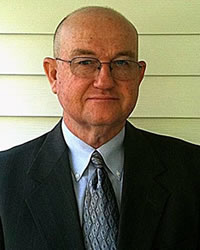
Gary Shepard is teacher and pastor of Sovereign Grace Baptist Church in Jacksonville, North Carolina.

Comments

0 / 2000 characters
Comments are moderated before appearing.

Be the first to comment!

Joshua

Joshua

Shall we play a game? Ask me about articles, sermons, or theology from our library. I can also help you navigate the site.