Bootstrap
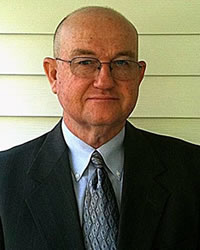
Gary Shepard

The Blood Bought Church

Acts 20:28
Gary Shepard November, 4 2007 Audio
0 Comments
Gary Shepard
Gary Shepard November, 4 2007

Sermon Transcript

Auto-generated transcript • May contain errors

100%
Turn back to Acts chapter 20
where we read this morning. I wonder why anybody would aspire to be a preacher. I say that because I think about
it almost every day. And I'm reminded even more of
it in what the Apostle says in these words. I'd aspire to be as faithful
as he was I would aspire to be as able
to present the gospel as well as he did. But most of all, I would aspire
to have the same gospel. He says in verse 24, he says,
but none of these things move me, neither count I my life dear
unto myself. so that I might finish my course
with joy, and the ministry which I have received of the Lord Jesus, to testify the gospel of the
grace of God." If you look back in this 28th
verse, The Apostle speaking to the elders
from the church of Ephesus urges them to take heed. He urges them in this verse to
take heed to their ministry to those saints at Ephesus And as he does this, he reminds
them of what is at the heart of the gospel. He says, take
heed, therefore unto yourselves and to all the flock over the
which the Holy Ghost hath made you overseers, to feed the church
of God. And then he lets us know what
the gospel is all about. He says, to feed the church of
God which he hath purchased with his own blood. I want to talk to you about the
blood-bought church. And this is the same church that
the Lord Jesus Christ said, upon this rock, that rock that Peter
had just confessed. Not Peter, but the one he had
just confessed, Christ Himself. Thou art the Christ, the Son
of the living God. And our Lord said, upon this
rock I will build my church, and the gates of hell shall not
prevail against it. We find in this book, in many
ways, and in many pictures, redemption. And to redeem something or someone
means something like this, to buy back by the paying of a price. It has to do with the paying
of a price. It means to acquire or gain something
and make it yours. Think about that. To acquire
something or gain something either by price or by labor and to make
it yours. The Lord Jesus is the possessor
of the church on one hand because the Father gave those in the
church to Christ. But he is the possessor also
in that he is the redeemer of the church. He, by his labor and by his paying
of the price, made it his own. He bought it for himself. And
redemption in the Bible, which is said to be by the grace of
God, not by the works of man, but by the grace of God, is through
the blood, the blood shedding of the Lord Jesus Christ. It is the redemption of people. It is the redemption of people. from their sins, from the curse
of the law. And He has redeemed all His people
from their sins and for Himself. Paul says it like this in Romans
3, being justified, or having been justified freely by His
grace through the redemption that is in Christ Jesus. I'm interested in the redemption
which is in Christ Jesus. And I believe that what you'll
find is that when we learn what the Bible says about the redemption
that is in Christ Jesus, you will find it is quite different
and even contrary to the redemption that is set forth by man. You see, most in what is called
modern Christianity, believe that Christ died and shed his
blood for every person in the world without exception. And somehow in their blindness
they imagine that that somehow is a way of exalting God. when in truth it is at the very
opposite. It is a degrading view of Christ
and His redemption. But most of all, is that what
the Bible teaches? Was that the design and scope
and the intention of God in the death of His Son? In other words,
it amounts to something like this. Is the redemption that
is in Christ Jesus, does it make for a possibility or a certainty? Did He in His death make all
men redeemable or did He actually redeem somebody? An old preacher by the name of
John Owens set forth three things which sum up the way that it
has to be. Some people later on call this
Owens' dilemma. And in that he said, one of three
things has to be. In other words, one, Christ died
for all the sins of all men So all men will be saved. We know that can't be because
our Lord has already told us that there are some who would
be lost, already said that most would be lost, and already are
in hell. The second thing He said was
this, that Christ died for some of the sins of all men. And if
that be the case, nobody can be saved. If it's left up to
you and me to satisfy God in the matter of one sin, if there
is left one part of this work of salvation to us and redemption,
we'll perish. And then he set forth the third
thing. And he says, that is, that Christ
died for all of the sins of some men, and they'll be saved. And that's exactly what the Bible
teaches. It teaches us in type and shadow
and picture and plain statement that the Lord Jesus Christ died
for all the sins of some people and every one of them is going
to be saved. Somebody said, but that's not
fair. But the problem is what you and
I call fairness is a blinded and a misguided view of fairness
because we don't have a clue about what's fair. We're sinners. Absolute sinners. Blind to anything
that is right or good or truth. And if left to ourselves, if
God did not act as God sovereignly and justly and mercifully and
graciously, nobody would be saved. Nobody. You see, the Bible sets
forth the death of the Lord Jesus Christ and that redemptive work
as a particular redemption. And I'll tell you what that means.
It means that God's people, all who will ever be saved, all who
will enter into His glory, all of them, He saves by a particular
person, and in that redemption it is for particular persons. It takes place at a particular
place, at a particular time, on a particular cross, and it
has a particular definite result. He did not come from glory on
a fool's errand. He did not come from glory by
a contingency plan with God, but He came as the Redeemer to
redeem man. And He was the Redeemer before
He ever came. If he wasn't, then Job certainly
missed it by a country mile when he said, I know my Redeemer liveth. He said that a long time before
Christ came. And you see, if Christ died for
all men, then why are not all saved? And somebody always responds
to that with this, because they do not believe. But there is
a problem with that. Isn't unbelief a sin? And does not the Bible say that
the blood of Jesus Christ, those for whom it shed, it cleanses
them from all sin? If the Lord Jesus Christ and
His shed blood does not cleanse me from all my sins of unbelief,
I'm in real trouble. You see, we believe in a particular
redemption. in what has been called by some
a limited atonement, and even those who deny a limited atonement
have to admit that the accomplishments of Christ's death are limited
to those who believe. You say, do you believe an unbeliever
will go to heaven? No, they say. Well, they have
in that alone limited the effectualness of the death of Christ to that
person's believing or not. And every person who believes
in hell and eternal judgment, they certainly limit the atonement,
don't they? Why do I, why did the Apostle
Paul, And why do we as a church believe
that the death of the Lord Jesus Christ is such? It's because of what Paul says
in this very verse. He says, Take heed therefore
unto yourselves, and to all the flock, over the which the Holy
Ghost hath made you overseers, to feed the church of God which
he hath purchased with his own blood." I don't know how it could ever
be any plainer. The Lord Jesus Christ in the
shedding of His blood in the purpose of God And toward the
very honor of God, in His death, a redemptive death, purchased
the church with His own blood. He's not talking about the church
in the way that men use that word. He's not talking about
a building. And he's not talking about an
organization. And he's not talking about a
denomination. That word church literally means
something like this. A called out assembly. A called out people. Called out and assembled by God. That's why I believe it. I believe it, first of all, because
it is absolutely consistent with the Word of God. I'm not talking
about a verse out of context here, and I'm not talking about
a verse out of context there. I'm talking about just what Paul
said, all the counsel of God. And when you begin over in the
book of Genesis, in the very first of this book, what you
find out is in the very first types and shadows that we have,
this is exactly what God pictured. those skins that were slain by
God Himself, by the way, and were used as that covering over
Adam and Eve, which was a picture of imputed righteousness, the
blood that was shed in their deaths to cover Adam and Eve. It was for Adam and Eve alone. When you see Noah building the
ark at the exact dimensions and command and instructions of God,
it was an ark that was built for Noah and his family, and
every other living soul on the earth perished in that blood. As a matter of fact, when you
see what God commands him to do, and taking that pitch which
is a Hebrew word that is akin to that word we use in the Scriptures,
atonement. He said you pitch it on the outside,
and you pitch it on the inside of this vessel, and that will
protect the judging waters of the flood. That's the blood. That's the blood of Christ. And
when you look through this book, the blood of that Passover lamb,
the blood of all those sacrifices offered by Abraham and every
other, the sacrifices of the tabernacle, the work of the priests,
they were all for Israel alone. They weren't for Hittite or Jebusite
or Habite or any of the other ites, any of the other people
who lived surrounding Israel. Those sacrifices, those bloodsheddings
were everyone for God's people. And when you see that great man
Boaz, who is a type of the Lord Jesus Christ who is that Goel
in the Hebrew, that kinsman redeemer. When he goes down and he goes
to the gate to pay that price and satisfy every claim against
him, he goes down to redeem Ruth and Naomi. Oh, somebody says, well, don't
you think he ought to have redeemed everybody that was in bondage,
everybody that was in slavery? Evidently not. And no, he could
not, because he was a type of the Lord Jesus Christ, and every
Old Testament type is the same picture, shows the same thing
in one way or another, and not only that, everything in the
New Testament is very plain about it. In other words, what are we going
to base what we believe on? What are we going to base what
we preach on? Is it that which everybody wants
to think is right, or is it that which the Bible says is true? Most especially, the Lord Jesus
Christ says that He died for His sheep. As a matter of fact,
that's what Paul says here in this same verse, the flock. Who
is the flock? They are the sheep of God, of
whom the Great Shepherd says in John 10, I am the Good Shepherd. The Good Shepherd gives His life
for the sheep. He says, as the Father knoweth
me. Even so know I the Father, and I lay down my life for the
sheep." Somebody says, well, everybody's a sheep. Oh, no. They may be a sheep according
to Dr. so-and-so or Reverend so-and-so, but according to the
great shepherd, not everybody's a sheep. As a
matter of fact, Those who in his day, while he was here in
this earth, those who in that day thought that they of all
people were surely the sheep, the people of God, he looked
them square in the eyes and confronted their self-righteousness and
self-deception. And he said, the reason that
you believe not on me is because you are not of my sheep as I
told you you were. The Lord Jesus Christ said that
He gave His life for His friends. Greater love hath no man than
this, that a man may lay down his life for his friends. And you are my friends if you
do whatsoever I command you. You say, well, nobody has ever
done what He commanded them. Oh, yes. All of God's people
do what they are commanded of Christ, which is to leave every
hope other than Him, cast off every other possible way but
Him, repent of every other righteousness but Him, and believe on Him. They said, tell us what the work
is that we may do it. He said, this is the work. that
you believe on Him who has sent me." You go on in the Word, you
find this same Apostle, the Apostle Paul, saying of the church, of
that one which is his bride, husbands, love your wives even
as Christ also loved the church and gave Himself for it. gave Himself a sacrifice for
His bride, for His church. And rather than all, the people
that Christ redeemed by His blood, they are described, lest anybody
get a wrong notion and confine the work of Christ as being for
virtually none, He describes them again and again, not as
all, but as many. He redeemed many. He says in Matthew 20, even as
the Son of Man came not to be ministered unto, but to minister
and to give His life a ransom for many. Not your many and not my many. Not your all or not anybody's
all, but God's many. Hebrews 9, Christ was once offered
to bear the sins of many, and unto them that look for Him shall
He appear the second time without sin unto salvation. That's exactly
what Isaiah recorded that He did. By His knowledge shall my
righteous servant justify many, for He shall bear their iniquity. You see, the words that he uses
in Scripture concerning the death of the Lord Jesus Christ for
his people are words like redeem and ransom and purchase. There's
never anything said about him making a bid for them. There's
never anything said about him trying to make something possible
for them. At the very heart of all of this
is substitution. If he dies in the place of a
sinner, that sinner will not die the death for sin. But not only that, but we believe
this because it glorifies the triune Godhead. In other words,
the redemptive work was not left to be made effectual by the will
of fallen man. It just can't be. In other words,
the greatest work of God, the thing that gives to God the greatest
glory and the most honor and satisfies Him and exalts Him
in every way, that He did this, that, and the other, and then
turned it over to the hands of those whose hearts and minds
are enmity against Him? That would be like George Bush
saying, I've got a plan and a purpose, it's a good one, it's going to
work, everything's going to be fine, and I'm going to turn it
over to Nancy Pelosi and Harry Reid to carry it out for me. That's not going to fly, is it?
No. No, you see, whoever makes the
death of Christ to be effectual, to have actually accomplished
the salvation of an individual. Whoever it is that finally makes
this effectual is the one who gets the glory. In other words,
if Christ died for every single one of us in this room, or every
single person in the world, And the way we'll know whether or
not anybody is actually saved by his death depends on something
that they do. Then they'll have to get the
glory for it. Have to. You see, we'll know. If we don't ever know it before,
and men who think absolutely otherwise, Every person is going
to know the design and the intention of God in the death of Christ
by who actually enters into heaven's glory. They may not know now. They may
not confess it or admit it. They may hate it and despise
it, but they'll have to own and confess that every one of those
who enter into God's heaven, they are the ones that Christ
died for. And this notion that was espoused
by a man named Andrew Fuller and so many who followed after
him, this notion that the death of Christ was sufficient for
all men and yet only efficient for those who believed, that's
ridiculous. You see, redemption is not a
theory. Redemption must display the harmony
of the Godhead. Paul says of Christ, in whom
we have redemption through His blood, the forgiveness of sins
according to the riches of His grace. He says that of the Father. He says that of the Son. He says
that of the Holy Spirit. All together, three persons in
the Godhead in the very first chapter of Ephesians, and He
said, all to the praise of the glory of His grace. Neither by the blood of goats
and calves, but by His own blood He entered in once into the holy
place, having obtained eternal redemption For us. Do you know this book is for
us? Has it ever dawned on you that? You read this book, what
God says, and you try to change that and alter that and make
it say what you want and what other men and people want to
say, it's not for you. This book is a love letter to
the Lord's Bride. It's for us. He says, I have
glorified Thee, Father, on the earth. I have finished the work
that Thou gavest me to do. And to deny this is to deny that He's God. It's
to deny that the blood that He shed on that cross as the sacrifice
for sins, the sins of His people, it's to deny the effectualness
of that. It's to deny that it's the blood
of God. Peter says it like this, for
as much as you know that you were not redeemed, there's nothing
about a possibility here, is there? For you know that you
were not redeemed with corruptible things as silver and gold from
your vain conversation received by tradition from your fathers,
but with the precious blood of Christ as of a lamb." God's lamb
without blemish and without spot. You see, it's in the redemption
of the Lord Jesus Christ that we find it revealing the wisdom
of God. When you start reading through
the book of Romans on the very first three chapters, you read
about man's need of redemption. You go on and you read chapters
48, 4 through 8, and you'll find the provision of it, and 9 and
11, and you'll find God's sovereignty and grace in it. You get to chapter
11. Paul says, Oh, the depths. He's awestruck. And I'll tell
you this, if the redemption that's in Christ hasn't struck you with
awe, you don't know nothing about it. You don't know nothing about
yourself. He said, O the depth of the riches
both of the wisdom and knowledge of God! How unsearchable are
His judgments and His ways past finding out! You see, Christ is said to be the wisdom of God. The wisdom of God. I know God's
wisdom is seen in creation and in providence and everywhere,
but nowhere like in redemption. To plant it, to purpose it, to
purchase it, to produce it, and to perpetuate it. How can He
do that? In Christ. He is the wisdom of
God. You see, the wisdom of God takes
in man's bankrupt state, takes in his inability, his sinfulness,
his deadness, and saves a sinner as he is. There are people who sometimes,
in looking at what some have called the doctrines of grace
or the five points of grace. They say, well, I'm a four-pointer
or I'm a three-pointer or something like that. I say, you're not
even a one-pointer. You ain't even got past the first
point that all men and women in Adam fell and are by virtue
of that fall sinners, totally depraved, helpless, lost, condemned,
and in themselves unable to save themselves. If you ever believe
the first point, that makes all the rest of them absolutely necessary. I love it when Paul says, in
whom we have redemption according to the riches of His grace. Why?
Because Christ is the wisdom of God. He's the only way. He's the only one by whom And
his death is the only possible way that God can remain just
and yet justify us. That's the only way. And oh, it does demonstrate the
sovereign power of God. Like Jeremiah said, is there
nothing too hard for God? Somebody said, how can he do
this? Well, the psalmist said it as well as it can be said.
He said, our God is in the heavens, and he hath done whatsoever he
hath pleased. Now, there has been a day when
I would fall against that. And it is a miracle of grace
that I can read that to you this day, read it, acknowledge it
to be true, but not only that, I'm glad it's that way, or I'd
never be redeemed. I'd still have to bear my sins.
He redeemed by that picture we have of Israel being brought
out of Egypt. He redeemed them by blood and
by power. He not only shed that blood,
That lamb, that blood was sprinkled on the linoleum doorpost, and
God said, when I see that blood, I'll pass over you. Then He made application. He
actually, by might and power, conquered their great enemy,
Pharaoh, and opened up the Red Sea and actually delivered them. Fully redeemed them out of Egypt. And that's why an old preacher
says that redemption is a ransom and a rescue and a release. He has all power in heaven and
earth. As Christ said to the Father,
You've given me power over all flesh that He should give eternal
life to as many as Thou hast given Him. And if His redemption
doesn't accomplish that, And it's not done. Oh, how it does magnify and vindicate
the justice of God. I love the justice of God. Unless we are enabled to see
something of the character of God as a just God in this, we'll
miss it. In other words, if you break
the law in this land, if you commit murder, and you're brought
before me as a judge in the land, and I just kind of tap you on
the hand and send you on your way, you would say that I'm unjust. One of the things that God said
to Israel is this, I'm the righteous God. And because I'm the righteous
God and you're my people, in all your dealings there must
be equity. You must deal justly. You must
weigh out the exact amounts. You must treat everyone honestly
and fairly and deal with your debts and everything. Because
I'm the righteous God. It's like old Job said. How can man who drinks iniquity
like water, how can man born of woman be just with God? You see, men will not consider
the ramifications of their schemes of doctrine in the light of what
the Scriptures teach us about God. You want a picture of it? When
they came for the Lord Jesus Christ, those soldiers did, in
the garden. He said, who are you looking
for? They said, Jesus of Nazareth. He said, I am. And they all fell
backwards. But then he said this. He said,
if you take me, let these go. That's it. The only way that
God could let us go is to take His Son and shed His blood as
that one sacrifice for sin forever. Pay the debt to His faithful
justice in full, the wages of sin being death. Paul said, Christ hath redeemed
us from the curse of the law. How's that, Paul? Being made
a curse for us. For it is written, Cursed is
every one that hangeth on a tree. He showed himself to be a just
God and the justifier of all who believe on Christ by setting
forth Christ the propitiation for our sins. He in His own self
bare our sins in His own body on the tree that we being dead
to sins. When Christ died for sin, I died
to sin, should live unto righteousness,
by whose stripes ye were healed." God must be just, and His justice
must be satisfied and honored and executed, and He must be
faithful and just. if he forgives our sins. Why did John say that? He's faithful
and just to forgive us our sins. Because Christ paid the debt.
Because he put away sin by the sacrifice of himself. And men
make the just God to be unjust by saying that he requires double
pay. because a just God cannot send
to hell those for whom Christ dies and pays the price for their
sin. He can't do it. He's not going
to do it. And this surely does exhibit
the love of God. Isn't it amazing how men talk
most about the love of God, and they degrade the greatest
demonstration of it? You see, God's love is not a
helpless desire. It's not merely a good intention. Christ loved the church. and gave himself for it." That's just absolutely as plain
as it can be. He loved the church and gave
himself for the church. When you look in John 3.16, just turn back there a minute.
John 3.16. It's not like you don't know this verse, but there's
another verse or two around it. John 3.16. He's going to talk
about the love of God. But look back at verse 14. And as Moses lifted up the serpent
in the wilderness, God commanded Moses to make a
serpent of grass. In other words, the people had
sinned against God, and God had sent fiery serpents into the
camp, and everyone that was bitten of those fiery serpents, they
died. And so God says, this is the
remedy. He said, you make a serpent of
grass, hold it up on a pole in the middle of the camp, and everyone
that looks to that serpent, they'll live. That wasn't just a fairy tale. Because he says here, as Moses
lifted up the serpent in the wilderness, That brass serpent
was not a serpent. That brass serpent was not the
result of sin. But like Christ, who was made
sin for us, made in the likeness of sinful flesh, and hung up
on that cross, and all who look to Him shall
live. And as Moses lifted up the serpent
in the wilderness, even so must the Son of Man be lifted up,
that whosoever believeth in him should not perish,
but have eternal life. should not perish, but have everlasting
life." You want to know who He loves? You want to know who He
died for? Everyone that believeth on Him. That means everyone that God
gives that gift of faith to, which is His people. That word world there means most
of all, first, that there is no other in this world. There
is no other Savior. But it means most of all, especially
in this context, that Christ is not simply dying for the Jews,
but for Jew and Gentile, the people out of the world. And it glorifies the person and
the work of the Lord Jesus Christ. John writes in the Revelation,
speaking of Jesus Christ, who is the faithful witness, and
the first begotten of the dead, and the Prince of the kings of
the earth, unto him that loved us and washed us from our sins
in his own blood, and hath made us kings and priests unto God
and his Father, to him be glory and dominion for ever and ever. Now, what's he called? Well,
he's called Jesus. What does that mean? Well, the
angels said, call him Jesus, for he shall save his people
from their sins. He's called the Savior. Does
he save or does he not? He's called the Redeemer. Does
he actually redeem or does he not? You see, there never was, for
one minute, for one second, in all of eternity, a possibility
that God the Son, who came in human flesh, that He would not
do exactly what He came to do. And that
was to purchase, to redeem the church. with his own blood. With his
own blood. Did he or didn't he? If he died
for all, he failed. As a matter of fact, in praying
to the Father in John 17, his whole intercessory work and prayer
is for these he went to the cross to redeem. He says, Father, I
pray not for the world. You mean to tell me that Christ
is going to die for the world, but He's not going to pray for
the world? I pray not for the world, but for those that Thou
hast given me. Given me. I could go on, but I'll just
say this in closing also. This is the only redemption that
produces in the hearts and lives of the redeemed. The right response. Only one. Because it humbles
them. That we are such sinners as to
have required the death of God's Son to save us. That He did freely lovingly and
willingly offer up such a sacrifice for us, that I can do nothing that will
redeem me, but I had to be redeemed by Christ alone, that there's
nothing for me to pay, that there's nothing for me to assist Him
in, that it's really a finished work? in whom we have redemption according to the riches of His
grace. I tell you, this is the only
thing that will give hope to a sinner who is a real sinner. who's found out that he can't
redeem himself, that she can't do anything to deliver herself
out of the bondage of this sin. But here it is. Full, free, finished,
eternal. Christ be praised. Christ be
thanked. Christ be worshipped. The psalmist said, Let the redeemed
of the Lord say so. Revelation, here they are. And
they sung a new song, saying, Thou art worthy to take the book,
and to open the seals thereof. That's the church. singing to
Christ. For thou wast slain, and hast
redeemed us to God by thy blood out of every kindred, and tongue,
and people, and nation." Out of. Again, who are these? These are they which are not
defiled with women, for they are virgins. These are they which
follow the Lamb whithersoever he goeth. These were redeemed
from among men, being the firstfruits unto God and to the Lamb. And it's only a redeemed people
that are motivated to obedience and service and holiness, and
it's only this redemption, this good news of redemption in Christ
Jesus, full and finished, that produces the courage and the
zeal to truly preach these glad tidings of the gospel to sinners. Do you think that there was ever
a preacher outside of Christ that was any more zealous? When
Paul was speaking there in Acts chapter 20, he was saying that
the Spirit of God and every evidence already showed that he's going
to be in trouble when he got to Jerusalem. That he'd probably
die as a result of it. Or are you going to preach
something that is probably going to get you into more trouble?
Because this is the ministry that God has given. This is the
privilege of serving the Lord Jesus Christ. This is the privilege
of preaching to His people, these redeemed ones, this good news. Christ died for them, and He has redeemed them. And
He's going to make sure they find out about it. Because I'm going to preach to
them the gospel of the grace of God. That they have been justified
freely by His grace through that redemption which is in Christ
Jesus. He bought the church with His
blood. Our own worthiness, our own value lies only in this, the price that was paid for us. It's the blood of the Lord Jesus
Christ. He's like old Boaz coming into
this world, going straight to the gate, which was that cross
God had appointed outside of Jerusalem. What are you here for? I'm here
to redeem Ruth and Naomi, which are in themselves a picture of
the church out of Jew and Gentile. Naomi being a Hebrew. Ruth being
that Moabitess Gentile. There they are. That's the church.
What you here for? I'm here to redeem them. I'm
here for my bride. God help us to see it. To rest
in it. To rejoice in it. Proclaim it. Our dear and blessed
Redeemer, we thank you. We feel so ashamed that we are
so thankless, that we do not have the capacity to rightly
appreciate and value what you've done for us. And so often, Lord,
we confess that it's clearly demonstrated in our failures,
our unfaithfulness, our ingratitude, that we do thank
you. We do praise you as our Redeemer. Lord, help us, for we pray in Christ's name.
Amen.
Gary Shepard
About Gary Shepard
Gary Shepard is teacher and pastor of Sovereign Grace Baptist Church in Jacksonville, North Carolina.

Comments

0 / 2000 characters
Comments are moderated before appearing.

Be the first to comment!

Joshua

Joshua

Shall we play a game? Ask me about articles, sermons, or theology from our library. I can also help you navigate the site.