Bootstrap
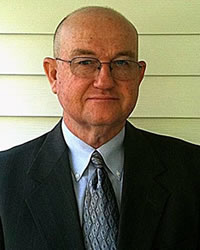
Gary Shepard

The Outcasts Gathering To Christ

1 Samuel 22:1; 1 Samuel 22:2
Gary Shepard September, 23 2007 Audio
0 Comments
Gary Shepard
Gary Shepard September, 23 2007

Sermon Transcript

Auto-generated transcript • May contain errors

100%
Turn in the scriptures with me
this morning to 1 Samuel and the 22nd chapter. 1 Samuel chapter 22. I don't know
if you noticed it or not, but in that psalm that was read, It has as a prefix in the King
James, a prayer when he was in the cave. My message this morning, I've
entitled, The Outcasts Gathering to Christ. the outcasts gathering to Christ. Look with me in the first two
verses of 1 Samuel chapter 22. David therefore departed thence, and escaped to the cave Adulam. And when his brethren and all
his father's house heard it, they went down thither to him. And every one that was in distress,
and every one that was in debt, and every one that was discontented
gathered themselves unto him, And he became a captain over
them, and there were with him about four hundred men." David was already the true king
at this time. He had already been anointed
by the prophet of God as such. But at this particular time,
he is also in exile. He is an outlaw to the reigning
king and a fugitive, so much so that he now finds himself
in a cave. He is rejected by King Saul. by all the priests for the most
part, and by most of the people. And he is very much like the
one of whom he is a type, the Lord Jesus Christ. Our Lord is described as David's
Lord and David's Son. And if you are ever enabled to
find out how this man, Jesus Christ, can at the same time
be David's Lord and David's Son, then you may well be on your
way to being taught of God the gospel of Christ. Christ is the
anointed King of God, who He has set, the Scripture says,
on His holy hill. No one is waiting, nor especially
is Christ Himself waiting, for them to make Him Lord and King. He is already God's holy But as far as the world is concerned,
and I should say especially the religious world is concerned,
he is rejected and exiled and outside of the acceptance of
this world. And he is despised most greatly. And I don't doubt this one bit.
He is despised most greatly as king, as the sovereign king of heaven
and earth, as the king of righteousness and the king of peace. As a matter of fact, The prophet
is led by the Spirit of God in Isaiah 53 to describe him in
this way. He is despised and rejected of
men, a man of sorrows and acquainted with grief, and we hid, as it
were, our faces from him. He was despised, and we esteemed
Him not. From His own lips our Lord said
this to some men in His day, The foxes have holes, and the
birds of the air have nests, but the Son of Man hath not where
to lay His head. He is not welcomed into any home
or palace or place. And in John 7 it says, after
a certain occasion, that every one, every man went unto his
own house. But shortly after that it says,
that Jesus went into the Mount of Olives. Here is this king who is the
king of kings, and yet it is as king that he was condemned
by Pilate. It was as king that he was rejected
by his own people who said, we will not have this man to rule
over us. And it was as king that he was
crucified. Written over his cross was Jesus
of Nazareth, the king of the Jews. And they said, don't write
that. Write that he said that he was
the king of the Jews. But Pilate, being directed by
God and fully in the control of God, said, what I have written
I have written." But right now, at this very hour,
it is as King that he sits at the right hand of the throne
of God, the King forever. He can never be brought down
from that lofty place. He is there certainly because
of his successful accomplishments. And so what we have in this text
this morning are some things that we ought to see in relationship
to King Jesus and those who gather to Him. The first thing is this. And that is that these who are
described here as having gathered to David are in a picture just
exactly like those who gather to the Lord Jesus Christ. You see, they are, in the first
sense, those who are in relationship with Him. If you look at what
it says here, it says, when his brethren and all his father's
house heard it, they went down thither to him. Now, I don't
think that that necessarily means that they were all brethren or
in this relationship in the flesh being associated with Joseph
or Mary in that sense, or with David as he is here in this text. But it is certainly those who
are in relationship, if they picture those who are the chosen
people of God, and they are in relationship with the Lord Jesus
and have been in the family of God since before the world began. But even though they are that,
though they are surely these that were picturing the children
of God, It is not mentioned here of any of the chief captains
of the army, or any of the prestigious individuals of the state, or
the princes, or the leaders, or any such like coming to David. And what is pictured here was
not only the case when Christ was here, but is also the way
it is in the last days, including this day. Those who gather to Christ are
in every natural sense outcast. They are described in this book
as the lost. They are described as those who
are in themselves ungodly. They are said to be sinners. They are said to be these outcasts. Let me read you some verses of
Scripture. In one place, the psalmist says,
the Lord doth build up Jerusalem. He gathereth together the outcasts
of Israel. He gathers together the outcasts
of Israel. And then he says this by another
prophet, and it shall come to pass in that day that the great
trumpet shall be blown. I don't have any doubts whatsoever
that that is a representation of the gospel. He says the great
trumpet shall be sounded. And that was the same kind of
trumpet which was the shofar or the ram's horn that was sounded
in the day of the atonement to announce this sacrifice that
had been made, an atonement that was made. And that day the great
trumpet shall be blown, and they shall come which were ready to
perish in the land of Assyria, and the outcasts in the land
of Egypt, and shall worship the Lord in the holy mount at Jerusalem."
He says there's a people, they're outcasts. But when this great
trumpet is sounded, they'll be gathered together and they'll
come and they'll worship the living God. And then that prophet Isaiah
again, he says this, and he shall set up an ensign for the nation,
a banner. and shall assemble the outcasts
of Israel, and gather together the dispersed of Judah from the
four corners of the earth." So we see here that everyone who
gathers to Christ, just like these who gather to David, every
one of these who gathers to Christ, they do so because they are gathered
by Christ. If you and I have ever been brought
together spiritually, to gather by faith to the Lord Jesus Christ,
it's because He gathered us. And we are outcasts. If you look
at what Paul says in 1 Corinthians chapter 1. 1 Corinthians chapter 1, beginning
in verse 26. He says, For ye see your calling,
brethren, how that not many wise men after the flesh, not many
mighty, not many noble, are called. He is saying this particularly
to preachers of the gospel and generally to all the Lord's people. But God hath chosen the foolish
things of the world, to confound the wise. And God hath chosen
the weak things of the world, to confound the things which
are mighty, and base things of the world, and things which are
despised hath God chosen, yea, and things which are not, to
bring to naught things that are, that know flesh. should glory
in his presence. But of him are ye in Christ Jesus,
who of God is made unto us wisdom and righteousness and sanctification
and redemption, that according as it is written, he that glorieth,
let him glory in the Lord. They are all outcasts. And everyone
that gathers to Christ is of that character in themselves,
and every one of them, therefore, can only gather to Christ because
they are gathered by Christ. Now, notice what it says here.
It says of them that they were not very many in number. Now,
if you consider all the hosts of all the numbers of all the
people of Israel, and you set beside them this number of 400
men, that isn't many, is it? You mean to tell me of all the
Israelites, of all those that David was truly the anointed
king over, and they never gathered to him except 400 men? I think that humanly speaking,
that's a pitiful sum when compared to all the hosts of Israel. And it would certainly in that
day, as well as in this day, be a pitiful sum that religionists
would malk at and scoff at because there were so few. You remember I said that David
here is a type of Christ. And when he went down to where
the army of Israel was set in array against the Philistines,
and David went down there, sent of his father, and he saw his
own brothers there. They mocked him, and they mocked
his work. And they said to him, you are
so naughty. What are you doing? Come down
to where the battle is. Although there was no battle,
they were all towering in fear. What are you come down here to
the battle for, seeing that you've left those few sheep here to
tend? And that's the way the world
regards the Lord's people. as just those few sheep that
Christ has been given into His care. But when you stop and look
back at all the experiences of Christ, first of all, think,
how many were they with Him in the garden? Just a handful. And not only
that, how many of them were actually with Him when He was hanging
there on that cross? Or how many was there when he
was engaged in that trial? Or how many was there that went
to his tomb? Not many. And that is why the
Lord Jesus Himself says in Matthew 7, Enter ye in at the straight
gate, For wide is the gate, and broad is the way that leads to
destruction, and many there be which go in thereout." In other
words, if you base those who are going to heaven or those
who know God by numbers, you're going to be in trouble.
If you judge and determine what truth is by the number of people
who believe it, or you judge how God is by what the number
of people say about Him, you're going to perish. Wide, wide, he says, is that
way that leads to destruction, and many there be which go in
thereout, because straight is the gate, and narrow is the way
which leadeth unto life. And few there be that find it. That's not my narrow view. That's what Christ said. That's
what He said. He says again in Matthew 22,
For many are called, but few are chosen. And everywhere you
look in Scripture, it's the same picture. How many were rescued
from the flood? Eight souls. How many were there saved amongst
the inhabitants of Jericho? Rahab and her family. And you look all through the
Scripture, how many were rescued from the destruction of Sodom? Lot and his two daughters. So here are all these outcasts. And the Scriptures say that they
are a numberless number which no man can number. And somebody
sets that forth as being just nobody knows, we'll never know
until it's all happening. But he says it's a numberless
number that no man can number, but God's already numbered them. The Lord knows them that are
His. And He likens them to the sands
and the stars, but compared to the masses in any age, compared
to the most of the people, the people of Christ have been few
when compared. And so our Lord says to them,
He says, Fear not, little flock. Fear not, little flock, for it
is your Father's good pleasure to give you the kingdom." It
was few, comparatively, that gathered to David. But there's something else also.
They are particularly described in these verses. Verse 2, it
says, and everyone that was in distress, and everyone that was
in debt, and everyone that was discontented gathered themselves
unto him. And that is an excellent description. of every man and woman that gathers
to the Lord Jesus Christ spiritually." What's the first thing that he
says describing them? It says, everyone that was distressed. Now, I know that most everybody
is in one kind of distress or another most all the time. living
as we do here in this world. They're distressed physically,
they're distressed mentally, they're distressed financially,
they're distressed of family and work and whatever it is.
There's always some kind of distress. But that's not what's here. There's
some people who have it in their mind, and this is a total deception,
but they have it in their mind That may be because they didn't
have much, or because they suffered bodily affliction, or because
they had problems and trials in life, that they are automatically
on that basis going to heaven. Not so. You see, those who come to Christ
are in distress, and that distress is because of the working of
God's convicting power by His Spirit. It is something that we do not feel
or ever come to know or experience if God leaves us to ourselves. It is something that can only
be wrought in us by the Spirit of God, and it is, first of all,
the distress of seeing ourselves as sinners. That we are sinners before God,
in ourselves, no matter what we are, to ourselves and to men. It means that we see ourselves
like the Apostle Paul did after having thought he lived all his
life a moral and a religious man, but now realizing that I
was before a blasphemer, an injurious person, A sinner of the worst
kind. And the only way that one such
as Saul of Tarsus would ever be brought to confess that is by the Spirit of God. And
that's the only way you'd ever be brought. And that's the only
way I was ever brought. You see, we never see what we
really are. We never see what we really are
in the sight of God until God shows us. We're so self-deceived
and religiously deceived in this world. We never know that. We
never confess that. And those who come to Christ
are in a distress that is because we've not only seen ourselves,
but because we see ourselves in the light of God. I can tell you this, if God is
not who He says He is in this book, you've got no problem with it. And you can decide how He is
as easily and as well as somebody else. They can decide how they
want Him to be. But if He is, And I assure you
He is, as He says He is in this book. We ought to be in distress. You see, it is in His light,
the Scripture says, that we see light. If He commands us, if
He is our Creator, if He rules over us, if He punishes sin, outside of Christ, we're in big
trouble. We're in eternal trouble. And
we may walk in this life and look good and smell good and
try to act good and whatever we might do, but apart from Christ,
apart from our being gathered to Him, He said, if you believe not, that
I'm He, you shall die in your sins." It's the distress of realizing
that death is coming, and that judgment is certain, and that
eternity is unending. It's the distress of seeing how
that we have defied the God who holds our life and eternal destiny
in His hand. It's the distress of seeing that
we have slighted His mercy and trifled with His long-suffering
grace and rejected His messengers and refused His Son. It's to be in a bad distress. But then it says of them also
that this characterizes them. They're not only in distress,
but they're in debt. They're in debt. You know, most
of us always feel like we're a little short. But the Scripture says that we
have all sinned and come short of the glory of God. It shows that we are in debt
to God who is the giver of all things. We all walk around in
this world, and it's my house and my family and my life and
my this, that, and the other. And the truth is, it is not.
The one thing we can claim is my sin. And we are in debt to the justice
of God because of our sin and death. You see, that's why today's
Gospel and today's preaching just bypasses and redefines so
many words in the Bible, because if we use them, if we believe
what the Bible says about this matter of sin and this matter
of debt to God, Then we won't want to use those words. Such as this, it says that he
gave his life a ransom for many. What's that? That's a payment.
Such as this, it says that by his blood he obtained eternal
redemption. What does that mean? That means
to buy back by the paying of a price. Such is this where Paul
says, you are not your own because you are bought with a price. And since you and I have nothing
to pay with, we have no holiness, we have no righteousness, we
have no way of satisfying the eternal God, we have nothing
of ourselves that He could have because it is polluted with sin,
and we are spiritually bankrupt, nothing that God would ever accept. We're in debt. Unless He's paid that debt, we're
in debt. And then look at the third thing
it says about them. It says they were all discontented. Will no time on this earth does
any sinner, saved or not saved, in this flesh ever find themselves
really contented? Oh, they may be one minute, but
give us another minute, we won't be contented. But what this means is that they
are discontented, and spiritually it means that we are no longer
satisfied with the rags of our own self-righteousness. You know you can be very satisfied
with yourself. with what you've done, with who
you are, and you can go through this whole life being satisfied
in that sense unless you are made discontented by God. We're a lot like a scene in a
movie. I remember they advertised it
so much on TV because it was kind of a catchy thing. But it
was the guy on TV who is from Australia, Dundee, and he meets
up with the gang of thieves on a street somewhere in New York,
and they all pull out their switchblades, you remember? And then he reaches
inside his vest and pulls out that knife that is about three
times as long as the longest one. He said, now, that's a knife. And that's the way we are. We're
kind of flicking our switchblades through life until God confronts
us and shows us superior power, superior glory, great holiness,
and what His justice requires and says, now that's a knife. And that's the same knife. that He says, Awake, O sword,
sword of His justice. Awake, O sword, and smite the shepherd. And if Christ did not bear in
His bosom that sword of divine justice in our behalf, that's
what we have to face. is to be discontented in that
we're no longer satisfied with the old professions and experiences
of religion. Discontented because we're no
longer satisfied with the rituals and the ceremonies and the traditions
and the fleshly appeals of such religion. is to be discontented
because we are no longer satisfied with error and long to truly
know the truth, no longer satisfied with a false peace and a false
refuge, or satisfied with all the offerings and attractions
of this world. So what do such people do? They
come to Christ. Outcast. In debt. Distressed. Discontented. Can't find hope in any other
thing. Can't find peace in any profession
or religion or anything. Can't find hope because all those things are
in Christ. I certainly don't like life in
a cave. I certainly hate to leave the mainstream. I certainly hate
to leave family and such after the flesh and all these things. I really hate in myself to have
to go to a cave and a person who lives in a cave to find these
things. Likewise, the Christ that is
exiled from this world, who is despised by all the main religions
and people of this world, the Christ who Himself is salvation,
who has accomplished everything concerning the salvation of His
people, He is the One. He is the One. You see, he came not to call
the righteous, but sinners. And the Pharisees in his day,
they said, why, he can't be anybody. He's a friend of publicans and
sinners. Oh, if he knew who he was talking
to, he wouldn't be talking to her. But he does. He gave this parable. He said, A certain man made a
great supper, and bade many, or invited many, and sent his
servant at suppertime to say to them that were bidden, Come,
for all things are now ready. And they all with one consent
began to make excuse. The first said unto him, I bought
a piece of ground, and must needs go see it. I pray thee, have
me excused. And another said, I bought five
yoke of oxen, and I go to prove them. I pray thee, have me excused. And another said, I married a
wife, and therefore I cannot come. So that servant tamed and
showed his Lord these things. Then the master of the house,
being angry, said to his servant, Go out quickly into the streets
and lanes of the city, and bring hither the poor, and the maimed,
and the halt, and the blind." That's who comes to Christ. An old writer said about this
very thing, he said it was a deep sense of
need which drove them to him. and
a hope that he could relieve them. A deep sense of need. And yet you know how God describes
the professing church in the last days. Rich and increased with goods
and having need of nothing. And I can tell you this, if you
continue in this life and never have need of Christ, you'll never
have Him. He goes on to say, so it is spiritually,
none but those who truly feel that they are paupers before
God, with no good thing to their credit, absolutely destitute
of any merits of their own, will appreciate the glad tidings that
Christ Jesus came into this world to pay the debt of such. Only those who are smitten in
their conscience, broken in heart, and sick of sin will really respond
to that blessed word of His. Come unto me, all ye that labor
and are heavy laden, and I'll give you rest." That's who I'm
looking for, some needy people. If you're not hungry, if you
don't have a spiritual hunger, what need would you for the bread
of life? If you don't have need born out
of a spiritual thrust, thirst brought by the Spirit of God,
what need would you have for Him who is the water of life?
If you are rich and increased with goods and you don't need
anything, what good would it be to have Him who is the treasure But these men also gathered to
David just like God's elect gathered to Christ. They gathered to Him. Now, there wasn't anything to
be seen by the natural eye. He wasn't living in the palace.
He wasn't doing anything that looked spectacular. He was living
in a cave. So the only reason that they
would have had to gather to Him is Him Himself. It says there, they gathered themselves
unto Him. There were no crowns, no fabulous
clothes, no riches, certainly no ease or rank or reward. Nothing but David himself. Don't you imagine that he was
a very charismatic individual? Naturally. And plus that, having
the Spirit of the Lord upon him. They gathered to him. And that's
the way it is with those who come to Christ. He says, come
unto me. Everyone that is taught of God
and learns of the Father, he said, comes to me. And they can't be stopped. You remember that woman who had
an issue of blood? There was a big crowd around
the Lord Jesus. And there were people who were
trying to get her out of the way so they could get there. Not for the same reason that
she wanted to be there. They wanted some bread or something
like that. With her it was life or death.
And she pressed in the press till she touched his garment. And their coming to David was
also a coming forth just like a believer's
is to Christ. Everyone who sought David in
the cave turned their backs on the kingdom of Saul, on the religion
of Judaism, at all costs. That's what repentance
is. That's what conversion is. Repentance
is being brought to turn from, acknowledge the truth concerning
what God says about Himself and His salvation in His Word. In Hebrews 13 it says, Wherefore
Jesus also, that he might sanctify the people with his own blood. in order to do this, suffered without the gate, outside
of the gate, outside of Jerusalem. Let us go forth, therefore, unto
him without the camp, or outside the camp, bearing his reproach. For here we have no continuing
city, but we seek one to come. Now, I don't think those guys
that went down to David thought they were going to live in that
cave forever, do you? They believed God, that He was
the King, that He would sit on that throne and reign and be
a blessing to the people. You see, outside of the city
where Christ was crucified is where the leper was compelled
to live. It was where the criminals were
condemned and slain. It was where the defiled were
put and stoned. It's where the filth was deposited. The Bible says Christ being numbered with the transgressors
being made sin for us, being made a curse for us, died outside
of Jerusalem, died outside of the favor of Judaism, and most
of all died forsaken of God. But if you ever find out why,
He cried out on that cross, My God, my God, why hast thou forsaken
me? You'll find hope. That's why we flee to Christ.
Because what He says to the Father and about the Father is the clearest,
most personal proof and evidence that He was bearing the sins
of these outcasts in his own body on the tree to the extent
that when God brought that justice to bear on him, he who is of purer eyes than
to behold iniquity could not behold it even when it was brought
to bear on his son. And if it was dealt with by his
son in my place, It's no more. No more. One man said, God requires us
to forego and renounce all advantages and privileges, whether social,
financial, political, or religious, which are inconsistent with an
interest in Christ, communion with Him, and fidelity to His
cause. leave it behind and gather to
Christ. And they received David like true believers receive Christ. If you look in that second verse
again, It says that they gathered themselves under him, and he
became a captain over them, a king over them, an acknowledged, loved,
obeyed king, captain to them. He was king over all, but he
was king in this special sense under them. Those who come to
Christ, they come to Christ and receive Him as Lord, as King. They believe as they are commanded
in Scripture, they believe on the Lord Jesus Christ. The first thing we do when we
believe on Christ is we bow to His sovereign authority as the
Lord and King over all. No matter what they had been,
they now became His servants and His soldiers, and they continued
so, submitted to His will. and faithful to his cause, and
righteous before God in him." I probably told you this, I know
I have, but I read this story once about Napoleon and a young soldier who was standing
in the line. They were inspecting the troops. The general, Napoleon, was riding
down on his horse. He was a small man, and his horse,
therefore, was sort of bigger. You know, sometimes the smaller
the man, the bigger the horse. But he was riding along inspecting
the troops, and something spooked his horse. And the horse just
went wild and reared up and snatched the reins out of Napoleon's hand
and such as that. And everybody just froze except
for one young private. And he leaped out there in front
of that horse and grabbed the horse's reins and calmed him down. Napoleon looked down at him and
he said, Thank you, Captain. And so that man left the line
and troops. He went over to the tent, the
mess tent that the officers were in. And he went in there and
he sat down to eat. Some of them looked at him. They
saw his rank, apparent rank, his uniform. They said, what are you doing
in here? He said, I'm a captain, and this
is where the captains eat. They said, who said you're a
captain? He walked to the tent door, pointed
his finger at Napoleon, and he said, he did. He was a captain simply because
the general said he was. And that's what justification
is all about. That's what imputed righteousness
is all about. It is to be declared righteous,
acceptable, holy, sinless by God, all based on the doing and the
dying of His Son. You say, are you a righteous preacher?
Yes. Because God says that I am in Christ. I'm an outcast of myself, distressed
and in debt and discontented. But I've been gathered by God's
grace and power to King Jesus. King of righteousness. king of peace. I am whatever he is to the Father. And I'll say with Paul, I am
what I am by the grace of God. May the Lord gather us to his
Son. Oh, it's to gather from all this
world and its hopes and its glories and its favor and such, but it's
to gather to God. You go back and you read in the
Revelation, the vision, John sees us. He's riding this horse,
has a bloodied vesture. as every sign of victory and
glory, King of kings and Lord of lords." And you just go on and read farther. And then you tell me, was it
a good thing that they gathered to David in a cave? Absolutely, because they reign
with David in a palace. Is it a good thing to gather
to Christ? Yep. He says those who suffer with
Him will also reign with Him. Our Father, this day we give
You thanks for such a glorious Savior, the one of whom David
is a picture. The one who truly is the man
after your own heart, the man that represented all
your people, conquered all their enemies, wrought a glorious victory
salvation on their behalf. And though the world may exile
him, and though religion as a whole may cast him aside, tell him
to flee. Give us grace that we might be
gathered to him. Lord, we ask that you take your
word and bless it to the hearts of your people in our great weakness. Honor yourself. We thank you
for your blessings to us. Grant to us faith that we might
look to Christ alone. For we thank you and pray in
His name, and by His merits. Amen.
Gary Shepard
About Gary Shepard
Gary Shepard is teacher and pastor of Sovereign Grace Baptist Church in Jacksonville, North Carolina.

Comments

0 / 2000 characters
Comments are moderated before appearing.

Be the first to comment!

Joshua

Joshua

Shall we play a game? Ask me about articles, sermons, or theology from our library. I can also help you navigate the site.