Bootstrap
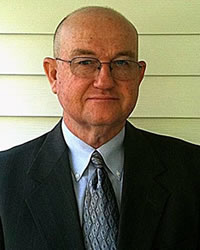
Gary Shepard

O Lord Revive Thy Work

Habakkuk 3:12
Gary Shepard September, 12 2007 Audio
0 Comments
Gary Shepard
Gary Shepard September, 12 2007

Sermon Transcript

Auto-generated transcript • May contain errors

100%
The book of Habakkuk and the third chapter. Theologians sometimes refer to
prophets like Habakkuk as the minor prophets. But the truth is, there has never
been a minor prophet. And the reason being is because
they were all sin of God, they all had the message of God, and
they all spoke the things concerning the Lord Jesus Christ. That hymn that we just sang, was a hymn written, I think,
in about 1858 by a man by the name of Albert
Midlane. I don't know much about him.
I know he was a businessman. And I read somewhere that he
wrote something over 300 hymns. couldn't find most of them, but
the ones I could find were really good. But I'm sure that he got the
inspiration for that hymn from this text tonight. If you'll look with me here in
Habakkuk chapter 3, it says, a prayer of Habakkuk
the prophet upon Shigenoth. O LORD, I have heard Thy speech
and was afraid. O LORD, revive Thy work in the
midst of the years. In the midst of the years make
known In wrath, remember mercy." The prophet's words here are,
I believe, both a prayer and a song. That's what that strange
word, shiginoth, in verse 1 means. Somebody defined that as a mournful
ode, a mournful song, one of supplication. And the Bible shows us as a whole
that the Lord is faithful to revive His work among his people in many times
of adversity and decline and difficulty. And so I believe that this word
or this prayer or song can be applied to every season when the church or believers
individually suffer these declines and difficulties and trials and
afflictions. And if you notice here, I believe
he sets forth the right word and example because mercy is
what we are to flee to for a refuge. And what we are to rely on as
our only plea, mercy being the kind treatment of an enemy. And we as the Lord's people are
always found, I'm afraid, though not His enemy, yet being found
in a position sometimes even as His enemies. And so we can never say, Lord,
remember our merit, or remember what we've done, or remember
how faithful we've been, but, Lord, remember Your own mercy. Mercy. And that's the prayer of my heart. This is the prayer of my heart. I pray the same thing. And I pray on the same ground,
because I don't have any other, for the Lord's mercy. You see, as I said, the work
of God here can mean either His work as it refers to us as individual
believers, does it not say, for we are His workmanship? And then naturally, of course,
as it refers to His church as it is as a whole in this world,
and as it is in all of its visible local expressions? And it has
to do with his people and his church primarily because he says,
Lord, revive. And to revive here presupposes
that life is present. Of course, that life is in Christ. He is our life. And you can't
revive that which is not alive. Actually, what it means here
is this. It means to preserve a life. Lord, preserve a life. Your work. And this ought to be our plea,
and it ought to be our prayer, it seems like, even more in these
days of apostasy, of unbelief. And it should be our prayer for
ourselves. It ought to be our prayer for
our brethren. And it ought to be our prayer
for all the Lord's church here in this world. We're the same
weakness in this flesh. We face the same difficulties. We face the same persecuting
world. But I want you to notice, first
of all, what it was that brought this prophet to say this. Verse 2, he says, O Lord, I have
heard thy speech. I have heard thy speech. That surely means, on the one
hand, literally heard from God, but most especially spiritually
heard from God. As a matter of fact, here in
this verse, this word, speech, when he says, I have heard thy
speech, is I have heard thy report. I have heard the hearing. And that is the same thing that
another prophet says in Isaiah chapter 53 when he says it like
this, same thing. Who hath believed our report? Evidently, Isaiah and this prophet
Habakkuk and all of the Lord's believing people, they've heard
something. They've heard from God something
that everybody else obviously hasn't heard. I've heard the
report. And here is the reason they heard.
Isaiah tells it clearly. He says, And to whom is the arm
of the Lord revealed? That's the only reason one sinner
hears from God and another doesn't. And especially the only reason
why one sinner hears in the heart, believes, then the other doesn't,
it's because he reveals himself. He reveals his truth. He reveals his Son. And this
has to do with God's speech. And God's speech is this written
Word. And it is the speech of His truth
and His gospel that is declared faithfully by those who preach
His Word. He said, I've heard thy speech. In the book of Proverbs it says
this, From hearing the law, from hearing
the Word, the speech of God, even his prayer shall be abomination. If he doesn't hear, if he doesn't listen first, if he
doesn't believe first, then even his prayer is abomination in
the sight of God. You remember the king Saul who
was told by God through the prophet to take and to slay everything
that had to do with the people that they were finding as their
enemy, destroy everything. And one day the prophet came,
sent of God again. He said to this king, he said,
now what is this that I hear? The lowing of the cattle and
the blading of the sheep. Oh, did not God tell you to destroy
everything and keep nothing? Oh, he said, but we save the
best of the cattle and the best of the sheep to offer to God
as a sacrifice. He said, to obey is better than
to sacrifice and to hearken, to listen, better than the fat
of rams." He said, I've heard your speech. Have you heard from
God? I'm not talking about God speaking
audibly. as He did on a couple of occasions
in the New Testament. But every child of God, everyone
who is brought to believe God, will hear from God, hear through
His Word, hear through His Gospel, and take what He gives in this
book as God breathed. This isn't a book on philosophy.
It isn't a book on history, although it provides the most accurate
history. It is the Word of God. Thus saith the Lord. And he heard,
as all the Lord's people do, in their heart. They hear spiritually,
enabled by the Spirit of God. They hear with the hearing of
faith. I've heard something. And I'll
tell you this, one day I heard something. And I've not been
the same since. I've not viewed things the same
way since. I've not viewed myself the same
way since. I've not viewed God the same
way since. I've not viewed how God saves
sinners the same way since. And neither will anybody else
who hears what He says. You see, not many hear like Samuel
did, even in his youth when the Lord spoke to him, and he said,
Speak, Lord, for thy servant heareth. And when God gives by His Spirit
all those instructions there in the revelation to the seven
churches of Asia Minor, and therefore to those that represent the church
in all ages, He says this almost every time, He that hath an ear,
Let him hear. That's what moved the prophet.
He says, I have heard. And when he says that, I have
heard thy speech and was afraid. That's why I know that so many
people have not in any way heard from God. because they have not
the fear that the prophet is speaking of here, which is the
fear of the Lord, which God says is the beginning of wisdom. They
talk about God, they talk about Jesus, they talk about the church,
they talk about all these things, but I know in my heart of hearts
that they haven't heard from Him. And I was thinking about this
today. Humanly speaking, it would be much easier on this flesh,
much easier on the mind and the emotions and such as that, on
the one hand, if you never heard. You say, what do you mean? I mean
you could cruise down through this life, headed for destruction
with ease and happiness and temporal satisfaction and all these things. But if you hear from God, it's
going to bring about a fear. It's going to bring about that holy
reverence toward Him. I'll tell you, I can just remember
In some ways, when the Lord first began to reveal His truth to
me, His gospel to me, and I began to find out how He really was,
it seemed like every expression that I used for God or for His
Son just didn't work anymore. And not only that, but the way
that I said it, It just wouldn't work anymore. What happened? I was afraid. I wasn't afraid. When the Lord reveals His grace,
we aren't afraid that He will then somehow cast us off, though
we may feel that at the beginning. But believing on the Christ that
He reveals as all of our salvation, we don't have a fear that He'll
punish us or discard us or cast us off. But we reverence Him. And we have a fear for our families,
and our friends, and our acquaintances, and the men and women in our
world. We have a fear for that judgment
that they'll face apart from God's grace. And so, in that
light, Paul says, knowing the terror of the Lord, we persuade
me. but unregenerate people. The Apostle says, they have no
fear of God before their eyes. And I see that every day. I see
that on every hand. I see that, it seems like, on
every t-shirt I meet, and every bumper sticker, and every word
that comes out of somebody's mouth, and most especially by
religionists in this world. They have no fear of God before
their eyes. And so when the Lord's people
who have heard His speech, who have heard and have some knowledge
of His Word, of what He says and what He requires and what
He commands even us as His people. When we see a decline, when we
see the lifelessness or the lack of vitality in our own selves
and among the Lord's people and the church as a whole, you can't be satisfied. You see, all these false prophets
in his day, as well as in our day, they are quite willing to
accept the counterfeit. They are quite willing and satisfied
to delight in that which has the outward appearance, that
form of godliness. But the prophet looked around
him, he saw the decline, saw what was going on, saw what was
being said, saw how God supposedly was being worshipped and what
was declared by the false prophets. And because he'd heard God's
speech, he knew something about God's Word. He said, I was afraid. I'm afraid for my generation.
I'm afraid for the church in this day, in one sense of speaking. And it reminded me of this. It
reminded me of a day in 1 Kings. Let me read it to you. It says,
And it came to pass in the fifth year of King Rehoboam that Chishak,
king of Egypt, came up against Jerusalem And he took away the
treasures of the house of the Lord and the treasures of the
king's house. He even took away all, and he
took away all the shields of gold which Solomon had made. He went into the temple. He went
into the king's palace. He took out everything that was
of any worth and value. He gutted those places, and He
even, it says, took what was very important, and that was
the gold shields that Solomon had made. That makes
me think of the great work of Christ, our Solomon. And we're
living in this day in which it seems like that men have taken
and they have gutted out of everything that would pertain to God that
which is good and lasting and real and true. In other words,
everything that glorifies God. Everything that gives His people
hope and peace and joy and comfort, they've gutted it out and there
isn't anything left. And they've done this. Listen
to this. So what did King Rehoboam do? And King Rehoboam made in
their stead, in the stead of these shields of gold, made in
their stead brazen shields, and committed them unto the hands
of the chief of the guard, which kept the door at the king's house.
And it was so, when the king went into the house of the Lord,
that the guard bare them, and brought them back into the guard
chamber." And they were nothing but brass.
They were in the place where the gold used to be. And I just
imagine that the king had those men to spend the greater part
of their days polishing that brass to make it as shiny as
it was. And yet, all the time, it was
nothing but a counterfeit. And Habakkuk looked around in
his day and he saw those shields of brass and those people polishing
them, in a sense, as hard as they could, trying to make like
this is the truth, this is the gospel, this is God, we're worshipping
Him, doing all these things, this is grace, this is love,
this is mercy, this is everything. But it wasn't, because he'd heard the speech
He'd heard God say how he was and how he could only be worshipped
through and by a sacrifice and a praise. He heard all these
things from God and he looked about him. He's afraid. So what does he pray for? He prays for God to do something. You know, if there is a chief
shame, I'm afraid amongst the Lord's
people. I'm not talking about false professors
here, but I'm talking about the Lord's people. If it is a chief
shame among us, and me the most shameful of us all, it is that
we spend more time complaining about the way things are, talking
about the way things used to be, rather than asking God to
do something. He said, you have not because
you ask not. This flesh finds it so much more
easy to complain and murmur and think about All the things –
it's just like somebody was saying once about a Welsh preacher.
They say you can always tell a Welsh preacher. Why? Because
he's always preaching on revival. He's always talking about how
things used to be. He's always talking – I don't
know about that for sure, but I've heard that. But Habakkuk prays for God to
work. To do something by His life-giving
Spirit. To do something to work for His
work. That's what His people are. That's
what His church is. They're His planting, the Scriptures
say. They're His building. And Paul, writing to those Philippians
with their difficulties, just like every other church there
in the New Testament, he said, I'm confident of this. I'm confident
that God, who has begun this good work in you, He'll perform it. right until
He brings you to stand in His presence. He will perform that
work because it is a good work, and the only one who can do a
good work is God Himself. You see, everything that pertains
to a believer, everything that pertains to the church of the
Lord Jesus Christ, which is His body, is according to God's plan. He planned it all. He purposed
it all. He purchased it all. And He produced
it all. It's His work. When I first began to hear and believe the
gospel, I thought you could revive this denomination that I was
in. I was going to be a part of leading
the Southern Baptists back to where they came from and belonged.
And then after a while, the Lord finally taught me that you can't
go back to where you've never been. And He never will revive somebody
else's work. He will not revive man's work
because there is no life in it. He only revives His work. And He always revives His work
because He alone is the one able to bless and revive and preserve
a life. And if He wasn't, and if He didn't,
if He left us to ourselves, What would we be? And that in a hurry. Way back in Ecclesiastes, he
gives us something that you can just hold on to this. The wise Solomon led by the Spirit,
he said, I know that whatsoever God doeth. Now, this is just
what he does. Sometimes I hear people say,
well, I don't want this to fall apart. I don't care if everything
that God's not in falls apart. And you needn't fear for what
He's in. He'll preserve it. But he said,
I know that whatsoever God doeth, it shall be forever. Nothing can be put to it, nor
anything taken from it, and God doeth it that men should fear
before Him." It's His work. I know us preachers, we get all
bent out of shape sometimes. We're fretful and fearful about
this and that and the other, but we just have to be brought
back again and again to remember this is His work. Isaiah again, thus saith the
Lord, the Holy One of Israel, and His Maker, ask me of things
to come concerning my sons, and concerning the work of my hands,
command ye me." Ask me about my work, he says. Don't tell
me about your work. Ask me about my work. And so the plea goes out in Psalm
85. He says, Will thou not revive
us again? And for a reason, that thy people may rejoice in
thee. That's what happens when the
Lord revives His work. His people go back. to rejoicing in Him and only
Him. And I am convinced that He will
do whatever it takes to bring all His people back to rejoicing
in Him. not in each other so much, not
in the local church so much, not in this or that or the other,
but when He revives His work, it brings those people to rejoice
in, to trust in, to remember their hope is only in Him and
Him alone. Let Thy work appear unto Thy
servants, and Thy glory unto their children, and let the beauty
of the Lord our God be upon us. The Lord will perfect that which
concerneth me. Thy mercy, O Lord, endureth forever. Forsake not the works of Thine
own hand. his work. And that's why he gets
the glory. Except the Lord build the house,
they that labor, they labor in vain. Christ said upon this rock,
I will build my church. All his people are born not of
the flesh, but of God. This salvation is of the Lord. And so he says, I heard your
voice. I heard your speech. I heard
it in the depths of my soul. I heard it as words from the
living God. I heard it as necessary words. I heard it as truth which will
never falter. I heard it as your purpose which
will never fail. I heard it as it reveals who
you are and as it declares the only way of salvation in that
one that you've appointed, Christ Jesus, by His cross. I've heard
that. And I looked around, and I'm
afraid. And so he prayed, Lord, revive
your work. You see, the church of the Lord
Jesus Christ is characterized by truth. The church of the Lord Jesus
Christ is characterized by grace. It's characterized by love. It's characterized by mercy. And when the Lord revives His
work, He revives and brings again afresh and new displays of these
things. He revives and the truth becomes
much more important than it was. He revives and grace becomes
much more important than it failed to be. Graciousness and love
and mercy, not only the mercy and love of God to us, but the
likewise manifestations of that by His Spirit through us. You notice he didn't say, well,
I guess if it's just going to be, it's going to be. No, he prays, Lord, revive thy works. And he desires God to do what
is necessary to be done, which may and often is severe. Just remember mercy. In your professing church, in
this world in which we live, do something for your glory.
Make known. Make yourself known. That's the delight of the Lord's
people. Lord, get honor for Yourself. Get glory for Yourself. Make
manifest Yourself. Not only to me. Do that, please. Make known Your power and Your
presence and Your quickening Spirit in my own heart in this
work, but, Lord, in the church and in the world. Make known your gospel. Did you know that the Lord God
has joined His glory to doing good for His people? His glory, His honor, having
committed Himself to it in that everlasting covenant, His glory
and honor is joined to His doing good to His people. His promises, His providence,
His power all work not only for the good of His people, but for
the glory of His name. He said, make known. And in wrath, remember mercy. Now, the Scriptures say that
the Lord's people will all be saved from wrath in Christ. But the Lord, all the days of
this world since the fall, has clearly demonstrated His wrath
toward the inhabitants of this earth, the effects of which have
often fallen on his people." Habakkuk looked out at this nation
and this world in which he lived, just like it is in our day. He
looked out in it, he saw inevitably. And God had told him, this is
what he's going to do. He's going to bring his wrath
and judgment. But he said in the midst of it,
remember mercy. Remember the one who is the Lord
our mercy. Remember the one who will be
the mercy performed. And he calls him by that covenant
name, Jehovah, O Lord. I hear that all the time. Oh,
Lord. I want to say to people, if you only knew who you were
talking about. Jehovah God. And he calls Him, Oh, Lord. Oh, Jehovah. In His redemptive
character, the Redeemer, the Eternal, the Self-existent One. Oh, Lord. I've heard your speech. I've heard you report. I've heard
and you've brought me to believe your gospel. I was afraid. Revive thy work in the midst
of the years or as the years approach. And those are the years
of God's purpose and the years of our individual lives and the
years that precede the coming of our Lord Jesus Christ, the
years of these last days. this year, this hour. Revive your work. Remember mercy. Cause your gospel
to go forth in power. Work in the hearts of men and
women in this world to bring them to a knowledge of Christ,
and especially work in the hearts of your believing people that
we might know this refreshing Make known. One old writer said, make known more of himself as the covenant
God and father of his people. Make known more of his mind and
will and of his love and grace and mercy in Christ. that he
would make known more of Christ, of his person, of his offices,
and his grace, that he'd make known more clearly the work of
his Spirit and grace upon their hearts, and display his power
and the efficacy of his grace in reviving it and carrying it
on. that He would make known more
largely His covenant and promises, His truth and faithfulness in
the performance of them, that He would grant a larger measure
of knowledge of all divine things of the gospel and of the truths
of it, such as is promised and is expected will be in the latter
day, when the earth shall be everywhere filled with the knowledge
of the Lord. Look back over in chapter 2 and
verse 14. In the midst of all that he said
about this people and this world, he says in verse 14, For the
earth shall be filled with the knowledge of the glory of God,
of the glory of the Lord, as the waters cover the sea. And the earth shall be filled
with the glory of the knowledge of the Lord. So evidently old Albert Midlane,
he had some knowledge of this passage. And so he wrote this hymn, and
this is the first verse we sang it. Revive thy work, O Lord. Thy mighty arm make bare. Speak with the voice that wakes
the dead, and make thy people hear. Hear. O Lord, I pray, revive your work. Help us to see the difference
between man's work and your work. And in the midst of the years,
remember mercy. Lord, we pray that you would
hear us tonight for Christ's sake. Lord, we know that this prayer, this word, affects
so many individuals, so many circumstances, so many things,
even in the world in which we live. We don't know them all. And oftentimes,
Lord, we have difficulty discerning what is Your work and what is
not. But that doesn't change our prayer.
We pray that You would revive Your work. Cause us, Lord, to continue to
hear Your speech, Your gospel, Your Word. and continue to give us that
fear of the Lord, which is the beginning of wisdom. That fear of the Lord, which
brings us to know we have nothing else to fear. And Lord, in all things, help
us. Save us or we perish. Keep us from falling. And preserve
us unto that day. And by your grace we'll praise
you for eternity. And by your grace we'll begin
to even this day. That all honor and power and
glory forever and ever Be Yours. Amen.
Gary Shepard
About Gary Shepard
Gary Shepard is teacher and pastor of Sovereign Grace Baptist Church in Jacksonville, North Carolina.

Comments

0 / 2000 characters
Comments are moderated before appearing.

Be the first to comment!

Joshua

Joshua

Shall we play a game? Ask me about articles, sermons, or theology from our library. I can also help you navigate the site.