Bootstrap
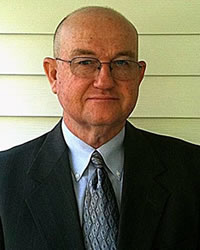
Gary Shepard

We Have An Anchor

Hebrews 6:18-20
Gary Shepard September, 2 2007 Audio
0 Comments
Gary Shepard
Gary Shepard September, 2 2007

Sermon Transcript

Auto-generated transcript • May contain errors

100%
Turn with me, please, this morning
to the book of Hebrews. Hebrews chapter 6. I sometimes think about how foolish the book of Hebrews would be
if God had not given us first the Old Testament Scriptures. But I want you to look here with
me this morning in Hebrews 6, beginning in verse 13. The apostle says, For when God
made promise to Abraham, Because he could swear by no greater,
he swore by himself, saying, Surely, blessing, I will
bless thee, and multiplying, I will multiply thee. And so after he had patiently
endured, he obtained the promise. For men verily swear by the greater,
and an oath for confirmation is to them an end of all strife. Wherein God, willing more abundantly
to show unto the heirs of promise the immutability of his counsel,
confirmed it by an oath. that by two immutable things,
and that word immutability means unchanging, unaltering, that
by two immutable things in which it was impossible for God to
lie, that we might have a strong consolation who have fled for
refuge to lay hold upon the hope set before us, which hope we
have as an anchor of the soul, both sure and steadfast, and
which entereth into that within the veil. Whether the forerunner
is for us entered, even Jesus, made an high priest forever after
the order of Melchizedek." I believe that there is a great
consolation to be found in these verses, not only for the Lord's
believing people, but for all his people that he would yet
bring to believe on the Lord Jesus Christ. There is a hymn, an old hymn,
that I believe was written with these verses, verse 19 especially,
in mind, and it goes something like this. We have an anchor that keeps the soul steadfast
and sure while the sea billows roll, fastened to the rock which
cannot move, grounded firm and in the Savior's love. And that's what I call this message
this morning. We have an anchor. And since we live not far from
the sea, we most likely know what an anchor
is. We've got these Navy guys with
us this morning, and we're thankful, and I know they know what an
anchor is. It is a device by which a ship
is secured and held firm. And it is especially beneficial
in the midst of strong storms or swift tides and such as that. And God, in His condescending
mercy and grace to us, uses that picture to show us His blessing
to believers. Our text before us speaks of
an anchor. But this is the most important
anchor, because he describes it as the anchor of the soul. That's what we really ought to
be interested in, an anchor for the soul. And when you read these
verses, this anchor of the soul is spoken of in a threefold way. There are three things about
this anchor that characterize it. One is it's said to be a
hope. Hope. And then it's described as a
refuge. And then it's called a forerunner. this anchor. And if you notice,
there are some things here in light of these few verses that
are just clear when you read it and listen to what God says
about it. And the first thing that I'd
want us to notice about it is, what is this hope? The hope here is distinguished
from the strong consolation that we read about in verse 18. They are not the same in one
sense. And so that means that the hope
spoken of here is not the grace of hope in the heart of the believer. And by that, he shows us that
our hope is not in our hope in that sense. Our hope in our hope
is not the anchor of the soul. Faith in our faith is not the
anchor of our soul. But this hope is set forth distinguished
because this hope is said to be set before us. And so this hope is objective. It's outside of us. It's not
subjective. And this hope, he says, entereth
into that within the veil. Whatever this hope is, this hope
outside of ourselves, it has to do with things of God, things
in the presence of God, in that true tabernacle of God, in heaven's
holiest, the most holy, which is God's presence. And not only that, but it's said
to be laid hold of. lay hold of this hope, and it
is really what is described in the next chapter as the better
hope. Look down in Hebrews 7 and verse
19, where the Apostle says, For the law made nothing perfect,
but the bringing in of a better hope did. As a matter of fact,
this whole epistle of Hebrews is described as a book of better
things wherein God the Spirit takes the things of the Old Testament
which were types and shadows of Christ and shows how He is
a better priest, that this is a better covenant that it has
better promises and is ratified, if you will, by better blood. And all these things have to
do with one. For the law made nothing perfect,
but the bringing in of a better hope did by the witch. We draw nigh unto God. And that can only be the Lord
Jesus Christ, who is this hope that the Apostle speaks of, and
is surely the hope by which we draw nigh unto God, the hope,
the better hope that is pictured in all these Old Testament types
and shadows and promises, but who is in Himself far far better. He is the hope spoken of, and
He is that one hope describing Himself in this way, I am the
way, the truth, and the life. No man cometh unto the Father
but by Me. He's that better hope by which
we draw nigh unto God. And Paul, writing to the Ephesians,
says, for through Him, only Him, but through Him we both have
access by one Spirit unto the Father. He is this one way, this
one hope, and is called that by Paul writing to Timothy when
he describes himself first as Paul and an apostle of Jesus
Christ by the commandment of God our Savior and the Lord Jesus
Christ who is our hope. The hope here is the divine person. the Lord Jesus Christ, the eternal
Son of God, the Word that was made flesh and dwelt among us,
the One by whom came grace and truth. That is who this hope
is. But also, he says that this hope
is set forth before us. How is this hope? How is the
Lord Jesus Christ, our hope, set before us? Well, all the
way back in the everlasting covenant of grace. In other words, the
Bible first describes Christ as being before all things. He is in the book of Proverbs,
in a most marvelous way, describes himself as not only wisdom, but
the one that was in the beginning of all things, before creation,
before this world, before man was in this literal sense, before
all things in the mind and in the purpose of God. He was set
forth as that head and mediator and surety and guarantor of everything
that God has for His people. But He's not only set forth in
that everlasting covenant, but He is also the one who was set
forth on that cross. outside of Jerusalem when he
was set forth as the substitute for sinners. He was set forth
as that one suffering in the room and stead of God's people,
pouring out his life's blood to satisfy the law and the justice
of God on our behalf. He was that one set forth between
earth and heaven bearing in His own body the sins of His people
on that tree. And for that reason, and for
this very Word that we have mentioned here, it says that when He died,
when He hung on that cross and yielded up His life in the place
of His people and satisfied God, it says that the veil of the
temple was rent in twain from top to bottom. And that shows the way by which
we draw nigh unto God. It was rent in twain, that veil
that always in the Old Testament separated God and men. That way that was never allowed
to be opened except by that great high priest once a year and by
that Passover sacrifice. But it says when he suffered
on that cross that the veil in the temple to show that it was
God who is satisfied. It was God whose work was accomplished. That veil without the hand of
man was torn in two from top to bottom signifying that the
way into the holiest, the way into God's presence, the way
of acceptance, this is the way, Christ who is the way. And so in this tenth chapter
of Hebrews, Paul, if he's the writer, says this, by a new and
living way. This is the way we come to God. By a new and living way which
He hath consecrated for us through the veil, that is to say, His
flesh in His death. But in all truth, I believe that
in this particular context, What he's talking about is a reference
to the Gospel. He was set forth in that everlasting
covenant. And he was set forth on that
cross, suffering and dying. But Paul is talking here, I believe,
in reference to the Gospel. That he is set forth before men,
and most especially For his people, he is set forth in the gospel,
in the gospel of Christ, in the gospel of God's grace. And that gospel is described
as good news. It's described as glad tidings. And so we have this hope, we
have this anchor, and that is the good news. We have an anchor
for our souls. We have a hope, not a wish. You and I may wish for a lot
of things. We may entertain notions and
wishes and may even call them hopes that there is no reason
for us possibly to have any hope for. But a hope in the truest
biblical sense is that which God's people have, which is based
on the promise, the clear testimony of God and the work of Christ. Turn back over to the book of
Colossians for a minute. There are a lot of people who
are looking for hope, and there are even some maybe they think
looking for hope for their souls. But there is only in our day
and any other day a hope to be found in that news, that declaration
of Christ. Now listen to this in Colossians
chapter 1 and verse 5. Paul here says in verse 5, For
the hope which is laid up for you in heaven Whereof you heard
before in the word of the truth of the gospel." And there everybody is looking
for a hope in something that they feel or something that they
experience or something that they see with the natural eye.
But Paul says to these Colossian believers, he said, the true
hope, the hope of eternal glory, the hope of heaven, He said,
you heard it in the Word of the Truth, the Gospel. That's where the hope of God
is set forth. The hope of God is set forth
in this message that He declares of His Son and Him crucified. And outside of Him, there is
no hope. Look down at verse 23. He says,
"...if ye continue in the faith, grounded and settled, and be
not moved away from the hope of the gospel, which ye have heard, and which
was preached to every creature which is under heaven, whereof
I, Paul, am made a minister." Where did he hear this hope?
He said, in the gospel. Look down also at verse 27. And that makes us to know that
this gospel is the gospel of Christ. He says, "...to whom
God would make known what is the riches of the glory of this
mystery among the Gentiles, which is Christ in you, the hope of
glory." He's the hope of glory. And He's
the one revealed in the gospel, priest in the gospel. What He
did and who He is, that's the message of the gospel. Paul said,
I'm determined to know nothing among you save Christ and Him
crucified. Even every instruction that we
find in the Bible that has to do with our conduct of life,
every instruction, every word, every command, every warning,
it's always associated with the gospel of Christ. Because in the gospel is the
only hope for sinners revealed. That's how it's set forth. That's
how He's set forth. All the glory. And then it says
something here about fleeing to Him for refuge. Now, that's interesting. He says
something about men and women fleeing to Christ for refuge. What is it to flee to Christ
for refuge? Well, I'll tell you this, it's
not to make some pilgrimage in this world. If you look here in our text
in verse 18, he says that by two immutable things in which
it was impossible for God to lie, we might have a strong consolation
who have fled for refuge. to lay hold upon the hope set
before us." He said, we not only have this
hope set before us, which is Christ, but he says, we have
fled to Him for refuge. We didn't just hear what was
said about Christ. We didn't just find ourselves
able to explain some things about Christ and what He did or the
things of God's grace. We have fled to Him for refuge. What does that mean? That's just
another biblical way in which God expresses the faith that God brings His people to
have to believe on Christ. Words like this, coming to Christ,
or believing on Christ, or submitting to Christ. And here, believing
on Christ is described as a fleeing to Him for refuge. And when somebody flees from
something, that has to do with haste and with urgency. Number one, on the one hand,
because of some state of danger that they need to get out of
as quickly as possible. In other words, if this building
were on fire this morning, and you saw that it was on fire,
and you realized the danger, you would leave, and you would
leave as quickly as you could, and it would be well to describe
what you do as fleeing from it. That's what repentance is about.
Repentance, it says, toward God, and faith in the Lord Jesus Christ
We flee in repentance from all the things that we once thought
brought us in the favor of God or that God accepted or blessed
us because of. We flee from all those things
to the one refuge. And I'll tell you, a sinner never
flees, never has that urgency about him until the Spirit of
God brings them to see and to realize the danger of standing
before God clothed in our own righteousness, imagined that
because of some little experience that we had, or some little thing
that we did, or something that we gave, imagining that we could
ever stand before this holy God like that. Not only does one flee for refuge
to the Lord Jesus Christ when he's brought to see the danger
of his own way and his own self, but also when he's made to see
the glory of Christ as that one refuge. You see, we not only have something
to flee, we have someone to flee to. And he is described as this refuge
again and again, but especially and most gloriously in the Old
Testament in a picture under the law in six divinely appointed
cities. They were called the cities of
refuge. And they were a type of the Lord
Jesus Christ. Six cities of refuge. Six, that number seemingly always
the number of man. Six cities that pointed to the
one way, the one place of refuge for a sinner. And so under the law it was said
that when one committed what we would call, I can't even think
of the term now, manslaughter. When he would commit manslaughter,
like if he'd be hewing with an axe and the head of the axe would
fly off and kill somebody standing by, and that person's relative
or near kinsman or whatever that would be called the avenger of
blood would run after them to chase them to avenge the loss
of their loved one. But if that man could make it
to one of those six cities, if that one who committed that
act, if he could reach one of those cities of refuge, he was
safe. He was safe. Those cities were scattered out
throughout Israel on both sides of the Jordan. And they were
set in such a way that there were the best roads leading to
those cities, 32 cubits wide, with all the stones and the stumbling
blocks removed and signs everywhere pointing to these cities of refuge. And if one could make it to that
city, the avenger of blood could not
touch them. And they were as safe as safe
could be for as long as the high priest in that city lived. And that's the picture here. You see, that's the whole matter. A man was to run there in the
high. And that's why we have what we
have in the Old Testament. God gives us, I've said, He gives
us the illustrations first. And now here in Hebrews, He says
that the Lord's people are safe because they have fled to Him
for refuge. One of those cities was called
Kedesh, which means holy place. And here is a refuge for those
that are unclean. Another one was called Shechem,
which means shoulder. And the Lord Jesus Christ is
that one who is a refuge for the weary. One of them was called Hebron,
which means fellowship. And he is that one in whom we
have fellowship with God. Another was called Basar, which
means stronghold. The Lord Jesus Christ is a place
or a person of safety. Another one was called Ramoth. which meant exalted. And the Lord Jesus Christ is
the refuge for the hopeless. And then that last one was called
Golan, which means joy. And the Lord Jesus Christ, as
he said, is that refuge for the brokenhearted. Those who weep
in the matter of their sin. Those who found this world to
have no joy in it whatsoever. And He is their refuge. And that's why He says, All that
the Father giveth Me shall come to Me, and him that comes to
Me I will in no wise cast I like what an old writer had
to say about this. He said, The sinner in his natural
condition of false serenity and comfort are his. And then, unawares
to him, the Holy Spirit convicts him of sin, And he is filled
with distress and alarm till he cries, what must I do to be
saved? The divine answer is, flee for
refuge to lay hold of the hope set before us. But there is a
great difference between the refuge under the law and that
made known in the gospel. The cities of refuge were available
only for those who had unintentionally killed a person. But we have been conscious, deliberate,
lifelong rebels against God. Nevertheless, Christ says, come
unto me, all ye that labor and are heavy laden, and I'll give
you rest. Also the manslayer in the city
was safe, yet his refuge was a prison. It is the very opposite
with the believer. Christ opened for him the prison
door and set him at liberty. Christ makes free. And again,
in entering the city of refuge, he turned away from his inheritance,
his land, and his cattle. But the one who lays hold of
Christ obtains an inheritance. For the manslayer to return to
his inheritance meant death. For the Christian, death means
going to his inheritance. And to that I'll add one thing.
The manslayer was safe for as long as that high priest lived,
but he did eventually die. But the Lord Jesus Christ is
a priest forever after the order of Melchizedek. He'll never die. He is the refuge. And those who lay hold of Him,
I know it is by God-given faith. And yet, they are described here
as those who lay hold, who flee to this refuge, who lay hold
of this high hope. So what do those who lay hold
of this hope find themselves receiving? And I can tell you
this, you won't find this anywhere else. But in verse 18, it says
that we might have a strong consolation. A strong consolation. You know, not believing on Christ can be glorified by writers and
preachers or whoever and whenever, but it is still just unbelief. You read some of the old Puritans,
and it's almost as if they're commending people, admiring people
because they supposedly have been searching for all these
years, trying to find out the truth, trying to find out Christ.
They've not been doing that at all. That's just unbelief. Those who fled to Christ, they
have a strong consolation. What provides or produces this
strong consolation? Well, Christ Himself is our consolation. Everybody is looking for a feeling. They want to feel assured. I don't often feel assured. But
if you notice, it says, that there was a man in Jerusalem
who was an aged man by the name of Simeon. He says, the same
man was just and devout, waiting for the consolation of Israel. It says when the Lord Jesus Christ
was brought in there as a child, and he saw the Lord Jesus Christ
for the first time with his eyes, he said, I'm ready to go in peace,
because mine eyes have seen God's salvation. He himself is the consolation
of spiritual Israel. If you do not find consolation
in Christ, there is not any to be found anywhere else. He is
the one consolation. And if we have not consolation,
I'm afraid the only alternative to believe is that we are not
looking to Christ alone. God describes Himself as the
God of consolation. And His people are said to receive
consolation in everything or comfort even in their afflictions. Listen to what Paul says to the
Thessalonians. Now our Lord Jesus Christ Himself
and God even our Father which hath loved us, and hath given us everlasting
consolation, and good hope through grace. If you look in the least measure
to works, to your own person or doing, at whatever point,
you'll have no consolation. But amazingly, by the grace of
God, confessing what we are in ourselves, acknowledging what
our sin is, the reality of it, the experience of it, the power
it still has upon us in a measure, in the midst of all that, looking
to that good hope, ever fleeing to Christ. we have
a strong consolation, because faith looks to who He is and
what He does, and not to who we are and what we've done. Turn to Romans 15, and I just
want to read you one verse in Romans 15. Romans 15 and verse 13. You ought
to mark this verse. It's an important verse. Romans 15, verse 13. Now the
God of hope fill you with all joy and peace in believing. You see that? How does the God of hope fill
his people with joy and peace? Through believing. Through believing that you may
abound in hope through the power of the Holy Ghost. The Holy Spirit
enables us to believe God. Not to just believe in God, but
to believe God. To believe what God says. Have you got anything else right
now that you can see with the eye or feel or hear except what
God says? When old Paul was there in that
ship, in that Urocladon wind, and it was so bad that they had
already cast off all the things they were shipping, and then
they turned and they cast off all the tackling and all the
parts and pieces of the ship that could be unhooked and everything. And it looked exactly like they
were going to die. It looked like Paul would surely
perish. But he had an anchor. He had an anchor steadfast and
sure. This is what he said. He said, I believe, God, that
it shall be as he hath said. A gust of wind might have knocked
him down the next second. Men around him were probably
screaming, terrified, seasoned mariners who were deathly afraid. He certainly couldn't see anything
around him that would give him hope, but he had an anchor. I believe God. that no matter
how bad it gets, no matter how stormy it gets, no matter what
takes place by way of circumstance, I believe that it shall be as
He hath said. And He hath said that neither
I nor those that sail with me shall lose their life. And I have lots of days when
my failures, when my sins are worse than any storm that might
ever have been on this earth. And my only consolation is that it shall be as God has
said. that every sinner who has fled
to Jesus Christ, who has left every other hope, who has believed
on Him, which is to trust and rely and cast all hope on Him,
they're going to be safe. They have an anchor of the soul.
God has promised and He has sworn by Himself. His own honor, His
own glory is on it. And every one of these who are
described here as heirs of promise. How could somebody like you or
me ever be an heir of promise to God? As if He made us joint heirs
with Christ. so that we receive the same thing
that the heir receives because of him. Now, why will Christ
as this anchor keep us secure? Well, because of who He is and because of the work He has
already accomplished and finished. and because of where he is and
what he's doing for us right now. Our hope is in our anchor. Sometimes we sing this song which says the same thing. is built on nothing less than Jesus' blood and righteousness. I dare not trust the sweetest
brain, but wholly lean on Jesus' name. He didn't say we wouldn't have
troubles and trials and afflictions and sicknesses and problems and
all these things. He didn't say we wouldn't have
that. He said we would have them. But he said, but we have an anchor. We have an anchor that keeps
the soul. If our body is destroyed, and
it may be, If everything we have is taken,
if our family is lost from us, we have an anchor with the soul. And he is steadfast and sure. And we are tethered to God by the forerunner. Look at that
last verse, verse 20. Whither the forerunner? Now,
I don't know if this is true or not, but I read it many years ago, that a forerunner was a name
given to a small ship, small boat. And when the big ships, the big
vessels would come to the mouth of the harbor if it was low tide,
they couldn't go in. And so this little ship would
sail out there, this one they called the forerunner, and would
take the line from the bigger ship with the anchor and take it back
into the harbor and anchor it into the harbor. That way the ship would be safe
if there was a storm came up or whatever, be safe because
the anchor was secured in a place that would keep it secure. I
don't know if that's true or not, but it sure sounds good. That's the way God in His Son
is. He came from heaven to die in the place and the room of
His people, secured all their salvation. and then rose again
from the dead and entered back into the very presence of God,
sat down, and I guess we could say dropped
anchor, and secured all his people. And one day the time God has
appointed will come, and that time that will carry all his
people home. will rise and bear them safely
into that fort never ever to leave again, never ever to face
a danger or a problem or a sin or whatever it may be. Whether
the forerunner is for us entered, even Jesus made an high priest
forever after the order of Melchizedek. He entered the veil into the
Holy of Holies and offered that one sacrifice for sin forever. and secured His people. Were
they those who flee to Him for refuge? Those who know Him to
be their only hope. He's the good hope of grace. Our Lord, this day we thank You That though we pitifully seek
to speak of Christ, even using those things, Lord,
that your Spirit has given, Lord, we know we fall short of presenting Him and His finished
work in the way it should be. Our hope is that you will take these things that we have read
this morning concerning the refuge, the hope, the forerunner, the
anchor, all of which speak of Christ and Him crucified, and reveal these things concerning
Him to the hearts of your people that they might flee every other
hope, believe on Christ, and have that comfort and peace and
joy that makes for a strong consolation. And may all the praise and all
the glory be yours forever. Amen.
Gary Shepard
About Gary Shepard
Gary Shepard is teacher and pastor of Sovereign Grace Baptist Church in Jacksonville, North Carolina.

Comments

0 / 2000 characters
Comments are moderated before appearing.

Be the first to comment!

Joshua

Joshua

Shall we play a game? Ask me about articles, sermons, or theology from our library. I can also help you navigate the site.