Bootstrap
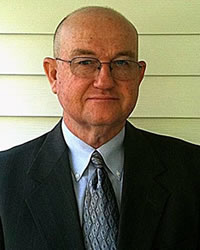
Gary Shepard

I Lay Down My Life For The Sheep

John 10:15
Gary Shepard August, 5 2007 Audio
0 Comments
Gary Shepard
Gary Shepard August, 5 2007

Sermon Transcript

Auto-generated transcript • May contain errors

100%
Turn in your Bibles this morning
to the tenth chapter of the Gospel of John. We are glad to have those that
visit with us this morning. The more there are, the more responsibility I feel
to try to tell you the truth. Look with me here in John 10
beginning with verse 11. I am the good shepherd. The good
shepherd giveth his life for the sheep. But he that is in
Hyrulean, and not the shepherd, whose own the sheep are not,
seeth the wolf coming, and leaveth the sheep, and fleeth, and the
wolf catcheth them, and scattereth them. The hireling fleeth because he
is an hireling, and careth not for the sheep. I am the good
shepherd, and know my sheep, and am known of mine. As the Father knoweth me, even
so know I the Father, and I lay down my life for the and other
sheep I have which are not of this fold, them also I must bring,
and they shall hear my voice, and there shall be one fold and
one shepherd. Therefore doth my Father love
me, because I lay down my life, that I might take it again."
No man taketh it from me, but I lay it down of myself. I have power to lay it down,
and I have power to take it again. This commandment have I received
of my Father." I take my title this morning
from an expression by our Lord that he makes three times in
just those few verses. He says, I lay down my life for
the sheep. And he identifies himself here
in this text as the good shepherd. And he sets himself in contrast
to that hireling, that false shepherd who cares not for the
sheep. And he makes us to know here
that he is the one who is responsible for the sheep. And he shows us three things
that characterize the Good Shepherd's sacrifice. He shows us that it is perfect. And He shows us that it is voluntary. And then thirdly, He shows us
that it was particular. And every other, every other
sacrifice, but most especially every other shepherd, he says,
is the same as a thief and a robber. I have thought on these expressions
this week over and over again, and they are without a doubt the words of everlasting love. I laid down my life for the sheep. And not only that, not only do
we find the shepherd's love for the sheep, but we also find here
the great love of the Father for the shepherd. Now, there's
no doubt in my mind that in the Godhead, the Father loves the
Son. God the Father loves God the
Son. But here he expresses something
in verse 17 that makes us know that he loves the Son. He loves Him in His character
as the Shepherd. He says, Therefore doth my Father
love me, because I lay down my life that
I might take it again." You see, these are the words of the Son
of God, but they are His words in His character as the Mediator. They are His words as the Redeemer
of His people. And that priest who is their
priest forever, who not only represents God to them, but them
to God by the sacrifice of himself. And who is, because of all he's
done, the Great Shepherd, even the one who returns us to God
as the Great Shepherd and Bishop of our souls. He says, I lay down my life for
the sheep. And I could hear the psalmist's
words, the words of every believer, or the words especially of God. That grace is poured into his
lips. Thou art fairer than the children
of men, Grace is poured into thy lips, therefore God hath
blessed thee forever." Why is grace poured into His
lips? That He might pour it forth from
His lips to the ears of His people. I lay down my life for the sheep. I said three things characterized
the sacrifice of this great and good Shepherd, and the first
one was this. His was a perfect sacrifice. As a matter of fact, if you look
here, the three times that we find that expressed from the
Savior's lips each time He says that He lays down one single
thing. His life. I hear people speaking of giving
their lives to this cause or to this individual or giving
their lives for something or someone. But there has never
been one who ever gave the life that Christ gave, because there
has never been one who had the life that Christ had. He gave His life, which is to
say that He gave His perfect holy, spotless, sinless life. And if he had not had that life
to give, not one sinner would ever be saved. And so necessary
is that sacrifice as a sinless sacrifice as a perfect sacrifice
necessary that over and over and over again, in various ways,
God the Spirit reminds us of this and assures us of this. A sinner cannot save a sinner. And so it says, as we are reminded,
in the very opening books of the Scripture when sacrifice
first began to be set forth and taught under the Mosaic economy. He says, Whosoever offereth a
sacrifice of peace offerings unto the Lord to accomplish his
vow, or a freewill offering in bees or sheep, it shall be perfect
to be accepted, there shall be no blemish therein." Under the
Old Testament law, one thing was surely pictured and required
in every sacrifice, whether a heifer or a lamb or a bird or whatever
it was. It had to be without spot and
without blemish. It had to be perfect as far as
the human eye could examine it and call it perfect. And that
was because every one of those sacrifices pictured the sacrifice
of the shepherd. I lay down my life for the sheep. And He is for that reason in
particular here described by Himself as the Good Shepherd. Of everybody else it has to be
said, there is none good, no, not one. And yet it can be and
has been and must be said of the Lord Jesus Christ that He
truly is the Good Shepherd. And were He not good in the sight
and sense of holiness and righteousness and true good, the good that
is God, He could not have laid down that life for the sheep. Listen to some Scriptures. And
he made his grave with the wicked and with the rich in his death,
because he had done no violence, neither was any deceit in his
mouth." He's perfect. Not only that,
the angel that announced his very coming, said to that one
who would be his earthly mother giving birth to him, he says
to her, the Holy Ghost shall come upon thee, and the power
of the highest shall overshadow thee, therefore also that holy
thing which shall be born of thee shall
be called the Son of God." She is not and is nowhere in Scripture
called the Mother of God. She is not at any time found
in a relationship to a man who is a sinner like herself at any
time to bring forth this child, the Lord Jesus Christ? She is
the one of whom it is said is overshadowed by the Holy Spirit,
and that body formed in her is not of a natural creation, but
is the work of God. That's what he said, a body.
hast thou prepared for me." A sinless body because he had no earthly
father, because he was not in any way nor could be contaminated
in the womb of his earthly mother. He is that holy thing, the Son
of God. And then in Acts 2, Whenever
the apostle begins to preach the Christ, the risen Christ,
he says, speaking of David, he said, David, seeing this before,
spake of the resurrection of Christ, that his soul was not
left in hell, neither did his flesh see corruption. Even in death, And all that was
involved in this particular and unique death, even in death,
even in his being put in the grave, even in the things that
he suffered on the behalf of his people, it says, at no time
did his flesh see corruption. Not at all. The writer of Hebrews gives it
to us like this, "'For we have not a high priest which cannot
be touched with the feeling of our infirmities, but was in all
points tempted like as we are, yet without sin.'" Without sin. That's the sacrifice
that God required. That's the sacrifice that Christ
offered. And that's the only sacrifice
that God will accept. And that's the only sacrifice
that ever has put away sin. Again in Hebrews, he says, "...for
such an high priest became us." That is, fitted us in our need,
fitted us in what would be required to save us, had to be a man,
but had to be a perfect man without sin, such a high priest became
us who is holy, harmless, undefiled, separate from sinners, and made
higher than the heavens." His sacrifice is gloriously perfect. And then when the Apostle Peter
comes along, he's led by the Spirit of God, and he kind of
brings it all together for us, the sacrifices that pictured
him and then Christ Himself. He says this in 1 Peter 1. Forasmuch as you know that you
were not redeemed with corruptible things as silver and gold, you
were never redeemed by those things under that Old Testament
economy, by the pictures of Christ's sacrifice, from your vain conversation
received by tradition from your fathers, but with the precious
blood of Christ. as of a lamb, without blemish and without spot. Not a flaw, not the slightest
imperfection, never a miscue in mind or deed or word or motive
or thought. Peter again says this in chapter
two. who did no sin, neither was guile found in his
mouth, who when he was reviled, reviled not again. When he suffered,
he threatened not, but committed himself to him that judgeth righteously." And so when this shepherd says,
I lay down my life for the sheep, he's talking about the life which
is God manifest in the flesh. He's talking about a perfect,
sinless, holy sacrifice. He's talking about a sacrifice
that is of such perfection and purity that God will accept it
on the behalf of His sheep. and ask no more. And it will
settle every matter. It will satisfy everything He
requires, because it's perfect. And that's why He says, He hath
made us to be accepted in the Beloved. All right? Then there's the second thing
about His sacrifice. And this is absolutely important
that we see. Not only was his sacrifice absolutely
perfect, it was also voluntary. Voluntary. You see, there is a notion in
our day, and has been for a long time, that the things that happened
to the Lord Jesus Christ, and especially His being crucified
on that cross outside of Jerusalem, that what happened to Him was
either the devil controlling it, or men controlling it, or
circumstance controlling it, or something like fate controlling
it, but that absolutely is not the case. That's why three times here he
says it, I lay down my life for the sheep. And the first thing
that I would say to that, to the shock of what we think by
nature is this, and that is that there was never in you or me
or any other person. There was never anything in us. We were never anybody to have
it done for us, and neither could we deserve it in any way. He simply voluntarily laid down
His life for the sheep. And that's why Paul says this
when he writes to the Romans. He says, where is boasting then? Where is our boasting? Give us
something that we can boast in. And he says, it is excluded. It is absolutely excluded. Because we did not deserve his
sacrifice, we did not deserve his love, we did not deserve
his coming, we did not ask for it. He said, I lay down my life for
the sheep. And many of those same sheep
At their first hearing of this, they'll say stupid things. That's
what characterizes sheep by nature. They're stupid. They'll say things
like, well, I didn't ask him to do it. It's like a man going down in
the water, drowning. And he's down for the count.
He's gone down the last time and somebody rescues him and
brings him out and saves his life. And he lays there gurgling,
finally can talk. He said, I didn't tell you to
do that. That would be so foolish, wouldn't
it? You see, if he had sinned, And if he were at any point a
personal sinner in any way, he could not have done this. You know why? Because divine
justice, God acting as the thrice holy God He is, He would have
had to take him just like He would have to take every other
sinner and He would lay hold of him and bring him to death. Because the soul that sinneth
shall die. Somebody says, well, that means
that in some way Christ sinned. That means just the opposite. That means that He did not sin. And that when He came to that
cross, when He came to that hour so often spoke about, it would
not be that the soul had sinned and therefore He had to die or
that because He owed the wages of sin, death had to reach out
and take Him. That's not what it says, is it? He said, I lay down my life. There never was a point, there
never was an hour, there never was an instant where there could
ever be found anything in the Lord Jesus Christ in Himself
that would require that justice reach out and lay hold of Him
and take Him. No, He said, I lay down my life. The death of Jesus Christ for
his sheep was a free and voluntary gift. And he acted in that hour
just exactly like the prophet said he would act in Isaiah 53. He was oppressed and he was afflicted,
yet he opened not his mouth. He is brought as a lamb to the
slaughter and as a sheep before her shearers is done, so he opened
not his mouth. Why? Because he wanted to. Now, you can mark this down. Only one man who ever has lived in this world
has had a free will. Now, that's just the way it is. Only one man could, as a man,
exercise a will in free and absolute sovereignty. And here he is. I lay down my life for the sheep. Now, I want you to see this.
Turn over to John chapter 18. John chapter 18. And look down at John 18 at verse
3. Judas then, having received a
band of men and officers from the chief priests and Pharisees,
cometh thither with lanterns and torches and weapons. Jesus
therefore, knowing all things that should come upon him went
forth and said unto them, Whom seek ye? They answered him, Jesus
of Nazareth. Jesus saith unto them, I am." That's actually how he responded.
That addition of the italicized he is something the translators
had. He answered them in the very
power of Jehovah. I am. Remember Moses? The Lord sends
him to Pharaoh, tells him to tell Pharaoh to let my people
go, and Moses being as weak in his humanity and unbelief as
we are, he said, Lord, who shall I tell him sent me? He said, tell him I AM sent you, the eternally existent and self-existent
One. Tell him I AM sent you. And so they come, and He asked
them, who do you seek? They said, Jesus of Nazareth. And he said, I am. I am. And Judas also, which betrayed
him, stood with them. As soon then as he had said unto
them, I am, they went backward and fell to the ground. Then ask him, he them, he them
again, whom seek ye? And they said, Jesus of Nazareth. And Jesus answered, I have told
you that I am he. If therefore you seek me, let
these go their way." Well, if he told them that he
was Jesus of Nazareth, Why didn't they just immediately with their
swords and their spears and their superior numbers, why didn't
they just go grab him right then before he ever said it again?
Because he lays down his life. And when he spoke who he is as
the eternal Jehovah Jesus, It says that they all fell back
as one. You couldn't have taken him by
force if you had millions of soldiers, millions of weapons, because he lays down his life
for the sheep. Look over in John 19. John 19, and look down at verse
9, where he's before Pilate. Look back at verse 8, John 19,
when Pilate, therefore, heard that saying, he was the more
afraid. What saying? The charge of the
Jews, that he said that he was the Son of God. Remember when they hung him on
the cross and Pilate put Jesus of Nazareth the King of the Jews?
They said, no, don't put that. Put that he said he was the King
of the Jews. He said, which of these miracles do you seek to
stone me for? They said, for none of the miracles
but that you make yourself to be God. And when Pilate heard that, he
was the more afraid. And he went again into the judgment
hall and said unto Jesus, Whence art thou? But Jesus gave him
no answer. Then said Pilate unto him, Speakest
thou not unto me? knowest thou not that I have
power to crucify thee, and have power to release thee? And Jesus answered, Thou couldst have no power at
all against me, except it were given thee from above. Therefore
he that delivered me unto thee hath the greater sin. First of all, Pilate himself
could have had no power against anybody if it had not been given
him from above. It is God who raises up and God
who brings down. It is God who kills and makes
alive. It is God who sets in authority
whom He will. He could have had no authority
over anybody except God had set him in authority. But more than
that, he could not have any power over the Lord Jesus Christ unless
it's given unto him. He couldn't take the life of
Christ. The Roman soldiers, they didn't
take the life of Christ. He gave His life. And the cross is not something
gone amiss and amuck. It's not something that God allowed
to happen and then tried to turn it for good in some way. No. He said, Lo, I come to do Thy
will, O God. Look back over in John chapter
10 in our text, in verse 15. He says, "...as the Father knoweth
me, even so know I the Father." What does that mean? What he
is saying is, I am co-equal with the Father. As He knows me, so
I know Him. And I lay down my life for the
sheep. Verse 17, he says, Therefore
doth my Father love me. in this particular love, in this
particular view of Christ as that God-man mediator and Savior. Therefore doth my Father love
me, because I lay down my life that I might take it again. No
man taketh it from me. No one. but I lay it down of myself."
I have power to lay it down. I have power to take it again. And if we didn't know that He
truly did have the power to lay it down, we surely had to know
it in the fact that He had the power and did take it up again. This commandment. have I received
of my Father." But look back at one of the most
important hours and times and events in John chapter 19 and
listen to the Lord Jesus Christ. Now, just imagine what He has
endured humanly. Just imagine the suffering physically,
the mental anguish, the torture, just everything. And not only
that, but much more that we cannot comprehend which takes place
between Him and the Father. So much so, So much so is this death a death
for sin that he cries out, My God, my God, why hast thou forsaken
me? There he is hanging on that cross.
He's endured all this. He has his hands and his feet
nailed to the cross. He's suffered the wound of a
sword, a spear in his side, he's had the crown of thorns crushed
on his head, he's felt in his bosom the very anguish of separation
from God? Verse 30, when Jesus therefore
had received the vinegar, he said, And he bowed his head and gave
up the ghost in an absolute total control. Yielding himself voluntarily
to every suffering, to every abuse, to everything that the
death of the Savior for sin required. And then when it was all accomplished,
and only the He yielded up the ghost. He yielded up his spirit. Luke says it like this, and when
Jesus had cried with a loud voice, I love that line in Scripture. Because that line tells me, and
you if you'll hear, that here is the Son of God, after all
He's endured, hanging there a bloody mass on this cross, in human
flesh, and he is so in control. He doesn't whisper it. He doesn't whisper it so some
man can come along and claim that he killed the God-man. But
he cries with a loud voice. full control, full strength. He cries with a loud voice and
He says, Father, into Thy hands I commend my spirit. And having
said thus, He gave up the ghost. I couldn't do that, but He did. Paul says he's the
one who gave himself for our sins that he might deliver us
from this present evil world according to the will of God
and our Father. He said, I am crucified with
Christ, nevertheless I live, yet not I, but Christ liveth
in me, and the life which I now live in the flesh I live by the
faith of the Son of God who loved me and gave himself for me. who gave Himself a ransom for
all to be testified in due time, who gave Himself for us that
He might redeem us from all iniquity, and purifying Himself of people
zealous of good works. He says, I lay down my life. Can you imagine God manifest
in human flesh, laying down willingly, lovingly, without any regrets
or disappointment, laying down His life for you. And then here's the last thing. It was definite. His sacrifice was particular. He said, I lay down my life for
the sheep. We all were witnesses in the
news, I suppose, to that bridge collapse in Minnesota. One of these days, they're going
to build that bridge back. Suppose that they were in their
construction to build it as wide as could possibly be built. We're
not going to build it eight lanes. We're going to build it a thousand
lanes wide. But we're only going to build
it halfway across the river. Will they be glorified because
they build it so wide? What's the use of it? It doesn't
take you across the river. But what if they go back and
they build it eight lanes wide, and it goes all the way across?
It takes you from one side to the other. And men preach a gospel
in our day, They preach of Christ, they preach of Redeemer, they
preach of salvation, and they make it so broad. But the only
problem is, it won't take you across. It makes it available for everyone. It makes everyone savable, they
say. It gives everyone a chance or
an opportunity Not this one. I lay down my life for the sheep. Not for everybody, but for the
sheep. And this is true of all Scripture.
It means for the benefit of and the sake of the sheep. Why is
Christ dying on that cross? For the sheep. Usually, the death of a shepherd
would be the death of the sheep. Not this one. The death of this
shepherd is the life of the sheep. Because in his death, by his
sacrifice, one sacrifice for sins forever, he put all their
sins away. The sheep. Even as the Son of Man came not
to be ministered unto, but to minister and to give His life
a ransom for many." To give His life instead of, or in exchange
for many. That love we've talked about
in the beginning, John records His words, greater love hath
no man than this, than a man lay down his life for his friends. Did you ever take the time to look
in Scripture and see who it is that Christ died for? Isaiah says, for the transgression
of my people was he stricken. That's God talking. The angel
said, Thou shalt call His name Jesus, for He shall save His
people from their sins. Paul writes to The church at
Ephesus, he says, husbands, love your wives even as Christ loved
the church and gave himself for it. Gave himself to satisfy divine
justice in their place. And what a marvelous thing it
is to hear the instruction that he gives to those Ephesian elders
when he says in Acts 20, take heed there unto yourselves and to all the flock. The flock. That one that Jesus speaks of
like this, fear not little flock. For it is your Father's good
pleasure to give you this kingdom. All the flock over the which
the Holy Ghost hath made you overseers to feed the church
of God, which he hath purchased with
his own blood. He has obtained eternal redemption. He has obtained absolute, full,
and free forgiveness for them by the sacrifice of Himself. I laid down my life for the sheep. Those sheep are not sheep that
were once goats, and there are no goats that will become sheep.
You can turn and you can read in Matthew 25 where it speaks
of the great shepherd standing there, dividing, singling out,
and he says to the sheep, come ye blessed of my Father. He says
to those goats, depart from me into everlasting fire prepared
for the devil and his angels. What distinguishes his sheep?
If you turn back to John chapter
10, the Good Shepherd says what distinguishes his sheep from
the goats. Now, you can look at men and
women, and we all do. We're pretty good at examining
each other and checking each other out. finding all the flaws
and blemishes and such with each other. But you can find outwardly,
as far as moral conduct, as far as sincerity, as far as attendance
to a so-called place of worship, as far as generosity, you can
find all the things by which men naturally determine whether
or not either they or somebody else are one of God's sheep. You can find that in amongst
every people. You look at the cults and you
see their sacrifice, you see their sincerity, all these things. But look at verse 16. He says, And of the sheep I have
which are not of this foal, them also I must bring. He may be talking about the Gentiles
in relationship to the Jews, or he may be talking about those
who are not present at that hour, or those who live in the various
places in the world at that time, or those of us who live at this
time, or whatever. Of the sheep, he says, I have
that are not of this foal, And I've got to bring them. Why? Because I pledged to in that
everlasting covenant. But look at this next thing.
And they shall hear my voice. They shall hear my voice. Now, there was enough. In what
he said in this one statement, I am the good shepherd. I lay
down my life for the sheep. There is enough in that to stir
up the natural rebellion and unbelief that is common to us
all. Look down at verse 24. Then came
the Jews round about him and said unto him, How long dost
thou make us to doubt? If thou be the Christ, tell us
plainly. Like they really were looking
for information. I found out in my experience
in over 25 years of preaching, most questions are not asked
to get information, but to give it. Now, that's just the way it is.
Preacher, let me ask you a question. Let me interpret that for you.
Preacher, I've got to tell you something, and I probably want
to correct you in this matter. Jesus answered them, I told you,
and you believe not, the works that I do in my Father's name,
they bear witness of me. You ask, I told you, the works
I do, they bear witness of me, but you believe not, because you're not of my sheep, as I said unto you." Now, that didn't say what we
wanted to say, which is, if you'll believe,
you'll be one of my That's not what he said. He said,
you believe not because you're not of my sheep. My sheep hear
my voice, and I know them, and they follow me, and I give unto
them eternal life, and they shall never perish, neither shall any
man pluck them out of my hand. My sheep hear my voice. This may surprise you, but I've
never heard the voice of Christ in my ear. I know what all these
TV evangelists and such claim, that the Lord told them this
last night, and the Lord told them that, and all this kind
of stuff. You know, I want to say it was
that extra pizza you ate. It was not the Lord. or it was a lying spirit. Because the Scripture says that
God hath in these last days spoken unto us by his Son. He has spoken to his sheep through
the gospel of his Son. Seven times in the book of Revelation,
when he's talking to the seven churches there in Asia Minor,
and he's talking to the angel or the messenger to each of those
churches, he says, "...he that hath an
ear, let him hear what the Spirit saith unto the church." Now, what does the Spirit say
unto the churches? Christ said, I'll send the Comforter. I'll send the Spirit of Truth,
and He will lead you into all truth. He will take the things
of mine and show them to you. They follow him. Let me read
you one more portion in John chapter 8 and verse 40. They claim to be Abraham's children. He says, But now you seek to
kill me, a man that hath told you the truth. which I heard
of God." Abraham didn't do that. "'You do the deeds of your father.'
Then said they to him, We not be born of fornication. We have
one Father, even God." We believe in God. Jesus said unto them,
if God were your Father, you would love me. Did you hear that? If God were
your Father, you would love me. For I proceeded forth and came
from God, neither came I of myself, but he sent me. Why do you not
understand my speech? Even because you cannot hear
my word. You are of your Father the devil.
and the lust of your father you will do. He was a murderer from
the beginning, and abode not in the truth, because there is
no truth in him. When he speaketh a lie, he speaketh
of his own, for he is a liar and the father of it. And because
I tell you the truth, you believe me not. And yet, which of you convinces
me of sin? And if I say the truth, why do
you not believe me?" Now, you look at that next verse
or listen. He that is of God, chosen of
God, redeemed of God, the sheep of God, heareth God's word. Here's this gospel. Here's this shepherd. Say, I
am the good shepherd. The shepherd giveth his life
for the sheep. And that's our hope. And that's why David said, the
Lord is my shepherd. I shall not want. Ye therefore
hear them not, because you are not of God." That's what the gospel preacher
is doing. He knows God has some sheep,
and he's not on a fool's errand. But he's gone, sent out of God,
to preach the one gospel that gives all the glory to the shepherd,
makes salvation to be all in the shepherd in his sacrifice
that is perfect and voluntary and definite. If Christ died
for me, what am I to fear? May He enable you to hear His
voice. May He do that work in our hearts,
that life-giving. All, He says, the hearing ear
is from the Lord. And it's to hear in our minds
and hear in our hearts so as to believe it. Act on it. Rest in it. Because if the Lord is our shepherd, as His sheep, we're safe. Oh, the devil may go around like
a roaring lion trying to get them. There's a wonderful thing
in John 10 there. He says, there came all these
robbers and thieves. All that ever came before me
are thieves and robbers. Listen to this. But the sheep
did not hear them. hear my voice and they follow
me. They won't follow the voice of
a stranger. Father, we ask this day that it be your pleasure to call out
your sheep. May men and women and young people
be found confessing the Good Shepherd as their all, their
righteousness, their salvation, their hope, their rest. Lead us in those green pastures
of Your Word. Glorify Yourself, we pray, and
ask all things in Christ's name. Get all glory for yourself. For we pray in Him. Amen.
Gary Shepard
About Gary Shepard
Gary Shepard is teacher and pastor of Sovereign Grace Baptist Church in Jacksonville, North Carolina.

Comments

0 / 2000 characters
Comments are moderated before appearing.

Be the first to comment!

Joshua

Joshua

Shall we play a game? Ask me about articles, sermons, or theology from our library. I can also help you navigate the site.