Bootstrap
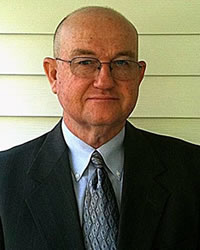
Gary Shepard

The Marriage Made In Heaven

Ephesians 5:22-33
Gary Shepard July, 8 2007 Audio
0 Comments

Sermon Transcript

Auto-generated transcript • May contain errors

100%
If you would turn this morning
to the book of Ephesians, the fifth chapter, Ephesians
5, and I'll begin reading in verse 22. Wives, submit yourselves unto
your own husbands as unto the Lord. For the husband is the
head of the wife, even as Christ is the head of the church, and
He is the Savior of the body. Therefore, as the church is subject
unto Christ, So let the wives be to their own husbands in everything. Husbands, love your wives even
as Christ also loved the Church and gave Himself for it, that
He might sanctify and cleanse it with the washing of water
by the Word. that he might present it to himself
a glorious church, not having spot or wrinkle or any such thing,
but that it should be holy and without blemish. So ought men
to love their wives as their own bodies. He that loveth his
wife loveth himself. For no man ever yet hated his
own flesh, but nourisheth and cherisheth it even as the Lord
the Church. For we are members of his body,
of his flesh, and of his bones. For this cause shall a man leave
his father and mother, and shall be joined unto his wife and they
too shall be one flesh. This is a great mystery, but
I speak concerning Christ and the Church. Nevertheless let
every one of you in particular so love his wife even as himself,
and the wife see that she reverence her husband." I want to try to talk to you
this morning for a while about the marriage made in heaven. I'm sure you've heard people
refer to various earthly marriages as must have been a marriage
made in heaven. Well, this is the marriage made
in heaven. If you look back here in verse
31, there is something I want us to notice in the beginning. Paul says, For this cause shall
a man leave his father and mother, and shall be joined unto his
wife, and they too shall be one flesh. they too shall be one flesh." You see, the union that is spoken
of here between husband and wife is absolutely important, and
such things as infidelity and divorce and adultery so serious
because of what this union represents. It is not a light matter. And in giving the exhortations
that Paul gives here in this text, he shows this plainly,
especially in that next verse. Verse 32, this is a great mystery, but I speak concerning Christ
and the church. I speak concerning Christ and
the church. And I really don't believe that
anything shows more the love of God and the wonder of His
grace and the faithfulness of His character any more than this
union that Paul is talking about. He says this is a great mystery. What he means there is this is
a profound truth. This is beyond man's ability
to discover for himself. But it is something that God
now reveals in the Lord Jesus Christ. And while no one is joined
to the Lord Jesus Christ by a natural union, as we just found out in
what was read in Matthew 1 there, the union of a husband and wife
is a type of a spiritual union, a union of Christ to His church. And what we sometimes fail to
realize is we think that these natural unions are real and these
spiritual unions are less than real when it is exactly the opposite. You see, this spiritual union
is so real that we find it represented and spoken of from one end of
the Bible all the way to the other. We find it in the first
book and the first people, Adam and Eve. And then we find it
in the last book where we see this marriage of the bride and
the bridegroom and the Lamb's wife pictured there in this revelation
of the Lord Jesus Christ. And there are about four things
concerning this this morning that I would ask the Lord to
enable me to point out to you. I can't give you eyes to see. I can't give you a heart or faith
to be able to appreciate it. But if I can point them out to
you, I pray that He would be minded Himself to reveal to you
these things. And the first one is this. The
Marriage Covenant. You see, marriage actually is,
according to the Bible, a covenant. Let me read you a verse out of
Malachi, when God is talking to the nation of Israel. He says,
"'Yet you say, Wherefore? Because the Lord hath been witness
between thee and the wife of thy youth against whom thou hast
dealt treacherously, yet is she thy companion and the wife of
thy covenant." In other words, within these
people there was such a failure in every aspect of their lives
It was simply a picture of their failure to Jehovah God. But this covenant that we're
talking about here that is represented by this marriage covenant is
called in Scripture the everlasting covenant. And the marriage that I'm talking
about, just like so many that we read about in the Bible, it
is a 100% arranged marriage. Somebody said, I'm not interested
in an arranged marriage. That depends on who does the
arranging. And what we have here and what
Paul read actually brought it to my mind fresh and anew when
he says there in Matthew, it says that Mary was espoused to
Joseph. And then in the next verse it
tells us that as such she was already viewed as his lawful
wife. Because the espousal in that
hour and before and after was a ceremony of betrothing. That's a word we don't use very
much anymore except sometimes in the wedding ceremony. But
this espousal or this betrothing was a formal agreement between
those then coming under the obligation for this purpose of being married,
of being man and wife. And they were in that day in
the East frequently contracted years before the actual marriage. I don't know how long a time
it was that Mary was espoused to Joseph, But evidently it was
sometimes. And it says here that she was
espoused to him, or betrothed to him, which means to promise
by one's truth. To promise, to pledge by one's
truth. And men and women were betrothed
when they were engaged to be married. And from that time of
this betrothal, or espousal, the woman was regarded as the
lawful wife of the man to whom she was betrothed. And the very
word used in the Hebrew for one part of this espousal, or this
marriage, means to sanctify. to sanctify, to set apart. And we find the same language
all throughout the New Testament especially as it refers to what
God has done on the behalf of His people that He chose in the
Lord Jesus Christ. And that is exactly one aspect
of this sanctification that is in Christ Jesus. It means to
be set apart or chosen or regarded in Him as that what we are not
in ourselves. You see, all throughout the Scripture,
we find this very thing. Hosea's words concerning Gomer
were God's covenant words in Christ to all His elect. He says, "...and I will betroth
thee unto me forever." Yea, I will betroth thee unto me in righteousness,
and in judgment, and in lovingkindness, and in mercies. I will even betroth
thee unto me in faithfulness, and thou shalt know the Lord." You see, unless our salvation,
the whole of it, traces itself back to that fountainhead of
God Himself and grace in Christ and that which He will do, we
have no salvation. He said, I'll do all these things. I'll accomplish all these things. And then in Isaiah 63, it says
this. He says, as the bridegroom, rejoiceth
over the bride, so shall thy God rejoice over thee." There is something in this marriage
wherein God makes His people so as to be able, or in His sight,
He to be able to rejoice over them. Isaiah 54, "'For thy Maker
is thine husband, the Lord of hosts is his name, and thy Redeemer
the Holy One of Israel.'" It looks like that even naturally
we could see these things. In Jeremiah, he says, "'Turn,
O backsliding children, saith the Lord, for I am married unto
you, and I will take you one of a city, two of a family, and
I will bring you to Zion." You see, it's all about what
God will do. It's all about this everlasting
covenant. It's all about his betrothing
us unto himself before the world began. And the marriage of Isaac,
a type of Christ, the promised son, was arranged by his father
Abraham. And Judah and many others that
we read about in the Scripture, it says, he took a wife for his
son. and the bride of Christ, which
is every true believer, every believing child of God, rejoices
that this is the way it is. You see, this is exactly what
Paul is saying in Ephesians 1. He says, Blessed be the God and
Father of our Lord Jesus Christ, who hath blessed us with all
spiritual blessings in heavenly places in Christ, according as
He hath chosen us in Him before the foundation of the world."
You see, there is not a sinner in this world that has ever lived
or would ever live that would ever be in this union with Christ
and married to Christ were it not that God, in His sovereign
will and power, put them in this everlasting covenant and joined
them with His Son. And that's why His people thank
Him for election. We thank Him for His choice of
us in grace. We thank Him for His giving us
to Christ in that covenant arrangement. And His everlasting love and
choice is the source of all our blessings, which He says are
all spiritual blessings. In other words, as is said in
this book, we love Him because He first loved us. And what we find in this Bible
is that this covenant, the choice of this covenant, is a choice
of grace. You say, what do you mean by
that, preacher? I mean just exactly what the Bible shows, and that
is In all the types, if you look at who God chose for Hosea, what
was she? She played the harlot. She was
a fickle woman. Or the choice that Boaz had in
Ruth, the Moabitess woman. Or look farther at the one that
Jacob chose in Rachel. Or look at who David chose in
Bathsheba. And especially look at who Adam
chose. You say, Adam didn't have a choice.
Oh, yes, he did. As a matter of fact, the Bible
says that Eve was deceived in the transgression. But Adam was
not. And so when he took that tree
in the midst of the garden, he did so knowingly and willingly,
and in doing so, he joined himself to his wife Eve. And it's a choice of grace. This covenant, this everlasting
covenant, this marriage covenant made by God before the world
began, wherein He chose that people and gave them to the Lord
Jesus Christ. It is an unchangeable, unalterable,
everlasting covenant that is sealed by His blood. All right? Here's the second
thing, and that is I want you to think about the bridegroom's
gift. The bridegroom's gift. And I say that because it was
required that the bridegroom pay the bride price, or what is sometimes called the
dowry to the father of the woman. There was a man who wanted the
daughter of Jacob, a man by the name of Shechem. As a matter
of fact, her brothers dealt very severely with this man and wronged
him. But it says that Shechem said
unto her father and unto her brethren, Let me find grace in
your eyes, and what ye shall say unto me I will give. Ask me never so much dowry and
gift, and I will give according as ye shall say unto me, but
give me this damsel to wife." He knew there was a bride price
or a dowry that was expected. And we find the same thing with
David. You see, David was such a poor
man, and he had no money, and he had no real possessions, but
Saul required of him a dowry of 100 of his Philistine enemies
dead in order to have his daughter Michael for his wife. And my friend, in this everlasting
covenant, wherein the Lord Jesus Christ Himself is the Bridegroom,
unmistakably in this book, He is the Bridegroom. And in this
marriage, there was a dowry, a bride price that had to be
required of Christ for this bride. Why? Because of who she is and
because of who he is. You see, God's chosen have nothing
to pay with, but they required a high price. And before Boaz could take Ruth
to his wife, he had to go down to the gates and pay the price
of redeeming her and satisfy all of the law and justice required
of her as her kinsman-redeemer. He had to go, and he had to honor
the law, and he had to pay the price, and he had to satisfy
the claims of the near Kinsman before him, and the same is true
of that redemption which was accomplished by Christ the Redeemer." In other words, Christ, the Redeemer
of His people, had to act in the same way as was pictured
in Boaz, the Kinsman Redeemer, of Ruth. I'll never forget when first
I found out that Ruth was not the central figure of that book. Actually, there are two books
in the Bible that bear the name of women And neither one of them
are the central figure, even humanly speaking in the book,
the book of Esther. The central figure, and I might
say also the one who himself represents Christ in the book
of Esther, is Mordecai. And the one who's the central
figure in the book of Ruth is Boaz. He's the kinsman redeemer. In order to have Ruth, this Moabitess
woman, who was married at one time to a Jewish man who died,
everything had to be satisfied and every claim had to be met
and every debt had to be paid. And he had to go in this role
as the kinsman-redeemer and go and pay and satisfy every claim. That's why Paul says to the Lord's
people, you are bought with a price. That's what redemption is about. Hosea had to pay the price to
redeem Gomer off the slave market. So in our case it says that the
wages of sin is death. And the soul that sins shall
surely die. So that in order to have this
bride, Christ the bridegroom, he has to die. Why? Because that's
the ransom price. He didn't just come in order
to live an exemplary life. And neither did he come to just
teach a lot of true things, or set a great example of some way,
or even to die the death as a martyr. He came to die the death of redemption. He came to satisfy the claims
that are against his bride. And in order to die, Christ,
the Son of God, has to leave the Father's house in heaven
and come to earth as a man in order to accomplish this redemption,
which could be no other way. No other way. It says that Christ came to give
Himself a ransom for many. Now, if someone kidnapped someone
in your family and they sent to you what is called a ransom
note, you wouldn't have a lot of trouble figuring out what
they wanted or what they demanded, would you? No. Well, here's the ransom. And
that is the bride of Christ and having fallen in Adam under the
curse of the law, held fast in the captivity of Satan, bound
by a nature of sin, everything about her had to be ransomed
and redeemed right down to our bodies. For this cause shall a man leave
his father and mother and shall be joined to his wife and they
too shall be one flesh." What has to happen with this sinner? He has to die. And so, if one redeems me, he
has to go before that inflexible justice of God. And there, before
this God of absolute holiness, he has to meet every requirement
and claim as my substitute and pay as my surety all that is
required. It was said of Jacob, And Jacob fled into the country
of Syria, and Israel served for a wife, And for a wife he kept
sheep." Well, the great shepherd, for
his wife, in order to keep his sheep, he had to lay down his
life in their place. He said, I lay down my life for
the sheep. I give my life for the sheep."
And he's not talking there about merely dying in order to make
something available or possible. He's saying, as the price of,
in order to redeem and in order to pay the ransom for, I lay
down my life for my wife, for my sheep. Hebrews 2 says, For as much then
as the children are partakers of flesh and blood, he also himself
likewise took part of the same, that through death he might destroy
him that had the power of death, that is, the devil. And the whole of the gospel The
good news of the gospel to the Lord's people is kind of summed
up in the words of the Apostle to the Corinthians when he said,
For you know the grace of our Lord Jesus Christ, that though he was rich, yet
for your sakes he became poor, that ye through his poverty might
be rich. It says that he redeemed his
bride from the curse of the law by being made a curse for her. And through the shedding of his
blood, he obtained eternal redemption. Why? Because we were like Abigail. Abigail, that we read about,
who became David's wife Abigail had a previous bad marriage. She was married to a bad man
that God killed. She had a bad marriage, and like
Esther, we had a determined enemy, the devil, And like Ruth, we
were stricken with poverty and in debt. And like Gomer, we had
played the harlot and were in bondage. But turn over to Romans 7. Romans 7. I want you to listen
to this. Know ye not, brethren, for I speak to them that know
the law, how that the law hath dominion over a man as long as
he liveth? For the woman which hath an husband
is bound by the law to her husband so long as he liveth. But if
the husband be dead, she is loose from the law of her husband,
So then if, while her husband lives, she be married to another
man, she shall be called an adulteress. But if her husband be dead, she
is free from that law, so that she is no adulteress, though
she be married to another man." Now listen to this, "'Wherefore,
my brethren, ye also are become dead to the law, by the body
of Christ, that ye should be married to another, even to him
who is raised from the dead, that ye should bring forth fruit
unto God." Now, here we are bound to the
law. Here we are under the curse of the law. Here we are in all
our Adam connections. How is it that we were delivered
from that bondage, from that relationship, from that connection,
from that responsibility, when as one we died with Christ? But thank God it says that we
in Him were raised up in His resurrection. that we might be
married to Him and bring forth fruit unto God. That's the only
way. That's how we were delivered
from our connections and association and condemnation in the first
Adam when we were raised up in union with the last Adam, Jesus
Christ. But even with her debt paid, Ruth, Gomer, whoever it is, she
has nothing, though she be free from her sins, she has nothing
with which to stand before God or to commend her to God. If all your sin debts were paid
from this day forward, from back every one, you still couldn't
enter into God's heaven. You couldn't. Because He requires righteousness. If you remember, and I read this
again this morning, it's such an amazing account, but if you
remember, whenever that Abraham sent his servant to look for
a wife for his son Isaac. Do you remember, it says that
he sent gifts with him. He sent all the gifts with him. Ruth, when she was in her own
state of bondage, she had nothing of herself. But she was married to Boaz. She had great riches. We have a term. I've used one
illustration so many times, I won't use it this morning, but we have
a term whenever a woman out of a background of insignificance
and poverty or whatever it is, all of a sudden, one day you
see her walking around and she's draped in gold and wearing fine
clothes and hats and everything, and somebody says, well, where
did she get all that from? And then somebody who knows says,
she married into it. She married into money. Have
you ever heard that phrase? That's the Lord's people. They
married into riches. You could say anything that you
want to say about them as far as being worthless, poverty stricken,
vile, corrupt, harlot, whatever you want to use, and it would
be true. But by His grace, and through
His being made poverty for us, we receive the riches of His
grace. As a matter of fact, in Romans
5, Paul calls it this, the gift of righteousness. There are two verses in Jeremiah
that describe not only this union and relationship, but also what the bride has by
virtue of being one with the bridegroom. The first one is
in Jeremiah 23. Behold, the days come, saith
the Lord, that I will raise unto David a righteous branch, and
a king shall reign and prosper, and shall execute judgment and
justice in the earth. In his days Judah shall be saved,
and Israel shall dwell safely." Who could that be but the Lord Jesus? This is the name whereby he shall
be called the Lord our righteousness." Now, that's wonderful. But there's
more. In Jeremiah 33, it says, "...in
those days shall Judah be saved, and Jerusalem shall dwell safely,
and this is the name whereby she shall be called the Lord our righteousness." They have the same name because
they are one and the same in the sight of God. They are one
flesh. They are in this union. And that's
why I have to contend that justification of the Lord's people preceded
time itself, because everyone who is put in union with the
righteous one is righteous in the sight of
God, is counted and declared and blessed as righteous in Christ. As a matter of fact, I like the
way old Robert Hawker put it. He said, as he became sin for
her when he knew no sin, so she, when she knew no righteousness,
shall by virtue of her union and relationship with him be
righteous, even the righteousness of God in him. in Him and by the grace of God. In Isaiah, he says, I will greatly
rejoice in the Lord. My soul shall be joyful in my
God, for He hath clothed me with the garments of salvation. He
hath covered me with the robe of righteousness. as a bridegroom
decketh himself with ornaments, and as a bride adorneth herself
with her jewels." When you turn and read, if you
would, sometime in Ezekiel 16, and you see this vile, lowly,
loathsome creature cast out dead in her blood on the ground. And then you read what he says.
He says, and when I passed by you, it was a time of love. How did he love his people? He
says he loved them in Christ. He didn't love us because we
were lovable. He loved us in Christ. And then
you hear him say, as he goes on farther, and I took her, and
I washed her, and I cleaned her, and I decked her out in fine
linens, and I did all these things, and I gave her earrings to wear,
and I did all these things, and she was perfect. Somebody's always talking about,
well, she's close enough to perfect for me. Not to God. But the Lord's bride is. He says,
and she was perfect through my comeliness, which I had put on
her. That's the most marvelous thought.
And she was perfect through my comeliness. which I put on her." He says, I wrapped her in a robe
of righteousness. And when she is beheld there
in the revelation, all dressed in fine linen, what is it? He
says, it's the righteousness of the saints. What is that? The righteousness of God in Christ. And the bridegroom's words to
his beloved bride in the Song of Solomon are so amazing when
you think about who's speaking to who. And Christ says to his church,
Thou art all fair, my love. There is no spot in thee. And you have ravished my heart.
That's really, that's beyond anything I'm able to comprehend. But He has made her so lovely,
having washed away every spot and taint, having made her able
to be presented without fault and spot and blemish, and made
her in Christ the very righteousness of God. There is not a spot in that sinner
beheld by the eyes of God and His justice that Christ has died
for. Quickly, the divine wooing. I guess I could say the divine
courtship. And let me say this, it is much
more than a mere influence. You see, like Abraham, he sends
his servant to fetch the bride. Let me ask you this, did he bring
her back? Absolutely. Theologians put what is probably
a pretty unnecessary term on something that is so obvious. They call it effectual calling. And I want to say sometimes,
how could it be any other way if it's God doing it? And to hear preachers say, well,
the Lord wants to do this, and the Lord wants you, and He'd
love to have you, that is so ridiculous. It says that whatsoever
His soul desires, that's what He does. And it's a foolish sinner who
sits and says, well, I know God wants me, but I won't let Him
have me. Oh, how foolish. Oh, Christ said,
all that the Father gives me shall come to me. How many? All of them. He says, they shall
all be taught of God, and everyone that learns of the Father comes
to me. Now, not all courtships are successful. This one is. This bridegroom is going to have
his bride. And not one single one of those
persons who make up this bride that he has chosen in love and
he has redeemed by his blood, not one single one of them will
be missing. He'll bring them all. Thy people shall be willing in
the day of thy power." Rebecca, are you going to go with this
man to marry a man that you've never seen? That you really know nothing
about? Simply based on the words that his servant said? Yes, I
believe I will. As a matter of fact, I got to
read you these two verses. Well, I don't know if I will
or not. I can pretty much tell you exactly
what they say. It's in Genesis. The servant of Abraham says to
Rebekah, God has blessed my Master. And He's given land and houses
and sheep and cattle and all these things. And my Master's wife has given
birth to a son. And so my Master has given all
these things to His Son. Did you know that's what I'm
coming to tell you this morning? It is that God Almighty has given
all things, especially as Paul says in Ephesians 1, all spiritual
blessings, all eternal blessings, redemption, sanctification, righteousness,
wisdom, just name it, everything that will last, everything he
has to give in grace. Everything that you and I as
sinners need and must have, He has given everything to His Son. And he that hath the Son hath
life and everything. And if I am married to Christ, the whole kingdom is mine and
His. I can remember years ago pretty much writing in a Bible,
underlining anything that really glorified God, and I would put
something, a note in there to show that that really wasn't
what it meant. I thought, no, I'll never believe
that. I'll never believe what these people say about this.
Guess what? I not only believe it, I love
it. It's my hope. I always remember an illustration
where a mother had a teenage son. He wouldn't comb his hair. He wouldn't stay clean. He wouldn't
put on clean clothes. He wouldn't do any of these things. And so one day, she had often
told her neighbor about it. And one day her and her neighbor
were sitting there in the living room, and down the stairs comes this
young man, and he has on clean, fresh, pressed clothes. His hair
is washed and combed neatly. He smells of a little bit of
cologne and stuff. And the neighbor said,
what in the world happened to him? And his mother said, well, she's
about sixteen and blonde with blue eyes. Changed everything. You see, this is a call that
works by love and by the power of God's Spirit. And a preacher
of the gospel tells of the glorious person and work of the bridegroom. that God has committed to him
and given in grace in him everything. And the Spirit of God takes these
things of Christ and shows them to us. Now, here's a man who once lived,
he knew what let's say a five-dollar bill was. And he's struck blind. And later
on, the government prints a hundred-dollar bill. They didn't have it when
he was able to see. And someone stands before him
and holds up a five-dollar bill and a hundred-dollar bill and
asks him, which one would you rather have? He can't appreciate the $100
bill because he can't see. And we're like that, man. We
go through this world, born in our sin, blind spiritually, clutching
that $5 bill. We think we've got something. And over here is the treasure
chest of inestimable wealth. And we'll clutch on to that five
bucks until our eyes are open and we're unable to see, just
as we're unable to see the riches and the treasures that are in
Christ Jesus. Paul said, we have this treasure,
speaking of himself as a preacher in all gospel, we have this treasure
in earthen vessels. You don't expect a treasure in
a clay pot. But that's what the gospel is. And when He gives us life and
faith and enables us to see in the gospel the eternal beauties
of Christ and His finished salvation, you see, the bride of Christ,
when she's enabled to see this, she forsakes all for Him. She counts all her imagined righteousness
and works as nothing for him. And then quickly I'll give you
this. This involves a life that is
truly lived happily ever after. Don't you like a story that ends? Maybe I'm just an old mush, I
don't know, a softie, but I like a story that ends and they all
lived happily ever after. Sometimes now in these days I'll
marry a couple and They enter into this covenant. They make
solemn pledges before God and men. They make promises and vows
to one another. And the least little thing can
come up. I'm out of here. They never love one another to
start with. Because you never love anybody
until you love them better than you love yourself. And that's
exactly what Paul is saying here. Don't you ever marry anybody
until you love them better than you love yourself. Not all these stories are love
stories, and therefore they don't all end with that thing, but
this one will. I promise you, this one will. He said, I'll never leave you
or forsake you. Not even death can separate this
union. No act, no Walderbeck can break
this covenant, because it all depends on him.
It all rests in the bridegroom. And all these earthly marriages,
all good marriages, I would have been married to
this lady just not too long, 42 years. But one day death will separate
us. Because in heaven, they neither
marry nor are given in marriage. But this other union, this other
marriage, it won't. Because in Matthew it says, speaking
of this natural union, for this cause shall a man leave his father
and mother, and shall cleave to his wife, and they twain shall
be one flesh. Wherefore they are no more two,
but one flesh. What therefore God hath joined
together, let no man put asunder. No man can put asunder. There is another word in the
Hebrew that gives the other part of the marriage. The one is like
kahashtan, I believe it is, or something like that. And it has
to do with this espousal, this sanctification, this setting
apart. And the other one is like nisim,
and it speaks of the elevation or lifting up. And that's when
they move in together to be husband and wife the rest of their days. And there's going to be a lifting
up in this marriage. When the Lord meets His people
in the air and they're changed in that moment and in that twinkling
of an eye, and they are in that hour by His power made like unto
Himself. And that great marriage supper
of the Lamb, the bride comes down out of heaven as a bride
decked out for the bridegroom. And they'll live happily in the enjoyment of one another
for eternity. I can't fathom that. But the
bridegroom, the bride rather says of the
bride, bridegroom, I am my beloved's and he is mine. And it says that he'll rejoice
over you. I know there's only one way God
could ever rejoice over me, and that's to see me in Christ. He'll
rejoice over you forever. That's the marriage made in heaven. That's His church married to the Lord Jesus. He says, till death do us part.
But the thing is, neither are ever going to die. What it is, what a wonderful
thing it is to be one with the Lord Jesus. If nobody else is faithful, He'll
be. I'll never leave you or forsake
you, and I'll present you faultless before the throne of glory." What a precious Christ. Our Father, we pray that this
Word of the Gospel that it might go forth in the
power of your Spirit, that we may be to some individual
this day as Abraham's servant, and say that our Master has given
all things into the hands of His Son. And he that hath the Son, she
that hath the Son, has all, has everything. Grant, we pray, to each one faith
to believe on Him to forsake all others, that in Christ we might possess
every gift of your grace. We thank you for such mercy, and may we in our earthly marriages
and relationships remember what it represents. May such a knowledge of this
hold sway over everything we say and everything we do to these that we love. Help us,
Father, we pray. For we ask all things and thank
you for all things in Christ. Amen.
Gary Shepard
About Gary Shepard
Gary Shepard is teacher and pastor of Sovereign Grace Baptist Church in Jacksonville, North Carolina.

Comments

0 / 2000 characters
Comments are moderated before appearing.

Be the first to comment!

Joshua

Joshua

Shall we play a game? Ask me about articles, sermons, or theology from our library. I can also help you navigate the site.