Bootstrap
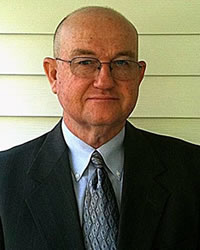
Gary Shepard

The Worst Is Behind Us!

Hebrews 9:24-28
Gary Shepard June, 24 2007 Audio
0 Comments

Sermon Transcript

Auto-generated transcript • May contain errors

100%
If you would turn to Hebrews
chapter 9 this morning, I hope I have the Lord's message. I have heard a number of preachers
stand, and they seem so sure, so confident. I've never seemed to be able
to do that. But hoping and praying that I
have here in Hebrews chapter 9, my title this morning, I believe,
expresses a reality for every believer. And I'm not talking about every
church member, religious person. I'm talking about every believer. And as they are called by God
himself in this book, for all God's elect. And my title is The Worst. is behind us. You see, the gospel is not a
message concerning what God will do for you if you believe, nor
is it a message of what Christ made possible for you if you
will accept it. You see, that would make salvation
contingent upon the works or the wills of fallen man. And that would make man ultimately
his own Savior, and he would have to get at least part of
the glory. No, the message of the gospel has to do with what Christ has
done, finished, and accomplished. And I'd have you to think about
it just a little bit this morning. If you were to turn on the news,
or if you were to open up the newspaper today, And there was no word in it about
crime. There was no word in it about
wars and conflicts. There was no mention of any murder
or any abortions or any drug problems. If there was no word
of any lying or cheating or stealing or deception, What if all the other plagues
within our society were no more? They did not, from this point
on, exist. You say, that would be a perfect
world to live in. No. Absolutely not. Because if this were to take
place, we would still have the greatest problem of all. You say, what in the world would
that be? That problem would still be sin. It would be S-I-N, sin. And we would still be sinners
who stand accountable to God who is just and holy over all. Do you have any understanding of
that? You see, if no one ever did any
of these things – now listen. If not one person in this world
ever again did any of these things, they would still be sinners. And they would still be desperately
in need of the Savior of sinners. They would still be desperately
in need of this priest for sinners that the Apostle is talking about
in our text. You see, the Apostle here in
Hebrews is contrasting the priesthood of the Old Testament priest to
that of Christ who is the one true and great High Priest. You see, their work and their
sacrifices were on earth, and they only pictured, and they
were types of Christ's work in the holy place of heaven in the
presence of God. Look down here in Hebrews 9 and
verse 24. For Christ is not entered into
the holy places made with hands." That's where those priests entered. Which are the figures of the
true. The figures, the pictures, the
types of the true. But into heaven itself, now to
appear in the presence of God for us, nor yet that he should
offer himself often as the high priest entereth into the holy
place every year with blood of others." There are so many similarities
between those and this one great priest, but there are many more
contrasts. You see, they did their work
many times, but he did his work once. And there is such a difference,
and one of the differences is because of who he is, and of this sacrifice which he
himself provided. Now, there are about three or
four things here this morning I want us to see. And that is
to be sure that we understand that the work of Christ as the
great High Priest was a work that had to do with sin. Now, I know religion. has dressed him up simply in
the garb and robe of a teacher, or a scholar, or an example,
or something like that. But the work of this priest was
a work that had to do with sin. And we find this priest actually
as the first priest who is mentioned in this book, if you can believe
that. Listen to what it says in Genesis
chapter 14, before the Levitical priesthood was established. And Melchizedek, king of Salem,
brought forth bread and wine. In other words, this priest,
Many people, and maybe me included, believe that this was actually
the pre-incarnate Christ, that He is the true Melchizedek. But He came and He gave to Abraham
bread and wine. What does that represent? A priestly
work already finished. Bread and wine. types of the
Word or the Gospel of God and the Spirit of God. He came forth
and when he met Abraham, he gave to him the types of a finished
work. And it says this of him, and
he was the priest of the Most High God. That's the first mention
of a priest in this book. But later on came the type and
the picture. And the first priests were the
heads of households, such as Adam, and Abraham, and Isaac,
and Jacob, and then the Levitical priesthood out of the Levites
that is established in the book of Exodus. Listen to what it
says. He says, And take thou unto thee
Aaron thy brother, and his sons with him from among the children
of Israel, that he may minister unto me in the priest's office."
Why? Because the Savior is not only
the prophet, and he is not only the king, but he is also the
priest. And these of the family of Aaron
were to minister unto God in the priest's office, even Aaron,
Nadab, and Abihu, Eleazar, and Ithamar, Aaron's son. And so these all came, and they
showed in the type that they were that their ministry as priests
unto God had to do with sin. The Lord's work had to do with
sin. But the problem in our day is
that men and women really don't know what sin is. And there is
no way that they can of themselves because they do not know about
the God that we've sinned against. People talk about little sin. You know what that tells me?
That tells me they know nothing about God. Somebody said there
can be no little sin because there is no little God to sin
against. And we have no idea. They don't
know the Scriptures. Therefore, they can't know what
sin is. And because preachers have showed
that they don't know what sin is because of the remedies they
prescribe for sin. Suppose that you come to me and
you have evidence that you have some dread disease. And so I'll
say, well, I know a lot about that disease. I think I can help
you. If you'll just go outside and turn on that outside water
spigot and just take a wash and wash your body with that water
out there, you'll be fine. The first thought that would
come to your mind is this. He doesn't know anything about
my disease. And men showed that they know
nothing about what sin really is because of the remedies that
they offer. Because they tell people in the
matter of sin, if you would just walk down the aisle and shake
the preacher's hand, everything will be right in the matter of
your sin. Or if you'll just take and let somebody sprinkle some
drops of water on your head, or dip you in a pool of water,
that'll wash away your sin. Or if you'll just give to the
church, or come to the church, or pray this particular sinner's
prayer, and it goes on worlds without end. But the Bible says that fools
make a mock at sin. And therefore, this religious
world and its pronouncers and its preachers, they, in what
they offer as the remedy for sin, they show themselves fools,
making a mark at what sin is. This book says and shows that
sin is the transgression of God's holy law And it is a failure
to do all of it. You say, well, I'm doing the
best that I can, preacher. I'm so sorry. But the book says
that if you fail to do each and every point of this law, if you
fail in one point of it to be obedient to it and to do it,
you're guilty of it all. That's right. You say, what? That's why I say we don't know
the God that we're dealing with. The God who's described in this
book as the God with whom we have to do, the God that we'll
face, the God that we've sinned against, a failure to do all
that He commands, finds us inconsistent with Him as He is, and guilty
of sin." You see, sin isn't just stealing
a watermelon or saying a cuss word or something like that.
Sin is any lack of conformity to God's will. Sin has to do
with every thought and every motive that is not to the glory
of God. Sin has to do with this. He says, all that is not of faith
is sin. Somebody said, well, I do everything
in faith. That's not what he's talking
about here. He's talking about this. Everything. that you do
not receive through that gift of faith that God gives, that
he shows in the gospel of Jesus Christ, which is everything that
is not of God in Christ, that sin. That means everything you do
is sin, everything you think is sin, every motive you have
is sin, and the only thing that is not sin is that which God
gives in the Lord Jesus Christ. You see, sin is what we are as
well as what we do. We do what we do because we are
what we are. And if by some amazing thing
we were able to stop doing what we do, we'd still be what we
are. Sinners. Oh, we love these little babies.
They're so sweet. I love them. I don't have any
grandchildren, but I'm doing my best to enter vicariously
into those of you who have and rejoice in them. But when they
come forth, you don't have to teach them to lie. You don't
have to teach them to be covetous or jealous. You don't have to
do any of those things. They do those things because
that's what they are, come forth from our mother's womb speaking
lies. It's a nature. It's a ruling
principle. It's a crime against God. So
the prophet says this, if one man sin against another, the
judge shall judge him. But if a man sin against the
Lord, who shall entreat for him? Ah, you can sin against me. But sin is, first of all, against
God Himself. And Paul says, because the carnal
mind, that natural mind, is enmity, that is, animosity and malice
and hatred against God. For it is not subject to the
law of God, neither indeed can be. Our natural minds, our natural
selves, our natural way of thinking and reasoning, our natural logic is against God. Hatred of God. Men don't hate their God. They don't hate the God that
religion sets forth before them, because religion knows exactly
what kind of God a man wants. But hatred against the true and
living God. That's why so many things are
invented out of Scripture. that cannot be found in Scripture
because the natural mind hates the things that are in Scripture.
But when man himself invents it, oh, it's all logical. It's all reasonable. And sin and depravity characterizes
us in our entirety. And we are described by God as
being those who are polluted with sin from our head to our
toes and with nothing but wounds and bruises and putrefying sores,
all of whom have sinned and come short of the glory of God that
God has concluded all under sin. And the failures of all the ideals
and plans and remedies prescribed and tried by men for generations
show a failure to admit this problem." Oh, men have great ideas, politicians
especially. Well, what we need to do is deal
with this, which turns out simply to be a symptom. But nobody looks back to see
that we have tried dealing with this symptom so many times and
failed. Why? Because we fail to admit
what the real problem is. That we are sinners. That rather
than being, rather than being essentially good. We are essentially evil. Now, the politicians look, they
say, well, this one is evil. Well, I guess they are insinuating
that these are not. Well, we're going to deal with
these problems. We're going to take them on in the behalf of
our constituents. We're going to do that, and we're
going to deal with these problems. But we know that everybody is
essentially good. We ascribe to this notion that
we're all created equal and that we all do certain things. But nobody will say. That what
we are, we are, and that's why we do what we do. And if Christ is to be a Savior
to us, if He's to be our priest, His work has to do with sin. I was talking to somebody recently
and I was saying, if ever anybody hears lies, it has to be the
funeral director. Because he never goes to any
funeral and ever hears anybody say, well, this man was a sinner
and so he went to hell. I actually have a friend whose father had no interest
in the gospel, no interest in the things of God. And this man
preached his own father's funeral and told the people there exactly
that. I think it made the rest of the
family mad, but that's the truth. Everybody's always in a better
place. No? If this high priest has not dealt
with their sin, they're in a worse place. Well, it's all going to be best
for them now. No, it's going to be worse. And that's why I say that the
Lord's people can rest in the knowledge that the worst is behind
them. You see, it says here that sin
is the absolute worst, most difficult, most problematic thing to deal
with and put away. And that is because God is just
and righteous and holy, and He will not simply sweep the sins
of men under the carpet, as we say, or gloss over it or disregard
it. It must be put away, or we're
going to face God with it. And I don't know much, but the God of this book, the
God that is, you don't want to face Him in your sin. You don't want to. You see, he says here that although
all those priests and those sacrifices, although they the Lord Jesus
Christ, all those Old Testament sacrifices, they could not put
sin away. Look over here in chapter 10
and verse 1. For the law, having a shadow
of good things to come, and not the very image of the things,
can never, with those sacrifices which they offered year by year
continually, make the comers thereunto perfect. For then would they not have
ceased to be offered? If sin is put away by an offering,
you don't have to offer anymore. But they did this year after
year. because that the worshippers, once purged, should have no more
conscience of sins. But in those sacrifices there
is a remembrance again made of sins every year, for it is not
possible that the blood of bulls and of goats should take away
sin. Not possible that any of those
lambs or bulls or heifers or whatever it was does. It's not
possible. Although they typified Christ,
it's not possible that they or the priests who also typified
Christ, it's not possible that those things ever, even though
God prescribed them, ever took away sin. Somebody thinks that by repeating
so-called sinner's prayer, that's going to take away sin? Or they
think that because somebody made a little walk down the aisle
or raised their hand or a preacher prayed for them or any of these
things in light of that, they think those things are going
to put away sin? All the ceremonies and the rituals
and the washings and the fasting such as the Pharisees and others
did and continue to do, that couldn't put away sin. All the religious promises from
denominations and preachers and priests with their absolutions
and penances and such, that can't put away sin. All the prescription
for works, if you do this, if you do that,
if you do this, you'll go to heaven. No, that won't put away
your sin. Repentance won't put away sin. Suffering can't put away sin. Even faith can't put away sin.
Self-denial or abstinence, that can't undo sin. But in the doing
of them in order to please God, they're sin themselves. Oh, we ought to practice morality. That won't put away sin. You see, even death can't put
away sin. When that rich man died in Luke
16, it says, in hell he lift up his eyes. Our problem is not our health.
Our problem is not communism. Our problem is not all these
things that draw our attention and distract us from the reality
of things. Our problem is sin. And even hell can't put away
sin. Because sinners will remain in
eternal punishment forever because they can never satisfy God in
the matter of their sin. They can never pay the debt that
is due. That's why he says, I have no
pleasure in the death of the wicked. He'll not be satisfied
in the matter of their sin forever, and that's why they'll remain
in eternal torment forever. But for God's elect, it can truly
be said, the worst is behind us. You look down here in Hebrews
9, verse 26. showing how different Christ
is as our priest, contrasting Him to all these others. It says
that the other priests had to enter in every year with blood. For then, if He had been like
all of them, for then must He often have suffered since the
foundation of the world, but now once in the end of the world. Isn't it amazing how men and
women try to take such things as prophecy and such and put
everything always way down the road? But you can mark it down. You
and I are living in the last days. We are living in the end
of the age. How do you know that? He hath
in these last days spoken unto us by his Son. And not only that,
he appeared, he hath now once in the end of the world appeared
to put away sin by the sacrifice of himself." Now, nobody believes the gospel
who does not believe that the Lord Jesus Christ did just exactly
that. A false gospel is characterized
by saying that he made something available or he did something
to make something possible or offer something, if you'll do
this. No, he appeared once in the end
of the age to put away sin by the sacrifice of himself. Now, there's no middle ground
here. He either did that Or he didn't. He either did that, or
he failed. He either did that for you, or
you're going to die in your sins. The first thing that's obvious
here is he appeared. That means that this is the Son,
the eternal Son of God, and not just another sinner. One who
is outside of ourselves, one who was sent and given by God
in His grace, one who was without sin so as to be acceptable to
God, and one who is the God-man in human flesh so as to die and
pay that debt of sin. If He did that for me, The worst is behind me. Do you
ever think about that? Oh, we just get so beat down.
You know, we're so tired out. We're so worried to death about
everything. We're so fretful and anxious
and clueless about how we're going to make it tomorrow or
the next day or all these things. But the worst is behind us. You
say, how do you know that? Because Christ dealt with the
worst. He dealt with the matter of the
sins of His people, and when He appeared, this eternal Son
who came in human flesh and died the death of the cross, He dealt
with that sin of His people and put it away. How do you put away
a debt? I've had them all my life, and
the only way I've ever seen to put them away is to pay them. That's the only way a debt can
be paid, satisfied in the sight of justice. And the Lord Jesus Christ, He
came into this world, He was the perfect example. He was without
a doubt, without sin, the Lamb without spot and without blemish. But if he had come and on this
earth lived, taught, provided this great example and whatever,
and then just ascended back into heaven, the sin matter would
still be there. He had to die. If you want to
know how bad your sin is, my sin, you can hear preachers preach
and try to describe the awfulness of sin, you can't even begin
to imagine it. I'll tell you the only way I
believe we ever know it, and that is to look at the Christ
of that cross hanging there and know this, that it takes the
death of the perfect Son of God Himself to put away your sin. That's how wicked we are. That's
how bad sin is. That's how difficult sin is to
put away. And that's why He gets all the
glory. There's no room left for me.
There's no room left for my will which is bound to this sinful
nature. There's no room left for anything
else but glory that goes to Him. You see, that's what it is to
put away sin. is to put it away by paying the
debt, paying what the broken law requires. And God says the
soul that sinneth shall die. The wages of sin is death. But if they're paid, I don't know. I don't know. He put away sin. That's in the singular. The one
great mass of his people's sins that God made to meet on his
head, as Isaiah said. And he did that by the sacrifice
of himself. By the sacrifice. You see, the
amazing thing is here, there was a priest, there was a sacrifice,
there was an altar. And when you come to this book,
and especially the book of Hebrews, you've got a priest and a sacrifice
and an altar. Who is it? Where is Christ? He's the priest. He gave Himself. He's the sacrifice. And the apostle
says, we have an altar. Who's that? That's Him. Christ and Him crucified. If you never see your sin, you'll
never see your need of a Savior. You just won't. And one of the most important
words in this verse, verse 26, is that word, hath. Hath. An old preacher said of
that verse in John, he that believeth on him hath everlasting life. He has it, and as a result of
that, he believes on him. One old preacher said, he's got
it. He's done it. He hath. Oh, what a foolish and dreadful
thing it is to do to take the work of Jesus Christ and to make
whether or not it's effectual or not to me depend on something
I do in any way. to make his glory depend on whether
or not I accept him or make a decision for him. Verse 22 in Hebrews 9, And almost all things are by
the law purged with blood, and without shedding of blood is
no remission, no forgiveness. But he hath put away sin by the
sacrifice of himself. As the Lamb of God, he made an
end of our sins. It says he washed us from our
sins in his own blood. He is the propitiation for our
sins. He gave Himself for our sins
that He might deliver us from this present evil world according
to the will of God and our Father? And Paul says it like this in
Ephesians 1, "...in whom we have." In whom we have. redemption through His blood,
the forgiveness of sins, according to the riches of His grace. In whom we have, through His
redeeming work, according to the rich grace of God, the forgiveness
of sins. And if we have that, the worst is behind us. Now,
that's just the way it is. The worst is behind us. He, his
own self, bare our sins in his own body on the tree, that we,
being dead to sins, should live unto righteousness. He by Himself
purged our sins and sat down on the right hand of the Majesty
on high. He offered one sacrifice for
sins forever. And He sat down. He rested from His work because
He accomplished it. And that's the only place you
and me will find any rest. I promise you that. when we sit
down and rest in Jesus Christ. Trust what He has done. Trust
Him and cease from ourselves. It says, verse 28, So Christ
was once offered to bear the sins of many. Now, do you know
what many is? Many is not all, and many is
not a few. Not all, but not a few. He will save,
first of all, everyone he purposed to save, which is everyone given
to him by the Father, everyone he chose in that covenant of
grace before the world began. He will save every one of them. And that will be a sufficient
number to glorify his name. And when that people stand with
Him in eternal glory, nobody will feel like anything or anybody
is missing. No. And unto them that look for Him
shall He appear the second time. And that is when it will be publicly
evident that he put away the sins of his people, because when
they were laid on him and he died that death, it so satisfied
God and put away their sins that it says when he appears the second
time, it will be without sin, unto a full and complete salvation
which even includes our bodies. We'll still have problems and
we'll still fail. We'll still have lapses of unbelief. We'll still have afflictions
and trials and persecutions and all that. But if Christ is our Savior, the worst is behind us. We'll go out and face death. But that won't be the worst,
that'll be the best. Isn't that a wonderful thing
to think about? That is that no matter what the
Lord's people face, the worst is behind them. He's already dealt with the worst.
If He, by the sacrifice of Himself, has put away our sins, they are
no more. You say, well, how do I know
that, Preacher? How do I really know that? You
don't unless you believe God. And to believe God is to rely
upon and trust in and have no other hope but the Lord Jesus
Christ. God help us to believe on him. Our Father, we know that in this
life there can be many things ahead of us all. We go the way of all flesh in
that sense. And all our trials and tribulations,
they're common to us all. But if our hope is in Christ,
if our soul's salvation in its entirety is in his care, if you've given us life and faith
to believe your gospel, we can rejoice that, come what
may, the worst is behind us. Give us faith to look to Him,
to trust in Him, and bring forth in our hearts and minds that
comfort that joy, that rejoicing, that
peace, that rest that is in Jesus Christ our Savior. We thank you. Make this to be
a reality in the hearts of your people. Save us from the religions of
this world and from all human works and merits. Deliver us,
Lord, from our own selves and our own natural ways of thinking, to trust your Son. For we pray
and ask and thank you for all things in his name. Amen.
Gary Shepard
About Gary Shepard
Gary Shepard is teacher and pastor of Sovereign Grace Baptist Church in Jacksonville, North Carolina.

Comments

0 / 2000 characters
Comments are moderated before appearing.

Be the first to comment!

Joshua

Joshua

Shall we play a game? Ask me about articles, sermons, or theology from our library. I can also help you navigate the site.