Bootstrap
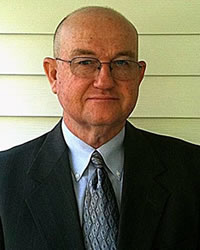
Gary Shepard

Preach The Word

2 Timothy 4:1-4
Gary Shepard June, 20 2007 Audio
0 Comments

Sermon Transcript

Auto-generated transcript • May contain errors

100%
Turn with me tonight to 2 Timothy
and the 4th chapter. 2 Timothy chapter 4. Paul writes to this man, Timothy, And he gives not only good instruction
for him, but also for us. He says to Timothy, I charge
thee therefore before God and the Lord Jesus Christ who shall
judge the quick and the dead at His appearing and His kingdom,
preach the word. Be instant in season, out of
season, reprove, rebuke, exhort with all longsuffering and doctrine. For the time will come when they
will not endure sound doctrine, but after their own lusts shall
they heap to themselves teachers having itching ears, and they
shall turn away their ears from the truth and shall be turned
into fables." There are probably no three words
in this book that I take to heart and have
now for almost some thirty years than the first three words of
verse two. Preach the Word. Recently I read an article in defense of using words not
found in Scripture. It hadn't been long when I just
admonished you in an article saying I thought that we need
to stick with the words of Scripture. And I personally believe that
we ought to stay with the words of Scripture as much as possible. I don't see anything elementary
about that. I don't see anything that is
foolish about that. The words of God are to be preached. They are to be repeated. And we are to interpret each
verse of Scripture and each word of Scripture and its meaning
in that verse by all the verses of Scripture and nothing else. The prophets again and again spoke words to Israel and others,
and they would begin with this, Thus saith the Lord. And I remembered today the words
that Peter spoke to Christ After all these, in John 6, a great
multitude of people departed from the Lord Jesus Christ, and
he asked them, he said, those few that remained, he said, will
you also go away? And Simon Peter answered him,
he said, Lord, to whom shall we go? Thou hast the words of eternal
life. You have the words of eternal
life. And so I believe to preach the
words, or to preach the Word, is to preach the words of Him
who has eternal life. Now, when I talk about that,
I'm not talking about abstaining from using every other word. But I think that much care should
be given to using the words by which we identify the doctrines
of Christ. If a doctrine is true, God has declared it. Isn't that right? And His words in doing so are
far better than mine. I know that. Far better than
yours or anybody else's. And not only that, it will be
clear without having to be propped up, I guess you'd say, or it
will be clear without the needs of words and terms and phrases
that were given birth to by old theologians and such men and
women of the past that have been added over the years. Something came to my mind today,
at least in my mind. It kind of puts everything in
perspective. And I thought we ought to maybe
always ask ourselves, what did those in the early church preach? And what did those that they
preached to hear? What did they hear? What did
those men preach? Where do those words that they
preached, where did they come from? Well, I believe that what
was preached was simply the repetition of the things that Christ said
and that the apostles were led by the Spirit of God to say and
to write. And there simply was no book. There was no so-called theologian
at that time. That's what they had. And they
preached what they preached, all of these things in the light
of the Old Testament Scriptures. Isn't that right? They took the
Old Testament Scriptures, which Christ said spoke of Him, and
using them, they compared them without a doubt to what Christ
had said and what these apostles had been shown by the Spirit
of God, and they with these things preached the gospel. They preach the gospel. But after
I got through reading this defense, and it came to my mind, sometimes
things will bring you to question yourself, and I think that's
a good thing. But it brought me to question
my own view of this, and I thought, can one preach the gospel? without using all of these man-made
words. Can a person really preach the
gospel without using terms that we do not find in Scripture? Can we preach the gospel without
these terms that men have devised, whether they are good or bad? Can we preach the gospel without
using these man-made terms, and it still be the gospel? And the thought came to my mind,
absolutely. If there was a gospel, before
all the man-made terms, even those that are accurate and may
be good. But if there was a gospel before
there was any of these, then you can count on it. They are
not essential to the gospel. And it is said in this article
that If we stick strictly to the Scriptures, it was almost
a kind of a mocking thing, really. If we stick strictly to the Scriptures,
then we couldn't use words like thus, thus, and thus, and thus,
and thus, and thus. And I began to look at that list
of words, all of which represented true
doctrine. but none of which were essential
to preaching the gospel. That's right. One of the terms was new birth. He said, if we stick strictly
to the Scriptures, we couldn't use this term, new birth, because
it's not in the Scriptures. But could I preach that true
doctrine without using that term? Absolutely. Absolutely. Turn over to John 3. Sometimes
men think that words that they devise throw light on the Scripture,
but it's just exactly the opposite of that. It's just exactly the
opposite of that. The words of God. which are the
Word of God, or just exactly that. And if there's any light
that's shone, it'll be by His words and not by our words. John chapter 3, listen to the
Lord Jesus Christ. John 3 and verse 3, Jesus answered
and said unto him, this is Nicodemus, And He's about to express to
him an absolute necessity. He's about to declare not just
a doctrine, but a supernatural work of grace that's necessary
in the salvation of a sinner. He said, Jesus answered and said
unto him, Verily, verily, I say unto thee, except a man be born
again, he cannot see the Kingdom of God. Nicodemus saith unto
him, How can a man be born when he is old? Can he enter the second
time into his mother's womb and be born? Jesus answered, Verily,
verily, I say unto thee, Except a man be born of water and of
the Spirit, he cannot enter into the kingdom of God. And that
which is born of the flesh is flesh, and that which is born
of the Spirit is spirit." Now, Nicodemus, you've been born of
the flesh. But it is essential if you ever
know God, if you ever, ever believe on Me, if you ever have everlasting
life, He says, you must be born again, and marvel not that I
say unto you, you must be born again. You've had that fleshly
birth. You must have that spiritual
birth that's from above. All right? Let me read you this verse out
of James 1. It says, "...of his own will
begat he us," and that means literally, brought us forth. Sometimes the use of things that
we use words to describe Scripture, they don't describe it, they
confuse it. And so you can't take everything
about a term or something we see in Scripture and make something
spiritual out of that which is physical. None will fit Christ
and none will fit any kind of spiritual action. James says, "...of his own will
beget he us with the word of truth." Who gives this birth? Who brings us forth to spiritual
life? He does by His will. Of His own will begat He us with
the Word of Truth. And then Peter. Peter writing
says this in 1 Peter 1, being born again, or having been born
again, not of corruptible seed, but of incorruptible by the Word
of God, which liveth and abideth forever." And that most likely
is Him who is the living Word, Christ. "'For all flesh is as
grass, and all the glory of man as the flower of grass, the grass
withereth, and the flower thereof falleth away, but the word of
the Lord endureth forever, and this is the word which by the
gospel is preached unto you." You see, this birth from above,
this spiritual life-giving to sinners such as we are by the
Spirit of God, this being brought forth of God, begotten of God,
that not only was taking place, that not only was a reality before
anybody came up with the term new birth, that's the reality
of God's work, His Spirit. All right? Here's another expression,
divine sovereignty. When I got to thinking about
this, it almost became ridiculous to me. Divine sovereignty. We stick with the Word of God.
We wouldn't use the term divine sovereignty. So what? So what? I'll tell you what. Men sometimes
hide in these words and phrases when the reality is the truth
of God sets it forth just like it is, and there can be no denying
it except a willful denying it. Nebuchadnezzar, he said it this
way, and at the end of the days I, Nebuchadnezzar, lifted up
mine eyes unto heaven, and mine understanding returned unto me,
and I blessed the Most High, and I praised and honored Him
that liveth forever, whose dominion," what does that mean? Sovereignty. Whose dominion is an everlasting
dominion. and his kingdom is from generation
to generation, and all the inhabitants of the earth are reputed as nothing,
and he doeth according to his will in the army of heaven and
among the inhabitants of the earth, and none can stay his
hand or say unto him, What doest thou?" Now, I don't even know if they
had the word sovereignty in Nebuchadnezzar's day, but I know this. I know
that God was an absolute sovereign there, and He brought this man
to know the reality and truth of it, and not only him, but
everyone he saved, both then and now. And in another place in that
first epistle, Paul writes to Timothy, he says, which in his
times he shall show, who is the blessed and only potentate, the
King of kings and Lord of lords. Some translations actually translate
potentate as sovereign. He does all His will, and nobody
can stop it or alter it. And if there never had been such
a word as sovereignty, it wouldn't matter. He'd still be the immutable,
unchanging King of kings and Lord of lords. As the psalmist
says, whatsoever the Lord please, that He did in heaven and in
earth and in the seas and in all deep places." Do you understand that? That's
pretty plain to me. Job said, he is in one mind,
and who can turn him and what his soul desires, even that he
does. I may talk, I may attribute that
to the sovereignty of God. I may talk about divine sovereignty,
but if I didn't even have that word and phrase, the doctrine
is plain. Plain. All right? Another word was substitution.
Just, what, two weeks ago, I tried to set that forth as plainly
as I know how. As a matter of fact, I thought
I'd just get Betty to stick aside and put away a CD that had that
message on it. And if anybody, after I'm long
gone, my children or my whoever, if anybody wants to know what
I believed and what I preached, just give them that. But do I have to use that word?
No. Romans 8, Paul writes, he says,
that spared not his own son, but delivered him up for us all." You can go back a few verses
in Romans 8 before that, and you can find out who he's talking
about here. But he says, he delivered him
up for us all. And since He did that, how shall
He not with Him also freely give us all things? He delivered His
beloved Son for us. That is, in our place, in our
room instead, as a vicarious sacrifice in our place, He stood
there and died there before the justice of God. He delivered
Him up for us. And that's just again and again
in Scripture, like the verse that I spoke from in 2 Corinthians
5, 21. For he hath made him to be sin
for us, who knew no sin, that we might be made the righteousness
of God in him. Paul says to the Galatians, Christ
hath redeemed us from the curse of the law being made a curse
for us in our place as our substitute. He says, walk in love to the
Ephesians as Christ also hath loved us and hath given himself
for us an offering and a sacrifice to God for a sweet-smelling savor. in our place. He says, who died for us, that
whether we wake or sleep, we should live together with Him. He says to Titus, who gave Himself
for us in our place. That's so simple. He gave Himself
for us that he might redeem us from all iniquity, and purify
unto himself a peculiar people, zealous of good works." Then it said words like, Trinity,
or Triune I don't know how many hundreds of years the dispute
has been since men used that term, Trinity. I find myself most of the time,
I prefer to use a term more like triunity, but that's not in the
Bible either. Or I say the triune God, but
that's not in there either. But if those terms were never
used, the God of the Bible, again and again, in a host of ways,
and by a host of expressions and pictures, shows Himself to
be God three in one. No doubt. And if there was not a place
in the Bible wherein we'd find this in its clearest expression
to me, if all we had was the account
of the baptism of Jesus, he makes a public demonstration
that he is God the Father, Son and Holy Spirit, and He is at
the same time the one God, and beside Him there is none other. Luke 3 says, Now when all the
people were baptized, it came to pass that Jesus also, being
baptized, and praying, the heaven was opened. Now, here's the man
Christ Jesus. He's just been baptized by John
the Baptist. And when he's brought up out
of the water, the Holy Ghost descended in a
bodily shape like a dove upon him. God the Son, God the Holy Spirit,
and a voice came from heaven which said, Thou art my beloved
Son, in thee I am well pleased. That is God the Father. speaking
concerning God the Son in human flesh, upon whom now on this
occasion the Spirit of God has descended on him in the form
of a dove." You go back and you read Genesis 1, and you see in
the beginning God created the heavens and the earth, and God
there is in the plural. But how much plainer could it
be than what John says in his first epistle? And there are
three that bear witness in earth, the Spirit, and the water, and
the blood, and these three agree in one. If we receive the witness
of men, the witness of God is greater, for this is the witness
of God which He hath testified of His Son. There are three that
bear witness in heaven, and these three He says, are one. That term, Trinity, may have
just been a confusion of things or something. But I know that's
clear. That's clear. And that's just touching the
surface. And then it said, total depravity. Total depravity. Is that a reality without that
term? I would say so. Turn over to Romans chapter 3. I thought as I was trying to
put this down, I thought, boy, this is true of me. Romans chapter
3 and verse 10. As it is written, there is none
righteous, no, not one. There's none that understandeth.
There's none that seeketh after God. They are all gone out of
the way. They are together become unprofitable. There is none that doeth good,
no not one. Their throat is an open sepulchre,
with their tongues they have used deceit. The poison of Asp
is under their lips, whose mouth is full of cursing and bitterness. Their feet are swift to shed
blood. Destruction and misery are in
their ways, and the way of peace have they not known. There is
no fear of God before their eyes." Or how about when he says this,
man at his best state is altogether vanity. Vanity. Or when our Lord expressed
it about as plainly as it can be in Matthew 7 or Mark 7 when
he said, for from within, out of the heart of men, Proceed
evil thoughts, adulteries, fornications, murders, thefts, covetousness,
wickedness, deceit, lasciviousness, an evil eye, blasphemy, pride,
foolishness, all these evil things come from within and defile the
man. He said, from our head to our
toes, nothing but wounds and bruises and putrefying sores
that have not been bound up or had ointment put on them. That's
the picture he gives. And that's the way man was long
before the term total depravity came along, I'm sure of that,
ever since the fall in the garden. And then another one was limited
atonement. Sometimes I just make sure I
don't even throw a term like that out to somebody because
it's like them going after a fake bone, a dog going after a fake
bone. You throw it out there and he may jump on it, but it's
a fake bone. It's not the issue. But the issue is who did Jesus
die for? And long before that term ever
was breathed from anybody's lips, I'm sure, it was written in Isaiah
53, he was taken from prison and from judgment, and who shall
declare his generation? For he was cut off out of the
land of the living, for the transgression of my people was he stricken."
Who did he die for? God says, for my people. Christ said, I am the good shepherd,
and the good shepherd gives his life for the sheep. He says concerning
the picture amongst husbands and wives in Ephesians 5, Husbands,
love your wives. And sometimes I think if we men
had any sense of that, we'd run away so scared. The example that
our Lord uses to show us how our relationship is to be toward
our wives, is the one that He has between Him and His church. Love your wives, and do so even as Christ loved
the church and gave Himself for it. Paul instructing and encouraging
those Ephesian elders in Acts 20, he said, Take heed therefore
unto yourselves and to all the flock over the which the Holy
Ghost hath made you overseers, to feed the church of God which
he hath purchased with his own blood. and instead maybe of giving the
particular death of Christ for His people a man-made theological
name which allows men to call the doctrine itself a man-made
doctrine, perhaps we would be better to just declare the truth
of these words of Scripture. Because they are God's words,
and we would declare them and leave men to argue with God. How about free and sovereign
grace? That's so old that he declared
it in such clearness, although he had demonstrated it many times
before Moses' day. But he says to Moses, I'll make
all my goodness pass before me, before thee, and I will proclaim
the name of the Lord before thee. And I will be gracious to whom
I'll be gracious, and will show mercy on whom I will show mercy." So, you believe in sovereign
grace? No. Do you believe what God said
to Moses? Do you believe what God repeats? in Romans 9 when he says, I'll
be merciful to whom I'll be merciful. Do you believe he could do that?
More than that, do you believe he has done that? That he'll have mercy on whom
he'll have mercy, compassion on whom he'll have compassion,
so then it's not of him that willeth. nor of him that runneth,
but of God that showeth mercy. For the Scripture saith unto
Pharaoh, even for this same purpose have I raised thee up, that I
might show my power in thee, and that my name might be declared
throughout all the earth. Therefore hath he mercy on whom
he will have mercy, and whom he will he hardeneth." We might just take the term sovereign
or free grace and throw that away, but what are you going
to do with that? That's God. That's God's words. And there are more, but how about
irresistible grace? I don't care. I don't care. Because if a doctrine is true,
if a phrase is true, it's already here in this book. He says, thy people shall be
willing in the day of thy power. That pretty much settles it for
me. Call it irresistible grace. Call it effectual calling. Just
put your name on it if you've got to. But here's where it's
at. His people will be willing in
the day of His power. Boy, that's an encouragement
to a preacher who knows it. That ought to be an encouragement
to us concerning our children and our friends that hate the
gospel. the words of our Lord, all that
the Father giveth me shall come to me. And him that cometh to
me I'll in no wise cast out." Or the words of Christ again,
"'Of the sheep have I which are not of this foal, them also I
must bring, and they shall hear my voice, and there shall be
one foal and one shepherd.'" You see what I'm saying? Just sometimes does us good to scrape off the man-made clutter
and look fresh at what God says, and to declare what God says,
and to declare it again, like old John. He said, Behold
the Lamb of God. The Scripture says the next day
John saw Him again coming. He said, Behold the Lamb of God.
What's the matter? Are you a broken record, John?
No, these are the words of God. I know I sometimes use these
terms, and I'll continue to do so, if they reflect what the
words of Scripture teach. But I don't have to use them. And I can preach the gospel without
it, and have. And not only that, but we have
to guard that any word or term that we use, we have to guard that it does
not indicate or insinuate in the least degree that which is
not found in the Bible. It's not there. What we say,
if not using a biblical word or term itself, should not even
insinuate otherwise. This book closes with some of the most serious,
sober words I know of in Revelation 22 and verses 18 and 19. For I testify unto every man
that heareth the words of the prophecy of this book, if any
man shall add unto these things God shall add unto him the plagues
that are written in this book. And if any man shall take away
from the words of the book of this prophecy, God shall take
away his part out of the book of life and out of the holy city
and from the things which are written in this book. There are some who believe that
you can't preach the Word without using such terms. That it is a thing almost to
be mocked at to insist upon the language of Scripture. But I
say it's the only safe way. And it is most definitely the
only way to give God all the glory. Say what you will. But
when men try to dress up, well, he uses a lot of hard words. Why would he do that? To shine
the light on his ability. What good does it do? If we use
the most exacting words, and we don't use the words by which
God says He would reveal His Son and save His people. Therefore, to preach the Word
is to preach Christ the Word. And it is to preach the words
of God. The words that he himself spoke
as God the Father, the words he sent to be spoken by his prophets,
the words that were spoken by God the Son, the words that were
spoken by those that the Spirit of God spoke through, such as
the apostles. To preach the Word is to preach
the words of God. Like I say, I'll use words and
terms if I feel like they are accurately describing what is
clear in Scripture. But I don't have to. Don't have to. I guard to try
to say what thus saith the Lord. And if you hear what thus saith
the Lord, and you believe what thus saith the Lord, you can
put that in the bank. If I were to give you maybe some
confusing terms and stuff, you'd say, well, I don't really understand
that. But if I give you the words of
God, it's safe for you to believe
it." And somebody said, well, you've
got to explain it to them. Well, I could explain it to you, humanly
speaking, until you blew it in the face. But if God explains
it to you. I'll never forget a man who came
to me. One time the Lord had been pleased Well, he was not in this place
to reveal the truth to him. And he would start by opening
his Bible with his questions, and he'd say, you know, is this
what the Lord is saying here? And it was just easy. Yep, that's
exactly what he's saying. Why? Because he says all his
people will be taught of the Lord. And they'll be taught just
what he says here. I can't improve on that. Glorious words they are too.
Our Father, we give you thanks and praise you tonight for your
amazing mercy and grace to such ignorant sinners as we are. Our hope is in your words. They
are the words of eternal life. We pray that you would teach
us and that in the doing so you would get glory all to yourself. We thank you for your mercy to
us. We pray for these that are sick.
We pray for every trouble, every heartache, every tribulation
in each life. And we thank you. We thank you
for all things and pray that you'd watch over us as we go
out into this remaining time of the week. May we give honor
and glory to your name. For we pray and ask it all in
Christ's name. Amen.
Gary Shepard
About Gary Shepard
Gary Shepard is teacher and pastor of Sovereign Grace Baptist Church in Jacksonville, North Carolina.

Comments

0 / 2000 characters
Comments are moderated before appearing.

Be the first to comment!

Joshua

Joshua

Shall we play a game? Ask me about articles, sermons, or theology from our library. I can also help you navigate the site.