Bootstrap
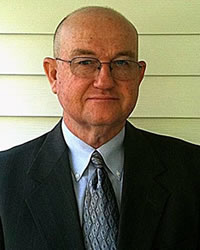
Gary Shepard

The Righteous Made Sin & Sinners Made Righteous

2 Corinthians 5:21
Gary Shepard June, 10 2007 Audio
0 Comments

Sermon Transcript

Auto-generated transcript • May contain errors

100%
Our text this morning is found
in 2 Corinthians 5. The title of my message this
morning is, The Righteous Made Sin. and sinners made righteous." And when I speak of that first
one, the righteous, I'm talking about the one that John called
Jesus Christ the righteous. And I thought about it without
a doubt, the things that I have to say this morning, they are
not As a matter of fact, it's a pretty
good rule of thumb to heed the warning of the old
preacher who said, if it's new, it isn't true, and if it's true,
it isn't new. As a matter of fact, what I want
to talk to you about this morning, as far as time is concerned is
as old as the garden. And it was one of the very first
things that we find God showing to our first parents, and the
very principle and gospel that He declared to them in that time. These things have been declared
by every gospel preacher for centuries. But they are strange to our generation. And they are naturally offensive
in our day. On the one hand, they reveal
our sinnerhood. On the other hand, they expose
the filthy rags of our self-righteousness. But they also give hope to real
sinners, to helpless and hopeless sinners. They give hope to God's elect. And they glorify Him alone. The Apostle Paul writes in this
second epistle to the Corinthians, this letter to believers. He writes, as you see here in
this chapter, to those whom God has reconciled unto Himself in
Christ. He writes to them in that place
in that day. He writes to us in this place
in our day. And he says, if you notice in
verse 20, Now then, we are ambassadors for Christ, as though God did
beseech you by us. We pray you in Christ's stead,
be ye reconciled to God." That's a bit confusing in one
sense of speaking. because he has just got through
saying that God was in Christ reconciling them unto himself. And he was saying that God, all
things are of God who hath reconciled us to himself by Jesus Christ. So what is he talking about here
when he says You be reconciled to God. Well, if God is reconciling
us in Christ, if He has reconciled us in Christ, then we're reconciled. So, He has to be talking about
something different here. And what He's talking about to
these believers at Corinth and to us is that we are to be reconciled
to everything now that God does, and to everything that God in
His Word says, and especially to the suffering and to the persecution,
or whatever we might be called upon to endure for the gospel's
sake. Be reconciled to these things. They are sent of God. Be reconciled
to these words. They are the words of God. Be
reconciled to all these things because God has reconciled us
to Himself in the Lord Jesus Christ. And then He, in verse 21, gives
again the basis for our doing this, the basis upon which God
has reconciled His people unto Himself, and that is the substitutionary
death of Jesus Christ. I thought about it as I read
that twentieth verse. That the Apostle here is led
by the Spirit to use language in which we find this very principle. When he says that we are, that
he is, in Christ's stead, to say something, in Christ's
place. And then he goes on with that
same principle and is led by the Spirit of God to tell us
the basis upon which God reconciled his people unto himself. Verse 21, he says, For, or because, He hath made him to be sin for
us who knew no sin, that we might be made the righteousness of
God in him." You see, substitution is the principle by which sinners
are reconciled to God And Christ is Himself the substitute. His death, to use a language
much more prevalent in days past, is the death of a vicarious sacrifice. In other words, He says in Scripture
again and again that He gave Himself on the behalf of others
and for others and not himself. He was not dying a death that
he was Jew in himself. His death is the death of a substitute. And this substitution is necessary
and is simply one who stands in the place of another, and
we have no problem understanding it or accepting it in everything
around us. If the teacher is sick and unable
to go to school that morning and teach, what do they do? They
get a substitute teacher. And in our day that is so sports
conscious, we see it on every hand that if the athlete is unable
to play because of injury or whatever, if he has to come out
of the game, what do they do? They put in a substitute in his
place. And that is the principle that
I'm talking about, and that is the principle of the gospel. because in Scripture it is one
who receives what another is due in the matter of punishment. It is paying for another what
they cannot pay, and it is doing for another what they cannot
do, And it is necessary in the salvation of sinners because
we can do nothing to please God. And we have nothing to pay our
sin debt with. And we cannot in any way satisfy
God's justice. And we cannot stand before God
and be accepted by God in ourself much less endure his wrath for
sin. An old preacher by the name of
Arthur Pink gave this warning. He said, Beware of quarreling
with the justice of this law of representation. Beware of
taking a side against this business of substitution. He says, this
principle wrecked us. We fell in Adam. And this principle alone can
rescue us. The disobedience of the first
Adam was the judicial ground of our condemnation. The obedience of the last Adam
is the legal ground on which God alone can justify the sinner. If we didn't fall in Adam, we
couldn't be raised in Christ. If we did not come into favor,
disfavor, in one outside of ourselves, we cannot be brought into favor
by one outside of ourselves. And he goes on to say this, the
substitution of Christ in the place of His people, the imputation
of their sins to Him and of His righteousness to them is the
cardinal fact of the gospel." No substitution, no gospel. No substitution, no Savior. No substitution, no salvation
from our sins. But he says, the principle of
being saved by what another has done is only possible on the
ground that we are lost through what another did, and the two
either stand or fall together. That's right. If we did not fall in Adam, we
cannot be raised in Christ. And this is the heart of what
we find in this verse of Scripture, and it is, as he said, the cardinal
chief fact of the gospel. And all of this book, in one
way or another, in picture or type, or in clear expression
and declaration, everything in this book And all the hope in
the gospel is here in this verse and everywhere. What does he
say? Well, the first thing he does
here is he tells us how Christ became this substitute. Now, I know how we are. Everybody
in our day wants to decide everything democratically, and everyone
thinks it can be settled by taking a vote. Not this. Look at those first words. For
he hath made him. Who is that? That is God Almighty. That means the one who is in
charge of everything and the one to whom belongs everything,
the absolute sovereign of the universe before you and I or
anybody else ever was, He made His Son the substitute. He's the Savior. He's the one
who is offended by our sin, and it was His law that was broken
in our sin. He is the one who is sinned against,
and therefore He appointed Jesus Christ the substitute. That's right. If you look back, to where Brad
read in our Scripture reading, there in Genesis 22, there is
the absolute perfect picture of substitution. God commanded
Abraham to take his son Isaac up on Mount Moriah and offer
him as a sacrifice. And Abraham, in the obedience
of faith, did just exactly what was required of him. He took
him up there, and he bound him up, and he laid him on that wood,
and he drew back his hand with the dagger, and was about to
pierce his heart with that dagger. and put his life away by the
shedding of his blood, and God stopped him. Why? To show us something. And He stopped him and yet used
that to show us this. that salvation is only through
and by that substitute and sacrifice that God provides. He says, you
take him off that altar and here is a ram who is caught in a thicket
in his horns a ram that I have provided to show this picture
and to appoint to my son the sacrifice that I provide." And so when he put him up on
that altar, he slayed the lamb and pleased God, and God was
satisfied, but more than that, In that, Abraham, by faith, believed
God. He believed what God said about
saving sinners by a substitute. You say, how do you know that?
Because of what Christ said. The Lord Jesus Christ said of
this man Abraham to those who were his very descendants, Abraham,
your father Abraham, rejoiced to see my day, and he saw it
and was glad." How did he see it? By faith.
He believed What God said and what God demonstrated in this
picture, in this sacrifice, that the only way that we can be saved
from our sins is in this substitute that God has appointed and He
has already appointed Him, it's Christ. That's what Isaiah says. He says in Isaiah 53, all we
like sheep have gone astray, we have turned everyone to his
own way, and the Lord, Jehovah God, and the Lord hath
laid on him the iniquity of us all. In other words, We were
not there in eternity, and we were not even there at the cross,
and we are passive in all of this business of salvation and
the accomplishment of that work wherein we're saved and whereby
we're saved. It is God who made him the substitute
in his wisdom. in his knowledge, knowing all
things, and in his love, because here is the love of God which
is in Christ Jesus. That God in love appointed and
ordained Christ to be the surety and substitute for his people.
And God will only accept the one He has appointed, so that
Christ is said to have spoken these words when He came here
in this world, that He came to do the will of Him that sent
Him. You see, the Bible says that
if you become surety for somebody, you will surely smart for him. If you take the responsibility
of somebody's debt on yourself, there's coming a payday. And
before the world ever was in that everlasting covenant, the
Lord Jesus Christ became the surety of His people and thereby
took upon Himself all that responsibility. But time came when He had to
be the substitute for His people. because God had appointed him.
And not only that, but because he willingly and freely took
their sins upon him. God says through the psalmist
in Psalm 89, I have laid help upon one that is mighty. I have exalted one chosen out
of the people. Who's that? My Son, the man Christ
Jesus. Paul writing in Romans 8 says
this, For what the law could not do, in that it was weak through
the flesh, our flesh, God sending His own Son in the likeness of
sinful flesh, and for sin, consumes sin in the flesh. He is none other than God the
Son manifested in the flesh, and this God of mercy and grace
and love declared and determined, I will become human flesh. I will be their substitute. I will render unto the Godhead
that obedience unto death, the death of the cross. I'll bear
their iniquity. I'll do it voluntarily. I'll
do it in love. I'll do it in mercy. And so God made him the substitute. And then the apostle shows us
this, and that is the absolute sinlessness of this substitute. Every word, every phrase, in
this one verse is vital. He shows us the absolute sinlessness
of the substitute. He says, for He hath made Him
to be sin for us who knew no sin. You and I can't even come close
to comprehending that. If anybody is enabled by restraining
grace to make it through this world, even a few years without
a major boo-boo. We just think that they ought
to have what men call sainthood. Boy, if anybody's going to heaven,
they are. No, no. He knew no sin. And if there was one thing that
in every type in the Old Testament, from the Passover lamb to whatever
it was, every sacrifice offered under that Old Testament economy,
the very first requirement was it had to be without spot and
without blemish. It could not be broken or crippled
or scarred or maimed in any way. Why? Because it was a type of
the perfect Son of God. He who is the substitute could
be so not only because he became flesh and was a man, but because
he's a sinless man. You and I can't even imagine
taking one breath without sin, living one minute without sin,
without some thought of wickedness or some spirit of jealousy and
covetousness or whatever it is rising up in us so quick, so
fast, anger, whatever it might be. But the man Christ Jesus, you
know sin. And if he had, he could not have
been the substitute for sinners. A man who owes a debt himself
can't pay somebody else's debt. A man who's in prison himself,
he can't get anybody else out of prison. But he said to those scribes
and Pharisees, you know, they were squeaky clean in their own
minds. He said, which of you can convince
me of sin? Which of you, the best of you,
which of you could ever charge me with sin? The writer of Hebrews expresses
it like this, for we have not a high priest which cannot be
touched with the feelings of our infirmities, but was in all
points tempted like as we are, yet without sin." He goes on, "...for such an high
priest became us, was just suitable for us, who is holy, harmless,
undefiled, separate from sinners, made higher than the heavens. All the writers of Scripture
bear this one thing so clear. He knew no sin. Peter said, who
did no sin, neither was guile found in his mouth, And he came
as God's Lamb to take away sin, and he lived as a man in the
full fulfillment of what that Passover Lamb pictured, a Lamb
without spot and without blemish. And then the apostle is led by
the Spirit to say something here that makes us to know something
about this substitutionary work itself. He says, he hath made him to
be sin for us. I don't know how many times in
this book we find that word for used to show just exactly this
truth of substitution. It means in the place of. And every one of those Old Testament
sacrifices, every lamb, every heifer, every bird, whatever
it was, It was always offered to God as a substitutionary sacrifice. It was always offered to God
in the place of the people. And he says, God did this. You know, the only way we could
have a work or a salvation that would actually save us, that
would actually accomplish the putting away of our sin, that
would actually accomplish the making of us righteous, is a work that God did. That's why I'm so thankful that
He did not leave one thing, one jot, one tittle, iota of this
work, of this salvation, not one thing to us, because we'd mess it up. We'd mess it up. We were living
there in our federal head, Adam, in a perfect garden paradise,
and he did Just exactly what we would have done if we had
been in that place, He blew it. The Bible says that He was made
sin for us. Somebody said this, not only
was the Lord of glory punished for sin, but He was made to be
sin. Not only did Christ bear the
wrath and indignation of God against sin, but He was made
sin. The Son of God was made to be
sin for us because there is no other possible way in the world
for God's elect to be discharged from their sin, but for Christ
to be made sin. It dawned on me this morning,
I was sitting there reading, and I thought how we are so often found trying
to understand the things of God. But I believe it's the case that
most of our seeking to understand these things is really unbelief. You say, why, preacher? Well,
because John says in 1 John 5, right at the last of that book
and chapter, he said, God hath given us an understanding. that we might know Him that is
true. And He has set forth the person
and the work of Jesus Christ in such clear and uncertain terms
that we are but to believe what He says. What does it say? It says here,
He was made sin for us. And I think a lot of good men
get hung up right here. And the problem comes from our
inability to comprehend the substitute as the God-man. This is not you and me dying
there. This is not any other person but that one who is God
and man in the same person. Here he is come, sent of God,
come in the flesh that he might be able to die the death of the
cross. But at the same time, he never
ceases to be the infinite God. Some rightly insist upon and
emphasize the sinlessness of Christ. Others emphasize and rightly so insist
upon the fact that he was made sin, which he was. But you fall into the black hole
when you go to explain all that that involves, because you can no better explain
that in its entirety, then you can explain this one person who's
able to do it. Can't separate it. He's God and
man in one person. He can die and did die. And his death, since he is God,
is also a death that accomplishes what the death of no one man,
even if he was a sinless man, could accomplish. Put away the
sins of his people. But faith has to believe God. Faith gives and has this understanding
from the gospel that God says on the one hand, he knew no sin,
and God says on the other hand, and at the same time, that he
was made sin. Can a man sin without committing
the act of sin? Absolutely. We did in Adam. Paul says, wherefore, as by one
man sin entered into the world, and death by sin, and so death
passed upon all men, for that all sinned. We, without committing an act
of sin ourselves, sinned in that. All right, what about this? Can
a man become a sinner? without a nature of sin? Absolutely. Because we did that,
too, in Adam. He says, For as by one man's
disobedience many were made sinners, so by the obedience of one shall
many be made righteous. And Adam was called the first
Adam, and Jesus Christ is called the last Adam, And by the principle
upon which we fell in Adam, we are saved in our substitute,
the Lord Jesus Christ. I'll tell you a verse of Scripture
that struck me. I can't remember if somebody
pointed it out to me. Maybe they did at some point,
but at least it came back to my mind. It's in the book of
Numbers, and it's describing when all the offerings and sacrifices
were necessary. Whatever occasion took place
that caused a sacrifice to be offering and a cleansing to be
necessary. And this had to do with those
priests. In Numbers 6 and verse 11 it
says, And the priest shall offer the one for a sin offering, and
the other for a burnt offering, and make an atonement for him,
for that he sinned by the dead." Now, what was the occasion of
this? If he came in contact with a
dead body, If he came into a tent like where
somebody had died, or if he was one of those responsible for
having to handle the body, if he came near this body, and especially
a priest, he had to have an offering. Why?
He didn't do anything. Oh, but it says he sinned by the
dead. When He came in contact with,
when He came in the presence of this dead body, He was ceremonially
unclean and had to have an offering, had to have a sacrifice. And my friend, the Lord Jesus
Christ, He identified with the dead. with dead sinners, unclean
sinners. God did not have to save any.
But once he purposed to save some of Adam's race, being the
just God that he is, the holy God that he is, the only way
was for Christ to be the substitute and the substitute to be made
sin. Therefore, the Lord hath laid
on him the iniquity of us all. All the sins, I mean every one,
every single sin, forget about the little sin and the big sin,
there is none such because there is no little God to sin against.
All the sins of all God's elect, of all time, of all times and
of all situations, every one. The Bible says in Isaiah 53,
were made to me on His head. And he who knew no sin was made
sin. But the glorious thing of this
is that this church that is his
bride, of whom it is said that when
one man marries a woman, He's the bridegroom, she's the bride. This is a picture of the type
of the church of the Lord Jesus Christ. He says, and they too
shall be one flesh. One flesh. And for our sins too have been
laid on Christ. They can't be on us. If the righteous was made sin
for us, then our sins are no more. In an act of this amazing love,
of this mercy from old eternity, of this grace, and of this justice, Somebody says, I don't want to
hear about justice. Brother, I do. I want to hear about it. Because you could stand in here
and you could say, well, don't worry about it. I know you've
got a payment on your old truck next week, but don't worry about
it. Everything will be fine. We'll take care of it. Don't
worry about it. Just forget about it. Show me the receipt. Let me know that it has justly,
legally been satisfied. But in this act of love and wisdom
and justice, God transferred our sin to Christ, and He alone
became accountable for it before God's justice. And that all before
the world began, he took as the surety this responsibility to
justice in the matter of our sin. But there came a time to
pass. There came a time to be the substitute. You know, I got to thinking about
it. Actually, this morning, I believe,
when I really started thinking about it, Going back through
all the Old Testament, looking for a real picture of substitution
outside of these animal sacrifices. Outside of something that involved,
at least in part, an animal sacrifice. I couldn't think of one. I mean, there's a picture of
the surety With Judah, in the book of Genesis, there's that
picture we read about in Genesis 22 that involves the ram, but
a person and a person. I'm not saying it's not there,
but I couldn't think of it until Christ Himself came and He gave us a picture even
of the reality. there was a fellow by the name
of Barabbas. And he was condemned, convicted,
guilty. Boy, that's a perfect picture
of us, isn't it? And the pilot came out and he
said, you know, it's necessary that I give one of you, one of
these to the people. They said, give us Barabbas.
And here, in actuality, here is this guilty, vile, convicted,
no doubt murderer, no telling what else. And he goes free. And instead of him, instead of
Christ, he goes free. And instead of suffering what
he should have suffered under that natural law, here's a sinless
man, Jesus of Nazareth. And He bears it. That's the only
one I know of. Christ had to be His own type
because nothing else ever really thoroughly fits. But that's exactly
what happened in our case and in His case. Believers, every
one of their sins were laid to Christ on that cross in the greater
sense before divine justice. And just like it was in the garden
when they came to Christ to lay hold of Him, He said, if you
take Me, you've got to let these go free. Isn't that something? If you take Me, these have to
go free. In the fullness of time, Christ
came as the substitute and paid the dead in full through the
death of the cross. And He was made what I am. He was made sin and therefore
had to bear the curse of sin, which is death. And Paul says,
Christ hath redeemed us from the curse of the law being made
a curse for us. Peter says, for Christ also hath
suffered for sins the just for, or in the place of, the unjust
to bring us to God. And then he shows us something
here about those sinners that he became
substitute for. For he hath made him to be sin
for us. You know, when you read in the
New Testament all these letters that these apostles were led
to write by the Spirit of God, that which is said and commanded
and promised and all this, It always has to do with a people
of which the apostles themselves were a part. Us. Paul writes in one place, to
the saints that are at such and such a place. He describes the
elect of God. The beloved of God. Those of
like precious faith. Believers in the Lord Jesus Christ. That's who He came to be substitute
for. If He died this death for every
person in the world, then either everybody in the world would
have to be saved because of divine justice. If he did not die but
for part of the sins of part of the people in the world, or
all the people in the world, then all would still ultimately
perish because they'd have nothing for every other sin. But as Owen said, he died. He
died a death that paid the debt of sin for all the sins of all
that people that he chose in Christ and gave to Christ before
the world began. So our Lord comes and he says,
I lay down my life for the sheep. I give my life for the sheep.
Paul said to those Ephesian preachers, he said, now you take care of
that church which the Lord purchased with
His own blood. A people that were in union with
Christ before the world began and were counted as one with
Him in the sight of God. Us. I've always said, if you want
to be one of us, quit being one of them. One of us. Those who look to
Christ, to His grace as everything in salvation and nothing of themselves. Well, I believe that, except,
you know, I still believe that, a minute, you're still one of
them, at least by your profession. Us. Saints. All that means is
those who were separated unto God by God Himself in Christ
and regarded and counted as holy and righteous in Him and in no
other, not themselves, and who are in time separated out by
His Spirit, called by His gospel, and enabled to believe on Christ. Let me hurry and say the last
thing. He shows in this the great success
of the substitute, the accomplishment of his work. For he hath made him to be sin
for us who knew no sin, that we might be made the righteousness
of God in him. What happens as a result of this
substitutionary work? We are made the righteousness
of God in Him. And this means the satisfaction
of divine justice. John is saying, and you know
that He was manifested to take away sins, and in Him is no sin. If the Lord laid on Him the iniquity
of His people, and John says, and now in Him there is no sin,
That means they're gone. He put them away. So Christ was
once offered to bear the sins of many, and unto them that look
for Him shall He appear the second time without sin unto salvation. Gone. Because He made peace by
the blood of His cross. Paul says, Wherefore, my brethren,
you also are become dead to the law. Christ, when that burden and
load of sin, guilt and punishment that was due all His people,
when He was made sin and the Lord brought that to bear on
Him, He had to go and stand before the law and justice of God, and
when he did, that's what he's doing on the cross, and God killed
him. Put him to death. That means if the law slew him, he's dead to the law. Let's say here's a man who goes
out and he rapes and murders and kills and steals and does
all these things. They take him, they bring him
down to the... I don't even know what they use now. Hanging ought
to be the thing, but let's just say that's the form of capital
punishment. They take him out and hang him.
You know, there's something in me That just says, well, that's
not quite enough. Can't we do something else to
him? Nope, he's dead. He's dead to the law. The law has meted out to him
all that it can. Not only was that the case with
Christ, not only is this the reason why it says that when
he appears it's without sin, because he put it away, because
he satisfied the law. He died to the law. But when
he did that, Paul said, his people did too. Wherefore, my brethren, you also
are become dead to the law by the body of Christ. that you
should be married to another, even to him who is raised from
the dead, that we should bring forth fruit unto God." We're
not only dead to the law in Christ, but we're raised up in Christ,
that we might be still one with Christ, married to Christ, and
bring forth fruit unto God, which is true worship and praise and
thanksgiving, and that which glorifies His name. And he says,
there is therefore now no condemnation to them which are in Christ Jesus. Because we were judged for sin
in Christ on the cross, and our judgment for sin is past. I came across a little story,
supposedly a true one, about a man who had been drafted into
the army in France. And a friend took his place as
a substitute and went into the army, and in the course of time
he was killed. And the war kept going on and
such, and later this fellow that he went for, he was drafted again,
but he refused to go. And he pleaded this, that he
was dead, that I can't go because I'm dead. And he explained how
his substitute had stood in the ranks in his place, and while
doing so was killed, and now as the man was slain while acting
in his place, he was legally exempted from service. He was me, and He died, so I'm
dead. Made the righteousness of God. Not just made righteous, but made the righteousness of
God in Him. You say, well, you don't look
so righteous to me. Righteousness doesn't have to
do with look. He says, we were made the righteousness
of God, the righteousness God requires, the righteousness He
gives, the only righteousness He'll accept. And if He accepted
otherwise, He wouldn't be God. Made the righteousness of God
in Him. One day we'll be made like Him. But we're already in Christ made,
the righteousness of God in Him. You see, in believing. It's not like the song I read
a while back said, that we lay our sins on Jesus. Faith is not
us laying our sins on Jesus. is God enabling us to believe
and to see that He laid our sins on Jesus, that He made Him to
be sin for us, and that He made us the righteousness of God in
Him. If God laid my sins on Christ,
they're not on me. And if He put them away, they
are no more. And He knew. Christ knew this. He knew what He was as the surety. He knew what was required in
being the substitute. He said, O fools, and slow of
heart to believe all that the prophets have spoken. Ought not Christ to have suffered these things,
and to enter into His glory? Did not all the prophets show
that Christ would die this substitutionary death? Did not all the prophets
and the types that God gave through them show that sin can only be
put away by sacrifice, justice can only be satisfied by the
shedding of blood? If Christ, the Messiah, It's
to be the Savior, fulfill all those types, save His people.
Ought not the Christ to have suffered these things? Oh, but He said also, and enter
into His glory. Because His is the glory. of
the substitute. And ours is the glory of being
saved by the substitute. Because the righteous, Jesus
Christ the righteous, was made sin for us by God. We are made the very righteousness
of God in Him. As Old Pink said, that's the
cardinal fact of the Gospel. God glorifying Himself in the
substitutionary death of His Son and saving all His people
from their sins. Our Father, this day we pray that You might teach and enable
us to believe this glorious truth, to trust in this wonderful substitute,
to rest in his finished work, to glorify you in all of your
attributes. May these who sit here and here
this day, Lord, find this a precious good news to their souls. And
wherever this message might be heard, Lord, in this earth, call
out your sheep and bring them that they might know and rejoice
in the Lord Jesus Christ. We do thank you and give you
praise and honor and glory. And pray that we might be enabled
to do so even more fully, worlds without end. For we pray in Christ's name,
Amen.
Gary Shepard
About Gary Shepard
Gary Shepard is teacher and pastor of Sovereign Grace Baptist Church in Jacksonville, North Carolina.

Comments

0 / 2000 characters
Comments are moderated before appearing.

Be the first to comment!

Joshua

Joshua

Shall we play a game? Ask me about articles, sermons, or theology from our library. I can also help you navigate the site.