Bootstrap
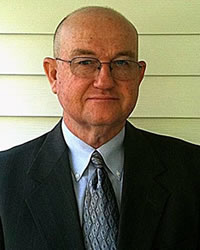
Gary Shepard

The Decease Accomplished

Luke 9:31
Gary Shepard April, 15 2007 Audio
0 Comments
Gary Shepard
Gary Shepard April, 15 2007

Sermon Transcript

Auto-generated transcript • May contain errors

100%
Open your Bibles with me this
morning to the Gospel of Luke. Luke chapter 9. And I want to read just a few verses. But I was just thinking about
it. Men by nature claim that they
would like to do a lot of things, that they would believe if they
could only see this or if they could only hear such. They say, well, if I could just
look into heaven to know it's there, or if I could just hear
what is being said in heaven, then I would believe I would
be without fears and without unbelief. But what we have here
in this text is just exactly that. And we are allowed by the
Spirit of God to cast an eye on those who are in heaven and
to hear that heavenly conversation. If you look down at verse 8, It says, And it came to pass,
about an eight days after these sayings, he took Peter and John
and James, and went up into a mountain to pray, the he being here the
Lord Jesus Christ. And as he prayed, the fashion
of his countenance was altered, And his raiment was white and
glistering. And behold, there talked with
him two men, which were Moses and Elias. Moses having been dead quite
a long time, and Elijah having been dead a long time, But he speaks here in this heavenly
vision to these two men who seem to represent the law and the prophets. Moses being
typical of the law that was given by him, and Elijah being representative
of the prophets, being one of the chief of the prophets. But what I want you to see this
morning is I want you to notice the subject of their discussion. In other words, we could say
this is the subject of heaven. This is what those in the presence
of God talk about. Look down in verse 31. who appeared in glory, and spake
of his decease which he should accomplish at Jerusalem." Are they talking about golden
streets, or are they singing gloriously melodic songs, or
what are they doing? They are speaking of the decease
of the Lord Jesus Christ. And this shows us what the Bible
tells us many, many places in one way or another, and that
is that the law and the prophets all had to do with Christ. The law and what it represented
had something to do with Christ. The prophets and what they prophesied
and spoke had to do with Christ. And not only does it all have
to do with Christ, in particular, it has to do with what he would
accomplish through his becoming flesh and through his dying, the death
of the cross." Now, I guarantee you this, and that is that what
men view in the death of Jesus Christ is first and foremost
that it is a failure, that it is a defeat. And that is why
he is presented so often, especially at times like Easter. That's
why he is presented so often in such a pitiful way. Somebody to be pitied, a failure,
and a man where things are just gone and gotten out of control. But if you notice this verse,
the death of Jesus Christ is spoken of here by the Law and
by the Prophets and by Christ Himself as an accomplishment, who appeared in glory and spake,
he and they, of his decease which he should accomplish at Jerusalem. Now, we have to know, if it was
not given to us anywhere else in the Bible, we have to know
by what that verse says that his death is not an accident,
and neither is it an experiment, nor can it be a failure, nor
an afterthought, and certainly not a natural occurrence or anything
to pity him for, but it is an accomplishment. This is that
which he would accomplish at Jerusalem. And the word deceased
here means literally exodus. This has to do, this conversation
and his death has to do with this exodus that he would accomplish
at Jerusalem. And the exodus, or an exodus,
if you will, simply has to do with a departure or a going out,
such as the departure of the children of Israel when they
made that exodus out of Egypt. And for that reason, Death here
is his departure out of this world. Listen to what he says
in II Peter. Peter says, moreover, I will
endeavor that ye may be able after my decease, same word,
after my decease to have these things always in remembrance. after his exodus, after his departure
out of this world. And for that reason, the death
of Christ, likewise, is called an exodus. And it involves not
simply his act of dying, but it involves the whole of that
redemption that he accomplishes in his life and death. And that's
why we have language in the Bible that gives us this very thing.
It says that he came into the world to save sinners. It says that he shall save his
people from their sins. And it says in Matthew 20 and
verse 28, even as the Son of Man came not to be ministered
to, but came rather to minister and to give his life a ransom
for many." In other words, there is a reason, there is a purpose
There is a goal in Christ's coming into this world. And it's not
something that's gone amuck here when He dies. It is something
that He came to accomplish. Moses, on the one hand, pictures
the Lord Jesus Christ in this. God killed Him and buried Him. And yet, on the other hand, Elijah
pictures Christ in this. Elijah was translated and carried
up into heaven. So everything in the law and
everything in the prophets, even in those things that the individual
lawgiver and prophet himself represents, they all had to do
with Christ. with that person and work of
Christ, with Christ and Him crucified, and what He would accomplish
in it. They were talking about His decease
or His exodus which He would accomplish at Jerusalem. And to preach the gospel, to
preach the gospel, which would be to follow the example of Christ
Himself, which would be to follow the example of Moses and Elijah
themselves, is to preach the gospel of the Lord Jesus Christ. And it cannot be, as so many
have tried to say, well, we just preach Jesus. No. No. because the gospel has to do
with Christ and Him crucified. Paul said that we preach Christ
and Him crucified. And it is a very gross thing,
it is a very foolish thing to imagine that it is simply talking
and speaking the name of Jesus and declaring the fact that He
died on a cross outside of Jerusalem. It has to have something to do
with what He as God manifested in the flesh accomplished. in
that exodus. And in most, he's a total failure. And I do believe that the one
thing that actually sets forth the true Christ and the true
work that was accomplished in his death, it is in this very
thing. What did he accomplish in his
death? Well, what was accomplished by
God in the exodus out of Egypt, and how did He do that? Christ's death is this decease
or this exodus out of this world. How was it that it is represented
in what God did through those Israelites when He brought them
in that exodus out of Egypt? Well, first thing he did was
he purposed it. It wasn't that the Lord Jesus
Christ came into this world at a time when it just happened
to be and He didn't just come as someone who was just born
into this world. But rather, it came in the will
and purpose of God. God purposed according to His
own will to do it. In Exodus 2, it says that God
heard their groaning and God remembered His covenant. It wasn't that they were just
in a bad way. But rather, it brought God, in
this sense of speaking, it brought God to remember a covenant that
He made. Long before they ever came to
this position, long before any of this ever happened, long before
any of them were ever born, God remembered His covenant with
Abraham, Isaac, and with Jacob. When we come to Ephesians 1 and
we read about the purpose of God and His grace in Christ,
the very first thing that is spoken of by the Apostle Paul
in that instance there in Ephesians 1 is that God the Father is to
be blessed and honored and thanked and praised because of what He
purposed and because of what He gave us in Christ. before the world began. Not just
to happen so, and not just at any time, but in Isaiah 53, where
we have Isaiah the prophet speaking so many years beforehand to this
occasion that we're talking about here, he said, it pleased the
Lord to bruise him. Pleased the Lord. What does that
mean? How could it please the Lord?
It means that it satisfied God, that it honored God in the fulfilling
of His purpose. Everything that He determined
to do, everything that He promised to give, every person He had
determined to save, it was all bound up in this exodus. The first thing he did was he
chose and he sent a man to be a deliverer. That's Moses. He didn't raise one up in this
manner wherein he was just exactly like these were. But he was unique. He was this man Moses, and he
was one who had before been determined to be. And this is what we read
in Exodus 3. He says to Moses, Come now therefore,
and I will send thee unto Pharaoh. You know the first thing that
Moses confronted? was these very people who charged
him with taking control on his own. Doing this, who put you
in charge? But he says, Come now, therefore,
and I will send thee unto Pharaoh, that thou mayest bring forth
my people, the children of Israel, out of Egypt. In Isaiah 42, Isaiah records,
Behold, my servant, whom I uphold, mine elect, in whom my soul delighted,
I have put my spirit upon him, he shall bring forth judgment
to the Gentiles." You might as well say that before
there was ever a sin committed in this world, before there was
ever a person born in this world, before there was even a people
chosen to save in this world, there was one appointed, the
Lord Jesus Christ. Paul writes in Galatians 4, he
said, but when the fullness of the time was come, that time
ordained of God and appointed of God. God sent forth His Son
made of a woman, made under the law to redeem them that were
under the law. This was an appointed person
who is none other than the God-man. And not only did he choose and
send a man to be a deliverer, he sent him to deliver a particular
people. Now, it's an amazing thing to
me. And if anything, it just gets worse and worse how people
think they are really bragging on Christ. How they think that
they are really lifting Him up magnifying him when they say
that Christ Jesus came into this world to die for every person,
to save every person from their sins. They make him in that to be the
worst failure. And more than that, they make
him to be a violator of his own law. And they make Him and His
grace to simply be determined a defeated thing or a victorious
thing by what man does. God says, I have sent you to
bring forth My people, the children of Israel, out of Egypt. Not the Egyptians. Not any of
those people of the Canaanites. Hold your place here and look
at Deuteronomy chapter 7. Look down at verse 6. Deuteronomy
7 and verse 6. For thou art an holy people unto
the Lord thy God." Now, they were certainly not
that in themselves. The Lord thy God hath chosen
thee to be a special people unto Himself above all people that
are upon the face of the earth. Is that fair? If God does it,
it is. And the fact that he does this,
of this national and earthly people, is just a picture of
what he has done spiritually toward his elect, which he has
chosen from among every people, kindred, tribe, and tongue, and
done it in Christ. The Lord did not set His love
upon you, nor choose you, because you were more in number than
any people, for you were the fewest of all people, but because the Lord loved you.
And because he would keep the oath which he had sworn unto
your fathers, hath the Lord brought you out with a mighty hand, and
redeemed you out of the house of bondmen from the hand of Pharaoh,
king of Egypt." He did it toward a particular
people. And when Christ came into this
world and he accomplished his exodus, He said, I lay down my
life for the sheep. I give my life for the sheep. Paul said, preach the gospel,
feed the sheep, the flock of God which he purchased with his
own blood. He loved the church and he gave
himself for the church. He laid down his life for his
brethren. In other words, Christ was made
surety in that everlasting covenant for that people that the Father
loved, for that people that He gave to His Son and made Him
responsible for. And He went into this world,
and when He came out of this world, He redeemed them. He obtained eternal redemption
for them. And it is toward them and will
be manifested for all eternity the same thing that God said
concerning that national people of Israel of whom these spiritual
Israelites are a type. He says, but against any of the
children of Israel shall not a dog move his tongue,
against man or beast, that ye may know how that the Lord doth
put a difference between the Egyptians and Israel." He said, you are going to know
that it is the Lord that makes them to differ. All of the world,
most of which will find this out when they wake up in eternity
separated from God, every person is going to know that the Lord
has made this people differ in the Lord Jesus Christ. What did Moses do as the one
appointed to actually accomplish their deliverance, their exodus? In other words, what Moses did
He was instructed so clearly by God Himself to do exactly
these things and follow these steps because of what it represented. What did He do? Well, He delivered
them all by one sacrifice. That's it. He delivered them
all through this one sacrifice, this Passover lamb, not by something
that they did or by something that they didn't do, but when
it got down to whether or not they would be delivered, the
Lord said, when I see the blood, I'll pass over you. As a matter
of fact, they were prescribed by God to take in each household
a spotless male lamb without blemish to watch him to make
sure he was not in any way foul. And they were to slay that one
lamb and take the blood and put it on the doorpost and the lintels
when that death angel passed through Egypt that night and
slew the firstborn in every household. And those Israelites were put
inside the house. They were on the inside of the
house that was marked by the blood. And when the death angel
passed through, which we say the death angel, but God actually
Himself describes Himself as the one who passes through, He
says, when I see the blood. Well, you say, what about all
those people in those houses? They were just as wicked as the
Egyptians were. He said, when I see the blood,
I'll pass over you. They were just as wicked as the
Egyptians. They were just as devoid of righteousness
as were the Egyptians. They were justly as deserving
of hell itself as the Egyptians. And the only difference was the
blood. It was the blood, the one sacrifice
that God had described and appointed and approved and provided, and
He didn't look to anything in them, just to that blood. Christ, when He came into this
world, the very first thing that the one that was appointed his
forerunner, John the Baptist, the very first thing and the very first character
that John announced him in was the Redeemer. He said, Behold
the Lamb of God. Behold the Lamb of God. and this
sacrifice and this feast that was the first in that deliverance
of Israel out of Egypt and called by God Himself the Passover. Paul says of him, for Christ
our Passover. We don't have a feast day anymore
because we have the feast Himself. Christ, our Passover, is sacrificed
for us. It is Christ that died. It is Christ who died for the
ungodly. It is by the one obedient act,
that act of death, that the many were made righteous. It was by
that death which was a death for sin, and which put away sin
by that sacrifice of Himself. It is by that death, by that
act of grace that we are delivered. But if you notice in that example, there was a sense in which they
were redeemed by blood. But even though they were redeemed
in that sense before God, they were still in a situation that
required they be redeemed or brought out by power. And that's exactly what God did.
He not only redeemed them by the blood of that Lamb, He redeemed
them, He brought them out by His power. What did He do? Well, he blinded Pharaoh's eyes
and he made the people willing. I just never, ever fail to be
amazed at this. Here they have held these people
as captives and slaves all these years, and they know that they
are dependent now on their very labor to make the bricks and
to do everything necessary for their economical welfare. And then one day Pilate just
decides to let them go. One day they just are, the people
are in a mood somehow to let them leave. And then he conquered
their enemies in the sea. Now why did that all happen?
Because there was no other way. No other way. And though the
Lord Jesus Christ died for His people, though He was their surety
before the world began, though He suffered and bled on the cross,
the death that makes an end for sin, every one of us in this
world, those even loved by the Father, those redeemed by the
blood of Christ, we are in our own state in the bondage of sin
when we come into this world. the Lord Jesus after he died
the death of the cross. He was raised by the power of
God, and the Scripture says that he triumphed over death, hell,
and the grave, Satan, and every power and principality. In other words, we are redeemed
by the blood of Christ. And yet at the same time, in
time, we are redeemed or brought out of the very power of Christ,
by the Spirit of Christ. And it says that He was delivered
for our transgressions and that He was raised because of our
justification. And when these Israelites were
delivered out of Egypt, They not only were set free, they
not only had their enemies conquered, but they had all of these items of gold and silver, precious
stones. Those people, and this really
is strange, those Israelites, at the request that they made
to these Egyptians, They just turned over to Him all of these
riches. Here they lived and worked as
slaves all this time in Egypt, and when they came out, they
not only had freedom, they had treasure. And that's the way it is. When
the Lord Jesus Christ saved and redeemed His people and brought
them out from under the bondage of sin and the power of sin and
the dominion of sin, He didn't just bring them out, He brought
them out with treasures. His own righteousness. Every
spiritual blessing. All the gifts of God's grace. The kingdom of heaven. More than
you and I can imagine an eternal inheritance. But Moses and Elijah, they weren't
talking about that. They were talking about the one
whose decease or exodus accomplishes all their salvation. And he delivers
us as he did these Israelites. He delivered them from Pharaoh's
captivity, and Christ delivers us from Satan's. Moses delivered
them from the bondage of slavery, and Christ delivers us from sin's
bondage and slavery. Moses delivered them from Egypt's
curse, and Christ delivers us from the curse of the law. And
as a result of the exodus, as a result of what he accomplishes
in the exodus, God is glorified and his enemies defeated. And in Christ's death, God's
purpose is fulfilled, and His law is honored, and His holy
justice is satisfied, and His character magnified in all His
attributes, His holiness, His righteousness, His love, His
grace, His mercy, His wrath. And God's Son is exalted. and
preeminent, and his people are redeemed to the praise and glory
of his grace. In time, in their experience, Christ also
accomplishes another exodus for them. And that is when he brings them
in the new birth from darkness to light, from poverty and slavery to liberty
in Christ, and from unbelief to faith in Christ. Because we're
still born in this life in the bondage of sin. but the Lord in his mercy, and
according to his purpose and grace in Christ, chooses and
sends us another messenger. And that messenger is given to
preach redemption and deliverance by the blood of Christ alone,
to preach Christ and him crucified. to preach the gift of righteousness
in Christ. And he effectually, by his Spirit,
mightily brings them in the day of his power out of false religion,
out of family traditions, away from their own works, and brings
them to the land of rest in Christ. to that Sabbath which is Christ
and Him crucified. And so the whole salvation of
God's people is an exodus which hinges upon the decease or the
exodus that Christ accomplished at Jerusalem. And that's why
the Apostle Peter is led by the Spirit of God to say to believers,
but you are a chosen generation, a royal priesthood, an holy nation,
a peculiar people, that you should show forth the praises of Him
who called you out of darkness into His marvelous light. Just
like He delivered Israel, so has He delivered and shall
deliver all His people in Christ. He loved them. He chose them. He determined all things concerning
them. And He saves us with an everlasting
salvation. Our Father, this morning we give
You thanks. We thank You for giving this
wonderful illustration even long before You sent our Redeemer. And You show us, Lord, that in
Your grace You save everyone in Christ. And Lord, we acknowledge this
day that He is our only hope. that it is His deliverance of
us. It is His grace to us and not
our works toward Him. It is what He accomplished, and
especially what He accomplished on that cross outside of Jerusalem,
and not what we're ever able to accomplish. We pray that You'd
give us further understanding and appreciation for our Savior and for this precious
salvation that you wrought toward us in Him. We pray, Lord, for
these that we've spoken of that are on our hearts, that are sick
and away, and we ask you to watch over us all and keep us by your
grace. We pray that you bless Philip
as he continues, Lord, in his training, that you would watch
over him and keep him safe and strengthen him, Lord, as he seeks
to work and to do in, Lord, what is often a very hostile and a
very anti-God atmosphere. Help us all, Lord, this world
that we live in is everywhere in all times that very same way. We thank you for your grace in
Jesus Christ. Amen.
Gary Shepard
About Gary Shepard
Gary Shepard is teacher and pastor of Sovereign Grace Baptist Church in Jacksonville, North Carolina.

Comments

0 / 2000 characters
Comments are moderated before appearing.

Be the first to comment!

Joshua

Joshua

Shall we play a game? Ask me about articles, sermons, or theology from our library. I can also help you navigate the site.