Bootstrap
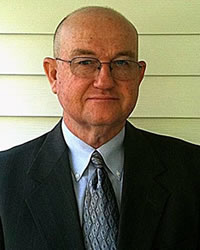
Gary Shepard

God Is Sovereign

Psalm 135:5; Psalm 135:6
Gary Shepard February, 14 2007 Audio
0 Comments
Gary Shepard
Gary Shepard February, 14 2007

Sermon Transcript

Auto-generated transcript • May contain errors

100%
Tonight I want us to continue with the Lord's help in what
I'm kind of calling elementary things about God. I guess I could say essential things about God. And I'd invite you first of all
tonight to turn to Psalm 135. Psalm 135. You see, last week
we began with the fact that God is. He doesn't explain His existence. The Word of God begins with the
fact that He is. But it not only declares that
God is, it also tells us how He is. And the only way that we can
ever find out about how God is, is from His Word. And first of all, in light of
who God is, I want us to consider tonight that God is the universal
sovereign. And by that, if you'll look down
in verse 5 and verse 6, here are two verses, two statements
that show this very thing. For I know that the Lord is great,
and that our Lord is above all gods. Whatsoever the Lord pleased,
that did He in heaven and in earth, in the seas, and all deep
places. Sometimes men try to present
God as one who desires to do many things, wishes to do many
things, and yet, because of some reason, finds himself unable
to do them. But that's not what that says,
is it? It says, whatsoever the Lord
pleased, that did He in heaven and in earth, in the seas, and
in all deep places. And that is what we mean when
we say that God is sovereign. Sovereign is defined in this
way, supreme. Supreme in power, possessing
supreme dominion as a sovereign ruler of the universe. superior to all others, not only
possessing all authority but also exercising all authority. In other words, God acts like
God. He rules. and He reigns. And sovereignty,
as it applies to God, means simply that God does what He will, and He does it to whom He will,
He does it when He will, and how he will. And no creature, no
person, no devil can stop him. Now, as far as earthly sovereigns
are concerned, there probably has never been one greater than
the king of Babylon, whose name was Nebuchadnezzar. And he stood
up on his balcony and he looked over all of Babylon and he took
to himself the glory for ruling, for making, for doing all that
he saw. And God dealt with him and revealed
to him that it was not he himself who had done that, but God. And it was not because of his
brilliance or genius or anything else about him that made him
the king of all the world for the most part, but it was God
who raised him up. And when God got through dealing
with him, this earthly sovereign made this confession. In Daniel
4.35 he said, At the end of those days, and all the inhabitants
of the earth are reputed as nothing, and he does according to his
will in the army of heaven and among the inhabitants of the
earth, and none can stay his hand or say unto him, What doest
thou? Now because we use that word
sovereign in our description of God, some have tried to avoid
the reality of this truth by saying the word sovereign is
not in the Bible. But in truth, any honest person
and student of the Scriptures would have to say that this truth
is everywhere in Scripture. And the closest thing that we
have to the actual use of the word is found, I believe, in
1 Timothy chapter 6 and verse 15, where it says that in his
times he will show who is the blessed and only potentate, the King of kings and Lord of
lords. That word potentate is defined
in this way, a person who possesses great power or sway, a prince,
a sovereign, a king or monarch, exalting him not only above earthly
princes and potentates, but above the highest of the celestial
hierarchy. He will show, He will reveal,
and He will make manifest to all men that He is the only Potentate,
the only and absolute Sovereign over all. And if God is not in charge,
absolutely, if He is not in total control, then whatever else He
is really doesn't matter. What He says or what He is in
any other attribute It does not really matter, and no man need
be concerned about it unless he is, as God, the absolute sovereign
and king and ruler of all things. But when you stop and think about
it, there is nothing more essential to God being God than God being
sovereign and controlling all things. Turn over to Psalm 115. Psalm 115. And listen to what
David says by the Spirit of God. Psalm 115 and verse 1, he says,
Not unto us, O LORD, not unto us, but unto thy name give glory,
for thy mercy and for thy truth's sake. Wherefore should the heathen
say, Where is now their God? No matter whatever happens, especially
to the Lord's people in this world, that brings men to say
of them, well, now look, you say your God is controlling everything,
so why is this, this, and that happening? But look at what David
says by the Spirit of God. He said, but our God is in the
heavens, he hath done whatsoever he hath pleased. Whatever happens, without exception,
most of which we could not even begin to explain because his
ways are not our ways, and his are not our thoughts, but everything
that happens, happens according to the will and purpose of the
all-wise, sovereign God. Whatsoever He has pleased, that
He has done in earth and heaven and below the And so much does
His sovereignty extend over all things. He again takes the very
sovereigns of the earth, the kings of the earth, and He declares
this unto us in Proverbs 21. He says, the king's heart the king's heart, at the center
of his very being. Whatever king has been, whatever
king or authority or power is right now, whatever king or ruler
is raised up on the earth, the heart of the king is in the hand
of the Lord. and as the rivers of water, he
turns it whithersoever he will." Now, the immediate thing that
somebody says, well, to believe that makes men to be like robots. Well, the truth of the matter
is that men are created beings subject to their Creator in all
things, so that the notion of man's so-called free will is
nothing more or less than rebellion against God's will. Think about it. There can only
be one free will in the universe. You have a will, and I have a
will, and every person has a will. And each and every one of us,
if our wills were truly free, we would be a lot different than
we are, we would have a lot more than we have, and we would not
endure most of what we endure if our wills were truly free. But the truth of the matter is
that is not true with God. God's will is the one and only
true free will in all the universe. And this was the issue with Satan
in his rebellion, and this was the issue with Adam and Eve in
the garden. Turn over to Isaiah chapter 14,
if you would. Isaiah chapter 14, and look down
in verse 12, because here in verse 12 we find the very point
of rebellion at which Satan rebelled against God and His throne and
was cast out of heaven. Verse 12, Isaiah 14. How art
thou fallen from heaven, O Lucifer, son of the morning? How art thou
cut down to the ground which does weaken the nations? For thou hast said in thine heart,
I will ascend into heaven. I will exalt my throne above
the stars of God. I will sit also upon the mount
of the congregation in the sides of the north. I will ascend above
the heights of the clouds. I will be like the Most High." Do you see what's at the very
heart of that rebellion? It's the will of Satan set against
the will of God. Now, whose will won? Look at the next verse. Yet thou
shalt be brought down to hell to the sides of the pit. No matter what Satan with all
his power and with all his glory at that time, no matter what
his strength or his might, his will could not stand and did
not stand against the will of the sovereign God. Satan said,
I will, and God said, you won't, and you'll be cast down to hell. You see, in Psalm 50 he says,
These things hast thou done, speaking of man, and I kept silence. Thou thoughtest that I was altogether
such a one as thyself, but I will reprove thee, and set them in
order before thine You see, not only is this at
the heart of Satan's rebellion, that was at the heart of man's
fall. Here in the midst of the garden,
a beautiful garden paradise that God created, that He gave to
our race in our father Adam, that He sent man there to dress
it and to have fellowship with Him. And there he was in this
perfect environment and everything given to him with one single
stipulation. God placed one tree in the midst of the garden. And
that one tree was not any tree of a special flower or a special
fruit. It was simply a tree of which
God said, eat everything else in the garden of every tree,
dress it, enjoy it, but do not eat of that tree in the midst
of the garden. What was the issue there? The
issue was God's right to be God and God's sovereignty and authority
over His creatures by which He had the right and exercised the
right as the sovereign and said, don't eat of that tree. So when did man fall? When did
sin enter in? What did sin have to do with? It had to do with the rebellion
of the creature, with the rebellion of Adam against the very sovereignty
and authority of God. It always comes down to this. You see, if God was not an absolute
sovereign, He could not maintain His throne. He could not carry
out His purpose and make it sure. He could not be sure to save
His people. He could not glorify Himself. And He, as the Sovereign, showed
Himself as that first of all, as far as revelation is concerned,
the creation itself. The psalmist speaks of this over
and over. In Psalm 33 9 it says, For he
spake, and it was done. He commanded, and it stood fast. Only the sovereign God can do
that. Again, in Psalm 148 and verse
5, it says, Let them praise the name of the Lord, for He commanded,
and they were created. He also hath established them
for ever and ever, He hath made a decree which shall not pass. It says in the New Testament
that He has set the bounds of our habitation. That He rules
in an absolute and sovereign control all over everything,
even to the extent that it says in Proverbs 16 and verse 4, the
Lord hath made all things for himself, yea, even the wicked
for the day of evil. Does that leave you and I with
things that we cannot explain? Absolutely. Does it leave us
without understanding as to why God does a great number of things
without a doubt. But it does not alter what He
says about Himself. It does not change how He declares
Himself to be and how He actually does in all things. In the Revelation, chapter 4
and verse 11, all the Lord's people are said
to confess something. Thou art worthy, O Lord, to receive
glory and honor and power, for Thou hast created all things,
and for Thy pleasure they are. and were created. He has done all things. He has
willed all things. He has decreed all things. And
He has done it all, first of all, for His own pleasure and
glory. And what we find is, if we look
at the Bible, we find that the God who is preached by most in
our day is really set forth as so pitiful, and so weak, and
such a failure, and so helpless, and so bound by man his creature. and therefore he's not God. Why? Because our God, His people
in every age confess to the delight of their souls, our God is in
the heavens, and He hath done whatsoever He hath pleased. You say, what about this? the
same. Well, what about that, the same?
What about that that appears to be the greatest wickedness,
or the most vile thing? It includes everything. And the failure is not in what
God does. The failure is in us, in our
blindness, and our rebellion against Him by nature, and our
inability to see things as He sees things. You see, the God of glory controls
all things and all people. And therefore, it in no way ever
speaks or knows anything of such things as chance or fate or accident
or Mother Nature or anything else. If it happens, it happens
according to the sovereign will of God Almighty. In Daniel chapter 2 and verse
21 it says, And he changes the times and the seasons He removes
kings and sets up kings. He gives wisdom unto the wise
and knowledge to them that know understanding. Why is this one king or president
or in charge from the least to the greatest thing? It's because
God raised them up. The reason why we are to be obedient
to the lawfully ordained rulers and law enforcement
and such as that, in Scripture it says, because the powers that
be are ordained of God. No one could have any authority
or have any power And it has nothing to do with whether they're
using it wisely in our eyes or not. That's why it is so foolish
for us, really, to get so steamed up over politics and the failure
of politicians and such as that, because the powers that be are
ordained of God. And if nothing else, especially
in our country, I think that God may set them up to show us
the weakness of man and how it is that we are never to trust
in man whose breath is in his nostrils. Our confidence is in God because
He's the one in charge to the degree that it says in Psalm
76 and verse 10, surely the wrath of man. Do you hear that? The wrath of man shall praise
thee, the remainder of wrath shalt thou restrain. Whatever of the wrath of man,
however it's voiced or demonstrated, Whatever is there and made manifest,
God releasing man to be what he is by nature, it will in some
way work to the praise and honor of God. And what won't, it says,
he restrains. How can he restrain? Because
he's the sovereign. He rules all things. He did so
many things in creation and in the creatures. Once it says that
He stopped the sun in the day of a prophet. It says that He
shut the mouths of the lion in Daniel's day to keep them from
devouring Him. He brought famine. He brought
flood. He brought wind. He raised up
armies of locusts to devour the land and the vegetation as a
judgment. He did all these things because He's God. Mark this down. You and I do
not look at what goes on and decide what is good or bad, what
is right or wrong. We look at what God does. If He does it, it's right. If He does it, it's good in a
way that is good to Him in His wisdom and knowledge. And this
blessed truth not only exalts God as He is, that's what humbles
man. You see, this is why I call this
essential or elementary things about God. You and I can never
be brought to a knowledge of what we are. except in the light
of who He is. That's what it says. In His light
we shall see light. You remember Isaiah. He was moving
along through life in the politically accepted arena, in the favor
of the king, highly respected, had some outward knowledge of
God, and then all of a sudden we read this. In the year that
King Uzziah died, what happened? He intruded into that office
which God had appointed for the priests. But it says, in the year that
King Uzziah died, Isaiah said, I saw the Lord. How did he see
Him? High and lifted up. And we have not even begun to
know God, to know about God, to see the Lord until we see
Him High and lifted up. The Sovereign, the King, the
Ruler of all things. And David could say not only,
our God is in the heavens and He hath done whatsoever He hath
pleased. He could say also at the same
time, and if you have a problem with that, it's because you don't
know our God. He can't do wrong. He can't be
held at bay by His creatures. He has to act according to His
holy and just nature. But it is as such that He rules
over all things. But this not only is that which
humbles man and exalts God, it's really what when we see it aright,
gives us hope. Gives us hope. You say, how can
this give us hope? You see, this sovereign God is
our only hope and can be the only Savior. Because there can
never be seen anything in us or be done anything by us to
deliver us from our sin and to save us from this judgment that
has fallen on our world? There's nothing to make him find
something in us worthy of that. So why does he? Why has anybody
said it? Because God wills it. And because God can say it. You see, he can't see any reason
in you to save you. He can't see anything in me done
by me that I could save myself. Here are all the devil and all
his angels giving him a million reasons why we ought not to be
saved. So why does he save any of us?
Because he will. You see that? Because he will.
As a matter of fact, there is none deserving of his
salvation. There is no outside power that
requires him to save anyone. There's every reason why he shouldn't. But this, he says, is his glory.
It's his glorious God. Turn over to Exodus chapter 33. Exodus chapter 33. You ever stop and think about what
Moses had been unable to see? He had seen a bush that burned
and was not consumed. He had heard a voice speaking
to him out of that bush, the voice of the living God. He had
seen all the miracles that were done in Egypt. He had seen the
Red Sea part. But here in Exodus 33, we find him asking God, saying, Show me your glory. You mean there's something more
glorious than seeing the water part and being able to walk across
on the dry ground and then the water come back together and
destroy your enemies? Evidently. Look down in verse
18. He's speaking to God. In verse
18 he says, And I beseech thee, show me thy glory. What will it be? Brilliant light? Or thunder and lightning? Or what will it be? And he said,
God said, I will make all my goodness pass before thee, and
I will proclaim the name of the Lord before thee, and will be gracious to whom
I will be gracious. and will show mercy on whom I
will show mercy." You see, this is the glory of
God, His sovereign grace in salvation. If you deserve it, then you get
the glory. If you can do something, then
you get some measure of the glory. If God has to do this, And what's his glory? But here
it is. He said, this is my glory. I'll
be gracious to whom I will be gracious. And I'll show mercy on whom I
will show mercy. Now, what does that mean? It
means he doesn't do it to every person. But at the same time, he really
doesn't have to do it to any person. And rather than this being a
negative thing, this is the absolute most positive and hopeful thing
that a sinner can have and hear. God declaring His sovereignty
in grace. I will be gracious to whom I'll
be gracious, and I'll show mercy to whom I'll show mercy." The
devil said, you don't know that person. You don't know that wretched
Gary Shepherd and his weakness and his sin and his unfaithfulness
and his ugliness of heart and mind and motive. You know what God says? I'll
be gracious to whom I'll be gracious, and I'll show mercy to whom I'll
show mercy. And that's the only reason and
the only way that you or I could ever receive grace and mercy
from God, because He wills it. You'll never
find a reason for God showing you mercy or me mercy in any
other being except Himself. He didn't say, I won't have mercy. He didn't say, I won't be gracious. He said, I will be gracious and
I will show mercy to whom I will. He sets his sovereignty not only
up front, but shows it in the most positive way that only we
in our blindness and rebellion could ever find it otherwise. Turn over to Romans 9. You see, because this is not
some mere Old Testament God. He's the unchanging God. So that
in the New Testament, Paul brings this very issue to the forefront
with the same clarity that we find it everywhere else in the
Bible. In verse 13, Paul quotes what
we find stated in the book of Malachi. and what we see clearly
demonstrated in the book of Genesis, between two twin brothers, one the object of his mercy and
the other simply left to himself and his sin. Verse 13, as it
is written, Jacob have I loved, But Esau have I hated." Now,
as one who has been down this road before, let me say, don't
spend your time trying to figure out how God could hate Esau. It's easy to see how a holy and
just God could hate a sinner like Esau. But you'd be best
doing spending your time is finding out how that same holy and just
God could love a scoundrel like Jacob. All right? It is anticipated
by the Apostle the natural response of men. Next question. He says, What shall we say then? Is there unrighteousness with
God? Is God not right or just because
He loves one and hates the other? What's that next two words? God
forbid. Just get that thought out of
your mind as quickly as possible that there is unrighteousness
or inequity with God. For He saith to Moses, I will
have mercy on whom I will have mercy, and I will have compassion
on whom I will have compassion. So then, it is not of him that
willeth, not man's will, nor of him that runneth, what
a man does, but of God that showeth mercy. salvation is of God who
shows mercy. For the Scripture saith unto
Pharaoh, even for this same purpose have I raised thee up, that I
might show my power in thee, and that my name might be declared
throughout all the earth. Therefore hath he mercy on whom
he will have mercy, and whom he will he hardeneth." Here he
is having mercy on those Israelites. Here he is leaving Pharaoh and
the Egyptians to their selves and their sins. Everywhere in
this book. Here he is at Sunday showing
mercy to Abel and leaving Cain to his just deserts. Thou wilt
say then unto me, Why doth he yet find Paul? for who hath resisted
his will? Nay, no, but, O man, who art
thou that replyest against God? Shall the thing formed say to
him that formed it, Why hast thou made me thus? And look at his example. He gives
us the same example he gives in Jeremiah. Hath not the potter
power, authority, dominion, whatever you want to call it, over the
clay of the same lump to make one vessel unto honor and another
unto dishonor? Doesn't the potter have the right
to make of his clay whatever he will, to do with it what he
will? Cannot I do with my own what
I will? God says. What if God, willing
to show his wrath and to make his power known, endured with
much longsuffering the vessels of wrath fitted to destruction, that he might make known the
riches of his glory on the vessels of mercy which he had aforeprepared
unto glory, even us whom he hath called not of the Jews only,
but also of the Gentiles. And you see, we are confronted
with God as this sovereign in a man, in the God-man, Jesus Christ,
as He is declared to be in the gospel. You see, men can preach anything
but the gospel. They can preach a false gospel.
And there is no problem. But the true gospel declares
God as He is, and especially as He is in Christ. And since Christ is God, He can
be no less a sovereign than God the Father. They are one and
the same. Turn over to John 17. I'll try to hurry. John 17. I want you to listen to this. You see, the gospel sets forth
the sovereign Christ as the saving Christ. John 17, verse 1. These words
spake Jesus and lifted up His eyes to heaven and said, Father,
the hour has come glorify thy son, that thy son also may glorify
thee." And there's a colon. He's going to tell what he means
by that after this. As thou hast given him power over all flesh. Does that sound like poor little
weak Jesus boy to you, or some pitiful fellow just bumbling
around the shores of Galilee in his sandals and robe, or such
as that? What character, when they crucified
Christ, or maybe I should say, what office did they crucify
Him in? What did they do to Him? They put a crown of thorns on
his head. And they took a reed and gave
it to him as a scepter. And they put a purple robe on
him. All the things that speak of
the kingship and the sovereignty and the rulership and reign of
Christ. And in that character, they mocked
Him, they spit on Him, and they killed Him. All right? As thou hast given
Him power over all flesh, as the man Christ Jesus, for
what purpose? that he should give eternal life
to as many as thou hast given him." Now, what kind of sovereignty
is in Jesus Christ the man? Power, sovereignty, authority
over all flesh. that He might give eternal life
to as many as the Father gave Him in that everlasting covenant
of grace before the world began. That's who He is. And therefore,
the command of the gospel is first of all, On Jesus? No. Believe on Christ? No. It is first, believe on the Lord
Jesus Christ. Christ means the Anointed One
of God. And Jesus means Savior. Jehovah the Savior. But the first
position, the first office, if you will, that we meet Him in
is this King. And we bow to Him and believe
on the Lord Jesus Christ. King of kings and Lord of lords. The last thing, or maybe I should
say among the very last things that he said to his disciples
before his ascending back into heaven was this, all power is
given unto me in heaven and in earth. In John 3, in verse 35, it says,
The Father loveth the Son, and hath given all things into his
hand. Ephesians 1 and verse 11, it
says, In Christ, in whom also we have obtained an inheritance,
being predestinated according to the purpose of him who worketh
all things after the counsel of his own will." You see, we
really know nothing about God until we confront this reality
that He works all things after the counsel of His own will. Matthew 11, verse 27, All things
are delivered unto me of my Father, and no man knoweth the Son, but
the Father, neither knoweth any man the Father, save the Son,
and he to whomsoever the Son will reveal him. It's in His
hands. He's the Sovereign. And the Scripture says that because
he came and became obedient unto death, even the death of the
cross, as the man, the God-man, he is
highly exalted. When he was raised up from the
dead, what happened? God seated him at the right hand
of the Majesty on high. And he has highly exalted him
that, at the name of Jesus, every knee should bow of things in
heaven, and things in earth, and things under the earth, and confess that he is Lord,
to the glory of God the Father. Every person will, though the
most of them in hell will do it, they will confess that Jesus
Christ is the Sovereign Lord. But the people of God, those
who are brought to believe on Him, they confess it in this
life. They're brought to confess it,
to see it in this life and rejoice in it. He's the Lord. He's the
sovereign of the universe. And His sovereign rule over all
things is our comfort in the midst of all events, all persecutions,
all trials, all afflictions. Whatever happens from the things that bring us
joy, to the things that break our hearts, we can say with the
man of oath, it is the Lord. It's the Lord. Let him do what
seemeth him good. And it's for this reason, the
fact that he is the sovereign Lord, that we can read what he
says concerning us and be glad. One of the most precious verses
in all of Scripture to the Lord's people is Romans 8 and verse
28. It says, And we know, and we
know that all things work together for good to them that love God,
to them who are the called according to His purpose. How can we be sure that all things
are worked together for our good unless He be the One who works
all things together? And sometimes it's a lot like
looking on the backside of a piece of counted cross-stitch work. You ever look on the backside
of one of those pieces? It's a mass of knots and threads
and the most disorganized thing you've ever seen. And so it's
amazing to turn it on the other side and see what a thing of
beauty has been created. The back side is the way we view
all things. The front side is the way God
has done and sees all things. This is not something that's
to be hid about God. This is not something that we
are to try to sneak up on people with about God. This is the very
essential of God. It's to be preached to all people, but to different ends. On the
one hand, in Psalm 9610, we read this. Say among the heathen, and that
simply means the unbelieving, that the Lord reigns. They say, well, we believe that.
We believe He reigns in creation, He reigns in providence and all
these things. But what about salvation, His
greatest glory? If He doesn't reign there, He
might as well not reign anywhere. Say among the heathen that the
Lord reigneth. The world also shall be established
that it shall not be moved. He shall judge the people righteously." Then he says something else concerning
the gospel that is preached and believed on by his people. This is the very passage that
Paul quotes in Romans 10, speaking of those who preach the true
gospel. He said, how beautiful upon the
mountains are the feet of him that brings good tidings, that
publishes peace, that brings good tidings of good, that publishes
salvation. And then he tells them what they're
to say. He says, say unto Zion. We can say to all men, the Lord
God omnipotent reigneth. But the good news of the gospel
is, to his elect people, to those he loved and chose, that Christ
came into this world and redeemed by His blood, and that the Spirit
calls out, He says, Say unto Zion, Thy God reigneth. That's a big difference. You know, at the end of a political
election, if your man doesn't get elected, You know, you can
say, well, he's president. That doesn't make you feel very
good, does it? But if you're a man, one you
agree with, one you know is going to look out for you, if he gets
elected, that's different, isn't it? When they announce his name,
that's my man. He's the man in charge. The message goes out to all the
world. God reigns. He's the sovereign. But he said it's good news to
his people. He said to them, thy God reigneth. He's the one in charge. He's
the one who's controlling everything. He can't do anything wrong because
He's holy. He can't fail in His purpose.
It's a purpose of grace to His people no matter how it appears
at any given time. Nothing can happen to us except
what God not only permits, but ordains. When they cast Paul in the prison,
he said, God put me here. I'm a servant of Christ. You see, this is essential. It's
elementary, but it's profound. And it's a blessing to God's
people. God is sovereign, controlling, ruling, ordaining, and bringing
to pass all things to work for His glory and the salvation of
all His people. May God not only help us to believe
it, but to find joy in it. I'm glad man's not in control.
I'm glad the devil's not in control. I'm glad I'm not in control. Our Father, this night we give
you thanks and praise and glorify you for all that you are. that
you do your will in heaven and earth, and none can stay your
hand or question you. We give you praise, and we thank
you that in your sovereignty you are pleased to show mercy
to poor sinners like we are in the Lord Jesus Christ, that we
might have eternal life in Him which is to know you in the person
that you've sent. We praise you and ask your blessings
upon your people that you might make this truth a comfort and
a reality to them in their experience day by day and moment by moment. May we cast off all creature
hope and hope in our God who does whatever he pleases and
brings us to be pleased with whatever he does. We thank you
and we praise you in Christ's name. Amen. Amen.
Gary Shepard
About Gary Shepard
Gary Shepard is teacher and pastor of Sovereign Grace Baptist Church in Jacksonville, North Carolina.

Comments

0 / 2000 characters
Comments are moderated before appearing.

Be the first to comment!

Joshua

Joshua

Shall we play a game? Ask me about articles, sermons, or theology from our library. I can also help you navigate the site.