For because ye did it not at the first, the LORD our God made a breach upon us, for that we sought him not after the due order. 1 Chronicles 15:13
Sermon Transcript
Auto-generated transcript • May contain errors
100%
If you would open your Bibles
tonight first to 1 Chronicles chapter 13. 1 Chronicles chapter
13. What we read in this chapter
involves the determination of David and the people to bring
up the Ark of the Covenant. Do you remember the Ark? piece
of furniture, if you would, that box that was made at God's command
and specifications, covered with gold, the blood was sprinkled
on that lid or mercy seat on the top, and God Himself said
that He would dwell between the golden cherubims that were on
each end of that mercy seat. And so now this ark of the covenant
is to be brought back by David and the people. And what would
outwardly appear to be a wonderful occasion suddenly turns into
an awful situation. If you look back down in verse
5, it says, So David gathered all Israel together, from Shahur
of Egypt, even unto the entering of Hemath, to bring the ark of
God from Kirjath-jerim. And David went up, and all Israel,
to Bala, that is to Kirjath-jerim, which belonged to Judah, to bring
up thence the ark of God the Lord, that dwelleth between the
cherubims, whose name is called on it. And they carried the ark
of God in a new cart out of the house of Abinadab, and Uzzah
and Ahio drove the cart. And David and all Israel played
before God with all their might, and with singing, and with harps,
and with psalteries, and with timbrels, and with cymbals and
with trumpets. And when they came unto the threshing-floor
of Chidon, Uzzah put forth his hand to hold the ark, for the
oxen stumbled. And the anger of the Lord was
kindled against Uzzah, and he smote him, because he put his
hand to the ark. and there he died before God. And David was displeased because
the Lord had made a breach upon Uzzah, wherefore that place is
called Perez-Uzzah to this day. And David was afraid of God that
day, saying, How shall I bring the ark of God home to me. What an awful occasion. You see, the reason for Uzzah's
death was simply the fact that he reached out to touch the Ark
of the Covenant. And not only that, but because
the Ark of the Covenant was not being carried in the way God
commanded. Not only was no one to touch
the Ark of the Covenant, but neither was the Ark of the Covenant
to be transported from place to place on a cart, even a new
cart, but rather it was to be carried on poles that were to
be run through the golden rings on it and borne along by the
priests. No priest to represent Uzzah,
and no priest to carry the Ark of God. And the reason why this
is so important, I think, is to be found in that sixth verse
in two things. It says of this Ark of the Covenant,
number one, that God dwelt between the cherubims on the Ark of the
Covenant. And number two, it says, whose
name is called on it. And when you look through the
Scriptures, that always means that God is worshipped through
this Ark of the Covenant or through this mercy seat and through this
means that He has established. And what we learn and what David
and these others learned, though they already knew it, though
they had already long, long before been told it and taught it, what
they learned was that God will only be worshipped one way. He will only be worshipped in
that way that He has commanded. And there is a multitude of reasons
why. You see, men by nature are very
religious. The Fall did not change the fact
that we all are by nature religious. But we are at the same time rebels
at heart and self-righteous at heart. and full of pride at heart. So men naturally want to think
that they will worship God when they want to, and where they
want to, and how they want to. That's how we came to have such
expressions as this, worship at the church of your choice. In other words, all that really
amounts to is you can worship God any way and anywhere and
at any time that you want to. But there are a multitude of
examples in this book that show us again and again that God will
only be worshiped. in that way, that one way that
He has appointed. And He shows us that in this
very people that knew so clearly and who had been taught firsthand
exactly how that God would be worshipped. Look over in 1 Chronicles
chapter 15. in chapter 15 at a later time. It says in verse 1, And David
made him houses in the city of David, and prepared a place for
the ark of God, and pitched for it a tent. Then David said, remembering
what he and all the people had been taught from Moses' day and
before to that hour, then David said, none ought to carry the
ark of God but the Levites. For them hath the Lord chosen
to carry the ark of God and to minister unto him forever. David said, only the Levites. Only the priests of God are to
carry the Ark of the Covenant. Why? We've got this nice new
cart. He says it is because, and only
because, the Lord has chosen them to do it. He has appointed
them to do it. He has determined this way to
be done, and there can be no other. And so he gathers together
all of these of the Levites, and verse 11 says, And David
called for Zadok, and Abiathar the priests, and for the Levites,
for Uriel, and Azariah, and Joel, and Shimeiah, and Eliel, and
Amminadab, and said unto them, You are the chief of the fathers
of the Levites, sanctify yourselves, both ye and your brethren, that
ye may bring up the ark of the Lord God of Israel unto the place
that I have prepared for it. For because ye did it not at
the first, the Lord our God made a breach upon us, for that we
sought him not after the due order." He said God brought the
death of Uzzah and stopped us in the midst of what we were
doing, brought a breach upon us because we sought him not
after the due order. Now, who establishes the due
order of seeking God and worshipping God and approaching God and being
blessed by God? Only God. So the priests and
the Levites sanctified themselves to bring up the Ark of the Lord
God of Israel, and the children of the Levites bear the Ark of
God upon their shoulders with the staves thereon, as Moses
commanded them according to the word of the Lord." God can only
be worshipped, that which we are to believe about Him. He
can only be approached, and we can only know the basis upon
which we are to do so only according to the Word of the Lord. It's not my choice. It's not
your choice. It's not everybody else's choice. And the fact that men have long,
long ago left this very thing, I say almost from the garden
itself, is demonstrated by all the religions in this world and
all the variations of such in this world. by which people think
that they are worshipping God. Now, I say this book is full
of distinctions. Turn back to the book of Genesis. All the way back to the book
of Genesis, to the fourth chapter, and to the first children born
into this world of Adam and Eve. And it begins. Genesis 4 and
verse 3. It says, and in the process of
time it came to pass that Cain brought of the fruit of the ground
an offering unto the Lord. Now, many have tried to plead
a case for Cain of ignorance or a mistaken motive, but the
truth of the matter is that Adam, not only by word, but by example,
had already told these men exactly how God would be worshipped. But now in this time, Cain brings
of the fruit of the ground for an offering unto the Lord, and
Abel he also brought of the firstlings of his flock, and of the fat
thereof. And the Lord had respect unto
Abel and to his offering, but unto Cain and to his offering
he had not respect. He didn't receive Cain's offering. Cain could not worship him. by
virtue of what he had grown in the grounds, which represented
the work of his own hands. God would not be approached in
any other way but by an innocent sacrifice such as the lamb. And Cain was very wroth, and
his countenance fell. He wouldn't be worshipped with
the best of watermelons or corn or grain or fruit. If it is not
a blood sacrifice in that substitute that he has appointed, he'll
not receive our worship and he will not accept the sinner. All right? Let me show you another
example. Turn over to Numbers chapter
3. Numbers 3. Now, these were those
who were involved in the priestly family themselves. These have
to do with children of Aaron who is the high priest of priests
in the Old Testament apart from Christ. But look at what it says
of them in Numbers chapter 3 and verse 4. And Nadab and Abihu,
they were in this priestly family. And Nadab and Abihu died before
the Lord when they offered strange fire before the Lord in the wilderness
of Sinai, and they had no children, and Eleazar and Ethamar ministered
in the priest's office in the sight of Aaron their father."
Now, we don't know exactly what they offered up to God. But they approached that priestly
work in some way, offered up something some incense or whatever
it was, they offered up something in a way contradictory to what
God had commanded them through the word He gave to Moses. And God slew them. They did not
approach Him. They did not seek the Lord. They
did not worship Him according to this due order that he has
established. All right? I'll show you another
example in Numbers 20. And this is really amazing because
this involves the very one through whom God gave these commands. His name is Moses. Look down
in verse 9. Here they are in the wilderness.
On the occasion before, when they were in need of water, God
commanded Moses to take his staff and strike the rock, and the
water flowed out, and they were quenched in their thirst, and
now they come again. But the Lord tells Moses not
to strike the rock again, but to speak to the rock. Why? Because of who it represents. Because the one that is stricken
and smitten and afflicted by God as the Savior of his people,
the Lord Jesus Christ, he was offered a sacrifice once. And from that time he is but
to be spoken to. But look at what happens. Verse
9, And Moses took the rod from before the Lord, as he commanded
him. And Moses and Aaron gathered
the congregation together before the rock, and he said unto them,
Hear now, ye rebels, must we fetch you water out of this rock? And Moses lifted up his hand,
and with his rod he smote the rock twice. And the water came
out abundantly, and the congregation drank, and their beast also."
Well, no harm, no foul, huh? And the Lord spake unto Moses
and Aaron, Because ye believed me not, to sanctify me in the
eyes of the children of Israel, because ye regarded me not, especially
in the eyes of this people, to exactly do what I commanded you. Therefore ye shall not bring
this congregation into the land which I have given them." And
God killed Moses, buried him somewhere on a mount, and nobody
has ever known where that was. There's no marker to Moses, because
God will be worshipped only in that way, that not only He commands,
but that he commands because of what and who it represents,
the Lord Jesus Christ. All right? Turn over to 2 Chronicles. 2 Chronicles chapter 26. You remember Uzziah, of whom
it is said in the book of Isaiah that in the year that King Uzziah
died, Isaiah said, I saw the Lord high and lifted up. Well, Uzziah was a great king. As a matter of fact, Isaiah wrote
down all that Uzziah did. But if you look down here in
verse 16 of 2 Chronicles 26, look at what it says, But when
he was strong, his heart was lifted up to his destruction. For he transgressed against the
Lord his God, and went into the temple of the Lord to burn incense
upon the altar of incense." Well, he was just doing what he thought
was right. No. You see, only the priests
were to do that. And Azariah, the priest, went
in after him and with him fourscore priests of the Lord that were
valiant men, and they withstood Uzziah the king, and said unto
him, It appertaineth not unto thee, Uzziah, to burn incense
unto the Lord, but to the priests, the sons of Aaron, that are consecrated
to burn incense. Go out of the sanctuary, for
thou hast trespassed neither shall it be for thine honour
from the Lord God.' Then Esau was wroth, and had a censer in
his hand to burn incense, and while he was wroth with the priests,
the leprosy even rose up in his forehead before the priests in
the house of the Lord from beside the incense-altar, and Azariah
the chief priest, and all the priests looked upon him, and
behold, he was leprous in his forehead, and they thrust him
out from thence. Yea, himself hasted also to go
out, because the Lord had smitten him. And Uzziah the king was
a leper unto the day of his death. and dwelt in a several house,
being a leper, for he was cut off from the house of the Lord.
And Joseph his son was over the king's house, judging the people
of the land." It doesn't matter if you're the king or the president
or the most highly esteemed person in this world. You cannot take
to yourselves the way in which God is to be worshipped and praised
and glorified, you cannot stand before God without this mediator
priest. Look back over in 1 Samuel chapter
13. Now, there are two main Sauls
in the Bible. In the New Testament, it is Saul
of Tarshish who became the Apostle Paul. And then in the Old Testament,
it is Saul the king. And so the one we have here is
Saul the king who has now reigned a year. And after he had reigned
two years over Israel, he chose a group of men, sent the rest
home, and did a few things that really ticked the Philistines
off. God had commanded him through
the prophet to go to a certain place and to wait to be told
what to do. The prophet said, you go here
and you wait and I'll come on a certain time and I'll tell
you what the Lord would have you to do. Well, Saul got to
the place and here was all the Philistines were in a really
bad mood. They were about, it seemed, to
attack them with superior numbers any day. And the prophet hadn't
showed up. Well, look down here in verse
8. It says in verse 7 that the people,
most of Israel, went and hid themselves in caves. And those
that were with Saul, it says, they followed him trembling.
He has the pressure of the Philistines. He has the pressure of the people. He has the pressure of his own
men. He tarried seven days according
to the set time that Samuel had appointed. But Samuel came not
to Gilgal, and the people were scattered from him. And Saul
said, Bring hither a burnt offering to me, and peace offerings. And
he offered the burnt offering." Well, surely it will be okay.
He's really in a pinch here. "'And it came to pass that as
soon as he made an end of offering the burnt offering, behold, Samuel
came. No accident. And Saul went out
to meet him that he might salute him. And Samuel said, what have
you done? What have you done? I can just
imagine Saul just so proud of himself, you know, because he'd
taken things into his own hand he'd offer, but God had not commanded
him to. Only the prophet, only the priest
could do this. What hast thou done? And Saul
said, Because I saw that the people were scattered from me,
and that thou camest not within the days appointed, and that
the Philistines gathered themselves together at Mikmash, therefore
said I, The Philistines will come down now upon me to Gilgal,
and I have not made supplication unto the Lord. I forced myself
therefore." and offered a burnt offering. And Samuel said to
Saul, Thou hast done foolishly. Just like he tells those people
in Matthew 7 who offer up before God in that day the fact that
they have done all these things, he said, You've done iniquity. You've done foolishly. Thou hast
not kept the commandment of the Lord thy God which he commanded
thee, for now would the Lord have established thy kingdom
upon Israel for ever, but now thy kingdom shall not continue. The Lord hath sought him a man
after his own heart." And the Lord hath commanded him to be
captain over his people, because thou hast not kept that which
the Lord commanded thee." Now, if you notice, in all these situations,
in none of them was it for want of knowledge. In none of them
was it because God had not given clear instruction. And that's
the way it is today. It isn't that God has not laid
this thing out clearly and plainly, that in the face of such overwhelming
opposition and rejection of His written Word, He has not only
maintained it to this day and maintained a faithful witness
to it, So the problem has to be in men and not in God. You see, in all these situations,
God will not have His order violated because of what it represented,
because it showed the one way that men can come to God and
speak to God and be accepted by God And it even showed the
very gospel of God. Saul made many blunders, but
without a doubt, this is the biggest of all. Because there
is no area where the judgment of God is more severe and the
wrath of God more certain than when men violate the God-ordained
order of the priest and the sacrifice. He ordained the priest. He ordained
the sacrifice. He will only be approached by
that priest. He will only accept that sacrifice. He will only receive men through
His grace in Christ. He will never receive them on
the basis of His Word, only by the blood of Jesus Christ and
not by the works of man. And that's why there's just one
gospel, just one Savior. Paul said it like this, For there
is one God, and there is one Mediator between men and God,
the Man, Christ Jesus. It's just one way he'll be worshipped.
Men say there are many faiths. God says there's the faith. Men
offer many Saviors. God says there's just one. Men
say There are many ways to God. Jesus Christ said, I am the way,
the truth, and the life. Turn over to Hebrews chapter
1. Hebrews chapter 1. Now listen
to what he says here in verse 1. God, who at sundry times and
in diverse manners spake in time past unto the fathers by the
prophets, hath in these last days spoken unto us by His Son,
whom He hath appointed Heir of all things, by whom also He made
the worlds, who being the brightness of His glory, and express image
of His Person, and upholding all things by the word of His
power, when He had by Himself purged our sins, sat down on
the right hand of the Majesty on high." There's your priest.
There's your sacrifice. There's your way of acceptance
and your way of worshiping God. And there is no other. No other.
As a matter of fact, the whole book of Hebrews is dedicated
in a great part to showing the very superiority of the priesthood
of Christ and the superiority of the sacrifice of Christ to
the very things he appointed in the Old Testament. Look over
in chapter 2, Hebrews 2, and verse 14. For as much then as
the children are partakers of flesh and blood, he also himself
likewise took part of the same, that through death he might destroy
him that hath the power of death, that is, the devil, and deliver
them who through fear of death were all their lifetime subject
to bondage. For verily he took not on him
the nature of angels, but he took on him the seed of Abraham. Wherefore in all things it behooved
him," who's this him he keeps talking about? The Lord Jesus
Christ. "...it behooved him to be made
like unto his brethren." that he might be a merciful and faithful
high priest in things pertaining to God to make reconciliation
for the sins of the people. You can't do that. You and I
can't deal in any way with God in these things pertaining to
God. We have to have a priest. And
he's not one that man has appointed, he's the only one that God has
appointed. And he must have a sacrifice,
not of something we possess or do, but he has to have a sacrifice
that God will accept. That's his sinless life which
he laid down for his people. Look over in Hebrews 4, Hebrews
4 and verse 14. Seeing then that we have a great
high priest, that is passed into the heavens, Jesus, the Son of
God, let us hold fast our profession, for we have not an high priest
which cannot be touched with the feelings of our infirmities,
but was in all points tempted like as we are, yet without sin. Let us therefore come boldly
unto the throne of grace, that we may obtain mercy and find
grace to help in time of need. Rather than being shut away,
rather than there being a veil in either a temple or a tabernacle,
our priest has made a way. Our priest has opened a new and
a living way through his body, through his suffering, through
his death, through his mediation and his sacrifice. Look over
in Hebrews 5. For every high priest taken from
among men is ordained for men in things pertaining to God,
that he may offer both gifts and sacrifices for sins, who
can have compassion on the ignorant and on them that are out of the
way, for that he himself also is compassed with infirmity. And by reason hereof he ought,
as for the people, so also for himself to offer for sins. And
no man taketh this honour unto himself, but he that is called
of God, as was Aaron. So also Christ glorified not
himself to be made an high priest, but he that said unto him, Thou
art my son, today have I begotten thee, as he saith also in another
place, Thou art a priest for ever after the order of Melchizedek. God appointed him the priest.
So what is being shown by all these things is not only that
God will not be approached by us or accepted by us in our own
persons or by any earthly representative, not only that, but that the only
one He will is the one He's given, and that's the Lord Jesus Christ.
Hebrews 7 and verse 19. For the law made nothing perfect,
but the bringing in of a better hope did, by the which we draw
nigh unto God. And inasmuch as not without an
oath, he was made priest. For those priests were made without
an oath, but this with an oath by him that said unto him, The
Lord swear and will not repent. Thou art a priest for ever after
the order of Melchizedek, and by so much was Jesus made a surety
of a better testament. And they truly were many priests
because they were not suffered to continue by reason of death.
But this man, because he continueth ever, hath an unchangeable priesthood. wherefore he is able also to
save them to the uttermost that come unto God by him, seeing
he ever lives to make intercession for them. For such a high priest
became us, suited us, who is holy, harmless, undefiled, separate
from sinners, and made higher than the heavens, who needeth
not daily as those high priests to offer up a sacrifice first
for his own sins and then for the people's, for this he did
once when he offered up himself. For the law maketh men high priests
which have infirmity, but the word of the oath which was since
the law maketh the Son who is consecrated forevermore. And then let me show you one
more in Hebrews 10. Hebrews 10 and verse 19. I made mention of it. Having
therefore, brethren, boldness to enter into the holiest by
the blood of Jesus. You see, it wasn't that God was
shutting that people out of his presence, but that he had appointed
the one priest and the one sacrifice, the one way that they could come
into his presence and be accepted and blessed by him. And every
time that priest went in to the Holy of Holies, that people that
he represented went in with him. By a new and living way which
he hath consecrated for us through the veil, that is to say his
flesh, And having an high priest over the house of God, let us
draw near with a true heart, in full assurance of faith, having
our hearts sprinkled from an evil conscience, and our bodies
washed with pure water. And let us hold fast the profession
of our faith without wavering, for He is faithful that promised. All these texts ought to be enough
to show us that God will not be worshipped in the way of our
choice or in a man-made way, no matter how it is, not with
a new cart or a new building or a new message, but only in
that one priest and by that one sacrifice of his blood, by that
one righteousness which he has established. Not only does God
not kill us, he receives us. And his throne in Christ is a
throne of grace. Now, when our Lord made this
statement in John 14, there are several ways to look at it. He
said, No man cometh to the Father but by me. That shuts out every
other way. It doesn't shut out that one
way, does it? No man cometh unto the Father. but by me." And the
Lord receives every sinner that he brings, and he must bring
them, because that's the other thing this means. No man comes
to the Father but by me. Christ has to bring them. But
every sinner that is brought to approach God and to seek mercy
from God and blessing from God only through and by this one
priest and his sacrifice, he'll accept. They have sought God
and sought to worship God according to the due order. Saul and these
others disobeyed God's command, acted as his own savior and mediator,
provided his own sacrifice, and was quite satisfied with it.
But God wasn't, because in doing what he did, he was denying the
absolute necessity of the person and work of the Lord Jesus Christ
for everything, everything. Men say you can worship God,
there's lots of ways, but God says there's just one way. Moses
got off that ark, I mean Noah came off that ark after the flood,
you know he was a busy man. Build an altar, worship God,
that's one way. You can say, well let's start
something new here. We've got a new situation here,
what we need is some contemporary worship. There's just one worship,
there's just one way to seek God according to the due order,
and that's in the person, the work, the blood, the righteousness
of Jesus Christ. And as all these others show,
to do otherwise is to expect nothing but judgment and wrath. Father, we thank you for such
mercy to warn us and to show us concerning that one way that
one merciful, glorious, God-honoring, sinner-saving way that you are
to be approached and worshipped. And that is through the one you've
appointed, the Lord Jesus Christ, who voluntarily laid down His
life in the sacrifice for our sins once and forever. And by that one offering, ye
hath perfected forever them that are sanctified. We thank you
and we give you praise. Keep us from any other way. Keep
us, Lord, from that natural tendency of our fallen flesh to look to
any degree toward our works or feelings or past or experience,
but only to look to the Lord Jesus. For we pray in His name. Amen.
About Gary Shepard
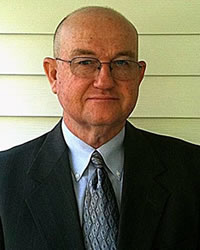
Gary Shepard is teacher and pastor of Sovereign Grace Baptist Church in Jacksonville, North Carolina.
Pristine Grace functions as a digital library of preaching and teaching from many different men and ministries. I maintain a broad collection for research, study, and listening, and the presence of any preacher or message here should not be taken as a blanket endorsement of every doctrinal position expressed.
I publish my own convictions openly and without hesitation throughout this site and in my own preaching and writing. This archive is not a denominational clearinghouse. My aim in maintaining it is to preserve historic and contemporary preaching, encourage careful study, and above all direct readers and listeners to the person and work of Christ.
Brandan Kraft
Bible Verse Lookup
Examples: Isaiah 53:10, Rom 8:28-30, Psalm 23, grace, love one another
0 results
Click a result to view with context
to
This chapter has verses 1---
Sign in to save your Bible lookup and search history.
Comments
Your comment has been submitted and is awaiting moderation. Once approved, it will appear on this page.
Be the first to comment!