Bootstrap
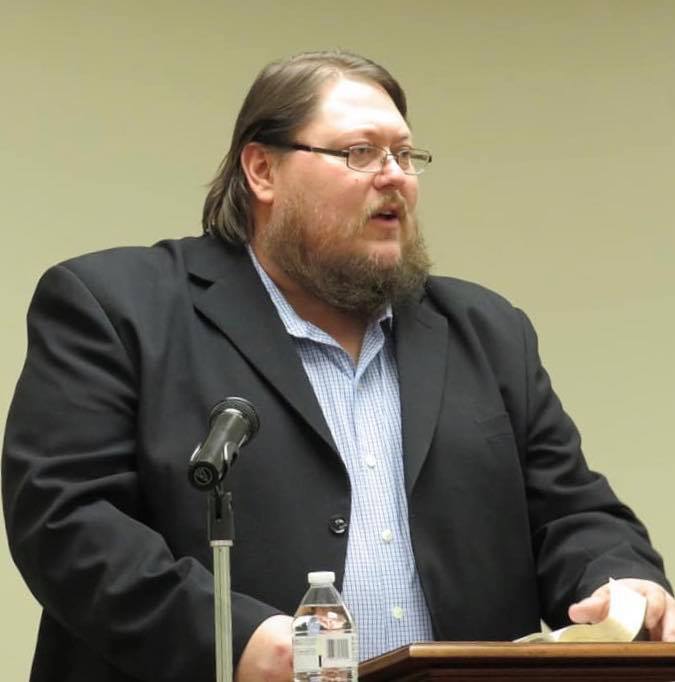
Mikal Smith

There is Forgiveness With Thee

Psalm 130
Mikal Smith June, 8 2025 Video & Audio
0 Comments

In the sermon titled "There is Forgiveness With Thee," Mikal Smith explores the profound theological theme of divine forgiveness as articulated in Psalm 130. The preacher highlights the spiritual conditions of the "child of grace," emphasizing a threefold process: the initial awakening to sin, the soulful cry for mercy, and the assurance of forgiveness through Christ's propitiatory sacrifice. Key Scripture references include verses 3-4, which articulate the impossibility of standing before a holy God due to sin unless one is forgiven. The preacher connects these concepts to the doctrines of total depravity, irresistible grace, and the assurance of salvation central to Reformed theology. Ultimately, the message underscores the practical significance of unwavering hope in God's mercy, inviting congregants to rest in Christ's completed work and to approach God with confidence, irrespective of their ongoing struggles with sin.

Key Quotes

“If thou, Lord, shouldst mark iniquities, O Lord, who shall stand? But there is forgiveness with thee, that thou mayest be feared.”

“The law comes in and shows us how sinful we are. It comes in and tells us how wicked we are.”

“God's will is being done... therefore, when you come before the Lord to pray, you are not thwarting God, or you are not encouraging God, you are not compelling God.”

“Brethren, the child of grace... from the time that his soul is awakened... whenever the gospel comes in and gives them the glimmer of hope, the full assurance of faith...”

Sermon Transcript

Auto-generated transcript • May contain errors

100%
Turn with me, if you would, this
morning over the Psalms 130. Psalms 130. Had to have a half crowd today. Don't need to call us a crowd. Phillips or I say we've all,
we've all, not all of us, Some of us have been sick here all
this week, and Phillips has been sick all week. He's still under
the weather, and he stayed home this morning. And Brother Daniel
is still recuperating from an ankle surgery, and he's not here
this morning. So it's just kind of a family
here today. So let's continue on anyway. We pray for them. Pray for us
as we continue to get over our cold, sickness, back injuries,
and all that kind of stuff. The 130th Psalm, I'm just going
to go ahead and read down through the eight verses here, and we'll
kind of look into this. It's been, I think it's been
a couple years or so since I preached on this psalm. This is probably
one of my favorite psalms. I think you'll see the reason
why. I think for any child of grace,
whenever they hear the content of this psalm, of course, all
the Word of God is God's Word and is comforting to the hearts
of His people. There are blessed seasons whenever
God speaks and ministers to our heart, and sometimes some passages
of Scripture some thoughts and expressions
that we find in the scriptures of our Lord tend to hit us a
little different at different times as the Lord brings us through
our seasons. And in Psalms 130, we read of the plight of the
child of grace I see in these eight verses, I see the clear
presentation of the manifestation of the salvation of God's people. Of course, we were saved from
the foundation of the world based upon the blood and the righteousness
of Jesus Christ and what He has done for us. But brethren, that
expression of grace, that experience of grace, that time enjoyment
of our Lord and what He has done for us begins at a certain point
and lifelong growth in the grace and the knowledge of the Lord
Jesus Christ that sustains us, that keeps us, that drives us,
that blesses us, that breaks us, that refreshes us as we go through
this life until we go to be with Him. And I find all those things
found in this 130 Psalms what makes it so beautiful. I pray
that today the Lord might comfort you not only in the driving message
that's found in the midst of these verses, but brethren, The
Lord might comfort you in this to see the grace of our Lord
and the mercy of God, forgiveness of God, and to see that all of
us come through these seasons together. Psalms 130 verse 1,
it says, out of the depths have I cried unto thee, O Lord. Lord,
hear my voice. Let thine ears be attentive to
the voice of my supplications. If thou, Lord, shouldst mark
some iniquities, O Lord, who shall stand? But there is forgiveness
with thee, that thou mayest be feared. I wait for the Lord,
my soul doth wait, and in his word do I hope. My soul waiteth
for the Lord more than they that watch for the morning. I say
more than they that watch for the morning. Let Israel hope
in the Lord, for with the Lord there is mercy, and with Him
is plenteous redemption. And He shall redeem Israel from
all his iniquities. Brethren, I see every section
of our salvation in this. I'm talking about our experience
of salvation, that is. We know that our salvation was
secured for us by the crucifixion of Jesus Christ, His death, Him
being nailed to a cross, His shedding of blood brought the
remission of sin. That blood is what has been sprinkled
on the mercy seat of God and that has become a propitiation.
Matter of fact, the scriptures tell us in the New Testament
It tells us that He is the propitiation for us through His blood. And that propitiation, that blood
that is shed for us, the propitiation means God can be merciful to
us. See, God can't be merciful to us. We're sinners. Every one of us in here, from
the youngest all the way up to me, the oldest, we're all sinners
in here. And it doesn't matter what little
bit you think you've done, We are all sinners before God.
We're guilty before God. God's holiness and righteousness
and justice cannot acquit wickedness. It cannot acquit the wicked. He says in his scriptures that
he will not acquit the wicked. And so we stand before a holy
God, guilty of sin, deserving of death because the Bible says
in God's justice system that the wages of sin is death. And
we all deserve that. Every one of us, again, from
the very youngest all the way up to me, the very oldest. We
deserve the death, the eternal death, the conscience eternal
torment, long wrath of God upon us because of our sin. And brethren,
unless God saves us, that's exactly what we will experience. And we will get that because
we deserve it. Because we have transgressed this holy God. But
listen, if you would, to what the psalmist says here. He says,
out of the depths have I cried unto thee, O Lord, Now if you'll notice here in
these first three verses, you'll see the beginnings or the awakenings
of the child of grace. See, before the Spirit comes
and quickens us, before the Spirit comes and enlightens our eyes,
gives us seeing eyes and hearing ears, gives us spiritual understanding
of things, We don't realize these things. We don't feel the depths
of our sins. We don't see ourselves as sinners
without hope. Now some of us may see ourselves
before that time. We may see ourselves as sinners
who do bad things, but we hope in ourselves. We hope in our
righteousness, in our own self-righteousness, in our good deeds, in our good
works, in our religiousness. But brethren, I'm talking about
this is a person here who the law of God has come and done
its perfect work in crushing the sinner so that the sinner
sees that it cannot keep God's law. The law has come in, and
as Paul says, that before the law came in, I didn't know that
I was a sinner. I didn't know any sin. But whenever
the law came in, I died. The law came in and I became
a sinner. I didn't know what sin was until
the law came in and showed me what sin was and it showed me
that I am full of it. The law comes in and shows us
how sinful we are. It comes in and tells us how
wicked we are. It shows and exposes and manifests
the inability for righteousness. We can't produce any righteousness.
So the law comes in and produces that in us. It produces the knowledge
of sin in us. And brethren, I know whenever
you listen to preaching like that, that sounds bad, but listen,
that's a blessing from God. It's a blessing from God whenever
God brings that to the heart of His child, who before quickening,
before spiritual life comes in, that child is unaware. of his
sinfulness and the depths of it. That child is unaware how
God requires of him complete and total righteousness and his
inability to keep it, his failures. And so what he does is he continues
to make forth a righteousness of his own. He is ignorant of
the righteousness of God and seeks to establish his own righteousness. But whenever God comes in in
grace and mercy to let us see the actual condition of our heart,
the condition of who we are, and the law of God comes in and
does this perfect work of conviction and condemning us and showing
our just reward is condemnation, then out of the depths of our
heart we begin to cry to the Lord. We begin to cry to Him
because we begin to see that we can't do anything. We are
guilty. And who is going to help us?
What are you going to do? You can't run to a preacher.
A preacher can't do anything for you. He can't establish a
righteousness for you. Now there are some preachers
that think that they can save their people by their smarts
and their academic achievements all their intellectual prowess. They think that they can safeguard
their flock. The Lord has put them over. But
brethren, I'm telling you, there is no hope for anybody except
in Christ Jesus. And I'm telling you, whenever
Christ comes and gives you life, and whenever that life comes
in and begins to see the wickedness of my heart and begins to see
the overwhelming nature of God's holiness and righteousness before
us in the law, and that law condemns us and crushes us and under the
weight of it, presses us down, we, out of the depths of our
heart, begin to cry unto the Lord for mercy. And this is what
the psalmist is experiencing. The awakening of the soul, the
awakening of the heart, the awakening of the consciousness to the depravity,
the wickedness, and the inability of the child of dust, Adam. That's who we are in Adam. And
the child of grace begins to see this, and this is not only
a heart-felt rich thing that each one of us goes through it
continues on until the day we die this doesn't go away by the
way brother while the gospel does come in and give us comfort
while the lord comes in and brings joy into our heart and the holy
spirit uh... it uh... it uh... it ministers
to our spirit and teaches us and and and and and convinces
us that we are his people brother listen crying death from our
sinfulness, it never goes away. The Apostle Paul we see in Romans
chapter 7 continues to battle with this even through his life. We battle this struggle with
sin is always present with me. I'm always wanting to do what
is right, but all I do is what is wrong. All I want to do is
what is righteous and holy and just, but all I find myself doing
is that which is sin and filthy rags before God. And I can't
do anything that can please God. I can't do anything. And so what
do I do? Do I just keep doing more? Well,
no, because the more I do, the more filthy rags I accrue. What do I do? I rest in Christ,
who has already done it for me. And so here we see the awakenings
of the soul. We see the conviction that the
law brings. We see the heart opening up to
see its need. And so it's crying out to God.
What does he say here? Look at verse two, he says, Lord,
hear my voice. Listen, the child of grace knows
it's coming before a holy God who is, and he's full of sin.
and he's coming before the throne and majesty of the king of kings
who is holy and righteous. And he's thinking to himself,
how is this God gonna listen to me? Because I'm full of sin. He's not gonna listen to me,
he's gonna snuff me out like a cigarette. He's just gonna
squash me and he's gonna put me under and annihilate all that
I am and throw me into the pits of hell. So this sinner, under
the weight of the law, under the weight of his conscience,
comes to the Lord and he cries out, Lord, if anything, please
just hear my voice. Let thine ears be attentive to
the voice of my supplications. Come and hear my cries. Now,
brother, I can tell you right now, the Lord doesn't hear the
cries and the prayers of the non-elect. Those who are the
reprobate, those who have not been chosen from the foundation
of the world, God doesn't hear their prayers. I know there's
a lot of misconception about these things, that God hears
everyone's prayers. Now, semantics is going to overcome
us here. Let me clear some things up,
right? Just so there isn't any semantics.
It isn't that God can't hear. or doesn't hear in the fact that
when somebody says something, he doesn't know about it. Okay,
that's not what I'm talking about. I'm talking about God isn't attentive
to the prayers of the reprobate. See, we hear in modern religion,
whether it be under the guise of Christianity or whether it
be some other false religion, we hear that if you pray to the
Lord, he hears our prayers. God hears your prayers. Brethren,
God only hears the prayer of His people because He puts that
prayer in those people. And by the way, just a side note
while we're on here, another bumper sticker theology that
we need to cast down is this prayer changes things. We don't change God's mind by
praying. When you pray to God, four things
here, this person is coming, this child of grace is coming
with supplications to the Lord, prayers to the Lord. That prayer
is not going to change the mind of the Lord. That prayer and
prayer in general is given to the child of grace and is a work
of the Holy Spirit in the heart of the child of grace. to cultivate
within the child of grace a dependency upon their God. Prayer is given
to us to bring us to a state where we are dependent upon God. We come to ourself knowing everything
is out of my hands. Everything is out of my control.
There is nothing that I can do in this situation, so my only
hope is in you. And if you be willing, may this
take place. We come depending and waiting
upon God. That's why prayer is given to
us. This child of grace that is crying out here, he comes
before the Lord with his prayer and supplications. But God is
not sitting there saying, OK, well, what's the laundry list?
OK, I've listened to your laundry list. Well, I'm going to do that.
OK, well, you prayed and had a good attitude about that. I'm
going to do that for you. God doesn't sit there and say,
well, I wasn't going to do that, but you were pretty earnest about
that, so I'm going to change my plan. No, listen, God has
remembered this, brethren, and I hope to not get too far off
track here. Remember the basic principles
of Scripture that we look and see all the time in God's Word. God has declared the end from
the beginning. and all things that are not yet
done, saying, my counsel shall stand. I will do all my pleasure. The Bible says our God is in
the heavens. He does whatsoever he pleases. Among the armies of the heaven
and the inhabitants of the earth, and none, none can stay his hand
or stop his hand from doing. what he wants to do. We can't
stop him from doing what he wants to do. And we can't grab his
hand and make him do what he does not want to do. God does
what he wants to do. Therefore, the principle of scripture
is this, thy will be done. God's will is being done in the
armies of the heavens and among the heavens of the earth and
none is staying his hand. Therefore, when you come before
the Lord to pray, you are not thwarting God, or you are not
encouraging God, you are not compelling God, because God is
not moved, or compelled, or coerced, or forced, or backed into a corner. You can't take the promises of
God and shove Him in a corner and say, you've promised this,
you've got to do this. God does whatever He wants. Now,
He won't break a promise, but He doesn't guarantee that a certain
thing happens to everybody, just like salvation. God has promised
salvation, but God has promised salvation to His people, not
to everybody. God has promised certain things,
but He hasn't promised it to anybody. So with those in mind, let's
go back to prayer. Prayer doesn't change anything.
Prayer brings us to the place where God is conforming our heart
to be dependent upon Him and to quit looking to our own sufficiency. Does everybody know what the
word sufficiency means when I say that? because sometimes I feel
like people don't really understand what that word means. Whenever
I say sufficiency, that means I have enough to do it. Okay? Sufficiency means that I can
do whatever needs to be done for that job. So prayer brings
me to the place where I see that I'm not sufficient. I'm not enough. I can't do it. And God is the
only one who is sufficient. God can do it. God can do whatever
He wants. Therefore, if God can do whatever
He wants, my prayer is to Him. I don't pray to the preacher,
or I don't pray to the church, or I don't pray to some organization. I don't seek after help outside
of God. I seek help from God. I don't
praise the, you know, we have loved ones, or my stepmom's in
the hospital, while we're thankful for The hospital workers, my
daughter and Heather, are hospital workers. I'm thankful for them,
that they're there to aid and to help with people that are
in the hospital and everything. I work on x-ray machines and
there are many other guys like me that keeps diagnostic tools
working that we can... But listen, we don't sit and
praise them because of the work that they have done. We thank
the Lord for giving them gifts to carry out His will. So see, prayer brings us to the
place of seeing God is sufficient for our needs, but it also, as
we'll see here, it'll also bring us to a place of reverence, knowing
that God is not required to be sufficient for us. God is not
required to extend mercy or grace to us. Now if we are His children,
thank God, He has promised that grace. Look on if you would.
Out of the depths have I cried unto thee, O Lord. Lord, hear
my voice. Let thine ears be attended to
the Lord by supplication. If thou, Lord, shouldest mark
iniquities, O Lord, who shall stand? Brethren, there He is.
He's coming to the Lord with supplication, and He knows, listen,
if you mark, if you reveal and keep track of my iniquities, who's going to stand? If God
is paying attention to iniquities, then who's going to stand? Nobody. And guess what? God is marking
iniquities. God has kept track of all sin. The Bible says that God has looked
upon all the inhabitants of the earth and found that the intent
of their heart is evil continually. God has said for all have sinned
and fall short of the glory of God. God has seen your sin. God
knows every one of your sins that you have ever committed,
that you ever will commit, that you're committing now. God knows
those things. So if the Lord should mark iniquities,
this is what this sinner is saying at the foot of God. He's saying,
Lord, if you are marking iniquities, who's going to stand? Because
you are holy, and you are just, and you are righteous, and you
cannot acquit the wicked. You cannot let it go. You must
punish this sin. How in the world can I get through
this? How can I be saved? How can I
not be destroyed before your face? So see, brethren, in those
first three verses, we see the work of God's Spirit in conviction
under the law of God and in the wickedness of our heart, how
the Spirit comes in and breaks us. That's why Jesus said the
sick are the ones who need a physician. Those who are well don't need
a physician. You know, Jesus was going to
the lame and the halt and all those ones who were blind and
deaf and couldn't speak and had leprosy and those who had died. You know, Jesus was going to
them and the religious leaders was baffled because among them,
the religious leaders kind of all just kind of grouped together
and expected everybody to come to them. And Jesus was here instead
of mingling with the theological crowd he was going out to those
who had heartfelt needs. Those who had problems and issues. Now that's on the physical side,
but look at that on the spiritual side. Those who don't need Christ,
who are trying to produce a righteousness for themselves, who thinks that
they're not truly sinful and that there is no hope for them
and that they don't think that You know, I'm as bad as everybody
keeps saying. I'm not as bad as that, you know.
I'm not totally depraved. I'm not completely without ability. I mean, I've got some good in
me. My good outweighs my bad. See, that person there, they're
not sick. They're not a sinner. They are
a sinner. But in their mind, they're not
sinners. To them, I don't, I'm not a sinner. So why do I need all that? I
don't need that. And so that's why Jesus said,
you know, I'm a good physician, if you would. And the physician
goes to those who are sick. You who don't think you're sick,
you think you are producing a righteousness of your own. You know, I don't
go there. Well, here we go. This child
of grace here has come before the Lord, has been shown their
sinfulness and says, if thou, Lord, mark iniquities, who shall
stand. They understand the righteousness
of God cannot forgive sinfulness. And so they're left at the foot
of the throne of the righteous and holy God as a sinner. And just like that publican that
stood in that tabernacle before the Lord And he said, Lord, be
merciful to me who is a sinner. As he stood beside and watched
that Pharisee stand up and say, Oh Lord, I am so glad you haven't
made me like that person. Listen, we got theological zealots
and prideful, arrogant, boastful men today that are flooding the
pulpits of God. And they're looking down on all
the people that are put below them. And all the other preachers
who don't have quite the credentials that they have, who are looking
on them and they're just saying, you just can't do it if you don't
even know how to do this or don't know how to do this, you don't
know this or don't know that. Look what I know, you need to
listen to me. You need to listen to me. Why? Because I'm trained.
Because I got letters behind my name. And that publican that stood
there, and because of its knowledge, and because of its understanding,
and because of its religiousness, thought that he had something
in with God. And that publican couldn't even lift up its eyes,
and he said, Lord, just be merciful to me. He didn't know all the
theology of the world, and I'm not saying that that's not important.
But brother, listen, it's the salvation that's in Christ that
matters. It isn't all the other things,
and I'll be the first to say, there are a lot of things that
we need to know in Scripture, but listen, the center point
is knowing Christ Jesus. We say to know nothing among
you except Christ and Him crucified. And so what does this poor man
need who is at the feet of God? Does he need to know how to exegete
all the verses of Scripture? Does he need someone to come
give him a great outline? What does this man need who is
at the foot of God, whose heart is sorrowful over his sinfulness? Does he need somebody to teach
him all the doctrines that have been passed down through the
ages? What does this man need? He needs hope. He needs somebody
to come and say, listen, this God that you're bowing before
that is marking iniquities, there's forgiveness with Him. Look at
verse 4. But there is forgiveness with thee that thou mayest be
feared or reverenced, that thou mayest be reverenced. Listen,
brethren, whenever a child of grace comes to see their sin
and then the gospel comes in, The gospel comes in and tells
them that they've been forgiven of their sin. That causes reverence
to God. It causes reverence to our Lord.
Listen, we have so many people that don't give reverence to
God. They want to tack the name Christian onto themselves, but
there's no reverence to God. There's no reverence to God in
anything that they do. And I'm not trying to be a prude.
I'm not trying to be legalistic. I'm one of the least legalistic
preachers probably most people will meet. But listen, there
has to be a reverence to God in the things that we do and
the things that we involve ourselves in, what we are. There's a reverence
to God. And forgiveness of sin brings
that. Why? Because we continue sinning. We continue sinning. And we continue
to be brought to that throne to once again say, I know there
is forgiveness with Thee. Thank You for that forgiveness.
I didn't earn it. I didn't quit sinning. You know? So many people think, well, you've
got to repent of your sin. Quit doing it. Well, brother, the Bible says
we can boldly come before the throne of grace in the state
of us still being sinners. We don't have to quit sinning
to go to the throne of grace. Now that is not, semantics again,
that is not me saying, it doesn't matter if you sin or don't sin,
keep on sinning, it don't matter. You can go to the throne of God,
he's gonna hear your prayer, and he's predetermined everything,
so it doesn't matter. That's not what I'm saying, that's
what you want to hear, because you don't want to bow to a sovereign
God. When someone comes to the throne
of grace and they see their sin, hear of their forgiveness from
a holy righteous God, it brings reverence to God. Look what he says here, that
there is forgiveness with thee. Can you imagine? Let's just put
ourselves in this man's place. Say you were caught doing something,
the police came, picked you up, took you in, threw you in a jail
cell, bound you hand and foot, and said, listen, the penalty
for what you've done, we're fixing to take you out there and we're
going to execute you. We're going to execute you. They march you out and take you
out there all bound hand and foot, prepare everything to get
ready to do it. And then someone steps in and
says, wait a minute. You've been forgiven of what
you've done. How in the world do you think that person is going
to feel? How do you think you would feel if you are moments from being executed and going
to your just reward? By the way, you're just a reward
for that. But yet someone comes in and
says, wait a minute. Someone has taken your place
on that. You have not been appointed to this wrath. Someone has forgiven
you. Do you not feel that you would
probably have quite a bit of joy and reverence to that person
who decided to take your place? The first three verses we see
the law and conviction, and we see in the first verse the child
of grace now hears the gospel that Christ has come and died
for him, and that that death has procured a forgiveness because
of the propitiation that's in his blood. And that forgiveness
is given to that child of grace, not that he has to keep up tabs
every day. Every time you sin, you got to
ask forgiveness, because if you don't, you won't get forgiveness.
No, he died once for all the forgiveness of sins. The blood that was shed on Calvary
was shed once for all time. It has covered all of our sins. He has sealed our sins up in
a bag. He has paid for every debt. for
every sin. And that right there, brethren,
is not going to be untangled. It's not going to be undone.
It is not going to be added to. It's not going to be taken away.
Christ didn't die for more sins. than I will ever commit, and
He didn't die for less sins than I will commit. I will commit
as many sins that Christ has died for, no more and no less. I will sin every sin, but, brethren,
listen to me. Every one of those sins has been
forgiven, and God brings us over and over and over again to His
throne like this man in reverence There is forgiveness with Thee.
I've sinned. There is forgiveness with Thee.
We're not reminding God that there's forgiveness. We're coming
to God and saying, God, my only hope is with You because there
is forgiveness with You. That's why the Gospel is preached
every week. You know why I don't preach lots of times sermons
on all the technical things of the Scripture, like church membership
and uh... the uh... uh... uh... you know the integral things
of the baptism and the Lord's Supper those are things that
are important and I preach on them those aren't weekly things that
we feed off of those are instructional things that we do and I preach
on that we teach on that we instruct within our church a lot of times
not within this setting but in other settings where we discuss
baptism and we discuss the Lord's Supper. We discuss church discipline. We discuss membership. We discuss
all those things. How to go to a brother whenever
they've been wronged and whenever we've been wronged. We discuss
that thing. We discuss those things. But
brethren, at the end of the day, the bread that feeds the sheep
is the bread of life that has come down out of heaven and whose
flesh was given for the sins of his people. That is the bread
that sheep eat. That is the bread that comes
in right here when this child of grace is sorrowing before
their God because of their sin. He doesn't need to hear how to
become a member of the local Baptist church. He needs to hear
There is forgiveness with thee. So what does he do? He comes
and he says, there's forgiveness with thee. In verse 5 he says,
I wait for the Lord my soul. Beth, wait. We wait upon the Lord. We continue
to wait upon Him. We look to Him. We trust in Him. How do I know that there's been
forgiveness for me? How do I know that? Well, the Spirit bears witness
with my spirit, but brother, not all the time. I'll be honest
with you, not all the time. I don't have 100% assurance every
day that God has done what he has done for me. Now, I know
for a fact that God has made a promise that for all His people
He has done that and He has given it to them and they will be the
recipients of it and it is counted to them. I don't have any clue
of that. I am 100% confident of that. Whether that has been for me,
there are some days that I'm 100% sure that it is for me. But brethren, listen, my sin
creeps in, my self-despair creeps in, My guilt creeps in. My despair
and depression creeps in. Things creep in and guess what?
I don't feel like that. How can the Lord, how can the
Lord have chosen me? How can the Lord have forgiven
me, loved me whenever here I am again in this same place doing
the same thing, thinking the same thoughts, conducting the
same activities that I used to do? My thoughts are not on Him,
but it's on myself, it's on my family, it's on the world, it's
on these things. How can I be His child? But guess what? Here I am again
in verses 1, 2, and 3. Be attentive to the voice of
my supplications. And what's the sound that comes
from Him? There is forgiveness of me. There's forgiveness. That's why the gospel needs to
be preached every week to us, brother. I don't know about you,
but this is the stuff that I like to hear. This is the stuff that
I want to hear. Now, somebody said, well, that's
what your itchineers want to hear. You're right. That's what
my itchineers want to hear. It doesn't want to hear about
me. It wants to hear about Christ. Now, I want to hear what Christ
did for me, but I don't want to hear what I need to do. or
how much better I need to get, or how studious I need to become. I don't need to hear that, because
that's never enough. It's an endless circle. That's
like running in a squirrel cage. You ain't ever going to get to
the end. You're just going to keep running, keep running, keep
running, and never get to the destination. And whenever everything
is over, you're going to find that there's nothing been accomplished
because you've not merited anything. He's not done anything except
run. So we wait for the Lord. Brethren,
the child of grace from the time that his soul is awakened like
we've seen in verses 1, 2, and 3, and whenever the gospel comes
in and gives them the glimmer of hope, the full assurance of
faith, the greatness of Christ's work, Whenever that comes in
and we have a hope established, we wait. What are we doing now? We're waiting. What does the
Bible say? They that wait upon the Lord
shall renew their strength. But how do we wait on the Lord?
We keep going to the Gospel. We keep going to the Gospel.
It says here, I wait for the Lord, my soul doth wait, and
in His Word do I hope. We keep going to the Word. Keep going to the Word. That brings us to the Word. The Word always points us back
to THE Word. Capital W. This is the record
of Him. God. It's the record of God in Christ. It points us to Him. And what
all He has done on our behalf, as our Father, as our Sacrifice,
as our Comforter. It points us back to Jesus. It says,
I wait for the Lord, my soul does wait, and in His Word do
I hope. I look into His Word and I see
what Christ has done for me. I look in His Word and I see
what He is for me. how he keeps me, he's promised
to not let me go, that he'll never leave me nor forsake me
no matter how many times I come to his throne with my sin. He says he'll never leave me
nor forsake me. Listen, I can't make that promise to you
guys, my children, my wife. I can't make a promise to my
wife who I love with all my heart and I've been with for 32 years.
33 years. We have one year that
went by really quick. I can't make a promise to her
that I'll never leave you or forsake you, as much as I love
her. And my intent is never to do
that. But I can't make that promise, because I don't know my flesh
as well as I know. I can't make a promise to never
not forgive her. Yeah, that's what I meant. Because
there are some times that we harbor feelings for a long time,
bring up old things. But listen, whenever we come
to God, God says there is forgiveness. Every time I come to God's throne,
there's forgiveness for you. There's forgiveness for you.
There's forgiveness for you. And He doesn't hold that sin
against me. See, I hold grudges. There's
things that people have done for me. For me, that I still
remember now. Brother, I'll be honest. I mean,
I'm not trying to pat myself on the back or be prideful or
anything like that, but I really tried to forgive and
forgive. When somebody does me wrong,
if there comes and there's restitution, let's make that stuff right and
go on, move on. I mean, I think most men are
typically like that. We kind of get over things pretty
quick. You know, we have a tiff or a fight, arm wrestle, or,
you know, we may have even a bare knuckle, something or another. I don't endorse that, but, you
know, hey, we get our feelings out and get it over with, and
then guess what? We got our arms around each other back to the
fishing hole, back to the ballpark, or, you know, back to whatever
we were doing, you know. I'm not saying that women aren't
like that either, but it just seems that men kind of get over
things a little bit quicker than guys do. With God, guess what? There's always forgiveness. And
there's not a remembrance of it. We keep going to Him and
talking about our forgiveness and needing that forgiveness,
and He's already forgiven us. So we wait. He says in verse
6, look, it says, My soul waited for the Lord More than they that
watch for the morning, I say more than they that watch for
the morning. Now to us, that isn't a big deal,
watching for the morning. That isn't a big thing to us. Our lives are so technologically
advanced and so full and busy with stuff that daylight dark,
that doesn't mean anything to us anymore. But I'll tell you
this, brother. The other night, whenever my
back was really hurting, I couldn't sleep at all. I only got maybe
an hour or two of sleep. Listen, and I went to bed early
that night. I went to bed at like 10 o'clock.
Normally, I don't go to bed that early. I went to bed at 10 o'clock.
And listen, I was stern. My back, I couldn't sleep in
any position. And listen, that was the longest
night. It seemed like that night was like 15 hours long. And dude,
I was waiting for the morning. Can you just get morning and
get this day going? Get over with tonight? And listen,
I was waiting for the morning. Brethren, this is what this guy
is saying. Listen here. He says, my soul
waited for the Lord. I'm waiting on Him more than
waiting for the morning to come. So that this day can get going.
So that the light will come. So that we'll be brought out
of the dark. So that things can be picked up and we can see what's
happening. Listen, those two verses there, 5 and
6, I see that as the time of the life of the child of grace
where we have entered into repentance and faith, trusting in God. This is our life of repentance
and faith. Repentance from what? Repentance
from wrong thinking. repentance from wrong doctrine.
What does this word do to us? He just told us, he said, my
soul doth wait and in his word do I hope. Well, the word of
God is given to us to sanctify us. Now that doesn't mean to
make us holy. Okay. The word isn't given to
us to make us holy because we are not holy people. We're not
holy and righteous in ourselves. That's in Christ. that's imputed
to us, not imparted in us. This Word is given to sanctify
us or to separate us. And what happens whenever God's
Word separates His people? God's Word separates us from
those of wrong doctrine, false doctrine. So as we grow in the
grace and knowledge of our Lord Jesus Christ through His written
Word, It separates us from those who do not believe His Word. It separates us from those of
the false religions, the false gospels. It separates us. Why do we have small congregations?
Because God has separated us. And so we endeavor to keep the
unity of the Spirit until the Lord brings us into the unity
of the faith. God has to bring us into the
unity of the faith. We can't do that in our own wisdom
and intellectual abilities. People think that they can unify
men just by teaching them theological indoctrination. But brethren,
listen, until the Spirit teaches somebody, until the Spirit brings
somebody in to see and understand something, They're not going
to see it. And we come together, and we
are separated by His Word. And so, we see this as our walk
in repentance, and our hope, and our continual hope, walking,
looking to Christ. That's our walk of faith. That's
how we walk. We walk according to faith, not
according to sight. We don't walk according to the
law. The law is not our rule of faith. Earth is not our rule
of life. Faith is our rule of life. We
walk in faith. So each day, we continue to walk
in faith. So verses 5 and 6 shows forth
the child of grace in their lifelong pursuit of God and faith. But look at 7 and 8 here. It
says, Let Israel hope in the Lord. I think we all are aware
that Israel, that we are talking about here, is the Israel of
God. The true Israel of God. Physical
Israel, the nation Israel, the country, the nationality, those
people in the flesh are not the children of promise. It's not
the children of promise. despite what all the Zionists
are saying out there, all the people out there that are claiming
that they are God's people because of their heritage, that is not
the children of God, that is not the Israel of God that has
been given the promises. The promises given to them have
been fulfilled and cut off because of their disobedience and their
harlotry to God. But, brethren, he's talking here
about the spiritual people of God. Let Israel hope in the Lord,
for with the Lord there is mercy. Turn with me quickly here, and
I'm just about done. Turn to Exodus chapter 33. God's speaking to Moses here.
Verse 18, he says, Moses says to the Lord, I beseech Thee, show me Thy glory. And he said, I will make all
my goodness pass before Thee, and I will proclaim the name
of the Lord. And he had already proclaimed
the name of the Lord to him. The name of the Lord was I Am.
I Am that I Am. God's self-consciousness self-consistent
there. He is self-sufficient. He is
self-contained. He says, I will proclaim the
name of the Lord there. If you remember back when I preached
on that passage of scripture, that name means sovereignty.
God is sovereign. And he said, that is going to
be my name forever. That's going to be my memorial
to every generation. They said, I will proclaim the
name of the Lord before thee and will be gracious to whom
I will be gracious and will show, here it is, mercy on whom I will
show mercy. He says right here, he said,
let Israel hope in the Lord for with the Lord there is Mercy,
that's part of his name to his people. In his sovereignty, God
shows mercy. Now, he says there, I can show
mercy on whom I will show mercy. He doesn't have to show mercy.
He surely didn't show mercy upon Pharaoh. He didn't show mercy
upon all the people of Canaan. He didn't show mercy to them.
And listen, brethren, He is not going to show mercy to the wicked
on the Day of Judgment. He will not show mercy. There
will be no mercy. But brethren, if you're a child
of grace, there is mercy. He says, Let Israel hope in the
Lord. Why? Because with the Lord for His
people there is mercy. And with Him is plenteous redemption. and he shall redeem Israel from
all his iniquities." You know when I see that in verse 7 and
8? We've already seen in verses 1, 2, and 3, we've seen how the
child of grace comes in and quickens him. God comes into the heart,
comes into the soul, breaks the heart, breaks the child of grace
in their heart and in their consciousness with the law, brings conviction
of their sin, We see that God brings in the gospel to give
hope to the child of grace. And whenever that hope comes
in, there is repentance from wrong thinking. They no longer
are seeking to establish their own righteousness. And now they
are trusting and hoping in the righteousness of Christ alone.
And so they are now repentant and they are walking by faith
in Christ Jesus. That's five and six. And now
they live in hope. And through that hope and from
that hope, they declare the gospel of God one to the other. Comfort
ye, comfort ye my people. They that trusted in the Lord,
they spake often one to another the things that Christ had done
for them. I'm paraphrasing that. But we see the gospel proclamation. Now that the Lord has come in
and given me hope, what do I do? I share that hope with others.
I share that hope with others. We begin to praise God and we
declare the hope of Christ. We declare the hope of the gospel. So here we see the life of the
child of grace, from beginning to end, as he comes into this
spiritual world, as he enters into the kingdom of God, until
he exits out of this lifetime and awakens with his new body
into the time of the Lord. We see his journey here in these
eight verses. All right, does anybody have
anything that you'd like to add to that? Any questions? All right, let's pray. Lord,
again, we thank you for this day. We thank you for your mercy
and grace that you've given us. We thank you for forgiveness.
What a beautiful sound. Lord, we thank you for the time
together, the church that you've given us. Lord, we thank you
for all those that you have saved by your beautiful and marvelous
grace. Lord, we can never expound enough. Our minds are not equipped enough.
Our hearts are not overwhelmed enough to be able
to fully display you in all that you are. But we are thankful
for Christ Jesus who came and has shown us the Father, that
has given us redemption, and that returns to us as the comforter
to lead us into all truth, to convict us of our sin, to enable
us to do the things that you have given for us to do, to complete
the works of redemption within us. Excuse me, the works of your
people within us, Lord. We're thankful for that. Father,
we lift up the Phillips to you. We pray that you would continue
to be with them in healing mercies with my mother-in-law, with my
uncle, with my whole family that I've got that's been sick for
our family here. Lord, we pray that you would
be with Brother Daniel in his healing as well. We know that
you're the great physician and you can remove that sickness
instantaneously. But God, we seek out your will,
whatever it is that you desire for us, we know that it's all
for our good. And so we ask, Lord, that you would give us
grace through these temptations and trials that we go through.
We ask, Lord, that you would give us grace in our afflictions
and our sicknesses, Lord. And Lord, we just pray that you
would continue to give us the gospel, give us hope. Lord, may we always be looking
towards you, trusting in you, and that we might not lean into
our own understanding, look to the arm of the flesh for anything,
whether it be temporal or whether it be for eternal. Father, we
are grateful that our Lord and Savior Jesus Christ has finished
it all. It's in His name we pray, amen.

Comments

0 / 2000 characters
Comments are moderated before appearing.

Be the first to comment!

Joshua

Joshua

Shall we play a game? Ask me about articles, sermons, or theology from our library. I can also help you navigate the site.