Bootstrap
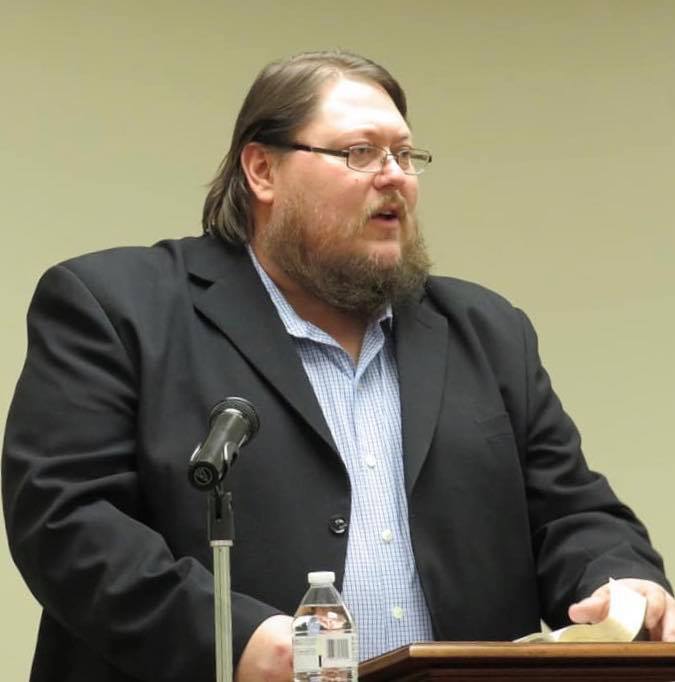
Mikal Smith

Shepherd, Door, Porter

John 9:40-10:15
Mikal Smith April, 6 2025 Video & Audio
0 Comments

Sermon Transcript

Auto-generated transcript • May contain errors

100%
We'll be in John chapter 9 and
10, and we're going to look at a few other verses as well if
we can get there, and the Psalms and some of the Old Testament. But that song that we just sang,
for those just now joining in with us, one of the hymns we
just sang was out of the Gatsby hymn, hymn 388. Verse one and verse six particularly, verse one said, approach my soul
the mercy seat where Jesus answers prayer. They humbly fall before
his feet for none can perish there. And then the sixth one
says, poor tempest tossed, soul be still, my promised grace received. I'll work in thee both power
and will, thou shalt in me believe. It speaks about the Lord Jesus Christ
as the one who is answering their prayer as they come before the
Lord. In this, as it says there, soul that approaches the mercy
seat with tempest and tossed soul. It's Jesus here who is
saying that he will work in them both the power and the will and
they shall believe in him. Of course, we know that that's
biblically true. The Bible says that he works in us both the
will and to do his good pleasure. The Bible says that his people will be willing in the day of
His power. So we know that our trust, our
belief, our coming to Christ, our hope in Christ, our looking
to Him for mercy, for grace, to bring us through whatever
affliction or trial that He is bringing us through. Had a conversation
with somebody this week, a young woman, an older woman that had
Called us and I need to get back with her by the way I called
her back, but had a conversation with her. She called me last
Sunday afternoon and We were talking about chastisement and
things like that a lot of people think that chastisement Is God
punishing us for our sins? But chastisement isn't always
punishment because of wrongdoing God chastens those that He loves. The Bible says He chastens those
that He loves. That's how we know that we are
His children, because He chastens those that He loves. And if we
are a chastened people, then we know that we are a loved people.
Well, that chastisement isn't always because we've done something
wrong. That chastisement is to bring
us through things to teach us to trust in Christ. Okay? And I speak about that a lot
of times in raising my children. and everything, we have had what
we would call negative discipline as well as positive discipline.
We have discipline that is discipline because of something that they've
done wrong, but there is also discipline that you give a child
to help correct them and to teach them and to instruct them and
to mold them into the people. So like with my kids, one of
the things we did is we give them chores to do. We made them
get out and work. get out in the yard, pick up
the yard, clean the yard, do the yard work, keep the rooms
clean, do stuff that they would have chores to teach them responsibility,
to teach them to respect authority, to teach them to be useful and
everything like that. And so there is instructive things
and there is disciplinary because of wrongdoing things. Well, same
thing with the Lord. The chastisement of the Lord
sometimes is for our instructional purposes, not for condemning purposes, okay? And
we know that the Lord never is gonna come with us because of
condemnation, because there is no condemnation to those who
are in Christ Jesus. But we see here whenever we come
before the Lord with a tempest or a tossed soul, If we come
before His mercy seat, as it says here, He says that He's
going to work in us the power and the will and that He shall
cause us to believe in Him. We come before His throne, we
come to Him, and He has caused us. See, in our natural self,
when we come before the throne of God, if we come before the
throne of God, the natural man will not come and bow before
the throne of God. As a matter of fact, the Bible says that
the carnal man is enmity with God. We're not gonna approach
God and ask for anything or seek anything from him because we
think that we can do it ourselves, right? We can handle things ourselves. But the one who is brought to
the throne of grace, the one who is caused to come and see
is the child of grace. The child of grace is caused
and brought by God to the mercy seat because he knows that that
is where he will find that mercy. That's where he will find the
answer. Whether it's a relief from the tempest and tossed things
that are going on, or whether it's his grace that will overflow
and abound to him and to cause him to be able to stand up through
those tempests and trials. I know Larry has talked a whole
lot in the last several weeks and stuff about trials and issues
and what God brings you through. and things like that, and how
God holds us up and sustains us through all of our trials
and our heartaches and our problems that we're facing and things
like that. If it wasn't for the grace of God, we wouldn't be
able to stand within these. We'd probably curse God and just have to go our own way.
But what is it that causes us to see the greatness of God in
all these things? What is it that causes us to
approach the mercy seat? What is it that causes us to
know that all of our hope lies within Jesus Christ? What is
it that does that? Well, that, I believe, is the
power of Christ Himself working in us. The carnal man is blind to that.
Natural man in the reprobate is blind to that. And he has
to be given eyes to see. And in John chapter 9, we find where Jesus has healed
a blind man. In his passings, Jesus came across
a blind man and he healed this blind man. And immediately the
religious leaders began to attack this man because he was giving
glory to God because he had been healed. And they were saying,
you know, how did you get healed? Who was it that did this? And
this man said, I don't know who did it. All I know is I was blind
and now I see. And as they were continually
going on about these things, They began to cast this man out
because he continued to give praise to this one who had given
him sight and so in John chapter 9 and beginning in Verse 35 we
pick up where Jesus had sought this man out where these Pharisees
were coming against him and Jesus kind of came to his defense and
and also to bring forth the fact of what was going on here as
far as his own personage. Look at verse 35 in chapter 9.
It says, Jesus heard that they had cast him out, and when they
had found him, he said unto him, Dost thou believe on the Son
of God? And he answered and said, Who is he, Lord, that I might
believe on him? Now let me just pause there for
just a second. There are a lot of people out
there that think you've got to have all this perfect knowledge about God and
about Christ and about doctrine to be saved. Right here is a
man who has already been saved, but had no clue who it was that
saved him, had no idea how it was he saved him. All he knew
was that he was lost and now he's found. All he knew that
he was blind, but now he sees. The compassion that was given
to him is all he knew. He knew that God had done something
for him and that he, in return, was given glory to God for what
God had done to him. Now, he didn't have all the details
yet. Eventually, he would have all
the details, but he didn't have all the details, but it didn't
make him any less saved. It didn't make him any less able to see, right? He was able
to see, but he didn't see everything yet, but he was able to see. Verse 37, Jesus said unto him,
thou hast both seen him and it is he that talketh with him.
So Jesus let him know, I'm the one that healed you. I'm the
one that give you the sight. It's me that you, that you don't
know who is. I'm the one. Verse 38, and he
said, Lord, I believe, and he worshipped him. Now, we're talking
about giving sight to the blind, but then it turns around and
talks about believing and worshipping. Okay, so here we see in Scripture
a lot of times when someone is healed, physical healing always
would represent, I mean, I think it actually happened, he actually
healed this blind man. But we always see that that is
representative of salvation. We are the ones who are blind
or deaf or crippled or lame or full of leprosy or whatever the
case would be. And the healing of that is the
sign or the symbol of the gospel coming in and giving us our Christ
coming in. What the gospel tells us is that
Christ has healed us. Christ has healed us. What was
the good news here? The good news is that Christ
had saved me. Christ saved me. And so, verse
39 says, Jesus said, for judgment I have come into this world that
they which see not might see, and they which see might be made
blind. Now, I want you to remember this
verse. The Lord's kind of teaching me
a few things about something that I'm going to come back to
Lord willing on another day. But I want you to pay close attention
to hear that it is Christ who has been brought into the world
so that they which see not might see and they which see might
be made blind. Now, whenever we look at this,
what is Jesus saying here? He's saying, number one, someone
could easily say, well, wait a minute, there's a contradiction
here, because Jesus said that he didn't come into the world
to condemn the world. So now he's saying that he is
coming into the world to judge the world? Jesus said that he
didn't come into the world to judge the world. Well, we're
talking about two different things, and there's two different contexts
here, brethren. You've got to let the context
speak. It says here, for judgment I am coming to this world. What
kind of judgment is He talking about? Well, in this case, He's
coming in in a judgment and He's been given power over all flesh,
as the Bible says, to give eternal life to all that have been, what? Given to Him. He's been given
power over all flesh to give eternal life to those that have
been given to Him, not to those who believe on Him, not to those
who ask Him, or come to Him, or repent, or get baptized, or
join a church, or keep some laws. No. He has given eternal life,
or given power over all flesh, to give eternal life to as many
as has been given to him. So there's a certain group of
people that Christ has been delegated the power of God, which he is
God, but in the office of the mediator to mediate life to these
people. And these people specifically. And so here we see that he has
come and the judgment is to judge between those that are his and
those that are not his. He's there to give life and knowledge
of God to those that are His and those that are not His. He
is there to continue in their blindness. Now, look at verse
40. And some of the Pharisees which
were with Him heard these words and said unto Him, Are we blind
also? Jesus said unto them, If ye were
blind, ye should have no sin. But now ye say, We see, Therefore,
your sin remaineth. Now, I'm kind of torn about what
this verse actually means. My whole entire life, I've heard
and I've read commentaries. Matter of fact, this morning,
I went and looked at a few commentaries of what some of these, what other
men have looked at this and understood it as, and all of them seem to
be in conjunction, and I seem to have a disagreement with them,
and maybe I'm wrong. They look at this as these men,
are saying that they see or have, that they are able to see, but
that they're actually the ones that are blind and everything,
and Jesus is calling them on that. You say that you see, but
your sin still remains. Because your sin remains, you
obviously don't see. But that to me doesn't make sense
in the context of the scripture. Matter of fact, just the opposite.
When a child of grace is given to see, That's whenever he begins
to know and to feel his sin. But whenever someone is a Pharisee,
who is a religious person, they don't see their sin because they
think that they're doing all the right things, that is appeasing
God, that is keeping them in good fellowship with the Lord,
or making them acceptable because of God, because they're keeping
the law. They're doing all these religious things and making God
happy and God is not mad at them. So they don't see their sinfulness.
So to me, this right here seems to be that these are some of
those Pharisees who were beginning to believe upon the Lord Jesus
Christ. These are some of the Pharisees who were beginning
to see, hey, this is the man that the Old Testament was telling
us about. He's coming. Matter of fact, remember whenever
John the Baptist was thrown into prison, he sent some of his disciples
and said, hey, go and ask him, is he really the Messiah? And
they went and asked him, what did Jesus tell him? He didn't
say, yes, I'm the Messiah. Go back and tell John I'm the
Messiah. What did he say? He said, go back and tell John
that the blind are seeing, the lame are walking, and the dead
are given given life. Why? Because that's what the
Old Testament said that the Messiah would do when he came, that he
would raise people from the dead, that he would give sight to the
blind, that he would give hearing to the deaf, that he would heal
the sicknesses of those that were here. That's what Jesus
did whenever he came. And so he was basically saying
these signs of what I'm doing are signs to show that I am God
with you. I'm God among you in the flesh. Here I am. I'm your Messiah.
And so here, these Pharisees are beginning to see, hey, this
man has just given sight to the blind. That's what the Bible
said the Messiah was. And we know the Bible's taught
that there were many of the religious leaders who began to believe
upon Jesus and to follow him. And I believe these were some
of them, and this is what Jesus said to them. Whenever they said,
are we blind also? And Jesus said, If ye were blind,
ye should have no sin. Meaning, if you were still blind,
you wouldn't be seeing your sinfulness. Because as Pharisees, you're
looking to Moses and the law for your righteousness, not to
me. But here you are, you're following
me, you're seeking after me, you're looking to me. And he
says, but now ye say we see, you're saying that you see. Therefore
your sin remaineth. They understand their sinfulness
because they see. And the reason I say that is
because now in verse 10, we go into what Jesus begins to say.
He gives a little parable about seeing, about understanding spiritual
things, about knowing certain things and how he is the one
who is originating all this. Look if you would at chapter
one of verse 10. Jesus begins with verily, verily, or truly,
truly, I say this, it means it's very important. Listen to what
I'm talking about. It's of extreme importance that you hear these
things. This is an important thing that
I'm about to share with you. He says, I say unto you, he that
entereth not by the door into the sheepfold, but climbeth up
some other way, the same is a thief and a robber. Now we know that
these Pharisees and these scribes were not the men that God called
to be leaders over Israel. If you look at the Old Testament,
who was the ones who was given to be the leaders over Israel? The Levites. The Levites were
the ones that God put in charge of doing all the sacrifices and
the priests were the ones who were be the priest over the people,
to be the mediators between the people and God, and the prophets
were the ones who were to preach to the people the things that
God had said. But somewhere between Babylon and Jesus' time, there
arose among those people these religious leaders called Pharisees,
Sadducees, these scribes, These were men who had set themselves
up in the seat of Moses. These were ones who had set themselves
up of the leaders of Israel who were not the ones that God had
commanded to be the leaders of His people. And he's saying here,
the ones who don't come in through the door are thieves and robbers. These Pharisees were leading
these people astray for their own benefit. These men were setting
themselves up in the place that they were for their own enrichment. And therefore, in doing that,
the people suffered. That's why Jesus said, whenever
he'd give those woes out, he said, woe unto you, scribes and
Pharisees. And he said, oh, Jerusalem, Jerusalem.
He was speaking to the Pharisees as the religious leaders of the
time. He said, oh, Jerusalem, Jerusalem, how off would I have
gathered Jerusalem in like a chick under wood under its wings. But you would not. You didn't
gather the people in as I would. You have done something different.
See, it was a woe upon the Pharisees. And here he's saying that these
men have climbed up some other way, they didn't come in through
the door. But he says here, he that entereth
not by the door into the sheepfold, now we take the sheepfold to
be the people of God, right? The people of God is the sheepfold.
Now we're gonna learn some other things, but pay attention here.
But he that entereth in by the door is the shepherd of the sheep. Now for a long time I thought
that was a strange saying because the sheep enter into the door
and become part of the sheepfold, but here it's saying the shepherd
entered it in. Well that's because I think it's
talking about something else. I don't think it's talking about the
sheep coming in, but it's talking about the one who is the shepherd
of the sheep coming in amongst his sheepfold. Now physically,
Christ came in amongst the sheepfold whenever he came in the flesh. God came, Emmanuel, God with
us. But brethren, God also comes
to the sheepfold in a spiritual way through the Holy Spirit.
And he entereth in through the door which is Christ. Now I want
you to pay attention, I don't even know if I'm going to be
able to get this out in a way that's going to be coherent.
And hopefully the Lord can give us all an understanding of this
today. But I want you to see, once again, and I'm amazed at
this. I was telling Brother Dan O'Dell
called me the other day, and I was telling him how amazed
I am that the more I read Scripture and the more I see the unity
of the Godhead in the person of Jesus Christ. And here again
is another great example of this. We see all of the Godhead at
work in the man, Jesus Christ. We see, he that entereth into
the door is the shepherd of the sheep, the one who owns the sheep.
The shepherd of the sheep is the one who owns the sheep. He's
the one that owns them. Now if you think about it, throughout
scripture we know that the elect child of grace belongs to the
Father. Jesus said, thine they were. They're the Father's. Thine they
were, and thou gavest them to the mediator, to me, for a purpose. I, God, in the flesh, have come
for a purpose for these people. And so we see the shepherd of
the sheep primarily being the Father, being God, and they're
his sheep. And Christ is the shepherd of
the sheep. He's the one that is the shepherd.
But notice if you would, it says, but he that entereth in by the
door is the shepherd of the sheep and to him the porter openeth. I don't know if y'all know what
a porter is. That's kind of an old fashioned
term that we don't really use anymore. But a porter, I was
a porter this morning. Sister Rosette came and knocked
on the door, rang the doorbell, or maybe I caught her before
she even did either one, but she rang the doorbell and what
did I do? I opened up the door and invited her in. Brother Larry
came up, I opened the door and let him in. The porter is a gatekeeper. It's someone who opens up the
gate and closes the gate. Whenever I was a little kid and
we'd go out in the pasture and do things out in the pasture,
I was the porter. Dad would drive up and say, get
out there and open that gate. And I'd have to get out and open
the gate, and he'd drive through, and I'd close the gate and have
to run up and get back in the truck, okay? The porter is the
gatekeeper, is the door opener, okay? And so here we're seeing
that Christ, the shepherd of the sheep, enters into the sheepfold
but he enters into the sheepfold by way of the door, and by way
of the door, the door is opened up by the porter. So you have
a shepherd, you have a door, and you have a porter. And those
three things are involved in bringing in relationship fellowship,
understanding, knowledge, food, sustenance, whatever to the sheepfold. Whatever it is that the sheep
are needing, the sheepfold, the shepherd brings it, he comes
through the door, and it's given and opened by the porter. Now
stay with me if you would. To him, the shepherd of the sheep,
the porter openeth, and the sheep hear his voice, and he calleth
his own sheep by name, and leadeth them out. And when he putteth
forth his own sheep, he goeth before them, and the sheep follow
him, for they know his voice." Again, here we see the relationship
between the shepherd and the sheep. They are his sheep. Those
sheep know him. The shepherd is theirs. They
realize that this isn't my shepherd. They don't hear the voice of
other men. They don't hear the voice of
other hirelings, of other things. They hear the voice of their
shepherd, and they follow their shepherd. And he leads them in
and out of the sheepfold. Why are they brought out of the
sheep? He leads them out of the sheepfold, out into the pasture
so that they might eat and that they might drink. brings them
back into the sheepfold so that they might be kept safe, that
they might rest. So it is the shepherd who is
in fellowship with his sheep and he has given them everything
that they need for life and sustenance and for safety and for rest and
for perseverance. Christ is that shepherd. He says
that a stranger will they not follow but will flee from him
for they know not the voice of strangers. This parable spake
Jesus unto him, but they understood not what things they were which
he spake unto them. Then said Jesus unto them, Verily,
verily, I say unto you, I am the door of the sheep. Now, Jesus
is claiming to be the door of the sheep. So you have the shepherd,
That's Jesus. You have the door and that's
Jesus. Now I said that there were three
aspects here. There was the shepherd, there was the door, and there
was the porter, right? There is the shepherd coming
into the sheepfold, there is the door that enters into the
sheepfold, and there is the porter who does the opening for the
shepherd to come into the sheepfold. And Jesus here is now saying
that he is the door of the sheep. So he is the way in which the
shepherd comes into the sheepfold. Now I know this all sounds a
little bit convoluted, but stick with me. This is a parable. Sometimes
parables, the things within the parables have overlapping meanings. When you look in the Old Testament
a lot of times, the symbols and the types of the Old Testament
had overlapping meanings, had overlapping things, okay? Jesus here is being shown to
be the shepherd, the owner and the leader of the sheep, but
he's also shown to be the entrance into the sheepfold. He is the
door. He is the way in. In other words,
you could say he is the mediation between outside the sheepfold
and inside the sheepfold. The door is what mediates that.
What separates the outside from the inside? How do you get into
this house? Through that door. Nobody enters
into this house unless they go through that door. That door
is the mediator between the outside and the inside. And Jesus Christ
is the mediator between God and man. He is the door from the physical
to the spiritual. He is the one who mediates between
those who are carnal and those who are made spiritual. He is
the one who takes the blinded eyes and makes them seeing eyes,
the deaf ears and makes them hearing ears. He is the mediator
of life. Those who are dead in trespasses
and sins but are made alive in Christ Jesus. He is the mediator,
so He is the doorway between deadness and life. Light and
dark. He is the mediator between the
children of grace and the children of Adam. He is the mediator between
God in heaven and man on earth. He is that mediator. He says, all that ever came before
me are thieves and robbers. but the sheep did not hear them. Jesus said, I am the door. By me, if any man enter in, he
shall be saved and shall go in and out and find pasture. So Jesus said, I'm the door.
If any man has entered in by the door, they're the saved ones
and they're going to find pasture. They're gonna find everything
that the shepherd supplies for them. Now listen, verse 10. The thief cometh not, but for
to steal, and to kill, and to destroy. You look on TV, and
I'm gonna use Kenneth Copeland as an example, I think all of
us know who that is, and have probably seen the videos of him
on TV or whatever. YouTube, whatever. Those men
like that are not, Shepherds. These Pharisees were not shepherds. You look at Kenneth Copeland.
What's Kenneth Copeland about? He's about nothing about except
for using the people in his congregation to extract money from them. To
extract popularity from them. To extract worship by them. To extract everything he can
from them for his own betterment. You can watch it on videos. You
can see he has no qualms talking about how rich he is, how lavish
he lives, whenever you bring up how he treats the people.
Listen, he doesn't care. He thinks whenever you start
calling him out on his doctrine, the first thing they do, toast
out not God's anointing. You can't touch me, you can't
talk about me, you can't bring accusations against me, I'm God's
anointing. Jesus says, the thief cometh
not but for to steal and to kill and to destroy. He says, I have
come that they might have life and that they might have it more
abundantly. Now in verse 11 he says, I am the good shepherd. The good shepherd giveth his
life for the sheep. So now we know Jesus is the shepherd,
Jesus is the door. But what about this other part,
the porter? What about the porter? Is that
separate? Is that something different?
The one who opens up the door for the shepherd? Someone says,
well, you know, that's somebody different. He can't be the shepherd
and the porter. The porter must be somebody different.
Well, how can you be the shepherd and the door? But yet Jesus said he's the shepherd
and he's the door. Remember what Jesus said in verse
39 of chapter nine. He said, I am come into this
world that they which see not might see. I have come into this world that
they which see not might see. How does one see Christ? The Holy Spirit opens their eyes. We know that the Bible teaches
that it is the Spirit of God that gives us life. It is the
Spirit of God who gives us knowledge, who gives us understanding. And
then whenever we couple that with what Jesus says over in
John chapter 14, where He says, if I go away, I will send a comforter
to you and that comforter will lead you into all truth. I go
away and I will come again to you. Jesus Christ is also the
porter. He is the one who opens the door. He is the one who brings in by
His Spirit himself into the heart of every child of grace. What does it say here? To him
the porter openeth, the shepherd. But the porter is the one who
opens the door. Well, Jesus is the one who opens up the eyes
to see. Who's the one that opens up our
eyes? It's the Holy Spirit. But yet
Jesus also claims to be the Holy Spirit in John chapter 14. So
here again we see the centrality of Jesus Christ as the mediator
showing God to His people. He is bringing God to His people
and then His people who long to see God and to know what God
is like only sees it through the shepherds. Because He's the
one who brings them in and out and gives them pasture. He's
the one who has made evidence. He is the door that opens up
the fellowship between God and man. It is by Christ and Him
alone. The sheep have, excuse me, it
says, I am the good shepherd and know my sheep and have known
of mine. As the Father knoweth me, even
so know I the Father and I lay down my life for the sheep. and other sheep I have which
are not of this fold, them also I must bring, and they shall
hear my voice, and there shall be one fold and one shepherd. Now, brother, Jesus went on down
into verse 25. He said, I told you and you believed
not. The works that I do in my Father's
name, they bear witness of me. But ye believe not. So here it
is, that some may see, that some may not see. He says, ye believe
not, because ye are not my sheep. As I said unto you, my sheep
hear my voice, and I know them, and they follow me. Why? Because
I have opened up the door for them to come in, and I the shepherd
have opened up the door so that I might come in. Brethren, I
see the sheepfold as being the child of grace who the shepherd
comes in through the door of Christ Jesus and the porter of
the Holy Spirit is opening up the understanding of what Christ
has done for us in the Gospel and therefore we receive what
Christ has done. We receive into us the sheepfold,
into us the righteousness of God. We receive that He is our
righteousness. We receive that He is our Savior. We receive that we are nothing,
that we see our sin, and that we know our sin and how our sin,
as he said to the Pharisee back there, our sin still remains. We know that we've not done enough.
And the shepherd has come into the sheepfold and has revealed
himself as the one who has died for the sheep. The sheep hear
his voice and know and they follow him. And how did they get there? Through the door. Or how did
he get there to them? Through the door. And how is
that door opened up? Through the Holy Spirit. Now, this isn't a new concept by the
way. Turn with me, if you would, back to Psalms, verse 80. Christ being the mediator of
God, Christ being the place where mercy is found, Christ being
the image of the invisible God, but also the man in which men,
his people, see and understand and know what
God is like. In Psalms chapter 80, look with
me if you would at verse 1. Give ear, O shepherd
of Israel, thou that leadest Joseph like a flock, thou that
dwellest between the cherubims, shine forth. Now there's a couple
of things, and I hope I can, the Lord allows me to bring this
together here. Back here in the Old Testament,
Jesus is depicted as the shepherd of Israel. Now we're talking
about spiritual Israel. O shepherd of Israel, thou that
leadeth Joseph. Joseph is another word for the
children of grace, just like Jacob. We are known as Jacob, okay? He says, thou that dwelleth between
the cherubims, shine forth. Now, here is that word shine,
shine forth. Well, isn't that what Jesus was
talking about? Whenever he says that he come
in to the sheepfold and the porter openeth up the door, and the
face of God shines into the heart and the life and the mind of
the child of grace. The Bible says that the face
of God shines, or excuse me, that the knowledge of God shines
in the face of Jesus. And the Bible says that Christ
has shone into our heart. He is the one who is showing
what God is like. He is the one who shows what God has done in
His salvation. He is the one where we just say,
where whenever we come before the throne of grace, we come
before Christ Jesus, for He is the one who, as it says here,
sits between the cherubim and shines forth who God is and what
God has done. How do we know we have mercy
with God? Because of Christ. How do we
know that God loves us? Because of Christ. How do we
know that we've been forgiven of our sins? Because of Christ. Who is the one that mediates?
If you remember a few, several weeks ago, I preached on the
mediator, the advocate, Christ Jesus, and how that he is the
mediator, not only of God to us, but us to God. He mediates
us to God. How do we know that Christ has
done this for us because He mediates that? He mediates what God has
done on our behalf through the Holy Spirit and the Holy Spirit
is always going to point back to what Jesus has done. It all
goes back to Jesus. So the Father and His character
and what He has done in having a people and giving a people
to Christ the Son who has come as the mediator to accomplish
all the things that the Father has given Him to do, and then
the Holy Spirit who has come and given the life, given the
knowledge, given the understanding, lives within that person to direct
them and to convict them of sin and to do all the things that
the Holy Spirit has done, puts them to Christ Jesus, the Father,
the Word, the Holy Spirit, all is found in Christ Jesus. And
Christ Jesus is mediating what the Father has done on their
behalf, what the Word is doing on their behalf, and what the
Holy Spirit is doing on their behalf. Everything that the Godhead
is and has done is being mediated through the one man Jesus Christ,
and he makes that one God known because he is the fullness of
the Godhead dwelling bodily. He is God in flesh, the invisible
God in the visible man, Christ Jesus. He is the fullness of
the Godhead. He is God. You say, well, you
know that, brother. I thought he was a separate person
than the Father and the Holy Spirit. Brethren, there is such
intricacy of this Godhead that is beyond understanding, that
is beyond the fathomless of what we know and understand. It is
overwhelmingly throughout all of Scripture how much there is
unity of this Godhead, but it is in Christ Jesus. And we only
see one person in the God that is presented to us, and that's
Jesus. Not three persons. but one person. We see the three-fold personage
of God, but that personage is bound up and wrapped up in Christ
Jesus. If we know anything of the Father,
it's because Jesus has shown Him to us. If we know anything
of the Word, it's because Jesus is the embodiment of that person. The Holy Spirit. If we know anything
of the Holy Spirit, it is Jesus. Why? Because the Spirit doesn't
speak about some other person. He speaks of Jesus. Why? Because
it's His Spirit. I come to you. Jesus isn't going
to say, I'm going to come to you, and then the Spirit comes
and say, hey, that Jesus is a good person. You need to keep looking
to Him as if He was a separate person. No, he's coming, and
what is he doing? He's pointing us back to Jesus. Why? Because Jesus is the one
who's come, pointing us back to himself. But here we see, O shepherd of
Israel, thou that leadest Joseph like a flock, thou that dwelleth
between the cherubims, shine forth. What does it mean to dwell
between the cherubims? Does anybody have an idea what
that's referring to? What's your thoughts on that? Well, there's a couple of things
that I think of. One of the things that I think of is in Revelation,
we see Christ sit upon the throne and around about him were all
these were all these grand symbols that we read in Revelation. But
we see that all these beasts with all these eyes and everything,
you know, these elders and all like this that around him. In
Isaiah, we see Christ high on the throne, and we see all these
cherubim around Him, going here and there and serving Him. But
what I think this is talking about, which is a symbol of the
heavenly, is the Ark of the Covenant. It's referring to the Ark of
the Covenant. The Ark of the Covenant, whenever it was made,
The Bible says that it was a gold box that God had detailed, given
to Moses to have built because it represented Jesus Christ.
But on that ark where the commandments of God was put in, there was
a solid gold bar that was laid upon top of that. That was called
the mercy seat. And over the top of that mercy
seat were two cherubim, and those two cherubim had the wings coming
together. And in between those two cherubim,
that is where God dwelt and came down to meet his people. In the
wilderness, whenever they walked around in the tent, it was taken
up, moved around all around the place. And then eventually, whenever
the temple was made, every year at the time of atonement, God's
presence would come down and He would fill that place and
He would reside on the mercy seat. And brethren, I've come
to believe that it was actually Jesus Christ Himself bodily who
sat on that throne of mercy. That Ark of the Covenant was
a pretty good sized thing and that seat of gold that was right
there was where Christ came and sat in the cloud that came down
that luminous cloud that came out of heaven and it would rest
on that mercy seat and that's where Christ would stand. The
reason I say that is because number one, Psalms 80 just told
us that it is the shepherd of Israel that dwelleth between
the cherubims. But look if you would with me
over at Numbers Oh man, I didn't mark it. I think it's in chapter 7
here. Here it is right here. Numbers
7. Look at verse 89. Numbers 7. Verse 89 says, And
when Moses was gone to the tabernacle of the congregation to speak
with him, to speak with God, then he heard the voice of one
speaking unto him from off of the mercy seat that was upon
the ark of testimony from between the two cherubims and he spake
unto him. Now Moses couldn't enter into
the Holy of Holies. Only the Levites could. So Moses
was speaking to this, hearing this voice coming from off the
top of the mercy seat as he was standing outside of the veil.
He couldn't enter in. Only the Levites could enter
in. So Moses was out there listening and hearing this voice. Now, if you look at Exodus 25,
and yeah, Exodus 25. Verse 21 says, and thou shalt
put the mercy seat above upon the ark and in the ark thou shalt
put the testimony that I shall give thee. And there, I will
meet with thee, and I will commune with thee from above the mercy
seat, from between the two cherubims, which are upon the ark of the
testimony of all things, which I will give thee in commandment
under the children of Israel." So here we see that God's communion
with His people is at the mercy seat. And it's telling us that
it is Christ who is the one who is sitting above the mercy seat. But we also know that Christ
is also symbolized by the ark itself. That Christ is symbolized
by the solid gold bar that is on there. That he's symbolized
by the wood staves and by the wood that's underneath the gold
in his two-fold nature of God and man. The gold representing
his deity, the wood representing his manhood. So we see all of
this is a picture of Christ Jesus. Christ Jesus is everything to
his people. He is the shepherd, he is the
door, he is the porter, he is the ark, he is the mercy seat,
he is the testimony within the ark, he is the one who sits. where the mercy and the salvation
of God is seen. It was there where they came
to sprinkle the blood, right? They came and sprinkled the blood
upon the mercy seat. It was there that forgiveness
is found. Where the shedding of blood is
shed, there is remission of sin. But who is the one that is in
the place between the two cherubim where the blood is found? Christ
Jesus. It is by His blood that we have
been saved. It is by His blood that we have
been forgiven. It is by His blood that we have
been purified, that we have been clean. See, we find mercy, we
find forgiveness, we find justification, we find sanctification, we find
everything that there is of God towards man and everything that
man needs towards God found at the mercy seat. And the one who
sits in the mercy seat is the shepherd of the sheep, who will
give everything to the sheep that is needed. and will present
everything to God that is needed on behalf of the sheep. It is
Christ who is God among us. in the flesh. Christ stood in
this place and received these offerings. Christ stood in this
place as the one among them. You notice throughout the Scriptures,
the Bible said that He would be their God and He would be
with them. And whenever they traveled around in that wilderness,
after they came out of Egypt, the Bible said that there was
a pillar of cloud and there was a pillar of cloud by day and
a pillar of fire by night. And the Bible says that God was
with them in the pillar of cloud and in the pillar of fire. He was there with them. I believe
that was Christ coming down in flesh and showing himself to
be their God and to leading them in the battle and to doing all
the things that we see that the man of God, the angel of God,
whatever would do, and Jesus was that one. Many people call
those Christophanies or Theophanies. I don't know where you get that.
You have to make that up. Why not just take what the Bible
says? The Bible says that that was Him. He's the Lord. He's the Shepherd of Israel.
He's the invisible God made manifest in flesh. A lot of times all
we are is what we have blinders on. We only see what our little
theologians tell us to see. We only believe what our little
theologians have told us to believe. We come to the scripture and
say, okay, I read that. I don't know what that means.
So we get all of our commentaries out. Oh, let's get our commentaries
out. Tell me what does that mean? Okay, oh yeah, that's a good
guide. Yeah, that must be what it means.
So now, instead of seeking what the Lord says, instead of going,
oh, this is what this means, oh, wait a minute, this is what
this means, oh, wait a minute, this is what this says, wait
a minute, let me search the scriptures and see what the scriptures commentate
on that. We run to our theologians and
our theologians tell us what to believe and they tell us Jesus
in flesh didn't have anything to do until he came in Bethlehem.
But yet the whole of Scripture is talking about Christ in the
Old Testament, talking about Christ in the New Testament,
talking about Christ being the image of the invisible God in
the Old Testament. So whenever we see God manifested
in the Old Testament, now we're saying, oh, that ain't Jesus.
That's a theophany. That's a Christophany. What is
that? It's a made-up thing. Instead,
let's just let the Bible say what it says. I will be your God and you will
be my people and I will dwell with you and be your God. Christ has dwelled with us. He
dwelled with those people bodily in times that He would come down
for the purposes that He had for Himself. He came and dwelt
bodily with us in the New Testament age and now He dwells with us. but this time he's dwelling with
us in spirit. One of these days we'll dwell
with him, personally, in the flesh, flesh to flesh, and like
Moses, we will see him face to face as a man. Brother, listen, we can't get
away from the fact that Jesus Christ is the central figure
of not only this scripture, not only salvation, but our interest
and our fellowship, our relationship, our knowledge, our understanding,
and everything that has to do with salvation and the God that
gives it. He is the central figure of it.
He is the shepherd of the sheep. He is the door in which the shepherd
comes into the sheepfold. And He is the porter that is
there opening that door so that the sheep can see the shepherd
and have fellowship with the shepherd. If the porter doesn't
open up the door, the shepherd doesn't come in. If the Holy Spirit had never
opened up our eyes, had never given us ears to hear, to give
us understanding, to give us faith to believe, we would never
have the relationship with the shepherd. To know the shepherd,
to hear the shepherd, to see him, to believe upon him. And
in doing so, when we believe upon the shepherd, we're believing
upon God. We're seeing God. We're beginning
to know what God is like because of the shepherd. And he is the
threefold character of the Godhead, Father, Word, and the Holy Spirit. All right, does anybody have
anything that you'd like to add to that or say about that? Corrections
or rebukes? I'm sure that they'll probably
be All right. Well, let's continue
to remember Daniel Gabbard. He will have surgery on his ankle
on Tuesday. Remember him in your prayers. Continue to remember Brother
Len Terry as he continues to heal from his amputation. Be in prayer for him for that. Anybody else have anything you'd
like to say? My Aunt Judy. I continue to pray for her and
my uncle Mike, who was in the hospital. I've never heard, did
he go home? He's still in the hospital. He's
still in the hospital trying to get fluid off of him. And
then my Aunt Judy, she had fallen a few weeks ago, gotten this
sore on her leg, turned into a big blood blister. And then
that kind of has come open and it's just like a big, giant open
wound now. And they've got some home health people coming to
treat it. at her house, but they sent a picture of it to us last
night, and it's pretty bad looking. So hopefully it doesn't go septic
on her. But anyway, keep her in prayer. Keep my uncle Mike in prayer. Anybody else I'm forgetting about?
Y'all have anything? Anybody? All right, bro, you got anything that you
want to add? All right, let's pray. Father, once again, we
come to you and we lift these Brethren, up to you. We pray for them,
for their health. Lord, so oftentimes we rely on
our medical people, and we look to them as our quote-unquote
saviors in healing and making better. But Father, we know that
you are the only one that can give healing. Yes, we understand
that you've given abilities to people to be able to attend and
minister to us, Ultimately, that body gets better. That body heals
up because you have given it to do so. So we always look to
you, Father, for our help. And we ask you for mercy in those
healing aspects. We know that you can miraculously
heal. We know that you can give that at just a word. And Father, we just pray that
if it be your will, that our loved ones and our brother be
healed. But Father, we do pray that whatever
your will be done, that you make that grace abound to us and be
sufficient for us. Father, we just thank you for
this time together. We thank you for the opportunities
that we have been given by you to gather together the fellowship
and the love that we have amongst each other. We thank you for
the word of God that has been given to us to show us Christ,
to show us of our salvation, to show us who you are. And Father,
Lord, I pray that if there hasn't been anything that I've said
this morning that is not of truth, Father, that you guard your sheep
to know and to not know the things that you would have them to know
and to not know. And Father, that you would help
me to speak truth. But Father, I pray that if these things be
true, I pray that they will abound to your glory And Lord, we pray
that it will be an encouragement to the children of God. Lord,
we thank you again for all that you've done for us through Christ
Jesus. We thank you for the salvation that's in him. And we pray that
you'd be with us as we leave now. Give us safety until we
meet again. And it's in your precious name
that we pray, amen.

Comments

0 / 2000 characters
Comments are moderated before appearing.

Be the first to comment!

Joshua

Joshua

Shall we play a game? Ask me about articles, sermons, or theology from our library. I can also help you navigate the site.