Bootstrap
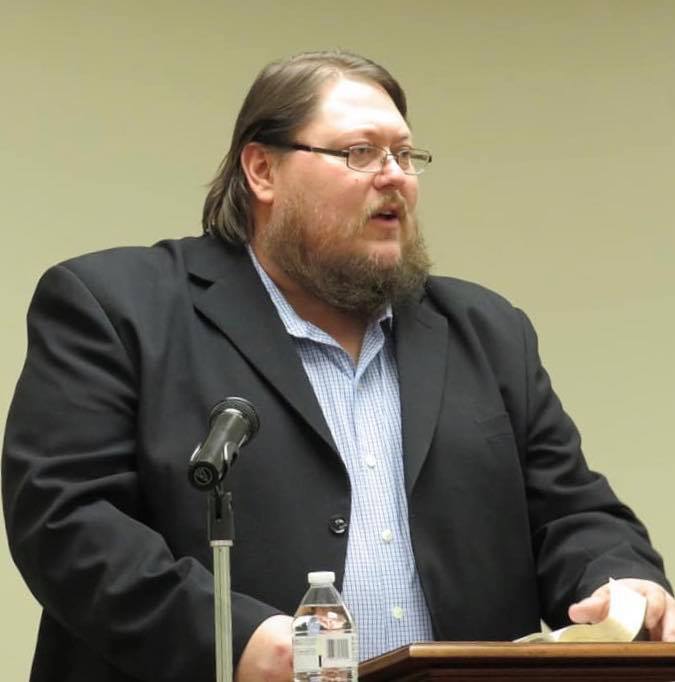
Mikal Smith

Subjected to Vanity

Romans 8:20
Mikal Smith November, 3 2024 Video & Audio
0 Comments
Sovereignty

Sermon Transcript

Auto-generated transcript • May contain errors

100%
Romans chapter eight. I want
to look at a few things here this
morning as it pertains to that, actually that last hymn that
we sang. Just to reread a couple of the
lines that we just sang. Kind of maybe bring into view
a little bit about what we might look at this morning. In that
first stanza that we sang, we sang, Great Father of glory,
how rich is Thy grace. What wonderful love is displayed
in Thy face. Jesus, Thy image with brightness
we view and hope to be formed in that likeness anew. I want you to kind of keep that
somewhat tucked back in your mind because The verses that
we're going to be looking at today, I don't know whether or
not we'll get down to this particular verse, but the Bible says in
Romans chapter eight and verse 28 and 29, it says, and we know
that all things work together for good to them that love God,
to them who are the called according to his purpose for whom he did
foreknow, he also did predestinate, to be conformed to the image
of his son. So the predestination of God
here that this verse is speaking of is the predestination to be
made into the image of Christ. And that's what we just sang,
that our hope is to be formed in his likeness anew. so that
hymn writer really had a lot of biblical backing in what he
wrote there. We went on to say, or sing, excuse
me, in the third stanza, or excuse me, the fourth stanza, it says,
the world knows us not, but in this we rejoice. To God we're
no strangers, but objects of choice. His love from eternity
gave us a home where now we are hoping in safety to come. Moving into the fifth stanza,
it says, arrayed in obedience. Now, that doesn't mean that we
are obedient in the flesh. That's not what he's talking
about. We're not arrayed in our obedience. We're arrayed in his
obedience, which is none other than his righteousness. It was
his obedience that was given to us as his righteousness. He
came and obeyed everything for us And we are imputed with or
arrayed in fine linen. That fine linen is His righteousness. And so it's talking about that
we are arrayed in obedience or His righteousness. And it's all
wrought by the Lamb. You notice here it's not wrought
by anything that we do. The obedience that's in view
that the scriptures teach that we have been given and that we
walk in this obedience. This obedience is not the obedience
that we do in the flesh, but we walk in the obedience of Jesus
Christ. We are walking in His obedience. When we walk before the Lord,
our walk is a walk of faith, not a walk of words. We walk
by faith, we don't walk by sight. We don't look for things that
are seen, we look for things that are not seen. We are hoping
in things that are not seen. We are trusting in things that
are not seen. As we'll see today, those things
that are seen are things that we can hope for, because we see
them. And there are a lot of people
that think that you have to have these evidences, and if you have
these evidences, then you're assured that you have something.
But that is not what the Bible says. Completely opposite of
what the Bible says. The Bible tells us that the hope
and the assurance of faith that God gives to his people is truly
something that is given to them by the Spirit of God. It's wrought
in them by the Spirit of God. That word wrought in them is
worked in them. That means worked in them. It
is worked in them by the Spirit of God. And it testifies to their
spirit that they belong to God, that they have a hope in Christ
Jesus, and that there is a future part of their salvation that
is yet to come, that they have been given as heirs of Christ
Jesus. And that's something that happens
internally. It's not something that happens physically, outwardly.
If I look to my outward works, if I look to my religious activity,
prayer, preaching, reading the Bible, praying, giving to the
ministry, helping my brother and sister in Christ, loving
my brother and sister in Christ, feeding the poor, clothing the
poor, feeding those who don't have any food. All these things
that we can do outwardly. Abstaining from things that we
do outwardly. All those things, a person who
is not saved can do those things. They can honestly do every bit
of that. They can do every bit of that stuff. Paul said he did
those things. And he did them better than anybody
else. He was a Pharisee of Pharisees. And Paul said that all those
things, I count as done. And the only thing that he wanted
to know, the only thing that he hoped in was that he was accepted
in the blood, that he was in Christ Jesus. to hope to know
that he was in Christ because it's only in Christ that his
obedience counts for anything. And I'm not talking again about
his outward obedience now that he is a Christian. I'm talking
about his hope is in the obedience that Christ performed on his
behalf when Christ walked this earth. And that obedience that
Christ walked for Paul, He walked for every child of grace. Because
that righteousness that Christ Jesus performed, He substituted
for every one of His elect. And that's what we are singing
about here in this hymn, is that we are arrayed in His obedience. That means we are covered in
His obedience. That we walk in His obedience, meaning that our
hope before God is not that we walk in our own righteousness
that we perform by being obedient to God. We walk in faith that
God accepts us on the righteousness of Jesus Christ and not what
we do. Therefore, what we do does not
matter in this lifetime as far as our acceptance with God or
our preservation in God. Now that's not saying go live
however you want to live and do whatever you want to do and
have no regard for sin because it doesn't matter. I'm not saying
that. What I'm saying is all these things are temporal and
these things have no bearing on our salvation before God. Our salvation before God is something
that took place outside of ourselves that we have no conditions to
keep because Christ secured that salvation outside of himself. And because he has done that,
to those who he gives that to, he gives a hope that this life
is not, no matter how sinful we are, no matter how wretched
we are, no matter how turmoil and beat up and battered and
scarred that we are or become, that in the end, this place is
not our home. This is not where we have come
from. We are going back to where we
came from. We are going back to the place
that has been prepared for us. We are going back to where we
are with God, not only spiritually, but physically. And so the hope
that is given, or that final salvation, is the hope of our
resurrection, the hope of our glory, which is, as this song
here says, the going to the home and where we have safety. But in between there and here
is a journey that the Lord has appointed for each one of us
to walk through. The Bible says that God has given
us, each one of us, a habitation. Not only a physical habitation
that we are living in now, but he has given us the habitation
that surrounds us, the place where we live, the people that
we're attached to, The ones who we are born into. The families
that we are born into. The places where He takes us
to live. The jobs that we have. The health that we have. The
looks that we have. Everything about us. The works that He moves
us through. Everything has been appointed
of God. He has set the habitation of
man. We cannot direct our steps. He
directs our steps. We can devise our ways and how
we want to go. I want to choose to do this. But ultimately, God determines
what is going to be done. I may want to go across the street
and help that guy right now, whatever he's doing in his yard,
but I may walk out here, trip on that step, fall over and break
my neck and be carted to the hospital and lay up in the hospital
for two weeks. We don't have any control over
anything in our life. We have a supposed free will
that people think that we have. And do we make choices every
day? Absolutely. We make choices all day long,
every day. I chose this morning to pour
this cup of coffee, and I chose to put cream in this coffee,
which I don't often do. Once in a while. I like my coffee
blackened out. I put coffee cream in it every
now and then because I like the taste of it. And so this morning
I chose to put cream in my coffee, then I chose to put it here and
drink that coffee. But brethren, even though I made
that choice, God is the one who before the foundation of the
world determined everything that I did this morning in those choices. The will is not free. The will is not free. The only
one that has free will is God. Because if someone has a free
will, that means they can do whatever they want and they have
the power to accomplish everything they want to do. And none of
us have that. Only God has that. So the choices
that we make, the conditions that we think that we have to
keep, have no bearing on anything as far as it pertains to our
salvation. It's all a gift that God has
done on our behalf, for us, and gives to us. And once He gives
that to us, He rots that or He works that salvation in us. And
He gives us what the Bible calls hope. That it will be completed
in fulfillment and totality at the end. See, this salvation
that we have, while Christ has finished all of the legal aspects
of salvation, everything that it takes for us to be acceptable
before God, everything that it takes for God to justify and
to save and to be able to acquit this sinner, Christ has already
done. It's a finished thing. There's
nothing to add to it. And there's nothing that can
be taken away from it. It's already been done. But the experiential
part of our salvation, living in this life, experiencing the
wretchedness of our sinfulness, experiencing the love and the
forgiveness that God gives to this sinner because of what Christ
did. hearing the call of the Holy
Spirit to come to Christ. Us coming to Christ and finding
forgiveness. Us being given to believe that
Jesus' righteousness is our righteousness and that there is nothing that
we can do but it's all of what He has done. That faith that's
given to us, that's an experiential thing. It's something that we
are brought through and it's manifested in us, but it's wrought
in our heart by God. Faith is a gift of God that's
wrought in our heart. It's not something that I can
just make up and do and accommodate whenever I want to. Faith is
the gift of God that He gives to His children at His appointed
time. Isn't it not funny that we don't
come from the womb automatically, having faith in Christ Jesus,
believing upon Him, and trusting in Him for our righteousness?
The Lord brings us in our habitation through some things and we develop
in this lifetime. And then there's a point that
the Lord brings us. And as Paul said, he reveals
himself in us. He was there. We've been his. We've been sons before the foundation
of the world. The Bible says that we have been
his sons before the foundation of the world. And because we
are sons, He has sent His Spirit into us, whereby we cry to God. We choose God. We choose Jesus,
so to speak, if you would, to use the vernacular of modern
Christianity. The reason that we come to Christ,
the reason we believe on Christ, the reason we trust in Him is
because God has sent His Spirit into our hearts. Therefore, because
we are sons and He has sent His Spirit, The Spirit rocks in our
heart or works in our heart to cry out to God, to see God as
our Father even though in our flesh we look and see how can
we be His Father when we are full of sin. We look no different
than the child of the devil that's out there that is committing
all these sins. Why? Because the flesh is just flesh
and it cannot please God. And we are still tied to this
flesh, in this flesh while the flesh has no control or victory
over us, we still are in this flesh. And so, because of that,
we have, as Paul, in the previous chapter in Romans, discusses
and reveals to us, manifests to us, something that God has
ordained for all of his children, and that is a spiritual warfare
that goes on between the flesh and the spirit. And that spiritual
warfare doesn't end when you say, I believe in Jesus Christ. That spiritual warfare doesn't
stop when you bow your knee and pray to God, will you save me?
It doesn't stop whenever you get baptized and join the church.
It doesn't stop. That warfare is what God has
appointed as our habitation from the time we come to know it until
the time we leave this earth. It is appointed to us to walk
in this warfare. And in doing so, there is the
struggle, the turmoil, the quenching of our heart, the fact that we
are still tied to this sinful nature. While that which is inside
of us loves righteousness and holiness, the outside of us continues
to love that which is not holy and righteous. And that's the
struggle that we are in. And that struggle doesn't change.
I don't care what those preachers that are out there tell us. Whenever
I read my Bible, I find a different story. And whenever I walk this
life, my experience tells me a whole different story. Now,
there are some that are deceived in their heart who think that
they are keeping the righteousness before God by their obedience.
But they are grossly, grossly mistaken. because they think
the law of God is in onesies and twosies, and they think that
righteousness is something that they are able to do with the
help of God, and they misunderstand that sin is who we are, not what
we do. sin is missing the glory of God,
missing the mark of righteousness, and that's who we are innate
in our Adamic nature. We miss the glory of God. We are not righteous. No, not one. Therefore, because
we are not righteous, because we are innate sinners, and we
are sinners not because we sinned, We are sinners because we are
sinful people by nature. Our nature is a nature that cannot
be righteous. Therefore, we have no hope in
that, in this flesh, and anything that this flesh does. We have
no hope in that. The child of grace, though, has
been given something different than that. While they have this
attached to them, the child of grace is born from above, and
that which is born from above is created in righteousness and
true holiness, and it lives within this vessel of clay. But what
we are, we are born from above. We are born from heaven. We're not born of this earth.
This flesh is born of earth, and it will stay of this earth. It's temporal, and all of its
lusts are temporal. All of its desires are temporal.
And whenever it's all said and done, this body that is temporal
will go back to the dust that God created it in. It has no future. It has no Righteousness,
it has no worthiness before God. Flesh is flesh and it cannot
please. It cannot, cannot. The Bible
says it cannot please God. But that which is born from above,
that which comes from the seed of the last Adam, is created
in true righteousness and holiness. And while now it is clothed in
unrighteousness, it in and of itself is righteous. And it is
waiting in hope, a hope that has been given it by the Spirit
of God, it waits in hope to put off this unrighteousness, and
it waits for a body that will clothe it that is wrought in
righteousness. And that's where we find ourselves
today in Romans chapter 8. In Romans chapter 8, we find
God, right after Paul describes this nature that we struggle
with, and then he starts talking about that we are no longer in
the flesh, but we are in the Spirit. If so, the Spirit of
God lives in us, and that we who walk after the Spirit will
not satisfy the lust of the flesh. He's not saying that we are not
in the flesh no more, because he clearly said in Romans chapter
7 that we still have the flesh. He's saying that we don't walk
after the flesh and that we are not of the flesh anymore because
the Spirit of God resides in us and He who is the strong man
controls the house. See, those who are outside of
Christ who have not the Spirit of God, they have no control. They can do nothing but be carnal
and fleshly. Well, we've been given the Spirit
of God where God rocks in us the works of the Spirit. Love,
joy, peace, long-suffering, gentleness, goodness, meekness, temperance,
faith. He rocks in us the love for God, the love for the brethren.
He rocks in us these works. They don't have that in the child
of the devil. They don't have that. But the
child of grace, they have that in there. And that strong man
that has now come in and taken control of this vessel, has control
over that fleshly man. And you say, well, if he has
control over the fleshly man, why doesn't he walk in holiness
all the time? And why does he ever sin? And
that means that the sinful man took over the fleshly man. No,
brethren, that's because, and this is contrary to most people's
thoughts and beliefs, it's because God has a purpose in our sin.
God has a purpose in allowing us to walk in sin, allowing us
to walk in unrighteousness, to allow us to experience the depth
of our depravity because that warfare, just like Paul said,
if you don't believe me, turn back to Romans 7 and see it.
Paul himself, a saved man, a converted man, an apostle of Jesus Christ,
said that in me dwells no good thing, that I am a wretched man,
and that what I want to do I cannot do. The things that I don't want
to do, those are the things that I find myself doing. And he said
that he cannot do anything in the flesh. This is Paul talking. Now that, you cannot divorce
that with what is being said in chapter 8 when it talks about
walking in the Spirit and walking by the flesh. What does it mean
to walk in the Spirit? It means to walk in faith. Paul
concluded in Romans chapter 7 that I with my flesh will serve. I can't get out of it because
I can't change the flesh. I will walk and serve the law
of sin in this flesh. But with my mind, that inner
man, That one that's born from above, that new creation that's
born from heaven. He said, I will serve the law
of God. And he said, oh, who's going to deliver
me from this body of death? Because it's this body of death
that keeps me in this spiritual warfare. It's this body of death
that continually brings this antagonistic thing to my mind
that although I want to be righteous and holy and do the things of
God, I find that I cannot do them. I can't do them. That every
time I go to do something good, evil is present with me. Why?
Because my flesh is evil. And any time I put my hand to
religious activities, it becomes evil because everything the flesh
does is evil. But the works of God in me are
spiritual. The desires of my heart are spiritual. The things that I am inwardly
are spiritual. That is why I needed a substitute
who walked obedience for me. Because I can't and never will. Therefore, I needed someone who
did it for me and for God who is righteous and holy and just
to deem His walk as satisfactory for my walk. And so that's why
Paul said that I will serve the law of God with my mind. I will
serve the law of sin. That's my plight. That's the
habitation that God has put me in until the day that Christ
delivers me from this body of death. But what is He going to
deliver me into? When I'm delivered from this
body of death, what will I be delivered into? He goes into
Romans chapter 8 to tell us that we will be delivered in to that
house that God has went to prepare for us that He has made in the
heavenlies awaiting us. And that's the house or the body
that He has prepared that is, verse 29, that is conformed to
the image of Jesus Christ. Now somewhere in between Romans
chapter 7 and Romans chapter 8 verse 29 where it says that,
we find our verses for today. So follow along with me as I
read. It says, verse 14, for as many as are led by the Spirit
of God, they are the sons of God. Again, if you look through
the context of Scripture, being led by the Spirit of God, walking
in the Spirit of God, walking by faith, it's all talking about
trusting in Christ Jesus. Faith in the Lord Jesus Christ.
It's talking about a life of faith, not a life of works. Not
a life of obedience in the flesh. It's a life of trusting on a
finished work already done for us and a talent to God as our
righteousness. He says, for as many as are led
by the Spirit of God, they are the sons of God. For ye have
not received the Spirit of God. By the way, let me just backtrack
there in verse 14. As many as are led by the Spirit of God.
Those who are led by the Spirit of God walk by faith and they
don't walk by sight. If you're walking by sight, hoping
in the things that you see, the evidences that you see, it might
be that you're not a son of God. Because the sons of God are led
by the Spirit, those who are led by the Spirit walk by faith. And they regard not the things
of the flesh and the outward things that men do. Now, brother,
that's just completely, totally the opposite of what I used to
preach. It's completely, totally opposite of what I used to believe.
I used to believe that those outward things that we do gave
evidence that we are His children. Why? Because we walk uprightly.
We walk holy. We walk righteous. We quit sinning
and we gradually become less and less sinful. That's pretty
much the holiness mentality, right? Philips, they've been
brought up in some of that. That's the mentality of the Methodist
movement, of the holiness movement, of a lot of the modern evangelical
Christianity is once I'm saved, I begin to stop sinning more
and more and more and more until I get to a place where I'm walking
righteous and holy before God. Hogwash. You're deceived. Galatians tells us, have you
begun in the Spirit? Are you now made perfect in the
flesh? No, the answer is no, absolutely not. You're never
made perfect in this flesh, you're never made righteous, because
the nature that you are in the flesh, again, cannot please God. So you think you're pleasing
God, but your heart is deceiving you, and it's wicked, and you
don't even know it, because you're blind. You're blinded to those
things. God has not revealed it. God
has not opened your eyes to see that. Those who God has opened
their eyes to see and opened up their ears to hear and given
them understanding of what is being taught, knows that in my
flesh dwelleth no good thing. Therefore, I must hope in someone
who is righteous and holy." And that was the Lord Jesus Christ,
the one and only person to have ever lived who was righteous
and holy. And it's his righteousness that God accepts. And that's
the only accepting righteousness that God will look to. We are
accepted in the Beloved. If we're accepted before God,
it's because we've been accepted in Christ. Christ was the one
who was righteous, and we are accepted on His behalf because
He did it for us. That's what a substitute is all
about. And here we see that as minions are led by the Spirit
of God, they are the sons of God. So, the sons of God walk
by faith. not by sight, not by the externals. Verse 15, For ye have not received
the spirit of bondage again to fear, but ye have received the
spirit of adoption whereby we cry, Abba, Father. See, we've
received the spirit of adoption. The Spirit has been given to
us who are in the flesh whose flesh continues to sin and disobey
God and walk in unrighteousness and cannot keep the law of God,
the Spirit of God is given to that child of grace that's planted
in this ugly vessel. The Spirit of God is given there
to us and that Spirit of adoption is given to us to let us know
that, yes, we don't look like that's our Father. We don't act
like that's our Father. But the Spirit of God testifies
to us that despite how we look on the outside, we are the children
of God in the inside. We are the children of God. It's
the Spirit's work to bring assurance. It's the Spirit's work to bring
hope. And He does so. I believe that
the Holy Spirit will do what He has given for us, for Him
to do. He is given to us to give us a spirit of adoption to know
that we have been adopted of God. This flesh is putrid and
dying and death. But the Spirit of God teaches
us that God, even though this wretched, vile self cannot please
Him, God has adopted that body because of who is inside the
body. The person inside that wretched
vile body is the seed of Christ Jesus, His child. And He adopts that body, adopts
all of the wickedness and the evilness and the unrighteousness
that it procures in itself until the day of redemption where He
gives us the body that is not plagued with sin. And during
this lifetime where we are in this body and we are plagued
with all the things that are part of its sinfulness, God has
adopted that because Jesus Christ came and walked the obedience
that this body cannot do. He gives that obedience to us
and He also gives to us the death that this body deserves. Jesus
Christ died on the cross and His blood was shed so that this
wretched vile body God could forgive and adopt until the purchased
possession is claimed. And so He gives us, the Bible
tells us in several places, that He gives us the Spirit of God
as the down payment, right? As the seal. The seal that we
are owned by God. He gives us the Spirit of God
to testify to us that we are His. He gives us the Spirit to
seal us so that that seal, like a king would put his imprint
on something, this is my possession. Until I redeem it, this is my
possession. He gives us the Spirit of God
so that we might know that we are His. He gives us the Spirit
of God so that we might know that we are children of God.
Why do we need to know that? Because apart from the Spirit
of God, we don't know that. And whenever we receive the Spirit
of God that teaches us our unworthiness and our inability and our unrighteousness,
we begin to think, oh my, how could God ever love a person
like me? How could God ever accept someone like me? You mean I'm
just nothing, that I can't do nothing? Then how am I going
to be saved if I can't do nothing? That's what the Gospel is all
about. The Gospel is about you don't have to do nothing, you
can't do nothing. That's the hard, cold facts of
it. You can't do nothing, but the
good news is that Jesus did do something, and that something
that He did isn't something that you have to work for, earn for,
or do any conditions for. He freely gives it to you, and
then He gives the Spirit of God to you so that in your experience,
you might know what was freely given to you. That you might
hope in what is before you in the days to come. That you might
in yourself be assured that though this outward man perish, the
inward man is renewed every day until the day of redemption.
Let's go on. Let's look at what it says. For
ye have not received the spirit of bondage again to fear, but
ye have received the spirit of adoption whereby we cry, I am
a father. The Spirit itself beareth witness
with our spirit that we are the children of God. It isn't the
preacher that tells you that you're the child of God. I will
never tell anybody I believe that you're a Christian because
of what I see in you. Because again, anybody can parrot
that. Anybody can mimic that. A monkey
can come out and act like a person. Go to the zoo and see it. Don't
act like people all day long. I don't know how many times I've
taken my kids to the zoo. We went over there and looked
at the monkeys, the gorillas, or whatever, and there they are.
They're doing stuff that looks just like what people do. They
act just like people. The kids are irritating themselves,
poking the other one. The other one's slapping its
hand, poking it, slapping its hand. They do all kinds of things
that look like us. Anybody can act religious. Anybody can be religious. But the spirit
is given to us to bear witness with our spirit that we are his
children. So it isn't that what we look at this kind of side
note, I had a man brother Larry, we used to fellowship with the
gentleman. And unfortunately, before he passed away, he ceased
to fellowship with us on several different notes, but mainly,
at least on my end of it, it was because of this very thing
here, that I believed that we could have, that the hope that
we have is a full assurance of faith, that there is assurance
that the child of grace can have, but that assurance isn't based
on what I do, it isn't based on how religious I am, how holy
I act, how much obedience I perform, how less sinful I have become. My assurance is not in the outward
things, but I explained to the brother that our assurance is
something that the Spirit attests to our spirit. And I can't produce
that. I can't produce the spirit making
my spirit know that I'm His. This security of the believer
or the once saved, always saved mentality, Well, I believe that
once a person is saved, that they are truly saved. They can't
lose that salvation. But the fact is, is that the
assurance doesn't come because I prayed a prayer, or I made
a commitment, or I said something at one time, or I returned from
some sin that I used to be a part of. I used to take drugs, or
I used to drink and get drunk all the time, or I used to commit
adultery, or I used to be a homosexual and now I'm not a homosexual,
or whatever the case might be. That's not what I'm talking about.
You don't get saved because you do any of those things. And so,
some people think that, you know, hey, I've done all this, and
now... But brethren, listen, that isn't
what attests to us that we are the children of God. We, by the
Spirit, are given a hope that we are His. And that there is
something for us on down the line. Let's continue reading.
He says, and the Spirit bear with our spirit, that we are
the children of God, and if children, then heirs. So if you're a child
of God, then that means you're an heir. Heirs of God and joined
heirs with Christ, if so be that we, here it is, suffer with Him,
that we may be also glorified together. Now, does that mean we're going
to be beat Burned at the stake. Our heads chopped off. Well,
that very possibly could happen to us. And listen, it might happen
in this lifetime. As bad as things are waxing worse
and worse, it seems. Especially if we don't show up
to the right rally. However, I don't believe that
that's talking about that. I believe that this suffering
that we're talking about here is within the context of the
suffering that Paul has been talking about, going back to
chapter 7, is the suffering of being in this body of sin. This consternation, if you would,
between the flesh and the spirit. We are given to suffer for His
sake. We're to suffer in this body
of flesh for His sake because the suffering in this body of
flesh is God given to produce something for us. And I believe
that's going to be bared out in the rest of this context here. Let's look along through the
context because I think it will bear it out. It says, If so be
that we suffer with him, that we may also be glorified together. For I reckon that the sufferings
of this present time are not worthy to be compared with the
glory which shall be revealed in us. God has given us something on
the inside of this fleshly body that we have not seen yet outwardly. And we won't see outwardly. That's
why I keep saying these people that say, what's on the inside
is going to come out on the outside. We're going to live these holy
lives, righteous lives, all these kind of things. While God may
give glimpses of things because of what He's working in us, that
doesn't mean that we can just pick up the mantle and go whenever
we want to, however we want to, in whatever capacity we want
to, and do these things. He says here, For I reckon that
the sufferings of this present time are not worthy to be compared
with the glory which shall be revealed in us. That glory that
is in us already, we have been glorified in the fact that we
are in Christ Jesus, we have been born from above, We have
been given everlasting life. That is glory that is in us,
but that glory is not made manifest yet. It will be made manifest
at the resurrection when our bodies will be given to us that
is designed to clothe that glorified person that is inside of us.
Look on with me if you would. Verse 19, For the earnest expectation
of the creature, waited for the manifestation of the sons of
God. Who are the sons of God? Well,
we go back to where we was a while ago. Those who are led by the
Spirit of God and those who the Spirit bear witness that we are
His, those are the sons of God. And what are the creatures waiting
for? They're waiting for the manifestation.
We've talked about that before. What is a manifestation? That
is showing something that was hidden. Something that hadn't
been seen before is now being manifested. It's being brought
forth. It's being shown. Okay, that's
what, to manifest something. You see my pocket? There's a
phone in it. You don't see it. I've now manifested
it. There's a phone in my pocket. Until that time, that phone was
hidden away. Now it's being made manifest. It was already there. but now
it's being made manifest. The sons of God are already born
of Him, are already His children, are already present in this lifetime,
already present in the lifetime to come, but yet they have not been made manifest.
Why? Because they're hidden in the
vessels of clay. They're pearls hidden in the field. There are those that are born
of God, that which is born of God has not been made manifest
until the glorification of the body. Again, I think the context
is going to bear that out. But let me back up, because in
verse 19, many people will say that this passage, when it talks
about creature, and it goes on especially in verse 20, It says
that this creature is talking about all of creation. The trees, the brute beasts that
are out there, the animals, the cows, the dogs, the plant life,
the insect life, the fish life, the bird life, and all the people. For the creature waited. for
the manifestation of the sons of God. So they say, and I've
heard it, and I've preached this, by the way, I no longer believe
this, but I preach this, that all of creation is waiting to
see the manifestation or the showing forth of the sons of
God, that there'll be one of these days that all of creation
is gonna look forth and see as we come forth as all the people
of God. But is this what the context
is bearing out? I don't believe it is. I believe this word creature
here is speaking of the elect of God and the elect of God only.
And particularly the inward man, that which is born from above.
That seed that remains in us, which is the life of God. That's
the creature that is in context here. Now bear with me, I know
some may not understand, some may not fully believe what I'm
talking about. Bear with me if you would. Just
be patient with me. I pray the Spirit might bring
this forth. Look at verse 20. It says, For
the creature was made subject to vanity, not willingly, but
by reason of him who has subjected the same, the creature, in hope. Now think about it, brethren.
That child of grace that's born from above has been born into
a body that has been subjected to vanity. Matter of fact, it's
in, I think it's Ecclesiastes, was it, that Solomon wrote, I'm
trying to remember now where, where he wrote Vanity I'm thinking
of what chapter that's in, and it may not even be in Ecclesiastes.
Well, I don't want to spend too much time on
there. I believe it's in Ecclesiastes, but Solomon said that this life
is nothing but vanity of vanities, that all things are vexed with
vanity. Everything. There's nothing new under the
sun, and everything that's under the sun that's temporal is nothing
but vanity. But it says here in our passage,
it says that the creature was made subject to vanity. Now,
if you'll turn with me over to a few passages, I think it bears
out that this is speaking of the child of grace, that inward
man. Look at 2 Corinthians, if you
would. Chapter 5. Matter of fact, I'm going to
back up a little bit, and this is going to be a little long
reading, but I want you to bear with me if you would. 2 Corinthians, in chapter 4, I'm
going to start reading about verse 14. I think this is a parallel
verse to what we're looking at in Romans. It says, knowing that
he which raised up the Lord Jesus Christ shall raise up us also
by Jesus, and shall present us with you." Okay, so I think he's
talking about the general resurrection here, when we're all going to
be resurrected. He says, "...for all things are
for your sakes that the abundant grace might through the thanksgiving
of many redound to the glory of God. For which cause we faint
not, but though our outward man perish, Yet the inward man is
renewed day by day." So that tells us that we are made up
of two men. Remember I mentioned last week,
the week before the last, the Shulamite is one who is made
up of two armies. We have the flesh, we have the
spirit. We have the outward man, we have the inward man. The outward
man perished. Yet the inward man is renewed
day by day. For our life affliction, could that be also termed suffering
in Romans chapter 8? Sufferings? For our light affliction,
which is but for a moment, worketh for us far more exceeding an
eternal way to glory. While we look not..." Listen
to this, brethren. This is what I was saying a while
ago. "...While we look not at the
things which are seen..." People that look for things that are
seen, they're looking for a sign. And what did the Lord say about
the people that are looking for signs? looking for the outward
things. It said, a wicked and untoward
generation seeketh after a sign. Show us. What's your proof? Let me see it. Show me your works. So I can
know that you're a child of God. Show me your obedience. To the
law, show me your walks in righteousness and obedience.
See, they want to see things. But what does Paul say here?
We look not at the things that are seen, but the things which
are not seen. For the things which are seen
are temporal, but the things which are not seen are eternal. See, this is all temporal things. The whole life of the Christian
is a life of faith. The Kingdom of God is a Kingdom
that is ruled and reigned by Jesus Christ in the hearts of
His people by faith, not by works. by that which is not seen. Because
if it's something that can be seen, it's something that can
be grasped and worked for. Therefore, if it's by works,
it's not of grace. And salvation is holy by grace.
If your salvation is by anything that you did, whether it be faith,
whether it be repentance, whether it be trust, whether it be a
prayer, whether it be a baptism, whether it be signing the dotted
line and becoming a member of a church or whatever it is, That
is what you're looking for to, or looking for, or looking at.
That's works. That's temporal. That's seen. That has nothing to do with eternal
salvation. Look at verse 1 of chapter 5.
He goes on to say, For we know that if our earthly house, and
there's where I got that. If our earthly house. This inward
man is in an earthly house. We just sung that hymn that talks
about we're looking for a house that God has made for us beyond,
awaiting us. In my Father's house are many
rooms or mansions. We are built up a house unto
God. Who are building up that house
unto God? the spiritual Israel, the spiritual
people of God. It's that which is spiritual
that makes up that spiritual house. And that spiritual house,
while now is invisible and spiritual that you cannot see, will one
day be clothed in an outward house that will be made, not
with these hands, but will be made in the heavenlies. that
we will inhabit. Look what he says. For we know
that if our earthly house of this tabernacle were dissolved,
we have a building of God, a house not made with hands, eternal
in the heavens. For in this we groan. See, in
this we groan. What do we groan? We groan in
the fact that we await this house. Who is it that's awaiting this
house? Those of us who are in Christ
Jesus, who have been given to know that our light affliction
is just for a moment. Those of us who look not at the
things that are outward, but the things that are heavenly.
The things that are not seen. That's who it is that groan. For in this, we, the children
of God, the children of grace, grown earnestly desiring to be
clothed upon with our house." See, that's symbolism. It's a metaphor. God is using
the term of a house in place of a body. We are longing to
be clothed upon with a house. That house is our new body that
is conformed into the image of Christ Jesus, who, by the way,
is the house of David, who, by the way, is the house of God.
It says, if so be that being clothed
we shall not be found naked. For we that are in this tabernacle,
so here God uses house and tabernacle interchangeably, while we are
in this tabernacle do groan. Who are the ones who are groaning
in this tabernacle? Well, it's not the child of the
devil out there. They're not groaning in this
tabernacle because they don't see any problem with them. They're
righteous, they're holy of themselves. They don't groan because they
still are governed by the flesh. They still have no spiritualness
in them to let them know that this outward thing can't do anything
and that it is of no worth and is no use and is going to be
gone away and with it all the things and works that they've
done. It's going to be burned away like wood hay and stubble.
If so be that being clothed we shall not be found naked for
we that are in this tabernacle do groan being burdened Not for
that we would be unclothed, but clothed upon that mortality might
be swallowed up in life. See, it's not that we're just
ready to put off this body and be naked, as it were, just a
spirit. But no, we've grown to not only
be put off of this body, but then to be clothed in a righteous
body, one that knows no sin, one that is conformed to the
image of Christ who knew no sin. It says, now He that hath wrought
us for the selfsame thing as God, who also hath given unto
us the earnest of the Spirit. Isn't that what Romans 8 is telling
us? That He's given us the Spirit, whereby we cry, Abba, Father,
and while we are in this sinful, mortal, temporal, and vexed,
evil body, We have that spirit of adoption that says that even
though we don't look on the outward appearances as though we are,
our hope is not on the outward. What is unseen? Our hope is in
that which is unseen. Our body is in heaven waiting
for us, and what we are inwardly is not what we find ourselves
to be outwardly. We have another man in us. We
have an inward man that is created in true righteousness and holiness,
and we have a body that is waiting for us that is prepared for that. See, we, just like Jesus Christ,
have taken on flesh and blood. See, the child of grace is born
from above, not from of the earth, earthy. This flesh and blood
that we are in is of the earth and it is of earthly, of the
first Adam. But the child of grace that's
born from above who comes and inhabits this, he is from the
heaven. He's spiritual and is from heaven. He's not of the earth, earthy.
So that which is born from above is that which will be clothed
with the body from above. Right now it's not. Why? Because God has subjected the
creature to vanity so that he might be in hope of that which
is to come. And the Bible says in our verses
as we will come to see that we are saved by hope or we are delivered
by hope, meaning that in this lifetime, what delivers us from
being succumbed? What delivers us from being overcome
and conquered by this flesh that continues in sin? The hope that's
been given in is that this is not our final home. Our final
home is not this fleshly body. Our final home is that heavenly
body that we have waiting for us with God. so that hope is
given to us and we've been subjected to vanity so that it will keep
the child of grace who knows no sin and cannot sin, who longs
for righteousness, but cannot do it in the flesh. It keeps
us in hope, trusting and looking and giving honor and glory to
Jesus Christ who is our hope. And we continue in hope that
perseveres us and speaks to our heart that we are His, that Spirit
of adoption. And that's what He says here.
that now He that wrought us for the selfsame thing is God who
hath given unto us the earnest of the Spirit. Therefore, we
are always confident, knowing that whilst we are at home in
the body, we are absent from the Lord. For we walk by faith,
not by sight." Again, Paul reiterates. We don't walk by looking about.
We've got to see it on the outside. You've got to do something on
the outside. You've got to show us You've got to be something
on the outside. No, we walk by faith, not by
sight. It says, we are confident, I
say, and willing rather to be absent from the body and to be
present with the Lord. Wherefore, we labor that whether
present or absent, we may be accepted of Him. And whenever
he says, therefore, whenever, or wherefore we labor, does he mean that There you go.
Well, that means that you've got to be obedient to Him. Get
out there and keep the law. Well, that's not what it's talking
about. Matter of fact, that word labor there, when used throughout
the rest of Scripture, that word behind this word here, it means
to endeavor, to continue in. Wherefore, we continue in that
whether we are absent or present, we may be accepted of Him. So
whether we're in this body or whether we're out of this body,
The thing that we are hoping for is that we are accepted in
Him. Because see, I can't be accepted
in myself. God will not accept any work
of this flesh. So my hope is that I've been
accepted in the Beloved. And if I've been accepted in
the Beloved, then that means I have a home outside of this
fleshly home waiting for me. See, the labor here is not a
labor of works, but a labor of faith. an endeavoring in faith,
a walk in faith. Those who walk according to this
rule are the Israel of God, Paul says in Galatians. But, if you'll
notice there in 2 Corinthians 5, while we're there, look down
if you would, in verse 17. It says, therefore, if any man
be in Christ, here's the word, he is a new creature. Old things
are passed away. Behold, all things are become
new. So here we see that God calls
that which is born from above a new creature. The creature
was made subject to vanity. Which creature? That creature
which is born from above. How was he made subject to vanity?
God put him in an earthen vessel. so that all the days of his life,
he would be subjected to that vanity, so that in that subjection
to vanity, he might have hope that would keep him persevering
to the end. Look with me over at Galatians. We just quoted it a minute ago.
Go to Galatians 6. Look at verse 15. It says, Neither circumcision availeth
or anything, nor uncircumcision. But what is it that availeth?
A new creature. What's that talking about in
context? It's talking about that which is born of God. It doesn't
matter if you're a Jew or a Gentile. The only thing that matters are,
are you born of God? Are you at the seed of Christ?
Are you the seed of Abraham, the child of faith? Are you a
child of faith? Are you a child of the devil
who looks after works and seeks after a sign? Jesus told those
religious leaders all these things. What did they say? What must
we do to do the works of God? See, they wanted to do the works
of God. And who was it that asked that question? The very ones
who Jesus looked to and said, you are of your children, the
devil, and those things that he does, you will do. You will
try to provide for yourself your own righteousness. You will make
yourself think that you are as God and you can be as God, making
your own choice. See, that's why if you haven't
read Brother O'Leary's book, The Lies of Free Will, you need
to read it because he points out in that, listen, one of the
things about free will that makes this thing so egregious before
God and the And listen, it is a worship of free will out there. I guarantee it. I don't mean
to get too sidetracked on this, brother, but I guess I'm going
to. In every religion that's out there in this whole entire
world, not just under the umbrella of Christianity, but every religion
that's out there, Hinduism, Buddhism, New Ageism, all the isms that
are out there, Catholicism, all these things, and Evangelicalism,
At the heart of all of them, they all got their, all their
different tenets of what they believe and how they do things
and their whole policies and polity and liturgies and all
the kind of things and their statements of faith and all this
kind of stuff. But there's one thing in all those religions
that are out there, no matter who it is or who it is that they're
bowing down to or what they're doing and how they bow down to
them, there's one thing that's common among every one of them.
You have a will. you must choose and you must
do something to please and gain favor before God. Evangelicalism
is no different. They say they don't believe that,
but in their activity and their doctrine they preach, that's
what they do. They believe that they are accepted by God by a
condition they meet and that they are kept in accordance with
their righteousness that they perform. If they don't perform
a righteousness and God turns His back on them, And they go
away and they become carnal and they become, you know, some even
say that you can lose your salvation and all that kind of stuff. It
all hinges on what you do with your choice and your will. You
have to do something. You have to do something. Every
religion, the only religion that doesn't require that is the true
gospel of Jesus Christ. Sovereign grace doesn't require
anything. It's truly grace. And so here,
Paul is saying that those who are counted as the Israel of
God, those who are counted as the people of God, the seed of
God, is that inward man the new creature? It's the new creature. It doesn't matter the outward
appearance. It matters what's inwardly. Is
in you the seed of Christ, that new creature? Now, turn with
me if you would to Colossians. Chapter 1, verse 15. And speaking of Jesus Christ, Paul writes in Colossians, he
says, Jesus, who is the image of the invisible God, the firstborn
of every creature. So the creature here, is equated
with those who are born of God. The firstborn of God. Jesus Christ
is the firstborn of every creature. We are His seed. And as the firstborn,
we are the seed that comes out of the firstborn and we will
be like Him who is the firstborn. We've used the illustration a
lot about the trees out there and the acorns. That tree produces
fruit. That fruit that comes out of
that tree is just like the tree itself and it will reproduce
after its time because that's the principle that God has laid
down from Genesis 1. Everything reproduces after its
time. Christ Jesus reproduces after Himself. He is the firstborn
of every creature. Notice that God uses the term
creature in reference to that which is born from above. It's
a new creature. A new creation. Now just to kind of solidify
that a little bit, keep your hand in Colossians there. It
won't matter if I look at Colossians 1 and verse 23. It says, if you
continue in the faith, grounded and settled, and be not moved
away from the hope of the gospel which ye have heard, it doesn't
say anything about the law here. It doesn't say anything about
obedience. It doesn't say anything about your outward appearance
or your outward conformity to anything. It says, continuing
in the faith, grounded and settled, being not moved away from the
hope of the Gospel. The hope of the Gospel has nothing
to do with your conditions that you have to meet, which ye have
heard and which was preached to every creature which is under
heaven whereof I, Paul, am made a minister. Notice that for one,
number one, side note, in Paul's time, the Gospel was preached
to every creature under heaven. A lot of people out there saying
the Great Commission says go and preach to every creature.
The Gospel hasn't been preached to every creature. Well, right
here it says that the Gospel was preached to every creature
under heaven in Paul's time. Look at Mark chapter 16. It's a great commission, but
it's the one found in Mark. Mark 16, verse 15. He says to them, go ye into all
the world and preach the Gospel to every creature. Now, he's not using the word
creature there to mean the cows, and the goats, and the sheep,
and the dogs, and the ants, and the sparrows, and the trees. Fish, who's he talking about
here? Well, if we look at the context
of how God used creature in our other verses, he's talking about
the people of God who have been given faith so that the Spirit
of God that is in them, who is rotting that faith in them, can
believe the report that is being told to them. Who hath believed
our report, and to whom hath the arm of the Lord been extended?"
Who believes the report of the Gospel? Those whom the arm of
the Lord has been extended. Who are the ones whose arm of
the Lord has been extended? The ones unto whom God has sent
His Spirit into their spirit, whereby they cry, Abba, Father.
The one who has been given the arm of the Lord, the power of
God who has come in and has wrought the Word of God into their heart
so that they might hear it, believe it, and understand it that this
is for me. Every creature is speaking of
those who are born of God. That's why you hear the prayer
in the Baptist say, we only preach to the elect. Not that the preaching
of the Gospel doesn't fall on the ears of the non-elect. Not
that we know who the elect are, therefore we go, okay, I'm going
to preach to you, and now I'm going to preach to you. No, the
preaching of the Gospel is designed only for those who is the new
creation. Because it is only to them that
the hope has been given, because it is to them who are the only
ones who have been subjected to vanity in hope." See, the
hope of the new creation is that we will be conformed to the image
of God going back to our passages. So that's why in Romans 8, he
says, "...for the creature was made subject to vanity, not willing,
but reason of him who has subjected the same in hope, because the
creature itself also shall be delivered from the bondage of
corruption." That's our fleshly bodies. "...into the glorious
liberty of the children of God." That glorious liberty is our
new bodies that will be freed from the body of death. Who shall
free me? I think Paul could have easily
said, who shall liberate me from this body of death? No one but the Lord Jesus Christ. Because the creature itself also
shall be delivered from the bondage of corruption into the glorious
liberty of the children of God. For we know that the whole creation,
and that's all the elect of God, groaneth and treveleth in pain
together until now. And not only they, meaning all
those who have gone before, all those Old Testament saints that
God had given His Spirit to, and I know that there's a lot
of evangelicals out there that said, oh, the Old Testament saints
didn't have the Spirit of God, but they don't know the Scriptures,
or God hasn't revealed it to them, because the Bible says
that if you have not the Spirit of God, you are none of His.
And the Bible also says in the New Testament that all those
prophets and all those preachers of the Old Testament spoke of
Jesus Christ through the Spirit of Christ that was in them, So
yes, the Old Testament saints had the Spirit of God, but it
says here that not only all of them, it says, for we know that the whole
creation grown together and tremendous pain together, and not only they,
but ourselves also, which has the firstfruits of the Spirit,
even we ourselves grown within ourselves. Ain't that a strange verse? Even
that we ourselves grown within ourselves. Sounds like two men,
right? There is something that is groaning
in something else. There is one person that is groaning
within another person. Is that not the duality that
we've been talking about? That that inward man groaneth
within the outer man because he's been made subject to vanity
within that outer man? And that outer man, it doesn't
groan. to be put off. No, what does
the outer man do? The outer man wants preeminence.
The outer man wants to have its way. The outer man wants to be
as God. The outer man wants to do what
it wants to do. It wants to have its own will.
It wants to have its own righteousness. The outward man wants to put
on that suit of fig leaves and walk before God and say, ta-da! But what does it say here? that
we groan within ourselves. We ourselves, that's who we are,
that spiritual man groans within this body of flesh waiting for
the adoption to wit the redemption of the body. See, there's a time
appointed that there will be a redemption of this body. This
body will be laid down. The Bible says that this corruption
will put on incorruption. This body will be dissolved back
to the dust that it came from and that a new body that has
been prepared for us will take over this inward man and be now
the suit for the inward man. He says, for we are saved by
hope, but hope that is seen is not hope. There you go again,
evangelicals who are looking at the outward Hope that is seen
is not hope. For what a man seeth, why doth
he yet hope for? But if we hope, for that we see
not, then do we with patience wait." Why did God subject us
to vanity, brethren? So that we would be given hope.
And that hope would be given to us to keep us this year, next year, the year
after, the year after, until the redemption of the body. Likewise, the Spirit also helpeth
our infirmities, for we know not what we should pray for as
we ought, but the Spirit itself maketh intercession for us with
groanings which cannot be uttered. For he that searches the hearts
knoweth what is the mind of the Spirit, because he maketh intercession
for the saints according to the will of God. And that, brethren,
is the context to these next few verses. And we know that
all things... What are the all things? Well,
I believe all things, but I also believe the all things specifically
in this context of the sufferings that we must endure in this body
of death and the consternation of the flesh and the spirit.
The outward man not walking and the inward man wanting to walk
and obeying the law of God. The outward man not being able
to do nothing. We know that all things work
together for good to them that love God. Who are the ones who
love God? Not everyone. The only ones who
love God are the ones that God has first loved. And yes, I know
this is a harsh saying, another book that Brother Larry has written
that you need to look at. It's got a lot more pages in
it. God does not love everybody. Contrary to what popular sentiments
are. The Bible is very clear that
God does not love everybody. And the reason that we love God
is because He first loved us. We can't love God unless God
has shed His Spirit within to our heart and shed that love
abroad in our heart by that Spirit. Otherwise, we will not love God.
We will continue in enmity against God. Enemies. We'll be enemies
of God. He says, for we know that all
things work together for good to them that love God, to them who are
the called. Again, if you remember, that's
not to those who are called like the modern translations of the
Bible put. The definite article in the Greek
is there because God intended this to be a specific group of
people, not just people in general. It's a specific group, the called,
the called ones. to them that love God, to them
who are the called according to His purpose, for whom He did
foreknow." Notice it says, for whom He foreknew, not what He
foreknew. God didn't look down the corridor
of time to see that you would choose Him. God isn't sitting
outside of time and seeing everything in one swipe and seeing you in
the eternal now choosing Him, therefore He elects you. That's
not what this says. It says, for whom, not for what
He saw. It's not ever what God sees.
What God sees is what God has purposed. This is speaking of
a person. People for whom God did foreknow. For whom He did foreknow. Some
will say that's because. Because whom He did foreknow,
He did also foreknow. And so they say, there you go.
God's looking down the corridor of time. And because of what
He foreknowed, he did predestinate. He predestinated out of his foreknowledge,
he saw it, and then he predestinated. Well, number one, predestinate
out of foreknowledge is not predestination. That's contrary. Predestination
is to determine one's destiny beforehand. To predestinate means
to, and actually, in the root of this word, it means to determine
the course to the horizon. It's what that word means. And to do that, if you look ahead
and see something that somebody did and then predestinate, you
didn't predestinate it, they did. But here it says, for whom
He did foreknow. That word for there doesn't necessarily
mean because, but it means for, like Jesus give His life for
us. For whom He did foreknow, He
did predestinate. Those whom He predestinated,
those are the ones He foreknew. He also did predestinate to be
conformed to the image of His Son, that He might be the firstborn
among many brethren. So brethren, God has given us
this consternation of the flesh and the spirit. He has subjected
the creature, meaning the child of grace, that inward man, to
vanity so that He would give us hope that would cause us to,
with patience and endurance, wait for that redemption at the
end. That the Spirit might bear witness
with our spirit that, yes, I'm over the outward man. Looks like
it isn't. Know that you are. You've been
adopted of God. You are His child. This body
is adopted and God is going to hold and keep this body until
it's a lot of time of death, whenever God will give you that
house that He has prepared for you above. Because all of those whom He
foreknew... See, we were foreknown before
the foundation of the world. The elect were. We are foreknown. Meaning foreloved. That word
foreknown means foreloved. We are foreloved. He predestinated to be conformed
to the image of God. That's our hope, is to be conformed
to the image of God. Not in this lifetime. See, that's
what the evangelicals say. That's what I used to preach.
That by our righteous walking and our refusing to disobey God
and our accepting to obey God, that we gradually, in a progressive
sanctification way, become more and more holy and less and less
sinful. And that is being conformed to the image of Christ. No, the
conforming to the image of Christ is that final putting off of
the flesh and the putting on of that house that's above. That's
what the context of this whole entire thing is. Paul started
it in chapter 7 wanting to know who's going to put away this
body of death. The body of death is what houses
the evil, the sin, the corruption. And I can't get away from it
as long as I'm in it. It's still going to function.
It's still going to be evident. And there's no hope in it. But
there's hope in the inward man who walks by faith, knowing that
in the life to come, there is a body that is prepared for me
that is not this body, but is freed into the liberty of the
sons of God who knows no boundaries, who knows no habitation of sin,
who is free in the liberty of God that is conformed to the
image of His Son. See, the image of Christ Jesus,
who is the image of the invisible God, is a body that knew no sin,
right? Jesus didn't know no sin. While
He was in this lifetime, He knew no sin. The body that He has
within right now knows no sin. We are being conformed to a sinless
body. Not conforming this fleshly body
into Christ, This fleshly body will never be conformed to the
image of Christ because the image of Christ never had this fleshly
body. It had a body from heaven. He
is the man from heaven. He is the one born, not of the
earth. Earthy is the first Adam, but
he is the man born of the Spirit from heaven. That's the second
Adam. And we are to be made like him.
There's some other verses I could go to, brother, but I know I've
been long, so we'll just kind of cut it short there. Does anybody
have any questions or comments? Sing a song? Yeah. Two, two over
three. My hope is built on nothing less
than Jesus' blood and righteousness. I dare not trust the sweetest
frame, but wholly lean on Jesus' name. On Christ the solid rock
I stand, all other ground is sinking sand. All other ground
is sinking sand. When darkness seems to hide His
face, I rest on His unchanging grace. In every high and stormy
gale, My anchor holds within the veil. On Christ's solid rock
I stand, All other ground is sinking sand. His oath, His covenant, His blood
support me in the whelming flood. When all around my soul gives
way, He then is all my hope and say, On Christ the solid rock
I stand, All other ground is sinking sand, All other ground
is sinking sand. When He shall come with trumpet
sound, O may I then in Him be found, Dressed in His righteousness
alone, Faultless to stand before the throne. All other ground is sinking sand. All other ground is sinking sand. Amen. Does anybody have another
song that you'd like to sing? 43. I'm at what? 43. 43? God is free. I don't know this
one. I don't know where it is. Did you say 304? No, 43. 43? Can you sing that? Praise
ye the Lord, the praise of every nation. Praise sin is free, yes,
praise sin is free. Jesus, the brother of wonderful
salvation. Praise sin is free, yes, praise
sin is free. Glory, glory, glory, hallelujah. Christ has paid the debt for
me. Glory, glory, glory, hallelujah. I'm so glad that salvation's
free. Praising the Lord, the eyes of
the ocean. Come with your hearts overflowing
with devotion. Grace is free, yes, grace is
free. Glory, glory, glory, hallelujah. Christ has paid the debt for
me. Glory, glory, glory, hallelujah. I'm so glad that salvation's
free. Grace in the morning, peace in
the evening. I'm so glad Oh, sometimes the shadows are
deep, and blood seems the path they could go, and sorrow sometimes
how they sleep. Fly campus down over the soul
Oh, then to the rock let me fly To the rock that is higher than
I Oh, then to the rock let me fly To the rock that is higher
than I Oh, sometimes how long seems the day And sometimes I'll
weary my feet, But toiling in life's dusty way, The rockless
and shadowed I'll sleep. Oh, then to the rock let me fly,
to the rock that is higher than I. Oh, then to the rock let me
fly, to the rock that is higher than I. Oh, me to the rock let
me keep, if blessings or sorrows prevail, or finding the mountain
way steep. or walking the shadowy veil. Oh, then to the rock let me fly,
to the rock that is higher than I. Oh, then to the rock let me
fly, to the rock that is higher than I. Alright, anybody have any questions or
comments? Questions or review? Manifest? That word manifest,
it means to show or to bring to light. So like with the example
of my phone, you can't see my phone, right? It's hidden away
in my pocket. But the phone is there, right?
Yes. It exists, it's real, it's there, but you can't see it. But there's a point whenever
I do that, now my phone is brought to light, brought out in the
open, or made able to be seen. It's manifested. And so, in talking
about what we were talking about, we don't know and see the sons
of God because they are what's hidden in our bodies. But one
of these days, they will be manifested whenever we receive the new bodies
in heaven. We'll receive those new bodies
and then everyone will know that we truly were. Because on the
outside, we don't. Whenever I look at everybody,
I sin, everybody sins, we all have our faults and our faults,
we continue to sin. Even though for those who are
Christians, we don't want to sin and everything. We want to do and be pleasing
to the Lord. But it doesn't matter what we
see on the outside. that one of these days there's
gonna be a lot of people in heaven that's gonna say, wow, I didn't
know that they were Christian. I didn't know they were a child
of God. And there are gonna be some that we're gonna look at
and say, wow, I thought they were Christian. And they really
weren't. And so that's what manifest means.
It just means to show or to bring out in the open, to make known.
All right, anybody else got a question? All right, let's sit down and
have a word first. Lord, we come to you and we thank you so much
for your grace and your mercy. And we thank you for salvation
that we have in Christ Jesus. We thank you for the hope that's
in Him. We thank you for the Spirit of God that's been given
to us to guide us, direct us, to keep us, to encourage us,
to teach us, to give us the hope that we've been talking about
here today. And we just look forward to that day that we do
put off this body of death and be conformed to the image of
Christ Jesus. Father, we thank you for the
help that you've restored to our brethren as we've been sick
for these last couple of weeks. And we're thankful that everybody
is here today and is feeling better. We pray that you would
continue to keep us healthy. Be with each one of these brethren
as they go home, especially in the storms and the rain. You
might give them safety. And that you might keep us together
until we meet again. May we do everything that might
be pleasing and honoring to you. that we might continue to be
kept in the faith by Your Spirit, that we might continue to preach
and stand upon the truth again by Your Spirit. And Lord, I pray
for any of these brethren that are here today that You would
call to Yourself. Lord, I pray that You might give
them faith and that they might trust in You and that they might
hope in You and that they might begin to experience and manifest
the salvation that is within them. And so Lord, we just thank
You again for all that you've done and all that you've done
for us. In Christ's name we pray.

Comments

0 / 2000 characters
Comments are moderated before appearing.

Be the first to comment!

Joshua

Joshua

Shall we play a game? Ask me about articles, sermons, or theology from our library. I can also help you navigate the site.