Bootstrap
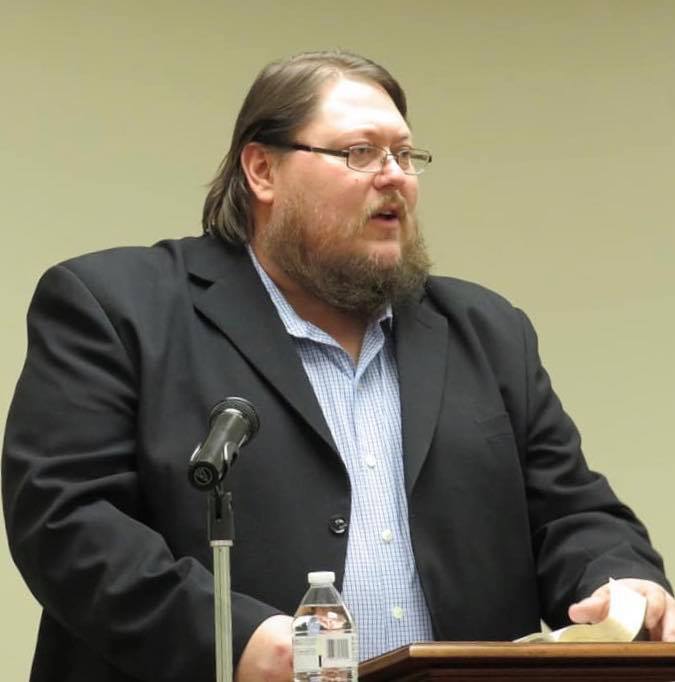
Mikal Smith

Limited Atonement and Wrath

Mikal Smith March, 17 2024 Video & Audio
0 Comments
If there is God's wrath on anyone, then there was no propitiation for that person. Christ death, propitiated God's wrath, therefore atonement is not universal but definite, particular, and limited.

Sermon Transcript

Auto-generated transcript • May contain errors

100%
Well, I thought this morning
we'd just kind of tie up our study that we've been looking
at the last two or three weeks on the limited atonement and
just kind of look at a few more things here. I wanted to kind
of go back and emphasize a couple things that
we've already talked about. And then I actually kind of maybe
look at a couple of things that the Lord wills and we have some
time to get into it. Some other things that the scriptures
teach us that Christ's atonement was for. And so if we had time,
we'll look at those. But if you want to turn to Revelation
chapter 20, we're not going to be talking about eschatology I thought we'd look and see some,
you know, we looked at, already we've looked at the election
of God teaches that the redemption of Christ is a particular or
a limited atonement. Okay, that was kind of the first
thing that we looked at. We've seen where the Bible overwhelmingly
teaches election and how that's so hid from Many people today,
of course the Lord is the one who has kept that hid, that has
blinded it. It's a gospel that only those
who have been born from above can see and believe and understand.
Those who the Lord has taught would see that. Otherwise, they're
believing a religion and another gospel, as Paul puts it. But election is, found throughout
the scripture and we see that God elected a people for the
purpose of redeeming that people out of their sin and the ends
of that is the glorification of Him through that. And so in
this election He has elected some for salvation and He has
elected some for damnation. In that election, the election
of those unto damnation, are those who, out of the same lump,
just like those who are elected to salvation, were all put into
vanity, as the scripture will look at today, was put under
vanity, was put under sin, was made subject to sin, and in putting
all people, the one lump, into sin, He would be glorified in
showing grace and mercy to some and justice and wrath upon others. Therefore God will receive glory
in both those elective groups. He will receive glory in what
he does. The glory of his love, grace,
mercy, compassion, and the glory of his justice and his wrath. And so, When we talk about Christ's atonement,
we see that the Bible overwhelmingly teaches that everyone for whom
God has chosen to that redemption is the one for whom Christ was
sent to die for. God took on flesh, came in flesh,
and the body that was prepared for Him whenever He came in flesh
was a body prepared and was made specifically to be the sacrifice
for sin and die in that place because the Bible, justice, God's
law, demanded that sin be condemned in the flesh. Okay? That was God's requirement, that
sin had to be condemned in the flesh. And so therefore Christ
came in the likeness of sinful men, and by that flesh, He condemned
sin by that flesh. He condemned sin in the fact that he died and
that he kept, of course he kept the law, but he died as the substitutionary
sacrifice, as the payment or the debt pay for all of his people. That debt was paid, that bond
was paid, okay? So Jesus, in doing that, secured
for everyone for whom he died, the promises that God made to
those elect in the everlasting covenant, or the eternal covenant,
we're speaking about that today, the terms are interchangeable,
but the scripture uses the phrase everlasting covenant. The new
covenant, the new testament, as you would, this testament
has been forever. God made this with Christ before
the foundation of the world, okay? Made this in Christ from
the foundation of the world. and everybody that was in Christ
Jesus that He gave to Christ before the foundation of the
world and who were united in Him in that eternal, vital union
were the recipients of the promises and the blessings that God promised,
and that's Ephesians chapter 1, all spiritual blessings in
heavenly places were given to those in Christ Jesus before
the foundation of the world for a purpose, that they would be
holy and without blame before God in love. Okay? And so God has, before the foundation
of the world, set apart a people and united them with Christ Jesus,
just as He did Eve with Adam, before Eve was ever brought forth
out of Adam, she was in Adam, she was given to Adam, and she
was blessed in Adam, before she ever was brought out of Adam
and made manifest to everyone else. She was blessed and had
all the recipients of that blessing that was given to Adam. We as
His people was before ever there was anything, was given to Christ
Jesus and united in Him before anything was ever made, but blessed
with every spiritual blessing. And I can only take what the
Scriptures say. Did we have an existence before the world began? I would have to say yes in seed
substance like Eve had in Adam. Did Eve have a substance? He
said he created them male and female and called them Adam. Did we have an existence before
that? Yes, in seed substance, in life
substance. That eternal life that is hid
with Christ in God. We had that in Adam. in actuality. And so those people who are united
in Christ Jesus, who are His seed before the foundation of
the world, those are the ones who would be the recipient of
all that God blessed Christ Jesus with. All the blessings, all
the inheritance that was given to Christ, that was to be also
upon His people. So that's why we are the recipients
of the promises. That's why we're the recipients
of all the things that has been given as blessings, all the spiritual
blessings in heavenly places. We have that because we have
been in the beloved from the foundation of the world, because
we have been in Christ Jesus before the foundation of the
world. Therefore, when Christ came to die, he came to redeem
those people that was given to him that are his. And so that's
why we believe in a limited atonement. That's why we believe in a particular
redemption, is because the Bible teaches that there is an election
of grace. Okay? And then we also see that
election was to damnation. Jesus didn't die for them, and
because He didn't die for them, they will continue to be judged
for their sin. They will be judged for everything
that they do. They will continue to live a
life that believes on themselves, that believes in their own self-righteousness,
that looks through their own works for getting them accepted
by God and when that day comes they'll find out that they will
not be accepted by God in their own righteous works. And so we
see that election teaches and supports and shows a particular
and definite atonement. Then we looked, the week after
that we looked at the efficacy that the atonement actually brings,
that the atonement actually causes something to happen, some things
to happen. Whenever Christ died, it purchased
certain things. When Christ died, it actually
brought into effect certain things that only those for whom he died
are going to be recipients of. it brought in justification,
how it brought in sanctification. We've seen how that it brought
forgiveness of sins. We've seen that he saw the travail
of his soul, that there was satisfaction. We've seen that there was propitiation,
there was a removal of wrath. We've seen all those things was
effects of Christ's death and everyone from whom Christ died
was the recipients of those effects. Those were actually are being made manifest to us
in the knowledge of these things, in the experience of these things.
See, they were already concrete before the foundation of the
world. They were already applied to us before the foundation of
the world. And whenever Christ came and died in time, what he
came and did was begin to make manifest that salvation that
was already solidified before the foundation of the world in
the everlasting covenant. That's what 2 Timothy 1, 9 and
10 is explaining to us. That He has saved us and called
us with a holy calling not according to our works but according to
His purpose and grace which is given to us in Christ Jesus before
the foundation of the world. Now that's as plain and clear
as I can understand it and see it and read it and know it. I
mean, I don't know how any way else to take that other than
that was a done deal. God had determined that. and
have viewed it that way, decreed it, yes, but also accounted it
as such at that time. But then it says, through the purpose of grace
which was in Christ Jesus, but now is being made manifest, but
now is being made manifest by the appearing of our Lord and
Savior Jesus Christ who hath abolished sin and death and brought
have brought life and immortality to light through the gospel.
See, the gospel isn't what's saving anybody. Jesus is who
saved us. And that salvation, which was
already a done deal in God's mind and determination before
the foundation of the world, Christ's coming at the time that
God appointed for His death, His coming is what was the grounds
and the basis for everyone before the cross and everyone after
the cross. to be the recipients of all those blessings that God
had made in Christ Jesus before the foundation of the world.
And so His coming was that, and it made it manifest. It made
it manifest. And I know I've said this so
many times, and I continue to regurgitate this over and over
and over again to you, to everyone, but we need to understand what
language is saying. What does the word manifest mean?
The word manifest means bring to light or to show forth something
that already was was a fact, something that was already hidden
but not seen yet. So the gospel is making manifest
or bringing forth something that was not known. To the child of
grace, before God gave His Spirit to us, caused us to be spiritually
alive and spiritually knowing and spiritually understanding
things, and began to teach us and everything. Before that,
we didn't know and didn't experience these things. But whenever we
were born from above and God began to teach us His truth,
what did that Gospel do? It brought the life and immortality
to light. It brought all the tenets of
the Gospel that are a part of what the Gospel is, that brought
that and made that manifest to us. We begin to know it and we
begin to experience it. Right? So if something is made
manifest, that is something that already existed and yet had not
been brought forth and put forth and seen yet. Okay? I've said this before, you know,
go out there with a metal detector in my yard and run it over my
yard and whenever that thing starts beeping and we start digging
a hole where that thing was beeping, And we find, say we find a gold
coin out there, that gold coin was always there. That metal detector did not cause
that gold coin to appear. The gold coin was already there.
What did the metal detector do? It just made manifest that there
was a gold coin there. The gold coin was there all along.
Our salvation has been here all along from the foundation of
the world, but the gospel is what comes in and makes manifest
the salvation that we already have. And so, whenever we look
at that, there is an efficacy in the salvation of Christ Jesus.
What He did shows and makes manifest what was already in the everlasting
covenant. So therefore, all the blessings
that God had decreed upon that elect people, Christ's death
secured that, made it sure so that everyone before the cross,
everyone after the cross would receive those blessings. And
in receiving those blessings, God cannot lie. They're going
to be the recipient of it. So that's why I say if Christ
died for everybody, then the effect of those blessings are
going to come upon those people. And so if there is a person that
ever leaves this place outside of Christ, not believing upon
Christ Jesus and believe in the gospel, and they go into hell,
then that person was not one for whom Christ died, because
the death of Christ secured the blessing and the promises onto
all that he died for. There's efficacy. Therefore,
if there is efficacy, that means there has to be a limited, definite
atonement, a particular redemption, because only some are going to
receive that. We know for a fact others will
not. So that kind of leads me to where
I'd like to start maybe this morning in seeing that the atonement
of Christ was not for the sins of all the people. And that is
because, and I know I've already talked about this a little bit,
but that's because eternal punishment would be unjust if Christ had
atoned for their sin. Now look with me if you would
at Revelation chapter 20, and let's just start there with passage
of scripture that I'd like to read, or a couple of passages
I'd like to read here. I want to start reading in verse
11. It says, And I saw a great white
throne, and him that sat on it, from whose face the earth and
heaven fled away, and there was found no place for them. And I saw the dead, small and
great, stand before God, and the books were opened, and another
book was opened, which is the book of life. And the dead were
judged out of those things which were written in the books, according
to their works." Now, pay close attention to that. The Lord is wording that to us,
right? He said, And the sea gave up
the dead which were in it, and death and hell delivered up the
dead which were in them, and they were judged every man according
to their works. And death and hell were cast
into the lake of fire. This is the second death. And
whosoever was not found written in the book of life was cast
into the lake of fire. Now I just want to make some
observations here on this passage of scripture. Number one, we
see that there will be people that will be cast into the lake
of fire. So that right there automatically
tells me that there will not be a universal salvation of everyone. Now that is clear from the scriptures.
Those whose names were not written in the Lamb's Book of Life or
the book of life, was cast into the lake of fire. That is clear
that there is people that will be in hell, that will be in the
lake of fire, I should say, because hell will be thrown in the lake
of fire. Therefore, there are some who
did not receive the effectual blessings of Christ Atonement
because they were thrown in the lake of fire. They would not
be thrown in the lake of fire because one of the effectual
blessings of Christ Atonement is being justified of all their
sin and the wrath of God being appeased. And we'll talk about
that again here in just a few minutes, Lord willing. So, if
they're in hell, They did not receive justification. They did
not receive propitiation. So we see here there is biblical
teaching, not of universal salvation, but of particular salvation.
Some people are saved. Some people will go into everlasting
destruction. So now, with that being the case,
we need to find out who the whosoever's are right here. Look at verse
15. And whosoever, you know, the Arminian loves that term,
whosoever, whosoever will may come, and they take that to be
everybody anywhere to come. But who are the whosoever's here?
The whosoever's are limited to a certain group of people. It doesn't mean everyone everywhere,
does it? Who is the whosoever's in verse
15? I remember a few sermons back,
I can't remember how far back, but a few sermons back we talked
again, and I've talked this on many occasions, but we talked
about a quantifier, that sometimes in Scripture we see a quantifier,
not a qualifier, but a quantifier. A quantifier is something that
is a word that is used that quantifies or gives a specific or a specific group of people
or specific type or something like that. It quantifies. Okay? If I said, as many as attended
services today, saying him, well, as many as, speaking about everybody
out there, no, as many as quantifies, what quantifies that? Those who
attended the meeting today, right? As many as. Well, here we see,
whosoever, has a quantifier. Those whose name was not written
in the Book of Life. Whosoever was not found written
in the Book of Life was cast into the fire. Now, whose names
were not written in the Book of Life? Who is the one that
is at this judgment? Well, the Bible says here that
it was all the dead. The sea gave up the dead. All
the dead were in front of him. And I saw the dead, small and
great, stand before God. Now, is that speaking of the
elect of God, redeemed by Christ? No, this judgment here is only
for the reprobate. This judgment is the judgment
upon the reprobate. See, the child of grace has already
been judged. We, today, we've already been
judged. If you're a child of grace here
today, You have already stood before God in your judgment,
and God has sentenced and made sentence upon you. You've already
been judged of God, and that was in the judgment that was
on Jesus Christ. You say, well, wait a minute,
I wasn't there. The Bible here says that every man shall give
an account, that we all shall stand before the judgment seat
of God. We did, brethren. We stood in
our substitute. Whenever Christ stood, as the
judgment fell upon Him, He stood as our substitute, and in Him,
we were judged of God. Every one of us was judged. And
so therefore, whenever Christ was judged, and that judgment
fell, justification fell upon us. And that is why the Bible
says that there is therefore now no condemnation. We're not
having to wait for the future to say there is no condemnation.
No, there is therefore now no condemnation. Why? Because Christ
has stood as our surety. Why was there no condemnation
to all those who were in the Old Testament before Christ died
on the cross? Because Christ stood as their
surety. God's judgment upon them was
in Christ. Even though it had not happened
yet, the judgment of Christ is what sealed the deal for every
one of them. It's what seals the deal for
every one of us. No condemnation to them, no condemnation to any
of us, no condemnation and that now is that ever present now
from the Old Testament time to the New Testament time. There
was no condemnation upon Abraham, Isaac, Jacob. There is no condemnation
upon them. How is there no condemnation
upon them? Because God before the foundation of the world had
blessed them with all spiritual blessings and heavenly places
in Christ Jesus And that included justification and propitiation.
There is therefore now no condemnation, no wrath, no judgment that's
going to befall the individual person because they were taken
up by a surety. They were taken up by a substitute
and he stood in their place and he was judged. And in his judgment,
there is no condemnation for anybody that he was standing
for. That is why we are so excited and that is why we are so adamant
about justification. That's why we are so adamant
of how sovereign grace is because this teaches the truth about
Jesus Christ. It teaches the truth about God's
salvation. Everything else that's out there
is teaching a salvation that wasn't accomplished, that wasn't
finished, and that had no effect, and that all depends upon your
works. And we see here, those who are
going to stand before God and be judged by works are the reprobate. We were already judged in Christ.
We will not be judged again for those things. I know some people
think, well, no, I understand that Christ took on all of God's
wrath and all the judgment on our behalf, but we still are
gonna have to stand before God and give an account for everything
that we've done since we've become a Christian. Brethren, what you've
done since you've become a Christian is also covered in everything
that Christ died for. Every sin that I am committing
and will commit until the day I die as the child of grace,
Those were part of the things that God brought judgment upon
Christ for. Those were my sins as well. What
am I going to give an account for whenever I go and stand before
God? What am I going to give an account
for? Because anything that's done
in the flesh is not worthy of anything and is worthless. It
doesn't please God. So I can't boast of anything
that I did in my flesh Anything that is done in my spirit, I
can't claim because it is God who works in me to do His good
pleasure. It's the spirit that works in
me. It's the spirit that produces fruit. It's the spirit that works
out the salvation that God has given me. It's the spirit that
has done that. Those are the works of God. So
I can't boast about those. So whenever I stand before Him
to give an account, what is the account going to be? Well, the
only thing that the account could be for the child of grace is
that Christ is my surety. Christ is my Savior. Christ is
my life. He's my death. He's my life. He's the one who died, and I
died in Him. He's the one who rose and now
lives, and my life is in Him. Obedience to the law? I can't
keep it, but He did. So I obeyed because He obeyed.
I am justified. Why? Because Christ is justified.
I am blessed with all spiritual blessings because Christ was
blessed with all spiritual blessings. So, if there is any account that
is going to be given by the elect of God in any kind of an open
judgment, it is going to be an open declaration that our salvation
is in the Lord. And, Brother, listen, that ought
to be our declaration now, that salvation is of the Lord and
not of our working and our doing, and our preaching, and our efforts
of ministry, and all these things. Salvation doesn't happen by that,
it happens by the work of God alone. But what does that say
to us here? Whosoever was not written in
the Book of Life, these people are the dead, great and small,
standing before God, and the books are open. And one of the
books is the Book of Life. If you're not written in the
Book of Life, then you are not going to be
justified. You are not going to be the recipient
of the things that Christ died for. So here again we see that
if there are any that are cast into the lake of fire as it says
there will be, then that would be unjust of God to do if Christ
had died for them. Christ's death secured their
name in the book of life Christ's death, or I should say that because
their name was written in the Book of Life, Christ's death
secured the blessings for them, but only them. And if He died for them, then they
will be those recipients. And these people that are being
cast into the lake of fire did not receive those blessings.
Look at 2 Corinthians chapter 5. Maybe I can somewhat clarify
this. 2 Corinthians chapter 5. Look with me if you would at
verse 10. It said, For we must all appear
before the judgment seat of Christ that everyone may receive the
things done in his body according to that he hath done, whether
it be good or bad. Again, whenever we come before
the judgment seat of Christ, that everyone may receive the
things done in his body according as he hath done, whether it be
good or bad." Well, we know that everything that is done in the
body of this flesh is bad, right? The only thing that is done that
is good is what God has done. So whenever we appear before
the judgment seat of Christ What are we going to receive?
We're going to receive the declaration or we're going
to receive the judgment of justified. Because everything that has been
done in this body as the child of grace is good. In the respect that Christ has
kept everything for us, the Spirit that is in us, the Spirit that
is from God that we have, that cannot
sin, the Bible says. It's created in true holiness
and righteousness. So the only thing that is seen
of us before the throne of God is good, because it's Christ. Whether it be the keeping of
the law, which he did for us, or the works of the Spirit, the
fruit of the Spirit, which is the work of God in us, so we're
not going to be able to boast of anything. We're not going
to be able to say, well, I resisted temptation over here, and I resisted
temptation over here, and oh, I advanced the kingdom of God
here, expanded the ministry of God over in this country, or
I did this, or I did that. We're not going to be able to
go up there and say, well, here's all the good things I did. I did
this, Lord, this, Lord, this, Lord, this, Lord. And, well,
everything I did bad here, well, Jesus died for that. God's not
going to take all these good things that you did and weigh
them with these bad things. That's the kind of thought that
most people have, that God weighs the good and the bad. And if
there's more bad than there is good, then you go to hell, but
if there's more good than bad, then you get to come to heaven.
That's not what this verse is saying. God is not weighing in
the balance your good and bad. No, he's judging everything done
in the body according as he hath done, according as he hath done. For we must all appear before
the judgment seat of Christ that everyone may receive the things done in
his body according to that he hath done, whether it be good
or bad. The Bible has already laid testimony
to the fact that there is none righteous, no, not one. The Bible
has already laid testimony to the fact that no man will be
justified by the law. The Bible has already declared
that there is none good but God. So the Bible has already laid
that judgment upon men. There is none good. And so whenever
this judgment comes, It's going to be God's actual voice of declaration
upon all those who, even though the Bible says that there is
none good, they thought there was some good in them and that
there is some good that can be done by them. And therefore,
by that good that they were doing, was making themselves acceptable
before God or keeping themselves in good standing with God. So
whether it be for salvation or whether it be for perseverance,
They thought that something they were doing was keeping them in
that state before God. And here's where God is going
to say, it doesn't matter whether you've done anything good or
bad in your estimation. I've already declared that everything
that you do is bad. Everything that you do is unrighteous,
filthy rags. See, the only one that I am counting
as good is the Lord Jesus Christ. And if you have not been under
His suretyship, if you have not been in Him, if you are not under
the blood of Christ Jesus, then you're not the recipient of all
those blessings. You are still in your sins, and
I will judge you according to your works. And the Bible says
that be sure your sin will find you out. You're missing the mark. That's what sin means is missing
the mark. You're missing the mark of righteousness, whether
it be good or whether it be bad. You're missing of righteousness
will be judged by God because he's going to open up the books
and he's going to show everything that you have ever done, whether
good or bad. And those works, as he calls
it back in Revelation, those works are going to be found wanting. And everyone who came relying
on those works, good or bad, will be cast in the lake of fire.
And God is not unjust. God is not unjust for doing that.
And God is not unjust in throwing someone in hell after he's been
paid for by Jesus Christ. So see brethren, the very fact
that there is a Judgment of God at the end of time and all these
wicked are going to be cast in the lake of fire Shows that salvation
was limited was Particular was definite upon a certain people
because if Christ died for everyone then everyone would receive those
blessings and That's why Romans 8 says, therefore
now no condemnation, because there is no condemnation on us
at all. Now, that brings up the fact
that someone will say, well yes, Jesus did die for everybody,
and those effects are for everybody, but yet you still have to believe.
If you don't believe on Him, if you are in unbelief, then
That's why they go to hell. They're in hell because of their
unbelief. And I've heard that argument.
That nobody goes to hell for their sins. They go to hell because
they did not believe upon the Lord Jesus Christ. As if unbelief
was not a sin, but yet they are being punished for unbelief. So what is it? Is it a sin or
is it not a sin? Now, look with me if you would
at Hebrews chapter Hebrews chapter 3. Look with
me if you would, verse 12. The Bible says, take heed brethren
lest there be in any of you an evil heart of unbelief in departing
from the living God. So that right there tells me
that the act of unbelief is a sin. It said in the evil heart of unbelief. So unbelief is a sin. Some people
don't count it as a sin, I guess. But it is a sin. It's evil, the
Bible says. Now, that means that unbelief, if
it is a sin, then that is something that Christ died for. He died
for unbelief. So now my question to those who
oppose limited atonement, particular redemption, definite atonement,
whatever phrase you want to use on that. For those who oppose
that, if unbelief is a sin and Jesus died for the sins of the
whole world, meaning everybody everywhere, then why is that
person going to hell? Why is Jesus casting them into
the lake of fire? Because if they believe, if they
are believers, then they have turned from their acts and their
hope of self-righteousness and keeping up good works and believing
there is something that they had to do in a condition for
God to save them. They've given that up and repented
of that and turned to Christ alone and seen that my salvation
has nothing to do with any condition in me. Therefore, they are believers.
But if you are an unbeliever, that means that you are still
holding that there is some righteousness or some condition that you had
to meet before God would give you, bless you, do salvation
upon you, however you want to look at it, that salvation does
not transpire until you believe, until you repent. until you receive Christ Jesus,
and for some, until you are baptized, and for others, until you join
the church. See, these are not conditions
for salvation. So therefore, if you are holding
that that is what must take place for salvation, then you are still
in unbelief. You are in unbelief. You are
not believing the gospel. You're believing a false gospel,
at the very best a partial gospel, but you're believing a false
gospel because a partial gospel is a full-fledged false gospel. So, what do they go to hell for? If unbelief is a sin and Jesus
died for the sins of everybody, and you say, well, you have to
accept Him. is not accepting Jesus Christ
then the sin? If not accepting Jesus is what
sends you to hell then that's a sin because the Bible says
that the wages of sin is death. See the fact that people are
being thrown in the lake of fire is because of sin. And so whether you put belief
or unbelief, whether you put non-acceptance, non-repentance,
no matter what you say is the condition that causes those people
to go to hell, that is sin. Because the Bible said the wages
of sin is death. It didn't say the wages of unbelief
or the wages of non-acceptance or the wages of non-repentance
is death. It said the wages of sin is death.
What is sin? Missing the mark of God's righteousness. That's what it is. And if you
are thinking that anything is conditioned upon salvation, that
is works. And anything that is of works
requires what? Payment. Right? The wages of sin or the payment
for sin is death. It's not life, it's death. Many of y'all read John Owens,
The Death of Death and The Death of Christ. John Owen causes my
head, my brain to scramble, okay? Scrambled eggs whenever I read
John Owen. You know, if you've ever read John Gill, John Gill
is said to be the king of run-on sentences. He has one sentence
and it's like two paragraphs long. Well, John Owens puts John
Gill to shame in the run-on sentences. I mean, it's just Anyway, John
Owens is very cerebral, and I have read John Owens' The Death, The
Death, The Death of Christ. I think it'd be a very good book
to read. I don't agree with everything
that John Owens says, as I don't agree with everything that John
Gill says, but I believe that there's a lot of great gospel
truths found in that book. But there was something in there,
and I know a lot of people have read this and used this, and
I'm no different than anybody else, and I'm gonna use it this
morning, But there is a segment of that book that Owen wrote
that I think is an argument that is excellent, an excellent argument. And I believe that it is unanswerable
to the Armenian who believes that there is a universal atonement. This is what Owen says in this
book, he says, The Father imposed His wrath due unto and the Son
underwent punishment for either one, all the sins of all men,
number two, all the sins of some men, which is what we're contending
for here, or three, some of the sins of all men, everywhere. So either Christ died for all
sins for all men, or all sins for some men, or some sins for
all men. That's the only three categories
that there is. There's nothing in between that. There's no other
category that we can go into. And so he says here, in which
case it may be said, if that's the case, if there's these three
categories, It must be said this, if the last be true, if Christ
died for just some of the sins of all men, and that is what
a lot of the Armenians that we grew up, Southern Baptist, whatever
Baptist, you're part of, I guess, but I grew up Southern Baptist,
but the majority of churches out there, whether you're Southern
Baptist, Church of God, Church of Christ, blah, blah, blah,
whatever it might be, They pretty much all hold to this same thing
that Jesus died for everybody and so that he's died for all
their sins but yet if they don't believe then they go to hell
and they go to hell for the sin, the one sin of unbelief which
they say is the unpardonable sin. That's why they're going
to hell for. Because of unbelief. It has to
be unbelief because that's the only sin that you go to hell
for. I think they might be mistaken on that but Another day sermon. So it says here, if the last
be true, if Christ died only for some of the sins of all men,
then what does that mean? Then none are saved. If the last be true, all men
have some sins to answer for. And so he says, then all men
can't be saved. If Jesus died only for some sins, then that
leaves other sins to be accounted for, and there is no merit in
anything that we could do to cover those sins. So whatever
sins Jesus didn't die for, unbelief, unrepentance, non-acceptance,
whatever you want to say, Whatever those sins are that Jesus didn't
die for, then those have to be accounted for by the person.
And we know that we can't account for those. We can't do anything.
We just read it. When the books are opened, everything's
going to be judged whether they be done good or bad. And for
those who are not found in the Lamb's Book of Life, whose all
their sins have been covered, if you're not found in that book,
then you're going to be found in your works, and your works
are not going to be good enough, he's going to throw, he's going
to say, you know, depart from me you workers of iniquity, I
never knew you. And he's going to catch you in the lake of fire.
So, if it's some of the sins of all the men, then nobody is
going to be saved, because then we all have to account for those
sins that were not covered, which was unbelief, which is non-acceptance,
which is unrepentance, all that stuff. He goes on to say, if
the second be true, then Christ in their stead suffered for all
of the sins of those some men, or the elect, in the whole world. And this, I believe, is the truth,
and I agree with you. This is the truth. That's what
we're contending for. That's what I've been contending for
the last two or three weeks, is that there is a particular,
definite atonement only for the elect of God that God has chosen
in His sovereign will to save. Because that's the only thing,
as far as the rest of Scripture is concerned, that can hold up
and line up and not be inconsistent and not be contradictory. Because if we look at the first
one, He died for the sins of all men, all sins of all men. If that is the case, according
to Scripture, if He died for all men, and he died for all
of their sins, then all men are saved. Owen goes on and says,
but if the first is the case, why are not all men free from
the punishment due unto their sins? You answer, because of
unbelief. I ask, is this unbelief a sin
or is it not? If it be sin, then Christ suffered
the punishment due unto it or he did not. If He did, why must
that hinder them more than their other sins for which He died?
If He did not die for that sin, He did not die for all their
sins. And if He did not die for all
their sins, we're back down to number three. He only died for
some of their sins, therefore they have to give an account
for their sins and they have to, in some way, make their own
atonement for that. God's wrath was not appeased
for those sins, and therefore God's wrath abides on them. But we believe the second is
true, all the sins of some men. Jesus died for all of the sins,
but He only died for all of the sins for a definite, particular,
definite group of people, a limited group of people, His elect. the election of grace. Now, brother,
I find that hard, and if anybody's listening, anybody's watching,
and they can find number one or number three in here and give
reason for how that works out, I've yet to find anybody who
can answer these questions that he just asked, unless they contradict Scripture,
unless they completely twist everything the Bible is saying,
because If he died for all the sins of all men, then they're
all saved. They don't have to pay for any sins. Therefore,
they're justified before God, and they are propitiated, meaning
God's wrath has been taken away from them. If they only died
for some of the sins of all men, they still have to account for
their sin of unbelief, their sin of rejection, their sin of
non-acceptance, their sin of unrepentance. They still have
to pay for that. And how are they going to pay?
They have no money to pay with. They have no righteousness. They
have no merit. They have no ability to appease
God. That which is flesh is just flesh
and it can not please God and all they are is flesh. They can't do it. So that only
leaves all the sins of some men and that in and of itself finds
no contradiction in Scripture. There's nothing that can contradict
that because all of Scripture is actually supporting that.
That Jesus Christ died for His sheep. He died for His church.
He died for His people. He died for those that the Father
gave to Him. That all that the Father gives
me shall come to me. That means that they will all
come and believe upon Me. They won't have unbelief, they
will have belief. That He is not willing that any
should perish, but that all come to repentance. That verse is
so misunderstood and misused. the will that none should perish,
but that all come to repentance." That means all the children of
grace, all the ones that he died for, will repent. So, belief, repentance, all that
is covered in the atonement. And that is given to those who
he died for. Therefore, if they do not have
belief and repentance, then that means they were not His. They
were not the ones for whom He died and there is no atonement
for them. So that propitiation, we talked
about it last week, that's another reason why we believe that God's
atonement through Christ Jesus is particular or definite or
limited. It's because of this whole thing about God being appeased
God's wrath was set upon a people and God's grace was set upon
a people. And so if there are any that
are under God's wrath, then that means His wrath was not appeased
for them and propitiation was one of the things that Christ
did through His death. Turn with me if you would to
1 Thessalonians. Let me read down to 16. It says, For ye, brethren, became
followers of the churches of God which in Judea are in Christ
Jesus. For ye also have suffered like
things of your own countrymen, even as they have of the Jews,
who both killed the Lord Jesus and their own prophets, and have
persecuted us, and they please not God, and are contrary to
all men. And here it is, verse 16. Forbidding
us to speak to the Gentiles that they might be saying this is
what the Jews were doing. Now, remember, this isn't the
church at Thessalonica. This is a Gentile church that
Paul is writing to. So he's writing to prominently
Gentile people, right? So what's being included here
is not just Jews, but also Gentiles. But he says, forbidding us to
speak to the Gentiles. The Jews didn't want us to go
speak to you guys. The Jews didn't like it. Matter
of fact, we had a big you know, big to do up in Jerusalem
over the law and about preaching the law and keeping people under
the law. And I had to go up there and I even had to set Peter straight
one time because he wanted to continue following those old
covenant things. But he said, we discussed the
fact of going to the Gentiles. And we all agreed that that was
God's purpose and what God was doing is that the gospel was
going to the Gentiles. that God had now put the nation
of Israel down as his people and as his vehicle in which the
gospel and the ordinances were being delivered and has now picked
it up to be taken to the Gentiles who are now going to carry the
gospel and the ordinances of Jesus Christ to the nations. Okay? Now you can call that replacement
theology. I don't care what you call it.
I call it biblical. All the elect of God are the
Israel of God and they're the only ones who are elect and they're
the only ones who are going to be the recipients of the promises
and the inheritance and all that stuff. It's all a spiritual thing.
But God used the nation of Israel as a vehicle in which he would
get the gospel and the ordinances to all of his people. We are
now the Gentiles taking that gospel to all the nations. The
gospel and the ordinances are being carried out by us as the
Gentiles. And there will be a time when
Jew elect and Gentile elect. The Bible says we've already
been brought together and made one man. We're all part of the
one root, which is Christ Jesus. We're all together as one church,
one body. We're all together as one bride,
one city. We're all together considered
as one, but there'll be a time when God will gather together
in physicality, every one of us from out of the world, and
He will gather all of the wicked from the world, and He's going
to separate them. It doesn't matter if you're a
Jew or a Gentile, everyone who is in that one body, that one
church, that one group, that is the Israel of God, was always
the Israel of God, the children of promise. that the physical
thing was a foreshadow or was a symbol of, was a type of. And so he says here, forbidding
us to speak to the Gentiles, that they might be saved. To
fill up, and here it is, this is, it kind of sounded a little
weird to you about why I'm looking at this first, but it says, permitting
us to speak to the Gentiles that they might be saved, to fill
up their sins always, for the wrath of God has come upon them
to the uttermost. Now that phrase there, fill up
their sins to the uttermost, to fill up their sins, that word
is used, matter of fact, this wording and phrase and The idea
here is actually used by Jesus, as a matter of fact, I'm going
to turn over there to Matthew chapter 23. Matthew 23 verse
32. intimates that there is a container,
and every container, here's a container,
there is a set amount that this container will hold, right? If
I start pouring coffee in here, if I'm going to fill it up, I
have to bring it up to the top, right? Once it's filled up, that's
full. It holds the intended amount
that it was set to hold. Let's just say this is, what,
8 ounces of coffee. It wasn't intended to hold 16
ounces. It wasn't intended to hold 12 ounces. It was set to
hold 8 ounces. Now, as it sits right now, my
coffee is about right there now. Well, the intended use of this
cup is to fill it up here. It has not been filled up. It's
partially full. So to fill it up, there has to
be more added to that, right? Now let's think about this. If
these men, these Jews, that were in context of the passage that
we looked at, and we look at any reprobate wherever they are, if they have a measure to fill
up, or if they have sins to fill up, then that means there has
been a predetermined measure for them. That tells me that
God has predetermined how much sin that they are going to do.
God is sovereign over their sin, and they're only going to sin
as much as God has determined that they will sin. They have
a measure of sin to fill up. Whenever the coffee cup maker
made this, they determined before any coffee ever came into this
thing, they determined the amount of coffee that would be put into
this cup. Eight ounces. If they were to fill up their
sins, that means that God has already predetermined their sins
and how many sins that they were going to fill up before the wrath
of God was going to fall upon them. That tells me that not
only is God predetermined how much sin that they were going
to have, but He already predetermined that He was going to pour out
wrath upon them. So that means that God has a
group of people that He has predetermined that they would continue and
fill up all the sin that they would sin and then be judged
for that sin. Is that not God's complete and
total sovereignty of all things? Does that make God the author
of sin? I don't think that even matters. That phrase and that
word and that thought doesn't even come into play because the
Bible says that God has determined all these things, that God has
controlled all these things, that God has done all these things. So, here, there is a measure
that God says that must be filled up before he pours out wrath
upon them. Now look at Matthew chapter 23.
Look with me, if you would, down to verse 32. Now this is Jesus
speaking here, saying the exact same thing that
Paul was actually quoting. Look at verse 30, starting verse
30. And say, if we had been in the days of our father, we would
not have been partakers with them in the blood of the prophets.
Wherefore, ye be witnesses unto yourself that ye are the children
of them which killed the prophets. Fill ye up then the measure of
your fathers." Fill up the measure of your fathers. So what he's
saying here is, go ahead, because what he's talking about here
is how they want to kill Jesus. Just like they killed all the
other prophets that spoke of God and about Christ who was
to come, they wanted to kill them, they did kill them, and
they want to kill Jesus, and they did kill Jesus. And so he
said, what are they doing? They're filling up the measure
of their sin. They're filling up the measure
of your father's. You're filling up the sin that
your father's did. You're filling up. So that tells
me, again, there is a pre-measured amount of sin and that there's
going to be a judgment for that sin, and God has already predetermined
that. And so these people are not going
to get out of filling up the measure of sin, And they're not
going to get away from the wrath of God for the measure of sin
that they filled up. And all that was predetermined
by God. God has elected some for grace and salvation. Even
though they have surely filled up their measure of sin, they're
not being judged for it because Christ was. But there are some
who also have a predetermined measure of sin And God is going
to pour out wrath on it. And they will have no substitute.
They will have no surety. God made that determination before
the foundation of the world. We see it very clearly in Romans
8 where He said He's made some vessels for honor, some for dishonor. Some vessels He has made ordained
for destruction. That's what we're talking about.
The wrath of God being poured out upon them is the destruction
that we're talking about. And He has ordained that from
the foundation of the world. Therefore, Jesus died for them. The reason that they're going
to destruction is they're going to destruction before the sin
that was filled up in measure. But God predetermined that it
would be so, but that their sins would not be covered, just as
those who had filled up their cup of sin, just like these other
people. But yet God sent a surety to
die for this cup of sin. and therefore no wrath. There
was appeasement, propitiation for them. God's wrath was removed
because death had been made. Over here, these people, the
wrath of God abides on them and will be on them and will be carried
out against them. Why? Because there was no appeasement. There was no death. So brethren,
the fact that there is anybody under the wrath of God and experiencing
the wrath of God shows us that God, before the foundation of
the world, had already determined that Christ's death was not going
to be effectual for them. So there was a limited atonement,
a particular redemption, a definite atonement. It actually took place. Look at what 2 Thessalonians. Chapter 1, verse 6. It says, seeing if it is a righteous
thing with God to recompense tribulation to them that trouble
you. And to you who are troubled, rest with us when the Lord Jesus
shall be revealed from heaven with his mighty angels in flaming
fire, taking vengeance on them that know not God and that obey
not the gospel of our Lord Jesus Christ, who shall be punished
with everlasting destruction from the presence of the Lord
and from the glory of his power. So here we see that there are
going to be those who are going to be punished with everlasting
destruction from the presence of the Lord and from the glory
of His power. And it's those who do not know
God, those who do not obey the gospel of the Lord Jesus Christ.
The gospel of the Lord Jesus Christ, by the way, is not except
Jesus as your Lord and Savior. That's not the gospel. The obedience
of the gospel is not repent. That's not the obedience of the
gospel. Repent except are not good news to the
child of grace because the good news is that salvation has already
happened for you. Repentance and faith and Acceptance
is something that comes because of the fruit of salvation. If I was to tell a person who
has not been born again already, who does not have the Spirit
of God, who does not have the teaching of the Spirit in them
to repent and to believe, that's not good news to them. That's
not good news. Why? Because they can't do it.
They can't repent unto salvation. And when I say repent unto salvation,
I don't mean repent for salvation. I mean repent unto the fact that
salvation is of the Lord, that salvation came by Christ alone,
that my righteousness is only from Christ's righteousness.
I have no righteousness of my own. No, it's impossible for
those who are not born from above. The Scripture is very clear about
that. It's impossible for them to come to Jesus Christ and believe
on Him. It's impossible for them to repent of their sins if they're
not born from above. It's impossible for them to accept
Jesus as their Lord and Savior if they are not born from above.
It is impossible for them to trust in Christ Jesus for their
salvation if they are not born from above. It's impossible.
So the good news isn't do this, do that, do this. The good news
is it has been accomplished. and obeying the Gospel is the
fact that we are resting in the Gospel. Whenever I obey what
the Gospel says, I am obeying that I have ceased from my labors,
I have ceased from my attempts at righteousness. I have ceased
from looking at anything that I do for acceptance before God
and I'm looking solely to Christ Jesus and my hope is in Him and
Him alone. That's what obeying the Gospel
is. Obeying the Good News is trusting and resting that Christ
had already done it all. That's the obedience of the Gospel.
Not my continued efforts to keep the Law, to be right with God.
So it says here, those who will be found before the Lord, let's
go back to Revelation where we started, those standing before
God, the dead from the great and the small, The sea and the
land and everything in it, everything, give up the dead, and all those
dead are standing before God, and the books are opened, and
the book of life is opened up. They do not have life. If they
do not have life, they cannot repent, believe, trust, come,
whatever you want to call it. They cannot do that. So therefore
they are left to make accounts for their own works, and their
own works is not going to get it. And we see here that they're
going to stand in the presence of the Lord. And at that time,
they're going to be judged according to those works. And when they
are judged, they're going to be found wanting. And it says
here they will be punished with everlasting destruction from
the presence of the Lord and from the glory of his power. Why? Because they obeyed not
the gospel. The only ones that can obey the gospel are the ones
for whom Christ died for, because in the death of Christ, repentance
and belief were given as the blessings of God. So again, they were not propitiated.
They're going to receive wrath. If they received wrath, that
means because they did not receive repentance and faith, blessings
of God, which shows they were not part of that atonement. So why do we believe in limited
atonement of particular addiction? Because the Bible is overwhelmingly
evident that that is the case. Now, we've been harboring on
salvation and I know that there are other things and I'm just
going to mention them quickly. I'm not even going to expound
on this a whole lot. But there are a couple of things
that I believe the Bible does teach that the atonement also
covers. And what happened in the atonement of Christ, if you
would turn with me to Colossians 2. Look with me in verse 13. It says, "...and you being dead
in your sins and in uncircumcision of your flesh, have He quickened
together with Him, having forgiven all your trespasses." You notice
there He's talking about people who were quickened. They were
the ones that He has forgiven of all their trespasses, right?
So you see there again, there's the fruits of the death of Christ. But it says here, verse 14, blotting
out the handwriting of ordinances that was against us, which was
contrary to us, and took it out of the way, nailing it to the
cross. So we see here in view, if you
would allow me this, and I hope that I'm not stretching The context
here, he's talking about what was done in the death of Christ,
right? In the death of Christ, what
happened? There was a blotting out of handwriting of ordinances
that was against us, which was contrary to us. That means that
everything that the law held against us was taken away. The
law doesn't have anything against us anymore. We are no longer
under the law's condemnation. We are no longer under the law's
jurisdiction. It can't have nothing. It can't
say nothing against us. That's one of the effects, the
effectualness of the cross, is that everyone for whom Christ
died, there is a blotting of ordinances against them. A blotting
out of the handwriting of ordinances against them. That word handwriting,
I was looking at that this week actually, that word handwriting
actually means a bond. The bond that was against us.
We had a bond against us. law of God, our sin, because
of our sin, the law of God had a bond against us. We had to
pay for that bond. If you bond out, you have to
pay that bond back. If you don't pay that bond back,
what happens? What happens whenever you don't pay a bond back? You have to pay the penalty.
You have to go back to prison. You gotta go to jail. If you
don't pay your bond, you're gonna go straight to prison. If we
can't pay our bond, what happens to us? Well, the Bible says the
wages is death, destruction, eternal damnation, whatever you
want to call it. The Bible says that we have to
pay that bond. Well, here it says Jesus in His
death took that bond away. He fulfilled it all. He paid
it all. He says He took, blotting out
the handwriting of ordinances which was against us. Which was
contrary to law. I said I wasn't going to get
too far into this, but let me make another note of this. Who's
he writing to here? He's writing to the Colossian
church. This is another Gentile church. He's not just talking
about the Jews. Now we know that the Mosaic law
was given to the Jews alone. They was under that law. Right? And I know everybody wants to
separate the law of God out into the ceremonial law, the civil
law, the civic law, the moral law, all this kind of stuff. But to the Jew, they were under
the ceremonial law of God, but the Gentile wasn't. The Gentile
never was under the ceremonial laws of God and was never to
be put under the ceremonial laws of God. That was the discussion
in Jerusalem with Paul and the apostles that was in Jerusalem.
That they are not to be put under the ceremonial law of God. But
he's talking to Gentiles here whenever he says the handwriting
of ordinances that was against us. So he's not necessarily talking
about the ceremonial laws of God, but he's also talking about
the moral laws of God. Because the Gentiles were only
under the moral laws of God. You remember the Bible said that
they who had not the law was a law unto themselves? That even
though they didn't have the law, they were doing the things of
the law? That was the moral law. That was the moral things of
the law. So they were under the moral law and was condemned under
the moral law, but they were never under the ceremonial law.
So it doesn't matter whether you're a Jew or a Gentile, whether
you want to say ceremonial or whether you want to say civil
or whether you want to say moral, no matter what side of
the aisle that you're on, every one of those handwriting abordinances
have been removed. And especially in this context
to the Gentiles, it's the moral law that was removed. For those
who don't think, who say that we're still under the moral law
of God, the moral law is what's in view here because the Gentiles
were only under the moral law. It never was under the civil
and the ceremonial laws of the old covenant. But he says here,
he said he took them out of the way, nailing it to the cross.
In verse 15, that having spoiled principalities He made a show
of them openly, triumphing over them. And so one of the effects
or one of the other things that the atonement was for, besides
the redemption of His people, the salvation of His people is
found right there in verse 15. Spoiling principalities and powers
and making a show of them openly, triumphing over them in it. triumphing over them, the principalities
and powers, in it." What is it? In what He did in nailing the
sins of His people. Everything that the law was demanding
against them, everything that the law had accusing them, which
the principalities and powers are doing, that's what Satan
is doing. He's the accuser of the brethren, right? He's accusing
the brethren before God. He's accusing the brethren before
themselves and before others. How many of us have come before
with us and Satan comes and attacks us and is saying, you surely
can't be one of God's children. Look how much you sin. I don't
know about you, but I feel that all the time. I feel an accusation
whenever I don't find myself being what the Bible tells me
I ought to be. Surely I can't be God's child
if I'm like this. Surely I can't be that. That's
Satan. That's the principalities and powers who are trying to
accuse us of this, but Christ in his death triumphed over them
in that death and openly displayed to everyone of them that that
accusation is not going to fly and is not going to hold water
when it comes to the judgment of God. So while he may accuse
us and make life miserable for us during this time, That is
not going to make any accusation before God because there is therefore
now no condemnation to those who are in Christ Jesus, but
also who can bring any charge to God's elect. Now, brother,
listen, if God himself says there's no one can bring any charge against
you in my court, then why do we let that be the case? And
not over our own minds, but why do we let that be the case in
the lives of our brethren? So what did Christ accomplish
in His atonement here? He accomplished showing and triumphing
over the principalities and powers who was the accusers of the brethren,
showing that their accusations that this group of people are
no different than this group of people, and they're deserving
of hell just as much as these guys are deserving of hell. He
said, well, the handwriting ordinance has been taken away for this
group of people. And if I've taken away the handwriting ordinance,
there's no one going to lay any charge to God's elect. No one's
going to separate them from My love. So Christ's definite atonement
for those group of people displayed His power even over those who
were accusing Him, the principalities and powers accusing His brethren.
Look at the other thing that this is, and this kind of goes
along with what I just said, but Romans 14. This will be the
last thing we read here, brother. We'll be done. Romans chapter
14, verse 9. It says, For to this end Christ
both died and rose and revived, that He might be the Lord both
of the dead and the living. So let's talk about Christ's
atonement, right? For to this end, Christ both died, rose,
and revived. That's Christ's atonement. That's
Christ's death. What was one of the purposes
here that Christ died, rose, and revived? That He might be
Lord both of the dead the living. This is to prove that He rules
over everyone. He rules over the dead. He rules
over the living. There is no one who is not out
from underneath His sovereign control. And I know there are
some people who say that God in His sovereignty has given
us free will and free choice. As a matter of fact, I had a
gentleman this week, I don't even know who he is, he has a
pseudo name on his YouTube account, but he commented on two weeks
ago's sermon, the limited atonement in the election, and he commented
on that, and he said that that was untrue. Has God determined
everything? Matter of fact, he starts his
comment out, he said, has God predetermined that the pastor
be fat? And he says, now I say that as
a fat man myself. And he said, but has God determined
that before the foundation of the world? He said, I would think
not. And he goes on to saying, has
God determined that Cain would kill Abel and blah, blah, all
these things. He said, God in His sovereignty
has given us the ability to choose in our free will and everything
like that. So I responded back to him and said, you know, if
I would go with what the Bible says, the fact that I'm fat,
yes, I believe that God has determined that. for the foundation of the
world. And he said that God does not
control every thought, word, or deed. Well, if God does not
control every thought, word, or deed, God is not sovereign.
And he claimed that God was sovereign. He said God is sovereign, but
God, in His sovereignty, has allowed this to happen. Men have
free will to choose what they want to do, that is outside of
the control, thought, word, or deed, outside of the control
of God. Well, that's not sovereignty.
You've contradicted yourself and you're ignorant of language.
Sovereignty means total, complete control. If God doesn't have
total, complete control, then God is not sovereign. Quit using
that term for Him in your religion. He's not sovereign in your religion.
You're using a term that is foreign to language and foreign to anything
that the Bible teaches about God and His control. I know sovereignty
is not found in the Scriptures, but God's control and total control
of all things is. So, I sent a message back to
this guy and I told him, I said, listen, either God rules over
everything or He doesn't rule. I said, the things that God rules
over, He rules over and it doesn't happen unless He does. So if
God rules over all things, He's ruled over whether or not I'm
heavy or not. Now, have I got to the size that
I have because of things that I've done? Absolutely, but God
predetermined all that as well. So, am I pointing the finger
and blaming God for it? No, I'm not. That's my human
nature. That's the nature that God created
me in Adam with, is to be a man that is predetermined to do those
things. That's our nature. Gluttony,
if you want to call it gluttony. Okay, well, that was part of
my makeup of being an Adam. That's what comes naturally to
Adam. You want to call me a liar? That's
what comes naturally to Adam. You want to call me a greedy?
That's what comes naturally to Adam. You want to call me an
unbeliever? That's what comes naturally to
Adam. Scorner or hater? enmity with
God, that's all what comes by default in Adam. That's why I
don't, don't lean on the arm of flesh and I do not boast about
anything except boast upon the salvation of God. Salvation of
Christ. But what did He say here? He
said He gives this to rule over everyone. His atonement showed
that He rules over everything. Satan and all those who are cast
into the lake of fire and that is over death, he has rule over death. Death
does not have dominion over his people or him. He has conquered
death. He has conquered sin. He has
conquered hell. He has conquered everything.
He is triumphant over everything. So he rules So whether they are
those who are of the dead, or those who are of the living,
whether they are reprobate, or whether they are the children
of grace, Christ has rule over them, and if He has rule over
them, that means He has sovereignty and total control over them.
He has control over their reprobateness. And whenever I say that, not
only the fact that they are reprobate, but as I was mentioning a while
ago, He has complete and total control over their filling up
the measure of their sin. He has control over the pouring
of out wrath and the condemnation for that sin. He has total control. There's nothing going to escape
the control of Christ, and it is all because of His atonement. And because He rules over the
living and the dead, that tells us that there is two groups,
living and dead. Those who are living are the
ones that God has given eternal life to, and the Bible clearly
says that Christ has been given power over all flesh to give
eternal life to as many as God gave Him, to as many as have
been given to Him. That's particular. That's limited. That's a definite
group of people. And those are the ones that He
died for, that His sovereign work of redemption and His sovereign
work of growing them in the grace and knowledge of God, His sovereign
work of bringing them in and persevering, preserving them
till the end and glorifying them with Him, that's His sovereign
work. But it's also His sovereign work
that those who He did not die for, that He will judge them,
that He will keep them and use them for His purposes and fill
up everything that they were intended for. And whenever their
intended purpose and end is done, He will destroy them. And at
the end, whenever He destroys them, He will not be unjust because
Christ did not die for them. Therefore, they are not going
to hell when someone paid their debt. They're going to hell because
of their debt and Christ has justly judged them for it because
He never knew them. surety shipped for them. He never
was their surety. So do we believe in a limited
atonement? Absolutely. The Bible is overwhelmingly replete
with teaching that Christ's death was a definite atonement, was
a particular redemption. And we hold that out as the gospel.
And if you do not preach this gospel, you are preaching a false
gospel. You are preaching and holding
and believing a false gospel. And if you continue to believe
that, then you're in the other category. Christ never knew you. He never
set His love upon you. He never was the one who you
received blessings through. Alright, does anybody have any
questions or comments, corrections or reviews? It's not popular. It's not a
popular teaching. It's been the cause of many divisions. It's been the cause of loss of
friends and family relationships. It's been the cause of splits
in churches, divisions again. Not just division among individuals,
but divisions among whole churches But didn't Jesus say that heresies
must come? And whenever they use that word
heresy, that word heresy actually means division. Divisions must
come that the people of God might be approved. What does that mean? There's
a sifting out, there's a separating. The gospel is separating out
those that are His. Those who are believing the gospel,
God is separating out and showing forth who are the believers and
who are The non-believers. Who are the ones believing that
true gospel? The ones who are believing what
He has said. They're believing this gospel.
The ones who are trying to cover up for God because they think
He's some unjust God for electing some and not others, and for
Jesus who's not dying for everybody. That God there, they're wanting
to promote, so then they're trying to cover up this other God. Therefore,
they want to preach a false gospel with a false Jesus. in a false
religion. No matter how much they want
to say it's Christian, it's not. In that second Thessalonians
that you were talking about there, in the 13th verse it says, we
are bound to give thanks always to God for you, brethren, beloved
of the Lord, because God hath from the beginning chosen you
to salvation through sanctification of the Spirit and belief in the
truth. And then he goes on and he says, whereunto he called you by our
gospel to the obtaining of the glory of our Lord Jesus Christ.
And then finally, now our Lord Jesus Christ himself and God,
even our Father, who hath loved us and given us everlasting consolation
and good hope through grace. Yep. Very good, brother. That's true. If we are his, if he has died
for us, We will be called. We will obtain. I think that
same phrasing is found in the epistles to Peter, if I'm not
mistaken. To those who have obtained like
precious faith. Is it 1 Peter or 2 Peter? I think it might be. 2 Peter Chapter 1, verse 1, Simon Peter,
servant and apostle of the Lord Jesus Christ, whom them that
have obtained like precious faith with us through the righteousness
of God and our Savior Jesus Christ. How did we receive, obtain this
like precious faith? Through the righteousness of
Jesus Christ. Well, what was the righteousness of Jesus Christ?
His life, death and resurrection. That's the righteousness that
God is looking at. That's the righteousness of Christ.
How do we receive that? Through His righteousness. We
obtain this faith. If you are part of those who
Christ obtained righteousness for, then you will get that righteousness. We will obtain it. Not by our
hunting after it, searching for it, tracking it down, finding
it and accepting it, making it Lord of our lives. I mean, that's
not how it happens. It happens by Him. He's the one
who seeks us. He's the one who has chosen us.
He's the one who seeks us. He is the one who finds us and
He is the one who gives us life. He is the one who gives us understanding.
He is the one who wipes away the scales from our eyes that
we might see and believe. He's the one who grants unto
us repentance. He's the one who grants unto
us that we believe. Brother, there ain't a small
iota of anything that we can claim that we have conditioned
upon what we have to do. It's a glorious gospel to those
who have been given to understand it and see it. Because we've
been given to understand the other side of it, we couldn't
have ever done it without Him. We wouldn't have done it, will
not do it, without Him. That's why it's glorious to us.
Now everyone thinks we're saying it's glorious because we're the
chosen ones. You think it's glorious because
you're the chosen ones, but if you're not the chosen ones, you
don't think it's so glorious. Well no, we think it's glorious because
we do know that we couldn't have done it without Him. that this
never would have been us if it would have been Him. That's what
makes it glorious, is the fact that God even saved anybody is
glorious. So we know that we have nothing
to do with it and we're not boasting in it. So, don't lay that charge. Don't lay that charge to us.
That's not why we are glorying, we're glorying in the Lord and
the fact that salvation has come. And particularly, that's come
to us, but it hadn't, not about who we are, about how good we
are. Surely wasn't that. All right, anybody else got anything
you'd like to add or questions or anything? All right. Father, we come now and we ask
you to just bless this time together and bless the fellowship, Lord.
I pray that the things that have been said have been spoken in
truth. Lord, I surely, I desire not to speak against you and
lie about who you are, what you have done in your work of salvation. Lord, I want to preach the truth
and teach the truth and hold to the truth and convey that
truth as you enable me. And Lord, if I do be in error,
I pray, Lord, to teach me, correct me. Lord, we are thankful for
what Christ has done. We see in Scripture that you
have made these great and precious promises in the Lord Jesus Christ
and that He has finished everything that He was sent to do and therefore
has accomplished all that was intended to be accomplished in
the salvation of His people. Therefore, we rejoice and we
trust that Christ's righteousness is enough. We don't need our
own righteousness. We don't need our own ability
and our own work. But Father, we trust in Christ
and Him alone and we look to Him, we rest in Him, we rest
with Him. All the works have been completed
from the foundation of the world, and we know that all of this
has been done, it has been settled, and is now being manifest and
taught to us by the growing in grace and knowledge, and that,
Lord, that one of these days will be consummated to its ultimate
end, whenever Christ will be glorified before all the nations
through His elect. So Lord, we just thank you for
all that you've done for us, and we ask in Christ's name,
Amen.

Comments

0 / 2000 characters
Comments are moderated before appearing.

Be the first to comment!

Joshua

Joshua

Shall we play a game? Ask me about articles, sermons, or theology from our library. I can also help you navigate the site.