Bootstrap
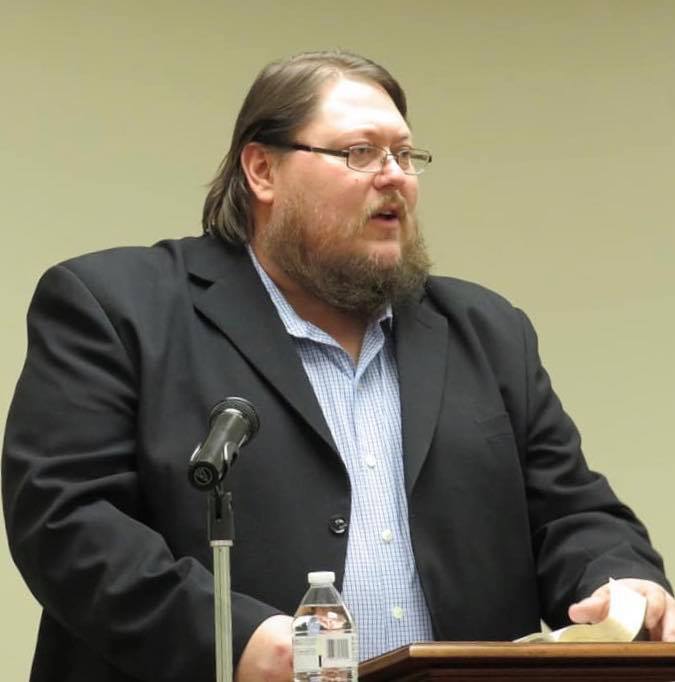
Mikal Smith

Spiritual Kingdom of Christ

Daniel 9; Mark 1:1
Mikal Smith December, 17 2023 Video & Audio
0 Comments
Christ's Kingdom is not of this world. It is a spiritual kingdom.

Sermon Transcript

Auto-generated transcript • May contain errors

100%
Turn with me, if you would, this
morning. We're going to be looking at a few verses, Lord willing,
this morning. Turn, if you would, to Mark chapter
1. Mark chapter 1. This morning I thought we might
look at the issue of the kingdom, Christ's
kingdom. Over the last few weeks we've
looked at a few different things and we've seen that the people
of God, the Israel of God, the true Israel of God is a spiritual
people. It's not a fleshly lineage or
a national people. spiritual people. I think the
Bible is pretty clear about that. I may do some more in-depth preaching
on that as time goes by. But we've seen that the true
Israel is a spiritual people. We've seen that the tabernacle
is a spiritual tabernacle. It's not a physical building.
It's a spiritual building. We've seen that the sanctuary
is not a physical thing. It's a spiritual thing. And so
we've seen that the people of God are a spiritual people that
make up this spiritual building and they have a king and they
are subjects in a kingdom. And this kingdom is not a physical
kingdom, it's a spiritual kingdom. Now, all of this was foreshadowed
and typified in the Old Testament by physical things, but whenever
we get into the New Testament we see that the preaching and
the teaching and the further revelation that the New Testament
brings, and that's another thing that I hope to maybe preach on
sometime soon, is the difference between the New Testament and
the Old Testament in the fact that the New Testament is the
further revelation or the open revelation of the gospel and
the things of Christ and how it does supersede the typified
and foreshadowed things in the Old Testament. And I may hit
on a little bit of that some today just to show what we're
talking about as far as the kingdom of Christ. But one thing we've
got to always understand is that we do take whatever the New Testament
reveals because it is a further revelation. It is a fuller revelation,
an unveiled revelation of those typified and foreshadowed things
in the Old Testament. Therefore, if the New Testament
lays a definition or lays a explanation or lays to end a prophecy that was
in the Old Testament, then we have to submit to that teaching. And we know that the New Testament
is the Scriptures just as much as the Old Testament is the Scriptures. And the New Testament doesn't
negate what was being taught in the Old Testament, but what
we have to understand is in the New Testament we see the fuller
understanding of what that Old Testament type of foreshadow
was pointing to, or how it was going to be fulfilled, and what
that was teaching. Again, like the sacrifices, like
the priesthood, you know, all those types of things. Even the
whole nation of Israel was a typification of the spiritual people of God.
The being delivered out of Egypt and crossing into the promised
land and going through the the Red Sea and the wandering in
the wilderness. All those were typifications
of things that we experience in the spiritual nature of the
spiritual kingdom of Jesus Christ. And so what we come across is
sometimes people will say, well, you're spiritualizing everything.
To most people, I will say, you're right, we are. Because that's
what this is all about, is we are to discern and we are to
preach and teach spiritual things with spiritual understanding.
We're looking at things from the spiritual understanding of
it and we are interpreting these things with the spiritual understanding.
Now, are some things literal? Absolutely. Are some things historical? Yes. Are some things poetic?
Yes. Are some things given to us for
basic facts? Yes. That's the nature of how
the scriptures have been given to us. But whenever we look at
these things, as I've mentioned many times, number one, we're
to always look for Christ in it, because Christ is the subject
matter from Genesis all the way to Revelation. Everything is
to focus on and to reveal the Lord Jesus Christ. And then,
akin to that, is those who are in Christ, or His people, His
true Israel, because Christ is actually the one who is called
Israel, and then we're called the Israel of God because we
are united with Him. And because of our uniting spiritual
uniting to Jesus Christ, we are the Israel of God. So the only
reason that we are that spiritual Israel of God is because we have
been united by God to Christ Jesus, who is the Israel of God,
who is the elect of God. See, that's the other thing.
Jesus Christ is also in scripture called His elect, but we too
are called His elect. Every individual child of grace
that before the foundation of the world was given to Christ,
we are the elect of God. But we are the elect because
we are in the elect one, who is Christ Jesus. So the only
way that you can be the elect of God is to have been united
to Christ whenever God give a people to Christ as their surety. So we are the elect of God because
we are in Christ Jesus. So you see how we look at these
things in a spiritual aspect, and we see everything from the
lens of looking for Christ in that, and then we see what it
has to do with us because of that. So whenever we're looking
through Scripture, and especially in the Old Testament, we're seeing
the picture of Christ's relation of not only himself, but also
his relation to his people. In fact, the whole book in the
Old Testament, Song of Solomon, is about that relationship of
us to our bride, our bridegroom. We as the bride to the bridegroom. But all of Song of Solomon, whenever
you read it, is a beautiful picture of a relationship between a man
and a woman, right? Matter of fact, I mean, a lot
of times whenever you read psalms, it's almost kind of somewhat
embarrassing reading some of the stuff, right? Because you're
reading some intimate talk between a husband to his wife. But again,
that is a picture of Christ and his church. Christ and his elect,
that is. So, whenever we look at The opposition
that says, well, you guys are putting too much emphasis on
the New Testament and you're not teaching the Old Testament.
No, we teach the Old Testament. Matter of fact, I think over
the last several weeks we've looked at many places in the
Old Testament. But you cannot fully understand
and know the Old Testament without that New Testament understanding
and revelation. Now someone might say, well,
what about all those before the New Testament was ever written?
What about that? That's the point. They did have
the scriptures as far as the Old Testament scriptures is concerned.
They had those scriptures, but they did not have the full teaching.
And the Bible is clear about that. They did not have this
in its fullness. And again, like I said, maybe
sometime I'll preach to that end and show where that's all
throughout the New Testament. We see that. However, I'm assuming
we all understand that and know that and have enough scripture
knowledge in our mind to know that what is in the New Testament
is the Old Testament concealed and the New Testament is the
Old Testament revealed, right? The Old Testament is the New
Testament concealed and the New Testament is the Old Testament
revealed. And so we see that a little bit better. But I think
I can kind of show you where that pivot point from preaching
and understanding in that Old Testament with that veil and
with that mystery. The Bible says that the gospel
was preached in the Old Testament, but it was a mystery. It was
preached, but it wasn't preached in its fullness or in its totality. Now did they understand that
there was a Messiah to come? Yes. Did they understand that
that Messiah would bear their sins? Yes. Did they understand
that that Messiah was going to be a Messiah not only to the
Jews but also to the Gentiles? Yes. That was clear in the Old
Testament. So the Gospel was preached to
Abraham, to Isaac, to Jacob. The Gospel was preached to all
those Old Testament saints all throughout the Scriptures. In
the Old Testament the Gospel was preached but the Bible in
a mystery. But there came a point where
that mystery was taken away and God sent men who were called
of God, equipped by God, given a gift by God to preach the things
of the kingdom of God. And this was different than had
been heard These people had not been hearing this preaching or
this kind of teaching. That's why it was such an oddity.
That's why it was such a wild thing. That's why the crowd was
gathering in masses to come and hear John and Jesus and the apostles
preach is because this was completely foreign to how they understood
things and heard things. But yet, whenever they come,
there was no going back and saying, well, we keep doing this, we
keep doing this, we keep doing this. No, it was a now we have
come and we are preaching the fuller revelation of the gospel
of Jesus Christ, okay, and the gospel of the kingdom. Now, I
think if we'll look, and let me just say at the onset of this,
there are a couple of viewpoints of the kingdom that are kind
of understood. One we talked about a few weeks
ago where the Jews They think that the kingdom of God, and
especially as we look into the New Testament, what their understanding
was, is their understanding of the kingdom of God was that Messiah
was gonna come and was gonna put down the Roman government,
gonna put down their enemies, and they were going to ascend
and inherit a kingdom to rule over the Gentiles, right? And so they were looking for
this earthly kingdom that they were gonna be set up in with
Christ as the head and the ruler and them as the subjects underneath
to rule over everybody else. But that's not what happened
and that's not what Jesus came to do and that was not the intent
and they misunderstood what the coming of the kingdom and what
the kingdom of Christ was all about and what Messiah was coming
to do. They completely misunderstood
that. And that's exactly why Paul and the other apostles were
making clear to them that, you know, we believe this and we
understood this. All this kind of stuff. But Jesus
came and taught them rightly the things of the Old Testament.
He did that with his apostles first. The disciples that were
following him around, he taught them those things. He taught
them about the kingdom of God. He taught them about his place
as the types and the foreshadows. And then after his resurrection,
he continued to do that with the guys on the road to Emmaus.
He began to teach them more fully from Genesis and all the way
through Malachi, everything that had to do with him. And so he
opened up their understanding. Well, how come he had to open
up their understanding? Because they did not understand.
They didn't understand that all the Old Testament was pointing
to Him and that He was the fulfillment of all of the things talked about
in the Old Testament. Well, why was that? Because it
was a mystery. Because it had not been preached
like this. And so, therefore, He was giving
them that fuller understanding, that fulfillment understanding.
He was giving them the understanding of These things were all a physical
thing that was pointing to this spiritual work that I've come
to do. And so there was a moving point from law and prophets to
the preaching of the gospel. We no longer are looking at the
law and the prophets, but now what does the gospel say? Because
the gospel is the further revelation or is the full revelation of
the Law and the Prophets. So those who are just wanting
to continue to look back to the Law and the Prophets are going
to miss what the fulfillment and the fullness, if you allow
me that word, the fullness of the Bible is all about because
that's all they're looking at. They're looking at the shrouded
mysterious, veiled gospel, and not what Christ has established. And so, if you would look with
me in Mark chapter one. Well, let me, before I move on,
I keep wanting to move forward. So that was one view of the kingdom,
right? The Jews looked at it as a coming king who was going
to set up his throne, rule over the Gentiles. They were going
to be in the high seats, right? Well, modern christianity today
has that exact same view of the kingdom but instead of it being
the jews necessarily it's going to be the christians that they're
going to be the christians that are going to be set up uh and
and they're going to be on the throne and they're going to be
ruling over the non-christians you know in some millennial kingdom
and and all this kind of stuff they're still looking for some
set up kingdom on the earth where Christ is sitting on a throne
with a rod of iron and they're sitting on higher seats and ruling
over people below them. It's still an earthly kingdom
that they're looking for. So you've got the Jews' view,
you've got the Christians' view that believes that it's going
to be the Christians ruling over, and then somewhere in between
there you have this Zionist view that kind of mishmashes both
of those, that yes, they believe that there's gonna be a coming
kingdom with Jesus on the throne, but yet the Jews are gonna be
the ones put up on that high seat, ruling over everybody else,
but all the Christians are gonna be in the good of all of it. And so they're looking for this
and the re-institution of the tabernacle and the temple and
the temple worship and the re-institution of the sacrifices and all this
kind of stuff. So they're looking for a visible,
tangible, earthly kingdom. But is that the kingdom of Christ? Is that what Jesus preached?
Because see, we've got to take Jesus' word above everyone else's. And subsequently, the apostles'
word, because Jesus directly taught and give them the things. Say, remember Paul, was it to
the to the Galatians or to the Corinthians, I can't remember
now, I think it's the Galatians, where he said, you know, that
which was given to me, I've delivered unto you. And so the apostles,
we know the 12 apostles was directly taught by Jesus, but yet Paul
being one born abnormally out of season or out of due time,
meaning apostle-wise, he was taught by Christ. Remember whenever
he went and, my mind just went blank where he went for those
three and a half years, but he went and the Lord taught him,
and I believe he taught him the same things that he taught these
other men. And while he was there being taught, that was the foundation
being laid for the Gentiles to be taught these things as well.
So the Jewish church, the Gentile church, all was of one faith. Therefore, the Bible is true
when it says that the faith was once delivered to the saints.
How was that delivered? By Jesus giving it to the apostles,
and the apostles being that foundation within that New Testament church,
they began to teach and preach the kingdom of Jesus Christ and
His precepts, His laws, His governance, all the things, and His doctrine. That was what was being taught.
And that was the foundation of the New Testament church. And
Christ is the one who adds to the church and builds upon that.
He builds those people that are being brought into the church.
He builds upon those who know these things and are perpetuating
these things. He is the one who is controlling
all that. He is the one who is keeping all that, sustaining
all that. And he has, from the time he
walked these shores of Galilee that we see in the New Testament,
until today, he has continually sustained this New Testament
church wherever it's at in history. It's never ceased to be out of
existence. It didn't go underground and come out some Catholic church
or made its way through some Catholic church or some other
church. It's always been His church and there's always been
His people with those doctrines and with that faith once delivered,
continually, perpetually teaching and preaching and standing and
defending and enjoying those things. And that's how we believe
in the perpetuity of the church, is like that. Okay? Not some
chain link thing that this church begat this church begat this
church and that, you know. It's based upon doctrine. It's
based upon the teachings of Jesus Christ and what he has laid as
a foundation and in that was given to those people. So therefore,
what Jesus taught and what the apostles affirmed in their teaching
to those that they began to be spread out to teach at Jerusalem
first, then into Samaria, then to the other parts of the world,
What they began to teach and preach was everything that Jesus
laid down. Therefore, if Jesus laid this
down to them, and we may not have Jesus saying it in our,
if you want to say, red letters, but yet if the apostle in the
epistles or in some of the other letters that they wrote make
note of this, because all scripture is given by inspiration of God,
that these men are not writing by private interpretation but
are moved by the Holy Spirit of God to write these things. If they are written by the inspiration
of the Spirit of God, then these things are true. Therefore, if
they give a definition or they give an understanding of something,
therefore, that was what Jesus taught them. It's in conjunction
with all the rest of Scripture. And so we have to take that,
submit ourselves to that, and we have to begin to look at it
in that perspective. We have to look at it from that
vantage point. And if that contradicts our man-made
theologies, our man-made traditions, and our man-made desires, then
submit to the Lord Jesus. And of course, we know that we
can only do that if the Lord gives us the ability to do that.
But look with me, if you would, at Mark chapter 1. And I want to start reading down,
and now this verse here eluded me for a long time, okay? This
passage, I hadn't read it, but just skimmed right over it. As
I do, to my shame, a lot of times with a lot of the introductory
parts of a book in the Bible, I'll kind of skip through real
quickly those opening passages because it's just hi, how are
you's and things like that. This seemed to elude me for such
a long time, but look at verse 14. It says, now after that John
was put in prison, now this is speaking about John the Baptist,
right? Now, let me just backtrack for just a second, if you don't
mind. John the Baptist, the Bible says, quote, was a man sent by
God. So whatever everybody wants to
debate about John the Baptist, was he the last Old Testament
prophet, was he the first New Testament preacher, was he some
intermediate between the two testaments or between the two
covenants, between the two offices or whatever, prophet
or preacher or whatever you want to call them, whatever anybody
wants to say, The Bible is clear that John was a man that was
sent by God. We know that John was conceived
almost as miraculously as Christ was conceived. Not to the same
extent, but don't put words in my mouth or get my meaning wrong,
but John was a promised birth just like Jesus was. An angel
appeared. and told John's parents, you're
going to have a son, just like Jesus was announced to his parents. But John was going to be for
a special purpose, a special person. Of course, we know now
with the New Testament revelation that John was Elijah that was
to come. Now, there again, there's one
of those types and foreshadows that is spiritualized. We look
at it from the spiritual. John is Elijah. Well, is John actually physically
Elijah, resurrected? No, he wasn't. But Jesus was
the one who claimed that John is Elijah. That was to come. But what does the scripture say?
John was a man who was sent by God and he was sent to prepare
a way for the Messiah. To prepare a way for Christ. He was to prepare a people for
Christ. And so John, that's why in the
predestinated order of God, that's why John was conceived first,
born ahead of time, and whose ministry began before Jesus Christ
because he was to prepare the way for the Lord. And so John
had a specific purpose. And John came with that purpose.
I think I can from scripture prove that the gospel that John
preached is the exact same gospel that Jesus preached and is the
exact same gospel that the apostles preached. They're no different. Some say that John's gospel that
he preached was a different gospel than what Paul and what Peter
all preached. Well, I will say that what John
preached was no different than Jesus, was no different than
Peter, Paul, James, John, any of the rest of the apostles.
But here we see that John is a man sent by God, so we know
from Scripture that John is being sent by God with a specific task
to do something that for 400 years has not been done. You
remember at the close of Malachi, the last of the prophets, there
was like 400 years And there was no work from God, there was
no prophets, there was no anybody. Then all of a sudden one came
out of nowhere and began preaching and teaching. And he began to
preach and teach something not that had ever been heard before.
But yet we know from scripture that this man was sent by God
with a message from God. That we can't deny. So this is
who we're talking about. Now after verse 14, now after
that John was put in prison, Jesus came unto Galilee preaching
the kingdom of God. So here, and I was gonna read
this verse again later, but here we see Jesus preached the kingdom
of God. I've heard some people say that
nowhere in the New Testament do you find Jesus or Paul or
any of the apostles preaching a spiritual kingdom. They never delineated between
the physical kingdom that was to be set up and a spiritual
kingdom. So that's false. That spiritual kingdom is not
anywhere found. We're reading into that. Well,
I hope to show here in just a minute that this is a spiritual kingdom.
Therefore, if Jesus and everybody else that preached the kingdom
was preaching the kingdom of God, what kind of kingdom were
they preaching? Because Jesus is preaching it
here, and as we'll see here in a little bit, Lord willing, there
were other men who were preaching it. Not just Jesus. But, look
at verse 15, it says, Jesus came into Galilee preaching the gospel
of the kingdom of God and saying, the time is fulfilled and the
kingdom of God is at hand. Not something in the future,
but it is at hand. Meaning it's here. The gospel
of the kingdom of God was being preached and Jesus was preaching
that the kingdom is here. It's at hand. Whenever we say
something is at hand it means that It's happening. It's happening
now. Here it is. Remember, the Jews
were thinking that Jesus was coming to set up a kingdom, to
set up this rule and this authority. That's what Messiah was to do. And Jesus is affirming as Messiah,
I am here to set up my kingdom and I'm going to preach the things
of the kingdom. And that's what he did. And he
said, that this kingdom though, and we'll see here in a minute,
isn't what they thought it was. So when Jesus came and said the
kingdom of God is at hand, was he mistaken? Was he speaking
in future terms of a thousand year reign later down the line? Or was he talking about something
that was happening there at that time and beginning with him And
if this kingdom was at hand, then what kind of kingdom was
it? It obviously wasn't an overthrow of the Roman Empire and the setting
up of a throne and a tabernacle and a ruling of the rod of iron
and the Jews being elevated to a level in status or even the
Christians being elevated to a level or status to rule over
everybody that wasn't. The preaching of the kingdom
that was at hand was a preaching and a teaching of an accomplishment
that Jesus was about to do, was about to take place, and a people
that was to be joined into that work, which was not only of Jew,
but of Gentile. But bear with me, I hope to open
this up a little bit further here in just a minute. It says,
the time is fulfilled. What did he mean by that? Jesus
said that with the coming of John, He said the time is fulfilled. Now if you would, look back with
me, keep your finger there and mark, but look back with me if
you would at Daniel. Daniel chapter 9. I understand that there's several
different interpretations of what this means and how everybody
figures it out and all this kind of stuff. In the Lord willing,
maybe one of these days, I preached on this before, Daniel 70 weeks,
but it's been a long, long time ago. And I don't want to get
into it this morning, but I will just say, I think that Daniel
70 weeks, that it was from, the time that
the command was given to rebuild, restore Israel after their Babylonian
captivity and that it was fulfilled in the time of Jesus Christ.
That is those 69 weeks and then the 70th week being what we are
in now. But it says, 70 weeks are determined
upon thy people and upon thy holy city Now, here's the reason
why I think this, part of the reason why. To finish the transgression,
there's one. To make an end of sins, that's
two. To make reconciliation for iniquity, that's three. And to
bring in everlasting righteousness, that's four. And to seal up vision
and prophecy, that's five. And to anoint the most holy,
That's six. You can see that every one of
those things took place in the ministry and life of Jesus Christ
during that time. Now, Jesus said that the time
had been fulfilled. What had been fulfilled? these
69 weeks leading up to this point, where there would be the finishing of the transgressions.
That finish the transgressions, it means to restrain. The finish
of the transgressions, it means to restrain, to withhold, to
hold back, to keep under the transgression. Basically, it's
saying that the transgression That men, and I'm speaking of
the elect of God, the transgression that these men have been, that
have been their condemnation, okay, is now being restrained. It's no longer affecting them.
We know that by the work of Jesus Christ, that there is therefore
now no condemnation to those who are in Christ Jesus. Is there
sin and transgression in the life of the child of the elect?
Absolutely. But it's not counted against
them. It's not seen. It's not taken into account.
The Bible says that blessed is the man unto whom sin is not
imputed. The Bible says that he has not
beheld iniquity in Jacob, nor hath he seen perverseness in
Israel. for the shadow of a king is among
them." So the transgression of God's people is no longer taken
into account anymore because Christ has come to be their substitute. So there is a finish of the transgression. Now, you can also look at that,
and the word finish there doesn't mean to fill up or to bring to
an end as I originally thought it was. I used to say that. Matter
of fact, one time whenever I preached on the Daniels 90 weeks, I believe
that's what I actually said, that that was talking about those
religious leaders filling up the iniquity of their fathers.
If you remember in the New Testament, the Bible speaks and Jesus speaks
of that they still are to fill up the iniquity of their fathers,
how their fathers had killed the prophets and continued to
persecute the prophets, and Jesus was basically saying, you're
gonna do the same thing with me, go ahead and fill up the iniquity
of your fathers. And that's what I thought that
was meaning, but when I looked into that word finish, the word
finish there doesn't mean to bring to fulfillment or to completion,
it means to restrain, to keep hold, or to bring back, to keep
back, or to restrain. And so, our transgression before
God has been restrained. It is no longer going before
God and accusing us before Him. But it says this, to make an
end of sins. Now, the Lord Jesus definitely
made an end of our sins. Whenever He nailed to that cross
the handwriting of ordinances that was against us, that brought
an end to our sinning. Again, are we still in Adamic
man's sin? We absolutely do. But as far
as in God's economy, our sin is no more. Every sin that we
have done, every sin that we might be doing, and every sin
that we will do, we're all part of that, that was sealed in a
bag, that was nailed to the cross, that was taken by God's blood,
was cleansed and purged. Therefore, there it is now. No
condemnation. Why? Because there is no sin.
He has removed the guilt of sin from us. He has removed the dominion
of sin from us. Sin no longer has control over
us, no longer has power over us. And so he has made an end
of sins for his people to make reconciliation for iniquity.
We've been reconciled to God. Our iniquity had separated us
from God, correct? Our iniquity had separated us
from God. In our vantage point, iniquity
had separated us from God. The iniquity of Adam and the
inherent sin that we have from him is all iniquity. We are at enmity against God,
but there is reconciliation through the cross of Jesus Christ. Whenever
we have been born of God and we have been given the Spirit
of God, He brings peace between us and God. That brings us into
a peaceful relationship with God. We no longer are kicking
against this holy God that we see in Scripture that we don't
want, don't like. We no longer are in enmity with
the God who has predestinated all things and who has chosen
the very destinies of all men and has only died for the ones
that He has been given to. See, that God we love. That God they out there don't
love. They don't like that, why? Because
they're still enmity with that God. But whenever the child of
grace has been brought to spiritual life and brought to spiritual
understanding, there is now peace with God, not only legally, but
experientially. And I would say that experientially
part, I can't say it's more important because you have to have the
legality of it before you can have the experiential part of
it. But the experiential part of it is what we actually know.
Yes, is there something out there in that legal aspect in the court
of heaven that Christ made peace with God where we who were sinners
and had iniquity and continue in transgressions and everything
can be made at peace with the justice and the righteousness
and the holiness of God? Yes, that's by the cross of Jesus
Christ. But brethren, in the experiential
aspect of that, We who are enmity of the God that we don't like,
that we hate, because He's the God that ain't to our liking,
that ain't to our way, and we brought this God down and molded
and made Him into a fashion that we like. We're enmity against
the God of the Bible. But through Jesus Christ, we
are made peace with who that God is. See, I once kicked against
all these things. A God that predestines everything,
A God who controls everything. A God who chooses who will and
who won't. I didn't like that God. I hated
that God. I probably in my time said that God is not God and
I will never serve that kind of God. But here I am. Now, that right there, that God
is the God I want to hear about. I want to know why because that's
the God I see in scripture. That's the God of this book.
And therefore, for me, It's a peaceful thing to hear about that thing,
but it's not for the reprobate. He says, and to bring in everlasting
righteousness. With the work of Jesus Christ,
His righteousness is imputed to all His elect. And it's an
everlasting righteousness. We can't ever lose His righteousness.
We could never gain it. We can't ever lose it. It was
given to us freely. That was done when Christ came.
That was the basis for all righteousness. But look at the next one. To
seal up the vision and prophecy. One of the things that Christ
was accomplishing whenever He came in the fulfillment of the
time is to seal up or to close up, to finish off and to hide
away what? vision and prophecy. All prophecy
is fulfilled in Christ Jesus. Now I'm talking about all the
Old Testament prophecy. Are there some things that Jesus
talked about that was going to happen later? Yes. The destruction of Jerusalem.
Now that was in the Old Testament as well. But Jesus talked about
a destruction of Jerusalem. But brethren, everything in the
Old Testament, the fulfillment of prophecy, and vision, the
Bible says here, with the coming of Jesus Christ, has been sealed
up. And I believe that that is what
Jesus is talking about in Mark, where he says that the fulfillment
of time has come. The time is fulfilled. Everything that was to happen
is being fulfilled with the coming of Jesus Christ. That's why we
see that everything that was being taught of in the Old Testament
was all about Christ. Everything that was talked about
of his kingdom was about Christ and his kingdom. And it wasn't
a physical thing, it was a spiritual thing. And he says it's now,
the time is fulfilled. What is being fulfilled? The
sealing up of vision, the sealing up of prophecy, and the revealing
of the true kingdom of Christ. The time has come that we are
no longer veiled, we are no longer under the mystery, we are no
longer under the hidden part of the Gospel, but now the time
has fulfilled that it should be made manifest, that it should
be brought out into the open. Why? Because the fulfillment
of all of it is now here and is going to be on display for
everyone to see. Christ on the cross is for everyone
to know and to see this is the fulfillment of all prophecy. This is the fulfillment. This
is the king coming into the kingdom and setting up his kingship. This is him showing that he,
matter of fact, the Bible says that he's been given power over
heaven and earth. That has been given unto him
power over all flesh. He is the King of kings. He is
the Lord of lords. Christ coming into His kingdom.
But what kind of kingdom was it? Is it a physical kingdom? Is it a spiritual kingdom? Look
if you would at Galatians chapter 4. Look at verse 1. It says, Now I say that the heir,
as long as he is a child, differeth nothing from a servant, though
he be lord of all, but is under tutors and governors until the
time appointed of the father. Even so, we, when we were children,
were in bondage under the elements of the world. But when the fullness
of time was come, God sent forth his Son, made of a woman, made
under the law, to redeem them that were under the law, that
we might receive the adoption of sons. Now here we see again
the fullness of time. When the fullness of time was
coming, that means the time that Christ came, there was a fulfillment
or a fullness that had taken place. That in the fullness of
time, so whatever the time was for something to happen, this
was the fulfillment of it. This was the fullness of it.
The fullness had come. It had only been in part, but
now it has come in full. that had been decreed, declared
of God from this point to this point, had not yet happened,
but now with Christ, the fullness of that time had taken place. And I believe that's what was
talked about in Daniel chapter 9. That the fullness of time
of all the transgression, all the iniquity, all the things
that were to be done, All that stuff, we see all that being
taken care of in Christ Jesus. The being made at peace with
God. The bringing in of righteousness. The sealing up of all the vision
and all the prophecy. I've heard it said that just
within the birth of Jesus Christ there was like, I don't know,
hundreds of prophecies in the Old Testament that was fulfilled
just in Christ's birth. I haven't counted them, I don't
know. That's what I hear, that's what I've been told. If I'm wrong
about that, forgive me. But still the fact remains is
that Jesus Christ has fulfilled every prophecy that was to be
fulfilled about the Messiah. Now, with that being said, we
see that John, or Jesus, was preaching the gospel and Jesus
said, the time is fulfilled and the kingdom of God is at hand.
Now look what he says here. He says, repent ye and believe
the gospel. Now, most people, whenever they
look at that, think that Jesus said, repent of your sins and
believe the gospel, but that's not what Jesus said. What's Jesus
talking about here? Repent means to have a change
of mind, right? The word repent means to change
your mind. or to turn in the other direction,
right? And everybody always says that
repent is about sin. You need to repent of your sin. Jesus did not say repent of your
sin and believe the gospel. He said repent and believe the
gospel. What they were believing until
the fullness had come, until the kingdom came, until the gospel
came, what they were believing was a misunderstanding of the
Kingdom of God, was a misunderstanding of the work of Messiah, was a
misunderstanding about who the people of God were, a misunderstanding
about the whole work of God in redemption. It was a complete
misunderstanding. Their doctrine was misunderstood,
was a misunderstanding. Everything was a misunderstanding
to them. And Jesus here was saying, now
that the time is being fulfilled, now that the kingdom of God is
here, turn from your wrong way of thinking about what this is
all about and believe the gospel. What does the gospel say? Well,
the gospel doesn't say anything about something that you work
towards. It doesn't say anything about a law keeping that you
must keep. It doesn't say anything about
you being descendants of Abraham in the physical fleshly realm
to be a child of grace. The gospel is all about the work
of Jesus Christ on behalf of other people. And everyone for
whom he did that work for are the adopted sons of God. Everyone
for whom he did that work for are the children of God. Everyone
that he did that work for are the ones who will be the recipients,
the inheritors of the kingdom of God and therefore they'll
be heirs of the promise of everything of the bounty of the kingdom
of God. But again, is this a physical
kingdom that Jesus is talking about or is this a spiritual
kingdom that Jesus is talking about? I think another point that can
be made about this being a different kingdom, a different preaching,
a different thing that had been taught leading up to this and
it being something new. Something that just started with
John and with Jesus and with the apostles can be found in
Luke. We'll turn to Luke chapter 16. Luke chapter 16. Jesus had just talked to them
about being stewards of the things
that have been given, trusting in true riches versus false riches,
about not serving mammon. And verse 14 says, the Pharisees
also, who were covetous, heard all these things and they derided
Jesus. So whenever Jesus talked about
what true riches are, being spiritual riches, being the riches of Christ,
being the riches of the kingdom of God, versus the riches of
the things that you have attained here in this world and in this
life, physical things, material things, earthly things, Whenever
Jesus pointed this out to these religious leaders, the scriptures
say that they derided Him. That means that they sneered
at Him. They scoffed at Him. Basically, that word means they
kind of turned their nose up at Jesus about what He said about
them. And look how Jesus responded
to them whenever they did this. And He said unto them, Ye are
they which justify yourselves before men. meaning that they
are justifying themselves as being the accepted or the elected
or the righteous ones because of their outward appearances.
They were justifying themselves before others by their works. And Jesus said, yea, they which
justify yourselves before men, but God knoweth your hearts. for that which is highly esteemed
among men is abomination in the sight of God." What you think
is your righteousness, your keeping of righteousness, your keeping
the law, what you think is to be highly esteemed, God thinks
is abomination. Now brethren, that's what God
thinks about you when you're trying to keep the law for righteousness
and for acceptance before Him. It's an abomination to Him. It's
sin. It's actually what it is. To
think that we can keep the law for acceptance, for perseverance,
for continuance in the faith or whatever. To think that, that's
a justifying of ourselves before men. But God knows our heart. What does God know about our
heart? He knows that our heart is deceitfully wicked above all
things. The Bible says that God knows about our heart is that
our heart is wicked and evil. Above all things, it says. The
Bible says that we are evil continually in this fleshly atom. The Bible
says that our hearts are not pure. Our hearts are not right
in this flesh. And so for us to think that we
can justify ourselves before God by outward works, by outward
attainment, by our lineage, by our descendants, whatever the
case, if we are going to avail ourselves or present ourselves
to God in something that is physical, something that is tangible, something
that is a work-related thing, That is an abomination to God,
he says. Now look what he says, though,
in verse 16. And the reason I say that is for those who continue
to think that there is this law service that is to be kept, that
God is requiring us to continue in the Torah, to continue in
the law service, to continue in the sacrifices. to continue
in all the feasts and the festivals and all the things that was given
in the Old Testament that were types and foreshadows that was
to be in the fulfillment of time sealed up with the work of Jesus
Christ. With the coming of Jesus Christ.
He was there to put an end to those things. To seal them up. To finish them up. To close them
up. to bring them to their specified
end. They was there for a purpose
for a specific time and now that time has come for them to be
done away with. It's now time for them to be
closed up. Why? Because the fulfillment
of them has come. Now look what he says there in
verse 16. He says, the Law and the Prophets
were until John. Since that time, the Kingdom
of God is preached. Every man presses into it. Now,
brethren, to me that seems to be very clear unless I just don't
understand English. It says that the Law and the
Prophets and everything contained in them were until John the Baptist. Not including John the Baptist,
but were until John the Baptist. But with the coming of John the
Baptist, it says here, since that time, the kingdom of God
is preached. Did John the Baptist preach? But this shows us that there
was a shift in the preaching from the law and the prophets
and that a new dispensation, if you'll allow me that word,
and I don't mean it in its ugly way of the dispensational way,
but a new testament, a new preaching. was being done, not of a physical,
typical, symbolical language, but of a spiritual language.
It was now being preached. Jesus Christ, what did John preach? He said there is the Lamb of
God who? Takes away the sins of the world
when Jesus come walking down that road and John Simon made
that Declaration was it a little bad lamb coming down the road? No, what was John doing? He was
taking the vision and the symbol and the prophecy from the Old
Testament and he was applying it to the spiritual of this New
Testament language that was now beginning to be preached that
that lamb of the Old Testament slaughter is this man, Christ
Jesus. He is the sacrificial lamb. He
is the one that God is going to sacrifice to take away the
sin, not to cover the sin, but to take away the sin. So here we see the symbology.
Now the New Testament is now giving definition to who that
lamb was. If all we had was the Old Testament,
that lamb was just a lamb. was just to sacrifice an animal
that had to be slaughtered so that my sin would be covered
because I sinned and God said if you sin, you've got to do
this for it to be covered. So see, the New Testament is
now being preached in a different way. We're no longer preaching
the types and the foreshadows necessarily of the Old Testament. But we're now giving the Old
Testament its feet by giving the fuller revelation and understanding
and it began with John the Baptist. The Law and the Prophets were
until John. Since that time the Kingdom of
God is preached. Look if you would at Hebrews
chapter 1. Hebrews 1, verse 1, said, God,
who at sundry times and in divers manners, meaning
different ways, spake in times past unto the fathers by the
prophets. Okay? So were the prophets told
things by God? Yes. God spoke to those prophets. and give those prophets the things
that they were to say. That's why I say the Old Testament
is just as inspired as the New Testament. The Old Testament
was God breathing out His words, and those prophets were relaying
those very words, wrote those very words down, that God, that's
why all scripture, Old Testament and New Testament, is given by
the inspiration of God. God, who at sundry times and
in divers manners spake, in times past under the fathers by the
prophets." How did he do that? Through the prophets. He spoke
to them through the prophets. The prophets declared unto them
the things to be known, to be told, right? But now something
that supersedes the prophets has come. Look at verse 2. God
who at sundry times in a divers manner spake in times past unto
the fathers by the prophets hath in these last days spoken unto
us by his Son." So now the Son is the one who
has come to speak on behalf of God. So whatever Jesus came and
preached and taught to those apostles the us, who have in
these last days spoken unto us, whatever Jesus spoke to them
were the words of God. Therefore, whatever those apostles,
whatever those men wrote down were written down because it
was God who spoke to them in Christ Jesus. Christ Jesus told
them what to write. Christ Jesus told them His doctrine,
told them what the kingdom was about. He explained the kingdom
to them. He explained the nature of His
kingdom to them. He explained who the people of
the kingdom were. He explained everything. Therefore,
Paul wrote that the kingdom of God is not a physical Israel,
it's a spiritual Israel. Not all that are of Israel are
Israel. That it is not a Jew who is one
outwardly, but one who is inwardly. And that a Jew is not one who
has been circumcised in the flesh, but one who has been circumcised
in the heart. The one who has been born from above, born again,
born from heaven. See, now we have a different
understanding that this kingdom and this people and these tabernacles
and all these things that was spoken of in the Old Testament
has been given spiritual feet, not physical, natural feet. They've
been given spiritual feet. We now are walking in a spiritual
understanding of these things, and it is a kingdom of spiritual
rule. Christ is ruling in us spiritually. Now, does He rule over all the
world in a physical way? Absolutely He does. Now, anything
happens that doesn't happen. You guys showing up here today,
Daniel showing up here today, my kids being here today, me
being here today, those leaves out there, flapping on the trees,
you know, that squirrel out in the yard trying to gather up,
none of that stuff is happening without the overall control of
God controlling everything. Because He rules over everything.
But brethren, whenever we're talking about the kingdom, we're
talking about a physical kingdom, and those subjects in that kingdom,
they submit. In the physical, we don't always
submit, right? I sin day by day. I sin. I don't
submit to the law of God. That's what Paul was saying.
I try to do, but I can't. Every time I try, evil's with
me. But what did Paul say? He said,
with this fleshly man, I am going to serve the law of sin. I cannot
keep the law. I cannot keep the ordinances.
I cannot keep the things that's required of me. But he said,
but the inward man, the spiritual man, He keeps the Law of God
perfectly, without fail. That inward man keeps the Law
of God. Why? Because it's a spiritual
kingdom and I am a spiritual man and that spiritual man that
is in me is subject to the King of that spiritual kingdom. and
keeps the law completely. Why? Because Christ does rule
with a rod of iron in His spiritual kingdom over all of His people
and they are subject to Him and they do His bidding. Now what
does that mean? That means that in the spiritual
aspect of these things, we cannot sin. The Bible says that those
who are born of God cannot sin. that the Spirit of God that has
been given to us is created in righteousness and holiness. See, that's why we have to separate
the physical from the spiritual, brethren. That's why I say that
all the time. There is the physical, there is the flesh, and there
is the spiritual. We are not of this world. This
flesh is of the world, but we are not of this world. Well,
how do you say that, preacher? I've only known this world. We
are not of this world. We were from somewhere else. We were from heaven. We were
from wherever it was that our life came from God, that was
born of God, that inward man that we are. And I'm talking
about the elect of God. I'm not talking about everybody
in the world. I'm talking about the elect of God. The Bible says
they are pilgrims. They are not of this world. Why? Because our spiritual person
who inhabits this flesh of Adam is not of this world. It does
come from God. Our life is hid with God. Christ
is life. He is your life, the scripture
says. The Bible says that all the fullness
of God dwells in Christ bodily and we are complete in Him. So,
I'm not complete in my flesh, but I'm complete in my spirit
man. I'm complete in Him. Why? Because my life is derived
from His. The seed always will reproduce
after its own kind. Well, if I'm a seed of Christ
in the spiritual realm, then that means that I am like the
one who came before me. An apple tree doesn't produce
oranges. It produces after its own kind.
The spirit man, Christ, produces after his own kind. We are his
generation. We declare, who shall declare
his generation? It's his spiritual people, not
his physical people. Listen, his physical people don't
declare him right now. Those physical Jews don't declare
Christ. But the spiritual Jews do. "...who
at the end of these last days spoken unto us by His Son." So,
Christ is now the spokesperson. Of course, He's always been the
spokesperson of God. Why? Because He is the Word of
God. If there's anything to be said
by God, it's through Christ. Because Christ is the Word of
God. Christ is the one who has made
known the things of the Kingdom of God. And so this shift from
types and foreshadows and the things that were told by the
Law and the Prophets in the fulfillment of time have now come to an end
and now instead of being told what was told by the Prophets
and the Law are now being told by the Son. and whoever the Son
gives utterance to. Whoever the Son gives these to,
and they continue on in these things. Look at John 18. So what does
Jesus say about this kingdom? If God has now spoken to us by
His Son, if there has been a fulfillment
of time, and now these things have been sealed up and being
fulfilled at this point, that Jesus is there, and He is now
the Word that everyone is to listen to, what did Jesus say
about this kingdom? Well, in John chapter 18, after
Jesus had been tried by the religious leaders and He was sent to Pilate, He said this, look if you would
down to verse 33. It said, Then Pilate entered
into the judgment hall again and called Jesus and said unto
him, Art thou the king of the Jews? Now that was the accusation
that the religious leaders hated. He's acting like he's the king
of the Jews. Obviously, that was something
that was being said to everybody. That was the word of mouth around
because all of a sudden, Pilate now, he doesn't get down and
get his hands dirty among all the common people and the Jews
and enter into the affairs of the religious leaders and the
Pharisees and Sadducees and things like that. He didn't get his
hands down in there. If you remember, there was kind
of this bouncing Jesus back and forth between Pilate and Herod
and all these other leaders. That's not my place. Go judge
your people among your own people. And it finally got back to Pilate
again. And what did he say? He said,
art thou the king of the Jews? So obviously this is the word
that's been going around is you're the king of the Jews. What did
Jesus say here? Jesus answered him, saith thou
this thing of thyself or did others tell of thee? He's saying,
did you hear this because you heard it from everyone else,
or is this what you really think? Pilate answered, Am I a Jew? Thine own nation and the chief
priest have delivered thee unto me. What hast thou done? And Jesus answered, My kingdom
is not of this world. God, who at sundry times and
in divers manners spoken unto us by the prophets, to the fathers
by the prophets, hath now in these last days spoken unto us
by His Son. The Son now is speaking on behalf
of all of God, and He declares here that the kingdom of God,
the kingdom of heaven, The Kingdom of Christ is not of this world."
I can't get any clearer than that.
His Kingdom is not of this world. What does that mean? Does that
mean that his kingdom isn't in this world? No. His kingdom is
surely in this world, but it's not of this world. It means it
didn't begin in this world. It didn't derive from the things
of this world. While this kingdom can be in
this world, it is not of this world. Meaning it is not set
up from anything of this world. It is not governed by anything
of this world. It is not of this world. And
if it is not of this world, then what does that mean? What lies beyond this world? That would be heaven. We would call it the spirit world,
right? Where the spirits of just men
go before God when they die. where God, who is a spirit, lives. Of course,
Jesus is there in body, I believe. Who is God manifested in the
flesh. But that's for another day. Jesus
said, my kingdom is not of this world. Look if you would at Luke
chapter 16. I'm sorry, Luke chapter 17. Luke
chapter 17. Luke verse 20. This is right
after the cleansing of the lepers. Now wait a minute. If Jesus'
kingdom is a physical kingdom, with a physical throne, physical temple, tabernacle,
with physical subjects, then I can observe that. I can see
that. I don't even know when it's coming. But Jesus said here, the kingdom
of God cometh not with observation. Now that word with observation,
it means with outward show. It's not tangible. Something
that you can see and grab a hold of. It's not something that you
can relegate here or there. Not something you can take a
picture with. It's not something you can draw on
paper. He goes on to say, neither shall
they say, lo here or lo there. What does he mean by there? Neither
shall they say, lo, here's the kingdom of God over here in Jerusalem
on the Mount of Olives at the tabernacle or the temple. Or
lo there, wherever else you want to put it. At the Vatican. Or the United States. Or Mecca. Neither shall they say, Lo here
or lo there." Who? Neither shall who say that? Neither
shall the subjects of the kingdom say, Lo it's over here or lo
it's over there. What does he say? Behold, the
kingdom of God is within you. Well, folks, if it's within us,
it's definitely not a physical kingdom. If the kingdom of God is within
us, it is not a physical kingdom. that is going to take place on
a physical mount, with a physical tabernacle, with a physical throne,
and a physical rod of iron, with a physical Jesus sitting on it.
That is not the Kingdom of God. And He said unto His disciples,
The days will come when ye shall desire to see one of the days
of the Son of Man, and ye shall see it not. What is He talking
about? He is talking about this Kingdom. Remember, they just
asked him, just will you tell us when the kingdom of God is
going to come? Because that's what we're expecting. If you're
the Messiah, you're supposed to be bringing in this kingdom
to set us up in power to rule over all these gentiles. When's
it going to happen? You've been here now for a little
while. And we keep thinking you are, but maybe you're not. I
don't know. We're kind of confused about who you are. Not really. We know that you're a man from
God because you're doing all these miracles. Would you just tell us, and Jesus
said, the kingdom of God doesn't come by observation. You can't
say, lo, it's here or lo, it's there. Why? Because the kingdom
of God is within you. Now, if it's within you, that's
not a physical kingdom. What is within you? It's a spiritual
kingdom. The kingdom of God is a spiritual
kingdom. And he says, listen, the day
is going to come when ye shall desire to see one of the days
of the Son of Man, and ye shall not see it." What is that saying?
One of these days you're going to desire to see the Son of Man
sitting on a physical throne with a physical rod of iron and
a physical spot to rule and reign the way you have thought is going
to happen and you're not going to see it. Verse 23, And they shall say
to you, See here, or see there, go not after them. These are
people that's going to try to get you to say, hey, there's
the king. Look, Christ is here and he's setting up his kingdom.
Now a lot of people are thinking these are the false gods and
the false Christ and all these things, these anti-Christ that's
going to set up his throne and act to be the king. No, Jesus
is telling these people right now, listen, people are going
to tell you that the physical kingdom of God is over here.
You got to go over here to check it out. They're telling us right
now the physical Kingdom of God is going to take place over in
Israel, in Jerusalem on the Mount of Olives. Or on the Temple Mount. What does Jesus say? Go not after
them, nor follow them. Romans chapter 14 meet and drink, but righteousness
and peace and joy in the Holy Ghost. For he that in these things
serveth Christ is acceptable to God and approved of men."
How do we serve God and how in the kingdom is He being served?
Righteousness, peace, and joy in the Holy Ghost. Them are spiritual
things, not physical things. Those are spiritual things. It says the Kingdom of God is
not in meat and drink. It's not in your outward ordinances. It's not in your outward activities.
It's not in your law keeping. That's what meat and drink was
talking about. Don't eat, don't drink. Don't
eat these things and do these things. Or eat these things and
drink these things at this time and this time, at this point,
under this festival to represent this or that or the other. But
God is saying here to us through Paul, the kingdom of God is not
in meat and drink. You don't serve the king in his
kingdom by adhering to law ordinances. You serve him through a spiritual
work of righteousness which is given to you. Through peace which
has been brought to you through the cross of Jesus Christ and
joy that the Holy Ghost brings into your heart over the things
that have been given to you. For he that is in these things,
serveth Christ, is acceptable to God and approved of Him."
Not will be accepted of God, but is accepted. Meaning that
those who serve Christ in this way are the ones who have been
accepted in the Beloved. The ones who are the elect of
God, united to Christ Jesus. These are the ones who are His
people, His true Israel. They're the ones who serve Christ
in this way, not in the outward show of ordinances, but in the
inward man of the heart. That's who serves Him. Now, I know it's been long, but
let's look at a few other things. Did John preach this? Is this
what John preached? Law and Prophets were until John.
Did John preach this? Well, in Matthew chapter 3, verse
1, I'm going to read these fairly quick, so if you can't turn fast,
write them down or something. In John chapter 3, verse 1, it
says, In those days came John the Baptist, preaching in the
wilderness of Judea, and saying, Repent ye, for the kingdom of
heaven is at hand. preach the kingdom of heaven. And we just learned that the
kingdom of heaven does not come with observation. It does not
come with outward work. It does not come in a physical
way. It's a spiritual thing. John came and preached and said,
repent ye, not repent of your sins, but repent of your wrong
thinking. The kingdom of heaven is at hand,
not to come. It's at hand. It's here. Jesus
said it was here and it was in you, right? Jesus, we already
read in John chapter 16, the Jesus priesthood, but we also
see in Luke chapter 8. We see in Luke chapter 8, verse
1. And it came to pass afterward
that he, speaking of Jesus, went throughout every city and village
preaching and showing the glad tidings of the kingdom of God,
and the twelve were with him." So Jesus went about preaching
the kingdom of God, which we learned is the spiritual kingdom.
He went about in every city and village preaching and showing
the good news. That word glad tidings, that's
also the word gospel, right? preaching the gospel of the kingdom
of God. And who was with them? The twelve.
The twelve apostles. The ones who he called out and
his apostles, he'd give that doctrine and train them and preach
to them and rewire their thinking about what the kingdom was all
about. The truth of what the kingdom
was about. And He took them with Him. And everywhere He went,
He preached this to everyone He preached to. And He preached
them specifically to these twelve so that whenever He left, those
twelve who would be the foundation of the New Testament church would
then begin to preach the Kingdom of God the way Jesus intended
it to be preached. That's why we preach it that
way. That's why we don't preach, follow Israel and the physical
people of God. We're preaching the spiritual
kingdom of God, which is a Jew that is inwardly, a Jew that
is circumcised in the heart, not one who is in the flesh.
We are children of Abraham by promise, not by the flesh. Listen,
Ishmael was just as much the child of Abraham as Isaac was,
but Ishmael was not a child of the promise. He was flesh of
Abraham's flesh, but yet he was not the child of promise. Esau
was a child of Abraham of his flesh, but was not the child
of promise. We are the children of Abraham
if we are the children of promise, meaning that we have been born
from above. That leads me to another thought, by the way.
To be a citizen of a kingdom, one either has to be born in
that kingdom, right? Or they have to be brought in
by naturalization. They have to be brought in by
naturalization. You have to be born in that kingdom
or you have to be naturalized. Well, this is a spiritual kingdom.
How is one to be a part of a spiritual kingdom? It's not by the flesh. You're born into that kingdom.
And how are we born into that kingdom? We're born from above. We are born. natural citizens
of the spiritual kingdom of Christ. So we see here that Jesus preached
this very thing. Look if you would also at Paul
in Acts. Did Paul preach this? Acts chapter 20, look with me
at verse 25. And now behold, I know that ye
all among whom I have gone preaching the kingdom of God shall see
my face no more. Again, this is Paul talking here
in this portion of Acts. He says, I know that ye all among
whom I have gone preaching the kingdom of God Paul preached
the Kingdom of God. Again, we know that the Kingdom
of God was a spiritual kingdom, not a fleshly kingdom, not a
physical kingdom, but a kingdom that was spiritual. So Paul preached
that. We also see, if you would, while
you're in Acts, turn to chapter 28. It says, "...and Paul dwelt two
whole years in his own hired house and received all that came
unto him, preaching the kingdom of God and teaching those things
which concern the Lord Jesus Christ with all confidence, no
man forbidding him." So Paul preached the kingdom of God and
what? Those things concerning the Lord
Jesus Christ. Not the things that concern Israel.
kingdom, the fleshly people, the national people. No, He taught
them what? He taught them the physical,
or excuse me, the spiritual kingdom and the spiritual king of that
kingdom, Christ Jesus. Look if you would in Acts chapter
8. We see Philip Philip preached the exact same
thing. Look at verse 12. But when they believed Philip
preaching the things concerning the kingdom of God and the name
of Jesus Christ, they were baptized, both men and women. What was
Philip preaching? Jesus Christ and the spiritual
kingdom of God. Now, I want to kind of take a
turn a little bit. I would probably say that all of
us in here would say amen to all this. I mean, this is clear
scripture to us, right? But why is it that some people
can read these same things and hear these things, and they still
want to go back to law service? They still want to look back
to a physical kingdom, a physical Israel, a physical rule and reign
on a physical throne over physical nations. Why do they want to
continue in this? Whenever this is a spiritual
matter, and we ought to be looking at it from that spiritual thing,
and the Bible has even told us to do so, why are there some
that still do this? Well, if you would, in Matthew
chapter 13, I think we have a couple of things that might give us
a little bit of a reason why. Jesus often spoke on the kingdom
of God, and whenever he would preach these things, a lot of
times, most of the time, I would say, probably, he spoke in parables,
right? In Matthew chapter 13 and verse
11, Jesus had been talking about some of these things. Verse 10
he says, and the disciples came and said unto him, why speakest
thou unto them in parables? And now most people would say,
well, parables are given to us to make it easy, make it understand
easier, right? Jesus preached in parables so
that the person could understand it better. He'd give them story
lessons. to better illustrate so that
they understand. But that's not why Jesus spoke
in parables. It's just the opposite, actually. It says, And the disciples
came and said unto him, Why speakest thou unto them in parables? And
Jesus answered and said unto them, Because it is given unto
you to know the mysteries of the kingdom of heaven. So right
there, number one, it tells me several things, just right here
in this verse. Number one, These parables are something
that has to be given to know. It is given unto you to know.
So it's something that cannot be known unless it's given unto
you, right? Another thing it says is the
mysteries, that these are mysteries. That speaking in parables, and
I would say in types and foreshadows and symbology like in the Old
Testament, basically those things were great big giant parables.
Jesus is saying here that these were mysteries. It's a mystery. He is speaking these things because
it's a mystery. He's speaking in a mysterious
way, so to speak, and unless you're given to know these things,
it's going to continue to be a mystery to you, right? Now,
am I safe to say that's the clear understanding of that verse?
Because the reason that I speak unto them in parables is because
it is given unto you to know the mysteries of the kingdom
of heaven, but to them it is not given. That's why I'm speaking
in parables. You're given to know the mysteries
of the parable of the kingdom of God, but they are not given
to know. Look, if you would, at Luke chapter
8, This is right after Jesus did
the parable of the sower and he said this in verse 10. And he said, unto you it is given
to know the mysteries of the kingdom of God. So if you'll
see here in this parallel verse, the kingdom of heaven and the
kingdom of God, Jesus used interchangeably. I know there's people that say
there's a difference between the kingdom of Christ, the kingdom
of heaven, the kingdom of God, that all those are different
things. I think they're all three one and the same. It says, but
unto you it is given to know the mysteries of the kingdom
of God, but to others in parables, that's, and here's, Jesus is
going to give the reason why he spoke to them in such a way.
That seeing they might not see and hearing they might not understand. The reason that Jesus spoke in
parables and if you would, symbols, types, foreshadows, is that seeing
they might not see and hearing they might not hear. But to those
who are given to hear, given ears to hear, and given eyes
to see, the Bible says that the seeing eye and the hearing ear,
the Lord has given both of them, right? He spoke to Isaiah, He
said, I'm going to send you to a people and you're going to
preach to them And they're not going to see, and they're not
going to hear, and they're not going to understand. How would you like to be a preacher? That's your commission. Hey, I'm going to send you over
there, and I'm going to have you preach to these people. But guess what? Nobody's
going to understand. Nobody's going to realize what
you're talking about. They're not going to accept it.
They're not going to receive it. Matter of fact, they're going
to get a little hostile towards it. Oh, thanks. But brethren, that's all we can
do. because we don't know who the Lord is going to give ears
to hear and eyes to see. We don't know who the child of
grace is that already has seen eyes and hearing ears, that to
them, that is what's quenching their thirst and their hunger.
We don't know that, so we keep going and preaching it. But here
He says that the seeing that they might not see and hearing
they might not understand. And even back in the Old Testament,
God made it clear that these things are written, even, Emmanuel
might have to help me on this verse, I can't remember exactly
where it's at. I think it's somewhere in Hebrews, but the Bible speaks
about, and it may be Peter, in one of the epistles of Peter,
that say that the things of the Old Testament, that these scriptures
were written for our understanding. Whose understanding? The ones
to whom they've been revealed. The ones to whom this fuller
understanding and revelation has been taught. The one in whom
the kingdom of God is being preached to. The spiritual kingdom with
the spiritual gospel. Those are the ones to whom those
things were written for our understanding. Those parables to them and to
a lot of people today are still veiled in shadow and type. They're
still veiled. in a mystery. They don't see
the connection with Christ and His spiritual kingdom and His
spiritual people and the spiritual tabernacle that they make up.
To them, it's still a mystery. Why? Because in seeing, they
do not see and in hearing, they do not hear. In Romans chapter 16, Look with me if you would down
to verse 25. It says, Now to him
that is of power to establish you according to my gospel. Now that word established here,
I just recently preached on that word established when I preached
down in Choctaw at the Bible conference. That word established
there, it means It means to root inside of you. It means to confirm
in you. And that word is used several
times in the New Testament, especially by Paul. About the gospel is
not something that we learn outwardly, or that we see with physical
eyes, or understand with physical ears, or is a tangible thing
that we can just take by ourselves. But the gospel, especially its
receptance, acceptance, belief, that this is something that has
to be established in us, that it has to be confirmed in us
by the Holy Spirit. We can hear it outwardly and
we don't understand it, we don't believe it, we don't receive
it as truth until the Holy Spirit confirms it in our heart that
it's the truth. And that's what the word he's
using here, not to him, that is of power to establish you
or confirm to you according to my Gospel, and the preaching
of Jesus Christ according to the revelation of the mystery
which was kept secret since the world began." So see, this gospel
that began with John was a mystery from the beginning of the world,
but now is being made manifest through the gospel. It's being
manifested through the preaching of Jesus Christ. So see, it wasn't something that
the Old Testament people understood in its fullness, and the teaching
that is in the Old Testament is not the fullest teaching of
the understanding of those visions and the prophecy and the things
concerning Christ and His Kingdom. But now, we have Christ who has
spoken on this account, and has given this account unto the apostles,
and the apostles has given that unto the disciples, and the disciples
continue to perpetuate that one faith that was given to them
throughout every generation. And it is no longer a mystery,
but it is what? We speak according to the revelation
of the mystery, which was kept secret, but now is made manifest
through the preaching of the Gospel. We see the same thing
in Colossians. Colossians chapter 1, verse 27. or excuse me, let me, verse 25,
whereof I am made a minister according to the dispensation
of God, which is given to me for you to fulfill the word of
God. Even the mystery which had been
hid from ages and from generations, it was hid from ages and from
generations, but now is made manifest to who? His saints. Not to his physical people, Israel,
but to who? His saints, those who are in
Christ Jesus, to whom God would make known what is the riches
of the glory of this mystery. So what is being made known whenever
we preach this spiritual kingdom and preach Christ Jesus? We're
preaching the riches of what this mystery was. The mystery
and the people that was under that mystery never got to see
the fullness and the richness of what was being showed to them. But now, to those who are His
saints, to those who have been given eyes to see and ears to
hear, we see the riches of the glory of this mystery, which
is Christ in you, the hope of glory. Now, wait a minute. Didn't
we learn earlier that the Bible said that the kingdom of God
was in you? Now we're being told that it
is Christ who is in you. Is He not the King and that the
kingdom is His? The kingdom of God is within
you and the King is on His throne in you. To whom we would make known what
is the riches of the glory of this mystery among the Gentiles,
which is Christ in you, the hope of glory, whom we preach, warning
every man, and teaching every man in all wisdom, that we may
present every man perfect or mature in Christ Jesus, whereunto
I also labor, striving according to his working, which worketh
in me mightily. We labor, striving according
to his working to His working, but it's a working that is inwardly.
Did you not see that? It's His working, but it is one
that is working in me mindly. It's not what I'm outwardly working.
It is not what I do. It is not my work. It's His work.
And it's a work that is doing in me. Brethren, it's a service
of the King in a spiritual kingdom. It's an inward thing. It's a
spiritual thing. It is not a physical, fleshly
thing. It is Christ in you. And lastly,
one more verse before I'm done. If anybody has anything to comment,
they're welcome to it. Luke chapter 17. Again, we already
read this verse, but with that thought that I just made, Luke
17, Neither shall they say, Lo here
or lo there. For behold, the kingdom of God
is within you." This is the kingdom that John preached, that Jesus
preached, that Paul preached, that Peter preached, that James
and John preached. This is the kingdom that is the
kingdom of God. It's a spiritual kingdom. It's
the kingdom that is in you. And the King is ruling in that
kingdom or He is in you. Brethren, we are not looking
for a physical thing because the Kingdom of God does not come
with observation in a tangible manner. It comes in the Holy
Ghost. It comes within the work inwardly
in us. That is where the Kingdom of
God resides. It is a spiritual Kingdom and
we serve that spiritual King in that spiritual Kingdom, but
it's not with these fleshly hands. It's not with these fleshly hands
at all. So hopefully that's, and I know, even though I've
been very long-winded today and everything on this, I know that
that's just a simplified look at this and there's probably
a whole lot more that I didn't cover in this and I didn't really
intend to do a full extensive thing on this, but just something
to show that the kingdom of God is a spiritual kingdom. The people of God are spiritual
people. It's the people of God that make
up that tabernacle. And the gospel is a spiritual
gospel. And that these things are all a mystery unless God
reveals that to us. It's still a mystery. And what
all the Old Testament was preaching, even though that was their Bible,
Jesus with His coming, with John and Jesus and the apostles, with
the coming of that fullness of time, That Bible that was shrouded
in veil was opened up. And so now all those who keep
saying, well, can you preach that with the Old Testament without
using the New Testament, with any reference to the New Testament?
Because all those people know, and there's been people that
have been asking us these questions, saying all they had was the Old
Testament. Can you preach what you're saying
about a spiritual kingdom without using the New Testament? And
the question to that, for the most part, is no. But that's the point. The point
is that the New Testament has been given to us and is the revelation
of the Old Testament. The Old Testament was meant to
be shrouded. The Old Testament was meant to
be kept a mystery. It was kept in that way and was
only revealed to those people during that time by the one who
God give. And even at that, it was only
in part. It was not in its fullness. But
now the preaching of the kingdom has been fully made manifest
of Jesus Christ and His work and His people's relation to Him and in it. And so, yes, we need the New
Testament to fully understand those things. Did the only Bible
that they had, and the only preachers that was preaching those things
to the people, were they preaching these things? Yes, they were.
And they was using that Old Testament Bible. But they were also using
the authority of Jesus Christ, who in these last days has spoken.
Who at sundry times, in diary's manner, spoke by the prophets.
He is now speaking. And now he has given that to
his apostles, who has written this down in this Bible for us.
And the Bible says we have a more sure word of prophecy. We have
a more sure word of prophecy. We had prophecy in the Old Testament
that was shrouded in mystery. But now we have prophecy. That word prophecy doesn't mean
foretelling. It means foretelling, preaching. We have a more sure word of preaching. Remember Jesus on the Mount of
Transfiguration? That's what that verse that says
that we have more sure word of prophecy comes right after Paul
and Hebrews given an account of them seeing his glory and
his fullness, right? And they saw, and Paul saw his
fullness on the road to Damascus. And he saw the glory of Christ
and everything like that. But he said, listen, God came
down out of heaven and he said, this is my son. and whom I am
well pleased, listen to Him." He didn't say listen to Moses. Although Moses needs to be listened
to, but he needs to be listened to through the lens of Jesus
Christ and the mouth of Jesus Christ. Christ preaches Moses
to us, not Moses preaches Moses to us. We have to listen to what
Moses and the prophets say through the man that God has appointed
to tell us about it, and that's the Lord Jesus. And so the writer
of Hebrews, and I might have that wrong, maybe it's in Peter.
I always get this mixed up. Forgive me of that. But the Bible says that we have,
even though he had all these miracles, and even though the
voice came out of heaven, we have a more sure word of prophecy. These scriptures have been given
to us to reveal and to show the truth of what that Old Testament
was saying. And Paul, Peter, Peter claims
that the writings that Paul had that they already had at the
time that Peter was writing his letter, Paul had already began
to write his letters. And Peter made very clear that
Paul's letters were equivalent to the scriptures which they
had in the Old Testament. So we know that Paul and all
the things that he wrote, and he's the one that mostly wrote
about the kingdom of God, and it being a spiritual kingdom,
and the fulfilling of the law, and the doing away with law service,
and that we are no longer under the law, but under grace. And
he was the one that even said, I cannot serve the law in the
flesh, I can only serve the law in the spirit. He's the one who
is claimed to be the scripture writer. So brethren, yes, the
New Testament are the Scriptures. Yes, the New Testament is the
revelation of the Old Testament things and the fuller understanding
of it. And they all come by the mouth of Jesus Christ. And we
listen to Him. We don't listen to rabbi so-and-so,
or prophet so-and-so, or pope so-and-so, or reverend preacher
man so-and-so. And I use that word reverend
tongue-in-cheek. You shouldn't call any preacher
reverend. But anyway, I'll end with that. Anybody have anything
you'd like to add to that or anything you'd like to share?
Any brothers got anything you'd like to share? Any corrections
or reproofs, rebukes? Maybe not at this time. I threw
out a lot there this morning, but I pray that the things that
I said were true. Right interpretation, huh? Well, if nobody has anything,
does anybody have another psalm or anything that you'd like to
sing? Alright, I'll just bow and hide away first. Lord Jesus, once again we come
before you, thanking you so much for all that you've done on our
behalf. We thank you for the Word of God that's been given
to us, and thank you for the testimony of yourself that is
given in the Word of God, and thank you, Father, for the Spirit
that you give us Christ Jesus, who is in us, to lead us not
only into all truth, but to convict us of sin, to confirm us in the
gospel, to let us know that we are his children. Father, we're
just grateful for this time that we have once again to be together
for the fellowship and the word of God and the fellowship among
the brethren. Father, I thank you for each one of these brethren
you brought here today, and Lord, I pray that you minister to their
hearts and Lord, the things that I've said, I pray that they've
been of truth and that they've been honoring of our Lord Jesus. Lord, I pray that anything that
I've spoke of or said today that is not of truth, that is of error,
Lord, I pray that not only would you forgive me of those things,
but Father, I pray that you would correct my understanding of those
and Lord, that you might also show truth to these brethren
that they might not follow after a preacher, but they might search
the scriptures to see whether these things be true or not.
Lord, I pray that you would keep us all in the faith, this church,
Lord, I pray that you would keep us standing on the faith once
delivered to the saints, that throughout this wicked and untoward
generation that we are living in, that we might be those who
earnestly contend for the faith that Jesus gave, and that we
might be a pillar and ground of truth here. Lord, I pray for
those in this town and the surrounding towns that are your children
that may not know that we are here. Father, I pray by your
providence that you might bring them so that they might find
refuge in a place that teaches and preaches the truth of Jesus
Christ if we so do. Lord, that they might find comfort
in the word of God and they might find comfort in the gospel of
free and sovereign grace. Lord, we just pray now that you'd
be with us as we leave this place, that you might keep us and direct
us and guide us as we know you do. And Lord, that you would
give us safety, that you might gather us back here again, if
that be your will. And Father, it's all in Christ's
precious name that we pray these things. Amen.

Comments

0 / 2000 characters
Comments are moderated before appearing.

Be the first to comment!

Joshua

Joshua

Shall we play a game? Ask me about articles, sermons, or theology from our library. I can also help you navigate the site.